Why carton planning matters more than the bag price
For canvas wine carriers sold through craft fairs, the bag unit price is only part of the buying decision. The real cost shows up in carton count, cube efficiency, damage rate, and how quickly your warehouse team can receive and shelf the goods. A carrier that looks cheap on the quotation can become expensive if it ships in oversized cartons, arrives crushed, or needs repacking at destination.
This is why a proper RFQ must go beyond fabric and print. Buyers should define how the product will fold, how many pieces fit per master carton, and whether the carrier must ship flat, semi-folded, or with an internal insert. Those decisions change sewing construction, carton dimensions, freight class, and even the amount of labor the factory needs at packing.
- One poorly planned carton can erase the savings from a lower unit price.
- A good packing plan protects print quality and preserves retail shape.
- Craft fair programs often ship in smaller, seasonal lots, so cube efficiency matters more than long-run pallet economics.
Choose the right canvas build for wine carriers
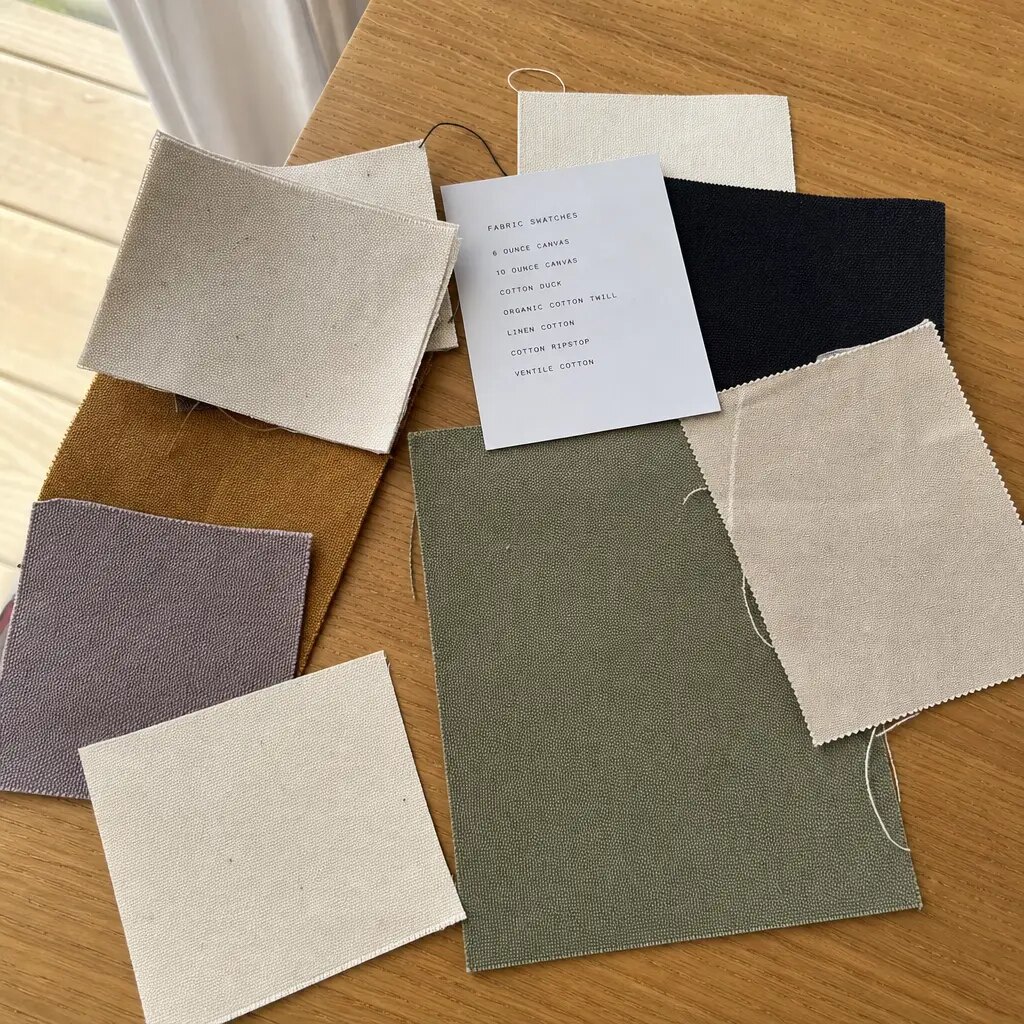
Most buyers start with fabric weight because it affects both retail feel and shipping performance. A 12 oz canvas is usually a practical starting point for standard wine carriers: it holds shape well enough for display, keeps sewing manageable, and avoids unnecessary weight. If the carrier needs a firmer body, heavier embossing, or more premium positioning, 14 oz canvas is a safer spec, but it will raise material cost and carton weight.
Do not treat the fabric as a standalone choice. The handle type, closure style, and whether the carrier uses a divider or sleeve all change the finished thickness. If a supplier quotes the same pack count for 12 oz and 14 oz versions, that is a sign the carton plan has not been fully calculated.
- 12 oz canvas: common for standard promotion and retail resale.
- 14 oz canvas: better for premium presentation, but usually higher freight and sewing cost.
- If the bag must hold a bottle insert or protective sleeve, revisit fold method and carton count immediately.
Print method, branding, and placement affect both cost and carton waste
Canvas wine carriers are often printed with a simple logo, a seasonal craft fair message, or a retailer’s private label. Screen print is still the most cost-effective route for recurring runs with one or two colors because it gives stable coverage and lower per-piece cost at scale. Heat transfer can work for short runs or complex art, but it increases the risk of edge lift, cracking, and scuffing during transit if the print is not cured and packed correctly.
Brand placement matters when the carrier is displayed at a craft fair table or stored in a carton by a distributor. A side logo may look clean, but it can rub against another carrier if cartons are packed too tightly. A front-center logo is easier to inspect on arrival, while a woven side label or sewn CTM marker is useful when buyers need discreet brand identification for internal handling.
- Request artwork placement dimensions, not just a logo mockup.
- For multi-color printing, separate setup fees should be visible in the quote.
- If the carrier is folded in cartons, protect printed surfaces with tissue, kraft slip sheets, or orientation control.
MOQ logic: why carton count and artwork count are connected
MOQ is not only about sewing quantity. A factory may accept a low bag MOQ but still push for a larger order once carton configuration, print setup, and fabric cut efficiency are considered. For example, a one-color screen print can support a lower MOQ than a three-color design because screen setup, color registration, and spoilage are more predictable. Likewise, a standard carton size usually lowers MOQ pressure because the factory can pack faster and waste less labor on custom packing.
When buyers compare quotes, they should separate MOQ by color, by artwork version, and by packing format. A supplier may quote 1,000 pcs total, but if that is split across two print versions and a special carton size, the true effective MOQ per SKU may be too small for efficient production. In practice, it is often better to consolidate artwork and carton dimensions early than to negotiate a headline MOQ that cannot be built efficiently.
- Ask whether MOQ changes if you switch from zipper top to drawstring closure.
- Ask whether a new carton dimension triggers a new packing minimum.
- Lower MOQ usually means higher unit cost, more waste, or less favorable carton optimization.
What a usable supplier comparison looks like
When sourcing canvas wine carriers, buyers usually compare three routes: direct factory, trading company, and local stockist or distributor. The cheapest unit quote is not always the best route. A direct factory can control fabric, sewing, print, and carton plan more tightly, but it may need clearer specs and stronger buyer-side QA. A trading company may simplify communication and coordinate mixed products, but packing details can be less transparent. A stockist can move fastest, yet it usually offers the least customization and the least control over carton efficiency.
For craft fair programs, the winning route depends on how much control you need over presentation and shipping. If the carrier is a core SKU and you expect repeat orders, direct factory sourcing usually gives the best control over quote structure, sample approval, and landed cost. If the order is small and timing is critical, a stockist may be useful for a quick launch, but the buyer should expect less flexibility on artwork and carton design.
- Direct factory: best for repeat programs and custom packing.
- Trading company: useful when managing multiple product types or more complex communication.
- Stockist/distributor: faster, but usually weaker on carton optimization and artwork changes.
Supplier route comparison for canvas wine carriers
The table below is most useful when a buyer needs to compare quotes on a real RFQ, not just look at sample photos. The goal is to find the supplier route that fits your delivery window, packing requirements, and tolerance for specification risk. Each route can work, but only if the packing plan is aligned with the sourcing model.
A common mistake is to compare only FOB unit price and ignore how each supplier handles carton dimensions, print setup, and sample approval. For this product, those items often decide whether the landed cost is stable or whether the shipment arrives with repacking work, damage claims, or a late-season delivery problem.
- Write decisions in measurable language, not only descriptive wording.
- Ask for sample photos plus one physical approval sample for important orders.
- Keep quotation, sample approval, and inspection notes tied to the same spec version.
Packing spec choices that change freight cost
Packing is where canvas wine carrier programs either become efficient or become expensive. The key variables are fold method, inner protection, carton count, and master carton dimensions. If the carrier is printed on both sides, the fold direction matters because one face can rub harder against the next piece. If the product includes an insert or divider, the packaging engineer must calculate the real thickness after compression rather than the theoretical flat thickness.
As a practical rule, aim for a master carton that is easy to handle, not just one that maximizes piece count. Many buyers focus only on unit density and forget that a carton that is too heavy slows warehouse receiving, raises damage risk, and complicates retail distribution. A more balanced carton can reduce total handling cost even when the box count is slightly higher.
- Use inner polybags only if print scuffing or dust control is a real issue.
- Add dividers when bottle-shaped inserts or rigid accessories are included.
- Keep gross carton weight within a warehouse-friendly range for manual handling.
Sample approval should include a packed carton, not just a loose bag
A loose pre-production sample is not enough for this product category. A useful approval process includes the sewn sample, the printed sample, and one packed carton sample with the final fold direction, carton label, and quantity count. That packed carton tells the buyer whether the carriers will hold shape, whether the logo rubs, and whether the outer box size is actually workable for the destination warehouse.
The sample should also confirm the practical details that often get missed in the RFQ: zipper pull orientation, seam alignment, print centering, and whether the bottle fits without stressing the side seams. If the buyer changes anything after sample approval, even a small change like fabric weight or handle width, the carton behavior can change enough to require a new packing test.
- Approve print placement on the actual fabric, not only on a digital proof.
- Review a fully packed carton photo before mass production.
- Keep one retained sample labeled with the approved specification version.
QC thresholds buyers can put into the PO
Quality control becomes much easier when the purchase order contains measurable thresholds. For canvas wine carriers, that usually means approved fabric weight range, stitch quality at handle anchors, print alignment tolerance, zipper or drawstring function, and carton count accuracy. Buyers do not need a complicated lab spec to avoid problems; they need clear acceptance points the factory can follow without guessing.
Use a practical standard that the factory can inspect on line and the receiving team can verify quickly. If a carton contains mixed sizes or mixed artwork versions, the risk of dispute rises sharply. Keep the PO structure simple: one SKU, one artwork, one carton spec, one pack count, one labeled destination. That discipline saves time when a freight claim or shortage review happens.
- Set stitch and print acceptance against the signed sample, not verbal approval.
- Require carton counts to match the packing list exactly.
- Avoid mixed-SKU cartons unless your warehouse explicitly wants them.
Lead time, production sequence, and the hidden schedule risks
For seasonal craft fair orders, lead time is usually lost in the wrong place: waiting for artwork sign-off, carton approval, or a late material substitution. A better schedule separates the project into material sourcing, sample approval, bulk sewing, print curing, packing, and export booking. If one of those steps slips, the factory should show exactly where the delay sits instead of giving one vague delivery date.
Buyers should also treat cartons and labels as critical-path items. A factory can finish sewing a carrier but still miss the ship date if the carton size or barcode label is not ready. If the order is going to a distributor or multiple retail locations, ask the supplier to build the packing sequence around the receiving process, not only the sewing line.
- Material arrival, print approval, and carton availability should all be visible in the schedule.
- Hold the factory to a packed-ready date, not just a sewing-complete date.
- For seasonal orders, allow buffer time for rework on print or carton labeling.
Specification comparison for buyers
| Spec decision | Recommended option | When it fits | Buyer risk to check |
|---|---|---|---|
| Fabric weight | 12 oz canvas for standard retail, 14 oz if the carrier needs a firmer handfeel and better seam stability | Most craft fair SKUs where the bag must look premium on a table display and survive repeated handling | Light canvas can collapse in transit and show print distortion; heavier canvas raises unit cost and carton weight |
| Handle construction | Self-fabric handles with reinforced cross-stitch or box-X at stress points | When buyers want a cleaner retail look and lower sewing complexity | Thin handle tape or weak bar-tacks lead to pull failures when buyers carry a full bottle |
| Closure style | Zipper top or drawstring tie depending on bottle presentation and compliance needs | Zipper suits premium retail, drawstring suits gift sets and quick pack-out | Zippers add hardware cost and sewing time; drawstrings can look low-value if cord quality is poor |
| Print method | Screen print for simple logos; heat transfer only for short runs or multi-color proofs | Screen print works best on recurring programs with stable artwork | Transfers can crack or offset in transit; screen print needs color and placement approval before bulk |
| Carton pack count | 6 to 12 pcs per inner/master carton based on bag thickness and fold method | Best when freight and warehouse handling need a balanced carton weight | Too many pieces per carton crushes shape; too few wastes cube and raises carton count |
| Carton style | 5-ply export master carton with internal poly bag and carton dividers if bottles or inserts are included | When carriers ship flat-packed with accessories or rigid inserts | Weak cartons fail at corner crush and tape split during export handling |
| Supplier route | Direct factory with carton plan built into the quote | Buyers who need control over pack-out, labeling, and export efficiency | If carton specs are not locked, the supplier may optimize for sewing speed, not freight efficiency |
| Sampling path | Pre-production sample plus packed sample carton approval | When the buyer needs to validate both product appearance and shipping readiness | A good bag sample can still fail in carton fit, barcode placement, or pack count |
| Lead-time structure | Separate sewing lead time from packing/material lead time in the PO | Useful for seasonal craft fair launches and staggered deliveries | If cartons, inserts, or print film arrive late, the whole shipment slips even when sewing is complete |
Buyer checklist before sampling
- Lock the bottle size range, carrier dimensions, and whether the bag must fit one standard 750 ml bottle or an assortment including taller formats.
- Set fabric weight, liner requirement, handle style, and closure style before asking for pricing.
- State print method, artwork colors, print area, and whether side-label branding is required.
- Define carton pack count, master carton dimensions target, and whether inner polybags or dividers are needed.
- Request both unit price and carton-level packing cost so freight cube is not hidden inside the bag price.
- Approve a pre-production sample plus one packed carton sample before bulk release.
- Ask for overrun/underrun tolerance, carton label format, and palletizing option if the shipment is going to a distributor warehouse.
- Confirm lead time separately for fabric, printing, sewing, packing, and export booking.
Factory quote questions to send
- What canvas GSM or ounce weight are you quoting, and is it finished weight after wash or raw fabric weight?
- What is the exact carton pack count, carton size, and gross weight per master carton for this quote?
- Which print method are you using, and what is the setup charge per color or per screen?
- Does your quoted lead time include material sourcing, sample approval, sewing, packing, and final carton labeling?
- What is your MOQ by color and by artwork, and how does the MOQ change if carton size or closure style changes?
- What QC standard do you use for stitching strength, print alignment, and carton compression resistance?
- Can you provide a packed sample carton photo and a dimensioned packing plan before mass production?
- What spare percentage do you recommend for packing loss, print spoilage, and sewing rejects?
Quality-control points to confirm
- Fabric weight tolerance should stay within a practical range of the approved GSM or oz spec; large variation changes drape, handle feel, and carton cube.
- Stitching at handle anchors and side seams should show even tension, with no skipped stitches, loose threads, or puckering at the stress points.
- Print registration should remain centered within the approved placement window; visible off-center logos become obvious on shelf displays.
- Zipper or drawstring function should cycle smoothly on a sample run without snagging, broken pulls, or cord fray.
- Carton pack count should match the approved packing sheet exactly; mixed counts cause warehouse disputes and retail replenishment errors.
- Master carton corners should survive handling without crushing the product shape; add dividers or flat inserts if carriers are boxed with bottles or glass-like inserts.
- Outer carton marks should match the buyer PO, carton label, and barcode placement, with no handwritten substitutions unless pre-approved.