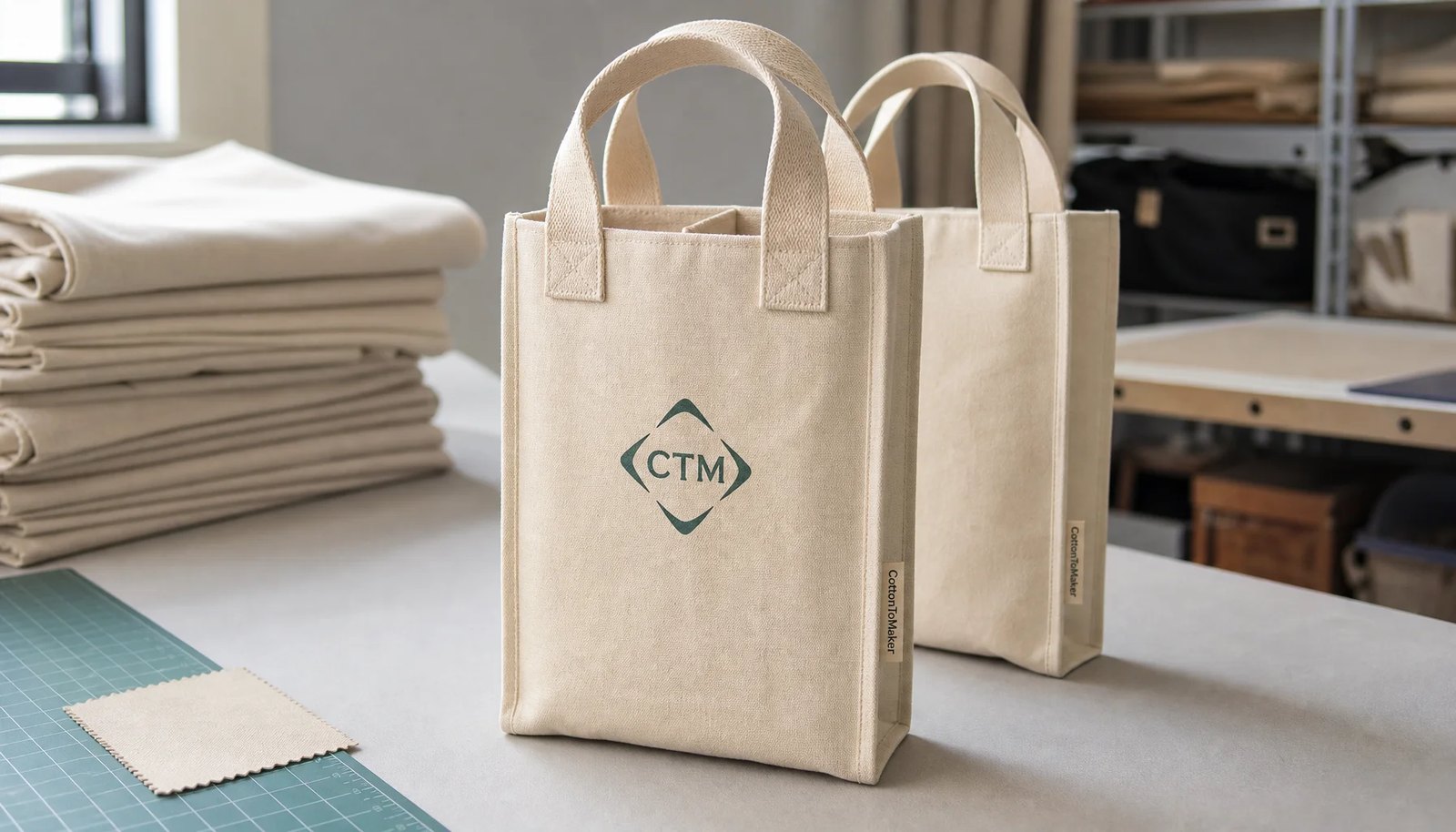
Start the RFQ With the Buying Use Case
A university bookstore should not request a canvas wine carrier as a generic tote bag with bottle holes. The correct RFQ starts with the selling occasion: alumni weekend gift packs, campus hotel welcome sets, fundraising wine pairings, graduation gifts, bookstore retail shelves, or distributor programs for multiple campus accounts. Each use case changes the fabric, capacity, handle strength, packing, and artwork approval path.
For example, an alumni event order may accept a simpler natural canvas carrier because the unit is bundled with a bottle and distributed quickly. A bookstore retail program needs cleaner stitching, better folding, barcode labeling, shelf-ready packing, and a print that survives handling by shoppers. If the same quote is used for both, the buyer may compare prices that are not built for the same job.
- State the bottle type: standard 750 ml wine bottle, sparkling bottle, olive oil bottle, or mixed bottle sizes.
- State the selling route: event giveaway, bookstore retail, online fulfillment, alumni pack, or distributor resale.
- State whether the carrier must stand upright when loaded or can be soft and foldable.
- State the expected retail presentation level: basic promotional, mid-range gift, or premium campus merchandise.
- State whether university licensing approval is required before print production.
Define the Canvas Before Comparing Quotes
Canvas wine carriers usually sit in the 8 oz to 14 oz range, roughly around 270 to 475 GSM depending on yarn and weaving. For most university bookstore programs, 10 oz or 12 oz cotton canvas is the practical center. It is strong enough for one or two bottles, still folds reasonably well, and gives screen print a stable surface. Lighter canvas can work for one-bottle budget programs, but it may collapse around the bottle and reduce perceived value.
Natural cotton canvas is common because it matches campus sustainability messaging and photographs well on shelves. Dyed canvas can look more branded, but it adds dye-lot risk, higher MOQ, and shade control work. If the RFQ says only canvas bag, suppliers may quote different fabric weights and finishes. A low quote may simply be a lighter fabric, not better pricing.
- Budget one-bottle carrier: 8 oz to 10 oz canvas, simple seam finish, limited print area.
- Standard bookstore carrier: 10 oz to 12 oz canvas, reinforced handles, clean screen print.
- Premium two-bottle carrier: 12 oz to 14 oz canvas, bound seams or lining option, stronger divider.
- Natural canvas risk: shade, cotton seed flecks, and slub texture should be approved in the sample.
- Dyed canvas risk: color migration, dye-lot variation, and longer lead time should be built into the schedule.
Size, Gusset, and Divider Details That Prevent Returns
A wine carrier fails when the bottle fits in the sample but not in real use. The RFQ should include finished dimensions and target bottle diameter, not only a product photo. A common single-bottle carrier may need enough width and gusset to accept a 750 ml bottle without stressing side seams. A two-bottle carrier needs more than double width because the divider, seam allowance, and bottle shoulder shape all consume space.
Divider construction is one of the most common quote gaps. A loose or lightly stitched divider looks acceptable when empty, but bottles knock together during transport. For retail and alumni gift packs, the divider should be sewn into the bottom seam or securely attached at the side seams, with bartack reinforcement where needed. If bottle protection is important, define whether the divider is canvas, padded, or simply a fabric separator.
- Provide target bottle dimensions instead of assuming all 750 ml bottles are identical.
- Set finished body tolerance before sample approval, especially for two-bottle carriers.
- Use a gusset wide enough for the bottle base, not only the bottle body.
- Require the divider attachment method to be shown in sample photos and sample comments.
- Confirm whether the carrier must fit a bottle with tissue wrap, gift tag, or protective sleeve.
Print Method for University Marks
Most canvas wine carriers for campus stores use screen printing because it handles solid university names, mascots, seals, and one to three spot colors efficiently. Screen print also gives predictable repeat results when the buyer reorders the same artwork. The RFQ should include artwork size, color count, Pantone references, print location, and whether the design crosses seams or folds.
Heat transfer can be useful when the artwork has gradients, small details, or many colors, but it changes the hand feel and may not age like ink printed directly into the canvas. Embroidery is possible for premium gift items, but it can pucker lighter canvas and may not be cost-effective on large flat panels. Licensed artwork should go through a print strike-off stage on actual fabric, not only a digital proof.
- Screen print: best for bold campus logos, solid colors, and repeat orders.
- Heat transfer: useful for detailed artwork, but test edge lifting and hand feel.
- Embroidery: premium appearance, but needs suitable canvas weight and backing.
- Woven label: good for subtle branding or side-seam brand identification.
- Print approval should include size, position, color, opacity, and curing quality.
MOQ Logic and Quote Comparisons
MOQ is not only a factory preference. It is tied to fabric purchase quantity, cutting efficiency, print setup, ink mixing, label production, and packing materials. A 300-piece order in natural stock canvas may be realistic, while a dyed canvas two-bottle carrier with custom label, hangtag, and multi-color print may need a higher MOQ. If the bookstore wants three department logos in small quantities, the supplier may price each design separately because each print setup creates labor and waste.
A useful RFQ asks suppliers to separate MOQ by fabric color, print design, and packing version. This prevents a buyer from assuming that 600 total pieces can be split into six designs without price change. Distributors serving several university bookstores should request a consolidation option: same carrier construction, different print logos, and shared material batch where possible.
- Lowest MOQ usually comes from stock natural canvas and one-color screen print.
- Higher MOQ often appears with dyed fabric, custom webbing, custom labels, or complex packing.
- Per-design MOQ matters when multiple university logos are ordered together.
- Print setup cost should be separated from unit price if reorders are expected.
- Ask whether overruns and underruns are allowed, and define the accepted percentage.
What a Complete Factory Quote Should Show
A quote for canvas wine carriers should contain enough data for landed-cost comparison, not only a unit price. Importers and bookstore distributors need material, dimensions, print method, packing count, carton size, gross weight, estimated CBM, sample cost, lead time, payment terms, and validity period. Without carton data, a buyer cannot compare sea freight, air freight, or warehouse receiving cost.
The best quote format also identifies exclusions. Tooling, print screens, courier samples, barcode stickers, hangtags, inner cartons, testing, inspection, and destination charges may not be included. These items are not problems if they are visible early. They become margin problems when they appear after purchase order approval.
- Product data: fabric weight, finished size, capacity, handle drop, seam finish, divider method.
- Decoration data: print method, color count, printable area, setup cost, strike-off cost.
- Packing data: individual packing, pieces per carton, carton size, gross weight, CBM.
- Commercial data: MOQ, unit price, sample fee, lead time, payment terms, quote validity.
- Export data: Incoterm, loading port, HS code suggestion, carton marks, inspection availability.
Sample Approval Should Simulate Loaded Use
A canvas wine carrier sample should be evaluated with actual bottles, not only viewed flat on a desk. The buyer should load the target bottle size, lift by the handles repeatedly, place the carrier on a shelf, and check whether the bottom panel distorts. For two-bottle versions, the bottles should not knock together excessively when the carrier is moved normally.
Sample comments should be written like production instructions. Instead of saying make stronger, specify add bartack at handle base, increase handle width, adjust divider attachment, move print 15 mm upward, or reduce stitch tension puckering. The approved pre-production sample should become the factory standard for fabric hand feel, construction, print color, and packing.
- Proto sample: confirms size, capacity, construction, and handle comfort.
- Print strike-off: confirms ink color, opacity, registration, and curing on actual canvas.
- Pre-production sample: confirms final material, logo, labels, packing, and workmanship.
- Loaded-use review: checks handle strength, divider function, bottom shape, and bottle stability.
- Approval record: includes dated photos, measurement sheet, and signed sample comments.
Packing Choices Affect Shelf Quality and Freight
Canvas wine carriers are simple products, but poor packing can create creased print panels, dirty fabric, mixed barcodes, and difficult receiving. For campus bookstores, the packing method should match the sales channel. Retail stores may need each piece folded consistently with a barcode sticker or hangtag. Event orders may prefer bulk-packed carriers by logo for fast distribution.
Individual polybags protect natural canvas during ocean shipping, but some university buyers prefer paper bands or reduced plastic. Paper options can look better for retail but may offer less moisture protection. If the product ships in humid seasons or long ocean routes, the RFQ should mention moisture control, carton strength, and whether desiccants are required.
- Retail packing: folded carrier, hangtag or barcode sticker, consistent front logo visibility.
- Event packing: bulk pack by design, clear carton marks, fast count verification.
- Eco-lean packing: paper belly band or master polybag, with moisture risk considered.
- Carton planning: avoid over-compression that leaves permanent creases across print areas.
- Warehouse receiving: carton marks should show SKU, logo version, quantity, PO number, and destination.
Lead Time Risks for Campus Buying Calendars
University bookstore calendars are fixed around alumni weekend, graduation, orientation, holiday gifting, and fundraising events. A supplier lead time that works for ordinary retail may fail when licensed artwork approval or sample courier time is added. The RFQ should request a schedule with separate dates for artwork review, sample making, sample approval, material preparation, bulk production, inspection, and shipment.
The riskiest schedule assumptions are dyed canvas, late artwork, multi-logo splits, and packaging changes after sample approval. Air freight can rescue small urgent orders, but wine carriers made from heavy canvas are not always economical by air. A smart RFQ asks for both normal production lead time and a risk note for any spec that could extend it.
- Artwork approval may take longer than sample sewing if university licensing is involved.
- Stock natural canvas is faster than custom dyed canvas in most cases.
- Multi-logo orders need extra print setup and packing separation time.
- Pre-shipment inspection should be scheduled before the vessel closing date.
- Ocean freight timing should be compared against event date with receiving and internal distribution buffer.
Inspection Standards and Acceptance Criteria
Inspection should focus on the way the product will be used: carrying glass bottles safely and presenting the university brand correctly. Visual inspection alone is not enough. The inspection plan should include measurement, loaded handle checks, divider checks, print rub test, seam inspection, carton count, and barcode verification where applicable.
For most bookstore orders, the buyer can use a general AQL framework but add product-specific checkpoints. Critical defects include broken handles, open bottom seams, wrong logo, wrong barcode, mildew odor, and stains on front panels. Minor natural slubs may be acceptable on unbleached canvas if approved during sampling. The key is to define these points before production, not during a claim.
- Critical defects: unsafe handle, open seam, wrong logo, wrong SKU, serious odor, contaminated fabric.
- Major defects: visible print misregistration, stains on front panel, incorrect size affecting bottle fit.
- Minor defects: small thread ends, acceptable natural flecks, slight shade variation within approved range.
- Functional test: loaded lifting and short carry test using representative bottle weight.
- Packing audit: carton quantity, SKU separation, barcode accuracy, and carton mark consistency.
Specification comparison for buyers
| Spec decision | Recommended option | When it fits | Buyer risk to check |
|---|---|---|---|
| Canvas fabric weight | 10 oz to 12 oz cotton canvas for most bookstore retail wine carriers | Good balance for alumni gifting, campus store shelves, and two-bottle presentation packs | Below 8 oz may sag around glass bottles; above 14 oz can increase freight and feel too stiff for folding |
| Bottle capacity | Single-bottle for gift counter add-ons; two-bottle with divider for alumni event packs | Use single-bottle for lower retail price points and two-bottle for premium university gift sets | Divider must be sewn into bottom seam or bartacked; loose dividers shift during handling |
| Handle construction | Self-fabric handles with cross-stitch or bartack reinforcement | Best when buyers want a clean canvas look and repeat-use strength | Handle drop must allow comfortable carry without bottles hitting the hand; weak bartacks fail before fabric |
| Print method | Screen print for solid university marks; heat transfer only for complex small-color artwork | Screen print fits one to three spot colors and repeat bookstore replenishment orders | Ink cracking, poor registration, and wrong Pantone matching create reject risk on licensed marks |
| Inside finish | Raw seam with overlock for budget orders; bound seam for higher retail presentation | Overlock works for giveaway programs; binding improves shelf appearance and reduces lint | Untrimmed threads, loose overlock, and exposed seam bulk can scratch labels or look unfinished |
| MOQ route | 300 to 500 pieces per color/design for custom canvas production | Works for bookstore seasonal buys, alumni association orders, and distributor consolidation | Very low MOQ quotes may use stock blanks, limited sizes, or digital print with different margin structure |
| Packing method | Flat packed in polybag or paper belly band, export carton with bottle carrier panels protected | Best for importers and campus stores that need clean shelves and easy counting | Over-compressed cartons can crease print panels; individual rigid inserts raise freight volume |
| Compliance evidence | Fabric composition, azo-free dye statement when applicable, print ink data, and factory inspection report | Useful for university licensing, retail buyer files, and distributor vendor onboarding | Generic certificates not linked to material, ink, or production lot do not protect the buyer during claims |
Buyer checklist before sampling
- Define single-bottle, two-bottle, or mixed carton assortment before requesting price.
- State finished size with tolerance, bottle diameter target, handle drop, and divider construction.
- Specify canvas weight in oz or GSM and clarify whether natural, dyed, bleached, or organic cotton is required.
- Send vector artwork with Pantone references and university licensing placement rules.
- Separate sample requirement from bulk order requirement: proto sample, print strike-off, and pre-production sample.
- Request itemized quote data: fabric, print, accessories, packing, inland freight, export carton quantity, and CBM.
- Confirm MOQ by design, fabric color, print color count, and shipping destination.
- Set inspection thresholds for dimensions, handle strength, print defects, seam strength, stains, odor, and packing accuracy.
- Clarify retail labeling, barcode, hangtag, country-of-origin marking, and carton marks before production.
- Build schedule buffer for artwork approval, licensed mark review, fabric dyeing, sample courier time, and final inspection.
Factory quote questions to send
- What canvas weight do you recommend for the stated bottle size, and can you quote one lighter and one stronger option?
- Is the fabric stock canvas or newly woven/dyed fabric, and how does that affect MOQ and lead time?
- What is the finished size tolerance for height, width, gusset, handle drop, and divider width?
- How are handles reinforced: bartack, box stitch, cross stitch, or extra patch reinforcement?
- Which print method is included in the quote, how many colors, and what is the maximum printable area?
- Can you provide a print strike-off on actual canvas before bulk production?
- What packing is included: individual bag, paper band, hangtag, barcode sticker, master carton, or inner carton?
- How many pieces per carton, what is the gross weight, and what is the estimated CBM for sea and air comparison?
- What is the MOQ per design and per fabric color, and what happens if the bookstore splits the order across several logos?
- What inspection standard do you use, and can the order be held for third-party inspection before shipment?
Quality-control points to confirm
- Finished size tolerance should normally be within plus or minus 5 mm for body panels and plus or minus 10 mm for handle drop unless the design requires tighter control.
- Canvas weight should be verified against the approved sample, with GSM or oz variance agreed before purchase order release.
- Handle pull testing should reflect loaded bottle use, not empty-bag handling; reinforce with bartack or box stitch where stress concentrates.
- Divider seam should be checked at the bottom and side attachment points because bottle movement often exposes weak stitching.
- Print color should be compared against approved Pantone or signed strike-off under consistent lighting.
- Ink adhesion should pass a basic rub test and tape test on the actual canvas surface after curing.
- Seams should be free from skipped stitches, open seams, needle cuts, excessive puckering, and long untrimmed threads.
- Canvas surface should be checked for stains, mildew odor, oil marks, slubs beyond approved natural texture, and inconsistent dye shade.
- Packing inspection should verify barcode, hangtag, carton marks, quantity per carton, and protection against print-panel creasing.
- AQL sampling should include loaded-use checks, not only visual inspection of empty folded bags.