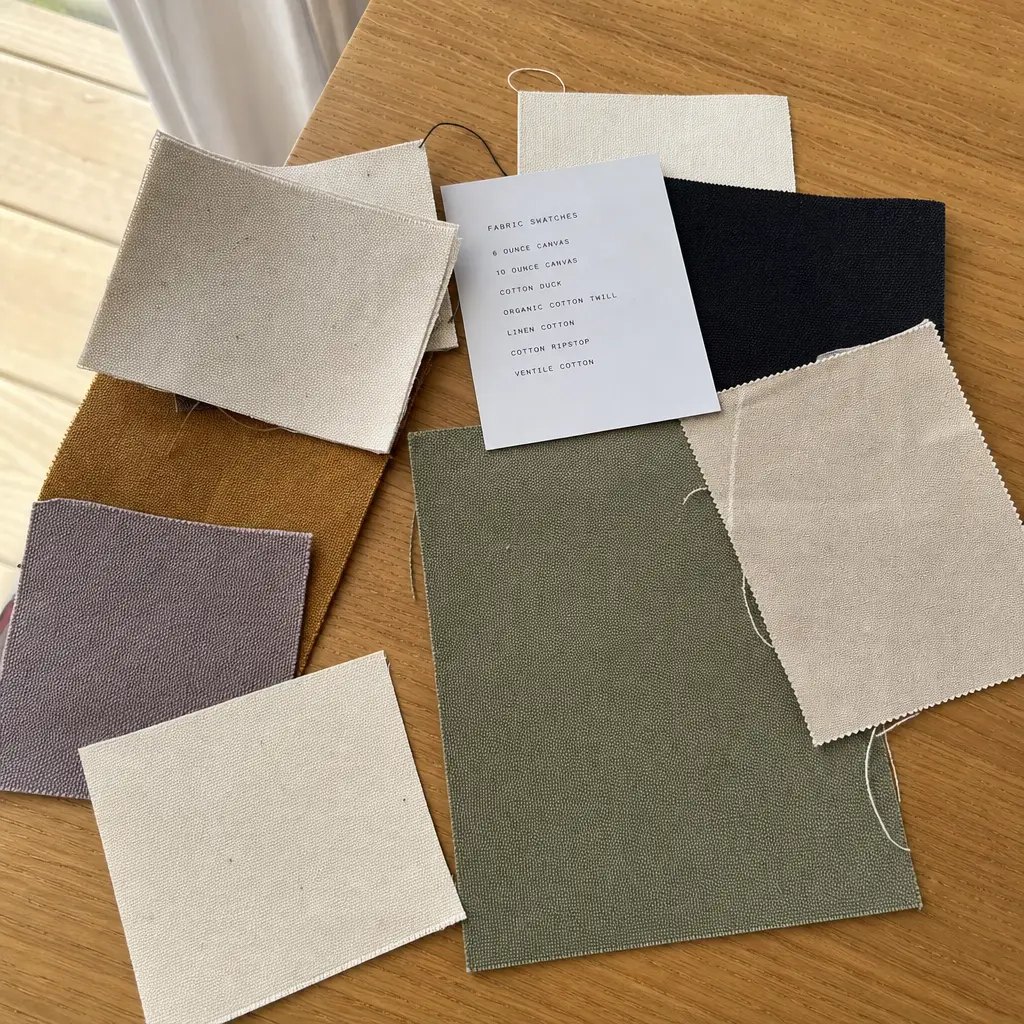
What This RFQ Has To Solve
The real buying problem with canvas wine carriers is not finding a bag. It is getting quotes that describe the same product, with the same fabric, print, and packing basis, so the numbers can actually be compared. Trade show exhibitors usually need a carrier that looks presentable on the booth table, travels safely in freight, and can be ordered in a quantity that makes sense for a campaign or event calendar. If the RFQ leaves room for interpretation, every supplier will fill the gaps differently and the low quote will usually be the least reliable quote.
A usable RFQ should force the factory to make three decisions on paper before anyone starts sampling: what bottle size the carrier must fit, what construction level the buyer wants, and how the brand needs to be presented. That means no vague request for 'nice canvas wine bags.' Spell out the bottle type, the intended use, the print method, and the pack method. Once those are fixed, the quote becomes a sourcing document instead of a sales reply.
- Tie the carrier to one bottle format or define the acceptable range.
- Separate promotional use from retail resale, because the construction standard is different.
- Ask for the quote in the same spec order every time: fabric, structure, print, handles, packing, carton.
Fabric Weight And Structure Decide Most Of The Cost
Canvas wine carriers are usually priced first by fabric weight and then by how much sewing time the structure needs. For a single-bottle carrier, 12 oz canvas is a common practical middle point because it balances body, printability, and cost. If the bag has to hold two bottles, travel well in freight, or look premium at retail, the buyer should usually move up in fabric weight or add reinforcement instead of relying on a thin body and hoping the handles will carry the load. Heavier is not automatically better, but underweight canvas is the fastest way to make a quote look good and the product feel cheap.
Structure choices matter just as much as fabric. An unlined carrier is simpler and cheaper, but a lined body or divider is better when bottles must not knock against each other. A reinforced base improves standing shape and reduces sagging when the bag is set down during an event. If the design includes a closure, that also changes the line balance, sewing complexity, and final look. The RFQ should not treat all of those as cosmetic options.
- Single-bottle promotional use: prioritize print area, stable handles, and clean seam finish.
- Two-bottle or retail use: prioritize divider support, base reinforcement, and handle anchoring.
- Premium gift use: ask for lining, cleaner internal finish, and a more controlled shape.
Build The Quote So Suppliers Cannot Quote Different Products
A quote is only useful when every supplier is quoting the same product basis. That means the RFQ should include a dimension sketch, target bottle fit, artwork file, logo placement, fabric weight, color reference, handle length, and packing spec. If the bag has a gusset, divider, zipper, or label, those details need to be named clearly. Buyers often assume the factory will infer the intended version from the product name, but the factory will usually infer the cheapest safe interpretation unless the RFQ blocks that path.
The cleanest RFQ format is simple: one page of core spec, one page of artwork and measurements, one page of packing and delivery instructions, and one page for required quote breakdown. Ask for separate lines for fabric, printing, trim, labor, packing, and carton cost if possible. That is the easiest way to see where one supplier is saving money and where another is adding value. It also gives procurement a cleaner basis for negotiation without arguing over a single all-in number.
- State the bottle dimensions or the exact bottle style the carrier must fit.
- List every artwork element: logo count, print colors, placement, and finish expectation.
- Require separate pricing for sample, bulk, and any setup or screen charges.
Compare Supplier Routes Before You Compare Unit Price
Canvas wine carriers can come from a direct factory, a trading company, a stock product decorator, or a local converter. Those routes solve different problems, and the lowest unit price does not always belong to the best route. A direct factory is usually the right option when the buyer needs control over fabric weight, handle construction, and print consistency. A trading company can be useful for mixed orders or when the buyer needs one point of contact across several product lines. Stock decorators are faster, but the buyer gives up control over base material and often pays a premium for speed.
The quote should reveal the route before it reveals the price. Ask who owns the factory, where the fabric is sourced, whether the item is made to order or pulled from stock, and whether the print is done in-house. If a supplier will not show a similar production photo, a fabric swatch, or a sample from the same sewing line, treat the quote as preliminary. The risk is not just quality. It is also schedule drift, because the wrong supplier route can add hidden handoffs that are not visible in the unit price.
- Direct factory: best control, better for repeat orders, slower to qualify.
- Trading company: easier coordination, but more layers between the buyer and the sewing line.
- Stock decorator: useful for rush jobs, but the base product may not match the brand standard.
MOQ Logic Should Follow Color, Trim, And Print Setup
MOQ for canvas wine carriers is rarely one number. It usually changes with fabric color, print complexity, handle type, lining, and any custom trim. A buyer asking for three body colors, two logo colors, and a special closure is not buying one SKU. The RFQ should force the supplier to separate the MOQ by configuration so procurement can see which part of the order is driving the minimum. That matters when the order is tied to a trade show or seasonal launch and the team is trying to split volume across more than one market.
Sample approval should also be staged. A reference sample or sales sample is useful only as a starting point. The buyer still needs a pre-production sample built from the actual fabric, actual logo method, and actual packing method. If the supplier changes canvas weight, lining color, or print technique after that point, the approval process needs to restart. This is where many orders go wrong: the team approves a nice-looking sample and later receives bulk production that matches the look only in a loose marketing sense.
- Separate MOQ by body color, logo color, and trim change.
- Ask whether stock fabric lowers MOQ or only shortens lead time.
- Require a pre-production sample made from the same material route as bulk.
Set Quality Limits In Measurable Terms
A useful QC section does not say 'good quality.' It says what the factory must hold and what the buyer will reject. For canvas wine carriers, the main issues are size variation, fabric substitution, weak handle anchoring, sloppy stitching, bad print alignment, and surface contamination. Buyers should define tolerance bands for dimensions, agree the sample as the visual standard, and specify what counts as a defect. That makes inspection easier at the factory, at the warehouse, and again when the goods arrive at the event prep center.
For a simple internal standard, require the carrier to match the approved sample in overall appearance, print position, and handle layout. Decide what the team will tolerate on loose threads, seam waviness, shade variation, and closure function before production starts. If the bags will be sold retail, the buyer should be stricter on surface finish and pack presentation than if the bags are a free promo item. The important part is not to leave the standard in a vague comment field where it cannot be enforced later.
- Define a dimension tolerance for width, height, and gusset depth.
- Set a visible defect rule for print, stitching, stains, odor, and loose threads.
- Agree the inspection method for handle strength and closure function before bulk starts.
Packing For Trade Shows Is A Freight Decision, Not An Afterthought
Packing has a direct impact on cost, carton count, and how the product looks when it reaches the booth. If the carriers are shipped flat, the buyer should specify how they are folded so the print does not crease and the handles do not bend permanently. Bulk packed cartons usually make the most sense for trade show distribution, because the bags will often be handed out, unpacked, or repacked on site. Retail-style individual packing only makes sense if the product is being resold or presented as a gift item with stronger shelf appeal.
The carton plan should include carton size, carton weight, bag count per carton, outer marks, and whether the cartons need palletization. If the bags are going through a warehouse before the show, the buyer should also define label placement and SKU separation. A supplier can make a low unit quote look attractive by packing inefficiently, which raises freight cost later. The RFQ needs to treat packing as part of the landed cost, not just a post-production detail.
- Specify flat fold direction and whether the logo can sit on the fold line.
- State the target carton weight if the cartons will be hand-carried at the venue.
- Require carton marks that match the PO, SKU, and event warehouse instructions.
Lead Time Risk Starts Before Sewing Begins
The production clock for a custom canvas wine carrier starts with artwork approval, not with sewing. After that come material booking, print setup, trim confirmation, sample signoff, bulk cutting, sewing, packing, and export handoff. Each step has a failure point. A late color approval can delay print setup. A changed logo file can restart sampling. A missing carton mark spec can slow the final pack. Buyers who are working to a trade show date need a schedule that leaves room for one revision cycle, not a paper-thin timeline that assumes every step lands on first pass.
The safest way to manage this is to freeze the non-negotiables early: bottle fit, logo method, carton labels, and final delivery window. Then hold a buffer for the items that usually move, such as lining color, minor trim details, or retail pack inserts. If a supplier is promising a fast turnaround, ask exactly which steps are already complete and which are still open. Many delays are not factory capacity problems. They are specification problems that were never closed before the order was released.
- Freeze artwork and dimensions before sample approval.
- Reserve time for one adjustment round if the first sample misses on print or fit.
- Treat carton label approval as part of the schedule, not an admin task.
Award The Order On Landed Cost And Execution Risk
The lowest ex-works quote is not necessarily the best buy. For canvas wine carriers, landed cost can change once sampling, screens, packing, cartons, inland freight, and export handling are added. A supplier that quotes a lower unit price but adds charges later may end up more expensive than a cleaner, more transparent offer. Procurement should compare the full cost stack, not just the bag price. The strongest quote is the one that makes every line item visible and keeps the production risk low enough that the trade show date is protected.
A simple award scorecard works well: price, sample quality, response speed, spec clarity, packing control, and evidence of similar production. If two suppliers are close on price, choose the one that showed the better material evidence and the cleaner pre-production process. For a branded product, the cost of a bad logo, wrong fold, or weak handle is higher than the small saving from an unclear quote. That is the core logic behind a useful canvas wine carriers RFQ template guide for trade show exhibitors: make the quote comparable, then choose the supplier that can actually deliver the spec.
- Compare the full landed cost, not only the ex-works unit price.
- Weigh evidence of similar production more heavily than polished sales language.
- Use one scorecard for price, quality, packing, and schedule reliability.
Specification comparison for buyers
| Spec decision | Recommended option | When it fits | Buyer risk to check |
|---|---|---|---|
| Fabric weight | 12 oz canvas for a single-bottle carrier; 12-16 oz for two-bottle or premium versions | Most trade show giveaways, retail promotions, and brand merch where the carrier must feel substantial | Suppliers may quote the same look with different GSM or weave density, so compare actual fabric weight and finish, not just 'canvas' |
| Carrier structure | Single-layer for low cost, lined body with divider or reinforced base for better bottle protection | Single-layer works for light promotional use; lined construction fits retail, wine club, or higher value gifting | A low quote can hide weak structure that lets bottles knock together or tilt in transit |
| Closure style | Open top with divider, tie closure, or zipper depending on display and transport needs | Open top is fine for quick giveaways; zipper or tie closure fits shipping and premium presentation | Closure changes sewing time and material cost, and a weak closure can make the bag feel unfinished |
| Print method | Screen print for simple logos, woven label or sewn patch for a cleaner premium look | Best when the artwork is limited to one or two colors and the brand needs repeatable production | Color accuracy, registration, and wash fastness can vary if the supplier swaps methods without stating it |
| Handle build | Cotton webbing or self-fabric handles with bar tacks at stress points | Use webbing for heavier loads or frequent handling; self-fabric suits lighter promotional orders | Thin handles and weak anchoring are the most common failure point in use and during sample approval |
| Supplier route | Direct factory for custom programs, trading company for small mixed orders, stock decorator for urgent events | Direct factory fits repeat orders and controlled specs; stock routes fit tight deadlines | Quotes from different routes are not directly comparable if one includes printing, packing, and inland costs while another does not |
| MOQ strategy | Base MOQ on fabric color, print setup, and trim combination rather than one blanket number | Best when the order has multiple SKUs or event-specific colorways | A low headline MOQ may hide separate charges for color matching, screen setup, or trim changes |
| Packing method | Flat-packed bulk with clear carton marks unless retail presentation needs polybag or insert | Bulk packing suits trade show distribution and lower freight cost; retail pack suits shelf or gift-sale use | Overpacking raises freight cost, but underpacking can crease print, bend handles, or create dust and scuff marks |
| Sample route | Reference sample plus pre-production sample, both approved against the same spec sheet | Best for custom logo, special fabric, or new supplier qualification | Approving a sales sample without matching material, print, and packing often leads to surprises in bulk production |
Buyer checklist before sampling
- Confirm bottle format first: standard 750 ml, Burgundy, Bordeaux, or magnum, because the internal width and base reinforcement depend on it.
- State the fabric weight in GSM or oz and require the supplier to quote the same material basis across all versions.
- Specify whether you want unlined, lined, or divided construction, and define the reason: display, protection, or retail resale.
- Provide final artwork, print colors, logo placement, and acceptable print method if the logo must not change between quotes.
- Break the order by colorway and SKU so MOQ, setup charges, and production lead time can be compared correctly.
- State the pack plan: bulk, individual polybag, tissue wrap, barcode label, hangtag, or master carton requirements.
- Ask for sample stages and approval points so the factory does not move to bulk before you sign off the right version.
- Request carton size, carton count, gross weight, and pallet plan if the shipment will move through a trade show warehouse.
- Define the delivery window with a buffer for rework, freight delay, and sample revision.
- Ask for photos or a short production video of a similar wine carrier if the factory is quoting a new style.
Factory quote questions to send
- What exact canvas weight, weave, and finishing are you quoting, and can you show the fabric swatch used for the quote?
- Is your quote based on direct factory production, or does it include trading, consolidation, or local decoration?
- What is included in the unit price: fabric, lining, print, handles, labels, packing, and carton marks?
- What is the MOQ by color, by print color, and by any trim or closure change?
- How many sample stages do you provide, what does each sample show, and what is the sample charge structure?
- Which print method do you recommend for this artwork, and what are the setup costs or screen charges?
- What dimensional tolerance do you hold on the finished carrier, and what is your stitch or seam inspection standard?
- How do you pack the bags for export, and what is the expected carton size and gross weight?
- What is your standard lead time after sample approval, and what production steps are the usual bottlenecks?
- What documents or material evidence can you provide if we need fabric composition, compliance, or origin support?
Quality-control points to confirm
- Finished dimensions match the approved sample and stay within the agreed tolerance on width, height, and gusset depth.
- Fabric weight and hand feel match the approved swatch, with no obvious underweight or loose weave substitution.
- Handles are centered, even in length, and anchored with clean bar tacks or equivalent reinforcement.
- Stitching is straight and consistent, with no skipped stitches, broken threads, or loose ends that affect appearance.
- Print placement matches the artwork proof, with acceptable color density and no blurred edges, cracking, or misregistration.
- The carrier holds the intended bottle type without excessive tilt, rubbing, or pressure on the bottom seam.
- Any zipper, tie, snap, or closure operates smoothly and aligns correctly after repeated opening and closing.
- No oil stains, dirt, odor, lint, needle damage, or fabric shading is visible on the production lot.
- Fold lines and packing method do not create permanent creases in the print or distort the bag shape.
- Carton labels, quantity counts, and SKU marks match the shipping plan and the buyer's PO details.