Start With the Use Case, Not the Bag
A good RFQ for canvas wine carriers starts with the market use case, not with a vague request for "a nice bag." Farmers market vendors usually want a carrier that moves between retail display, short-distance transport, and gift purchase behavior. That means the factory needs to know whether the buyer wants a two-bottle carrier for standard 750 ml bottles, a single-bottle gift sleeve, or a multi-use tote that can handle cider, olive oil, or specialty beverages. The more specific the use case, the less likely the first quote will miss the target.
The buying problem is usually margin pressure combined with presentation risk. A bag that feels too thin looks cheap on shelf and returns weak repeat business; a bag that is too heavy can kill margin fast. Put the retail role in the RFQ: farmer market resale, winery promotion, gift retail, or distributor pack-in. That one line helps the factory choose the right body shape, reinforcement level, and branding approach before it prices the job.
- State the bottle count and bottle type first.
- Define whether the carrier is for retail sale, promotional use, or pack-in with another product.
- Specify the target price band only after the use case is clear.
Choose Fabric Weight by Carry Stress, Not by Habit
For canvas wine carriers, fabric weight has a direct effect on stiffness, durability, print appearance, and price. A 10 oz canvas may look acceptable in photos, but it can collapse when bottles are inserted and often needs more structure from lining or a base board. A 12 oz canvas is a common starting point for a two-bottle carrier because it balances body and cost. If the carrier will be sold as a more premium retail item or handled frequently at markets, 14 oz to 16 oz canvas can improve the shape retention and perceived value, though unit cost will rise accordingly.
Do not let the factory describe fabric only as "heavy canvas" or "good quality." Ask for oz or GSM, weave density, and finish. If the bag will carry two full bottles, seam stress at the base and handles matters more than the front panel weight alone. A slightly heavier body with reinforced anchor points usually outperforms a heavier body with weak handles. If the carrier needs water resistance, clarify whether you want a coating, a lining, or simply a tighter weave, because those choices affect both hand feel and print adhesion.
- Use 12 oz canvas as a practical baseline for two-bottle carriers.
- Move up to 14 oz to 16 oz if the bag is premium retail, not just a giveaway item.
- Ask for the approved fabric swatch before accepting a quote.
Structure and Print Need to Be Specified Separately
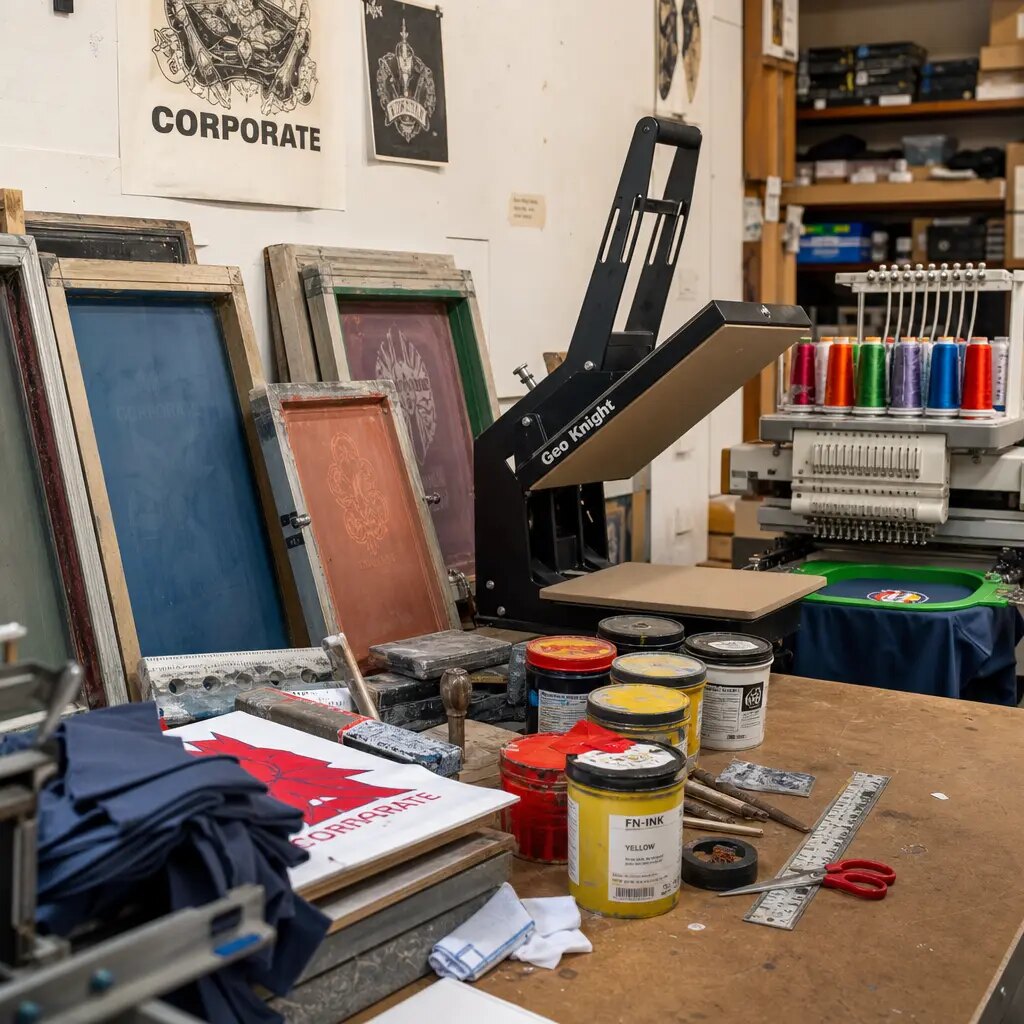
Canvas wine carriers fail in two different ways: the structure does not support the bottles, or the branding looks weak on the canvas surface. Treat those as separate spec decisions. Structural choices include divider walls, base reinforcement, binding on the top edge, and handle attachment style. Branding choices include screen print, woven label, embroidered patch, heat transfer, and side labels. A supplier can be strong in one area and weak in the other, so the RFQ should separate body construction from logo decoration.
For farmers market vendors, a clean one- or two-color screen print is often the most cost-effective option if the logo is bold and simple. If the brand wants a more finished retail look, a woven label or small patch can work better than a large print area. Avoid forcing too much detail into canvas print unless you have already confirmed line thickness and placement on a physical sample. Small text, thin lines, and gradient art tend to lose clarity on textured fabric.
- Call out handle type, divider style, and base reinforcement as construction items.
- Call out print method, color count, and logo placement as branding items.
- Approve a physical logo strike-off before bulk if the artwork is detailed.
Compare Supplier Routes Before You Compare Unit Price
The same wine carrier can come back with very different quotes depending on the supplier route. A direct factory usually gives the best control over fabric, stitching, and packing, especially when you need a repeatable spec for a retail program. A trading company may be useful if you want one purchase order covered across multiple product types, but it often adds margin layers and may blur the real production source. A domestic converter can be useful for speed and lower freight complexity, yet the fabric cost and decoration options may be less competitive on larger runs.
Do not choose the cheapest quote before you know what the supplier is actually selling. Some quotes are for stock bodies with a logo added later; others are for fully custom cut and sewn production. MOQ changes depending on whether the supplier has the body in stock, whether the logo plate or screen setup is already available, and whether you are asking for a new size or divider layout. The cleanest comparison is to normalize every offer to the same fabric weight, same print method, same packing method, and same sample obligation.
- Compare direct factory, trading company, and domestic converter on the same spec sheet.
- Separate stock-body plus logo offers from fully custom cut-and-sew offers.
- Do not compare a quote that includes retail packing against one that only includes bulk polybags.
Read the Quote as a Cost Build, Not a Single Number
A useful quote for canvas wine carriers should break out the parts that actually move cost. Fabric weight, print setup, divider construction, handle material, inner lining, and carton packing are the main drivers. If the supplier only gives one price, you cannot tell whether the bag is expensive because of the material or because the supplier padded the margin. Ask for the ex-factory unit price, sample charge, print setup fee, accessory cost, and carton cost separately so you can compare offers cleanly.
The other cost trap is mismatch between unit price and finished retail condition. A lower quote may exclude labels, barcode stickers, inner inserts, or even final fold style. When the carrier lands on your shelf or in your warehouse, those missing details become added labor. For buyers serving farmers market vendors, this matters because the product often has to look gift-ready while still moving through wholesale distribution. A slightly higher factory quote can be cheaper overall if it reduces relabeling, repacking, or quality sorting on arrival.
- Ask for a separate line for sample fees and setup fees.
- Check whether the quote includes labels, inserts, or carton marks.
- Normalize all offers to the same packing and decoration assumptions before comparing.
Approve the Sample Like a Production Tool
A canvas wine carrier sample is not just a showpiece; it is the production reference. The sample should confirm finished size, bottle fit, handle drop, divider spacing, print position, and overall stiffness. If a supplier sends only a photo, you still do not know how the seams feel under load or whether the bottles sit too tight. For this category, a physical pre-production sample is the correct approval gate. It should be measured, loaded, and compared against the spec sheet before bulk starts.
Use the sample to settle the issues that usually create later disputes. Check whether the carrier can take the intended bottle diameter without forcing the top open, whether the print sits level on the visible panel, and whether the handles stay comfortable when lifted. If the first sample is close but not right, mark the exact change needed on the sample and keep a reference photo and measurement sheet. That makes the second round faster and removes ambiguity from the order.
- Measure finished dimensions, handle length, and compartment width on the sample.
- Load the sample with the actual bottle type, not a lighter substitute.
- Keep one signed reference sample as the production standard.
Set Quality Controls Around the Failure Points
The main failure points on a wine carrier are seam integrity, handle anchors, print registration, and divider alignment. These should be named in the RFQ and repeated in the quality agreement. A buyer does not need a long generic inspection note; the factory needs a short list of measurable issues it must avoid. For example, define acceptable seam straightness, maximum print misalignment, allowed thread trim, and acceptable color variation against the approved sample. The more specific the acceptance criteria, the easier it is to inspect the goods on arrival.
For market-use bags, it is smart to test the carrier under realistic handling conditions. The bag should lift cleanly with the planned bottle weight, not just with an empty shell. The divider should remain upright, and the handles should not twist excessively. If the carrier is sold through a retailer, cosmetics matter too: loose fibers, crooked labels, and crushed carton corners can all create a perception problem even when the bag is functionally sound. Build those expectations into your QC checklist before the factory starts cutting fabric.
- Set a maximum print registration tolerance and a seam alignment tolerance.
- Require a loaded lift test with the intended bottle weight.
- Define what counts as a major defect versus a minor cosmetic defect.
Packing Should Match the Channel, Not Just the Factory Line
Packing for canvas wine carriers depends on where the goods go next. If the buyer is distributing bulk stock to retailers or market vendors, simple inner polybags with carton marks may be enough and will usually keep the unit cost down. If the product is sold as a gift item or retail accessory, the packing often needs a cleaner presentation: folded face direction, barcode sticker, hangtag, and possibly an insert card. The wrong packing route can destroy margin because it creates extra labor later even if the ex-factory quote looks low.
Ask the factory to state carton pack count, carton dimensions, and gross weight before you accept the order. That matters for storage planning, freight estimates, and warehouse receiving. A well-packed carrier should arrive flat, clean, and consistent, without crushed corners or warped handles. If the item includes a label or logo patch, confirm that packing does not scrape the decoration during transit. For a retail-facing product, the last five minutes of packing often decide whether the first shelf impression looks professional or rushed.
- Choose bulk packing for wholesale efficiency and gift packing for shelf readiness.
- Request carton size and gross weight before booking freight.
- Protect printed or labeled surfaces from abrasion inside the carton.
Lead Time Risk Usually Starts at the Sample Stage
Lead time problems for custom canvas wine carriers often begin before production starts. If the sample is not approved quickly, the schedule slips even if the factory has capacity. Typical sample lead times are often in the range of one to two weeks depending on fabric sourcing, decoration method, and change requests. Bulk production commonly runs longer, often several weeks, with the exact window depending on order size, seasonality, and whether the order needs special fabric dyeing or custom accessories. Treat those as planning ranges, not promises.
The main schedule risks are material availability, print setup delays, and last-minute artwork changes. If the carrier uses a specific canvas shade, confirm whether the factory has that fabric in stock or must weave or dye it to order. If the print is multi-color or requires precise placement, allow time for strike-offs and revision. Buyers serving farmers markets should plan against sales calendars, because missing a seasonal launch window is more expensive than paying a slightly higher price for a faster, cleaner run.
- Plan sample approval first, then bulk production, then freight booking.
- Treat artwork changes after sample sign-off as a schedule risk.
- Confirm whether fabric stock exists before committing to a launch date.
Use Landed Cost to Decide the Real Winner
The lowest ex-factory quote is not always the lowest landed cost. For canvas wine carriers, the final cost can change a lot once you add sampling, setup, freight, duty, carton volume, warehouse receiving, and any relabeling work. A direct factory quote that looks slightly higher may still win if the packing is more efficient or if the supplier already has the correct decoration setup. The right comparison is landed cost per sellable unit, not just price per bag.
When comparing offers, normalize the assumptions. Use the same fabric weight, same print method, same inner packing, and same carton count. Then add freight estimates based on actual carton dimensions, not on a rough guess. If the carrier is going into a retail program, include the cost of any insert cards, barcode stickers, or warehouse labor needed to make the product shelf-ready. That is the number procurement teams should defend, because it is the number that affects margin.
- Compare ex-factory price, freight, duty, and handling together.
- Use actual carton dimensions for freight planning.
- Include retail prep labor if the item is not shelf-ready out of the carton.
Specification comparison for buyers
| Spec decision | Recommended option | When it fits | Buyer risk to check |
|---|---|---|---|
| Source route | Direct factory for repeat custom runs; trading company only if you need speed or mixed-category sourcing | Best for importers and brands that want stable spec control and lower unit cost after sampling | Trading quotes can hide the real factory spec, so compare fabric weight, stitch count, and packing line by line |
| Fabric weight | 12 oz to 16 oz canvas, with 12 oz as the common starting point for two-bottle carriers | Fits farmers market vendors who want a sturdy feel without overpaying for heavy promotional bags | Light canvas can look fine in a quote but sag after one wet market season or when bottles are wrapped in tissue |
| Carrier structure | Two-bottle divider with reinforced base and binding on stress points | Best when the buyer sells wine, cider, olive oil, or gift sets that need bottle separation | A plain open tote is cheaper but increases breakage risk and weakens the retail value story |
| Handle build | Webbing handles or doubled self-fabric handles with bartacks at the top edge | Use when the carrier may be lifted by full bottle weight and carried across parking lots or markets | Thin handles can feel premium in photos but cut into the hand and fail at the anchor points |
| Branding method | 1 to 2 color screen print for repeat volume, woven label or patch for premium retail look | Screen print suits clear logos and tight unit cost; labels suit more refined retail presentation | Fine details and gradients are hard to keep sharp on canvas, so test logo size and edge clarity before mass production |
| MOQ strategy | Stock body with custom logo for the first run; fully custom cut and trim only after sell-through is proven | Useful for new SKUs, seasonal promotions, or a market test with uncertain demand | Low MOQ often means limited color options, fewer size changes, and less control over exact fabric shade |
| Packing route | Bulk packed in inner polybag with carton marks unless the item is sold as gift-ready retail | Good for wholesale distribution, warehouse handling, and domestic relabeling | Retail sleeves and inserts add cost, but skipping them can create shelf damage and uneven presentation |
| Sampling route | Physical pre-production sample before bulk; photo approval is not enough for this category | Needed when your spec includes print placement, divider spacing, or a new handle structure | A photo hides seam tension, fabric hand feel, and bottle fit, which are the main failure points on wine carriers |
Buyer checklist before sampling
- Define bottle count, bottle diameter range, and whether the carrier must fit standard 750 ml bottles, champagne bottles, or mixed shapes.
- State the target fabric weight in oz or GSM, plus whether the carrier needs lining, divider walls, base board, or water-resistant coating.
- Provide logo artwork in vector format and specify print size, placement, number of colors, and Pantone reference if color match matters.
- Set a target retail position so the factory can balance fabric weight, handle build, and packing cost against your margin.
- Confirm whether you need a gift-ready finish, including hangtag, tissue, barcode sticker, or inserted card.
- Request physical measurements for finished size, compartment width, handle drop, and seam allowance.
- Ask for carton pack count, carton dimensions, and gross weight before approving freight planning.
- Require a pre-production sample or golden sample sign-off before the bulk order starts.
- State your acceptable lead time window for sample, bulk production, and final shipment booking.
- Ask the factory to separate unit price, sampling fee, print setup, accessory cost, and carton cost in the quote.
Factory quote questions to send
- What exact canvas weight, weave type, and finishing are you quoting, and can you show the same material in a physical swatch or sample bag?
- Is the quoted price based on one-color screen print, multi-color print, woven label, or no branding at all?
- What is the MOQ by color and by logo variant, and does the MOQ change if I add a divider, lining, or base board?
- What are the finished dimensions, handle length, handle drop, and compartment width on the sample you used for the quote?
- How many sample rounds are included, and what is the charge if I need a revised pre-production sample?
- What carton pack count and carton size are you planning, and how does that affect master carton weight and freight cost?
- What is the normal production lead time after sample approval, and what events could push that lead time out?
- What quality standard do you use for print registration, seam alignment, and stitch density on stress points?
- Which accessories are included in the unit price, such as inserts, hangtags, labels, or barcode stickers?
- Can you separate ex-factory price from any local packaging, testing, or special setup fees so I can compare offers cleanly?
Quality-control points to confirm
- Finished dimensions should stay within an agreed tolerance on length, width, and handle drop so the carrier still fits the intended bottle shape.
- Seams at the bottom, side panels, and handle anchors should be straight, fully secured, and free from skipped stitches or loose threads.
- Print placement should stay centered within the approved tolerance, with no cracking, smearing, ghosting, or color shift beyond the signed sample.
- Fabric should match the approved GSM or oz target closely enough that the hand feel and body stiffness remain consistent across the lot.
- Divider walls should stand upright and keep the bottles separated without twisting, sagging, or collapsing when loaded.
- A loaded carrier should pass a basic lift-and-carry check with the intended bottle weight without handle stretch or seam opening.
- Cartons should hold the agreed pack count, remain square, and survive normal transit without crushing the product edges.
- Labels, hangtags, and barcodes should be fixed in the right position and readable without covering the retail face of the product.