Why Bookstore Wine Carriers Deserve Their Own QC Checklist
A canvas wine carrier can look like a small tote in a catalog photo. In use, it behaves very differently. A tote usually carries soft, mixed contents. A wine carrier holds a narrow, heavy glass bottle with a hard base, curved shoulder, and paper label. The customer tests quality almost at once: slide in the bottle, lift the handle, glance at the logo, and decide whether the item feels safe enough to carry across campus, to a car, or into a gift exchange.
For university bookstores, the product also carries brand risk. The front panel may show a licensed university mark, bookstore name, alumni message, donor-event graphic, or seasonal campus design. If the logo is crooked, the ink feels tacky, the canvas smells damp, or the handle stitches pull open, the issue is not just a supplier defect. It is a visible retail problem tied to the institution’s name.
A practical canvas wine carriers quality inspection checklist for university bookstores should combine bottle fit, load-bearing construction, logo control, fabric specification, packing, and delivery timing. Treat the item as a small engineered carrier, not a generic cotton giveaway, unless the program is intentionally low-cost promotional merchandise.
- Set separate approval gates for bottle fit, canvas GSM, handle strength, divider security, print quality, odor, and packing.
- Require a physical sample tested with the intended bottle format, not only a digital mockup or front-view photo.
- Keep licensed artwork approvals, Pantone references, and sample sign-offs in the same procurement file as the construction specification.
- Define the use case early: event giveaway, bookstore retail item, alumni gift carrier, donor package, or premium seasonal assortment.
- Write tolerances into the RFQ and purchase order so inspection decisions are based on measurable requirements, not subjective appearance only.
Begin With the Bottle, Not the Logo
The first technical question is simple: what bottle must fit? A standard 750 ml still wine bottle is a useful baseline, but bottle shapes vary. Many still wine bottles fall roughly in the 73 to 82 mm diameter range. Sparkling bottles can be wider and heavier, often near 88 to 95 mm in diameter. If the program may include sparkling wine, champagne-style bottles, cider, olive oil, or specialty donor gifts, the largest intended bottle should be part of sample approval.
Single-bottle carriers may be flat sleeves, gusseted sleeves, or styles with a boxed base. A flat sleeve can lower cost and reduce carton cube, but it may not stand neatly on a shelf when empty. A boxed base or gusset improves retail display and makes filling easier at checkout. It also adds seams, corners, and stress points that need inspection. The top opening matters too. If it is too tight, store staff may scrape bottle labels or distort the printed panel while inserting the bottle.
For two-bottle carriers, the divider is where many weak designs fail. A loose divider can look fine in sample photos yet shift as soon as two filled bottles are carried. Stronger construction secures the divider into the base seam, side seam, top hem, or a combination. Buyers should load two filled bottles, lift the carrier several times, set it down, and then check whether the base stays flat and the bottles remain separated.
- State the test bottle by capacity, height, maximum diameter, and category, including whether sparkling bottles must fit.
- Measure finished height, width, gusset, base depth, top opening, handle drop, handle width, divider width, and printable front panel.
- For retail display, test whether the carrier stands when empty and when loaded with the approved bottle format.
- For two-bottle styles, require written divider attachment details and reject vague wording such as standard divider unless a sample proves performance.
- Check insertion and removal at checkout speed; a carrier that is technically large enough may still be too tight for practical retail use.
- If the carrier will be sold empty, test how it looks on peg hooks, shelves, gift tables, and in folded storage.
Specify Canvas Weight, Fiber Content, and Fabric Tolerance
The word canvas is not enough for sourcing. Factories may use it for several cotton or cotton-blend fabrics with very different weight, stiffness, and appearance. For most university bookstore wine carriers, 10 oz to 12 oz cotton canvas, approximately 280 to 340 GSM, is a practical starting range. It gives more structure than lightweight promotional cotton while keeping sewing, folding, and freight manageable.
Lighter fabric can work for short-term event programs if the buyer accepts a softer body and approves load performance. Below about 260 GSM, however, a carrier may collapse around the bottle, wrinkle across the printed logo, and feel more like a giveaway than a retail item. Heavier canvas, such as 14 oz or 16 oz, can feel premium, but weight alone does not make the carrier stronger. Seams, thread, handle reinforcement, and divider construction still decide performance. Heavy fabric can also increase needle resistance, seam bulk, carton weight, and dimensional freight cost.
Ask for both ounce weight and GSM because suppliers may quote in different systems. Also request cotton content, weave, finish, color, and whether the goods are greige, natural, bleached, dyed, or washed. For bulk production, a tolerance such as plus or minus 5 percent GSM is easier to inspect than a broad phrase like heavy canvas. Any fabric substitution should require written approval before cutting.
- Event or giveaway carrier: 8 oz to 10 oz may be acceptable only after load test and print approval.
- Core bookstore retail carrier: 10 oz to 12 oz, approximately 280 to 340 GSM, is usually the balanced range for structure and cost.
- Premium gift carrier: 12 oz to 14 oz may be used with stronger sewing, cleaner seam finishing, and tighter inspection of thick stress points.
- Request fabric composition and do not assume 100 percent cotton unless the quote and sample confirm it.
- Set a bulk GSM tolerance and retain the approved fabric swatch or sealed sample for inspection comparison.
- Compare fabric weight with carton gross weight and cube because heavier canvas can change landed cost and warehouse handling.
Control Licensed Artwork, Print Method, and Placement
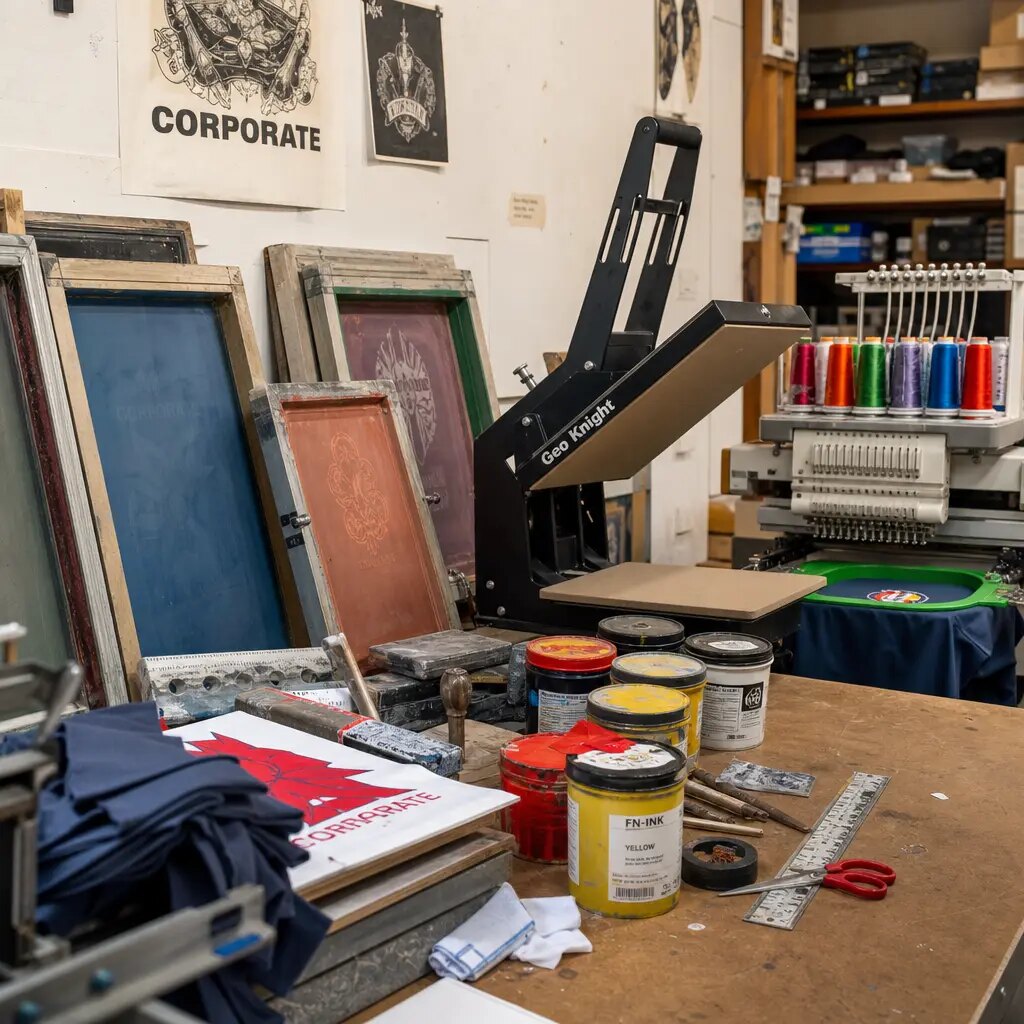
Campus wine carriers often use screen printing because many university marks, bookstore logos, and event graphics are built from solid spot colors. Screen print is practical for one to three colors, but it still needs tight control. The supplier should receive vector artwork, Pantone references, print dimensions, exact placement, color count, ink system, and license-approval status. A mark that works on apparel, mugs, or drinkware may need different sizing on a narrow vertical carrier panel.
Canvas texture affects ink coverage. Natural cotton absorbs and reflects ink differently from coated paper, plastic, or synthetic fabric. Pantone color should be judged on a physical strike-off or pre-production sample, not a digital mockup. White ink may need enough opacity. Dark ink may bleed if viscosity, mesh, pressure, or curing are poorly controlled. If the buyer wants a distressed vintage look, say so. If the buyer expects a crisp retail logo, say that too.
Heat transfer can reproduce gradients and full-color art, but it changes the hand feel and may sit on the surface more noticeably than ink. Embroidery can look premium, yet it may pucker small panels and complicate bottle fit if placed near stress points. Whatever method is chosen, licensed artwork should not be resized, simplified, recolored, rotated, or repositioned by the supplier without written approval from the buyer or responsible licensing authority.
- Provide final vector artwork, Pantone references, approved logo version, print size, and placement from top edge, side seam, and centerline.
- Keep print away from bulky seams, handle reinforcement, and divider attachment areas where pressure may be uneven.
- Approve a physical strike-off or pre-production printed sample on the intended canvas, not a print on substitute fabric.
- Set print placement tolerance, commonly around plus or minus 0.5 cm for small panels when the artwork requires centered presentation.
- Check curing with rub, flex, and packing-contact review so ink does not crack, stick, transfer, or remain tacky.
- Confirm whether setup charges, screens, artwork adjustments, and revised samples are included or charged separately.
Engineer Handles, Stress Points, and Divider Strength
The handle is the main load-bearing component. A filled bottle concentrates force at a small number of stitch points, especially where the handle joins the body. A box stitch with X stitch, bar tack, reinforced patch, or comparable reinforcement can work if it is sewn consistently. The RFQ should name the required method rather than leaving this detail to factory habit.
Handle dimensions affect how the product feels in a store and in a customer’s hand. A drop that is too short makes the carrier awkward to lift, especially when the shopper is also carrying books or other purchases. A drop that is too long may let the bottle swing or hit the customer’s leg. Handle width matters as well. Narrow fabric can curl under load and feel cheap. Measure handle drop and width on the pre-production sample, then test the loaded carrier in a realistic carry position.
Two-bottle carriers need closer review at the divider and base. A divider that is too short may allow bottle shoulders or bases to touch. One that is too loose may fold under pressure. A divider attached at only one weak point may twist diagonally. After loading and lifting, inspectors should examine divider seams, base corners, inside thread tails, and any pressure points that could scrape bottle labels.
- Specify handle material, width, drop, reinforcement pattern, stitch thread, and stress-point location on the technical drawing.
- Use a practical load test with the correct filled-bottle condition; two-bottle carriers should be tested with two filled bottles, not empty props.
- After load testing, inspect for broken thread, seam opening, fabric tearing, needle-hole enlargement, and handle elongation.
- Check base corners because load often transfers there when the carrier is set down abruptly.
- For two-bottle carriers, confirm the divider remains vertical and keeps bottles separated during lifting, walking simulation, and set-down testing.
- Request close-up production photos of handle joints, bottom seams, and divider attachment before goods are fully packed.
Use Sampling as a Production Trial
A showroom sample or stock sample is useful at the idea stage. It is not enough for bulk approval. The pre-production sample should use the intended bulk fabric weight, thread, handle construction, divider construction, label placement, print method, and packing fold. If the supplier samples with substitute fabric or a different printing process, the buyer cannot reliably judge bulk performance.
Sample review should be physical and measured. Insert the intended bottle. Lift it repeatedly. Set the carrier on a shelf. View the print under normal store lighting. Measure every critical dimension. On a narrow wine carrier, a difference of 0.5 cm may shift the logo off center or make bottle insertion frustrating. Document comments with photos, measurements, and clear pass-or-revise decisions.
Keep a sealed approval sample. Ideally, the buyer retains one signed and dated sample while the factory keeps a duplicate reference. This sample should represent the production target for fabric hand feel, print color, handle reinforcement, divider security, labels, seam finish, and folding method. If a change is approved after the first sample, update the spec sheet and require written supplier confirmation before bulk cutting.
- Do not approve bulk production from a digital mockup, flat photograph, or substitute-material sample.
- Measure the sample against the spec sheet: height, width, gusset, base depth, top opening, handle drop, handle width, divider width, and logo placement.
- Test print flexing around a bottle and check for cracking, flaking, tackiness, ink transfer, and visible distortion.
- Check odor, hand feel, seam trimming, and whether the carrier looks retail-ready under normal store lighting.
- Keep a sealed sample and fabric swatch as the inspection benchmark for bulk production.
- Record every sample change in writing, including revised dimensions, artwork position, stitch method, and packing fold.
Convert Expectations Into Defect Classes and Tolerances
Inspection is easier when defect classes are agreed before production starts. Critical defects are problems that make the product unsafe, legally risky, unsellable, or impossible to receive correctly. Examples include wrong licensed artwork, severe mildew odor, wet cartons, handle failure under the agreed load test, open bottom seams, missing required warning labels where applicable, or mixed goods that cannot be reconciled to the purchase order.
Major defects are issues a retail buyer, bookstore receiver, or customer would likely reject. These include visible stains on the front panel, print misalignment beyond tolerance, wrong barcode labels, loose divider stitching, broken handle reinforcement, incorrect dimensions affecting bottle fit, heavy creasing through the logo, or shade variation that makes a set look inconsistent. Major defects reduce sellable inventory even if they do not create immediate safety risk.
Minor defects are small issues that do not affect use or retail presentation, such as a short loose thread on an inside seam or minor natural slub variation in cotton canvas. Natural canvas is not a plastic sheet, so some fiber variation may be acceptable. The key is to define which surfaces are appearance-critical. Front display panels and logo areas should be graded more strictly than hidden inside seams.
- Dimension tolerance: commonly plus or minus 0.5 cm for small panels and plus or minus 1.0 cm for larger two-bottle bodies, unless the approved design requires tighter control.
- Print placement tolerance: set a centerline and edge measurements, with a typical small-panel target near plus or minus 0.5 cm from approved position.
- Fabric defects: classify stains, holes, heavy slubs, shade panels, dirty marks, and visible weaving faults by location and severity.
- Stitch defects: no open seams, skipped lock stitches, loose bar tacks, broken threads, needle cuts, or long thread clusters on visible panels.
- Odor defects: no mildew smell, damp feel, chemical odor beyond normal new-material smell, or carton odor transfer.
- Labeling defects: wrong item number, missing barcode, wrong campus mark, wrong PO carton label, or mixed assortment should be treated as receiving risks.
Inspect Printing, Sewing, and Packing Before Shipment Release
Final inspection should be more than a carton count. It should include visual review, measurement, loading, print checks, labeling checks, and carton review. Inspectors should pull samples across cartons, not only from the top of the first carton presented by the factory. If the buyer uses AQL, the sampling plan and defect definitions should be agreed before inspection day.
Printing needs close attention on small panels. Check registration, opacity, color, placement, curing, and surface defects. A slight tilt or off-center logo is more obvious on a wine carrier than on a large tote. Inspectors should measure from the top edge, side seams, and centerline. They should also rub and flex the print enough to identify under-curing, tackiness, cracking, or transfer risk.
Sewing and packing have to be checked together. A carrier can pass sewing inspection and still arrive unsellable if the logo is folded sharply, packed before ink is fully cured, compressed too tightly, or stored in damp cartons. Packing photos before shipment are useful, but they should not replace final random inspection when the order is large, time-critical, or license-sensitive.
- Pull inspection samples from multiple cartons and carton positions to avoid checking only the best-packed goods.
- Measure dimensions and print placement with a ruler or template, not by eye only.
- Load-test representative pieces, then inspect handles, base corners, side seams, and divider seams after the test.
- Check carton contents against PO: style, artwork, color, quantity, barcode, hang tag, label, and packing ratio.
- Confirm print panels are not folded through the logo unless that fold was approved on the sealed sample.
- Escalate wet cartons, mildew odor, crushed cartons, mixed styles, missing labels, or unstable carton stacking before shipment release.
Plan MOQ, Cost Comparison, and Reorder Control
MOQ depends on what is actually custom. A standard natural canvas body with a custom screen print may have a lower minimum than a dyed body with custom handles, woven labels, special divider, hang tag, barcode sticker, and individual retail packaging. When a supplier gives one MOQ, ask what drives it: fabric purchase, dye lot, cutting setup, print setup, label production, or packaging material.
University bookstores usually buy around fixed retail calendars: graduation, homecoming, alumni weekend, holiday tables, donor events, and licensed merchandise resets. For a first order, a stock-body plus custom-print route can reduce risk and allow sell-through testing. After the program proves itself, fully custom sizing, dyed canvas, or premium seam finishing may make sense for a larger annual buy.
Compare quotes using landed-cost thinking. A lower unit price may disappear if the carrier uses lighter fabric, excludes screen charges, requires more cartons, has higher defect risk, or needs repacking on arrival. Buyers should request quantity breaks and confirm whether repeat orders will use the same pattern, screens, fabric source, and packing plan. Reorder mismatch is common when the first order is treated as a one-off stock customization.
- Ask for pricing at realistic quantity breaks, such as pilot quantity, event quantity, and annual program quantity.
- Separate quote lines for sample charge, screen charge, artwork setup, label charge, hang tag, barcode application, packing, and courier cost.
- Confirm whether MOQ is per artwork, per canvas color, per print colorway, per size, per label, or total order.
- For dyed canvas, include lab dip, bulk dye lot, and shade-control requirements in the cost and schedule comparison.
- For repeat orders, require confirmation that the same pattern, print size, and approved construction will be used unless the buyer approves changes.
- Compare carton cube and gross weight because fabric weight and folding method affect freight and warehouse receiving cost.
Build the Timeline Around Campus Deadlines
Campus retail dates are not flexible. Graduation, alumni weekend, homecoming, donor events, and holiday promotions do not move because a factory needs extra time. Work backward from the required in-store date and include artwork approval, quote confirmation, sample production, courier time, buyer comments, possible revised sample, material purchase, printing, sewing, inline checks, final inspection, packing, freight, customs, and campus receiving.
The highest-risk timing steps are often licensed artwork approval and material confirmation. If a university licensing office, bookstore buyer, athletics department, or alumni team must approve the mark, finish that review before screens are made and before bulk production starts. If dyed canvas is selected, add time for lab dips, bulk shade approval, and possible shade-panel inspection. Natural canvas with screen print is faster only when artwork, dimensions, and packing instructions are complete.
Final inspection should not be scheduled for the same day goods must leave the factory. If defects are found, the supplier needs time to sort, rework, replace, or repack. Import buyers also need to consider freight booking, consolidation cutoffs, customs documentation, and campus receiving windows. The purchase order should identify the last acceptable dates for artwork approval, sample approval, bulk material release, final inspection, and shipment.
- Build the calendar backward from the required bookstore receiving date, not forward from the factory’s optimistic production estimate.
- Reserve time for licensed artwork review and do not let the supplier alter university marks without written approval.
- Add extra lead time for dyed canvas, custom labels, custom packaging, and revised sampling.
- Schedule inline inspection for complex two-bottle carriers, dyed goods, or first-time suppliers when possible.
- Schedule final inspection early enough to allow sorting, rework, re-packing, or replacement before the vessel or truck deadline.
- Request supplier milestone updates with photos of fabric, cutting, printing, sewing, packing, and carton marks for time-sensitive orders.
Specification comparison for buyers
| Spec decision | Recommended option | When it fits | Buyer risk to check |
|---|---|---|---|
| Fabric weight for retail wine carriers | 10 oz to 12 oz cotton canvas, approximately 280 to 340 GSM; confirm actual measured GSM from bulk fabric | Main bookstore retail item, alumni gift table, homecoming or holiday assortment where structure and print appearance matter | Below about 260 GSM may collapse around bottles; above about 380 GSM increases sewing difficulty, carton weight, and freight cost without automatically improving strength |
| Bottle size basis | 750 ml still wine bottle as the baseline; add separate fit approval for sparkling bottles if required | Most campus gift, alumni, and bookstore programs built around standard wine bottles | Sparkling bottles can be wider, often near 88 to 95 mm diameter; a carrier sized only for a narrow bottle may scrape labels or fail to insert smoothly |
| Single-bottle versus two-bottle construction | Single-bottle carrier for event gifting; two-bottle carrier with secured divider for premium gifting | Single-bottle suits lower price points and compact shelves; two-bottle suits alumni, donor, and holiday gift programs | Two-bottle divider must be sewn into base, side seam, or both; loose inserts shift and should not be accepted without a carry test |
| Handle method | Self-fabric canvas handle with box stitch plus X stitch, bar tack, or equivalent reinforcement | Reliable for retail because the handle matches the bag body and avoids additional trim color matching | Handle drop, width, stitch type, and load test must be written into the RFQ; factory-standard handles may be too short or weak |
| Logo method | Screen print for one to three spot colors; heat transfer only when full-color detail is necessary | Best for solid university marks, bookstore logos, simple spirit graphics, and event designs | Pantone color on natural canvas will not match coated paper exactly; approve a physical strike-off and set print placement tolerance |
| Natural versus dyed canvas | Natural cotton canvas for lower MOQ and faster sampling; dyed canvas only when brand color is required | Natural works for most bookstore wine carriers because it is easy to compare quotes and photographs well | Dyed canvas needs lab dip approval, bulk shade control, shrinkage review, and panel-to-panel shade inspection |
| Inside seam finish | Clean overlock for standard retail; bound seam for premium gift programs | Overlock is acceptable if thread tails are trimmed and seams do not snag bottle labels | Raw seams, long overlock tails, skipped stitches, and rough divider edges make the item look unfinished and can damage bottle labels |
| MOQ route | Stock natural canvas body with custom print for test runs; fully custom pattern, dyed fabric, trim, and labels for larger programs | Stock route fits pilot buys, events, and replenishment; custom route fits annual licensed merchandise programs | Verify the supplier’s actual stock dimensions, GSM, print area, and reorder consistency; stock body can change between seasons |
| Packing format | Flat packed in clean bundles or individual polybags if required; export carton with moisture protection | Flat packing controls freight cost and works when the logo panel is not sharply folded | Poor curing, tight compression, damp cartons, or folds through the logo can create cracking, odor, mildew risk, and unsellable creasing |
Buyer checklist before sampling
- Define the buying program before requesting prices: low-cost event giveaway, main bookstore retail item, alumni gift carrier, donor package, or premium holiday assortment.
- State the bottle requirement clearly: 750 ml standard wine bottle, maximum body diameter, bottle height, neck exposure, and whether sparkling or champagne-style bottles must fit.
- Specify finished dimensions in centimeters: height, width, gusset or base depth, handle drop, handle width, divider width, top opening, and printable front-panel area.
- State fabric weight in both ounces and GSM, plus cotton content, weave, finish, color, and whether natural, bleached, dyed, or washed canvas is required.
- Require the handle reinforcement method: box stitch, X stitch, bar tack, reinforced patch, or approved equivalent, with stress points shown on the technical drawing.
- For two-bottle carriers, define whether the divider is sewn into the base seam, side seam, top hem, or a combination, and prohibit loose dividers unless approved for a specific purpose.
- Send final licensed artwork with vector files, Pantone references, print dimensions, placement from edges, color count, license-approval status, and any restrictions on resizing.
- Approve a pre-production sample made with intended bulk canvas, bulk thread, final handle construction, final divider construction, labels, and actual print method.
- Set tolerances for finished dimensions, print placement, print color, fabric defects, stains, odor, stitch defects, divider security, handle strength, and carton condition.
- Confirm retail details: barcode sticker, hang tag, campus licensing label, item number, price label, suffocation warning if polybagged, and carton receiving marks.
Factory quote questions to send
- What exact fabric are you quoting: cotton content, oz weight, GSM, weave, finish, and whether it is greige, natural, bleached, dyed, or washed canvas?
- Can you provide the measured GSM tolerance of bulk fabric, for example plus or minus 5 percent, and confirm that substitutions require buyer approval?
- What bottle size was the pattern built around, including maximum bottle diameter, bottle height, and whether a wider sparkling bottle has been tested?
- Please list finished dimensions for height, width, gusset, base depth, top opening, handle drop, handle width, divider width, and printable area.
- For a two-bottle carrier, is the divider attached at the base seam, side seam, top hem, or only inserted loose, and can you provide close-up photos?
- What handle reinforcement is included in the quoted price: box stitch, X stitch, bar tack, patch reinforcement, or another construction?
- What load test do you recommend for this style, how much weight is applied, for how long, and what seam failure criteria do you use?
- Which print method is included, how many colors are included, what ink system is used, and what is the maximum print size for the front panel?
- Does the quoted price include artwork setup, screens, strike-off, pre-production sample, revised sample, print positioning template, and courier fees?
- What MOQ applies per artwork, per size, per canvas color, per print colorway, per label type, and per packing method?
Quality-control points to confirm
- Finished size should remain within the purchase-order tolerance, commonly plus or minus 0.5 cm for small single-bottle panels and plus or minus 1.0 cm for larger two-bottle bodies unless a tighter tolerance is agreed.
- Fabric GSM should match the approved sample and RFQ; random cutting-room fabric checks should not show an unapproved downgrade to lighter cotton, cotton-poly blend, or different weave density.
- Canvas should be clean, dry, and free from mildew odor, oil stains, rust marks, heavy weaving faults, obvious shade panels, excessive loose lint, and dirty fingerprints on display panels.
- Handles should pass the agreed load test with filled-bottle weight without seam tearing, handle elongation, broken reinforcement stitches, needle-hole spreading, or visible distortion.
- Base seams and bottom corners should remain closed after loading and repeated lifting; open seams, skipped stitches, or weak backstitching at load points should be classified as major or critical depending on severity.
- Divider panels in two-bottle carriers should keep bottles separated during lifting, walking simulation, and set-down testing; twisting, detaching, or folding under bottle pressure should not pass.
- Screen print should be centered, cured, and free from cracking, pinholes, heavy bleeding, poor registration, low opacity, tackiness, ink transfer, or obvious color deviation from the approved strike-off.
- Print placement should follow the approved measurement from centerline, top edge, side seam, and base seam; small panels often need a tolerance near plus or minus 0.5 cm.
- Stitching should be straight enough for retail presentation, with no open seams, skipped stitches, loose backstitching, broken bar tacks, needle cuts, or long thread clusters on visible areas.
- Inside seams should be overlocked, bound, or cleanly finished so bottle labels do not snag and loose thread tails do not shed at checkout or during customer use.