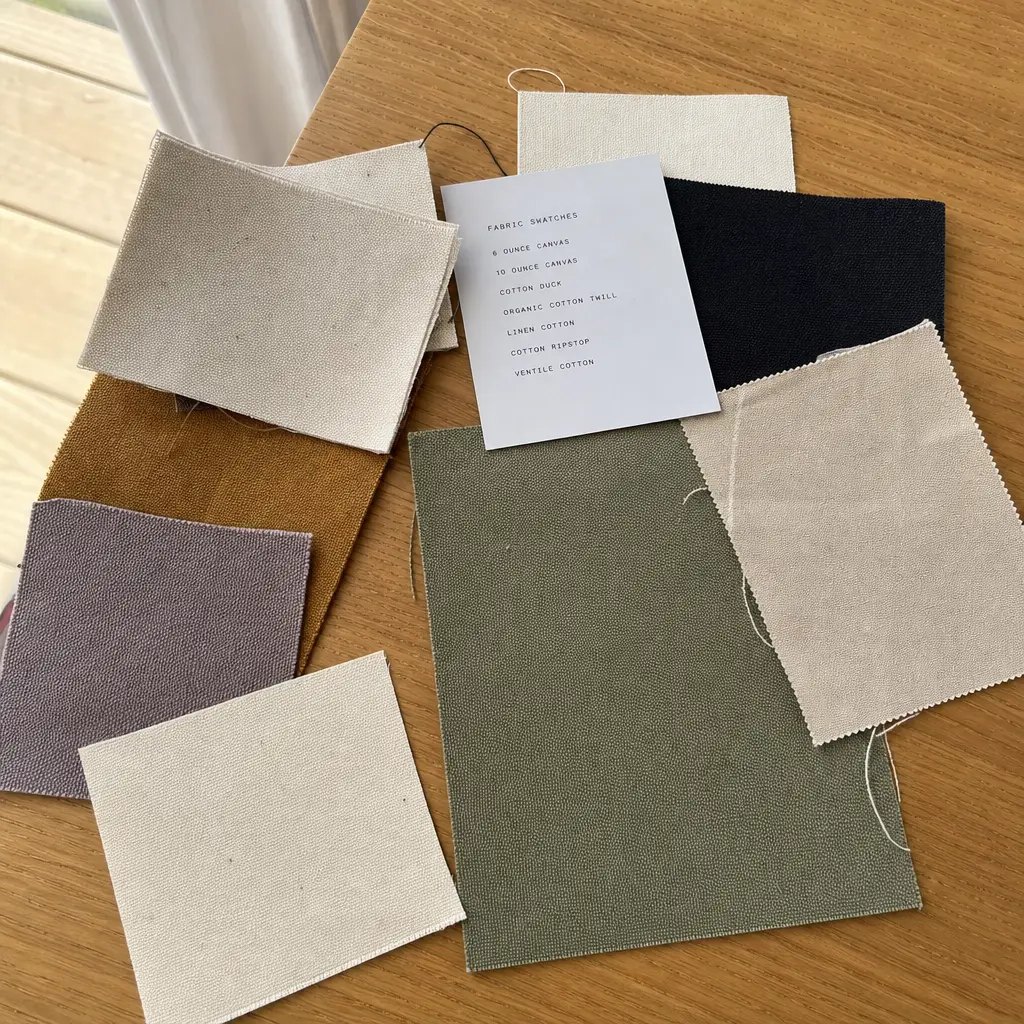
Why canvas wine carriers need their own inspection standard
A canvas wine bag is not just a smaller tote. The product has to carry concentrated glass weight, keep a clean retail look, and fit a fairly narrow range of bottle dimensions without stressing seams. Those demands change what buyers should inspect. A flat sample can look acceptable on the table and still perform poorly once a real bottle is dropped inside.
That gap matters even more for natural grocers. Many programs in this channel use natural or ecru canvas, simple dark logos, and reusable positioning. The design language is clean, but that also means defects stand out. Loose threads, oil spots, lint, print feathering, and shade variation are easy to see on undyed cotton. A shipment may be technically usable and still disappoint store teams if it looks inconsistent when cartons are opened.
There is also a practical commercial reason to use a dedicated canvas wine carriers for natural grocers quality inspection checklist. Claims in this category are often caused by repeatability issues rather than one dramatic failure. A few bags run narrow. Several dividers are shorter than approved. Cartons are compressed too tightly, so gussets lose shape and printed faces rub. None of those problems is unusual on its own, but together they create receiving friction, rework, and avoidable buyer time.
A stronger checklist links three things at once: end use, retail presentation, and production consistency. That is the real difference between buying this item as a commodity and buying it as a repeat program.
- Bottle bags carry concentrated load, so stress-point construction matters more than on standard totes.
- Natural canvas makes contamination, print defects, and shade variation easier to detect.
- A flat bag can look fine and still fail once loaded with glass bottles.
- Mixed-lot consistency is usually a bigger B2B issue than one perfect showroom sample.
- QC should cover use, presentation, and packing together rather than as separate topics.
Begin with bottle dimensions, assortment mix, and retail use
A common RFQ mistake is asking for a quote on a '750 ml wine bag' and leaving the rest to supplier interpretation. On paper that sounds clear. In production, it is not. A slim Bordeaux bottle, a rounder Burgundy bottle, and a taller sparkling bottle can all be 750 ml, yet they do not require the same pattern. Two suppliers can say their bag fits a 750 ml bottle while building around different bottle shapes. That is how quote comparisons become misleading before sampling even starts.
A cleaner process starts with the real bottle set. Give the supplier the widest bottle diameter and the tallest overall height expected in the program, both in millimeters. If stores may sell mixed bottle styles in the same bag, say that directly. If the carrier is for one bottle only, note that. If the style is for two bottles, define whether both bottles are assumed to be the same format and state the expected loaded weight.
Use case changes the spec too. A low-cost checkout add-on usually has different priorities from a private-label reusable carrier or a holiday gift program. One may favor disciplined cost and simple packing. Another may need better handle comfort, a neater inside finish, or a stiffer body because the bag will be handled more often and judged more closely by shoppers. If the bag is expected to stand upright in a shelf display, write that into the brief. Factories should not have to infer it from a photo reference.
This early information shapes pattern size, handle design, divider construction, fabric choice, and carton planning. It also helps procurement compare supplier answers on the same basis instead of trying to decode hidden assumptions later.
- Provide bottle diameter and overall height, not bottle volume alone.
- Approve fit against the widest and tallest bottle planned for the assortment.
- State one-bottle or two-bottle format before development starts.
- Clarify whether the item is promotional, reusable, gift-oriented, or shelf-displayed.
- Record loaded-weight expectations for heavier glass or two-bottle use.
- Do not assume 'fits 750 ml' means the same thing across factories.
Fabric decisions: weight, finish, and what should be fixed in the PO
For many natural grocer programs, 12 oz canvas at roughly 340 GSM is a sensible starting point. It usually gives enough structure for a one-bottle carrier to look substantial, resist excessive collapse at the gusset, and support simple screen printing with a cleaner overall result than lighter promotional grades. It is not the only workable option, but it is a strong commercial baseline when reuse and shelf appearance both matter.
The trouble begins when buyers compare quotes without normalizing the fabric basis. A supplier may propose 10 oz or 11 oz and describe it as close enough. Sometimes that is acceptable for a short-term event or a price-led giveaway. It is not a direct substitute for a reusable grocery program. Lighter canvas can feel less stable when loaded, show seam grin more easily, and make the bag look softer or more wrinkled on display. The ex-factory price drops, but the product is not really the same.
Heavier 14 oz to 16 oz canvas can be useful for two-bottle carriers, holiday assortments, or premium presentation. Still, heavier cloth brings its own controls. Seam bulk increases. Bottom corners become harder to sew neatly. Cartons gain weight quickly. Production teams may need different needle settings or sewing speed to avoid skipped stitches and thread heating. Buyers should treat heavier fabric as a true spec change, not just a visual upgrade.
Finish is just as important as weight. Ask whether the fabric is raw, desized, prewashed, dyed, or otherwise finished. Raw canvas can be cost effective, but it may carry more lint or sizing and can print less cleanly. Desized or prewashed cloth often gives a more stable surface for ink and a more predictable finished hand, though it may affect price and lead time. The key point is simple: the factory should not decide this silently after quote approval.
The PO and approval sheet should lock fabric in both oz and GSM, list fiber content, and note the agreed tolerance. In many programs, buyers work around plus or minus 5% for fabric weight unless another standard is contracted. However the number is set, it needs to be written down.
- 12 oz canvas, around 340 GSM, is a common reusable baseline for one-bottle programs.
- 10-11 oz may suit price-driven promotions but is not a like-for-like substitute.
- 14-16 oz can improve structure for premium or two-bottle styles but needs tighter sewing and packing control.
- Specify whether the cloth is raw, desized, prewashed, dyed, or washed.
- Write fabric in both oz and GSM, plus fiber content and tolerance.
- Fabric substitutions are one of the most common hidden quote downgrades.
Fit and pattern approval: where many claims begin
Pattern control is the quiet driver of performance in this product category. If the body width is slightly narrow, the bottle may force the side seams outward. If the gusset is inconsistent, the base may not open fully and the bag can lean or twist. If height is underspecified, a taller bottle neck may push against the top opening and make insertion awkward. None of these issues necessarily looks serious until real bottles are used.
That is why pattern approval should always be tied to the actual bottle profile, not only to nominal volume. For one-bottle carriers, buyers should confirm that the base sits fully within the bag, the bottle enters without catching on seams, and the loaded shape stays balanced. For mixed-assortment programs, the approved fit should reflect the largest intended bottle, not the easiest one to accommodate.
Two-bottle carriers deserve even more attention. Width alone does not solve the problem. The combined bottle load can distort the body, and if the divider is short or loosely attached, bottles may touch at the shoulder and neck even when the base appears separated. A supplier may show a sample that looks acceptable when empty, yet the divider shifts during real use. That should be tested during development, not discovered after mass production.
A good approval record includes actual finished measurements taken from the approved sample: body width, height, gusset depth, divider height, handle placement, and opening width. Notes such as 'easy bottle insertion' are helpful, but they should support measurements, not replace them. When bulk inspection starts, the team needs a measurable standard to compare against.
- Approve the pattern against real bottle dimensions, not generic volume terms.
- Check insertion ease, base support, and balanced loaded shape.
- For mixed assortments, fit should be based on the widest and tallest bottle planned.
- Two-bottle styles need divider testing under load, not visual review only.
- Record actual approved dimensions on the sample sheet.
- Many later quality disputes are pattern disputes in disguise.
Construction details that deserve close inspection
Strong construction is not one feature. It is a chain. The bottle load presses into the bottom seam or base area, transfers through side seams, and ends at the handle attachments. If one link is underbuilt, the whole bag becomes weaker than it looks. That is why generic wording such as 'durable stitching' does not help buyers much.
Handles are usually the first place to get specific. For many natural grocer programs, 25-30 mm cotton webbing with box-X stitching is a dependable default. It is easier to inspect than vague reinforcement, and it tends to distribute load better than many self-fabric handles. If a design uses self-fabric handles for aesthetic reasons, the buyer should expect closer review of turning quality, attachment length, reinforcement area, and stretch behavior when the bag is loaded.
Seam allowance matters more than some buyers expect. A bag can look neat from the outside and still be vulnerable if seam allowance is too narrow at the gusset or bottom corners. Under bottle weight, those points take repeated stress. Consistency is the real issue: even a sound construction method can fail if some operators sew narrower than the approved basis. During inspection, seam allowance and seam finish should be checked on opened units or on production references, not assumed from external appearance.
For two-bottle designs, the divider should be treated as a protective component. The stronger approach is a full-height divider anchored into the bottom seam and secured into side seams. Short floating dividers save labor, but they often do less than buyers assume. When random units are inspected, check that the divider reaches the approved height and is truly fixed into the structure rather than tacked only at the upper area.
Inside finish also shapes buyer perception. Overlock, binding, or a turned finish can all be acceptable if they match the approved sample and provide a clean enough result for the program. For a private-label natural grocer item, messy internal fraying may not trigger functional failure, but it can still hurt perceived value.
- Inspect the full load path: base area, side seams, divider anchoring, and handles.
- Use measurable handle specs instead of broad reinforcement language.
- Check seam allowance consistency at gussets and bottom corners.
- Treat divider construction as functional, not decorative.
- Review inside finish for both durability and presentation.
- Price differences often come from construction shortcuts, not fabric alone.
Print quality on natural canvas: simple logos still need process control
Natural-grocer branding often looks simple: one restrained logo on ecru canvas, little gloss, minimal decoration. Yet simplicity raises the bar. On a clean bag face, off-center placement or fuzzy edges stand out fast. Natural canvas also brings technical variables. Surface texture, lint level, and fabric finish can all change how ink sits and how sharp the artwork looks.
Water-based screen printing is often a good match for this category because it supports a softer hand and a lower-plastic appearance. Even so, print should be approved through a strike-off on the actual production fabric whenever possible. Artwork that looks crisp on one canvas finish can soften noticeably on another. A digital proof cannot show that difference reliably.
Procurement teams should also ask whether the artwork itself is realistic for the chosen fabric. Fine reverse lines, very small type, or intricate detail may not resolve well on textured cotton. If a supplier recommends slight line-weight adjustment, that is often standard production engineering rather than a warning sign. What matters is documenting the approved version clearly before bulk screens are made.
Placement tolerance should be stated in measurable terms. On a narrow wine bag panel, a small shift can look more obvious than it would on a large tote. The specification should define print size, location from the top edge, location from the side edge or centerline, and whether the bag is printed on one side or both. Inspection should then compare real measurements against that standard.
Finally, do not ignore curing and packing interaction. If printed bags are bundled too tightly before ink is fully stable, offset transfer can appear. A simple rub check and visual review of stacked samples can catch this before cartons are sealed.
- Use a strike-off on actual production fabric before bulk printing.
- Water-based screen print is commonly well suited to natural-canvas grocery programs.
- Confirm artwork detail is realistic for the selected fabric surface.
- Define logo placement from edges or centerline with measurable tolerance.
- Check curing and rub resistance before full packing.
- Narrow bag fronts make small print shifts more visible.
Sampling stages that reduce confusion and speed approvals
Trying to approve fit, print, fabric, and workmanship all at once usually slows sourcing down. A staged sample workflow is easier to manage and gives buyers cleaner decisions at each step. It also reduces the chance that one unresolved issue hides another.
The development sample should answer pattern and construction questions first. Does the approved bottle slide in smoothly? Does the base sit correctly? Does the gusset open as intended? Is the handle drop practical for hand carry? For a two-bottle style, does the divider maintain separation during loading and carrying? At this stage, some substitute material may be acceptable, but buyers should not use a development sample as the final standard for color or print.
The print strike-off comes next. This stage isolates decoration risk and lets the team review logo sharpness, color density, and overall appearance on production-like cloth. On natural canvas, that is especially useful because finish and surface character affect print performance more than many buyers expect.
The pre-production sample, or PP sample, should become the bulk reference. It needs to show the intended fabric, approved pattern, approved print, actual handle attachment method, seam finish, and planned packing basis. This is the moment to capture real measurements on the approval form rather than relying on broad notes. A sealed retained sample should then be kept for pre-shipment inspection and for any later claim discussion.
If the order includes multiple logo versions on a common construction, the sample workflow should also confirm that each artwork variant works on the same body and packing method. That can improve MOQ efficiency while keeping the physical spec stable.
- Development sample checks fit and construction logic.
- Print strike-off checks artwork behavior on the real fabric.
- PP sample locks the full bulk basis for sewing, print, and packing.
- Record actual measurements on the approval form.
- Keep a sealed approved sample for final inspection reference.
- Do not start bulk cutting on a new style before PP approval.
Pre-shipment inspection: what inspectors should measure, load, and open
A reliable final inspection routine for canvas wine carriers should combine dimensions, functional loading, workmanship, appearance, and packing review. Looking only at visual appearance is not enough. Many problems in this category become obvious only when the bag is measured or loaded with a bottle.
Start with dimensions. Inspectors should measure body width, body height, gusset depth, handle total length, handle placement, and divider height where relevant. The exact tolerance depends on the design, but many buyers work around plus or minus 0.5 cm on fit-critical points and plus or minus 1.0 cm on less critical points unless a tighter standard is needed. The purpose is not mathematical perfection. It is to keep fit, symmetry, and retail presentation within control.
Functional loading should use the approved bottle type or a dimensional equivalent. For one-bottle styles, the inspector should check insertion ease, base support, seam stress, and how the bag hangs when lifted. For two-bottle styles, the divider should remain upright and keep bottles separated during carrying. Handle symmetry is easier to judge when the bag is loaded rather than flat.
Workmanship review should prioritize stress areas. Bottom seams, gusset corners, handle attachments, and divider anchor points deserve more scrutiny than low-stress sections. Broken stitches, skipped stitches, seam grin, loose thread buildup, and open ends in these zones should be taken seriously. After that, inspect overall appearance: logo position, print density, natural shade consistency, stains, lint, fabric holes, needle damage, odor, and oil contamination.
Packing review closes the loop. Open enough cartons to see whether bundle compression has flattened gussets, created hard fold lines, or caused print transfer. Then verify quantity, assortment split, shipping marks, barcode labels if needed, and carton gross weight against the PO. A bag can leave the sewing line in good condition and still arrive looking wrong if packing is uncontrolled.
- Measure fit-critical points on a meaningful random sample.
- Use real bottles or dimensional equivalents during functional checks.
- Judge loaded hang and handle alignment, not just flat appearance.
- Focus workmanship review on high-stress areas first.
- Open cartons to inspect compression effects and print transfer risk.
- Verify counts, assortment, PO marks, and required labels before release.
Defect grading, acceptance criteria, and practical quote comparison
Defect grading works best when it is settled before production starts. Natural canvas has some inherent variation, including light slubs or subtle weave differences, but that should not become a blanket excuse for preventable faults. Buyers need a shared definition of acceptable material character versus unacceptable process error.
Functional failures are usually the clearest major defects. A bag that is too narrow for the approved bottle, a missing handle reinforcement, a divider that is not anchored as specified, or a seam opening at a stress point should not be treated as minor. The same applies to incorrect assortment packed into cartons when stores or sub-brands rely on accurate split quantities. These are business-use failures, not cosmetic inconveniences.
Appearance defects also need discipline. On simple natural-canvas bags, visible oil marks, mildew odor, severe shade variation outside the approved band, obvious print skew, print transfer, and prominent contamination on saleable faces are often major issues for retail acceptance. The cleaner the design, the less visual noise there is to hide defects.
Tolerance setting should stay realistic. Tight tolerances may sound protective, but if they do not reflect textile manufacturing reality, they create arguments rather than control. A better approach is to separate fit-critical measurements from less critical ones. Width, gusset depth, divider height, and handle placement often deserve tighter control than a secondary panel dimension. If upright shelf presentation is important, body height consistency and gusset symmetry may also need closer attention.
This same logic improves supplier quote comparison. Procurement should normalize the basis across bottle dimensions, finished size, fabric weight, fabric finish, handles, divider construction, print method, sample stages, packing method, and QC expectations. Otherwise the lowest price may simply reflect a lighter fabric, a shorter divider, a narrower seam allowance, or more aggressive packing. In this category, good comparison is really specification management.
- Classify fit failure, seam opening, and missing reinforcement as major functional defects.
- Treat visible contamination, mildew odor, severe print skew, and print transfer as major appearance defects.
- Allow natural slub only within defined visual limits.
- Set separate tolerances for fit-critical and non-critical measurements.
- Use retained physical references for shade and print comparison.
- Normalize quote basis before comparing price, MOQ, and lead time.
Specification comparison for buyers
| Spec decision | Recommended option | When it fits | Buyer risk to check |
|---|---|---|---|
| Base fabric weight | 12 oz canvas, approximately 340 GSM, 100% cotton | Mainstream one-bottle reusable programs for 750 ml glass bottles in grocery checkout or shelf sale | Suppliers may quote 10 oz to 11 oz as 'similar'; lighter cloth can reduce stiffness, show seam grin, and shorten service life |
| Heavy-duty upgrade | 14 oz to 16 oz canvas, approximately 390-540 GSM | Two-bottle carriers, holiday gift programs, or buyers wanting a stiffer upright presentation | Higher GSM increases carton weight, seam bulk, needle heating risk, and sewing time; confirm seam construction and carton weight limits |
| Bag fit basis | Pattern approved against actual bottle dimensions, not only 'fits 750 ml' | Programs carrying mixed Bordeaux, Burgundy, or sparkling bottles | A bag that fits slim Bordeaux may bind on wider Burgundy shoulders or fail to cover a taller sparkling bottle safely |
| Internal divider construction | Full-height divider anchored into bottom seam and secured into side seams; same canvas or reinforced divider material | Two-bottle carriers where bottle collision must be prevented during customer carry | Short floating dividers reduce cost but allow bottle contact at shoulder and neck; inspect divider height and anchoring on random units |
| Handle specification | 25-30 mm cotton webbing, box-X stitch at each end, total handle length 55-60 cm for hand carry | Most natural grocer retail programs needing reliable carry and repeat use | Self-fabric handles can stretch, twist, or tear earlier if attachment area is small or stitch density is inconsistent |
| Seam finish | Consistent seam allowance with overlock, binding, or turned finish per approved sample | Programs where inside appearance and seam durability both matter | Narrow seam allowance can slip under load; raw fraying edges may be unacceptable for private label or reusable retail programs |
| Print method | Water-based screen print on desized or prewashed canvas when possible | Single-color logos on natural canvas with a softer, lower-plastic look | Unstable raw fabric or fuzzy surface can reduce edge sharpness and cause variable ink holdout lot to lot |
| Natural shade control | Approved retained swatch or sealed sample for ecru/natural body color | Undyed or lightly processed canvas programs where lot consistency matters | Digital artwork cannot control natural cotton variation; define acceptable tone band before bulk approval |
| Packing method | Flat packed in controlled bundles, with carton weight and bundle compression limits defined | Wholesale replenishment, lower freight cost, and faster store receiving | Excessive compression can distort gussets, create hard fold memory, and increase print offset transfer |
Buyer checklist before sampling
- Define the bottle set before quoting: standard 750 ml Bordeaux, Burgundy, sparkling, or mixed assortment, and provide bottle diameter and overall height in millimeters.
- State whether the program is one-bottle or two-bottle and give the target loaded weight per bag so handle and seam construction can be matched to the use case.
- Specify fabric in both oz and GSM, for example 12 oz approximately 340 GSM, plus fiber content and whether the cloth is raw, desized, prewashed, or dyed.
- Issue a dimensioned drawing covering finished width, height, gusset depth, divider height, handle width, handle total length, and handle placement from side seams.
- Set measurable tolerances, such as plus or minus 0.5 cm on critical fit points and plus or minus 1.0 cm on less critical dimensions, unless your product requires tighter control.
- Name the exact print method, number of print colors, print size in centimeters, artwork location from top and side edges, and whether one side or both sides are printed.
- Require a development sample for fit, a print strike-off on production-like fabric, and a pre-production sample using bulk materials before mass cutting starts.
- Define handle reinforcement, such as 25-30 mm cotton webbing with box-X stitch, and ask the supplier to confirm stitch pattern consistency across production.
- Approve natural canvas shade against a retained swatch or sealed sample rather than a screen image or photo only.
- List packing assumptions in the PO: units per bundle, any interleaving requirement, carton dimensions target, and maximum carton gross weight.
Factory quote questions to send
- What exact fabric are you quoting in oz and GSM, what is the fiber content, and what tolerance do you apply to bulk fabric weight?
- Is the quoted canvas raw, desized, prewashed, dyed, or otherwise finished, and how will that affect print clarity, shrinkage, and lot-to-lot shade control?
- What bottle dimensions did you use to build the pattern, and what internal finished dimensions do you recommend for Bordeaux, Burgundy, and sparkling bottle formats?
- For two-bottle styles, is the divider full height, how is it attached at the base and side seams, and what material or reinforcement is used?
- What handle material, width, total length, attachment length, and stitch method are included in the quoted price?
- What seam allowance and seam finish are included, especially at gusset corners and bottom stress points?
- Which print method and ink system are included in the quote, and can you provide a strike-off on the actual production fabric before bulk printing?
- What are your standard placement tolerances for handle position, print registration, and finished body dimensions on this bag type?
- What is the MOQ by fabric color, by print design, and by total order, and can one body construction be split across multiple store logo versions?
- What sample stages are chargeable or refundable: development sample, print strike-off, pre-production sample, and shipment sample?
Quality-control points to confirm
- Fabric weight and hand feel match the approved bulk swatch, with agreed tolerance commonly within plus or minus 5% unless another standard is contracted.
- Finished dimensions of body width, body height, gusset depth, handle length, handle placement, and divider height fall within approved tolerance.
- Bag fit passes with the approved bottle type, including safe bottle insertion, base support, and no excessive stress at seam corners.
- No seam slippage, seam grin, broken stitches, skipped stitches, open ends, or loose thread buildup at stress points or visible panels.
- Handle reinforcement is present on every unit, stitch pattern is complete and centered, and handle pair alignment is consistent under light load.
- Divider is full height where specified, securely anchored into the base area, and remains in position during bottle loading and carrying.
- Print position, color density, edge sharpness, and curing match the approved sample, with no obvious offset transfer, smearing, or poor adhesion.
- Natural canvas shade remains within the approved visual band, with no uncontrolled mixed-lot appearance inside one shipment.
- No stains, mildew odor, oil contamination, fabric holes, slubs beyond approval, needle cuts, scorch marks, or excessive lint on saleable faces.
- Packing count, assortment split, carton markings, barcode labels if required, and gross weight all match the purchase order and packing instruction.