Why MOQ negotiation matters for canvas wine carriers
For a startup buyer, MOQ is not just a purchasing term. It decides whether the carrier stays inside budget, whether you can test demand with a controlled run, and whether the supplier gives you a real production slot or a padded quotation. Canvas wine carriers look straightforward, but the order can become expensive quickly if the factory has to split fabric lots, print setup, sewing time, and packing labor across too few units. That is why a good MOQ conversation is really about production feasibility, not only unit price.
The mistake is treating MOQ as one number. In practice, you are negotiating several minimums at once: fabric order minimum, print setup minimum, carton packing minimum, and sometimes color minimum or label minimum. If you only push for the lowest headline MOQ, you may lose control of fabric consistency, decoration quality, and final packing cost. For B2B procurement, the goal is to find the lowest quantity that still gives the factory a repeatable production route and gives you a product you can approve with confidence.
MOQ also affects commercial flexibility after launch. A startup often needs a first run that supports sales samples, a launch event, internal use for marketing, and a modest reserve for replacement or reorder. If the order is too small, you may pay a high unit price and still end up short. If it is too large, you risk holding inventory that cannot be customized or reworked easily. The right negotiation balances production efficiency with cash discipline.
A practical way to approach the conversation is to separate business risk from production risk. Business risk is your exposure if demand is weaker than forecast. Production risk is the supplier’s exposure if the order is too fragmented to run efficiently. When you frame the discussion this way, the buyer can often trade complexity for quantity. For example, a supplier may accept a lower MOQ if you hold the body style fixed, keep the print to one color, and standardize the packing format. That is better than forcing a very low number while accepting vague specifications and unclear responsibility for quality.
- Set the target order as a range, not a single figure, so the supplier can quote a real production route.
- Ask where the MOQ comes from: fabric, printing, sewing efficiency, or packaging labor.
- Match the MOQ to the use case: launch test, corporate gifting, retail replenishment, or distributor stocking.
- Ask whether the supplier can hold fabric or print screens for a reorder so the second run can be smaller.
Choose the right carrier structure before you negotiate price
The structure of the carrier drives the quote more than most buyers expect. A one-bottle flat carrier, a two-bottle divider carrier, and a structured gift carrier all use different sewing time, reinforcement, and packing logic. If the structure is still open when you request quotes, suppliers will fill the gap with assumptions, and those assumptions usually favor the factory’s easiest production path, not your sales channel. For that reason, an RFQ should define bottle count, internal fit, exterior shape, and reinforcement points before asking for price.
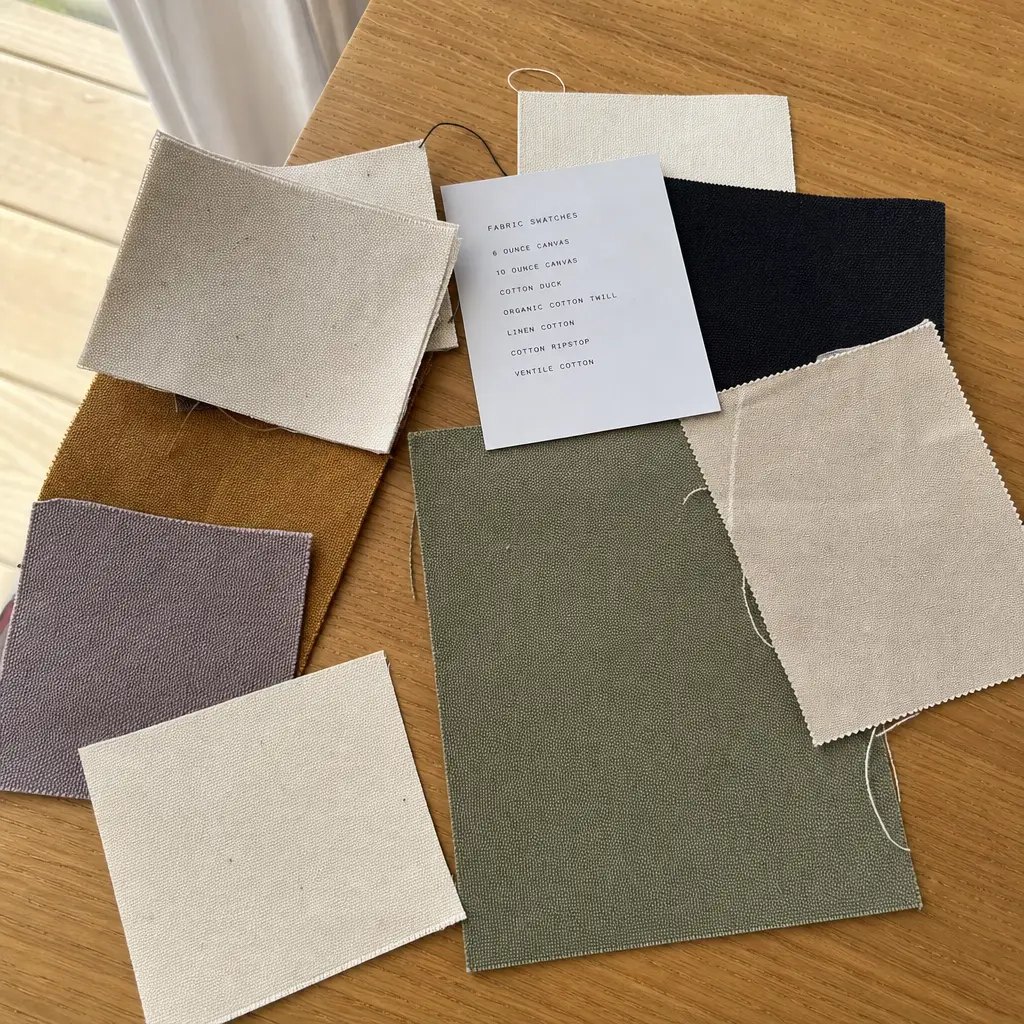
For most startup programs, 12 oz to 16 oz canvas is the practical range. Twelve oz is often enough for lighter gift use, simple branding, and a softer hand feel. Fourteen oz is a useful middle point for many buyers because it keeps enough body without becoming difficult to sew. Sixteen oz gives a heavier, more retail-ready body and better shape retention, but it can raise labor cost because thicker fabric is slower to sew and harder to turn cleanly at seams. If the carrier is meant to stand on shelf or travel repeatedly in consumer use, the extra structure can be justified. If it is a short-run promo item, a lighter build can keep the program commercially realistic.
Carriers that hold two bottles need extra attention. The divider can be sewn in, inserted as cardboard, or built as a shared wall between compartments. Each method changes cost, lead time, and transit protection. A sewn divider feels more integrated but takes more labor. A removable insert may save sewing time but can shift in transit if not designed carefully. Ask the factory to confirm how the divider is attached, whether it is removable, and whether the fit has already been tested with the actual bottle dimensions you plan to ship. For quote accuracy, also ask for seam allowance, base-board thickness, and whether the bottom board is glued, stitched, or loose-inserted, because each option changes labor and carton performance.
The bottle profile matters as much as the carrier format. A standard 750 ml wine bottle, a Champagne bottle, and some tall specialty bottles all have different shoulder width, neck diameter, and overall height. A carrier that works for one profile may bind on another or leave too much empty space at the top. If the product will be used for multiple bottle types, tell the factory the minimum and maximum dimensions, not just the volume size. That reduces the chance of a sample that looks right on paper but fails in practice when the actual bottle is loaded.
- Use 12 oz canvas for lower-cost promo or entry retail programs.
- Use 14 oz to 16 oz canvas when the carrier must hold shape better on shelves.
- Add a bottom board or divider only when the use case truly needs shape and protection.
- Confirm bottle diameter, neck clearance, and shoulder height before approving the body spec.
MOQ logic: what the factory is really protecting
A supplier’s MOQ is usually based on efficiency, not marketing. If the factory cuts a new fabric lot, sets up a screen print table, and then stops after a very small run, the labor loss is significant. That is why a quote that looks cheap at first can become unreasonable once you ask for multiple colors, multiple print positions, or premium finishing. The factory is trying to cover setup risk, not just material cost. When you understand that logic, your negotiation becomes more practical: you can reduce complexity instead of simply demanding a smaller number.
Your negotiation should separate the order into controllable blocks. One block is fabric and sewing; another is print setup; another is packing. If the factory can keep the body style fixed and only change print color or label type, you have a better chance of a workable MOQ. If you ask for too many variants at once, the supplier will protect itself with a higher unit price or a larger minimum. Procurement buyers should ask which elements are fixed across the entire run and which elements can be varied at a lower incremental cost.
A useful tactic is to ask for the first order in a base spec, then request a separate quote for the exact changes you may need on the reorder. For example, ask the supplier to price the body once, then price the addition of a woven label, the move from one print color to two, and the addition of retail packaging as line items. That gives you a realistic path to scale without having to renegotiate the whole product from scratch. It also helps reveal whether the factory is giving you a true production quote or a rough placeholder.
Procurement teams should also ask about the factory’s internal batching logic. Some plants price by fabric lot, some by sewing line balance, and some by print run length. If the factory wants to keep one batch to a single colorway or one carton configuration, it may be able to reduce MOQ if you accept that discipline. On the other hand, if you need mixed colors or mixed packing styles inside one order, the real MOQ may rise because the line has to stop and reset more often. You will negotiate more effectively if you know which lever is actually expensive.
- Consolidate designs into one body spec with one or two decoration options.
- Avoid splitting the first order across too many colors unless you have strong sales data.
- Ask whether mixed colors can share the same fabric batch and trim package.
- Request line-item pricing for labels, inserts, and packaging so the MOQ logic is visible.
Cost drivers that change your quote fast
Canvas wine carrier pricing is sensitive to more than fabric weight. The biggest cost drivers are print complexity, reinforcement, lining, handle style, and packing method. A one-color screen print on the front panel is usually the cleanest cost path. Full-color artwork, metallic effects, or decoration on both sides quickly add setup time and risk. If the order is small, the decoration cost can outweigh the material cost. That is why startup buyers should decide early whether the carrier is meant to be branded subtly or used as a highly visible retail item.
Handle construction is another meaningful variable. Self-fabric handles are usually the simplest option, but they may need extra reinforcement to support a full bottle or two bottles. Webbing handles can be faster and more durable, yet they may change the product’s visual tone and cost structure. Bar-tack reinforcement, X-box stitching, or double-stitch seams may be worth the extra cost if the carrier is intended for repeated use. If the buyer does not specify the reinforcement method, the supplier may choose the cheapest workable version rather than the best brand fit.
Packing also changes the quote in a direct way. Bulk packing looks cheaper per unit, but many buyers later discover that bulk-packed carriers need extra labor at the destination warehouse. If the carrier is going into retail or distributor channels, individual polybags, barcode stickers, and master carton marks may be worth the extra factory charge because they reduce downstream handling. The right option depends on where the work is cheaper in your supply chain: at origin or at destination.
The same is true for finishing details. A woven label, swing tag, inner insert, or branded belly band can look small on the quote, but each one adds a process step and a QC checkpoint. If the supplier is printing a label, sewing a label, and adding retail stickers, ask for the labor charge per unit as well as the setup cost. That makes the quote easier to compare and prevents a surprise when the factory explains that the small accessory required a full line change.
- Ask for a split quote: body only, body plus decoration, and body plus retail packing.
- Request the cost of one extra print color separately so you can see the incremental impact.
- Include any cardboard insert, woven label, or hang tag in the RFQ from the start.
- Specify handle reinforcement so the quote reflects true load-bearing construction.
How to compare supplier routes without missing hidden cost
Not every quote comes from the same sourcing route. A direct factory quote usually gives the clearest view of fabric, sewing, and packing costs, but some suppliers still route decoration or carton work to outside vendors. A trading company may offer lower friction on communication, but the chain between spec, sample, and production can be longer. The right route depends on how much control you need versus how much production risk you can tolerate. For first-time startup buyers, the biggest issue is not the route itself; it is whether the route keeps accountability clear when a problem shows up.
For a startup buyer, the key is to compare each quote on the same delivered basis. A low ex-factory price means little if the carrier ships in oversized cartons, uses poor packing efficiency, or needs extra labor to finish. Ask for the quote to include the same fabric weight, same handle spec, same print method, same packing format, and the same approval stage so the numbers are truly comparable. A supplier that refuses to align the quote to your spec is usually signaling either incomplete pricing or limited production control.
This comparison should also capture who owns what. Ask which parts of the program are made in-house versus outsourced, who approves print strike-offs, who checks carton marks, and who signs off the final inspection. If the supplier cannot answer those questions directly, the quote may look simple but carry hidden coordination cost. Procurement teams should favor suppliers who can show the production path clearly, even if their opening unit price is not the lowest on paper.
It helps to ask for a quoted process map, not just a price. A useful supplier should be able to describe sample creation, art approval, material booking, bulk sewing, inline inspection, final inspection, and shipping release in order. If the factory can show where the handoffs occur, you can better judge whether the timeline and MOQ are realistic. This is especially important if your launch depends on one shot at a seasonal or event-driven deadline.
One practical risk check is to ask how the supplier handles a mismatch between the sample room and the production line. In some factories, samples are made by an experienced technician while bulk is sewn by a different team. That is not automatically a problem, but it is a reason to ask for the same stitch count, same thread, same reinforcement pattern, and same print method in bulk. A direct factory is usually easier to verify on this point than a trading company, because you can ask for line photos, machine list, and material booking evidence instead of relying on relayed answers.
- Compare direct factory, trading-layer quote, and sample-room quote on one sheet.
- Use the same carton count and packing assumption across all offers.
- Reject quotes that omit setup charges, insert costs, or carton marks.
- Ask who is responsible for each approval gate before deciding on the supplier route.
How to verify factory claims before you commit
Sourcing advice becomes useful only when it helps you separate marketing language from production reality. If a supplier says it can meet your MOQ, ask what exactly makes that quantity possible. Is the fabric already in stock, or must it be woven or sourced on order? Is the print method already set up, or will it require a new screen? Is the packing format standard, or will it require hand assembly? The answer tells you whether the MOQ is truly supported or just quoted to win the order.
Ask for evidence, not just assurance. A factory should be able to show recent or current production references in the form of machine photos, material swatches, packaging samples, or a work-in-progress shot that matches your product class. You do not need a case study; you need proof that the plant actually handles canvas, stitching, print registration, and carton packing at the level your order requires. If the supplier cannot show how the carrier moves through its line, the risk of a mismatched quote is high.
Trading companies can still be useful, but the risk profile is different. They may coordinate multiple factories, which can help when you need flexibility or access to a broader material network. The downside is that the quote can hide which partner owns the critical steps, and that makes issue resolution slower when samples fail or cartons arrive damaged. If you buy through a trading company, ask which factory is actually making the carrier, whether you can see that factory’s QC checkpoints, and who pays for remake if the first sample is wrong. Those questions are essential because accountability matters more than the sales pitch.
Hidden charges usually show up in four places: artwork changes, packaging changes, carton changes, and special handling. A good quote should show whether setup is one-time or per color, whether label application is included or billed separately, whether carton marks are included or extra, and whether special folding or pre-shaping carries a labor fee. When the supplier is vague on those points, the quote may only be the starting number. Procurement buyers should insist on a full cost map before they compare suppliers, especially when the launch budget is tight.
- Ask for proof of fabric availability, print setup, and packing capability before approving MOQ.
- Request production photos or current work samples that match the actual product class.
- If buying through a trading company, identify the real factory and the remake responsibility.
- Check whether art, label, carton, or handling changes are one-time or per-unit charges.
Sample approval: what to touch, weigh, and measure
A sample should prove production intent, not just design intent. The sample needs the same canvas weight, thread type, handle reinforcement, and print method that you expect in bulk. If the sample is made from nicer material than production, you may approve a product that cannot be repeated at scale. This happens often when the supplier rushes a prototype with available stock instead of actual production fabric. For B2B buyers, the sample must be treated like a contractual checkpoint, not a showroom piece.
A useful sample review starts with basic physical checks. Measure the finished width, height, and gusset. Load the carrier with the actual bottle size you will sell. Inspect how the handles sit under weight, whether the base holds flat, and whether the divider or insert keeps the bottles from rubbing. If the carrier is for gifting, also check whether the print is centered and whether the edges look clean enough for shelf presentation. If it is for retail, verify that the stitching line stays visually consistent from front panel to side seam and that the seams do not pucker at stress points.
The sample approval process should also include an explicit sign-off list. Record which elements are approved as final and which elements remain adjustable. For example, you may approve the size, handle length, and fabric weight, but still allow the supplier to adjust the exact carton count or polybag style. That reduces ambiguity later. Once the sample is approved, the factory should know which specs are frozen and what would require a re-approval. This is one of the easiest ways to prevent expensive surprise changes during bulk production.
For higher-risk programs, ask the supplier to mark the sample with the production version code and date. That makes it easier to trace which approval set was used if a dispute arises later. It also helps when the same carrier is re-ordered months later. When the sample, artwork file, and approved packing note are all tied together, the supplier has less room to reinterpret the spec during the next run. This is a simple but valuable control point for procurement teams managing multiple product launches.
If you want the sample to be genuinely useful, review it under the same conditions the customer will see. Check it in daylight, under warehouse lighting, and with the intended bottle inserted. A canvas carrier can look acceptable on a table but show weak seams, wrinkling, or logo distortion once loaded. This is especially important for startup teams because a product that only looks good in a sample photo can create a false sense of readiness. The best sample review is a functional one, not just a visual one.
- Approve only after the sample uses production-equivalent fabric and print method.
- Load test with the heaviest bottle type you plan to pack.
- Reject samples that show uneven seams, weak corners, or unclear logo edges.
- Capture the signed sample as the reference for final bulk QC.
Packing and carton planning for export or domestic distribution
Packing is where many buyer surprises show up. Canvas wine carriers are not hard goods, but they can still deform if packed too loosely or crushed if packed too tightly. If your carrier has a board insert or divider, confirm whether it ships flat or pre-shaped. Flat packing often saves space, but it may require better folding control and more careful carton stacking. Pre-shaped packing protects presentation but increases carton volume and freight cost. For startup buyers, the most important question is which risk is more expensive: damage or freight.
The carton spec should be part of the negotiation, not an afterthought. Ask for the piece count per carton, net and gross weight, carton size, and whether the factory has a target stacking limit. If the carrier is going into retail, request a barcode label location and a master carton mark layout. If it is for promo distribution, focus on efficient packing density and fast warehouse handling instead of shelf presentation. Make sure the supplier knows whether the cartons will be palletized, hand-carried, or moved through a cross-dock environment, because that changes how much protection is needed.
You should also ask about crease control and shape retention. Canvas can hold fold memory if packed incorrectly, especially when paired with boards, inserts, or printed panels. Confirm whether the carrier can be folded without permanent distortion and whether a simple insert sheet or tissue wrap is necessary to keep the panel smooth. If the product is intended for gifting, the low-cost packing decision can quickly become a presentation problem. If the product is intended for bulk distribution, overpacking can become an avoidable freight and labor problem.
Add a specific packing QC checkpoint to the quote. The supplier should confirm whether cartons are tested for compression, whether the unit is dropped or vibration-checked before release, and whether the master carton seal is tape, strap, or both. If the route involves ocean export or long domestic linehaul, ask for the carton board grade and the maximum stack height the factory recommends. These details are small on paper but important in practice because a crushed carton can make a good carrier look unacceptable on receipt.
For buyers comparing multiple suppliers, packing is often the easiest place to find an apples-to-oranges quote problem. One supplier may quote bulk units inside a plain master carton, while another assumes individual polybags, inserts, and retail-ready labels. If the packing assumption is not written clearly, the cheapest quote may simply be the least complete. To avoid that, require the supplier to state the inner pack, outer pack, and label method in the same line item set as the product spec.
- Use one packing standard for the first order to reduce handling errors.
- Confirm whether the carrier can be folded without permanent crease damage.
- Ask for outer carton strengthening if the route includes long export transit.
- Define label placement and carton marks before bulk packing starts.
Lead time risk: where startup schedules slip
Lead time slips usually start with missing information, not sewing delays. When artwork is late, print approval drifts, or packing instructions change after sampling, the order stops moving. That is why the most reliable schedule is not the fastest quote; it is the quote that includes clear checkpoints. For a first run, a sample approval window and a frozen production spec matter more than a promised calendar date. A supplier that can explain the sequence clearly is usually safer than one that only offers an aggressive ship date.
A realistic factory schedule for a new canvas wine carrier order often includes sample development, approval, bulk material booking, printing, sewing, packing, and final inspection. If the supplier cannot explain which step drives the critical path, the date is not dependable. Buyers should also leave a buffer for rework if the first sample reveals an issue with handle length, divider fit, or print placement. Any design that depends on exact bottle fit should also account for measurement variance in the bottles themselves, especially when the carrier is meant to fit different bottle shapes.
One practical way to protect timing is to create a decision calendar. Set a date for artwork freeze, sample review, sample sign-off, bulk deposit, and production release. Then tell the supplier which steps are waiting on your team and which steps are waiting on theirs. This makes delay ownership much clearer. For procurement teams, that visibility matters because a missed internal approval can be just as damaging as a factory delay, and both can erode trust in the launch plan.
If the product is tied to a seasonal window, ask the supplier for a buffer-based ship plan instead of a single date. The plan should show the earliest safe ship date, the target ship date, and the latest acceptable ship date. That gives your team a realistic handling window for freight booking and receiving. A supplier that only provides one date without any risk buffer is not giving procurement enough information to manage launch risk.
The best timing conversations also include a back-up plan. Ask what happens if a print plate is delayed, if a fabric roll fails inspection, or if the carton supplier misses the dock date. You are not trying to create friction; you are trying to measure the supplier’s response logic. A factory that can name the fallback plan is usually better prepared than one that says everything will be fine. In startup sourcing, that difference can decide whether the launch ships on time or slips by weeks.
- Freeze artwork before confirming bulk material booking.
- Build time for one revision cycle into the launch schedule.
- Treat shipping time separately from production time in the plan.
- Use a written approval calendar so delays are visible early.
Landed-cost comparison: how to read quotes like a buyer
A good quote is not the lowest number on the page. It is the offer that converts cleanly into a landed cost you can defend. When you compare options, include unit price, setup charges, sample charges, packing adders, freight, duty, local handling, and a realistic allowance for overage or loss. The cheapest ex-factory offer can become expensive if it uses poor carton density or if you later need repacking at your warehouse. Procurement buyers should insist on the same accounting frame across every supplier so the comparison does not reward hidden omissions.
For startup buyers, landed cost also needs to match channel economics. A carrier sold into corporate gifting may support more packaging and presentation cost than a carrier sold into price-sensitive retail. If the unit economics only work at a high sales price, the product may never clear. The right negotiation is not only about reducing MOQ; it is about keeping the final landed cost inside the margin model you actually plan to sell. This is especially important when the first order is a test run, because a small mistake in freight or packing assumptions can erase the margin on the entire batch.
A clean way to manage this is with a side-by-side sheet that separates fixed and variable costs. Fixed costs include setup, sampling, and tool charges. Variable costs include the carrier body, decoration, inserts, and packaging. Then add logistics costs such as freight, duty, and local receiving. Once you see the total, you can decide whether to reduce the decoration, simplify the packaging, or raise the order volume. That is a more useful negotiation posture than asking the factory to simply make it cheaper.
Ask the supplier to quote the same product under three scenarios if possible: economy spec, balanced spec, and premium spec. The economy version might use lighter canvas and bulk packing. The balanced version might use 14 oz canvas and a woven label. The premium version might add a bottom board, stronger reinforcement, and individual packaging. Seeing those levels side by side helps procurement choose based on channel fit, not just lowest unit cost. It also makes it easier to explain the commercial tradeoff internally.
When you compare landed cost, look for quote gaps that often signal hidden charges. If one supplier is much lower on unit price but higher on packaging or freight, ask whether the product is packed more densely, whether carton dimensions are larger, or whether the quote excludes internal handling. If a supplier says the price is “all inclusive,” verify what that actually includes. In procurement, vague inclusions are the fastest way to lose budget control.
- Build one comparison sheet with ex-factory, freight, duty, and inbound handling.
- Use the same order quantity across all quotes to compare fairly.
- Flag any offer that leaves out packing or setup because it will distort landed cost.
- Separate fixed setup costs from per-unit costs before approving the order.
Specification comparison for buyers
| Spec decision | Recommended option | When it fits | Buyer risk to check |
|---|---|---|---|
| MOQ route | One core body style, one print method, one packing format | Best for startup launches, pilot programs, and first retail or gifting runs | Lower MOQ often hides higher unit cost, less color flexibility, or extra setup charges |
| Fabric weight | 12 oz to 16 oz canvas, with 14 oz as the most balanced starting point | Use when the carrier must look substantial without becoming hard to sew | Too light can distort under bottle load; too heavy can increase sewing time and cost |
| Handle construction | Self-fabric handles or webbing handles with bar-tack or box-X reinforcement | Choose based on load, brand look, and target channel | Weak reinforcement can fail under bottle weight and create avoidable claims or returns |
| Print method | 1-color screen print for simple branding; woven label for restrained premium branding; heat transfer only for short-run art approved for the fabric | Best when artwork is simple and setup cost must stay controlled | Fine type, gradients, and edge-heavy artwork can blur, crack, or add hidden setup cost |
| Divider / insert | Sewn divider for integrated two-bottle carriers; fitted cardboard insert only when transit separation matters and fit is stable | Needed when bottles must stay separated during shipping or retail handling | Poor insert fit causes rubbing, carton distortion, and damage in transit |
| Base structure | Structured bottom board with gusseted sides | Good for retail display, gifting, or repeated consumer reuse | Weak base construction can tip, sag, or crush under carton pressure |
| Packing method | Bulk packed with carton separators, or individual polybag plus master carton | Bulk suits promo; retail packing suits shelf or distributor channels | Retail-ready packing adds labor and carton volume, which changes landed cost |
| Lead-time plan | Sample first, then bulk with a frozen spec and a written approval window | Works when launch timing matters and artwork may still change | Skipping approval gates can lock in errors across the full order |
| Supplier route | Direct factory with explicit print, packing, and carton specs | Best when you need pricing transparency and production visibility | Trading layers can blur accountability for samples, QC, and lead-time control |
Buyer checklist before sampling
- Confirm the bottle count, bottle diameter, and whether the carrier must fit standard wine, sparkling wine, or taller bottle profiles.
- Lock fabric weight, lining requirement, seam allowance, and handle reinforcement before requesting pricing.
- Send artwork in vector format and state the number of print colors, print position, ink preference, and target Pantone references if relevant.
- Specify whether the quote must include divider inserts, bottom board, hang tag, swing tag, barcode label, or retail sticker application.
- Request sample timing, approval method, and exactly what changes are still allowed after sample sign-off.
- Ask for carton size, pieces per carton, gross weight, and whether the carrier ships flat or pre-shaped.
- Compare landed cost, not just unit price, by including freight, duties, local handling, repacking, and a small overage allowance.
- Ask the supplier to identify every cost driver separately: fabric, sewing, print setup, insert, labeling, packaging, and testing.
Factory quote questions to send
- What exact canvas weight, weave count, and fabric width will you use for this carrier, and is the fabric pre-shrunk, washed, or raw?
- What is your MOQ by color, by print method, by packing style, and by each size or bottle-count variation?
- How many screens, plates, or digital setup charges apply, and are they separate from sample charges and artwork changes?
- Will the sample use production fabric, production thread, final reinforcement, and the same print process as bulk?
- What are the finished dimensions, seam allowance, fold line, and carton dimensions you recommend for export packing?
- What are the recommended pull-test, stitch-density, and carton-strength targets for this product class?
- Which parts of the carrier are made in-house versus outsourced, and who owns final QC on the full order?
- Can you quote body-only, body-plus-decoration, and body-plus-retail-packing as separate line items so I can compare options accurately?
Quality-control points to confirm
- Fabric weight tolerance should stay within an agreed range, such as plus or minus 5% to 8% of the target GSM or ounce value, with the test method stated on the spec sheet.
- Print registration should keep logos centered and legible with no visible edge break, ink bleed, cracking, or smudging on the carrier body.
- Handle stitching should survive a loaded pull check without loose threads, skipped stitches, seam opening, or uneven bar-tack tension.
- Bottom board or divider fit should remain flat and secure with no wobble, bowing, exposed sharp edges, or movement inside the carrier.
- Finished dimensions should match the approved spec, especially bottle height, width, gusset depth, and handle drop.
- Thread tension and seam density should be visually consistent across panels, with no puckering at stress points or corners.
- Carton packing should protect shape and prevent crushing, with no deformation after stacking, transit vibration, or normal export handling.
- Barcode, SKU, and carton marks should match the approved packing list and be placed where the receiving team can scan them without repacking.