Start with the bottle spec before negotiating the bag
For canvas wine carriers, MOQ negotiation starts with the bottle, not the logo. A standard 750ml Bordeaux bottle, a wider Burgundy bottle, a sparkling bottle, and a specialty craft bottle can all require different body width, gusset depth, base reinforcement, and handle placement. If procurement sends only a photo of a wine tote and asks for the lowest MOQ, suppliers will estimate around a generic pattern. That usually produces quotes that look comparable on the surface but differ in fit, fabric usage, and production risk.
A good sourcing brief gives the factory the same information your warehouse or retail team will use later: bottle height, maximum diameter, shoulder shape, filled weight, whether the bottle has a gift box or sleeve, and whether the carrier must stand upright when loaded. The more precise the fit requirement, the easier it is for the supplier to explain the real material consumption and the practical minimum quantity. For eco apparel brands, this matters because the carrier often sits next to garments, gift sets, or event merchandise. A poor fit makes the product look improvised even when the fabric is technically strong.
Buyers should also decide whether the carrier is meant for one bottle format or a flexible range. A universal size may simplify reordering, but it can look loose on slimmer bottles and may need a deeper gusset or stronger base. A bottle-specific carrier looks cleaner and protects the product better, but it can reduce flexibility if the brand changes wine partners or gift suppliers. This tradeoff should be settled before price comparison, because a supplier quoting a narrow fitted pattern is not quoting the same product as one quoting a broad generic bag.
- Send the factory actual bottle dimensions, filled weight, and photos from front, side, and base
- Confirm whether the carrier must fit one bottle style or several common 750ml shapes
- Define the use case: resale item, gift packaging, event merchandise, wholesale insert, or shipping presentation
- Ask for finished bag dimensions with tolerance, not only flat artwork dimensions
Choose canvas by performance, not just by ounce weight
Canvas weight is one of the first numbers buyers ask for, but it should not be treated as the full material specification. A 12oz canvas with a tight weave can feel more stable than a heavier fabric with a loose construction. A 14oz canvas often gives better structure and a more premium hand, but it can increase cutting cost, needle wear, sewing difficulty at folded corners, and freight weight. Lighter canvas can be suitable for short-use promotional packaging, but for a reusable wine carrier it may collapse around the bottle, wrinkle heavily, and make a large print look uneven.
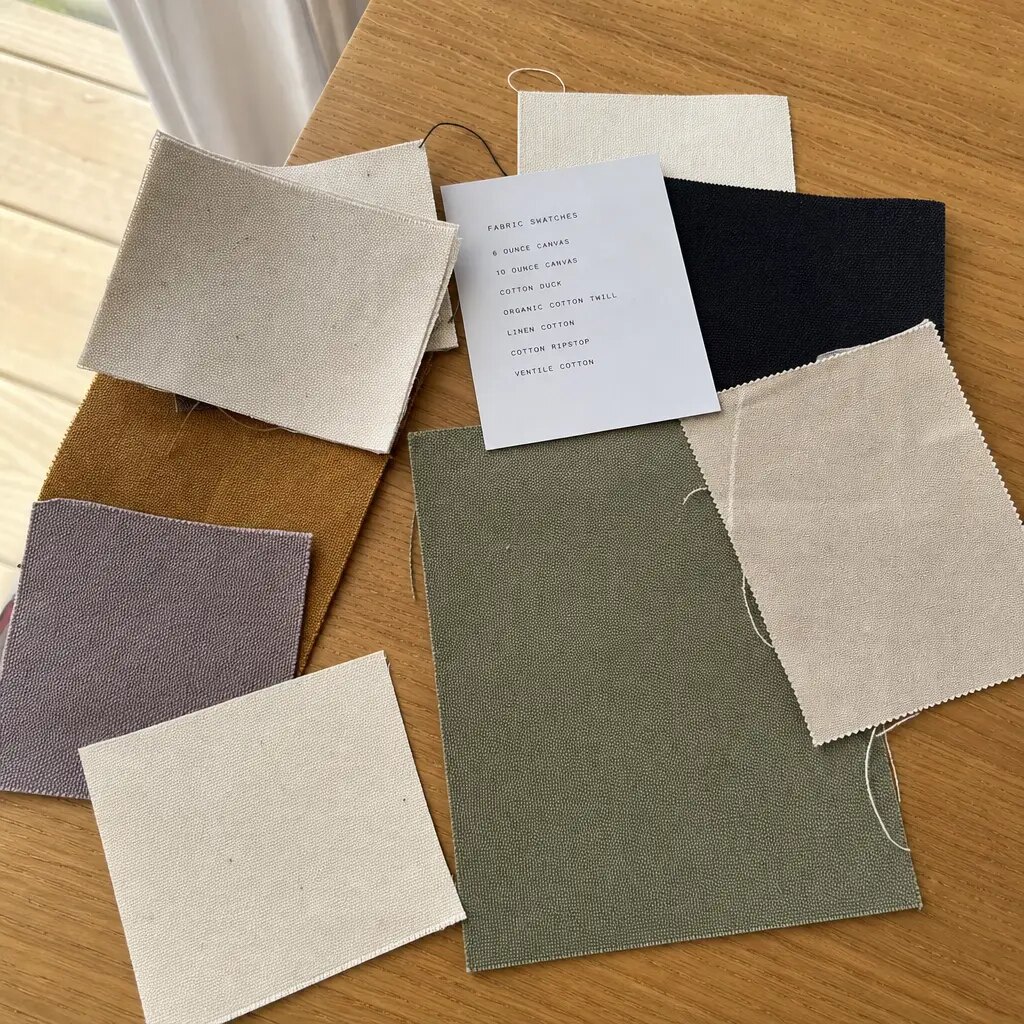
Procurement teams should request both ounce weight and GSM, then compare those numbers to a physical swatch. The swatch should show hand feel, weave density, shade, and finishing. Natural unbleached canvas may include slubs, seed flecks, and shade variation that support an eco look, but the buyer must decide what level of variation is acceptable. If a brand requires a cleaner premium appearance, bleached, dyed, or washed canvas may be better, but those finishes can change MOQ because the mill or dye house may require minimum lots.
Fabric selection also affects print and sewing. Rougher canvas can give a natural texture but may break fine print details. Heavier fabric can hold shape but may create bulk where handles, top hems, and side seams overlap. If the carrier needs a lining, binding, or reinforced base, the factory must sew through multiple layers. That is not just a cost issue; it is a quality-control issue. The approved fabric should be tested in the actual construction, not judged as a loose swatch alone.
- Use 12oz to 14oz cotton canvas as the normal starting range for reusable wine carriers
- Ask for oz, GSM, weave description, finish, shrinkage allowance, and bulk shade tolerance
- Treat natural slubs and cotton seed marks as an approval decision, not a surprise at final inspection
- Confirm sewing feasibility when heavy canvas is combined with lining, binding, or reinforced handles
Map every MOQ driver before asking for a lower minimum
MOQ is rarely a single factory rule. For canvas wine carriers, the minimum can come from fabric purchasing, cutting setup, screen printing, label production, trim sourcing, packing materials, carton printing, or the amount of time needed to set up a sewing line. When a supplier says the MOQ is 1,000 pieces, that number may not mean they cannot sew 300 bags. It may mean they cannot buy custom-dyed fabric, print labels, and run cartons economically at 300 pieces without changing the price.
The strongest MOQ negotiation approach is to ask which input creates the limit. If the fabric is stock natural canvas, the factory may be more flexible. If the order uses dyed canvas, custom woven labels, multiple print colors, and individual retail packaging, each component may bring its own minimum. Buyers can then decide whether to pay a surcharge for a lower quantity, remove a variation, combine colors, or accept a simpler component for the first order. This is much more productive than only asking for the supplier's best MOQ.
Eco apparel brands often want several versions for campaigns, retail partners, or seasonal gift bundles. That can make the order look larger in total but smaller at SKU level. A factory may accept 1,000 pieces total only if the construction, fabric, and packing stay the same across versions. If each version changes fabric color, print size, label, and carton mark, the supplier may treat them as separate orders. Procurement should clarify MOQ by total order, fabric color, print version, and packaging version before comparing offers.
- Ask whether MOQ is driven by fabric lot, print setup, label MOQ, trim MOQ, sewing setup, or carton packing
- Negotiate quantity breaks with the same specification so the cost curve is visible
- Reduce versions before reducing quality: one fabric color, one print method, one pack format
- Consider paying a transparent low-quantity surcharge instead of accepting hidden material downgrades
Use branding choices that fit canvas and protect repeatability
Branding is where a simple canvas wine carrier can become either a reliable procurement item or a difficult small-batch project. A one-color screen print is often the most efficient choice for eco apparel brands with simple logos, short slogans, or event marks. It can look clean on natural canvas and keeps setup manageable, but it still needs proper artwork preparation, mesh selection, ink cure, and rub testing. Large print areas, fine type, and tight registration increase risk and may raise setup cost.
Woven labels, sewn side labels, and small patches are useful when the brand wants a more permanent retail feel or when print durability is uncertain on rough canvas. A label can also make reorders easier if the same label is shared across multiple canvas items. The tradeoff is that label suppliers often have their own MOQ, and a sewn label adds placement tolerance and stitching checks. Heat transfer can reproduce detail, but it should be used carefully on textured canvas because cracking, edge lift, and shine can conflict with an eco look.
The RFQ should separate artwork decisions from construction decisions. Buyers should state print size, number of colors, Pantone references if needed, print location measured from seams, label dimensions, stitch color, and whether the artwork must remain centered after the bottle is inserted. A logo that looks centered on a flat empty bag can shift visually when the carrier bulges around a bottle. The approval sample should be checked loaded, not only flat on a table.
- Use screen print for simple, bold artwork with repeat production needs
- Use sewn labels or patches when a premium branded detail matters more than large graphic coverage
- Avoid tiny text, fine lines, and large solid ink blocks unless the supplier proves them on the exact canvas
- Measure branding placement from physical seams and confirm appearance with a loaded bottle
Build an RFQ that makes supplier quotes comparable
A canvas wine carrier quote is only useful when every supplier is pricing the same item. One factory may quote 12oz canvas with a reinforced bottom and interleaving; another may quote 10oz fabric, no insert, and bulk compression packing. Both may describe the product as a custom canvas wine tote, but the commercial offers are not comparable. Procurement teams should issue a structured RFQ instead of relying on a photo and target price.
The RFQ should include a concise product specification, target quantity, quantity breaks, packaging requirement, inspection expectation, and requested lead time. Ask suppliers to return a spec confirmation with their quote, not just a unit price. The confirmation should list fabric, finished size, print method, handle construction, reinforcement, trim, packing, carton quantity, carton dimensions, sample cost, setup cost, and production lead time. This prevents hidden substitutions and makes it easier to identify why one quote is cheaper.
For MOQ negotiation, ask suppliers to quote a baseline version and one simplified alternative. For example, the baseline might include 14oz canvas, screen print, reinforced base, hangtag, and interleaving. The simplified version might use 12oz stock natural canvas, one-color print, no hangtag, and bulk pack with printed faces protected. This gives buyers a real decision: pay for the premium spec or reduce defined cost elements. It also discourages vague downgrades such as changing to 'similar canvas' without approval.
- Require suppliers to confirm the specification line by line with the price
- Quote at least two quantity breaks, such as pilot order and repeat order volume
- Separate unit price, setup charges, sample charges, packing cost, and carton cost where possible
- Reject vague terms such as 'normal canvas,' 'standard print,' or 'export packing' until defined
Negotiate MOQ with clear give-and-take options
The best MOQ negotiation is specific. Instead of asking, 'Can you do lower MOQ?', ask, 'If we keep natural stock canvas, one print color, one label, and bulk pack with interleaving, what is the lowest production quantity and what surcharge applies below your normal MOQ?' This gives the supplier a practical path to say yes without hiding the cost in weaker materials. It also lets procurement compare the cost of flexibility against the risk of overbuying.
Useful negotiation levers include consolidating artwork versions, using stock fabric, sharing label components across products, accepting a longer production window, approving standard carton sizes, and allowing combined cutting with another canvas order. Less useful levers include asking for a lower price and lower MOQ at the same time while adding custom trims. Every extra component creates another planning point, and every version reduces efficiency.
Buyers should also protect future pricing. A low pilot MOQ may be acceptable at a higher unit price, but the supplier should quote repeat-order pricing at the expected production volume. Otherwise, the first order looks solved while the scalable program remains unclear. Put both numbers in the sourcing file: pilot order cost for launch risk control and repeat order cost for margin planning. If the supplier can only meet the low MOQ by changing fabric or packing, record that as a separate specification, not as the same product.
- Offer simplification in exchange for lower MOQ: fewer colors, fewer packs, stock fabric, shared labels
- Ask for a transparent low-MOQ surcharge instead of an unexplained quality change
- Keep pilot order pricing and repeat order pricing separate in the approval file
- Confirm whether partial shipment, longer lead time, or combined production can improve supplier flexibility
Sample approval should test construction, branding, and packing together
A sample that looks attractive empty may still fail in real receiving conditions. Canvas wine carriers should be sampled with the actual bottle or a dimensional match, the approved print or label, the intended reinforcement, and the proposed packing method. The buyer should load the bottle, lift it by the handles, tilt it, set it down, remove it, and place the carrier into the proposed carton quantity. This basic handling test often reveals twisting, base sag, handle discomfort, print distortion, and insert movement.
Sample comments must be measurable. 'Looks good' is not enough for bulk production control. Record finished dimensions, handle drop, seam position, print placement, stitch density, base flatness, and any acceptable natural fabric marks. If the print is slightly rough because of canvas texture but still approved, say so. If the natural shade has a warm tone and that tone is approved, attach the approved swatch or sample photo. The goal is to remove guesswork before cutting bulk fabric.
Keep approval samples in more than one place. Procurement needs one reference for commercial decisions, while the warehouse or quality team needs one for receiving inspection. The factory should also keep a sealed pre-production sample. If a dispute arises, all parties can compare bulk goods to the same approved standard. For branded programs, this is especially important because small differences in print position, label placement, or handle feel can affect customer perception.
- Test the sample loaded with the actual bottle, not only flat and empty
- Record dimensions, tolerances, stitch density, print placement, and approved fabric appearance
- Approve the packing method during sample stage if scuffing or deformation is possible
- Keep one approved sample with procurement, one with QC or warehouse, and one sealed at the factory
Set QC standards around real failure points
Quality control for canvas wine carriers should focus on the places where the product actually fails: handle attachment, bottom stress, print durability, seam consistency, bottle fit, and packing condition. A visual-only inspection may catch stains and crooked labels, but it may miss weak stitching or poor load behavior. The inspection plan should include measurement checks, appearance checks, and functional checks using the approved bottle weight.
Handle testing does not need to be complicated, but it should be practical and consistent. Inspectors can load the carrier with the intended bottle weight, lift and hold it, and check for seam opening, thread stress, handle elongation, or body distortion. The bottom should remain flat enough for the bottle to sit properly. If the carrier uses a board insert, the insert should not shift, warp, poke through fabric, or create a sharp edge. If the base is reinforced with fabric only, the stitching and layer alignment must be checked closely.
Print QC should include placement, color, cure, and rub performance. On natural canvas, slight texture show-through may be acceptable if approved, but flaking, tackiness, heavy bleeding, or misregistration should not be. Labels and patches should be checked for orientation, stitch neatness, and placement tolerance. Packing QC should confirm that printed faces are protected, cartons are not overcompressed, and carton marks match the purchase order. These checks are not paperwork for its own sake; they prevent avoidable claims after the product reaches retail or event teams.
- Check handle attachment and bottom seams with the intended filled bottle weight
- Measure finished size, handle drop, gusset, print position, and label placement against tolerance
- Test print cure and rub behavior on the exact approved fabric
- Inspect carton quantity, compression, moisture protection, export marks, and barcode or hangtag accuracy
Treat packing as part of the product cost
Packing decisions can change both unit cost and landed cost. A bulk-packed unprinted carrier may only need clean carton protection, while a printed retail-facing carrier may need interleaving, individual sleeves, tissue, hangtags, or barcode labels. Each choice affects labor, material cost, carton dimensions, receiving time, and waste profile. For eco apparel brands, buyers may also need to balance product protection with packaging reduction goals. The right answer is not always individual wrapping; it is the minimum protective pack that preserves sellable condition.
Before placing an order, ask for carton quantity, carton size, gross weight, and inner packing method. A low unit price can become less attractive if the carton count is inefficient or if crushed handles lead to rework. Conversely, an overly protective pack can increase freight volume and conflict with sustainability messaging. Printed faces may need tissue or face-to-face separation, while plain natural canvas may be packed more simply. The decision should be tied to sales channel and handling route.
Packing also affects MOQ. Custom printed cartons, barcode labels, hangtags, retail sleeves, and inner bags may all carry minimums. If the order quantity is low, standard cartons with applied labels may be more flexible than fully custom packaging. Buyers should ask suppliers to identify which packing elements are optional and which are required for damage prevention. That distinction helps procurement reduce cost without removing protection that the product genuinely needs.
- Define whether carriers are bulk packed, interleaved, sleeved, tagged, barcoded, or retail ready
- Request carton dimensions, quantity per carton, gross weight, and expected freight volume before approval
- Protect printed faces from abrasion and avoid handle compression during carton packing
- Separate sustainability preferences from performance requirements so the supplier knows what can change
Plan lead time from approval gates, not from sewing days
Canvas wine carrier lead time is often described as a production number, but the real schedule begins earlier. Artwork cleanup, sample making, sample shipping, approval comments, fabric reservation, label ordering, insert sourcing, cutting, printing, sewing, final inspection, packing, and export booking all take time. If buyers count only the sewing window, they may approve too late for a launch, holiday gift program, or retail delivery date.
The critical path changes with specification complexity. A plain natural canvas carrier with one-color print and bulk packing may move quickly after sample approval. A dyed canvas version with custom labels, lining, hangtags, barcode stickers, and printed cartons has more dependencies. Delays often come from late artwork changes, unclear Pantone expectations, missing barcode data, or packaging revisions after the production sample. Procurement can reduce risk by freezing artwork and packing before bulk release.
Ask suppliers for a milestone schedule rather than a single lead-time promise. Useful milestones include sample completion, sample transit, approval deadline, material purchase, cutting start, print start, sewing start, inline inspection, final inspection, packing completion, and ship date. If the supplier offers an aggressive schedule, ask what assumption it depends on. A fast lead time may apply only to stock fabric, available capacity, and immediate approval. Put those assumptions in writing so the team understands what can still move.
- Build the timeline from required delivery date backward through inspection, shipment, packing, sewing, printing, cutting, and sample approval
- Freeze artwork, labels, barcodes, and packing before releasing bulk materials
- Ask for milestone dates instead of only a total production lead time
- Add buffer for sample revisions, fabric shade approval, label supply, and freight booking
Specification comparison for buyers
| Spec decision | Recommended option | When it fits | Buyer risk to check |
|---|---|---|---|
| Bottle fit | Confirm against actual 750ml Bordeaux, Burgundy, Champagne, or specialty bottle dimensions | When the carrier must support a defined retail bottle or gift set | Generic bag dimensions can create tight seams, loose fit, tilted presentation, or bottle movement during handling |
| Fabric weight | 12oz to 14oz cotton canvas, with GSM and weave confirmed by swatch | Best for reusable retail packaging, apparel brand gifting, and premium promotional programs | Too-light canvas can sag and print unevenly; heavy loose-weave canvas can still feel weak despite higher stated weight |
| Canvas finish | Natural unbleached or dyed canvas with approved shade tolerance | When eco positioning and brand consistency matter | Natural cotton can vary by batch; dyed canvas may raise MOQ and require colorfastness checks |
| Print method | 1-color screen print, sewn woven label, or small patch depending on artwork | When buyers need repeatable branding without unnecessary setup cost | Heat transfer can crack on rough canvas; large screen prints need cure, rub, and placement checks |
| Bottle protection | Reinforced base, double-layer bottom, or removable board insert | For standard 750ml wine bottles used in retail, events, or corporate gifting | Without base support, the bottle can stress the bottom seam and distort the carrier shape |
| Closure style | Open top with clean hem for simple programs; hook-and-loop, snap, or tie only when needed | When packing speed, cost, and usability matter | Closures add sewing steps, inspection points, and possible MOQ increases for trims |
| Handle construction | Self-fabric handles or cotton webbing with reinforced box stitch or bar tack | When the carrier needs a sturdy reusable feel | Handles that are too narrow, short, or lightly stitched can fail practical load testing |
| Lining | Unlined for cost control; cotton lining or wipeable lining for premium gift presentation | When product positioning justifies the additional labor and inspection | Lined styles increase sewing time, wrinkle risk, shade-matching complexity, and minimum quantity pressure |
| Packaging | Bulk pack with interleaving, individual sleeve, hangtag, or barcode label as required by channel | When carriers are sold, gifted, or shipped into a retail warehouse | Packing differences make quotes incomparable and can create scuffed print faces or crushed handles |
Buyer checklist before sampling
- Confirm actual bottle style, diameter, height, shoulder shape, and filled weight before approving the bag pattern
- Define whether the carrier is for one bottle type only or must fit multiple 750ml formats
- Specify body dimensions, gusset depth, finished tolerance, handle drop, and whether the bottle must stand upright unaided
- State canvas weight in oz and GSM, weave preference, finish, color, and acceptable shade variation
- Decide whether natural cotton slubs, seed marks, and minor weave variation are acceptable for the eco look
- Choose print method, artwork size, color count, placement tolerance, and acceptable ink hand feel
- Confirm label, patch, hangtag, barcode, and retail compliance requirements before asking for MOQ reduction
- Define reinforcement: double-layer bottom, board insert, side seam binding, bar tack, or box stitch
- Separate MOQ by fabric color, print version, label version, packing format, and ship destination
- Ask which MOQ drivers are fixed costs and which are variable production costs
Factory quote questions to send
- What exact canvas construction are you quoting, including oz, GSM, yarn count if available, weave, finish, shrinkage allowance, and fabric source?
- Is the quoted canvas greige, natural unbleached, bleached, dyed, washed, or coated, and does that choice change MOQ or lead time?
- What finished dimensions and tolerances are included for body width, height, gusset, handle drop, and base width?
- Which bottle shape did you use when estimating the pattern, and can we test with our actual bottle before bulk approval?
- Does your MOQ change by fabric color, print color, artwork size, label type, lining, handle material, or packing method?
- What cost items are fixed at low volume: fabric purchase lot, screen setup, label MOQ, cutting setup, carton printing, or sewing line setup?
- What is included in the quoted unit price: material, cutting, sewing, print, label, insert, hangtag, inner packing, export carton, and carton marks?
- Can you quote the same specification at two or three quantity breaks so we can see the real cost curve?
- Can you provide a pre-production sample using the same fabric roll quality, stitching density, print process, reinforcement, and packing method intended for bulk?
- What print testing do you recommend for this artwork on canvas: dry rub, wet rub, tape pull, wash simulation, or abrasion check?
Quality-control points to confirm
- Bulk fabric must match the approved swatch for weight, hand feel, weave density, shade range, and visible natural cotton character
- Finished carrier dimensions must stay within the agreed tolerance after sewing, pressing, packing, and loading with the actual bottle
- Stitching must be dense and even at handles, side seams, top hem, base corners, and reinforcement points, with no skipped stitches or loose thread tails
- Handle attachment must pass a practical load check using the filled bottle weight plus handling allowance, with no seam opening, tearing, or distortion
- Print or label placement must remain within agreed tolerance and appear visually centered when the bottle is inserted
- Ink must be properly cured, with no tackiness, cracking, flaking, excessive bleeding, or unacceptable dry/wet rub transfer
- Side labels, woven labels, patches, hangtags, and barcode stickers must match approved position, orientation, and content
- The carrier must pass a bottle fit test using the actual bottle shape, including upright standing, lift, tilt, and removal
- Bottom insert or reinforced base, if used, must sit flat with no sharp edge exposure, warping, odor, or visible bulge
- Lining, if used, must be smooth, securely caught in seams, correctly shaded, and free from twisting, puckering, or loose internal threads