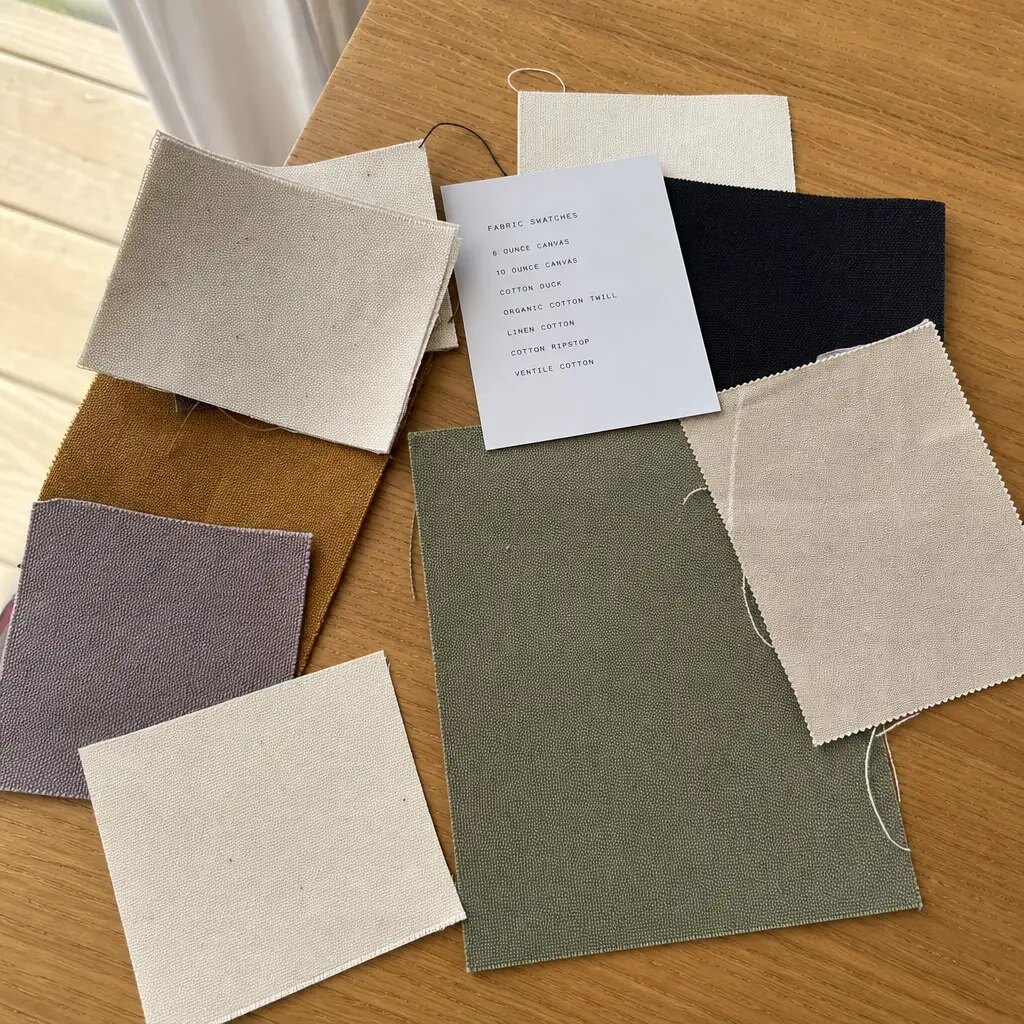
1. MOQ Is A Cost Structure, Not Just A Supplier Rule
When a factory gives you an MOQ for canvas wine carriers, it is rarely just an arbitrary number. It usually reflects several minimums sitting on top of one another: fabric purchasing, dyeing, cutting efficiency, decoration setup, label production, sewing-line scheduling, packing material purchase, and export administration. The headline MOQ may be 500, 1,000, or another quantity, but the true constraint might be one smaller part of the product. A natural 12 oz single-bottle carrier with one black screen print is much easier to plan than a custom-dyed carrier with three artwork versions, woven patches, barcodes, and retail sleeves.
That is why good negotiation starts with the cause of the MOQ, not the number itself. If the limit comes from fabric, ask whether stock canvas can be used and reserved. If it comes from screen setup, reduce print versions. If labels are the issue, use one shared label for the first run or move to a printed mark. If sewing-line setup is the bottleneck, keep the first construction standard and avoid last-minute pattern changes. This gives the supplier a practical reason to offer a lower opening quantity, a small-order surcharge, or a cleaner price ladder.
For eco apparel brands, the goal is not to strip the product until it feels cheap. A weak wine carrier sitting next to organic tees, hoodies, totes, or accessories can make the broader program feel inconsistent. Keep the quality signals that matter: suitable canvas weight, secure handle reinforcement, clean seams, controlled decoration, and packing that arrives presentable. Negotiate SKU simplicity first. Negotiate construction weakness last, if at all.
- Ask what drives MOQ: fabric lot, dye lot, screen setup, label MOQ, cutting waste, sewing-line time, or packing materials.
- Confirm whether MOQ is per style, per body color, per artwork, per label, per packing version, or per shipment.
- Negotiate fewer variables before negotiating weaker construction.
- Use a price ladder so trial, first production, and repeat-order quantities are compared using the same specification.
2. Start The RFQ With Bottle Geometry And Use Case
A short RFQ that says canvas wine bag for 750 ml bottle looks simple, but it leaves too much room for error. A standard Bordeaux bottle, a wider Burgundy bottle, a tall Riesling-style bottle, and a sparkling bottle can differ in diameter, shoulder shape, height, and filled weight. If the pattern is too narrow, warehouse staff or customers have to force the bottle in. If the cavity is too generous, the bottle swings, the bag looks unfinished, and the load shifts when lifted.
Your RFQ should include bottle height, maximum body diameter, shoulder width if relevant, neck height if the carrier covers part of the neck, and expected filled weight. If one carrier must fit several bottle types, state the largest bottle and the acceptable looseness around smaller bottles. For unusual packaging, sparkling bottles, or premium gifting, send the factory a physical bottle or a dimensionally accurate dummy. It is much cheaper to correct the pattern before the pre-production sample than to discover tight fit after cutting.
Use case matters just as much as geometry. A tasting-room giveaway may prioritize speed, a simple one-color print, and bulk packing. A retail accessory sold beside eco apparel needs better structure, neater stitching, and more consistent presentation. A corporate gifting carrier may need an insert, barcode label, gift-card pocket, two-bottle balance, or branded sleeve. The supplier can quote more honestly when they understand how the carrier will be used, handled, displayed, and shipped.
- Provide bottle dimensions and filled weight instead of only saying 750 ml.
- State whether the carrier must fit Bordeaux only, Burgundy only, sparkling, tall slim bottles, or mixed bottle profiles.
- Identify channel: event giveaway, retail resale, gift-with-purchase, winery club, e-commerce bundle, or corporate gifting.
- Separate required features from optional alternates so the factory can show which features raise MOQ or price.
3. Specify Canvas Weight, GSM, Finish, And Shrinkage
Canvas language can cause sourcing mistakes. Buyers often speak in 10 oz, 12 oz, or 14 oz canvas, while suppliers may interpret those ounce descriptions differently. Add measured GSM to the spec sheet. As a working reference, 10 oz canvas is often around 330-360 GSM, 12 oz around 400-430 GSM, and 14 oz around 470-500 GSM. Still, the approved supplier measurement should control the order. A written tolerance, such as +/-5% GSM or the supplier's agreed standard, is far more useful than a catalog phrase.
Finish changes the feel, appearance, print result, and shrinkage behavior. Natural unbleached cotton canvas may show seed flecks, slubs, and shade variation. Those features can work well for an eco apparel brand, but only if everyone agrees what is acceptable. Washed canvas may feel softer but can affect dimensions and print behavior. Dyed canvas needs lab dip approval, a bulk shade standard, and a defined light source for evaluation. Recycled-content, organic cotton, or other sustainability claims need documentation before the marketing team uses them.
Talk about shrinkage before sampling. A carrier made from untreated canvas can react to steaming, pressing, washing, humidity, or storage. Most wine carriers will not be washed like garments, so a full garment-wash standard may not be needed. Even so, you need enough dimensional stability for production, packing, and transit. Ask whether the fabric is greige, natural unbleached, bleached, dyed, washed, sanforized, pre-shrunk, or untreated. The answer affects sample approval and bulk tolerance.
- Use both nominal ounce and measured GSM in the spec sheet.
- Request actual GSM tolerance, not only the supplier's catalog description.
- Define natural, bleached, dyed, washed, recycled-content, or organic cotton requirements before comparing quotes.
- For dyed canvas, specify lab dip rounds, approved swatch, bulk shade tolerance, and who pays for rejected shade lots.
4. Choose Construction Details Before You Negotiate Price
Small construction decisions can quietly reset cost and MOQ. A single-bottle open-top carrier may use a simple body panel, side seam, bottom seam or gusset, and two handles. Add a divider, lining, bottom board, flap, drawcord, pocket, or reinforced sleeve, and you have introduced new materials and sewing operations. None of these details are wrong. They just need to be priced as intentional features, not added after the first quote.
Handles deserve extra attention because they carry the load and shape the user experience. Specify handle material, width, drop, attachment position, and reinforcement. Common options include box stitch, cross stitch, bar tack, double stitching, continuous straps, and inserted self-fabric handles. A sample can look tidy in a photo but still fail in repeat production if the stress-point sewing is vague. Ask for close-up photos, stitch method, and any load or repeated-lift checks the factory can support.
For a first low-MOQ program, the cleanest procurement position is usually one standard construction: one bottle, one body color, no lining, no divider, no special closure, and a practical reinforced handle. If sales prove demand, the next order can add premium details. This staged approach keeps the first PO manageable without sacrificing the basic quality that customers will notice immediately.
- Specify handle width, handle drop, handle placement, and reinforcement method.
- Quote dividers, lining, bottom board, and closures as alternates if they are not essential.
- Avoid changing dimensions after sample approval; pattern changes can affect cutting, printing, and packing.
- Use a written construction sheet with seam type, binding, raw-edge rules, and reinforcement photos.
5. Decoration Choices Can Make Or Break MOQ
Decoration is often the second major MOQ driver after fabric. A one-color screen print on stock natural canvas is easier to schedule than several Pantone colors, multiple print placements, or separate artwork versions. Screen printing is a strong choice for bold logos, short text, and repeat programs. It also gives buyers a clear way to control setup charges, screen count, print size, ink type, curing, and placement tolerance.
Digital print and heat transfer can help with complex artwork, gradients, or small seasonal graphics, but they are not automatically the better choice for an eco brand. Textured canvas changes the result. Opacity, edge sharpness, hand feel, cracking, rub resistance, and color consistency all need to be checked on the actual production fabric. A print approved on a smooth test cloth may look completely different on slubby natural canvas.
Woven labels, patches, and embroidery can make a wine carrier feel closer to an apparel accessory than a promotional bag. That is valuable when the carrier will be sold, reused, or bundled with higher-margin merchandise. The tradeoff is additional component MOQ, component lead time, sewing time, and placement QC. A small woven side label used across multiple products may be efficient. A different patch for every account can fragment the order and push MOQ back up.
- For low MOQ, start with one decoration method, one artwork size, one placement, and one colorway.
- Require print placement tolerance, commonly +/-3 mm to +/-5 mm depending on artwork and seam reference points.
- Ask for minimum line width and small-text limits before approving detailed logos.
- If using labels or patches, confirm component MOQ, lead time, artwork format, edge finish, and placement tolerance.
6. Read The Supplier Quote Like A Procurement Buyer
A usable supplier quote should tell you more than a unit price. It should state the fabric specification, finished dimensions, decoration method, packing method, MOQ logic, sample cost, setup charges, lead time, Incoterm, payment terms, quote validity, and over/under shipment tolerance. Without those details, two quotes may look comparable when they are not. One factory may include export cartons, screen setup, and label sewing. Another may list a lower unit price and charge those items later.
Ask suppliers to separate one-time costs from recurring costs. One-time costs can include sample development, screens, embroidery digitizing, woven label setup, cutting patterns, custom carton printing, testing, and courier freight. Recurring costs include fabric, cutting, sewing, decoration, labels, inner packing, cartons, inspection, and inland handling. This split helps your team understand whether the first order is expensive because the product is expensive or because setup is being absorbed up front.
Price ladders make MOQ negotiation much clearer. Ask for the same approved spec at three levels: trial quantity, practical first production quantity, and projected repeat quantity. If the supplier can accept the trial only with a surcharge, ask them to show that surcharge separately. Paying a transparent small-run surcharge may be a better decision than changing from 12 oz to 10 oz canvas, removing handle reinforcement, or accepting looser QC.
- Request quote validity dates because cotton prices, exchange rates, and freight assumptions can change.
- Ask whether the price includes export carton, carton marks, inner packing, barcode labels, hangtags, and document fees.
- Confirm Incoterm and named place, such as EXW factory, FOB port, CIF destination port, or DDP address.
- Set over/under shipment tolerance in writing, for example 0/+3% or another agreed range.
7. MOQ Negotiation Tactics That Do Not Reduce Product Quality
The most reliable way to lower MOQ is to make the order easier to produce. Start with SKU count. One body color, one fabric weight, one artwork, and one packing version are easier than a mixed assortment. If the brand needs multiple customer logos, ask whether blank carriers can be sewn together in one run and decorated separately. Then confirm whether each artwork still triggers screen setup, print MOQ, label MOQ, or packing separation.
Use stock inputs where possible. Stock natural canvas, standard webbing, existing thread colors, unprinted export cartons, and standard paper bands reduce the supplier's risk. Custom dyeing, custom trims, custom labels, and special retail packing should earn their place in the spec. If they are essential to the commercial program, accept that they may set the real minimum. If they are nice-to-have, move them to a reorder.
A repeat-order plan can help, but keep it honest. Suppliers may be more flexible when the buyer approves a standard spec, pays sample costs, accepts a small-order surcharge, and shares a realistic forecast with expected reorder dates. Do not promise volume that your company has not approved internally. Instead, ask what price and MOQ would apply if the second order reaches a defined quantity.
You can also negotiate timing. A deposit, fast artwork approval, or a flexible shipment window may help the factory fit a smaller order into production. What you should not trade away are inspection rights, PP sample approval, material clarity, or defect remedies. A low MOQ is not useful if the product arrives late, weak, dirty, or inconsistent with the brand.
- Reduce artwork and packing versions before reducing canvas weight or handle reinforcement.
- Ask for a small-order surcharge as an alternative to a higher MOQ.
- Use stock canvas and standard trims to avoid mill or component minimums.
- Keep QC, PP sample approval, and defect remedy terms intact even on a trial order.
8. Sampling, PP Approval, And Numeric Tolerances
Sampling is where the RFQ becomes a measurable product. A canvas wine carrier can look good in a photo and still fail bottle fit, loaded balance, handle comfort, or print durability. Approve samples against a written spec sheet, not only a visual impression. The sheet should cover fabric, measurements, handle construction, decoration, label placement, seam finish, packing, and bottle fit.
A practical sequence may include a rough fit sample, material swatch or lab dip, artwork strike-off, pre-production sample, and sealed approval sample. Not every simple order needs every step. Choose the steps that control your biggest risks. If the artwork is large, the strike-off matters. If the bottle is unusual, the rough fit sample matters. If the canvas is custom dyed, lab dip and bulk shade approval matter.
Numeric tolerances prevent arguments later. For many sewn canvas wine carriers, buyers discuss finished dimension tolerances around +/-5 mm for height, width, base depth, and handle drop; print placement around +/-3 mm to +/-5 mm; label placement around +/-3 mm; and stitch density such as 7-9 stitches per inch where appropriate. These are practical RFQ discussion points, not universal rules. Final tolerances should match the design, material, and factory capability.
- Measure the PP sample with the actual bottle or a dimensionally accurate dummy.
- Approve artwork on actual bulk canvas, not only a digital mockup.
- Record finished measurements, photos, fabric swatch, print strike-off, and packing method.
- Do not authorize bulk production until deviations and tolerance exceptions are written down.
9. Build A QC Plan For Strength, Appearance, And Brand Consistency
QC for canvas wine carriers has to cover both structure and appearance. Structural checks protect the user and the bottle. Visual checks protect the brand. A carrier with a beautiful logo but weak handle stitching is not acceptable. A strong carrier with dirty fabric, crooked labels, heavy odor, or poor packing is not retail-ready for an eco apparel brand either.
Define critical, major, and minor defects before production. Critical defects may include unsafe handle failure, sharp foreign objects, mold, severe contamination, or unsupported material claims. Major defects may include wrong dimensions outside tolerance, poor bottle fit, skipped stitches at stress points, unacceptable stains, wrong artwork, serious print defects, or incorrect packing. Minor defects may include small thread tails or slight natural canvas variation within the approved limit.
Inspection should not happen only at the end. Use incoming fabric review, inline sewing checks, decoration checks, and final random inspection. For larger shipments, many buyers use an AQL-based plan, such as general inspection level II, with acceptance levels agreed in advance. If your team does not use formal AQL, the PO should still state sampling quantity, defect classification, rework rules, and reinspection responsibility. Ambiguity is expensive once goods are packed.
- Check handle attachment with the intended bottle weight, including repeated lifting where reuse is expected.
- Inspect seams, gussets, dividers, and bottom reinforcement before final packing.
- Compare print and label placement against numeric tolerances, not visual opinion alone.
- Reject odor, mildew, oil stains, holes, severe shade bands, and contamination even if the bag is structurally sound.
10. Control Packing, Lead Time, And Shipment Milestones
Packing affects cost, presentation, freight cube, and damage risk. Canvas wine carriers are soft goods, but they can still arrive with crushed handles, distorted bases, scuffed prints, moisture damage, or dirty surfaces. If your brand avoids polybags, specify the approved alternative in the RFQ: paper band, tissue wrap, kraft sleeve, inner carton, or bulk pack. Plastic-free packing still has to protect printed surfaces and keep units clean.
Request carton data before final cost comparison. You need units per carton, carton dimensions, gross weight, net weight, carton material, carton marks, and confirmation that cartons are suitable for export stacking. A lower unit price can disappear if carton density is poor or packaging creates warehouse problems. For e-commerce, distributor, or retail routing programs, carton labeling and SKU separation are not afterthoughts; they are part of the product delivery requirement.
Break lead time into milestones: artwork approval, sample making, sample transit, material booking, lab dip or strike-off approval, cutting, sewing, decoration, packing, inspection, and export handover. Stock canvas shortens the schedule only if it is truly available and reserved. Custom dyeing, custom labels, and seasonal print capacity can become bottlenecks. For holiday gifting, winery programs, and apparel retail drops, put approval cutoff dates and shipment milestones in the PO instead of relying on a general lead-time promise.
- Define inner packing early, especially if plastic-free or retail-ready packing is required.
- Request carton size, carton count, gross weight, net weight, and carton marks before confirming landed cost.
- Protect prints from abrasion and handles from permanent crushing during transit.
- Add buffer for sample approval delays, inspection corrections, freight booking, and peak-season production capacity.
Specification comparison for buyers
| Spec or sourcing decision | Recommended procurement position | When it fits best | MOQ and cost impact | Buyer risk to check |
|---|---|---|---|---|
| Stock natural cotton canvas | Use as the baseline for low-MOQ negotiation | First orders, event programs, standard 750 ml bottle carriers, one body color, one logo | Usually the most flexible route if fabric is already available; ask whether MOQ is driven by cutting efficiency, decoration setup, or fabric reservation | Confirm the canvas is physically reserved for your PO; require measured GSM, shade range, shrinkage expectation, and finish details |
| Custom-dyed canvas | Use only when the body color is commercially important | Retail drops, brand-color assortments, winery collaborations, seasonal capsules | Usually raises MOQ because dye lots, lab dips, minimum dyeing quantities, and shade approvals add cost and time | Define Pantone or approved swatch, light source for review, acceptable shade tolerance, lab dip rounds, and re-dye responsibility |
| 10 oz canvas, approx. 330-360 GSM | Quote as the value option, not the default for premium retail | Giveaways, short-term promotions, price-sensitive bottle bags | Lower material cost and easier sewing, but less structure; may be easier to negotiate if the factory stocks it | Check loaded appearance, seam strength, opacity, handle distortion, and whether the carrier feels too light beside apparel |
| 12 oz canvas, approx. 400-430 GSM | Use as the practical starting point for retail-facing eco brands | Gift-with-purchase, resale, tasting room retail, apparel-store accessory programs | Moderate material cost with better body; MOQ depends on whether stock fabric is available | Confirm needle and seam performance, print opacity, fold marks, and finished bag weight for freight planning |
| 14 oz canvas, approx. 470-500 GSM | Reserve for premium programs where structure justifies cost | Higher-value gifting, reusable retail carriers, heavy-duty brand accessories | Higher fabric cost, slower sewing, more needle wear, and possible higher MOQ if not stocked | Check bulk seam thickness, handle attachment penetration, puckering, machine capability, and carton cube |
| One-color screen print | Best default for simple eco apparel branding | Bold logos, short text, repeat SKUs, natural or dyed canvas | Screen setup applies, but unit cost and repeatability are stable once artwork is approved | Confirm screen charge, ink type, curing, print size, placement tolerance, minimum line weight, and Pantone matching approach |
| Digital print or heat transfer | Use selectively for complex art or many colors | Illustrations, gradients, seasonal graphics, short-run artwork tests | May reduce screen setup pressure, but base bag MOQ can still apply; unit cost can be higher | Test hand feel, rub resistance, edge cracking, color consistency, wash or steam sensitivity if relevant, and retailer acceptance |
| Woven label, patch, or embroidery | Use for a quieter garment-adjacent brand mark | Premium eco apparel positioning, subtle branding, reusable accessory feel | Adds component MOQ, approval steps, sewing time, and placement QC | Ask label MOQ, lead time, thread colors, backing, edge finish, placement tolerance, needle damage risk, and required artwork file format |
| Single-bottle open-top carrier | Use for the first custom run when negotiating MOQ down | Standard bottle gifting, winery retail, apparel bundle packaging | Lowest complexity: fewer panels, no divider, no lining, simpler QC | Validate fit on target bottle profiles; one generic sample may not fit Bordeaux, Burgundy, sparkling, and tall slim bottles equally |
Buyer checklist before sampling
- Define the bottle profile before RFQ: standard Bordeaux, wider Burgundy, tall Riesling or slim bottle, sparkling bottle, or mixed-use range. Provide bottle height, maximum diameter, shoulder width if relevant, and filled weight if available.
- Lock construction before price comparison: single-bottle, two-bottle, divider, lining, bottom board, drawcord top, flap closure, open top, side gusset, base gusset, or flat pouch style.
- Specify fabric by both ounce and GSM where possible. Common procurement references are 10 oz at about 330-360 GSM, 12 oz at about 400-430 GSM, and 14 oz at about 470-500 GSM, but actual supplier weights must be measured.
- Ask for fabric tolerance in writing. For cotton canvas, buyers often use a GSM tolerance such as +/-5% or an agreed supplier standard; confirm before PO instead of relying on nominal ounce description.
- State whether canvas is greige, natural unbleached, bleached, dyed, washed, recycled-content, organic cotton, or certified material. If a claim will appear in marketing, request documentation before price approval.
- List all SKU variables separately: style, size, body color, fabric weight, artwork version, print color, label version, hangtag, barcode, and packing method. Ask which variable resets MOQ.
- Request a price ladder at minimum trial quantity, workable first production quantity, and repeat-order quantity. Use the same spec for all tiers so the cost comparison is meaningful.
- Separate one-time costs from recurring costs: sample charges, screen charges, embroidery digitizing, woven label setup, cutting pattern or die, custom carton print, testing, inspection, and courier freight.
- Require a pre-production sample made with approved bulk fabric, final decoration, final label, final handle method, and intended packing before bulk cutting or at least before mass sewing.
- Define measurement tolerances on the PO: finished height +/-5 mm, width +/-5 mm, base depth +/-5 mm, handle drop +/-5 mm, print placement +/-3-5 mm, label placement +/-3 mm, unless your product needs tighter or looser limits.
Factory quote questions to send
- What is the MOQ by style, bottle capacity, body color, fabric weight, artwork version, print colorway, label version, and packing version? Which of these variables resets the MOQ?
- Is the quoted canvas in your factory stock, nominated supplier stock, or made-to-order mill production? How many meters are available now, and can they be reserved after deposit?
- What is the exact canvas specification: nominal ounce, measured GSM range, yarn count if available, weave, fabric width, finish, shrinkage expectation, and color or shade tolerance?
- Can you quote the same carrier in 10 oz, 12 oz, and 14 oz canvas with the same dimensions and handle method, showing unit price, MOQ, lead time, and finished bag weight?
- What bottle dimensions did you use for the pattern? Can you confirm fit for our supplied bottle dimensions and test with a physical bottle or 3D/dummy bottle before PP approval?
- What are the finished dimensions and tolerances you can guarantee for height, width, base depth, mouth opening, handle drop, handle width, print placement, and label placement?
- What handle reinforcement is included: box stitch, cross stitch, bar tack, double stitch, inserted handle, continuous handle, or self-fabric loop? Can you provide photos of the stress-point stitching?
- Are screen setup, ink mixing, embroidery digitizing, woven label setup, cutting die or pattern, sample fees, courier freight, and custom carton printing included or charged separately?
- Which decoration method do you recommend for our artwork, and what are the limits for minimum line width, small text, print size, registration, ink opacity, and color matching on textured canvas?
- Can you provide a strike-off on the actual bulk canvas before PP sample approval? If the print fails rub or adhesion checks, what correction options are available?
Quality-control points to confirm
- Fabric weight is verified against the approved range using a measured GSM test or an agreed equivalent method; do not rely only on nominal 10 oz, 12 oz, or 14 oz descriptions.
- Canvas shade, slub level, seed flecks, weave texture, and finish are compared to the approved swatch under agreed lighting, with natural cotton variation accepted only within written limits.
- Fabric defects such as holes, broken yarns, heavy contamination, mildew, strong odor, oil stains, severe shade bands, or unacceptable dirty marks are rejected or segregated before cutting.
- Finished bag height, width, mouth opening, base depth, and bottle cavity are measured against the spec sheet. Typical soft-goods tolerances may be +/-5 mm unless tighter limits are agreed.
- Target bottles fit without forcing, tearing, excessive looseness, or awkward loading. The carrier should remain balanced when lifted with the intended full bottle weight.
- Handle drop, handle width, handle spacing, and handle angle match the approved sample. Handles should not twist excessively or create uncomfortable pressure when carrying a full bottle.
- Handle attachment uses the approved reinforcement method, such as box stitch, cross stitch, bar tack, or double stitching, with no skipped stitches, broken threads, or loose back-tacks at stress points.
- Side seams, bottom seams, gussets, top binding, and divider seams are secure, even, and free from exposed raw edges unless a raw-edge design was explicitly approved.
- Stitch density is checked against the approved range, such as 7-9 stitches per inch where specified, with no seam slippage, puckering that distorts appearance, needle cuts, or loose thread tails.
- Divider attachment, if used, is centered, secure, and tall enough to reduce bottle contact. Loaded two-bottle carriers should not lean excessively or allow bottles to strike each other sharply.