Why MOQ Is Harder for Bookstore Wine Carriers
Canvas wine carriers look simple, but the MOQ discussion is not the same as a flat tote bag. A university bookstore may need 300 pieces for an alumni weekend, 600 pieces for a holiday gift display, or 1200 pieces split across several campus logos. A factory may quote a standard MOQ of 1000 pieces because cutting, print setup, material allocation, and line changeover are not efficient at very small quantities.
The practical goal is not to force the lowest MOQ at any cost. The goal is to separate the fixed setup items from the flexible items, then decide which specifications are worth protecting. A buyer who can accept stock canvas, one-color screen print, standard handles, and common carton packing has a stronger negotiation position than a buyer asking for custom dyed fabric, specialty labels, four-color printing, and a small quantity in the same RFQ.
- Treat MOQ as a cost structure problem, not only a supplier policy.
- Negotiate around shared materials and standard construction before pushing price.
- Keep campus licensing, artwork approval, and receiving requirements visible from the first quote.
Define the Use Case Before Asking for Quantity Flexibility
University bookstore orders usually fall into several different buying situations. A retail wine carrier sold near graduation gifts needs a clean shelf appearance, barcode handling, and repeatable logo placement. An alumni event gift may prioritize deadline certainty and acceptable presentation over individual retail packaging. A donor program carrier may need better fabric handfeel, stronger structure, or a hangtag explaining campus sustainability values.
These use cases change the MOQ conversation. If the carrier is a one-time event item, the buyer may accept stock fabric and a simple logo to reduce setup. If it is a retail SKU intended for reorder, the buyer should protect construction consistency and barcode packing even if the first order quantity is modest. For licensed merchandise, the approval schedule may be more important than the sewing schedule because the factory cannot safely start printing until artwork is approved.
- Retail resale: prioritize shelf shape, barcode labels, carton consistency, and repeatable color.
- Event giveaway: prioritize delivery date, simple artwork, and fast sample approval.
- Donor or alumni gift: prioritize fabric feel, stitching quality, and premium presentation.
- Distributor program: prioritize carton labels, master carton data, and reorder specification control.
Choose a Fabric Weight That Supports Both MOQ and Retail Quality
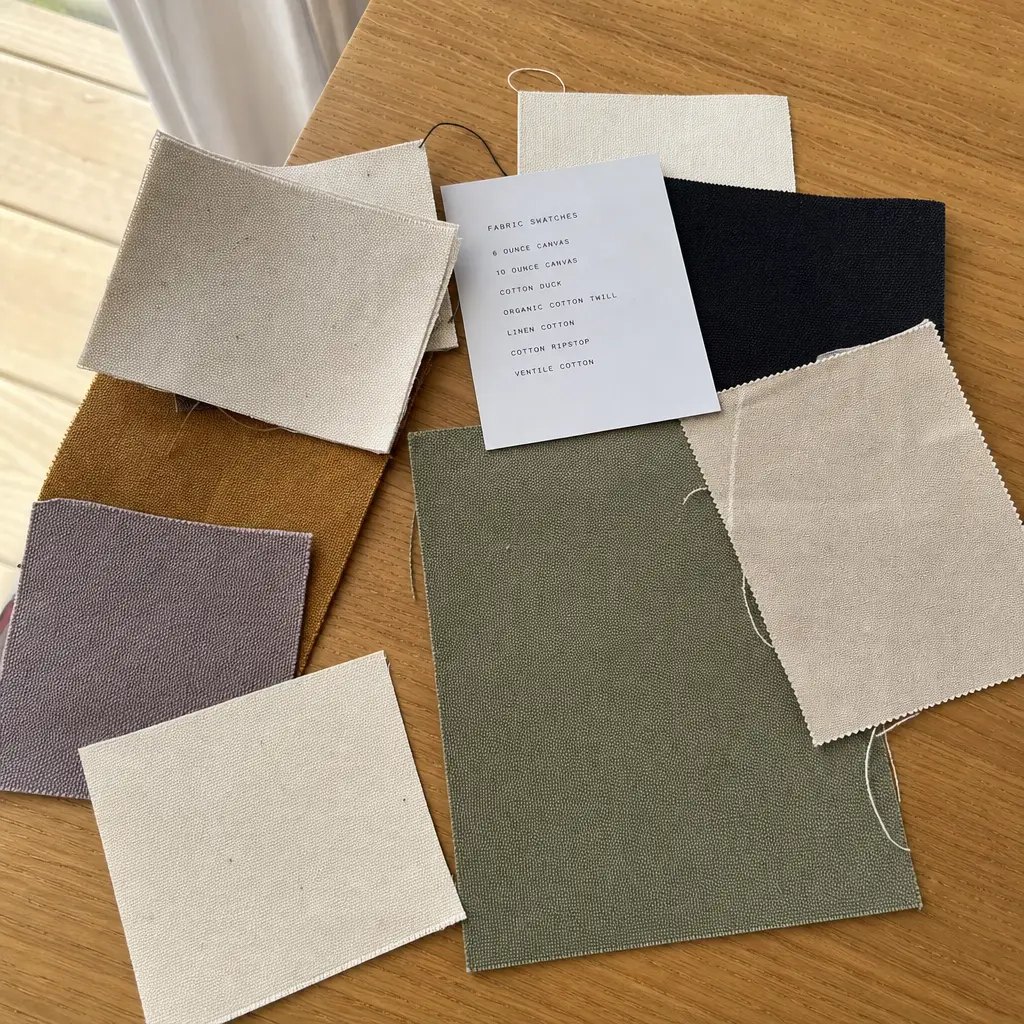
For canvas wine carriers, fabric weight is one of the most important quote variables. A practical starting point is 10 oz to 12 oz cotton canvas, roughly 280 to 340 GSM depending on yarn and finishing. This range gives enough body for a bottle carrier while still cutting and sewing efficiently. Lighter fabric can look weak when holding a full bottle, while very heavy canvas increases material cost, needle wear, carton weight, and sometimes the factory's minimum cutting quantity.
If the bookstore wants a natural cotton look, confirm whether natural slubs and shade variation are acceptable. Natural canvas is not pure white and may vary between lots. Bleached canvas gives a cleaner print background but can change handfeel and cost. Dyed canvas can support school colors, but custom dyeing usually increases MOQ because the mill requires a minimum fabric quantity. For MOQ negotiation, using a stock natural or stock black canvas is often easier than requesting a Pantone-matched school color fabric.
- Entry retail choice: 10 oz canvas for softer handfeel and lower weight.
- Standard sturdy choice: 12 oz canvas for better bottle support and perceived value.
- Premium choice: 14 oz canvas only when higher freight and sewing cost are acceptable.
- MOQ-friendly color choice: stock natural, stock black, or stock navy instead of custom dyed fabric.
Set Bottle Fit and Construction Details Early
A canvas wine carrier should be quoted from a bottle specification, not only from a photo. Standard 750 ml wine bottles, champagne bottles, and tall specialty bottles have different diameters and shoulder shapes. A pattern that fits a slim wine bottle may be too tight for sparkling wine. If the carrier will be sold as a general campus gift item, the safest RFQ includes the maximum bottle diameter and height the bookstore expects customers to use.
Construction also affects MOQ because each added sewing operation increases line time. A single-bottle carrier with a simple front logo is easier to place in a low-MOQ production run. A two-bottle carrier needs a divider panel, stronger bottom construction, and more careful measurement control. Handle length should allow comfortable carrying but not make the filled bottle swing excessively. Reinforced handle stitching is not optional for a loaded product.
- Provide target bottle size in millimeters for height and diameter.
- Specify whether the bottle neck should be visible or mostly covered.
- Use reinforced box stitching or bartack stitching at handle attachment points.
- For two-bottle carriers, require a divider that prevents glass-to-glass contact.
Use Print Method as a Negotiation Lever
Most university bookstore canvas wine carrier orders should start with one-color screen printing. It is cost-efficient, durable when cured properly, and easy to approve with a Pantone reference. It also supports MOQ negotiation because the factory can keep setup simple and production speed predictable. For a first order, a clean one-color university bookstore mark often performs better commercially than a complicated multi-color design that delays approval.
Heat transfer can reproduce detailed artwork but may change the handfeel on canvas and requires careful adhesion testing. Embroidery can feel premium, but on a small wine carrier it adds stitch time and may pucker lighter canvas. Woven labels are useful when multiple products share the same branding system, but they create their own label MOQ. If the buyer wants a lower finished goods MOQ, choosing the print method with the fewest separate setup requirements is usually more effective than asking every supplier to discount the same complex artwork.
- Best first-order method: one-color screen print on 10 oz or 12 oz canvas.
- Use heat transfer when artwork detail matters more than natural fabric handfeel.
- Use embroidery only when the fabric weight and logo size can control puckering.
- Use woven labels when the same label will be used across multiple bag styles.
Understand the Factory's MOQ Logic
A factory MOQ is usually built from several smaller minimums. Fabric purchase may have a roll or dye-lot minimum. Printing has setup time, screens, ink mixing, drying space, and operator scheduling. Cutting has marker efficiency and spreading time. Sewing has line setup and learning time for a new shape. Packing has carton setup and labeling work. When a buyer understands which part is driving the MOQ, the negotiation becomes more specific.
For example, a supplier may accept 500 pieces if the order uses stock natural canvas and one print color, but require 1000 pieces for custom dyed maroon canvas. The same supplier may allow 300 pieces if the carrier is combined with a tote bag order using the same fabric and logo color. This is why the strongest RFQ includes quantity tiers. The buyer should request pricing at realistic break points instead of asking only for the minimum possible number.
- Ask for price breaks at 300, 500, 1000, and 2000 pieces if those quantities are realistic.
- Offer to use stock fabric and standard handles to reduce material minimums.
- Combine campus bag styles using the same canvas when the program allows it.
- Avoid changing logo size, print color, or fabric after the MOQ has been negotiated.
Compare Quotes by Cost Drivers, Not Only Unit Price
A low unit price can hide missing details. One quote may include 12 oz canvas, reinforced handles, one-color print, blank sample, export carton, and basic inspection. Another quote may use thinner fabric, exclude screen charges, omit pre-production sample cost, and pack loosely in weak cartons. These two prices are not comparable. A university bookstore buyer should normalize the quote before presenting options to management or a distributor partner.
Useful quote data includes fabric weight, finished size, print method, setup fees, sample fees, packing count, carton dimensions, gross weight, production lead time, and payment terms. Carton data matters because wine carriers are often bulky relative to their unit value. If the receiving warehouse charges handling fees or requires carton labels, those instructions should be quoted from the beginning. Landed cost is shaped by both product cost and logistics behavior.
- Separate unit price, setup charges, sample cost, and freight estimate in the comparison sheet.
- Require carton size, carton weight, and pieces per carton for landed-cost planning.
- Record whether the quote includes artwork proofing and print screens.
- Compare the same fabric weight and print method before choosing a supplier.
Build a Sample Approval Path That Prevents Production Mistakes
For a new canvas wine carrier, the best approval path is usually a blank construction sample followed by a printed pre-production sample. The blank sample verifies bottle fit, handle length, divider position, fabric feel, seam allowance, and shelf appearance. The printed sample verifies logo size, print placement, ink color, curing, and fabric interaction. This two-step route takes more discipline, but it prevents expensive mistakes before mass production.
The approval notes should be written like production instructions. Do not only say that the sample is approved. Record the measured dimensions, handle length, fabric weight, logo width, print position from top edge or side seam, and carton packing method. If the bookstore's licensing department requires separate artwork approval, keep that approval attached to the production file. Factories can follow precise comments; vague approval emails create room for interpretation.
- Measure the sample with a bottle inserted, not only flat on a table.
- Approve logo placement using distance from seams or top edge.
- Keep one sealed approved sample for factory reference and one for buyer reference.
- Do not release mass production until artwork, construction, and packing are all approved.
Set Practical Quality Thresholds for Inspection
Quality control for canvas wine carriers should focus on function, appearance, and consistency. Function includes bottle fit, handle strength, divider strength, and bottom seam security. Appearance includes fabric cleanliness, print sharpness, logo position, thread trimming, and shape after packing. Consistency includes size tolerance, fabric shade, and repeated placement across the shipment. These points should be included in the purchase order or inspection checklist before production starts.
For tolerances, a practical buyer can allow small variation in sewn fabric goods while rejecting issues that affect use or retail presentation. For example, minor natural canvas slubs may be acceptable, but oil stains on the front panel are not. A few millimeters of variation may be normal, but a carrier that cannot hold the target bottle comfortably is a functional failure. Print defects on a university logo should be treated seriously because licensed merchandise depends on brand control.
- Reject carriers with broken stitches, skipped handle reinforcement, or loose divider seams.
- Reject obvious stains, heavy weaving defects on the front panel, and dirty packing marks.
- Reject logo prints with poor curing, heavy bleeding, wrong color, or visible misregistration.
- Define measurement tolerance before production, especially for bottle opening and carrier height.
Plan Packing for Campus Receiving and Retail Handling
Packing is often treated as an afterthought, but it can affect both cost and complaints. Natural canvas can pick up dust or moisture if cartons are weak or warehouse conditions are poor. Individual polybags protect the product but add cost, plastic use, and unpacking labor. For many bookstore orders, flat packing in clean export cartons with a protective liner is enough, while retail programs may need barcode stickers or inner bundles by SKU.
Carton planning should include receiving reality. A campus bookstore may not have the same dock equipment as a large distributor. Cartons that are too heavy slow handling and increase damage risk. Cartons that are poorly labeled create inventory errors when multiple campus logos or event versions ship together. If the order includes several artwork versions, each version should be packed and marked separately unless the buyer specifically approves mixed cartons.
- Use clean export cartons sized to prevent crushing and excessive movement.
- Limit carton weight to a handling range acceptable for the bookstore or distributor.
- Mark cartons by SKU, artwork version, quantity, purchase order, and country of origin if required.
- Use inner bundles when the buyer needs faster receiving counts or store allocation.
Specification comparison for buyers
| Spec decision | Recommended option | When it fits | Buyer risk to check |
|---|---|---|---|
| Fabric weight for standard retail carrier | 10 oz to 12 oz canvas, roughly 280 to 340 GSM, pre-shrunk if washing is expected | Good balance for campus gift shops, alumni wine club packaging, and mid-range licensed merchandise | Below 8 oz may collapse on shelf; above 14 oz can push sewing time, freight weight, and MOQ higher |
| Single-bottle versus two-bottle format | Single-bottle carrier for lower MOQ; two-bottle carrier only when gift basket value supports it | Single-bottle styles are easier to consolidate with other canvas bag orders and reduce separator complexity | Two-bottle carriers need divider strength testing; weak dividers create breakage risk and customer complaints |
| Print method for bookstore logos | One-color screen print for first order; upgrade to heat transfer or embroidery only for defined artwork needs | Best for university marks, bookstore names, alumni event logos, and clean reorder control | Multi-color licensed logos may require higher setup cost, more proofing time, and tighter Pantone approval |
| MOQ negotiation basis | Negotiate by shared fabric, shared thread, and one print color rather than only asking for a lower number | Works when the buyer can accept standard canvas, standard handle webbing, and carton packing | A very low MOQ with custom dyed fabric, custom woven labels, or complex printing may create a misleading quote |
| Handle construction | Same canvas folded handle or 2.5 cm cotton webbing with reinforced box stitch | Suitable for filled bottles, retail display handling, and gift program fulfillment | Unreinforced handles may pass visual inspection but fail under loaded drop or pull tests |
| Packing style | Flat packed in export cartons with inner polybag only if moisture or dust control is required | Keeps volume manageable for campus receiving docks and distributor warehouses | Over-packing increases freight volume and unpacking labor; under-packing risks dirty natural canvas |
| Sample approval route | Blank construction sample first, then printed pre-production sample after artwork proof | Useful when the buyer is negotiating MOQ but cannot risk logo placement or bottle fit errors | Skipping the construction sample can hide handle length, divider position, and seam allowance problems |
| Lead time planning | Quote 7 to 10 days for sampling and 25 to 40 days for production after approval as a planning range | Fits seasonal bookstore calendars, alumni weekends, graduation gifting, and donor campaigns | Approval delays, license review, fabric booking, and campus purchase order timing can add more risk than sewing time |
Buyer checklist before sampling
- Define whether the carrier is for retail resale, event gifting, donor packaging, or licensed merchandise before discussing MOQ.
- Specify bottle size: standard 750 ml wine bottle, champagne bottle, tall bottle, or mixed use.
- Choose single-bottle or two-bottle format before requesting pricing; the divider changes labor and testing needs.
- State fabric weight in oz or GSM, such as 10 oz canvas or 12 oz canvas, not just natural cotton.
- Confirm whether natural canvas color variation is acceptable or whether bleached, dyed, or Pantone-matched fabric is required.
- Provide print size, print location, number of colors, Pantone references, and whether university licensing approval is required.
- Request a blank sample and a printed pre-production sample if the order involves a new pattern or new campus artwork.
- Set handle strength expectations for a loaded bottle carrier, including reinforced stitching and pull-test acceptance.
- Clarify carton quantity, carton marking, barcode labels, and whether units need individual packaging for retail receiving.
- Ask suppliers to show the price effect at two or three quantity levels instead of quoting only one MOQ.
Factory quote questions to send
- What is your normal MOQ for this exact canvas wine carrier style, and which parts of the MOQ are driven by fabric, printing, cutting, or sewing setup?
- Can our order use your stock natural canvas, stock cotton webbing, and standard thread to reduce MOQ?
- What fabric weight and GSM are included in the quote, and can you provide a swatch or previous production reference?
- How much does the unit price change at 300, 500, 1000, and 2000 pieces for the same construction and print?
- Is the quoted price based on one-color screen print, heat transfer, embroidery, or another method?
- What are the setup charges, screen charges, sample charges, and any artwork proofing fees?
- What bottle size was used to develop the pattern, and can you test our required bottle diameter and height?
- What is the lead time for blank sample, printed sample, material booking, mass production, and final inspection?
- What packing method and carton size are included, and how many pieces are packed per export carton?
- What quality control checks are performed before shipment, including handle strength, print adhesion, seam strength, and measurement tolerance?
Quality-control points to confirm
- Fabric weight tolerance should be agreed before production, usually with a practical range rather than a vague fabric description.
- Finished carrier dimensions should allow the target bottle to slide in and out without forcing, while keeping the bottle upright.
- Handle attachment should include reinforced stitching with no skipped stitches, loose thread nests, or weak bartack substitutes.
- Divider panels on two-bottle carriers should be sewn deep enough to prevent glass contact during handling.
- Print color, logo size, print position, and edge sharpness should match the approved pre-production sample.
- Screen print adhesion should pass a reasonable rub test after curing, especially on heavier natural canvas.
- Natural canvas should be checked for oil stains, dark slubs, heavy weaving defects, and obvious shade mismatch across panels.
- Cartons should be clean, dry, export-grade, and marked according to the buyer's receiving or distributor instructions.