Start With Bottle Fit, Not Fabric Names
For canvas wine carriers for liquor retailers, the first buying problem is not whether the bag is called canvas, cotton, or reusable. The first problem is whether the carrier safely fits the bottles your stores actually sell. A 750 ml Bordeaux bottle, a wider Burgundy bottle, a sparkling wine bottle, and many liquor bottles do not occupy the same footprint. If the RFQ only says wine carrier, suppliers will quote based on their nearest standard pattern, and the final product may look fine when empty but fail at checkout when bottles rub, lean, or cannot be inserted smoothly.
Give the factory bottle references before discussing price. The most useful data is bottle height, base diameter, shoulder width, and whether the carrier must accept mixed bottles. For liquor retail, it is common to need flexibility for wine, spirits, and seasonal gift bottles, but every extra millimeter increases fabric consumption and can make the carrier look loose with standard wine bottles. If you sell a narrow private-label wine only, the carrier can be more fitted. If the program is for general retail use, allow a more forgiving cell width and reinforce the base.
- Single-bottle carriers usually need a clean front panel, stable base, and comfortable short handle.
- Two-bottle carriers need a divider that prevents glass contact and keeps the logo panel flat.
- Four-bottle and six-bottle carriers need load-tested handles and a base structure, not just heavier fabric.
- Mixed wine and spirits use requires larger cells and a sample test with the widest intended bottle.
Choose Canvas Weight by Load and Retail Use
Canvas weight is often quoted in ounces per square yard, while many international buyers also request GSM. A practical range for wine carriers is 10 oz to 16 oz, roughly 340 GSM to 540 GSM depending on weave and finish. A 10 oz or 12 oz canvas can be strong enough for single or two-bottle carriers if the sewing is correct. A 14 oz or 16 oz canvas is more suitable for multi-bottle carriers, premium gift packs, and repeated retail use, but it increases unit cost, carton weight, and sewing difficulty.
Do not select the heaviest fabric automatically. Heavy canvas can make a small single-bottle carrier feel stiff, bulky, and expensive. It may also reduce print sharpness if the surface is coarse. For a promotional carrier handed out with a bottle purchase, 10 oz to 12 oz often gives the best cost-to-value ratio. For a reusable six-bottle carrier that shoppers may keep in the car, stronger canvas plus reinforced handles and base support is more important than a soft hand feel.
- 8 oz canvas: lower-cost promotions, but risky for heavy bottles unless design is very simple.
- 10 oz to 12 oz canvas: common balance for branded single and two-bottle retail carriers.
- 14 oz canvas: better structure for premium retail programs and multi-bottle formats.
- 16 oz canvas: heavy-duty use, higher perceived value, and higher landed cost.
Understand What GSM Does Not Tell You
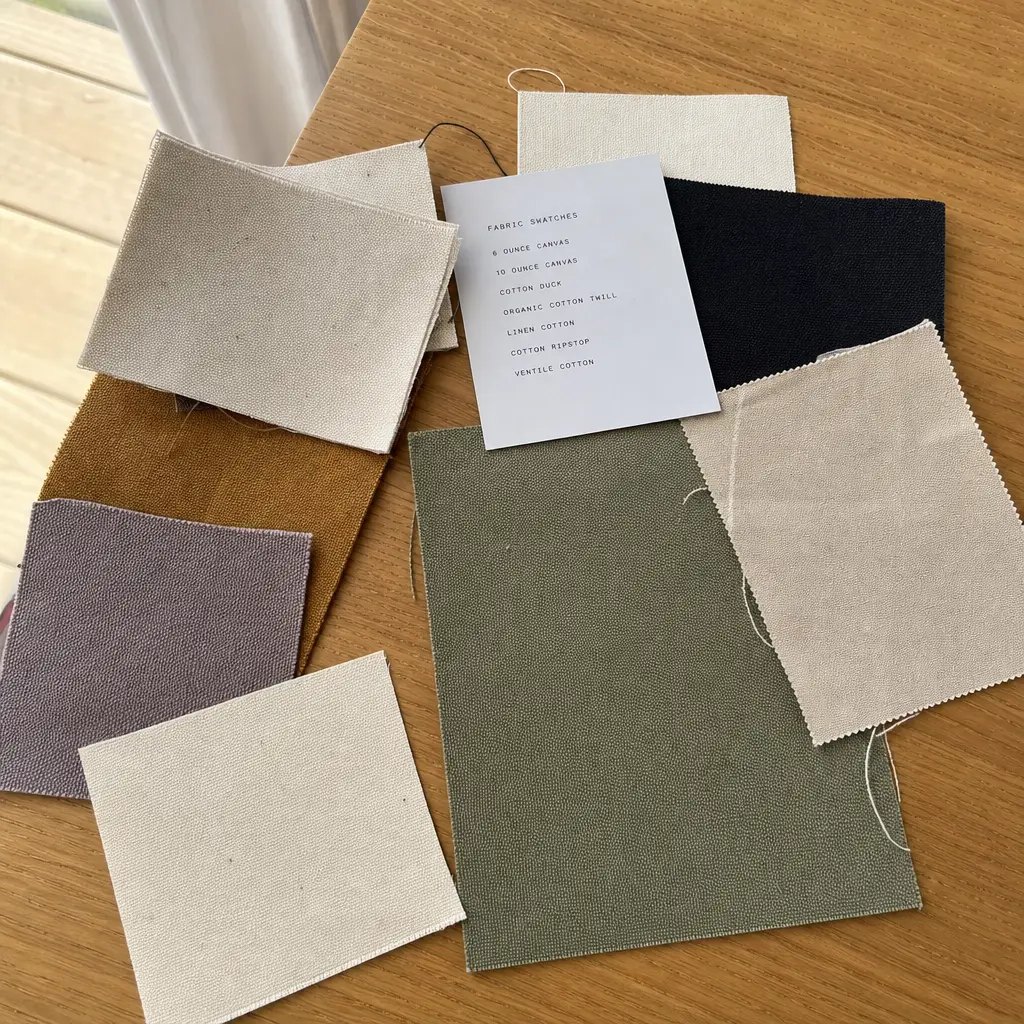
GSM is important, but it is not a complete strength specification. Two canvas fabrics with the same GSM can behave differently because of yarn count, weave density, finishing, cotton quality, and whether the fabric is washed or stiffened. A loosely woven heavy canvas can stretch and distort. A tighter medium-weight canvas can hold shape better and print more cleanly. This is why RFQs should request both fabric weight and a physical swatch before sample approval.
For procurement teams comparing supplier quotes, treat fabric description as a data point that must be verified. A quote that says 12 oz cotton canvas and a quote that says 12 oz canvas may not mean the same thing. The second could be a cotton-poly blend, lower cotton content, or a fabric calculated before finishing. If sustainability claims matter to your brand, specify whether recycled cotton, organic cotton, or standard cotton is required, and understand that each path affects MOQ, color control, and available stock.
- Request fabric weight after finishing, not only greige fabric weight.
- Ask whether the canvas is 100 percent cotton or blended.
- Check weave tightness and surface smoothness for print quality.
- Keep one approved swatch sealed for inspection comparison.
Match Divider Design to the Selling Channel
The divider is the part most often under-specified in wine carrier RFQs. It controls bottle protection, user experience, packing volume, and sewing time. For a two-bottle canvas wine carrier, a simple sewn divider or fabric bridge may be enough. For four-bottle and six-bottle carriers, the divider must hold cells open and prevent bottles from hitting each other while the customer walks from the store to the car. If the divider collapses, the carrier becomes a branded sack rather than a useful retail product.
Retail buyers should decide whether the divider needs to look premium or simply protect bottles. A canvas divider gives a reusable, coordinated appearance but costs more to cut and sew. Cotton webbing dividers can be strong and less bulky. Corrugated or cardboard inserts reduce cost for gift packs, but they can look disposable and may deform in humid storage. Removable dividers help packing efficiency but can be lost or inserted incorrectly at store level.
- Sewn-in canvas dividers suit premium reusable carriers and gift programs.
- Webbing dividers reduce bulk and can be strong if stitched into load-bearing seams.
- Removable inserts help flat packing but need clear packing control.
- Cardboard dividers fit short-life promotions but should be moisture protected.
Build Handles for Real Bottle Weight
Handle failure is the most visible production mistake because it happens in the shopper's hand. A full 750 ml bottle weighs roughly 1.2 kg to 1.6 kg depending on glass weight and liquid. A six-bottle carrier can easily exceed 8 kg before considering movement and shock. The handle design must be specified by material, width, length, stitch pattern, and reinforcement. A higher canvas GSM will not solve a weak handle seam.
For single and two-bottle carriers, 25 mm to 30 mm cotton webbing is common. For larger carriers, 30 mm to 38 mm webbing gives better comfort and load distribution. Side-seam inserted handles or full-length webbing can spread stress better than handles sewn only to the upper panel. Box stitching and bartacks are useful, but only when the machine tension, thread, and fabric layers are correct. The RFQ should require load testing on finished samples using the actual bottle count.
- Define handle drop so shoppers can carry comfortably without bottles swinging too low.
- Use reinforced stitching at every load point, not only decorative top stitching.
- Specify thread color and thickness if contrast stitching is part of the design.
- Test the carrier loaded and lifted repeatedly, not only held static for a photo.
Select Printing Around Canvas Texture
Liquor retailers often want the carrier to act as packaging and advertising at the same time, so print quality matters. Screen printing is usually the most practical method for bulk canvas wine carriers with one to three solid colors. It handles simple logos, store names, seasonal campaign marks, and front-panel branding at competitive unit cost. The print area should be planned around seams, gussets, handles, and fold lines so the logo does not disappear when the carrier is filled.
Detailed artwork requires more caution. Fine lines can break on coarse canvas, and large solid ink areas can feel stiff or crack if the ink is not matched to the fabric. Heat transfer can work for smaller runs or full-color graphics, but it changes the hand feel and may not match the natural look of cotton canvas. Embroidery is premium for a small mark, but it is slow, raises cost, and can pucker thinner panels. For dyed canvas, request a print strike-off because ink opacity and color shift are common quote traps.
- Use screen print for solid retail logos and repeat bulk orders.
- Use heat transfer for detailed short runs after testing adhesion and hand feel.
- Use embroidery for small premium logos, not large promotional graphics.
- Approve print size by measuring the filled carrier, not only the flat panel.
Control MOQ by Separating Stock and Custom Elements
MOQ depends less on the word carrier and more on what is custom. A natural canvas body in a standard size may have a lower MOQ because the material is common and the pattern already exists. A dyed canvas body, custom webbing color, special divider, printed retail sleeve, or non-standard bottle cell can push the MOQ higher because the factory must buy material, set up dyeing, prepare screens, and manage separate cutting. Buyers often receive confusing MOQ answers because they combine all these variables in one request.
A practical way to reduce MOQ risk is to separate the specification into base product and custom options. For example, quote a standard natural 12 oz two-bottle carrier with one-color screen print, then quote the cost impact for dyed black canvas, custom divider, or printed hangtag as optional lines. This gives procurement teams a real decision path instead of one inflated price. It also helps brand owners decide whether the retail benefit of a custom color justifies the higher order quantity and longer lead time.
- Lowest MOQ usually comes from stock natural canvas and standard patterns.
- Dyed fabric increases MOQ and requires lab dip approval.
- Custom webbing, lining, and packaging can each create separate minimums.
- Complex artwork may require setup cost even when the bag MOQ is acceptable.
Use Sample Approval as a Production Control Tool
A sample should not be treated as a sales photo. It is the control document for mass production. For canvas wine carriers, the approved sample should include final or production-representative canvas weight, handle webbing, divider construction, thread, print method, logo placement, folding method, and packing direction. If the sample uses substitute fabric or a temporary divider, label it clearly and require a second pre-production sample before bulk cutting.
When reviewing samples, load them with real bottles and use them as a shopper would. Insert and remove bottles several times. Carry the bag by the handle, set it down, lift it again, and check whether the base collapses or the divider shifts. Measure logo position and compare the front panel after filling. Many empty samples look straight on a table but twist once loaded because the handle placement, gusset depth, or divider tension is wrong.
- Approve one sealed reference sample for the factory and one for the buyer.
- Record finished dimensions and acceptable tolerances on the sample tag.
- Photograph print placement with a ruler before mass production.
- Reject samples with strong odor, dirty fold marks, loose threads, or unstable dividers.
Plan Packing Before the Final Price
Packing affects both product condition and landed cost. Flat-packed single and two-bottle carriers can be efficient, but the fold line must not run through a large printed logo if the product will be displayed soon after arrival. Multi-bottle carriers with fixed dividers may need more carton space to avoid crushed cells. If the factory compresses them too tightly, retail staff may spend time reshaping every piece, and the carrier may still look deformed on shelf.
Carton weight is another practical issue. Six-bottle canvas carriers made from heavy fabric can make export cartons too heavy if packed in large quantities. Overweight cartons are harder to handle and more likely to be dropped. Buyers should request pieces per polybag or no polybag, pieces per inner bundle, export carton dimensions, gross weight, and pallet loading estimate. For liquor retailers with sustainability targets, reduce individual plastic where possible but still protect light canvas from dirt and moisture.
- Avoid hard creases across front logo panels.
- Keep dividers protected so they open correctly at store level.
- Set carton gross weight limits suitable for warehouse handling.
- Confirm whether pieces are packed flat, folded, nested, or shaped.
Compare Quotes by Landed Cost, Not FOB Alone
A low FOB quote can be misleading if the fabric is lighter, the divider is weaker, the carton is oversized, or the inspection risk is higher. For canvas wine carriers, landed cost includes unit price, sample and setup charges, inland freight, export packing, ocean or air freight volume, duties, local delivery, and the cost of rejects or rework. Heavy fabric and bulky dividers can raise freight cost enough to offset a small unit-price saving.
To compare suppliers fairly, build a quote sheet that forces the same data fields. Include fabric weight, material composition, finished size, bottle count, divider type, handle spec, print method, color count, packing method, carton size, carton quantity, gross weight, sample lead time, mass production lead time, and Incoterm. If one supplier cannot provide carton dimensions before sample approval, use a provisional estimate but do not treat the price as final. Procurement teams should compare both commercial terms and evidence quality.
- Calculate cost per usable carrier after expected rejects, not just quoted unit price.
- Compare carton CBM because bulky carriers can change freight economics.
- Separate one-time setup costs from repeat-order unit costs.
- Use the same Incoterm when comparing supplier quotes.
Specification comparison for buyers
| Spec decision | Recommended option | When it fits | Buyer risk to check |
|---|---|---|---|
| Main fabric weight | 10 oz to 12 oz cotton canvas, roughly 340-410 GSM | Single and two-bottle retail carriers where shape, print surface, and cost must balance | Below 8 oz may sag with full bottles; above 14 oz raises freight and sewing cost without always improving retail value |
| Heavy-duty multi-bottle build | 14 oz to 16 oz canvas with reinforced base and bartacked handles | Four-bottle or six-bottle carriers, club packs, tasting sets, and distributor giveaways | Confirm actual finished load test, not only fabric weight; handle stitching and base board matter more than GSM alone |
| Internal divider material | Same canvas, cotton webbing, or removable corrugated insert depending on price tier | Canvas dividers suit reusable gift carriers; corrugated inserts suit lower-cost promotional runs | Loose dividers can shift during packing; oversized cells can allow glass-to-glass contact |
| Handle construction | Cotton webbing 25-38 mm wide, full-length sewn into side seams or reinforced with box stitch | Retail buyers need comfort at 1-6 bottle weights and consistent appearance at checkout | Short handles reduce usability; narrow webbing cuts into the hand when carrying multiple bottles |
| Print method | Screen print for solid logos; heat transfer only for detailed short runs; embroidery for premium small marks | Screen print gives best unit cost for liquor retailer logos and store campaigns | Thick ink can crack on coarse canvas; embroidery on thin panels can pucker around the logo |
| Color and finish | Natural, black, or dyed canvas with pre-production lab dip for branded colors | Natural canvas suits craft wine shops; black hides stains; dyed colors fit brand campaigns | Dyed canvas can shrink or bleed; specify colorfastness and avoid approving color only from a phone photo |
| Retail packing format | Flat pack by piece or bundled cartons with dividers protected from crushing | Flat packing lowers carton volume for single and two-bottle carriers; shaped six-bottle carriers need careful carton planning | Over-compressed packing can crease logo panels and deform divider shape before retail display |
| Supplier evidence | Factory photos, material swatches, print strike-off, load test record, and carton drop-ready packing sample | Importers comparing quotes need proof that specs are executable, not only a low FOB number | A quote without fabric GSM, handle spec, divider construction, and packing method is not comparable |
Buyer checklist before sampling
- Define bottle count and bottle profile first: 750 ml Bordeaux, Burgundy, Champagne, spirits, or mixed retail bottles.
- Specify fabric by weight and construction, such as 12 oz cotton canvas, not only by the word canvas.
- Match GSM to load: lighter for single-bottle promotions, heavier for multi-bottle carriers with repeated use.
- Decide whether the carrier needs a flat base, removable divider, sewn divider, or board reinforcement.
- Set handle width, length, attachment method, and bartack or box-stitch requirement before quoting.
- Choose print method based on artwork coverage, color count, canvas color, and wash or rub expectations.
- Request a pre-production sample using final fabric, final handle, final divider, and actual logo placement.
- Review carton packing, piece folding, divider protection, carton weight, and pallet loading before approving mass production.
- Collect quote data in the same format from every supplier: material, size, MOQ, print, packing, sample fee, lead time, and Incoterm.
- Add acceptance criteria for bottle fit, seam strength, print adhesion, color tolerance, odor, stains, and carton condition.
Factory quote questions to send
- What exact canvas weight are you quoting in oz and GSM, and is it greige, washed, dyed, or finished canvas?
- Is the price based on cotton canvas, cotton-poly canvas, recycled cotton canvas, or another blended fabric?
- What bottle size did you use for pattern calculation, and what internal cell dimensions will fit after sewing tolerance?
- How are the handles attached: side seam inserted, cross-body webbing, box stitch, bartack, or simple top stitch?
- What divider construction is included in the price, and is it removable, sewn-in, foldable, or packed separately?
- Which print method is included, how many colors, what maximum print area, and will you provide a strike-off before production?
- What is the MOQ for natural canvas, dyed canvas, custom size, custom webbing, and custom printed packaging?
- What is the sample lead time and mass production lead time after artwork and material approval?
- How many pieces per export carton, what is the estimated carton size and gross weight, and can cartons pass normal export handling?
- What inspection standard do you recommend for seams, handle strength, print defects, stains, odor, and packing damage?
Quality-control points to confirm
- Fabric weight tolerance should be declared before production; many buyers accept around plus or minus 5 percent if appearance and strength remain within approval sample.
- Finished size tolerance should be practical for sewn canvas, commonly around plus or minus 5 mm on small panels and larger tolerance on gussets.
- Bottle cells must fit the target bottle without forcing, but should not allow excessive movement that causes glass contact during carrying.
- Handles should pass a load test using the intended bottle count plus safety margin, with no seam tearing, bartack opening, or webbing slippage.
- Logo position should be measured from fixed seams or top edge, not judged by eye across folded pieces.
- Print adhesion should be checked by rub test after curing, especially on coarse natural canvas and dark dyed canvas.
- Canvas odor, mildew marks, oil stains, weaving slubs, and dirty folding lines should be included in inspection criteria.
- Dividers should stand correctly after unpacking and should not collapse under bottle weight in normal retail use.
- Cartons should stay within manageable gross weight and should protect front print panels from hard creasing.
- Pre-shipment inspection should include actual bottle fitting, not only visual inspection of empty carriers.