Start With the Buying Use Case, Not the Word Canvas
A canvas wine carrier can be many things: promotional packaging, a retail accessory, a gift-set component, a winery collaboration item, or an apparel order insert. In a catalog photo those versions may look close. On a purchase order, they are not close at all. Each one points to different fabric weight, handle engineering, decoration, packing, and inspection standards.
A low-cost event carrier may only need to survive a short handoff and carry one standard bottle. It can be softer, simpler, and less structured. A carrier sold beside apparel has a different job. It must sit cleanly, carry the brand mark neatly, pass receiving checks, and look intentional when a customer handles it in store. The material choice has to follow that job.
Procurement teams often lose time when the RFQ says only canvas wine bag. One supplier may price a 10 oz single-layer cotton canvas carrier with basic webbing handles. Another may include 14 oz canvas, lining, a divider, a base board, a woven label, and individual packing. Both quotes may be honest. They are still not comparable.
The brief should name the commercial role, sales channel, bottle style, target quantity, documentation needs, and whether the item is a cost-controlled giveaway or a retail-facing product. This is also where the team should define who approves claims, artwork, sampling, QC, and packing. Filled glass bottles concentrate weight in a small area, so material selection cannot be separated from load and construction. A useful canvas wine carriers material selection guide for eco apparel brands begins with the loaded product, not with a fabric mood board.
- Define the carrier as retail SKU, gift packaging, collaboration item, apparel insert, wholesale account item, or event giveaway.
- State whether the carrier must look structured when empty, only when loaded, or while hanging on a fixture.
- Separate one-bottle and two-bottle requirements because divider, base, and handle stress are different.
- List the decision owner for claims, compliance, artwork approval, QC approval, and packing approval.
- Do not compare unit prices until fabric weight, construction, branding, packing, and Incoterm are aligned.
Translate Bottle Assumptions Into Dimensions the Factory Can Use
Wine bottle fit is not universal. A typical 750 ml Bordeaux bottle is narrower than many Burgundy or Champagne-style bottles. Premium bottles can also be heavier or wider than the sample bottle sitting in a supplier showroom. If the carrier must handle a mixed assortment, the widest and heaviest bottle should drive the pattern and strength review.
Give the factory numbers, not just a product description. Useful inputs include bottle height, body diameter, base diameter, shoulder shape, and filled weight. A physical bottle is even better for custom work, especially when the program includes sparkling bottles, oversized glass, or a retail gift set. If sending glass is impractical, a dimensioned drawing or dummy bottle can still prevent expensive rework.
Fit has to be checked while the carrier is loaded. Finished body width, height, gusset or base width, opening clearance, and handle drop all affect the way the user experiences the product. A narrow opening slows packing staff. A short handle drop feels awkward. A soft or undersized base can let the bottle pull the bottom seam into a point. For two-bottle carriers, the divider must keep bottles separated during normal handling and after repeated insertion.
The approved sample should be tested with the bottle style used in the final program, not only with the supplier's standard test bottle. For two-bottle bags, test two full bottles and any expected mixed combination, such as one standard wine bottle plus a wider sparkling bottle. The front panel can also shift when loaded, so logo approval should happen with a bottle inside the carrier.
- Provide bottle height, body diameter, base diameter, shoulder profile, and filled weight.
- Define maximum acceptable insertion friction: the bottle should slide in without forcing or distorting the opening.
- Set finished dimension tolerances, such as plus or minus 5 mm for body dimensions and plus or minus 10 mm for handle drop when appropriate.
- For two-bottle carriers, specify divider height, divider material, attachment points, and whether bottles may touch.
- Approve samples while loaded because the fabric panel shape changes once the bottle pushes outward.
Select Canvas Weight by GSM, Tolerance, and Surface Quality
Canvas weight is often quoted in ounces, but buyers should ask for both oz and GSM. The conversion is not always perfectly clean because mills, finishes, and supplier habits vary. As a practical range, 10 to 12 oz canvas often falls around 340 to 410 GSM. That can work well for simple one-bottle carriers when the handles and base seams are properly reinforced.
For stronger retail presentation, heavier bottles, corporate gifting, or a more reusable feel, 12 to 14 oz canvas, roughly 410 to 475 GSM, is usually a safer starting point. It gives the bag more body and helps the carrier look less disposable. Still, heavier is not automatically better. A 14 oz canvas can create bulky folded seams, uneven top edges, needle breakage, puckering, and poor stitch tension if the factory is not set up for it.
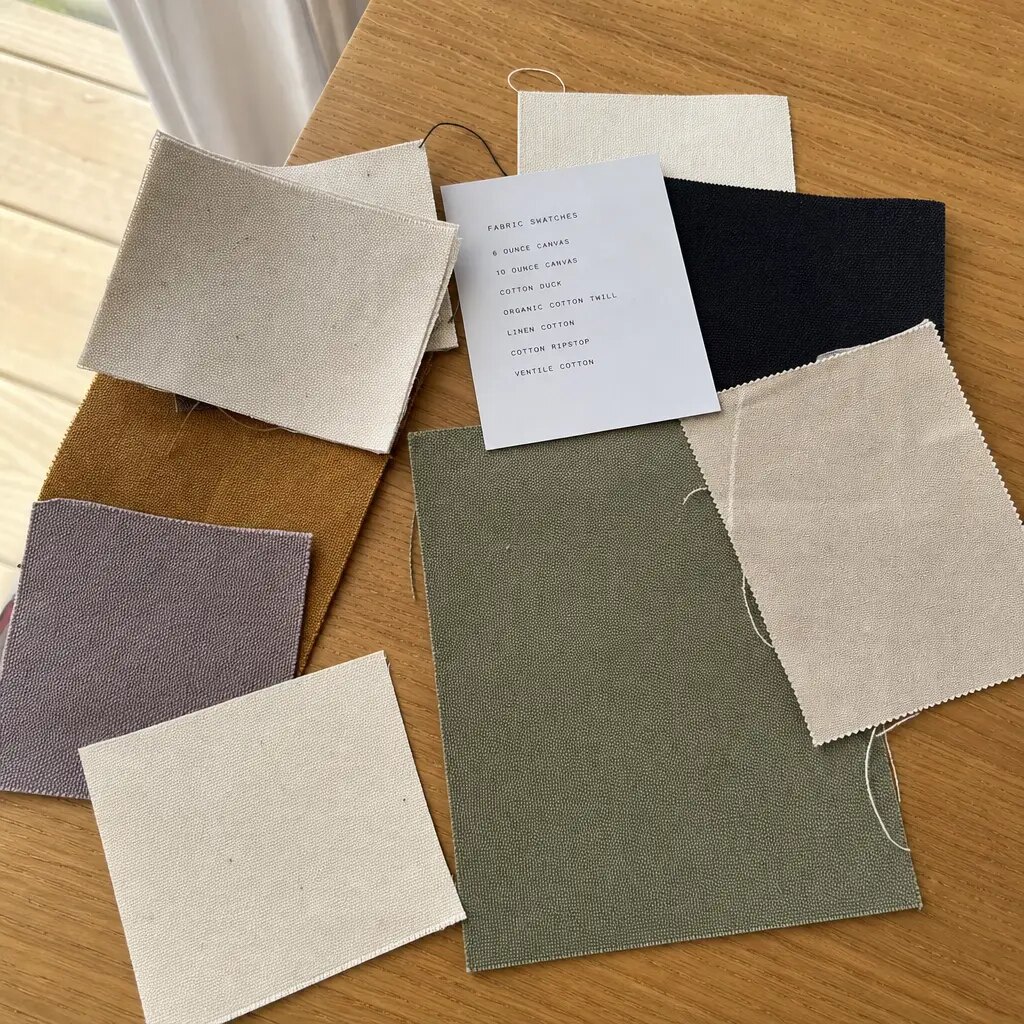
A tight, stable 12 oz canvas may print cleaner and sew more consistently than a loose, rough 14 oz canvas. That is why the swatch review should include weave density, hand feel, surface hairiness, neps, slubs, and finishing. The number in the quote is only one part of the decision. The surface must also accept the chosen print or label method.
Write the tolerance into the specification. Many buyers use plus or minus 5 percent as a practical GSM tolerance, although tighter or looser standards may be needed depending on the order and fabric source. If shade and texture matter, approve a larger cutting or range board rather than one small swatch. Natural cotton canvas often includes seed flecks and shade movement; those traits should be accepted deliberately or limited clearly before bulk cutting.
- Use 10 to 12 oz, about 340 to 410 GSM, for cost-sensitive one-bottle carriers with good reinforcement.
- Use 12 to 14 oz, about 410 to 475 GSM, for stronger retail presentation, heavier bottles, or better reuse perception.
- Consider 14 oz and above only after checking seam bulk, print surface, handle comfort, and sewing capability.
- Set GSM tolerance in writing and require the bulk fabric to match the approved swatch or range standard.
- Inspect weave tightness, surface texture, and print compatibility before choosing fabric weight.
Choose Cotton Claims and Finishes With Evidence Behind Them
Eco apparel brands often want wine carriers to feel connected to the same material story as their garments. Natural cotton canvas works well for that reason. It pairs easily with apparel labels, kraft hangtags, simple print marks, and reusable packaging language. But a natural look still needs control. Undyed canvas can reduce dye-processing complexity compared with custom colors, yet it can also show shade variation, seed flecks, neps, and small slubs.
Those natural details are not automatically good or bad. They look intentional when the buyer has approved a range. They look defective when the receiving team expected a smooth, uniform surface. The specification should define acceptable shade, flecks, slubs, weave lines, hand feel, odor, and any shrinkage or finishing expectations that matter to the final use.
Organic cotton can support a verified sustainability program, but it is not a simple checkbox upgrade. Buyers need to know what is certified: yarn, greige fabric, finished fabric, transaction certificate, or final sewn product. That scope affects what the brand can say on a hangtag, product page, retailer submission, or internal compliance file. Procurement should confirm the exact wording with compliance before it becomes part of the RFQ or artwork.
Recycled-content cotton and recycled cotton blends may fit some brand goals, but they can bring more variation in shade, fiber length, surface neps, and hand feel. Dyed canvas improves brand color control, though it adds lab dips, dye-lot minimums, colorfastness checks, and shade-band risk. Water-resistant finishes may be useful for event, hospitality, or outdoor handling, but coatings can change print adhesion and may conflict with a fully natural positioning. The finish should solve a real use problem, not just make the spec sound more premium.
- Ask exactly which document is available: fabric certificate, transaction certificate, scope certificate, test report, or supplier declaration.
- For organic claims, confirm whether the claim can legally apply to the final sewn carrier or only to the fabric.
- For natural canvas, approve shade range, seed flecks, slubs, neps, and hand feel before bulk cutting.
- For dyed canvas, require lab dip approval, bulk shade approval, and colorfastness expectations if relevant.
- Avoid vague wording such as eco-friendly, sustainable, or green unless documentation supports the specific claim.
Engineer Handles, Seams, Base, and Divider for Real Load
The handle attachment and bottom seam are the highest-risk areas on a canvas wine carrier. A full 750 ml bottle commonly weighs around 1.2 to 1.6 kg depending on the glass weight and contents. A two-bottle carrier can therefore put more than 3 kg of practical load on the handle system before movement, swinging, or rough handling is considered.
The body fabric may be strong enough while the handle fails. Stress gathers at a few stitch points, especially when the user lifts quickly or the bottles shift. That is why handle engineering belongs in the tech pack, not in a comment like strong handles. Specify the handle material, width, drop, placement, seam allowance, reinforcement pattern, thread, and stitch density.
Cotton webbing is practical for many eco apparel programs because it distributes pressure and matches the natural canvas look. Self-fabric handles can look cleaner, but they need enough folding, edge control, and locked reinforcement. Narrow handles reduce material cost, yet they may feel uncomfortable with a loaded bottle. Bar-tacks, box stitching, or X-box reinforcement should appear on the approved sample and be carried into bulk production without substitution.
The base and divider need the same attention. A reinforced bottom seam or base insert helps stop the bottle from pulling the carrier into a sharp point. In a two-bottle version, the divider has to stay attached and prevent bottle contact during normal handling. If the design uses a base board, define material, thickness, covering, edge finish, and removability. For eco-positioned products, check that boards, linings, snaps, drawcords, and closures match the brand's material policy.
- Specify handle width, handle drop, handle material, placement, seam allowance, stitch density, and reinforcement type.
- Use bar-tacks, X-box stitching, or box stitching at load points, with length and thread color approved in the sample.
- Treat handle tearing, bottom seam opening, and divider detachment as major or critical defects.
- Test one-bottle carriers with the heaviest expected bottle and two-bottle carriers with two full bottles.
- Check loaded comfort: the handle should not twist sharply, cut into the hand, or pull the top edge out of shape.
Match Branding Method to Canvas Texture and Order Size
Decoration should be chosen with the fabric, quantity, and brand position in mind. Screen printing is usually efficient for simple logos, bold wordmarks, and one- or two-color artwork. On natural canvas, water-based ink can give an apparel-adjacent look, but curing has to be right. Under-cured ink can rub off, crack, look weak, or sit unevenly on a textured surface.
A digital mockup is not enough for approval. Ask for a physical print strike-off on the actual bulk or approved sample canvas. The strike-off should confirm color, opacity, registration, edge sharpness, placement, curing, and rub performance. If the carrier will ship folded, fold the printed sample the same way bulk goods will be packed. A logo that looked clean on the table can develop a permanent crease in a carton.
Woven labels, side tabs, patches, and small stitched labels can make a wine carrier feel closer to an apparel accessory than a promotional giveaway. They also add variables: label size, color, angle, fold direction, stitch line, and placement from the seam or top edge. If the carrier shares existing apparel trims, the brand gains consistency, but label MOQ and lead time may become separate cost drivers.
Embroidery can work on heavier canvas, especially for small marks. On lighter fabrics, it can pucker the panel or distort fine lettering. Heat transfer can offer detail and color consistency, yet adhesion and hand feel must be tested on textured canvas. Large prints should avoid hard fold lines, bottom corners, heavy friction zones, and seam intersections wherever possible.
- Use screen print for simple artwork, larger runs, and cost control; approve ink opacity and curing on real fabric.
- Use woven labels or patches for subtle apparel-style branding, but quote label MOQ and placement tolerance separately.
- Test embroidery for puckering, thread tension, and small-text readability before bulk approval.
- Set print placement tolerance, such as plus or minus 3 to 5 mm where the design and factory capability allow.
- Include dry rub, flex, and visual registration checks in the decoration approval process.
Build an RFQ That Produces Quotes You Can Compare
A strong RFQ removes supplier guesswork. It should include target quantity by SKU, bottle dimensions, finished carrier dimensions, canvas weight in oz and GSM, fabric composition, color, construction, handle details, reinforcement, lining, divider, base insert, decoration, labels, packing, carton requirements, sample stages, testing needs, Incoterm, and target delivery date. If those points are missing, each supplier will price a different product.
The quote format should separate the visible cost drivers. Buyers do not need a factory's full internal costing, but they do need to know what is included. Fabric, dyeing, cutting, sewing, reinforcement, printing, setup charges, labels, hangtags, inserts, individual packaging, cartons, inspection, and sample fees should not be hidden inside one vague unit price. Exclusions often appear after sampling, when changing suppliers is more painful.
MOQ also needs careful wording. Stock natural canvas with one-color printing may allow a lower MOQ than dyed canvas, organic cotton, recycled-content fabric, custom webbing, woven labels, or lined two-bottle construction. Ask whether the MOQ applies per fabric color, artwork version, label design, packing type, SKU, or total order.
This matters for apparel brands that split quantities across seasonal colors, collaboration logos, wholesale accounts, or retail channels. A supplier may say the MOQ is 1,000 pcs, then later explain that the custom woven label needs 3,000 pcs or that dyed canvas has a fabric-color minimum. Bring those dependencies into the quote stage.
- Attach a spec sheet instead of relying on a reference photo alone.
- Ask suppliers to list inclusions, exclusions, setup fees, sample fees, MOQ logic, lead time, and Incoterm.
- Require separate pricing for optional lining, divider, base insert, woven label, hangtag, and individual packing.
- Compare suppliers only after aligning GSM, construction, handle reinforcement, decoration method, packing, and shipment terms.
- Ask for estimated carton dimensions, units per carton, gross weight, net weight, and CBM for freight planning.
Use Sampling to Prove Fit, Strength, Decoration, and Packing
Sampling should prove function, not just appearance. A prototype or fit sample confirms bottle insertion, loaded shape, handle comfort, base stability, and divider behavior. A decoration strike-off confirms how ink, embroidery, label, or patch application performs on the actual fabric. A pre-production sample should use final materials, final construction, final branding, and final packing method.
Inspect the sample loaded and unloaded. A logo that appears centered on a flat empty carrier may sit too low or distort when a bottle pushes the front panel outward. A handle that looks tidy may twist when lifted. A divider that seems acceptable on the table may collapse when two bottles are inserted quickly. Small problems are easier to fix at this stage than after bulk cutting.
Packing should be part of sample approval. If the product will ship folded, fold it for the same amount of time and check the logo, seams, top edge, and shape recovery. If the carrier ships with a base insert, hangtag, barcode, paper band, or individual bag, those items should be reviewed together rather than added after PP approval.
Keep controlled approval samples. One signed or sealed PP sample should stay with the factory, and one should stay with the buyer or inspection team. Top-of-production goods should be compared with the PP sample and written specification, not with memory or a message-thread photo. If production changes fabric lot, ink, label, insert, handle material, or packing method, require written approval before that change is used in bulk.
- Request prototype or fit sample, decoration sample, PP sample, and top-of-production photos or samples when risk justifies it.
- Load the sample with the actual bottle or the heaviest likely bottle before approval.
- Approve artwork position in the loaded state and after the carrier has been folded and packed.
- Record all sample comments in the tech pack; do not approve bulk production with unresolved verbal notes.
- Retain matching PP samples at factory and buyer side for final inspection comparison.
Set QC Tolerances Before Fabric Is Cut
Quality control should be written before bulk fabric is cut. Wine carrier defects are predictable: weak handle attachment, narrow seam allowance, bottom seam distortion, crooked label, print misplacement, shade variation, stains, odor, divider failure, and wrong packing count. The buyer should define critical, major, and minor defects before production starts.
A torn handle is not a cosmetic issue. Neither is a bottom seam opening under the agreed load. Functional failures should be treated as major or critical defects, depending on the buyer's quality manual and the risk to the end user. Cosmetic issues, such as minor natural flecks on approved natural canvas, should be handled differently from stains, mildew, or unapproved shade mixing.
Measurable checkpoints make inspections less subjective. Common points include finished dimensions, handle drop, handle placement, logo placement, stitch density, bar-tack length, label angle, shade lot, and carton count. The exact tolerance depends on the design and supplier capability. Body dimensions may be controlled within a few millimeters on simple patterns, while handle drop may need a wider tolerance because webbing and sewing tension can vary.
A practical QC plan includes incoming fabric review, in-line sewing checks, decoration checks, top-of-production review, and final random inspection. If the buyer uses AQL, state the inspection level and acceptable quality limits in the PO or quality manual. For functional review, include loaded bottle checks, handle pull or carry test, bottom seam inspection, print dry rub, label readability, odor check, and packing verification. For export orders, also review carton strength, moisture exposure risk, and accurate carton marks.
- Create a defect classification list covering handle failure, wrong fit, wrong artwork, severe stains, odor, broken stitches, and packing errors.
- Set tolerances for body dimensions, handle drop, handle placement, divider placement, logo placement, and label alignment.
- Check stitch density and bar-tack consistency at load points during in-line inspection, not only at final inspection.
- Perform loaded fit checks on samples from production, not only on the approved PP sample.
- Verify carton quantity, SKU separation, barcode accuracy, carton marks, and whether folding damages logo appearance.
Plan Packing, Compliance, and Delivery Before the PO Locks
Packing affects both cost and product condition. A soft unlined carrier can often ship folded, which saves carton space. The tradeoff is crease risk, especially across a printed logo. A structured carrier with a base insert, divider, or retail hangtag may need flatter packing, fewer units per carton, or insert protection. The packing plan should match the product's sales channel, not just the lowest freight volume.
Individual polybags reduce soiling, but they add material and may require suffocation warnings depending on destination and bag dimensions. Paper bands or paper wrap can fit an eco apparel story more naturally, although they may offer less moisture protection. If the carrier will arrive at a retailer, winery, event site, or apparel warehouse, clarify who will unpack, scan, display, or distribute it.
Compliance details should be handled before the PO is placed. Retail programs may require barcode labels, country-of-origin marking, fiber content labeling, warning statements, retailer carton marks, or restricted-substance testing. Requirements vary by market, retailer, and product claim, so the supplier should not be expected to guess. Sustainability language should match available documentation and approved legal or compliance wording.
Lead time should include fabric sourcing, lab dip if dyed, label production, sample revisions, PP approval, bulk cutting, printing or embroidery, sewing, finishing, inspection, packing, and freight booking. A quote that lists only sewing time can mislead planning. Ask for a milestone schedule and identify the latest artwork approval date, fabric approval date, PP approval date, and shipment booking date. The cleaner the front-end specification, the fewer surprises appear near delivery.
- Decide folded, flat, or upright packing based on logo crease risk, structure, carton volume, and retail presentation.
- Specify individual packaging, hangtag, barcode, country-of-origin mark, warning label, carton mark, and master carton count.
- Ask whether polybags, paper wraps, or bands are included and whether destination warnings are required.
- Build the lead time around fabric, labels, samples, production, inspection, packing, and freight, not just sewing days.
- Require suppliers to confirm exclusions such as testing, certification documents, repacking, duties, and freight.
Specification comparison for buyers
| Spec decision | Recommended option | When it fits | Buyer risk to check |
|---|---|---|---|
| Sourcing route | Direct canvas bag factory with in-house cutting, sewing, and print coordination | Best for 1,000 to 20,000 pcs when the buyer needs control over fabric lot, handle reinforcement, logo placement, inspection, and export packing | Confirm whether printing, dyeing, labels, and inserts are in-house or subcontracted; require one accountable party for defects across all steps |
| Sourcing route | Trading company managing bags, labels, hangtags, inserts, and cartons | Useful when the wine carrier is one item in a broader apparel or gift program and one PO is operationally easier | Ask who the actual sewing factory is, who approves PP samples, and whether inspection happens before goods leave the factory |
| Sourcing route | Local decorator using imported blank carriers | Suitable for low quantities, domestic event deadlines, or artwork-only customization | Decoration may be controlled, while base bag GSM, handle strength, shade, and bottle fit can vary between blank-bag batches |
| Sourcing route | Apparel or tote factory adding wine carriers | Works for simple unlined one-bottle carriers if the supplier already makes structured cotton bags | Check bottle geometry, bottom seam construction, bar-tack settings, and loaded fit; garment sewing experience alone is not enough |
| Sourcing route | Prototype studio followed by bulk bag factory | Appropriate for premium retail carriers, unusual bottle shapes, closures, dividers, or gift-set presentation | A polished prototype does not prove repeatable mass production; require bulk factory pattern confirmation, PP sample, and top-of-production check |
| Fabric build | 10 to 12 oz cotton canvas, about 340 to 410 GSM, single layer with reinforced handles | Practical baseline for one-bottle gift packaging, apparel order inserts, or moderate reuse where cost matters | Below-spec GSM, loose weave, or weak handle stitching can make the carrier sag even if the quoted oz sounds acceptable |
| Fabric build | 12 to 14 oz cotton canvas, about 410 to 475 GSM, reinforced base and handles | Better for retail shelf presentation, heavier bottles, corporate gifting, or eco lifestyle positioning | Higher seam bulk and needle tension issues can create puckering, broken stitches, or poor print results near folded seams |
| Fabric build | Lined 12 to 14 oz canvas with divider or base insert | Best for two-bottle carriers, premium gift sets, fragile bottle labels, or carriers that must stand upright | Lining, board, and divider add separate defect points; confirm material composition, edge finish, and whether inserts support sustainability claims |
| Material claim | Organic cotton, recycled-content cotton, undyed cotton, or certified fabric option | Useful when the carrier must support apparel brand compliance, retailer sustainability requirements, or verified product copy | Confirm certificate scope, transaction documentation, and whether the claim applies to fabric only or to the final sewn product |
Buyer checklist before sampling
- Confirm commercial use: retail SKU, gift-with-purchase, apparel packaging insert, corporate gift, winery collaboration, wholesale account item, or event giveaway.
- List bottle assumptions: bottle count, height, body diameter, base diameter, shoulder shape, filled weight, and whether Bordeaux, Burgundy, Champagne-style, or mixed bottles must fit.
- Specify finished dimensions with tolerances: body width, height, gusset or base width, opening clearance, divider position, handle drop, and handle width.
- Choose canvas weight in both oz and GSM, and state acceptable fabric-weight tolerance, commonly plus or minus 5 percent unless the buyer sets a tighter requirement.
- Define fabric composition and claim level: conventional cotton, organic cotton, recycled-content blend, undyed natural canvas, dyed canvas, or finished fabric with certification documents.
- Approve acceptable natural-canvas variation: shade range, seed flecks, slubs, neps, weave lines, hand feel, odor, and shrinkage after finishing if relevant.
- Specify construction: single layer, lined, bound seams, overlocked seams, folded seams, French seams, base insert, bottle divider, closure, neck retainer, or hang loop.
- Detail load-point engineering: handle material, handle drop, handle width, seam allowance, bar-tack length, X-box stitch size, stitch density, and reinforcement placement.
- Define branding: print method, ink type, number of colors, Pantone or Lab target if needed, artwork size, file format, placement tolerance, label dimensions, and stitch method.
- State packing requirements: folded or upright, individual polybag or paper band, hangtag, barcode, suffocation warning if polybagged, carton quantity, carton marks, and pallet limits if applicable.
Factory quote questions to send
- What is the exact canvas weight in oz and GSM, what tolerance do you control in bulk, and can the bulk fabric come from the same approved swatch source?
- What is the fabric composition and yarn or fabric certification scope, if any? Does documentation cover yarn, greige fabric, finished fabric, or final sewn product?
- Is the fabric stock, made-to-order, dyed-to-order, organic, recycled-content, or undyed natural canvas, and what is the MOQ and lead time for each option?
- What bottle dimensions does your current pattern fit? Please confirm height, body diameter, base width, and maximum filled bottle weight used for your sample test.
- Can you quote one-bottle and two-bottle versions separately, including any divider, base insert, lining, closure, or reinforcement cost difference?
- What are the finished dimensions and tolerances you will hold for body width, height, base width, handle drop, handle placement, divider placement, and logo placement?
- What handle material, handle width, handle drop, seam allowance, stitch density, bar-tack length, and reinforcement pattern are included in the quoted price?
- Is printing, embroidery, woven label production, patch application, cutting, sewing, inspection, and packing done in-house? If any step is outsourced, who controls defects and rework?
- What decoration methods do you recommend for this canvas surface, and can you provide a print strike-off on the actual fabric before PP approval?
- What are setup charges by screen, color, embroidery file, woven label design, patch mold, barcode label, hangtag, or special carton mark?
Quality-control points to confirm
- Fabric weight matches the approved oz and GSM target within the agreed tolerance, commonly plus or minus 5 percent unless otherwise specified, with no unapproved shade lot mixing, mildew, oil marks, weak weave areas, or severe slubs outside the approved standard.
- Finished dimensions match the approved specification, including body width, height, base width, gusset, opening clearance, divider position, handle drop, handle width, and handle placement within written tolerances.
- Bottle fit is verified with the agreed bottle or dummy: no excessive drag during insertion, no neck pinch, no base distortion, no divider collapse, and no unacceptable leaning when loaded.
- Handle reinforcement follows the approved construction: correct webbing or self-fabric handle, seam allowance, bar-tack length, X-box size, stitch density, thread color, and placement on both sides of the carrier.
- Loaded strength check is performed using the agreed bottle weight or a defined equivalent load; handle tearing, broken stitches, bottom seam opening, or severe distortion is treated as a major or critical defect.
- Seam quality is consistent: straight stitch lines, no skipped stitches, broken threads, loose thread tails, needle cuts, open seams, twisted binding, or seam allowance narrower than specified at load points.
- Print quality matches the approved strike-off: correct color target, opacity, registration, edge sharpness, placement, curing, and no bleeding, cracking, ghosting, pinholes, scorch marks, transfer stains, or dry-rub failure beyond the agreed standard.
- Woven labels, patches, hangtags, care labels, and barcode labels are aligned, secure, readable, correctly oriented, and within placement tolerance, with no wrong artwork version or mixed SKU packing.
- Lining, divider, base board, and closures sit flat and secure, with no curled board, exposed sharp edges, rough seams that can scratch bottle labels, loose snaps, misaligned drawcords, or divider detachment.
- Edge finishing matches the specification: overlocked, bound, folded, turned, or intentionally raw only if approved; no uncontrolled fraying is acceptable on shipment-ready goods.