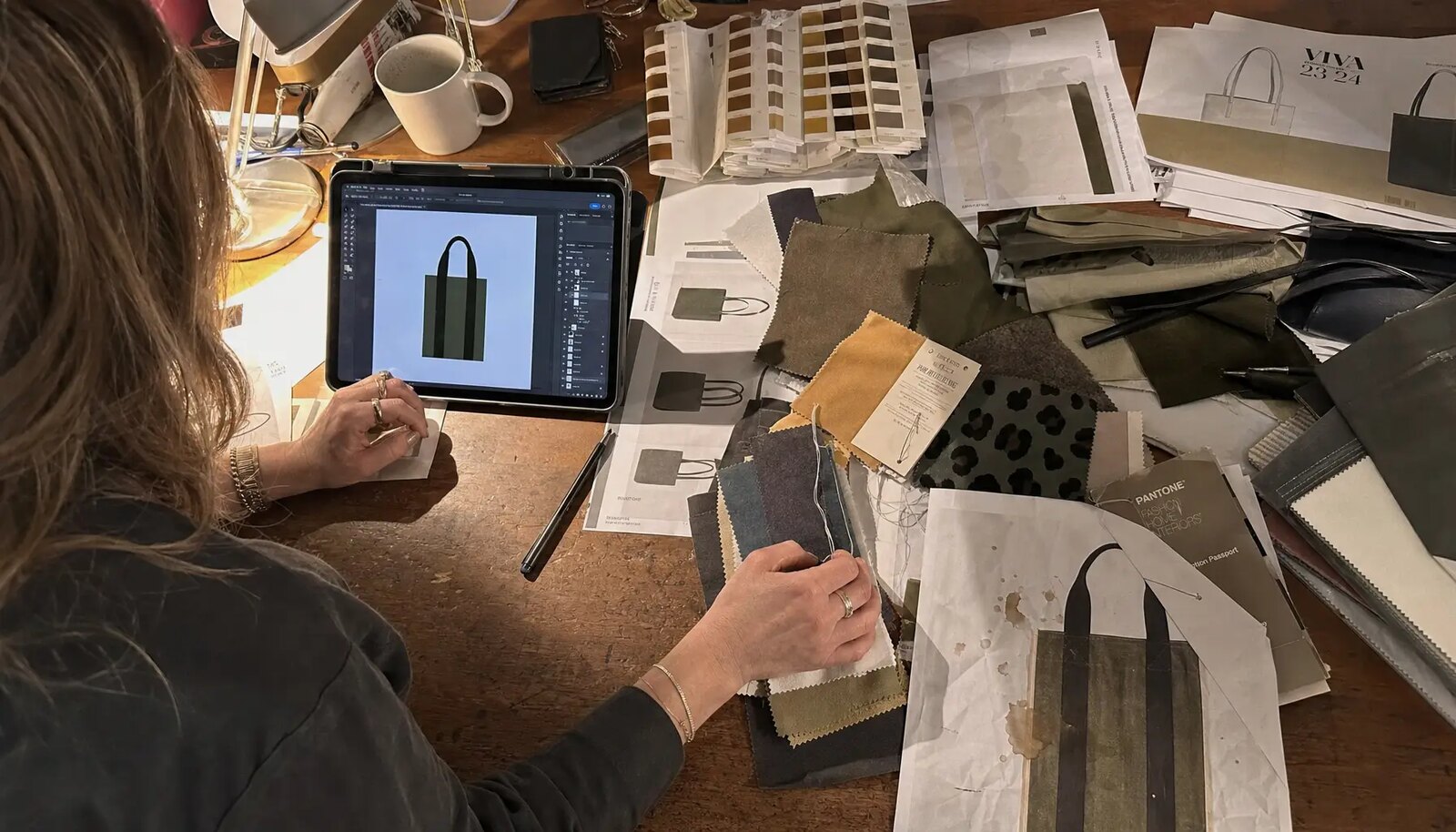
Why canvas wine carriers fail at craft fairs
A canvas wine carrier looks simple from a distance. On a craft-fair table, though, it works hard. Staff handle it all day, shoppers pick it up by the handles, glass bottles add concentrated weight, and cartons may be opened, repacked, and moved from event to event. Weak fabric, loose stitching, tight dimensions, and unstable decoration show up quickly in that environment.
For procurement teams, the biggest risk is not usually one obvious defect. It is specification drift. One supplier may quote 12 oz natural canvas with a flat sleeve base and basic handle stitching. Another may quote 14 oz pre-shrunk canvas with a boxed base, bar-tacked handles, print-protected folding, and clearer carton packing. Both quotes may say “canvas wine bag,” but they are not the same product.
Craft-fair selling adds another layer. The carrier should look good empty, load quickly during a sale, hold the bottle without sagging, and keep the logo visible. If it is too soft, the front panel wrinkles around the bottle. If it is too tight, staff have to force the bottle in and the seams take unnecessary stress. If it is overbuilt, the unit cost, folded bulk, and carton CBM may undermine the target margin.
A stronger sourcing process starts with the bottle, not the artwork. Define the approved bottle range first. Then build the specification around finished dimensions, canvas weight, fabric finish, handle reinforcement, decoration, and packing. This prevents a common problem: approving an attractive flat sample that performs poorly once a filled bottle is inside.
- Source the item as load-bearing bottle packaging, not as a generic promotional tote.
- Ask every supplier to quote finished fabric weight, construction, handle reinforcement, and packing format in writing.
- Test the sample with the actual bottle shape before approving artwork placement or bulk cutting.
- Balance structure and freight because heavier canvas can improve hand feel while increasing folded bulk and carton CBM.
- Use the approved pre-production sample as both the functional standard and the workmanship standard.
Start with bottle dimensions and carrier geometry
“Fits a 750 ml bottle” is too vague for a buying spec. Wine bottles vary by region and style, and craft-fair assortments may also include sparkling wine, cider, olive oil, spirits, or specialty bottles. A carrier that is comfortable on a slim Bordeaux-style bottle can feel tight on a sparkling bottle. The same bag may look sloppy around a narrow tapered bottle.
Put the bottle data in the RFQ. At minimum, state the maximum bottle diameter, bottle height, shoulder profile if relevant, neck height if a closure is used, and filled weight. When the carrier must serve several bottle types, use the widest and tallest approved bottle for stress testing, then check whether the smallest bottle rattles or leans too much.
Carrier geometry should be specified in finished, usable terms. Internal width controls how easily staff can load the bottle. Base depth affects whether the bottle stands securely and whether the bottom is properly supported. Top opening width changes loading speed and closure function. Handle drop affects comfort and prevents the bottle neck from crowding the user’s hand. Outside dimensions alone can mislead buyers because linings, gussets, seam allowances, and thick folded edges reduce the internal cavity.
A good craft-fair carrier usually gives the bottle enough room to slide in without forcing the seams, while still feeling secure when carried. Build in a practical loading allowance. Canvas can shrink, relax, or move during finishing and sewing, so a sample that barely fits is not a safe production standard.
Base style is also a sourcing decision. A flat sleeve base is simple, low-bulk, and easy to pack. It may not stand neatly on a display table. A boxed or gusseted base improves presentation and bottle stability, but it adds sewing time and folded volume. If the design includes a snap, tie, flap, or button loop, test it with the actual loaded bottle before approving the pattern.
- List the maximum approved bottle diameter, height, shoulder shape, neck height, and filled weight in the RFQ.
- Ask the factory to confirm internal cavity dimensions, not only outside dimensions.
- Measure top opening and base depth on the finished sample after sewing and finishing.
- Test the widest approved bottle first, then check whether slimmer bottles rattle excessively.
- If using a snap, tie, flap, or button loop, approve fit with the closure fastened around the loaded bottle.
Choose canvas weight using finished GSM, not vague labels
Canvas weight drives cost, hand feel, structure, print behavior, and freight. It should not be described only as “heavy canvas” or “thick cotton.” Use finished ounces and/or GSM, and ask whether the stated number refers to greige fabric or finished fabric after dyeing, washing, bleaching, or pre-shrinking.
For single-bottle craft-fair carriers, a practical starting range is often 12–16 oz finished canvas, roughly 340–540 GSM depending on weave and finish. That range is broad, so match the weight to the commercial goal rather than assuming heavier is always better.
A 12 oz canvas, commonly around 340–400 GSM, can work for cost-controlled programs. It is useful for unlined, open-top carriers that need to fold flat and ship efficiently. The tradeoff is structure. Buyers should check panel sag, handle pull, and whether the logo distorts when the bottle is inserted.
A 14 oz canvas, often around 400–470 GSM, is a balanced option for many craft-fair wine carriers. It usually gives better body than lighter canvas, provides a more substantial retail feel, and remains practical for sewing and packing. For natural canvas with a one-color screen print, this weight often gives buyers a good mix of structure, printability, and manageable carton bulk.
A 16 oz canvas, often around 470–540 GSM, pushes the product toward premium gift packaging. It may stand better and feel more durable, but it also increases material cost by weight, sewing resistance at thick seams, needle wear, folded bulk, and carton volume. If the program depends on compact event inventory or a lower retail price point, heavy fabric can become a hidden cost.
State a GSM tolerance in the purchase order. A common commercial tolerance is around ±5% for finished fabric, unless the buyer requires tighter control and the supplier confirms feasibility. This check should happen before cutting. Once a lighter or looser lot has been cut and printed, the problem becomes much more expensive to correct.
- 12 oz / about 340–400 GSM: softer, lower bulk, suitable for entry or promotional single-bottle carriers.
- 14 oz / about 400–470 GSM: balanced option for structure, printability, and manageable sewing.
- 16 oz / about 470–540 GSM: premium feel and stronger structure, with higher material and freight impact.
- Specify finished GSM after dyeing, washing, bleaching, or pre-shrinking, not only greige fabric weight.
- Require the supplier to record GSM checks before cutting the bulk fabric.
Fabric construction, finish, shrinkage, and color control
Two fabrics can both be called 14 oz canvas and still behave differently. Weave density, yarn quality, surface fuzz, finishing, and shrinkage affect print sharpness, seam strength, panel stability, and final dimensions. For most wine carriers, plain-weave cotton canvas or cotton-rich canvas is common. Still, the buyer should state whether cotton/poly blends are allowed. If the item is marketed as cotton or positioned as reusable natural packaging, fiber content must match labeling and compliance expectations.
Finish selection changes the look and the risk profile. Natural finished canvas gives the rustic craft-fair look many buyers want, but it can vary from cream to beige between lots. Dyed canvas needs lab dip approval and color-lot control. Bleached canvas can create a cleaner print base, though it may look less rustic. Washed canvas feels softer and more artisanal, but it may reduce structure. Pre-shrunk or sanforized-style finishing can improve dimensional consistency, but suppliers should support that claim with data.
Shrinkage is not just a laundry issue. It affects panel size, logo placement, top opening, and bottle fit. If the carrier is sold as washable, state the wash method, care label, and acceptable dimensional change. If it is not intended for washing, say so clearly and still request fabric stability information because finishing, printing, pressing, humidity, and storage can all influence dimensions.
Color approval should use physical standards. Digital art approval will not show how ink looks on textured cream canvas. For dyed fabric, approve a lab dip or fabric swatch under agreed lighting. For natural canvas, approve a shade band or define what level of variation is acceptable. Also decide in advance whether slubs, neps, and small weave irregularities are part of the rustic character or inspection defects.
Repeat orders need extra discipline. Craft-fair programs often reorder in waves, and a second fabric lot can look different beside remaining first-run inventory. Ask the supplier to retain an approved swatch and production standard, then reference that standard on the next PO.
- State fiber content and whether cotton/poly blends are allowed.
- Define finish: natural, bleached, dyed, washed, pre-shrunk, coated, laminated, lined, interlined, or untreated greige.
- Request shrinkage data and agree on acceptable dimensional movement if washability is claimed.
- Approve physical swatches for fabric shade and hand feel before bulk purchasing.
- For dyed canvas, confirm lab dip approval, color MOQ, and shade tolerance before quoting final price.
Lining, interlining, and base support choices
Lining is an upgrade, not a default. An unlined canvas wine carrier can be durable, attractive, and resale-ready when the body fabric is strong enough and the seams are finished cleanly. For many craft-fair programs, unlined construction is the best commercial balance because it reduces material cost, keeps the carrier foldable, shortens sewing time, and avoids internal bunching.
A cotton lining can improve perceived quality and hide internal seams. It also changes the pattern. The lining and seam bulk reduce usable space, so bottle fit must be checked again after lining is added. A lined sample may look fine when empty but wrinkle around the bottle or gather at the base. If the lining fabric is too light, it may tear, twist, or pull before the outer canvas shows a problem.
Interlining is different. A partial interlining can stiffen the front panel, handle attachment zone, or base without fully lining the carrier. It can help the bag stand better or keep the logo panel flatter. It also adds cutting accuracy, bonding, or sewing requirements. If fusible material is used, confirm that heat application will not affect fabric shrinkage, print appearance, or hand feel.
Base support deserves its own decision. A sewn boxed base is usually cleaner than a removable insert for simple single-bottle carriers. A loose insert may improve stability, but it raises questions about material, removability, washability, consumer instructions, and packing. For a premium gift item, extra structure may be worth the cost. For compact craft-fair inventory, it may simply add bulk.
A practical approach is to quote the core product and one upgrade version separately. This keeps the buyer from mixing assumptions. Lining, interlining, binding, woven labels, snaps, and base supports all add value only if the retail position can support the added cost and QC work.
- Choose unlined construction for efficient, foldable, cost-controlled single-bottle programs.
- Add lining only when the interior finish supports the target retail price or gift positioning.
- Reconfirm internal dimensions after adding lining, interlining, or base structure.
- Avoid loose base inserts unless material, care instructions, and packing are fully specified.
- Quote upgrades separately so cost increases are visible and comparable.
Handle and seam construction for glass-bottle loads
The handle is the most important load-bearing detail on a canvas wine carrier. A filled glass bottle puts concentrated weight into a narrow package, and every lift transfers stress through the handle attachment, top edge, side seams, and base. A handle that looks neat on an empty sample may stretch, twist, or fail when used repeatedly at an event.
The RFQ should define handle material, width, drop, attachment position, reinforcement method, stitch type, and placement tolerance. Self-fabric canvas handles create a consistent natural look and are common for craft-fair carriers. Webbing handles can be strong and efficient, but the texture and color should fit the brand. A double-layer or folded handle is generally safer and more comfortable than a thin single-layer strip.
Reinforcement needs to be visible in the specification. Common options include bar-tacks, box-X stitching, reinforced parallel rows, or fold-back attachments. State how many reinforcement points are expected and where they sit. If the factory uses bar-tacks, check that they are centered and not cutting the fabric. If box-X stitching is used, make sure the corners are secure and not too close to the fabric edge.
Seams deserve the same attention. Side seams and base seams must resist fraying, twisting, and concentrated bottle pressure. A seam allowance in the range of 8–12 mm is often practical for heavier canvas, though the correct value depends on the design and seam type. Raw edges should be enclosed, folded, bound, or overlocked as appropriate. Heavy fabric also requires suitable needle size, thread tension, and machine setup to prevent skipped stitches, needle cuts, and puckering.
Appearance still matters. Craft-fair shoppers see these carriers up close. Crooked handles, uneven stitch rows, puckered seams, and loose threads reduce perceived value even if the item technically holds the bottle. Build these visual standards into the sealed sample and the inspection checklist.
- Define handle width, handle drop, handle material, attachment location, and placement tolerance.
- Require bar-tacks, box-X stitching, or reinforced stitch rows at load-bearing points.
- Specify seam allowance, edge finishing, and top-edge construction before price comparison.
- Perform repeated loaded lifts using the approved bottle weight or equivalent test weight.
- Inspect handle symmetry because uneven handles cause twisting and poor display appearance.
Decoration selection: print, embroidery, labels, patches, and transfers
Decoration affects unit price, sampling, production risk, and packing. Screen printing is often the most practical method for canvas wine carriers sold at craft fairs, especially for one- or two-color logos. It works well for solid shapes, readable typography, and repeat programs. The RFQ should state color count, print size, print area, Pantone or approved color standard, ink type if relevant, setup charges, and print placement tolerance.
Canvas is textured. It does not behave like smooth paper or coated packaging. Fine lines, small reversed text, halftones, and tight registration may lose sharpness on coarse fabric. Natural canvas also changes color perception because ink is printed over a cream or beige base rather than bright white. If the artwork needs strong color, ask about ink opacity and approve a strike-off on the actual production fabric.
Embroidery can give a premium handmade impression, but it needs restraint. Dense embroidery can pucker lighter canvas, especially on a small single-bottle panel. Approve a digitized sew-out and check stitch density, backing, thread color, trimming, and panel distortion. Embroidery is usually better for small marks, initials, or badge-style branding than for large detailed graphics.
Woven labels and sewn patches are useful when the buyer wants detailed branding or consistency across several SKUs. They reduce some print-on-canvas issues, but they add trim MOQ, tooling, placement tolerance, and attachment checks. Cotton patches, faux leather patches, and printed labels should be reviewed for edge finishing, abrasion, colorfastness, and whether they create pressure marks when packed.
Heat transfers can help with short runs or complex multicolor artwork. They also require strict validation on canvas. Transfers may lift at the edge, crack across fold lines, or show heat-press marks if the substrate and application are not controlled. If the decorated panel will be folded in the carton, test the folded sample before production approval.
- Screen print works best for simple logos, solid shapes, and repeatable production.
- Embroidery suits small premium marks but requires puckering and backing checks.
- Woven labels are useful for detailed branding and multi-SKU consistency.
- Patches add perceived value but require edge, colorfastness, and attachment inspection.
- Heat transfers require fold, rub, adhesion, and press-mark checks before approval.
MOQ, supplier route, and quote comparison discipline
MOQ is shaped by material and setup realities. Natural canvas with one print color may support a lower MOQ than dyed canvas, lined construction, custom woven labels, metal trims, or multiple colorways. Each fabric color, print design, lining color, closure style, and packing format can become a separate control point.
Supplier route also changes visibility. A direct factory may give the buyer clearer access to fabric sourcing, cutting, sewing, finishing, and carton optimization. A trading company can be useful when a buyer is consolidating several categories, but the actual production assumptions may be less visible unless requested. A local converter may help with urgent samples or low-volume trials, though unit cost and fabric-lot consistency can vary.
Quote comparison should be line-by-line. A low price may exclude pre-shrunk fabric, handle reinforcement, artwork setup, printed carton labels, sample fees, or retail packing. Another supplier may include those items. Issue one shared spec sheet and require every supplier to state inclusions, exclusions, tolerances, and assumptions.
One useful RFQ structure is to ask for two versions. The base version might be 14 oz natural finished canvas, unlined, open top, boxed base, one-color screen print, reinforced handles, and controlled inner packing. The upgrade version might add 16 oz canvas, cotton lining, woven label, or a premium closure. This makes the cost of each improvement visible instead of producing unrelated quotes.
Lead time should be broken down by stage. Fabric procurement, dyeing, print screen preparation, embroidery digitizing, trim production, sample approval, bulk sewing, inspection, and packing can each affect the schedule. The PO should state that bulk production begins only after written approval of the pre-production sample and final artwork.
- Ask for MOQ by fabric color, print design, trim, lining, closure, and packing configuration.
- Require setup charges and sample charges to be listed separately from unit price.
- Compare only quotes based on the same fabric weight, finish, handle construction, decoration, and packing.
- Request base and upgrade versions using the same bottle dimensions.
- Confirm lead time after final sample approval, not just after deposit.
Sample approval sequence and practical testing
A good sample process reduces risk one step at a time. Start with fabric swatches for weight, shade, surface texture, and finish. Next, approve a blank fit sample using the actual bottle or a dimensionally accurate bottle gauge. Once the fit and construction are right, move to printed strike-offs, embroidery sew-outs, label placement, or a full pre-production sample.
Test the pre-production sample the way the final product will be sold. Insert and remove the bottle several times. Carry the loaded bag by the handle. Set it on a table and see whether it stands, leans, or collapses. Check whether the front panel stays flat enough for the logo to remain readable. If there is a closure, fasten it with the bottle inside and look for fabric strain.
Decoration approval should include more than color. Review opacity, edge sharpness, placement, registration, ink coverage over slubs, and behavior at fold points. For embroidery, check puckering, thread tails, backing visibility, and whether the stitched area changes panel shape. For labels and patches, check alignment, corner security, and abrasion risk.
Packing approval is easy to skip, but it often determines how the goods arrive. Review the sample in its final folded form. When freight, resale appearance, or warehouse handling matters, request a mock packed carton or packing photos. A carrier that looks sharp when freshly pressed can arrive with a permanent crease through the logo, pressure marks from patches, or dust exposure from loose bulk packing.
The sealed sample should become the production reference. It should include the approved fabric, print, handle, seams, dimensions, closure, and packing method. Any change after sealing, including fabric lot, print position, trim, fold method, or carton count, should require written buyer approval.
- Approve fabric swatch before blank sample and blank sample before decoration approval.
- Use the actual approved bottle or a gauge for fit testing.
- Repeat insertion, removal, closure fastening, and loaded lifting during sample review.
- Evaluate the decorated sample after folding, not only when freshly pressed and flat.
- Seal a reference sample and require written approval for any production change.
Packing, carton planning, and landed-cost control
Canvas wine carriers can be freight-sensitive. Folded fabric, boxed bases, linings, and handles create bulk, and a small change in fold method or carton count can change carton dimensions and CBM. Ask for estimated carton dimensions, units per carton, gross weight, net weight, and total CBM at quote stage. Confirm those details again after the pre-production sample is packed.
Craft-fair inventory may pass through many handling points before sale. Cartons are stored, transported to events, opened at booths, repacked after shows, and handled by small retail teams. Packing should protect decoration from abrasion, dust, print transfer, and permanent creases without adding unnecessary freight cost. Individual polybags are not always required, but controlled inner packing is usually worth discussing.
Fold direction should be specified. If every unit is folded directly through the logo, the print may crease in the same place on every carrier. If embroidered labels or patches press against neighboring units, they may leave pressure marks. For screen-printed designs, allow proper curing time before packing and prevent printed surfaces from rubbing under compression.
Retail and warehouse details belong in the final quote, not as last-minute add-ons. Hangtags, belly bands, barcodes, suffocation-warning polybags if used, country-of-origin marking, carton labels, and routing labels all add labor and inspection points. If cartons must meet internal drop, stacking, or pallet requirements, state that before production.
Landed cost is more than the unit price. A cheaper carrier that arrives dusty, creased, mislabeled, or scuffed can lose resale value and require rework. Packing is therefore part of material selection because heavier canvas, lined construction, patches, and boxed bases all affect fold bulk and carton efficiency.
- Request carton dimensions, carton count, gross weight, and estimated CBM with the quote.
- Define fold direction so visible panels and decoration are protected.
- State whether units are bulk packed, inner packed, individually polybagged, hangtagged, barcoded, or belly-banded.
- Confirm country-of-origin marking, carton label format, master carton count, and inner pack count.
- Review a packed sample or packing photos before mass production for decorated or premium carriers.
Specification comparison for buyers
| Spec decision | Recommended option | When it fits | Buyer risk to check |
|---|---|---|---|
| Bottle-fit standard | Define the largest approved bottle by diameter, height, shoulder shape, and filled weight; do not specify only “750 ml wine bottle” | Craft-fair programs with mixed wine, cider, olive oil, spirits, or sparkling bottle shapes | A carrier that fits a Bordeaux-style bottle may be tight on champagne/sparkling bottles or too loose on slim bottles |
| Fabric weight | 12–16 oz finished canvas, commonly about 340–540 GSM after finishing; state tolerance, often ±5% for GSM unless buyer requires tighter control | Most single-bottle craft-fair carriers needing retail feel, moderate structure, and a printable surface | Too light may sag under load; too heavy increases sewing difficulty, folded bulk, carton volume, and landed cost |
| Fabric construction | Plain-weave cotton canvas or cotton-rich canvas with confirmed finished GSM, hand feel, shrinkage, and shade standard | Natural, rustic, reusable, or giftable bottle packaging where texture is part of the brand look | Loose weave, high surface fuzz, or uncontrolled shrinkage can reduce print sharpness and distort dimensions |
| Fabric finish | Natural finished, dyed, bleached, washed, pre-shrunk, or coated only if specified; request shrinkage data before bulk cutting | Programs requiring repeat orders, consistent logo placement, or tighter dimensional control | Unfinished or heavily washed canvas can vary in shade, shrinkage, and panel stability between lots |
| Lining choice | Unlined for efficient single-bottle carriers; cotton lining or partial interlining only when the retail positioning pays for it | Unlined suits most craft-fair resale; lining suits premium gift packaging or hidden interior seams | Lining reduces internal cavity space and can wrinkle, twist, or bunch at the base if not patterned correctly |
| Handle construction | Double-layer canvas handle, webbing handle, or folded self-fabric handle with bar-tacks, box-X, or reinforced stitch rows at load points | Glass bottles, repeated customer handling, and reusable positioning | Thin handles, low stitch density, narrow seam allowances, or missing reinforcement are common failure points |
| Seam and base design | Flat sleeve for lowest bulk; boxed/gusseted base for table stability; seam allowance typically needs to be defined, for example 8–12 mm depending on construction | Craft-fair tables where the carrier should stand upright when loaded or present as gift packaging | Weak base seams carry concentrated bottle weight; oversized bases allow bottle rattle and poor display posture |
| Decoration method | Screen print for simple logos; embroidery or woven labels for premium marks; patch or transfer only after fold/rub testing | Buyer selects by artwork detail, MOQ, durability expectation, and target retail price | Fine lines can fill in on textured canvas; dense embroidery can pucker; transfers may crack or lift if folded across the print |
| Packing format | Controlled fold direction, inner pack count, master carton count, carton dimensions, gross weight, and decoration protection stated in the PO | Import, wholesale, and event inventory that must arrive clean, flat, and resale-ready | Overpacking raises freight; underpacking causes dust, abrasion, pressure marks, print transfer, and permanent creasing |
Buyer checklist before sampling
- Define the approved bottle range before quoting: maximum bottle diameter, height, shoulder shape, neck height, filled weight, and whether the program includes standard wine, champagne/sparkling, cider, olive oil, or spirits bottles.
- Set finished internal dimensions, not only outside measurements. Include internal width, internal height, base depth/gusset, top opening, and handle drop with allowable production tolerance.
- Specify finished fabric weight in oz and/or GSM after finishing. For example, state 14 oz finished canvas, target 430 GSM, tolerance ±5%, instead of using only “heavy canvas.”
- State fabric construction and finish: plain-weave cotton canvas, cotton/poly canvas if allowed, natural finished, dyed, bleached, washed, pre-shrunk, laminated, coated, lined, or interlined.
- Request shrinkage information and dimensional stability. If the carrier is marketed as washable, define the wash method and acceptable dimensional change; if not washable, state care-label expectations clearly.
- Define handle construction: handle width, handle drop, attachment location, reinforcement method, bar-tack or box-X requirement, thread type if specified, and acceptable placement tolerance.
- Confirm seam allowance, seam type, edge finishing, top-edge fold, base seam reinforcement, and whether loose thread trimming is included as a final inspection point.
- Lock decoration specifications: method, artwork size, print area, Pantone or approved color standard, number of colors, ink type if relevant, print placement tolerance, and approval lighting condition.
- Clarify MOQ by fabric color, print design, lining color, trim, closure, and packing configuration. A low MOQ for one natural canvas design may not apply to dyed fabric or multi-color artwork.
- Approve a sample sequence: fabric swatch, blank fit sample, printed strike-off or embroidery sew-out, pre-production sample, sealed reference sample, and packed sample if cartons are important.
Factory quote questions to send
- What exact fabric are you quoting: fiber content, weave, finished GSM or oz, GSM tolerance, surface finish, and whether the stated weight is greige or finished fabric?
- Is the canvas natural finished, dyed, bleached, washed, pre-shrunk, laminated, coated, lined, or interlined? What shrinkage data can you provide for the quoted finish?
- What bottle dimensions and loaded weight are you using for the quote? Please state maximum safe bottle diameter, bottle height, base fit, and recommended loading weight.
- What finished dimensions are included: outside height and width, internal cavity width, base depth/gusset, top opening, handle length, and handle drop? What dimensional tolerance will you hold in bulk?
- What handle construction is included in the price: self-fabric or webbing, single or double layer, handle width, stitch pattern, bar-tack count, box-X size, thread type, and seam allowance?
- What seam construction is quoted for side seams, base seam, top edge, and gusset? Are raw edges enclosed, overlocked, bound, or folded under?
- What decoration method is included: screen print, heat transfer, embroidery, woven label, cotton patch, faux leather patch, or other? How many colors and what setup charges are included?
- For screen printing, what ink type is quoted, what is the maximum print area, what print placement tolerance is achievable, and what test do you use for rub or fold resistance?
- For embroidery or labels, what backing, stitch density, label size, label fold type, and placement tolerance are included? Are digitizing or label tooling fees separate?
- What is the MOQ by fabric color, print design, trim color, lining color, closure style, and packing format? What price breaks apply at higher quantities?
Quality-control points to confirm
- Verify fabric weight before cutting against the approved target GSM or oz. A practical bulk tolerance is often ±5% unless the buyer specifies otherwise and the supplier confirms feasibility.
- Check fabric shade, texture, slubs, neps, surface fuzz, and finish against the approved swatch. For natural canvas, define which irregularities are acceptable before production.
- Measure finished dimensions on sampled units: outside height and width, internal cavity width, base depth, top opening, handle drop, and closure alignment. Record actual values against the PO tolerance.
- Test bottle fit with the approved bottle or gauge. The bottle should insert without forcing seams, sit correctly at the base, and not twist the panels or strain the closure.
- Inspect handle placement and reinforcement. Bar-tacks, box-X stitches, or reinforced stitch rows must be secure, centered, balanced on both sides, and free of skipped or broken stitches.
- Perform a loaded lift check using the approved filled-bottle weight or an equivalent test weight. Look for seam stress, handle distortion, thread breakage, and panel twisting after repeated lifts.
- Inspect stitch quality across visible and load-bearing areas: stitch density, thread tension, seam straightness, needle damage, loose threads, raw edge exposure, puckering, and backtracking security.
- Check base construction for stability. The carrier should stand, fold, or collapse exactly as approved; boxed bases should not lean, and flat sleeve styles should not distort excessively when loaded.
- Review print or decoration under the approved lighting condition. Check color, opacity, registration, edge sharpness, placement, skew, ink build-up, press marks, label alignment, and embroidery puckering.
- Run basic print handling checks appropriate to the decoration: dry rub, light wet rub if applicable, fold-line observation, adhesion check for transfers, and pressure-mark review after packing.