Why logo placement matters on a wine carrier
On a canvas wine carrier, the logo is not just decoration. It sits on a small surface area, often near seams, handles, or a base gusset, so the placement decision affects print clarity, cost, and how the product looks after folding and shipping. If the logo is too high, it can be hidden by the bottle neck. If it is too low, it can be distorted by the bottom seam or base insert. Buyers sourcing for trade shows need a placement that stays visible in hand, at a booth, and in carton openers' photos.
For exhibitors, the carrier usually has two jobs: carry a bottle safely and communicate brand identity fast. That means the logo should be readable from a short distance, centered against the bottle mass, and placed where the print shop can keep clean registration. A good supplier will show you the artwork zone before sampling, not after. If they cannot explain seam offsets, print margins, and usable panel width, the quote is not ready for production.
- Target logo visibility at arm's length, not just on a flat artwork file.
- Avoid placement that crosses seam lines, handle anchors, or strong fold points.
- Design the artwork zone around the actual finished bag dimensions, not the cut panel size.
Choose the right canvas weight before you place the logo
Most trade show buyers look at the logo first, but canvas weight decides whether the carrier feels premium and keeps its shape. For single-bottle carriers, 12 oz canvas is often the floor for a structured retail look, while 14 oz to 16 oz gives a firmer body and better logo presentation. Lighter fabric can be acceptable for short-run giveaways, but it tends to wrinkle more, especially if the bag is folded tightly in shipping cartons or stored for events over several months.
Fabric weight also changes how the print behaves. On thin canvas, heavy ink layers can make the front panel stiff or create print show-through. On heavier canvas, the surface is usually more stable, which helps screen printing stay sharp and centered. If the carrier includes a lining, divider, or reinforced base, ask the factory to confirm whether the quoted GSM is for the outer shell only or for the full composite construction.
- Use 12 oz canvas for budget-conscious event use and lighter fill requirements.
- Use 14 oz to 16 oz canvas for better shape retention and more premium retail feel.
- Confirm whether the supplier quotes fabric weight in oz, GSM, or finished bag weight, because those are not interchangeable.
Best logo placement zones and what each one changes
The safest place for a logo is usually the front lower-center panel, with enough clearance from the side seams and the top opening to avoid distortion. That placement keeps the mark visible when the carrier is standing or held by the handle, and it gives the printer a flatter, more predictable area. If the bag has a divider, the front panel may be smaller than expected, so the usable print width should be confirmed with a physical sample or CAD drawing, not a guess.
Side-panel branding can work when the buyer wants subtle premium branding or a more fashion-like presentation, but it is less visible at events. Bottom placement is rarely the best choice for trade show use because the logo gets hidden once the bottle is inserted or the bag is set down. Large wrap-around graphics are possible on some styles, but they raise distortion risk and usually increase print setup cost. For most buyers, a single front logo with a clear margin is the best balance of visibility, cost, and production control.
- Front panel branding is the default for trade show visibility and repeat use.
- Side panel branding works better for minimal, premium, or gift-retail positioning.
- Avoid bottom placement unless the brand intentionally wants hidden or secondary branding.
Print method selection and quote drivers
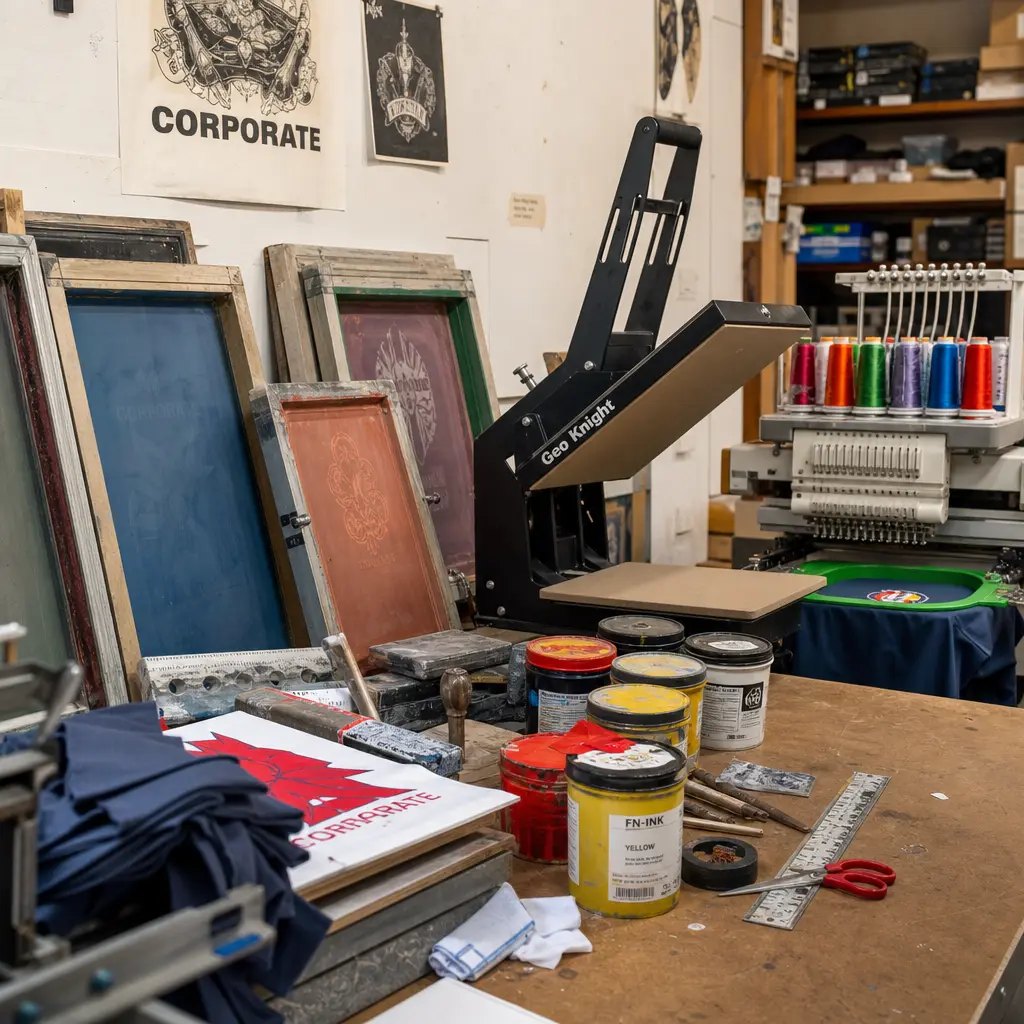
The print method should follow the artwork, not the other way around. Screen printing is usually the best choice for one- or two-color logos because it gives strong opacity, stable registration, and lower unit cost after setup. Heat transfer can solve more complex graphics or small-batch needs, but it should be used carefully because the print film may feel less integrated with the fabric and can be more vulnerable to creasing if the carrier is folded tightly. Embroidery can look premium, but on a small wine carrier it may create bulk and can pull the fabric if the stitch count is too dense.
When comparing quotes, separate setup cost, unit print cost, and reprint cost. A supplier may quote a low unit price but hide higher screen charges, pantone matching fees, or a surcharge for multiple logo locations. If the logo needs a second color or a precise pantone match, ask whether the first print run includes strike-off approval and how many rounds are included before bulk production starts. This matters more on a small-format product where one bad alignment is immediately visible.
- Screen print for durable spot-color branding and predictable reorders.
- Heat transfer for small MOQ, multi-color art, or sample-stage testing.
- Embroidery only when the design is simple and the fabric can support the stitch density.
MOQ logic, sampling flow, and how buyers avoid hidden cost jumps
MOQ on wine carriers is often driven by fabric color, print setup, and sewing efficiency rather than by the logo itself. A factory may accept a lower MOQ for a standard natural canvas body but require higher volume for custom dyed fabric, special closures, or multi-location prints. If your buying plan includes several event versions, compare the MOQ by SKU and by print version, not just the overall order size. Splitting by city, channel, or campaign can quickly move the order into expensive small-batch territory.
A proper sample flow should include at least three stages: blank material confirmation, printed strike-off or photo sample, and pre-production sample in the actual fabric lot. The sample should be evaluated under the same conditions as final use: filled with a bottle, folded into carton pack, and inspected for placement accuracy. If the supplier only shows a blank sample or a digital mockup, you still do not know how the logo will behave on the finished carrier.
- Ask whether MOQ changes by fabric color, print colors, or closure type.
- Use the same bottle size in all sample checks so fit issues are not missed.
- Approve the pre-production sample after packing, not before.
Supplier comparison: which sourcing route fits which buyer
Not every sourcing route gives the same control over logo placement. A direct factory with in-house sewing and printing usually gives the strongest control over seam offsets, artwork setup, and reorders, especially when the buyer needs a stable spec for multiple trade shows. A trading company can be useful when the buyer needs several styles in one shipment, but logo placement accountability may be split across subcontractors. For brand owners and distributors, the deciding factor is often not the lowest quote but the number of hands touching the artwork before the final packout.
If the order is time-sensitive, ask who will actually print, who will cut, who will inspect, and who will pack. The more handoffs in the chain, the higher the risk that a measured placement instruction gets lost. For a wine carrier, even a 5 mm shift can make a logo look off-center, especially if the bag has a divider or side gusset. The best route is the one that can prove where the artwork lands on the finished bag, not just on the CAD file.
- Direct factory route: best for placement control, repeat orders, and lower variance.
- Trading route: useful for consolidated purchasing but requires tighter approval documents.
- Mixed-sourcing route: highest risk when print, sewing, and packing are split across vendors.
Packing decisions that protect logo quality in transit
Packing has a direct impact on how the logo looks when the buyer opens the carton. If the carrier is folded with the print panel creased too tightly, the ink line can weaken or the fabric can show permanent fold marks. For canvas wine carriers, flat packing with a light tissue insert is usually enough for appearance, while heavy compression should be avoided unless the supplier has already tested the print method under load. If the product includes a divider or internal insert, make sure the fold sequence does not push the logo into a hard crease.
Carton configuration should support both warehouse handling and event readiness. Buyers often want unit packs that arrive clean, countable, and easy to display without re-ironing or re-shaping. The carton pack count should be aligned with the carrier's shape so the logo panel faces consistently in the box. Outer marks, carton dimensions, and gross weight also affect freight quoting and receiving efficiency, so these items need to be locked before order confirmation.
- Use flat packing when the logo face must stay clean and presentation-ready.
- Avoid over-compression if the print is screen printed or heat transferred.
- Specify unit orientation in the carton so opening consistency is preserved.
Lead time and schedule risk for trade show programs
Trade show buying has little tolerance for late samples. For a typical canvas wine carrier program, artwork setup, sample approval, and production can move quickly if the supplier already has the right fabric and print screens ready. But if the order needs custom dyeing, a new logo placement window, or a special closure, the schedule can stretch fast. The biggest delay is often not sewing; it is the back-and-forth on artwork dimensions, placement confirmation, and sample revision. Buyers should treat the approval cycle as part of lead time, not as a separate admin step.
A realistic schedule includes time for pantone matching, print registration checks, finishing, packing, carton confirmation, and export documentation. If the supplier says bulk production starts immediately after PO, clarify whether that includes sample sign-off and whether the first cartons are held for final inspection. In practice, a clean, simple logo on standard canvas can move faster than a more complex, retail-ready carrier with lining, divider, and custom closure. The order timeline should be written by milestone, not by a single delivery date.
- Reserve extra time if the artwork needs precision placement or multiple colors.
- Treat sample approval as a production milestone, not a courtesy step.
- Schedule buffer for carton changes, label corrections, and export packing review.
How to compare landed cost without missing the real tradeoff
A low unit quote can hide the real cost if the supplier underprices print setup, uses lighter canvas, or changes the packing method later. To compare landed cost properly, separate material, printing, sewing, packaging, and freight assumptions. A carrier that is cheaper by a few cents may become more expensive if the print rubs, the carton count is inefficient, or the bag must be reworked after inspection. For procurement teams, the goal is not just a low ex-works price; it is a stable, repeatable landed result that arrives ready for distribution.
When comparing two or three suppliers, ask each one to quote the same spec sheet and the same artwork placement drawing. That is the only way to compare like for like. If one supplier quotes 12 oz natural canvas with one-color screen print and another quotes a lighter fabric or a transfer method, the prices are not directly comparable. The best quote is the one that matches your target presentation, avoids rework, and keeps the same placement standard across reorder cycles.
- Compare on the same fabric weight, print method, and packing spec.
- Separate setup charges from recurring unit cost.
- Watch freight efficiency if cartons are oversized because of bag shape or insert design.
Specification comparison for buyers
| Spec decision | Recommended option | When it fits | Buyer risk to check |
|---|---|---|---|
| Logo placement zone | Front lower-center panel with 15–25 mm clear margin from seams | Best for one-color logos, simple brand marks, and fast sampling | Artwork can distort near side seams or bottom gussets if the bag is narrow |
| Print method | Screen print for 1–2 spot colors; heat transfer only for small runs or multi-color logos | Best when the logo area is flat and the brand wants strong color control | Transfers can crack or peel if the carrier is folded tightly or packed under pressure |
| Canvas weight | 12 oz to 16 oz canvas for premium retail or repeated trade show use | Best when the carrier must hold a bottle upright and feel substantial | Light canvas can show print show-through, sag, or seam stress at the base |
| Handle reinforcement | Bar-tack or X-box stitching at handle joins | Best for heavy glass bottles and buyers who expect carry-through at events | Weak handle stitch quality causes returns even when the logo looks fine |
| Bottle divider | Inserted divider or sleeve for single-bottle stability | Best for exhibitors handing out bottles at booths or client dinners | Divider seams can reduce the usable print area and affect logo centering |
| Closure type | Open top for giveaways; zipper or snap for resale and premium gifting | Best when the carrier must travel before use or look retail-ready | Closures add labor, extra parts, and higher QC risk at the zipper track |
| Branding route | Direct bag branding instead of separate hang tags when the carrier is handled often | Best for trade show distribution and repeated reuse | Hang tags can detach, bend, or get removed before the buyer sees the brand |
| Supplier route | Factory with in-house print, sewing, and packing control | Best for buyers who need color consistency across reorders | Split sourcing raises misalignment risk between bag size, print position, and final packing |
| Packing method | Flat packed with tissue and carton divider, logo facing one direction | Best for retail distribution and cleaner opening presentation | Poor folding can crease the logo area and slow booth or warehouse receiving |
Buyer checklist before sampling
- Confirm the exact bottle size range the carrier must fit, including diameter, neck height, and whether it needs a divider or gusset allowance.
- Lock the logo placement with a measured artwork file showing distance from seams, top edge, bottom edge, and handle stitch points.
- Choose the print method based on run size, logo colors, hand feel, and whether the carrier will be folded or compressed in transit.
- Set the minimum canvas weight, thread count expectation, and handle reinforcement standard before requesting quotes.
- Approve one pre-production sample with actual artwork, actual fabric lot, and final packing method, not just a blank sample.
- State carton quantity, inner packing style, and label requirements so the quote includes real export-ready packing costs.
Factory quote questions to send
- What is your standard logo placement zone for this carrier, and how do you measure it from seams and handles?
- Which print method do you recommend for our logo size and color count, and what setup cost or screen cost applies?
- What canvas GSM or ounce weight is included in your quote, and is the fabric pre-shrunk or washed before cutting?
- What is the MOQ per colorway, per logo version, and per print method if we split orders by event or region?
- Can you supply a photo sample, a printed pre-production sample, and a sealed gold sample for approval before bulk?
- What carton pack count, polybag use, tissue use, and master carton size are included in your standard packing quote?
- What lead time do you need after artwork approval, and what part of the timeline is most likely to slip?
- Which parts of the product are made in-house and which are outsourced, especially printing, sewing, labels, and packing?
Quality-control points to confirm
- Logo placement tolerance should stay within ±5 mm of the approved location on the first article sample.
- Print edges should be crisp with no major pinholes, bleeding, ghosting, or visible misregistration at normal viewing distance.
- Canvas weight should match the approved specification within the supplier's declared tolerance and not feel loose or underbuilt at the base.
- Handle stitching must hold at load without skipped stitches, uneven bar-tacks, or seam puckering near the logo zone.
- Carrier opening and bottle fit must pass with the intended bottle size, including any divider, closure, or lining component.
- Packed units should remain flat and clean, with no ink transfer, folding damage, oil marks, or dust on the logo panel.
- Carton labels, quantity counts, and outer master carton marks should match the PO and final packing instruction sheet.