Why lead time planning is different for coffee roasters buying wine carriers
Coffee roasters usually source canvas wine carriers for a campaign, not as a permanent packaging item. The bag may support a holiday gift box, a winery collaboration, a cafe retail display, a corporate gifting program, or a limited release that pairs roasted coffee with a bottle. That makes the calendar stricter than it is for many standard cotton totes. If the carrier arrives after the gift launch, even a good unit price does not solve the commercial problem. Procurement should therefore treat the bag as a dated retail component with its own critical path: specification, sampling, material booking, print setup, sewing, packing, inspection, and freight.
A wine carrier is also more technical than it looks. It carries a narrow, heavy item with a high center of gravity, often made of glass. The shape must support the bottle, the handles must survive real use, and the front panel must stay presentable enough for a branded gift. When the RFQ says only custom canvas wine bag with logo, suppliers fill in the missing details differently. One may quote 10 oz canvas and a simple flat bottom. Another may quote 14 oz canvas, side gussets, reinforced handles, and a sewn divider. The price and lead time difference can look confusing, but the real issue is that the suppliers are not quoting the same product.
For B2B buyers, the main planning goal is to remove ambiguity before comparing offers. A clear specification reduces sample revisions, prevents hidden cost from appearing after PO placement, and gives the factory a realistic basis for scheduling. This is especially important during gifting seasons, when printing and sewing capacity can tighten and small changes can push the order into a later production slot.
- Treat the carrier as a dated launch component, not a generic promotional bag.
- Ask suppliers to quote the same fabric, construction, print, packing, and sample route.
- Assume the production clock starts after final approvals, not after the first inquiry.
- Use a written spec sheet so brand, procurement, and factory teams approve the same target.
- Reserve extra schedule buffer for holiday, collaboration, or retailer-driven launches.
Start with the real load case before confirming dimensions
The most useful sourcing brief begins with the load case. A standard 750 ml Bordeaux bottle, a wider Burgundy bottle, a sparkling wine bottle, an olive oil bottle, and a glass cold brew bottle can all require different gusset depth, height, and handle stress assumptions. Coffee roasters often build gift sets that include both beverage and coffee products, so the carrier may need to hold a bottle plus a 250 g or 340 g coffee pouch, a tasting card, or a small accessory. If that use case is not described at RFQ stage, the first sample may technically fit a bottle but fail the actual gift configuration.
Flat dimensions alone are not enough. A bag that is 36 cm high by 11 cm wide may sound suitable, but the bottom structure, seam allowance, gusset depth, and fabric stiffness determine whether the bottle enters easily and stands properly. A narrow carrier can look elegant but may overstress the seam corners when loaded. A carrier that is too wide can look loose and cheap on a retail shelf. Procurement should ask the merchandising or product team for the actual bottle type and filled weight before asking suppliers for price.
A good load-case statement is short but specific. For example: one filled 750 ml Bordeaux bottle, estimated 1.2 to 1.4 kg, bag used for seasonal coffee and wine gift retail, must stand upright when loaded, logo centered on front panel, natural canvas preferred, bulk export packing. If a coffee pouch will sit beside the bottle, include the pouch dimensions and whether a divider is required. This lets the factory recommend construction rather than guessing.
- Measure bottle height, base diameter, widest shoulder diameter, and filled weight.
- State whether the carrier holds one bottle, two bottles, or bottle plus coffee product.
- Confirm if the bag must stand upright empty, loaded only, or not at all.
- Share photos or drawings of the bottle and gift configuration when dimensions are unusual.
- Avoid approving a sample with a different bottle shape from the final program.
Fabric weight, finish, and color route can move the schedule
For most retail-ready canvas wine carriers, 12 oz to 14 oz cotton canvas, roughly 340 to 400 GSM, is a practical starting point. It gives better body than lightweight promotional canvas and helps the carrier keep a cleaner shape around the bottle. Lighter 8 oz to 10 oz canvas can be appropriate for low-cost event giveaways, but buyers should test loaded appearance and seam stress before accepting it for a premium gift program. Heavier canvas above 16 oz can look substantial, yet it can slow sewing, increase needle wear, raise freight weight, and create bulkier cartons. More weight is not automatically better; the right construction matters just as much.
Fabric route is a major lead time variable. Stock natural canvas is usually the safest option for tight deadlines because mills and bag factories often keep it available. Stock black canvas is also common, but buyers should still confirm availability by GSM and lot size. Custom dyed canvas can be worthwhile for a brand-specific campaign, but it adds lab dip approval, dye lot management, possible shade variation, and extra material lead time. If the program is fixed to a holiday ship date, a stock fabric with a strong print or label solution is often safer than waiting for a custom dye.
Finishing also affects dimensions and appearance. Washed canvas may feel softer and more premium, but it can introduce shrinkage, color variation, and additional processing days. Unwashed canvas is more predictable for dimension control but may feel crisper. If the approved sample is washed and bulk is unwashed, the buyer may see differences in hand feel and size. The RFQ should therefore state fabric weight, color route, finish, and tolerance, not just cotton canvas.
- Use numerical fabric specs: oz, GSM, and tolerance where possible.
- Check whether the quoted fabric is stock, booked to order, or custom dyed.
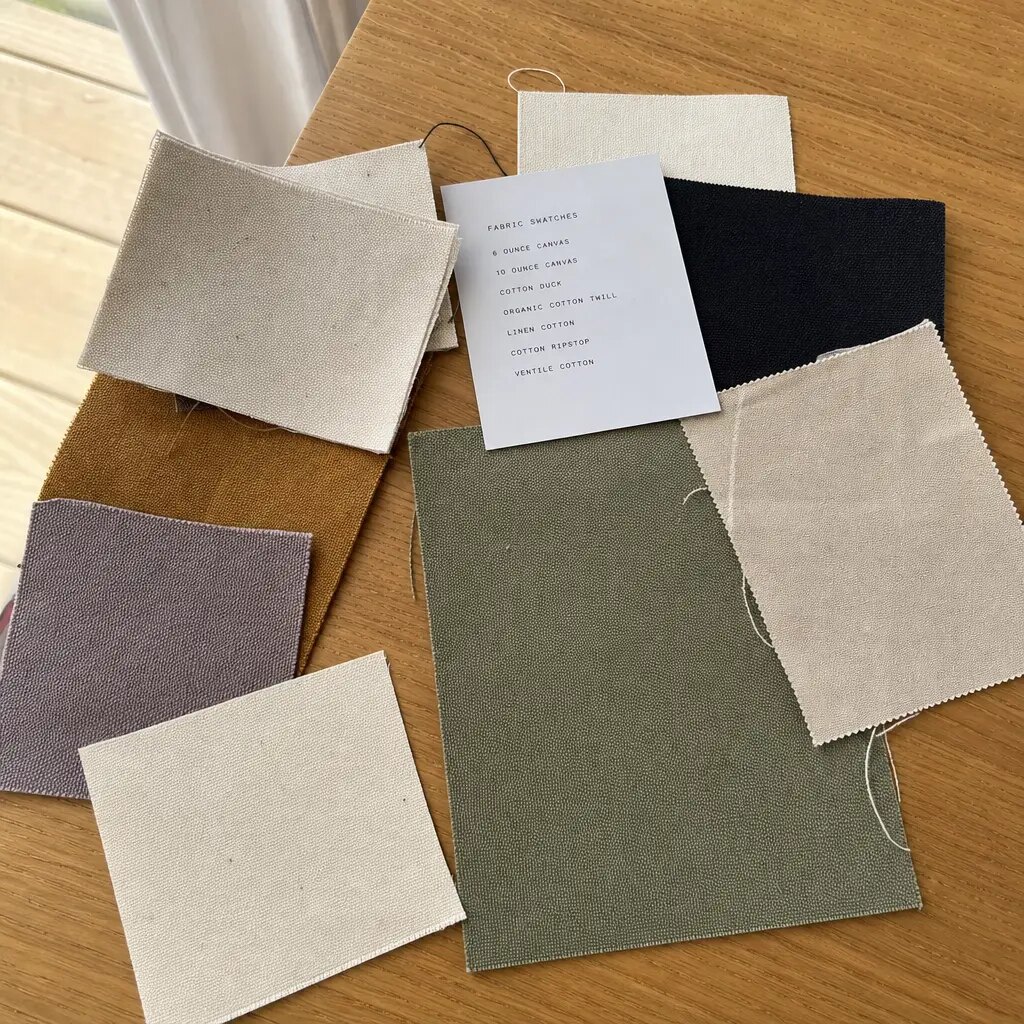
- Ask for fabric swatches from the actual available lot when timing is tight.
- Do not switch from natural to dyed canvas after sample approval without resetting the schedule.
- If washed canvas is requested, confirm shrinkage allowance and final measurement tolerance.
Construction details that determine durability and presentation
A canvas wine carrier needs a formed structure. The most common reliable approach is a front and back panel with side gussets and a bottom construction that allows the bottle to sit flat. A simple flat pouch shape may be faster to sew but can pull into a cone when loaded, causing the bottle to lean and the printed panel to distort. For coffee roaster gift programs, this matters because the bag is part of the perceived value of the bundle. A carrier that slumps on a shelf can make the entire gift set look less intentional.
Handle construction should be specified in measurable terms. Buyers should confirm handle material, width, finished drop length, attachment position, stitch pattern, stitch density, and whether reinforcement is visible or hidden. Self-fabric handles give a cohesive canvas look and are often preferred for natural, craft-oriented branding. Cotton webbing handles may provide more consistent width and can simplify sewing on higher-volume programs. In either case, handle joins are one of the most important inspection points because they carry the full load.
Two-bottle carriers and bottle-plus-coffee carriers need special attention. A divider must be fixed well enough to stay in position during use. If it is attached only loosely near the top, it may ride up or fold, allowing the bottle and coffee pouch to shift. Padding may be useful for glass-to-glass contact, but padding changes thickness, sewing time, and carton cube. The buyer should decide whether the goal is separation, cushioning, or simply presentation, then specify the divider accordingly.
- Specify side gusset depth and bottom panel style instead of relying on the word standard.
- Confirm handle drop with a physical carry test, especially for retail customers carrying the bag by hand.
- Require box stitch, cross stitch, bartack, or another approved reinforcement at load points.
- For two-bottle styles, check divider attachment at both top and bottom or side and bottom points.
- Approve construction photos or a technical sketch before bulk cutting begins.
Printing and branding decisions that add or remove days
Coffee roaster branding often uses clean wordmarks, badges, seasonal illustrations, or collaboration marks. For many of these designs, screen printing is the most predictable option on canvas wine carriers. It works well for one to three spot colors, provides solid coverage, and is easier to evaluate for placement and rub resistance. If the artwork is simple and the order quantity supports it, screen print often gives a stable balance of unit cost, durability, and production timing.
Transfers, digital printing, or other methods can be useful for high-detail artwork, gradients, photographic images, or many small artwork splits. The tradeoff is that these methods may involve outsourced processing, additional curing or pressing time, transfer edge visibility, and adhesion testing on textured fabric. Dark canvas can also require a white underbase or stronger opacity control, which changes hand feel and may extend production steps. Procurement should not allow print method to remain open after the quote is approved because a late method change can affect both price and schedule.
Logo placement is another practical issue. Printing near seams, over gussets, or close to folds increases the risk of misregistration, wrinkles, and inconsistent pressure. A centered front-panel print is usually the safest. Buyers should provide artwork size, placement from bottom or top reference point, Pantone or color reference, and accepted placement tolerance. The approval sample should be evaluated both flat and loaded, because the bottle shape can change how the logo appears in real use.
- Use vector artwork when possible and freeze artwork before sample production.
- Ask whether printing is in-house or outsourced and whether the quoted lead time includes curing.
- For dark fabric, review opacity and hand feel before bulk approval.
- Keep print away from seam allowances and heavy folds unless the factory confirms feasibility.
- Define print placement tolerance, not only visual approval.
MOQ planning for roasters with seasonal, wholesale, and collaboration SKUs
MOQ is driven by more than the number of finished bags. Factories consider fabric booking, cutting efficiency, print setup, sewing line changeover, packing complexity, and the number of separate SKUs. Coffee roasters often need several versions: a holiday design, a winery partner design, a cafe retail design, and a wholesale customer version. If each variant uses a different size, fabric color, handle style, and print location, the order becomes multiple small production runs. That raises cost and can extend the lead time because each variant needs its own setup and approval path.
A better procurement strategy is to standardize the bag body. Use one fabric weight, one size, one handle construction, and one print location wherever possible. Then split the order by artwork, hangtag, or carton label. This lets the factory cut and sew a larger common batch before separating print or packing workflows. It also helps the buyer reach practical production efficiency without overbuying every SKU. The RFQ should show the total order quantity, the desired split by artwork, and which elements are shared.
Buyers should also ask suppliers where price breaks occur. A quote may have one MOQ for the bag body, another for custom fabric dyeing, another for printing setup, and another for labels or insert cards. If a supplier says the MOQ is 1,000 pieces, clarify whether that means per artwork, per fabric color, per construction, or total across the shared body style. This prevents surprises when the PO splits into multiple destinations or retail channels.
- Standardize body size and construction before splitting artwork.
- Keep print location consistent across SKUs to reduce setup variation.
- Use stock fabric for small artwork variants and reserve custom dyeing for larger commitments.
- Ask for MOQ by body style, fabric color, print artwork, label, and packing method.
- Send a SKU matrix with quantities, artwork names, packing requirements, and destination rules.
Sampling stages that prevent expensive bulk corrections
Sampling should be planned as a risk-reduction process, not a formality. The first step is usually a digital artwork proof that confirms scale, position, and color reference. If the bottle fit is uncertain, a blank fit sample can verify height, gusset depth, bottom shape, and handle proportion before paying for full print setup. The most important approval is the pre-production sample made with actual canvas, actual print method, final thread, labels, divider, and packing method. This sample becomes the reference for bulk production and inspection.
Skipping sample stages may appear to save a week, but it can create larger delays later. If the first bulk pieces reveal that the bottle leans, the handle drop feels too short, the print sits too close to the bottom seam, or the divider collapses, the factory may need to stop production, recut panels, remake screens, or resew samples. For a fixed-date launch, that is more damaging than spending time on a proper approval sample. The sample schedule should be written into the procurement timeline before the PO is placed.
Approval should involve both brand and operations reviewers. Brand teams check logo scale, color, and retail presentation. Operations teams check real bottle fit, packing practicality, carton count, and downstream handling. The approval note should be measurable: approved height, width, gusset, handle drop, print position, print size, label location, and packing fold. Comments such as looks good are not enough for bulk control.
- Request a blank fit sample when bottle size or gusset depth is not confirmed.
- Use the actual bottle or an exact substitute for every fit review.
- Approve a printed pre-production sample before bulk, especially for dark canvas or large logos.
- Document final tolerances for dimensions, handle drop, print placement, and packing.
- Keep one approved sample with the buyer and one with the factory for comparison.
Packing choices affect labor, carton cube, and launch readiness
Packing is often discussed too late, even though it can change both production time and landed cost. Bulk export packing is usually the fastest route. Carriers are folded flat, often packed by dozen or another agreed count, then placed into export cartons. Handles may be tucked inside to reduce snagging, and an inner polybag may be used to protect light canvas from dust. This format works well when the importer, distributor, or coffee roaster will handle final merchandising locally.
Retail-ready packing adds more steps and more chances for error. Individual polybags, printed insert cards, swing tags, barcode stickers, tissue wraps, retail cartons, and SKU-specific carton labels all require artwork approval and data accuracy. If barcode files or hangtag artwork arrive after sewing is complete, finished goods may sit idle while the factory waits. If SKUs are similar, packing staff can mix artworks unless the packing instruction and carton marks are clear. For multi-channel coffee roaster programs, packing control can be as important as sewing quality.
Carton planning should not be ignored. Wine carriers are narrow but structured, and excessive folding can crush the bottom panel or create permanent creases across the print. Overpacking cartons may reduce freight cube but damage appearance. Underpacking may raise shipping cost. Buyers should request estimated pieces per carton, carton dimensions, gross weight, and a photo of the packed carton layout if presentation is critical.
- Choose bulk export packing unless retail channel requirements justify individual packing.
- Freeze hangtags, insert cards, barcode labels, and carton marks before bulk packing begins.
- Ask how handles will be folded or tucked to avoid creases on the print panel.
- Confirm carton count, SKU assortment, and destination labels against the PO.
- Review whether individual polybags are necessary for light canvas protection or retailer compliance.
Build a realistic lead time backward from the required ship date
Factory lead time is often quoted as a single number, such as 30 or 40 days. Procurement teams should clarify what that number means. In many cases, it starts only after deposit, final artwork, approved sample, material confirmation, and packaging details are complete. The total project timeline begins earlier, with RFQ clarification, quote comparison, internal approval, sample production, sample transit, buyer review, and possible revisions. If these front-end steps are not scheduled, the buyer may believe the order is on time while the factory is still waiting for final inputs.
A practical backward plan starts with the required ex-factory date or delivery date. Then allocate time for freight booking, final inspection, packing, bulk sewing and printing, material preparation, sample approval, sample transit, and internal decision-making. As a planning example, a straightforward stock-fabric program may need several days for RFQ clarification, about one to two weeks for sample preparation and transit depending on route, a few days for buyer review, then several weeks for bulk after approval. Custom dyeing, outsourced printing, multiple SKUs, retailer packing, or revised samples can each add time.
Buyers should also consider factory queue risk. Seasonal gifting periods can create competition for printing tables, sewing lines, and packing labor. A small order with late artwork may not receive immediate line priority if larger programs are already scheduled. The best way to protect the ship date is to freeze the specification early, approve samples quickly, and avoid late packaging changes. A buffer is not wasted time; it is protection against predictable procurement friction.
- Clarify whether lead time is in working days or calendar days.
- Confirm the milestone that starts bulk lead time: deposit, artwork approval, sample approval, or material arrival.
- Add time for sample shipping, internal review, and possible revision.
- Reserve extra days for custom dyeing, outsourced printing, retail packing, or mixed SKU sorting.
- Book final inspection before the cartons are fully closed, not after the planned ship date.
Quote comparison: expose hidden differences before selecting a supplier
The lowest unit price may be real, but it may not be based on the same carrier. A lower offer can assume lighter canvas, no divider, shorter handles, a simpler bottom, fewer print passes, bulk packing instead of retail packing, or no pre-production sample. These differences affect more than price. They change durability, presentation, carton efficiency, inspection risk, and lead time. Procurement should normalize each quote before making a supplier decision.
A useful quote comparison sheet should include fabric weight, fabric color route, finished dimensions, gusset depth, bottom construction, handle construction, divider detail, print method, number of print colors, sample timing, MOQ basis, packing method, carton estimate, and lead time milestone. It should also separate one-time costs from repeat-order unit costs. Screen charges, sample fees, mold or cutting pattern charges, hangtag printing, and special packaging may not belong inside the base unit price, but they must be visible for total landed planning.
When a quote is missing detail, ask for clarification rather than assuming flexibility. Missing information often becomes a change order later. If one supplier can confirm GSM, construction photos, sample schedule, packing count, and inspection process while another provides only a short price line, the more complete quote may reduce total risk even if the unit price is higher. For fixed-date coffee roaster launches, quote reliability is a procurement value.
- Compare quotes against one shared specification sheet.
- Separate unit price, sample cost, screen cost, packing cost, and freight assumptions.
- Ask suppliers to confirm what is excluded as well as what is included.
- Review carton cube and gross weight because freight can offset small unit-price savings.
- Treat vague quotes as schedule risk until every major spec is confirmed.
Specification comparison for buyers
| Spec decision | Recommended option | When it fits | Buyer risk to check |
|---|---|---|---|
| Fabric weight | 12 oz to 14 oz canvas, about 340 to 400 GSM, with agreed GSM tolerance | Retail-ready gift carriers for wine, coffee collaborations, and premium cafe merchandising where the bag needs body and bottle support | A cheaper 8 oz to 10 oz quote may collapse when loaded, wrinkle heavily after packing, and distort print across the front panel |
| Fabric color route | Stock natural, stock black, or other factory-held stock shade before considering custom dye | Best for seasonal coffee roaster programs with fixed launch dates and moderate quantities | Custom dyed canvas can add material lead time, lab dip or strike-off approval, shade variation control, and higher MOQ pressure |
| Construction style | Single-bottle carrier with full side gusset, formed bottom panel, and reinforced handle joins | Core option for 750 ml wine collaborations, bottle-plus-coffee gift sets, and retail counter displays | Flat sewn shortcuts may stand poorly, create unstable carton packing, and overstress bottom corner seams |
| Two-bottle or combo format | Fixed center divider sewn securely into bottom or side seams; optional padding only if required by load case | Useful when pairing two glass bottles or one bottle with a coffee pouch, brewer accessory, or gift insert | Loose dividers can float upward, allow bottle contact, fail loaded carry checks, and create customer complaints |
| Handle material and drop | Self-fabric canvas handles or cotton webbing, with finished drop length stated in cm and box or cross-stitch reinforcement | Self-fabric gives a cohesive cotton look; webbing can improve repeatability and speed on larger runs | Factories may shorten handles or reduce reinforcement to save fabric and sewing time unless the quote locks drop length and stitch pattern |
| Print method | Screen print for 1 to 3 solid logo colors; transfer only when artwork detail requires it | Most coffee roaster marks, seasonal badges, and collaboration logos on medium runs | Outsourced transfer or digital work may add queue days; dark fabric needs opacity control and rub or adhesion review |
| Logo placement | Print on the main front panel away from seam allowances, heavy folds, and gusset edges | Clean retail presentation and simpler inspection for branded gift programs | Printing too close to seams increases misregistration, wrinkling, and rejection risk during bulk inspection |
| Sampling route | Artwork proof, blank fit sample if needed, then sewn pre-production sample using actual fabric, print, trim, and packing | Best for fixed-date launches where visual approval and bottle fit both matter | Approval based only on a stock sample can hide fabric weight, gusset width, print scale, and packing differences |
| MOQ planning | Group SKUs by shared body size, fabric, and construction; split only artwork, hangtag, or carton label where possible | Roasters launching cafe, wholesale, and seasonal variants without overcommitting to every SKU | Many low-quantity structural variants create cutting changes, sewing interruptions, higher setup costs, and longer lead time |
Buyer checklist before sampling
- Define the exact load case: standard 750 ml wine bottle, sparkling bottle, oil bottle, cold brew bottle, two bottles, or bottle plus coffee pouch.
- Record bottle height, bottle base diameter, widest shoulder diameter, filled weight, and whether the bag must stand upright when loaded.
- State finished bag dimensions, including height, width, gusset depth, bottom panel construction, and acceptable tolerance.
- Specify canvas weight in oz and GSM where possible; avoid vague terms such as heavy canvas or premium cotton without a numerical range.
- Confirm fabric route: stock natural canvas, stock black canvas, other available stock shade, or custom dyed target color.
- Decide whether fabric should be unwashed, washed, enzyme washed, or otherwise finished; note that finishing can affect dimensions and shade.
- Choose handle type, handle width, finished handle drop, reinforcement stitch style, and thread color.
- Clarify whether the carrier needs an inner divider, padding, bottle neck support, woven label, hangtag, care label, or retail insert.
- Provide final logo artwork in vector format when possible, with Pantone or color reference, print size, placement, and number of print colors.
- Define whether artwork is identical across all SKUs or split by cafe, wholesale customer, holiday campaign, or collaboration partner.
Factory quote questions to send
- Which canvas weights do you currently hold for wine carrier production, and what are the actual GSM ranges for each option?
- Which stock fabric colors are available without dyeing, and what is the estimated extra time if we require a custom Pantone shade?
- Is your price based on greige, natural, dyed, washed, or otherwise finished canvas, and will shrinkage affect finished dimensions?
- What finished dimensions, gusset depth, bottom construction, and bottle type are included in your quote?
- Does the quoted construction include a formed bottom panel, side gussets, inner divider, handle reinforcement, labels, and thread color matching?
- What handle drop and handle width are assumed, and can you confirm the reinforcement stitch pattern with a photo or sample reference?
- Is printing completed in-house or outsourced, and how many days should we allow for screen setup, printing, curing, and print inspection?
- How many print colors are included in the unit price, and are screen charges, artwork proofing, and color matching fees separate?
- Can multiple artworks share one fabric lot and one body construction while being printed and packed as separate SKUs?
- What is the MOQ per body style, per fabric color, and per artwork, and where does price change at higher quantity breaks?
Quality-control points to confirm
- Finished height, width, gusset depth, bottom width, and handle drop measured against approved sample and tolerance, commonly plus or minus 0.5 to 1.0 cm depending on construction.
- Fabric weight checked against agreed GSM or oz range, with hand feel, weave density, shade, and surface cleanliness compared to the approved material reference.
- Bottle fit verified using the agreed bottle or exact substitute, checking insertion, removal, standing shape, seam stress, and front panel distortion under load.
- Handle attachment inspected for approved box stitch, cross stitch, bartack, or reinforcement pattern, with no skipped stitches, loose threads, or weak corners.
- Bottom seam, side seam, and gusset seam reviewed for straightness, secure backstitching, seam allowance, thread tension, and absence of seam opening when loaded.
- Inner divider, if used, checked for secure attachment at the correct points so it does not float, collapse, or allow bottle-to-bottle contact.
- Print placement measured from agreed reference points, with acceptable tolerance stated for centering, height from bottom, and distance from seams or gussets.
- Print quality reviewed for color match, opacity on dark fabric, curing, rubbing resistance, cracking, smudging, pinholes, and registration on multi-color artwork.
- Labels, hangtags, insert cards, and barcodes verified against PO and SKU list, especially when the same bag body ships with multiple artworks or retail channels.
- Light-colored canvas inspected for oil marks, dirty handling, needle damage, broken yarns, major slubs on print area, excessive crease marks, and shade variation within carton.