Start the RFQ with measured bottle data
Canvas wine carriers for hotel retail should be specified around the bottle before the buyer discusses logo, color, or price. A wine carrier is load-bearing retail packaging for a glass product, not a narrow tote bag. Bottle height, maximum body diameter, shoulder profile, closure height, and the intended number of bottles control the pattern, gusset, divider, seam allowance, handle position, and carton packing. When these inputs are missing, suppliers often quote a generic carrier size that photographs well but may not fit the buyer's actual wine, Champagne, olive oil, or gift bottle program.
Hotel retail assortments often include more variation than a single winery SKU. One property may sell Bordeaux-style bottles, another may sell Burgundy bottles, while a resort shop may include Champagne, local spirits, olive oil, or seasonal welcome-gift bundles. The difference is not minor. A common 750 ml Bordeaux bottle may be around 290-310 mm tall with a body diameter near 73-78 mm, while many Champagne bottles are wider and heavier. Burgundy bottles often have sloped shoulders and a broader body. Tall Riesling-style bottles can create a height and handle-clearance issue even when the diameter is modest.
Procurement teams should decide whether the carrier is designed for one exact bottle, a controlled bottle range, or broad compatibility. Exact fit gives the cleanest silhouette and better carton efficiency. Broad compatibility can reduce SKU complexity for hotel groups, but it must be tested against the tallest bottle, widest bottle, and heaviest bottle in the approved range. A bag that fits the widest bottle may look loose around a standard wine bottle, so the buyer should decide whether universal fit or retail presentation is more important.
The RFQ should state bottle dimensions in millimeters and identify the measurement source. The safest route is to send an actual bottle or a rigid bottle dummy before pre-production sampling. If that is not possible, provide a drawing that includes height, maximum body diameter, base diameter, shoulder start point, neck diameter, closure height, and target clearance. For most canvas carriers, buyers should allow practical loading clearance rather than specifying a skin-tight fit. A carrier that is 2 mm too tight may pass a flat measurement check but fail at the hotel counter when staff need to load bottles quickly.
- Provide bottle height, maximum body diameter, base diameter, shoulder shape, neck height, and closure height in millimeters.
- State whether the factory will receive an actual bottle, a rigid dummy, or a dimensioned drawing for fit checking.
- Define whether the carrier must fit Bordeaux, Burgundy, Champagne, tall bottles, spirits, olive oil, or mixed gift contents.
- Specify single-bottle or two-bottle capacity before requesting artwork, MOQ, or price breaks.
- Allow approximately 6-10 mm loading clearance per bottle compartment unless the approved sample proves a different clearance works.
- Ask the supplier to confirm internal compartment dimensions, not only external finished bag dimensions.
Convert retail positioning into material specs
The material spec should reflect whether the carrier is a paid retail item, a guest amenity, or short-term promotional packaging. For most paid hotel retail programs, 10 oz to 12 oz cotton canvas, approximately 280-340 GSM before washing, is a practical starting range. It gives better hand feel and shelf structure than lightweight promotional cotton, accepts screen printing well, and avoids the unnecessary freight weight of very heavy canvas. Lighter 6 oz or 8 oz cotton may be suitable for giveaways, but it often collapses around bottles and can look under-specified next to premium wine or resort merchandise.
Do not accept a supplier quote that says only cotton, canvas, eco cotton, or heavy fabric. These are not procurement specifications. Different factories use different references for ounce weight, GSM, fabric width, yarn count, washing loss, and finishing. One supplier may quote 260 GSM as heavy canvas, while another may interpret the same request as 380 GSM. The RFQ should state a target ounce weight and GSM range, then require the supplier to return the exact weight, fiber content, and finish being quoted. If the factory proposes an alternative, it should explain the impact on unit cost, structure, shrinkage, lead time, and carton weight.
Color route changes both risk and schedule. Natural unbleached canvas is popular for hotel retail because it has a tactile, relaxed appearance, but natural canvas also shows dark yarns, seed flecks, stains, and panel shade variation more visibly. Bleached canvas creates a cleaner ground for bright prints but can look less natural. Black canvas hides shop handling marks, yet lint, print opacity, and white ink coverage must be checked. Stock dyed canvas can be efficient for brand colors that are close enough to available shades. Custom dyed canvas requires lab dip approval, bulk shade tolerance, potential minimum fabric quantity, and review of shrinkage after dyeing or washing.
Buyers should also decide whether the canvas is washed or unwashed. Washed canvas can feel softer and more retail-ready, but washing may cause shrinkage, skew, shade variation, and dimensional change after sewing if not controlled. Unwashed canvas gives more predictable cutting and sewing dimensions, although the hand feel may be stiffer. If the bag will never be washed by the end user, do not over-specify laundry performance unless it is relevant to the product promise. Instead, focus on the actual retail requirements: structure, touch, print appearance, stain tolerance, and consistent bulk supply.
- Use 10 oz canvas for a balanced hotel retail carrier where cost, print quality, and structure all matter.
- Use 12 oz canvas when the carrier needs a firmer shelf shape or higher perceived retail value.
- Reserve 6-8 oz cotton for promotional or light-duty packaging unless sampling proves it supports the bottle acceptably.
- Specify fiber content, oz, GSM, color route, wash status, and whether the material is bleached, unbleached, dyed, or black.
- For custom dye, require Pantone target, lab dip, bulk shade tolerance, and review of shrinkage before cutting.
- Ask the supplier to return estimated finished bag weight and carton gross weight when comparing heavier canvas options.
Specify construction at real stress points
Wine carrier failures usually occur at predictable stress points: handle attachments, top hem, side seams, bottom corners, and divider seams. A polished hotel logo will not compensate for a handle that tears in a lobby or a bottom seam that opens when a guest carries bottles to a room. A two-bottle carrier loaded with two 750 ml glass wine bottles can easily exceed 2.5 kg before tissue, hangtags, inserts, or additional gift items are added. Champagne or spirits can push the practical load higher. The RFQ should therefore describe construction details in measurable terms instead of relying on a product photo.
Handle specification needs more detail than handle material. Cotton webbing handles provide consistent width and strength, especially when the bag body is thick. Self-fabric handles give a cohesive look and can be cost-effective, but they should be folded, stitched, and attached consistently. Rope handles may look decorative, but they require reinforced holes, eyelets, or patches, and they can create pressure points or uneven loading. For hotel retail sourcing, ask each supplier to quote the same handle width, finished drop, attachment depth, reinforcement method, thread color, and thread type so price comparisons are meaningful.
Box-and-cross stitching is a common reinforcement for loaded fabric carriers, but the RFQ should still define what is expected. The buyer can request reinforcement boxes with full perimeter stitching, diagonal cross stitch, secure back-tacking, and no skipped stitches. Stitch density may vary by fabric and machine setup, but a practical target such as 7-9 stitches per inch can help prevent loosely sewn stress points. Attachment depth matters because a handle sewn only into a shallow top hem may pull out under load. The handle should be anchored into a reinforced area with enough vertical depth for the load.
Bottom and divider construction must match the bottle program. A single-bottle carrier needs a gusset or base sized to the bottle diameter plus loading clearance. A two-bottle carrier needs two compartments that hold bottles apart without stealing too much internal width. The divider can be a sewn-in canvas panel, reinforced panel, or removable insert. For hotel retail, sewn-in dividers are often easier to control because loose inserts can be lost during packing, warehousing, or store replenishment. If a removable divider is chosen, it should be treated as a component with its own count, packing method, and QC check.
- Use reinforced box-and-cross stitching at each handle attachment point for loaded wine carriers.
- Define handle material, width, finished drop, attachment depth, stitch density, thread color, and thread type.
- Set gusset depth from bottle diameter plus loading clearance, then verify the carrier stands and loads correctly.
- Specify top hem depth because handle load often transfers through the folded top edge.
- For two-bottle carriers, define divider height, layer count, bottom anchoring, side attachment, and opening clearance.
- Request close-up sample photos of handle stitching, top hem, bottom corners, side seams, and divider attachment.
Control dimensions with tolerances and drawings
A wine carrier is a soft goods item, but that does not mean dimensions can be vague. Bottle fit depends on several dimensions working together: internal width, gusset depth, top opening, finished height, divider height, handle drop, and seam alignment. A bag can meet outside width and height but still fail because the divider is too wide, the gusset is too shallow, or the top opening collapses when a bottle is inserted. The RFQ should include a simple specification drawing or table that separates external dimensions from usable internal dimensions.
For structured wine carriers, a common production tolerance is plus or minus 5 mm on key finished dimensions, unless the design, fabric, or wash process requires a wider range. Buyers should not apply the same tolerance to every feature without thinking about function. A 5 mm difference in total outside height may be harmless, while a 5 mm loss in internal compartment width may make a Champagne bottle difficult to load. If the carrier is washed after sewing, dimensional tolerance should be reviewed after wash because shrinkage and twisting can affect shape.
The approved pre-production sample should become the physical reference for bulk production, but it should not replace the written spec. The buyer should record approved measurements, measurement points, and acceptable variation. For example, print position should be measured from the top edge and center line, not estimated by eye. Handle drop should be measured from the top edge of the bag to the inside top of the handle when relaxed. Gusset depth should be measured at the base and compared with the approved sample under flat and lightly opened conditions.
Dimensional control also affects packing and display. If the bag is expected to stand on a shelf, the base must open evenly and the side seams must not twist. If it will hang on a display hook, handle drop and balance matter. If it will be sold flat, front panel creasing and fold line placement matter. Asking for a measurement table in the quote stage helps suppliers identify pattern assumptions before sampling, rather than after bulk cutting.
- Set key dimension tolerance at plus or minus 5 mm unless the approved spec states otherwise.
- Measure internal width, gusset depth, top opening, divider height, external height, handle drop, and handle width separately.
- Define measurement points for handle drop, print position, gusset depth, and divider height before inspection.
- Use the approved sample plus a written measurement sheet as the production standard.
- Treat loss of internal width as a functional issue, not merely a cosmetic dimension variance.
- Require the supplier to confirm whether washing, dyeing, or pressing changes final dimensions.
Choose logo method for canvas texture
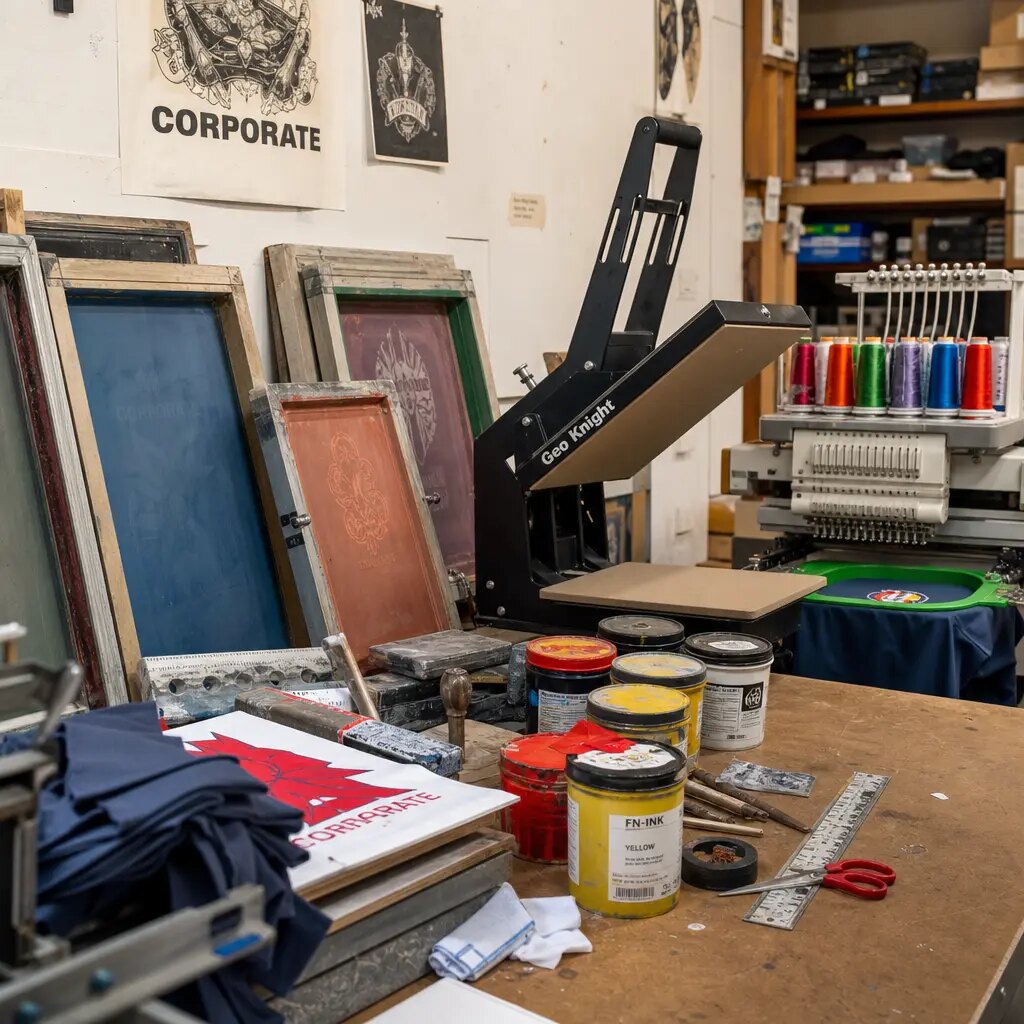
Decoration should be selected after the buyer reviews fabric texture, artwork complexity, and retail positioning together. Screen printing is usually the most practical starting point for canvas wine carriers for hotel retail. It works well for one-color and two-color hotel logos, keeps unit cost controlled, and maintains a natural cotton look. Its limitation is detail. Fine serif text, small property names, thin crests, and delicate line art can fill in, break, or look uneven on coarse canvas. A paper proof or digital mockup does not show how ink behaves on the final fabric.
Heat transfer can reproduce finer detail and multi-color graphics, but the surface feel is less natural and may not suit boutique or resort brands that want a tactile cotton product. Embroidery can create a premium impression on thicker canvas, but dense stitching can distort the panel, add backing inside the bag, and increase cost. Woven labels are useful for hotel groups because one common blank carrier can be paired with different property labels. That approach can reduce body SKU complexity, but label MOQ, label lead time, label sewing position, and property-specific packing still need control.
Artwork files should be supplied in vector format with the final print size, placement, color count, Pantone references, and minimum text-size concerns. The factory should confirm whether the artwork is suitable for the selected canvas and decoration method. For screen print, buyers should ask about minimum readable line weight, minimum text height, ink opacity on natural or black canvas, and curing method. For embroidery, ask for stitch count, backing type, thread color reference, and whether panel puckering is expected. For woven labels, ask for label size, fold type, edge finish, MOQ, and sewing tolerance.
The most important approval item is a strike-off on actual canvas at final size. A strike-off is not just a color check; it verifies ink coverage, edge sharpness, detail retention, hand feel, and placement feasibility. The buyer should review the strike-off under normal retail lighting, not only under factory sample-room light. If the brand logo includes a crest, fine tagline, or property name, approve readability at normal viewing distance. If the logo must be close to a seam, gusset, or handle, confirm the placement on a full sample rather than on a separate fabric swatch only.
- Provide vector artwork, final decoration size, placement coordinates, Pantone references, and color count in the first RFQ.
- Request a strike-off on actual production canvas when brand color, small text, crest detail, or ink opacity matters.
- Ask for minimum readable text height and line weight for the selected canvas and decoration method.
- Avoid placing logos across gusset folds, bottom creases, heavy seams, or handle stitch areas.
- For multi-property programs, compare total cost for screen changes versus woven label changes.
- Confirm whether curing, embroidery backing, or label stitching affects the inside feel or bottle loading.
Build MOQ and SKU logic before price negotiation
MOQ is rarely one number for canvas wine carriers. It changes with fabric availability, color route, decoration method, label type, packing method, and SKU split. Natural stock canvas with a one-color screen print usually supports a lower MOQ because the supplier can use available fabric and standard print processes. Custom dyed canvas, embroidery, woven labels, specialty hangtags, or multiple property logos can raise MOQ because each component has setup loss, minimum purchase quantities, and separate handling requirements.
Hotel groups often want a total order split across properties. The purchasing team may prefer one shared carrier shape but different hotel logos, barcodes, hangtags, or carton marks. The RFQ should list every SKU separately instead of giving only the total program quantity. A supplier may be able to cut and sew one common blank bag body, then decorate or label by property. This can reduce pattern and sewing complexity, but it does not remove print setup, label control, packing separation, or inspection sampling by SKU.
Price breaks should be requested at realistic purchase levels. A quote at an inflated volume does not help procurement approve a launch order. Buyers can request 500, 1,000, 3,000, and 5,000 pieces using the same specification basis, then add columns for extra logo versions, special labels, and packing changes. One-time charges should be separated from unit price: screen setup, embroidery tape, woven label setup, sample charge, lab dip charge, hangtag setup, barcode application, and special carton marking all affect comparison.
When negotiating, keep the technical spec stable. If a supplier reduces price by changing fabric weight from 12 oz to 8 oz, removing divider reinforcement, shrinking the gusset, or compressing cartons more tightly, the quote is not equivalent. Procurement should ask suppliers to show any value-engineering proposal as a separate option with the spec change clearly marked. This protects the buyer from approving a lower price that no longer matches the hotel retail requirement.
- Ask for MOQ by fabric route: natural, black, stock dyed, and custom dyed canvas.
- Ask for MOQ by decoration route: screen print, embroidery, woven label, and heat transfer if applicable.
- List each property logo, color, capacity, barcode, hangtag, carton mark, and destination as a separate SKU.
- Request price breaks at realistic volumes such as 500, 1,000, 3,000, and 5,000 pieces.
- Separate setup charges, sample charges, label costs, barcode application, and special packing from unit price.
- Require suppliers to identify any cost-saving spec change instead of burying it in a revised unit price.
Use a sample path that tests production risk
A first prototype can help confirm shape and size, but it should not be treated as final approval unless it uses the actual materials and production processes. A sample made from substitute fabric may stand differently, shrink differently, print differently, or sew more easily than the quoted bulk fabric. The pre-production sample should use the actual canvas weight, actual handle material, actual divider construction, actual decoration method, actual label placement, and intended packing method whenever feasible.
Hotel retail samples should be evaluated as both packaging and merchandise. The carrier must hold the intended bottle, load without excessive friction, protect bottles from contact in a two-bottle format, present the logo cleanly, and feel appropriate for the intended retail price. Buyers should review the sample empty and loaded. If the hotel shop will display the carrier flat, hanging, or standing with a bottle inserted, the sample should be checked in that display condition. A bag that looks good flat on a table may twist, lean, or crease when filled.
The approval record should include measurements, photos, and written comments. Photos should show the front, back, side profile, top opening, inside divider, handle attachment, bottom gusset, label, barcode or hangtag, and packed condition. Measurement notes should include width, height, gusset, top opening, divider height, handle drop, handle width, and print placement. If the sample reveals tight loading, crooked print, divider interference, or handle imbalance, the specification should be corrected before bulk cutting.
Loaded testing should be agreed before the sample is judged. For a single-bottle carrier, the test load should exceed the expected bottle weight with a practical safety margin. For two-bottle carriers, many buyers use a 4-5 kg static hang test as a practical screening method, but the exact load and duration should match the product and risk tolerance. The key is to define pass/fail criteria: no handle tearing, no seam opening, no severe distortion, no divider detachment, and no unacceptable print damage after normal handling.
- Measure finished width, height, gusset, top opening, handle drop, handle width, and divider height on the sample.
- Test loading with the actual bottle or approved dummy, including the tallest and widest bottles in the approved range.
- Conduct a loaded hang or lift test using an agreed weight, duration, and pass/fail standard.
- Rub, flex, and visually inspect the printed area after curing for adhesion, cracking, smudging, and edge quality.
- Review the carrier empty, loaded, standing, hanging, and flat packed if those conditions apply to retail use.
- Approve the sample with written dimensions, tolerance notes, photo record, and correction list before bulk production.
Define packing and hotel receiving data
Packing is part of product quality and landed cost. Canvas wine carriers may be flat packed, lightly folded, bundled, individually polybagged, inner-cartoned, or packed with tissue. Flat packing usually protects front panels and dividers better than aggressive folding, especially for two-bottle carriers. It may increase carton footprint, but it reduces the risk of deep creases across the logo or bent dividers that make the item look shopworn before it reaches the hotel retail shelf.
Hotel retail buyers should define receiving requirements before approving the quote. Carton marks may need to show purchase order number, item code, property name, logo version, color, capacity, quantity, carton number, and destination. If bags will be allocated to different properties, SKU separation must be built into packing. If the product will be sold individually, barcode stickers, hangtags, insert cards, and retail labels should be specified before production, not added as an urgent request after sewing is complete.
Carton data is essential for landed-cost comparison. A quote without pieces per carton, carton dimensions, gross weight, net weight, and CBM is incomplete for import planning. A heavier 12 oz carrier with a firm divider may have a higher freight cost than a lighter bag even if the unit price difference looks small. Buyers should also set a practical maximum carton gross weight for safe warehouse handling. Overloaded cartons can crush lower cartons, deform dividers, and create claims at receiving.
Sustainability preferences should be stated clearly. Some hotel brands prefer no individual polybags, while others require polybags for moisture protection, barcode control, or warehouse cleanliness. If individual polybags are prohibited, consider carton liners, bundled packing, desiccants where appropriate, or moisture-resistant outer cartons depending on route and season. Natural cotton canvas can absorb odor and moisture, so packing should protect the sellable face from mildew smell, oil marks, dirty carton interiors, and compression damage.
- Request pieces per carton, carton dimensions, net weight, gross weight, and estimated CBM before quote approval.
- Define whether bags are flat packed, lightly folded, bundled, individually polybagged, or inner-cartoned.
- Set carton marks by PO number, item code, property, logo version, color, capacity, quantity, and carton number.
- Confirm how sewn dividers, labels, hangtags, and printed panels are protected from compression and abrasion.
- State whether individual polybags are required, prohibited, or replaced by carton liners or bundled packing.
- Require barcode placement and adhesive type to avoid residue or visible marks on natural canvas.
Read the quote as a costed specification
A low unit price is not useful unless every supplier is quoting the same product. The main cost drivers for canvas wine carriers are fabric weight, fiber content, color route, finished size, gusset depth, handle material, divider construction, decoration method, number of logo versions, label type, stitch complexity, packing method, carton size, and inspection requirements. A fast quote may assume lightweight canvas, simple handles, no divider reinforcement, no retail label, and compressed packing. A higher quote may include the construction the buyer actually needs for hotel retail.
Procurement should request a structured quote sheet rather than accepting scattered email answers. At minimum, the quote should show unit price, currency, Incoterm, MOQ, price breaks, sample cost, sample lead time, bulk lead time, setup charges, decoration method, packing method, carton data, payment terms, export port, and quote validity. If the buyer compares landed cost, carton CBM and gross weight are mandatory. Cotton canvas weight and packing format can change freight cost enough to affect the final supplier decision.
The quote should also clarify repeat-order economics. Screen frames, embroidery tapes, woven label setups, approved strike-offs, and production files may reduce future setup time if they are stored and reusable. Buyers should ask how long screens or files are kept, whether repeat orders use the same fabric source, and whether the approved color standard remains valid. Repeat-order consistency matters for hotel groups because property shops may reorder the same carrier seasonally or across multiple openings.
Finally, the purchase order should attach the final specification sheet. Do not rely on email history or product photos as the binding spec. The PO package should include fabric details, dimensions, tolerances, artwork, decoration method, SKU list, packing instructions, carton marks, inspection criteria, approved sample reference, and delivery terms. This reduces the risk of assumption changes when production passes from sales to sampling, printing, sewing, packing, and export documentation teams.
- Normalize GSM, dimensions, handles, divider, decoration, SKU split, labels, and packing before comparing prices.
- Treat missing carton dimensions, gross weight, or CBM as an incomplete quote for landed-cost planning.
- Ask whether screens, embroidery tapes, label setups, and approved production files are reusable for repeat orders.
- Request quote validity and clarify whether cotton price, exchange rate, or material availability can change the quote.
- Compare total program cost across all property logos and labels, not only the cheapest single SKU.
- Attach the final approved specification sheet and inspection criteria to the purchase order.
Control lead time by locking decisions early
Lead time risk often starts before sewing begins. Missing bottle dimensions, delayed artwork approval, unresolved lab dip comments, late barcode files, or changing carton marks can consume more calendar time than cutting and stitching. A realistic sourcing schedule separates material confirmation, lab dip if needed, sample making, artwork strike-off, buyer approval, bulk fabric purchase, cutting, printing, sewing, inspection, packing, and export handover. Each gate should have a responsible party and approval deadline.
Natural stock canvas with a one-color screen print is usually the fastest route because fabric sourcing and color approval are straightforward. Custom dyed canvas adds lab dip and bulk dyeing time. Embroidery adds tape setup and stitch approval. Woven labels add label sampling and minimum production time. Multi-property allocations add packing review, carton mark approval, and SKU separation checks. These steps are manageable, but they should be planned before a hotel opening, seasonal wine program, conference gifting deadline, or holiday retail launch.
Buyers should avoid asking the factory to start bulk cutting before fit, artwork, and material are approved. It can appear to save time, but it turns a small sample correction into a bulk production problem. If the bottle fit is tight or the logo is too close to a seam, cut panels may not be recoverable. A better approach is to define the last responsible approval date for each decision and ask the supplier to update the schedule if any buyer-side approval slips.
The RFQ should ask for lead time by stage, not only one delivery date. A supplier can provide sample lead time, strike-off lead time, lab dip lead time, bulk production lead time after approval, inspection window, and export handover timing. This gives procurement a realistic view of where schedule risk sits. It also helps hotel teams understand that changing a barcode, hangtag, or property allocation after packing materials are ordered is not a minor administrative edit.
- Freeze bottle dimensions, carrier capacity, fabric route, artwork, and logo placement before pre-production sampling.
- Approve lab dip before bulk dyeing when custom fabric color is required.
- Approve strike-off before bulk printing, especially for fine logos, light ink on dark canvas, or brand-critical colors.
- Lock barcode, hangtag, insert card, carton marks, and property allocation before packing materials are ordered.
- Request a schedule showing buyer approval gates, sample timing, production milestones, inspection, and export handover.
- Add buffer for public holidays, peak production seasons, custom dyeing, woven labels, and multi-SKU packing.
Specification comparison for buyers
| Spec decision | Recommended option | When it fits | Buyer risk to check |
|---|---|---|---|
| Fabric weight for paid hotel retail | 10 oz to 12 oz cotton canvas, approximately 280-340 GSM before washing | Boutique hotel shops, resort retail, tasting counters, minibar gifting, and paid reusable wine packaging | Below about 260 GSM may collapse around glass bottles; above about 380 GSM increases sewing difficulty, carton weight, CBM, and freight cost |
| Fabric color route | Natural unbleached, bleached, black, stock dyed, or custom dyed canvas specified separately | Natural gives a tactile retail look; black hides shop handling marks; stock dyed colors shorten approval versus custom dye | Custom dye needs Pantone target, lab dip, bulk shade approval, shrinkage review, and tolerance for panel-to-panel variation |
| Bottle capacity and fit | Single-bottle or two-bottle carrier based on measured bottle range | Single bottle supports impulse purchases; two bottle supports welcome gifts, wine sets, and higher-ticket retail bundles | RFQ must state bottle height, max body diameter, shoulder type, and whether Champagne, Burgundy, Bordeaux, tall Riesling-style, spirits, or olive oil bottles must fit |
| Internal clearance | Bottle diameter plus 6-10 mm practical loading clearance per compartment, adjusted by fabric stiffness | Helps hotel staff load bottles quickly without forcing seams or scuffing labels | Too tight causes slow loading and seam stress; too loose makes the bottle lean, weakens shelf presentation, and increases carton volume |
| Bottom and gusset construction | Box bottom or side/bottom gusset sized to bottle diameter and display needs | Needed for carriers expected to stand on a shelf or hold two bottles without twisting | Narrow bases make loading difficult; oversized bases waste fabric and CBM; poorly aligned gussets make the bag lean when loaded |
| Handle construction | Cotton webbing or self-fabric handles with reinforced box-and-cross stitching | Required for loaded glass product, repeated shop handling, and guest carry from retail counter to room or vehicle | Weak handle stitching is a common failure point; require stitch density, attachment depth, thread type, and loaded hang test criteria |
| Divider method for two bottles | Sewn-in canvas divider, reinforced if bottle weight or diameter is high | Keeps glass separated, speeds staff loading, and avoids loose inserts being misplaced | Divider too short allows bottle shoulders to contact; divider too wide reduces usable internal width; removable dividers need separate SKU control |
| Logo decoration | Screen print for one to two colors; woven label for property variants; embroidery only after distortion review | Screen print controls cost; woven labels support multi-property programs; embroidery can suit premium positioning | Fine serif text, crests, and thin lines can fill in on textured canvas; require strike-off on actual fabric at final size |
| Retail labeling and SKU control | Barcode sticker, hangtag, insert card, side label, or carton label defined before quote | Important for hotel groups allocating inventory by property, color, bottle capacity, and seasonal program | Late barcode or hangtag requests add handling cost and may delay packing; adhesive placement can mark natural canvas |
Buyer checklist before sampling
- Define the bottle use case: standard wine, Champagne, Burgundy, Bordeaux, tall bottle, spirits, olive oil, or mixed hotel gift set.
- Provide bottle height, maximum body diameter, base diameter, shoulder shape, neck height, closure height, and target loading clearance in millimeters.
- Specify finished external width, finished height, gusset depth, top opening, internal compartment width, divider height, handle drop, and handle width.
- State canvas type as cotton canvas, recycled cotton blend, organic cotton if required, or cotton-poly blend, with target oz and GSM.
- Confirm whether fabric is natural unbleached, bleached, black, stock dyed, custom dyed, washed, unwashed, pre-shrunk, or laminated/coated.
- Define handle material, width, finished length, drop, attachment depth, stitch pattern, thread color, thread type, and loaded-use expectation.
- For two-bottle carriers, define sewn-in or removable divider, layer count, finished height, attachment points, bottom anchoring, and clearance at the mouth opening.
- Provide logo artwork as vector files with final print size, placement coordinates, color count, Pantone references, minimum text height, and line-weight concerns.
- Request a strike-off on the actual production canvas when brand color, crest detail, fine lettering, or ink coverage matters.
- List each SKU separately by capacity, fabric color, logo version, label, barcode, hangtag, carton mark, destination property, and allocation quantity.
Factory quote questions to send
- What exact fabric are you quoting: fiber content, weave, oz, GSM, width, shrinkage expectation, stock status, and whether it is greige, natural, dyed, washed, or unwashed?
- What finished dimensions do you recommend for our bottle height and maximum diameter, including seam allowance, gusset depth, top opening, and loading clearance?
- Which bottle type have you assumed in the quote: Bordeaux, Burgundy, Champagne, tall Riesling-style, spirits, olive oil, buyer-supplied bottle, or measured dummy?
- For two-bottle carriers, is the divider sewn-in or removable, single layer or reinforced, bottom anchored or side-sewn only, and what is the finished divider height?
- What handle material, handle width, finished drop, attachment depth, thread type, stitch density, and reinforcement stitch pattern are included in the unit price?
- What loaded handling test can you perform on the pre-production sample, and what test weight, duration, and pass/fail criteria do you recommend?
- Which decoration method is included, and what limitations apply for small text, thin lines, Pantone matching, print opacity, curing, and wash or rub resistance?
- Can you provide a strike-off on actual production canvas at final logo size before bulk production, and is the charge included, refundable, or separate?
- What is the MOQ for natural canvas, black canvas, stock dyed canvas, and custom dyed canvas separately, including any fabric minimums?
- If the order is split across property logos, what is the MOQ, setup charge, production time, and packing charge for each logo or label version?
Quality-control points to confirm
- Finished size tolerance should normally be within plus or minus 5 mm for key dimensions unless the approved sample and PO specify a wider tolerance.
- Bottle fit must be checked with the buyer's actual bottle, a buyer-approved dummy, or a measured bottle drawing, not only with a generic factory bottle.
- Internal compartment width, gusset depth, top opening, divider height, handle drop, and handle attachment depth should be measured separately.
- Handle attachment should pass a loaded hang test using the expected bottle weight plus an agreed safety margin; for two 750 ml glass bottles, buyers commonly test at 4-5 kg total load.
- Handle reinforcement should be checked for complete box-and-cross stitching, adequate stitch density, no skipped stitches, no loose back-tacking, and no fabric tearing near stress points.
- Bottom corners, side seams, and top hem should be inspected under load because defects may not appear when the carrier is flat on a table.
- Print should be checked for cracking, ink bleeding, poor curing, wrong position, color mismatch, smudging, pinholes, and loss of fine logo detail on textured canvas.
- Print position should be measured from fixed reference points such as top edge, side seam, center line, or gusset fold rather than judged by eye only.
- Divider alignment should keep bottles separated without twisting the mouth opening, reducing usable width, or allowing glass shoulders to touch during carry.
- Natural canvas should be inspected for heavy slubs, oil marks, dark yarn contamination, mildew odor, panel shade mismatch, and stains visible on the retail face.