The Proofing Problem Hotel Buyers Need to Control
Canvas wine carriers are small, but the proofing risk is higher than many procurement teams expect. A hotel logo that looks correct on a digital layout can sit too low once the bottle is loaded, disappear into the bottom curve, or distort near a sewn divider. For retail shelves, the carrier must also stand cleanly, show the logo at the right height, and feel strong enough for a guest to carry a full bottle from the shop to the room or lobby.
The buying problem is not simply choosing a bag size. The buyer must lock the canvas weight, bottle format, artwork method, print position, handle reinforcement, packing plan, and approval sequence before bulk cutting. If these are left open, suppliers quote different assumptions and the lowest price may only be low because it uses lighter fabric, smaller print coverage, weaker handle construction, or basic packing that creates receiving issues.
- Treat the print proof as a production control document, not a sales mockup.
- Approve the carrier while it is loaded with the target bottle shape.
- Compare quotes line by line for canvas GSM, print method, packing, and sample stage.
- Keep one physical approved sample for factory QC and one for buyer-side inspection.
Start With Bottle Fit Before Artwork Placement
The bottle shape drives the bag pattern. A 750 ml Bordeaux bottle, Burgundy bottle, sparkling wine bottle, and Champagne bottle do not occupy the same space. A carrier that fits a straight Bordeaux bottle may become tight at the shoulders with a Burgundy bottle, while Champagne bottles often need more diameter and stronger bottom support. Hotel retail programs sometimes sell mixed local wines, so the RFQ should identify the largest and heaviest bottle expected, not only the most common SKU.
Finished size should be stated as usable internal fit plus flat finished dimensions. For a single 750 ml wine carrier, buyers often evaluate finished width, height, and gusset together, then test whether the bottle can be inserted without scraping the print area or stressing the side seams. For two bottle canvas wine carriers, the center divider should reach high enough to prevent glass contact but not so high that packing becomes slow or the necks angle outward.
- Provide bottle height, base diameter, shoulder diameter, and filled weight.
- For mixed retail assortments, size around the largest routine bottle, not the easiest bottle.
- Request loaded photos from front, side, and top to see bottle lean and logo visibility.
- For two bottle carriers, define divider height and attachment points before sampling.
Choose Canvas Weight for Retail Feel and Sewing Reliability
Canvas wine carriers commonly use cotton canvas in the 10-12 oz range, roughly 280-340 GSM depending on the mill and finishing. This range gives a better retail hand feel than light promotional cotton while still folding and sewing cleanly. Lighter fabric can work for event giveaways, but hotel retail usually needs more structure because the product may sit on a shelf, hang on a peg, or be handled repeatedly before sale.
Heavier canvas is not automatically better. At 14 oz and above, the carrier can feel premium, but thicker seams become harder to sew neatly, print edges may break over folds, and cartons become heavier. If the hotel brand wants a refined boutique look, a well-finished 12 oz natural canvas with clean stitching may outperform a stiff heavy canvas that creases badly after packing. The RFQ should name a target GSM and acceptable tolerance so suppliers do not quote different fabric grades under the same word “canvas.”
- Use 280-340 GSM for most natural canvas wine carriers sold in hotel retail.
- Use heavier canvas only when the retail price point and sewing design justify it.
- Avoid comparing quotes that say only “cotton canvas” without GSM or oz.
- Ask whether shrinkage, washing, bleaching, or dyeing changes the final hand feel.
Match Print Method to Logo Detail and Canvas Texture
Screen printing is usually the safest method for hotel logos on canvas wine carriers when the artwork uses solid colors and clean shapes. It gives good coverage, controllable placement, and efficient cost at bulk quantities. However, canvas texture can create small gaps in ink coverage, so the buyer should review a real printed panel instead of relying on a flat digital proof. Fine lines, small serif text, and pale ink on natural canvas need special attention.
Heat transfer can reproduce gradients or fine details, but the film may feel less natural on a canvas retail product. Embroidery can look premium for a small crest or monogram, yet it adds cost and can pucker lightweight canvas. Woven labels or side labels work well when hotels need multiple property names or when the logo should be subtle. The best method is the one that matches artwork, retail positioning, order quantity, and the fabric surface.
- Screen print: best for one to three solid brand colors and medium to large logos.
- Heat transfer: useful for complex artwork, but test film feel and edge durability.
- Embroidery: premium for small marks, but needs adequate fabric stability.
- Woven label: good for a subtle branded detail or multi-property production.
Set Print Proof Acceptance Criteria in Millimeters
A print proof should define actual size, color, location, and tolerance. “Centered on front” is not enough because the front panel may shift slightly during cutting and sewing, and a loaded bottle changes the visual balance of the bag. Better proofing uses measurements from fixed reference points: top edge, side seam, bottom seam, and handle stitch line. A common placement tolerance might be plus or minus 5 mm for standard screen print, but the exact tolerance should be agreed before production.
Color approval also needs a physical reference. Pantone numbers are useful, but ink on natural canvas will not always look identical to coated paper. If the hotel brand has strict standards, approve a printed canvas swatch under consistent lighting. If the brand can accept commercial tolerance, write that clearly so the factory does not spend time chasing an impossible match on an absorbent fabric.
- Write print size as width by height in millimeters.
- Measure print position from seams or edges, not from a visual guess.
- Approve ink color on the same fabric color and weight as bulk production.
- Define whether small pinholes from canvas texture are acceptable or rejected.
Understand MOQ Logic Before Splitting Hotel Logos
MOQ for canvas wine carriers is affected by fabric, cutting, sewing line setup, printing setup, and packing complexity. If all hotel properties share the same natural canvas body and only the logo changes, a supplier may allow a combined body MOQ with separate print setup charges. If each property wants a different fabric color, handle color, print method, and carton label, the factory must treat them more like separate production lots.
Buyers can improve MOQ efficiency by standardizing the carrier body and varying only artwork or label. For example, one single bottle carrier pattern, one 12 oz natural canvas, one handle design, and one print location can support several hotel logos more efficiently than several slightly different sizes. This is especially important for distributors handling multiple boutique hotels where each property needs a modest quantity.
- Separate MOQ for fabric body, print artwork, and packing if the order has many variants.
- Use one carrier construction across properties to reduce cutting and sewing changeovers.
- Expect separate screen charges for different logo colors or artwork sizes.
- Avoid late artwork changes after screens, films, or embroidery digitizing are prepared.
Quote Data That Prevents False Price Comparisons
A useful quote should show more than unit price. For canvas wine carriers, the buyer needs fabric weight, finished size, print method, print colors, setup cost, sample cost, packing method, carton size, pieces per carton, gross weight, lead time, and incoterm. Without these fields, two quotes may appear comparable while one includes reinforced handles and printed carton labels and the other includes only a plain lightweight bag.
Landed cost also changes with packing density and carton dimensions. A heavier 12 oz canvas carrier may still be the better commercial choice if it reduces retail returns and supports a higher selling price, but the buyer should see the freight impact. Request carton measurements and gross weight early, especially for air shipments, small replenishment orders, or distribution to island resorts where dimensional weight matters.
- Require fabric GSM, not only fabric name.
- Break out print setup, sample fee, and unit print cost where possible.
- List carton size, quantity per carton, net weight, and gross weight.
- State incoterm and port so supplier quotes do not hide freight assumptions.
Sample Approval Should Happen in Stages
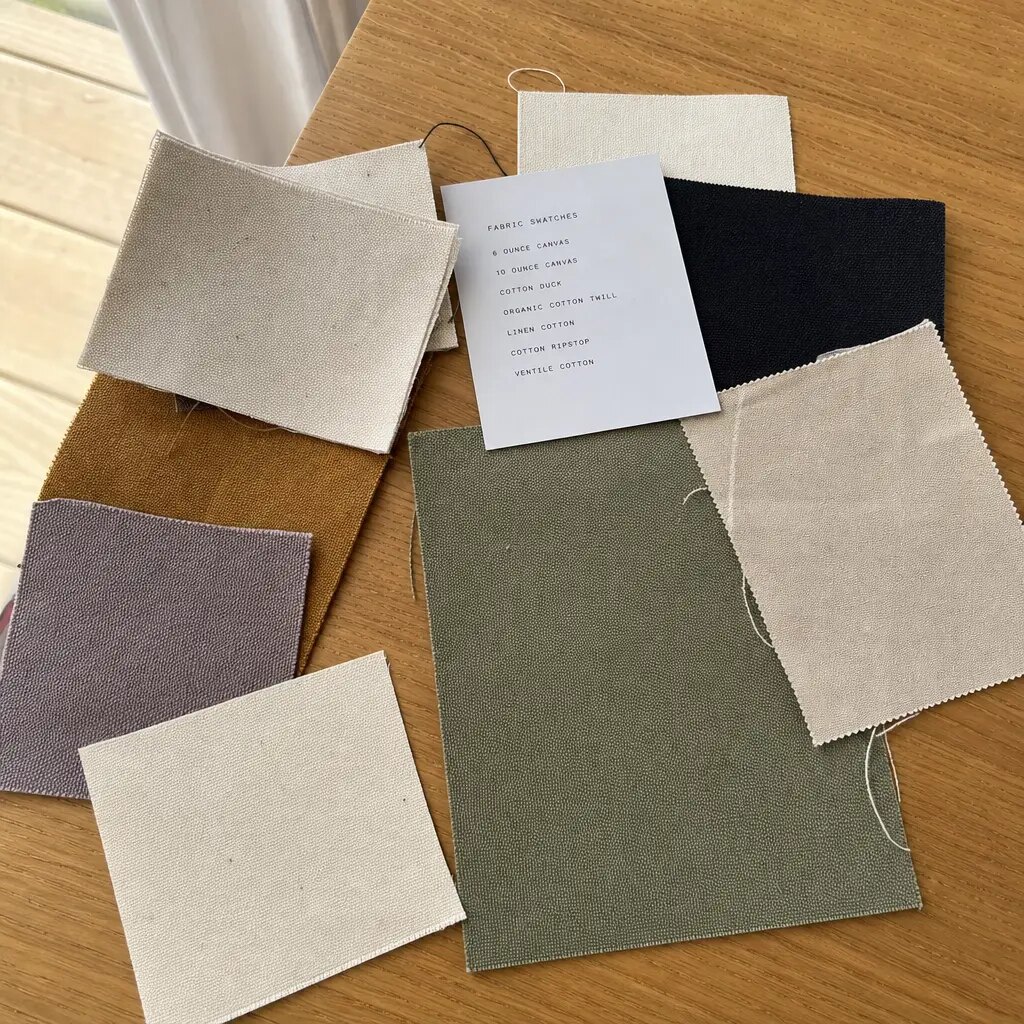
A clean approval process normally starts with fabric and artwork proofing before the full pre-production sample. The buyer can approve a canvas swatch for color, weight, and hand feel, then a printed panel for ink coverage and color, then a sewn sample for size, construction, and loaded appearance. This sequence prevents paying for several complete samples when the real issue is fabric shade or print color.
The full pre-production sample should be reviewed like a mini final inspection. Load the actual bottle, lift it by the handle, place it on the retail shelf height if possible, and photograph the front logo. Check whether the printed area wrinkles, whether the bottom seam sits flat, and whether the handle length works for guest carry. Once approved, seal or sign this sample and reference it on the purchase order.
- Approve fabric swatch before judging print color.
- Approve printed panel before bulk screens are used on sewn goods.
- Approve full sewn sample with a filled bottle inside.
- Record every approved dimension, print location, and construction detail on the sample sheet.
Packing and Carton Marking Matter for Hotel Retail
Hotel retail orders often move through a central warehouse, purchasing office, or distributor before reaching individual properties. A good canvas wine carrier can still create operational problems if cartons are mixed, labels are unclear, or inner packs are not suitable for shelf replenishment. Packing should protect the print surface and keep the bags clean, but it should not create unnecessary plastic waste if the hotel brand has sustainability guidelines.
Flat packing is common and efficient, but the buyer should decide whether each carrier needs an individual polybag, paper band, kraft sleeve, or bulk inner pack. For printed natural canvas, avoid packing that causes heavy fold marks across the logo. Carton labels should include SKU, hotel property, artwork code, quantity, purchase order, and destination. For multi-logo orders, carton maps reduce receiving mistakes.
- Use inner packing that protects print surfaces from rubbing during ocean or truck transport.
- Avoid tight compression that creates permanent creases across the front logo.
- Print or label cartons with artwork code and property name for multi-location orders.
- Confirm carton strength if bags ship with other retail goods or through distributor handling.
Lead Time Risks Usually Come From Proofing, Not Sewing
Many canvas wine carrier delays start before the sewing line. Artwork files arrive in low resolution, Pantone references are missing, the buyer changes logo size after seeing the first proof, or the hotel adds another property logo after screens are prepared. Fabric can also create delay if the buyer selects a custom dyed canvas instead of available natural or black stock canvas. These risks should be visible in the schedule.
A practical timeline separates artwork review, fabric approval, print proof, pre-production sample, bulk production, inspection, and shipping. Lead time should start after the final approval point, not after the first inquiry. If the hotel needs carriers for a seasonal wine program, opening date, wedding package, or holiday retail set, build buffer around proof approval and final inspection rather than assuming the factory can recover all lost days during sewing.
- Send vector artwork and brand color references at the RFQ stage.
- Choose stock canvas when the order has a fixed launch date and modest quantity.
- Lock all hotel logos before print screens or embroidery files are made.
- Schedule final inspection before goods leave the factory, not after warehouse arrival.
Specification comparison for buyers
| Spec decision | Recommended option | When it fits | Buyer risk to check |
|---|---|---|---|
| Canvas fabric weight | 10-12 oz cotton canvas or about 280-340 GSM for most hotel retail wine carriers | Gift shop, minibar upsell, wine tasting counter, and room amenity programs needing a firm hand feel without looking bulky | Below 260 GSM may wrinkle around the bottle base; above 380 GSM increases sewing resistance, freight weight, and fold marks |
| Bottle format | Single bottle carrier for low MOQ programs; two bottle carrier with center divider for premium retail sets | Single bottle fits broad resort retail; two bottle fits winery partnerships, welcome gifts, and holiday bundles | Two bottle bags need divider height and bottom reinforcement tested with real filled bottles, not empty sample bottles |
| Print method | Screen print for solid hotel logos; heat transfer only for detailed gradients or small runs; embroidery for small premium marks | Screen print is usually best for clean one to three color logos on canvas | Ink can bleed on loose weave canvas; transfer film can feel plasticky; embroidery can pucker if the canvas is too light |
| Print position | Front center logo with minimum 25-35 mm clearance from seams, handle stitching, and bottom fold | Works for gift shop shelves where the bag stands facing forward | Artwork too close to edge may distort during sewing or disappear when the carrier is filled |
| Handle construction | Self-fabric handle or cotton webbing handle with reinforced box stitch | Retail buyers needing a natural canvas look and reliable carry strength | Long handles can drag on narrow shelves; unreinforced handle ends can tear under a 1.2-1.8 kg filled bottle load |
| MOQ logic | Consolidate fabric color, bag size, and print method to reduce MOQ pressure | Useful when several hotel properties share one carrier base but need different logos | Different logo colors or print locations may create separate setup charges even if the bag body is identical |
| Retail packing | Flat packed in inner polybag or recycled paper band, then export carton with artwork code label | Good for hotel warehouse receiving and multi-property distribution | No SKU label or mixed carton map can cause receiving errors and wrong property allocation |
| Proof approval | Approve size set, fabric swatch, printed panel, and full pre-production sample before cutting bulk fabric | Best for logo-sensitive hospitality retail where brand color and placement matter | Approving only a digital mockup does not verify ink absorption, seam clearance, or loaded bottle shape |
Buyer checklist before sampling
- Define bottle type before quoting: 750 ml Bordeaux, Burgundy, Champagne, or mixed retail bottle range.
- Specify finished bag dimensions, not only flat panel artwork size; include width, height, gusset, and divider if any.
- State fabric weight target in GSM or oz, acceptable tolerance, weave type, color, and shrinkage expectation after finishing.
- Send vector artwork with Pantone or brand color reference and note whether exact color matching or commercial tolerance is required.
- Mark print position with distance from top edge, side seam, bottom fold, and handle stitching; include a tolerance such as plus or minus 5 mm.
- Choose print method based on artwork, hand feel, and order size; do not let the supplier decide without showing print proof samples.
- Require loaded bottle fit photos from front, side, bottom, and handle area using the bottle shape closest to your retail SKU.
- Approve stitching density, handle reinforcement, divider attachment, and bottom seam construction before mass production.
- Set carton packing rules by SKU, property name, artwork code, quantity per carton, and carton label format.
- Request quote separation for bag body, print setup, sample fee, packing, carton, inland freight, and any artwork change charges.
Factory quote questions to send
- What canvas weight in GSM and oz are you quoting, and what tolerance do you control in bulk fabric?
- Is the quoted canvas stock fabric or custom dyed fabric, and what MOQ applies to each route?
- Which print method are you quoting for this artwork, and how many screens, films, or setup items are included?
- Can you produce a printed panel proof before a full sewn sample, and how many working days does each proof stage need?
- What is the maximum printable area on the selected wine carrier after seam and handle clearance?
- What bottle size and weight will you use for the loaded sample test, and can we supply our bottle dimensions?
- How is the handle attached, what stitch pattern is used, and what load test can be performed on the finished carrier?
- Are dividers sewn into the side seams, bottom seam, or both, and what height is recommended for the bottle shape?
- What are the quoted packing details: pieces per inner pack, pieces per carton, carton size, gross weight, and carton label fields?
- What production lead time starts after artwork approval, deposit, or pre-production sample approval?
Quality-control points to confirm
- Fabric weight should match the approved sample within the agreed tolerance, commonly plus or minus 5 percent unless another tolerance is written.
- Finished dimensions should be measured flat and loaded; wine carriers must not lean severely when holding the target bottle.
- Print position tolerance should be written in millimeters and checked from fixed seams or edges, not judged only by visual centering.
- Print color should be compared under consistent light against approved Pantone, physical swatch, or signed print proof.
- Ink coverage should be even on canvas texture without pinholes, heavy bleeding, cracked transfer film, or fuzzy logo edges beyond agreed limits.
- Handle attachment should survive a practical loaded lift test using the heaviest target bottle plus safety margin.
- Divider panels should keep bottles separated without forcing the necks outward or making the carrier difficult to pack flat.
- Stitching should be secure at stress points with no skipped stitches, loose threads, open seams, or sharp thread tails near the bottle.
- Carton labels should match SKU, artwork code, quantity, purchase order, destination, and property allocation instructions.
- Final inspection should compare bulk goods against the sealed pre-production sample for fabric shade, print size, print position, sewing, and packing.