Why MOQ matters more than unit price
For canvas wine carriers, MOQ is not just a number in the quote. It is the factory’s signal about how much material, labor, setup time, and line attention the order will absorb. A unit price can look attractive and still be a poor buy if the minimum forces the team into excess stock, awkward storage, or a rushed production slot. For procurement buyers, the real question is whether the supplier can make the carrier repeatedly at the same quality level, not whether the first run is the cheapest on paper.
Tech startups feel MOQ pressure more sharply than established brands because demand is less predictable. A team may need branded carriers for a launch event, client gifting, investor meetings, or a retail bundle, but not yet know whether the design will repeat. Buy too many, and inventory risk sits on your books. Buy too few, and you miss the date or pay a premium for emergency replenishment. That makes MOQ a planning tool, not just a negotiation target.
The most useful MOQ conversation starts with what can stay standard. The carrier body, size, and construction can often remain fixed while decoration, label, or packaging changes. That gives the buyer a base SKU to reuse and a lighter lift when the campaign changes later. Factories are usually more willing to support a lower minimum when the pattern is already proven, the physical product stays stable, and the custom work is limited to one repeatable step.
So instead of asking only, 'Can you lower the MOQ?' ask, 'Which specification changes would make a lower MOQ realistic?' That question moves the conversation into production logic. If the supplier says one stock fabric color, one print color, and bulk packing would reduce the minimum, the buyer can decide whether those tradeoffs fit the launch. Procurement wins when the spec is simplified in the right places rather than diluted everywhere.
- Use MOQ to negotiate scope, not only price.
- Simplify decoration before sacrificing construction quality.
- Treat the carrier body as a reusable base SKU.
- Ask which production step actually drives the minimum.
Start with a precise canvas spec
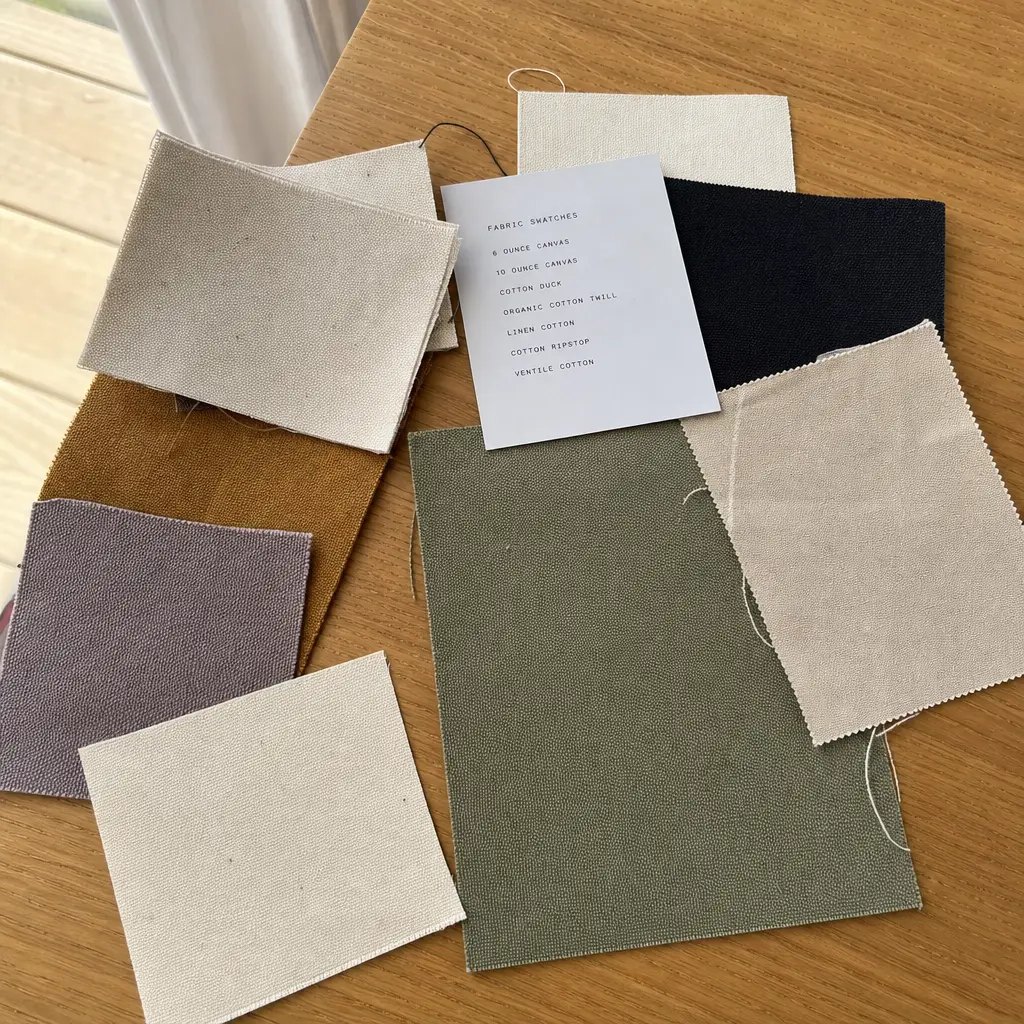
A vague request for 'canvas wine carriers' usually produces vague quotes. Canvas is a category, not a single material, and the difference between a light promotional sleeve and a structured retail carrier can be large. The buyer should define fabric weight, composition, weave, finish, and the expected hand-feel or structure. For many B2B programs, 12–16 oz cotton canvas, often around 340–450 GSM depending on weave and finish, is a practical baseline because it balances shape, durability, and sewing efficiency.
Lower weights can work for simple promotional gifting, especially when the carrier is not meant to carry a heavy load or hold its shape on shelf. But lighter canvas tends to drape more, show print distortion more easily, and feel less premium. Heavier weights improve body and presentation, yet they also increase sewing resistance and may slow production. The right spec depends on whether the carrier is being used as a one-time event handout, a branded retail product, or a reusable client gift.
If the bag must stand upright, say so explicitly. That requirement changes the build. Some carriers need a reinforced base, a double layer at the bottom, tighter side seams, or a hidden stiffener to keep the profile upright. If the carrier is only meant to protect the bottle during presentation, a simpler structure may be sufficient. The buyer’s job is not to over-engineer the item but to define the use case so the factory does not guess.
Write the spec in measurable terms. Include the bottle type or bottle dimensions used for fitting, the finished width and height, the handle length, the closure type, and any seam allowance that matters to the pattern. If your team expects multiple bottle shapes across launches, ask the supplier to state the tolerance range for the approved sample. That is how you prevent the second order from drifting away from the first approval.
- State fabric weight in GSM or oz, not 'thick canvas.'
- Confirm whether the carrier must stand upright empty.
- Use one real bottle as the fit standard.
- Ask for a written tolerance range on finished dimensions.
Specify fit, stitching, and closure like a buyer, not a shopper
The bottle fit determines whether the carrier feels premium or awkward. For a standard 750 ml bottle, many buyers start by checking body width, shoulder height, neck height, and base diameter rather than only total bottle height. A carrier can be tall enough and still fail if the shoulder bulges too much or the neck clearance is too small. For sourcing accuracy, give the supplier the actual bottle sample or a dimensioned drawing, not just the bottle volume.
Stitch construction matters because wine carriers are load-bearing at two points: the handles and the base. A useful buyer-side spec should say how the handle is attached, whether the seam is single- or double-stitched, and whether the factory must use bar-tacks at stress points. For thicker canvas, a 2-row stitch at the handle attachment plus bar-tacks is a common expectation. If the design is more minimal, the buyer should still ask for the stitch count and reinforcement method so the factory cannot downgrade the build without notice.
Closure style should be chosen according to bottle height, brand presentation, and transit risk. A top flap with snap creates a more finished look and protects the bottle neck. A drawstring neck can be flexible across multiple bottle heights. An open-top sleeve is simplest and usually cheapest, but it offers the least retention. The wrong closure can also scratch labels, press on foil capsules, or leave the bottle loose during handling. That is why closure choice belongs in the spec sheet, not only in the design mockup.
For procurement, the best wording is functional and measurable. Instead of saying 'premium finish,' define the finish: folded top edge, bound edge, turned hem, snap placement, or clean topstitch. Instead of saying 'good fit,' say the sample must accept the target bottle with no distortion greater than the agreed tolerance. Those small wording changes make the quote easier to compare and the QC easier to enforce.
- Measure body width, shoulder height, neck height, and base diameter.
- Request stitch count and bar-tack placement at load points.
- Choose closure by bottle profile and presentation need.
- Replace vague finish language with measurable construction terms.
How decoration method changes MOQ and rework risk
Decoration is one of the biggest levers affecting MOQ on canvas wine carriers. Screen print is often the most practical option for simple logos because it is fast, repeatable, and easy to price when the artwork is one color. It tends to work best on stable, flat panels with moderate artwork size. The risk is that very fine details, small reverse text, or tight registration can fill in or shift during production. Buyers should specify the artwork size and the minimum line thickness if the logo has small elements.
Embroidery creates a premium tactile effect but adds digitizing, thread planning, and extra fabric stress. It is usually better on heavier canvas than on lightweight fabric, and it can pucker if the design is too dense. For startup programs, embroidery is often best when the logo is simple and the order justifies the added setup. If the logo has tiny letters or a lot of fill, the buyer should ask for a stitched sample or a sew-out photo before approving bulk.
Woven labels and sewn side labels are useful when the branding should stay consistent while the artwork changes from campaign to campaign. They are also a strong choice when the buyer wants to keep print risk low. A label attached to the seam or side panel allows the carrier body to remain standard while the brand mark is updated later. That can help lower MOQ because the factory does not need to re-screen, re-digitize, or remake the product for every campaign.
The key sourcing move is to ask the factory to quote the same carrier body with multiple decoration options. Then compare setup cost, MOQ, lead time, and appearance. Do not let the decoration choice get buried inside one lump-sum price. The more visible the branding method, the easier it is to see which version is actually a good procurement decision rather than just the cheapest-looking quote.
- Screen print fits simple logos and repeat volume.
- Embroidery adds premium feel but can raise setup and distortion risk.
- Woven labels reduce risk when artwork changes often.
- Quote multiple decoration methods against the same base SKU.
MOQ negotiation levers that actually move the number
Factories usually relax MOQ when the order is easier to run. That means buyers should look for ways to reduce production friction before asking for a lower number. The most effective levers are simple: one fabric color, one bag size, one decoration method, one print color, and standard bulk packing. If the factory can cut from existing stock, reuse a proven pattern, and avoid special finishing, the order becomes much more attractive.
SKU consolidation is especially useful for startups. Instead of making three versions of the same carrier for three campaigns, build one base carrier and vary only the label, insert, or print file. That lets the factory plan one cutting run and one sewing setup while still giving marketing enough flexibility. It also improves reorderability because the physical product stays stable across programs. If the carrier needs to be reused for future launches, a stable base SKU is usually more valuable than a one-off custom build.
Price breaks should be reviewed carefully. Ask for pricing at 300, 500, and 1,000 units, then check which part of the cost is actually changing. Sometimes the factory is spreading setup cost over more units; sometimes it is crossing a fabric stock threshold; sometimes it is simply applying a better labor rate. If the supplier says the price drops materially above a certain quantity, ask what operational change occurs at that point. That answer often reveals where the real MOQ sits.
Do not overload the order with custom requests if the goal is a lower minimum. A low MOQ plus custom color, custom lining, custom closure, custom packaging, and multi-color print is usually not a low-friction job. The supplier may accept it, but the quote often gets expensive or the quality becomes less stable. A better tradeoff is to choose two priorities, such as lower MOQ and one-color branding, while accepting stock color and bulk packing. That is a realistic procurement compromise, not a failed negotiation.
- Lower MOQ by reducing changeovers and stock variation.
- Consolidate multiple campaigns into one base SKU.
- Compare price breaks at 300, 500, and 1,000 units.
- Avoid stacking too many custom features into a low-MOQ order.
Compare sourcing routes without comparing apples to oranges
Factory-direct sourcing gives the cleanest picture of what is really being made. You can see the fabric spec, sewing method, decoration method, and packing structure more clearly, which usually makes repeat ordering easier. It also supports better QC because the buyer can tie a defect back to a specific material or production step. The tradeoff is that the buyer must manage more detail up front: artwork approval, dimension lock, packing instructions, and sample signoff all need to be finalized before the bulk order starts.
Trading companies can be useful when a startup needs speed or a mixed assortment. They may be able to source from stock, combine products from different factories, or simplify the paperwork. The downside is transparency. If the quote does not reveal the true fabric weight, construction, or decoration method, it becomes hard to compare against a factory-direct offer. A trading quote may be convenient, but it can still hide substitution risk or make it difficult to enforce a consistent standard on reorders.
For most tech startup programs, a factory-direct base carrier with flexible branding is the strongest long-term model. The physical product stays stable while the message changes. That allows future orders to skip some sampling work, or at least reduce it, because the carrier pattern is already approved. If the startup expects repeated gifting or seasonal campaigns, the first order should be designed as a repeatable platform, not a one-time novelty.
Before comparing suppliers, normalize every quote. Make sure each one uses the same fabric weight, size, closure, decoration method, carton count, and sample terms. If one supplier gives a lower MOQ but only by quoting a lighter fabric or a simpler finish, the quote is not equivalent. Buyers should compare like-for-like products before judging price, otherwise the cheapest line item may not be the cheapest usable carrier.
- Factory-direct improves transparency and reorder control.
- Trading routes can help with speed and mixed stock.
- Normalize every quote before comparing price.
- Design the first order as a repeatable base SKU.
Quote data to demand in writing
A procurement-ready quote should look like a production document, not a casual sales note. If the quote does not state fabric composition, fabric weight, carrier dimensions, closure type, decoration method, print area, packing format, unit price by quantity, sample cost, and lead time, it is too vague to support a purchase decision. Vague quotes create disputes later because the buyer and supplier may have been mentally quoting different products under the same name.
Ask the supplier to separate one-time charges from recurring charges. Screen setup, digitizing, sample development, and artwork revisions are not the same as the per-unit manufacturing cost. If those items are bundled together, the buyer cannot tell whether the quoted unit price is truly competitive or whether setup charges are simply hidden in the total. A clean quote should make it obvious what happens on the first order and what happens on a reorder.
Carton and logistics information should also be part of the quote. Ask for carton dimensions, gross weight, units per carton, inner pack method, and shipping marks. Those details affect freight estimates, warehouse handling, and receiving accuracy. They also help the buyer see whether the supplier is packing efficiently or wasting space. When carton data is missing, the landed-cost estimate is incomplete and the receiving team is left guessing.
Use common terminology carefully. 'Wine tote,' 'wine bag,' and 'single-bottle carrier' may sound interchangeable, but the build can differ materially. One supplier may be quoting a soft sleeve, another a structured retail carrier, and another a lined premium version. Ask for drawings, annotated photos, or a dimensioned sketch if the product is not fully standard. The more precise the terminology, the less likely the buyer is to approve the wrong thing.
- Require dimensions, fabric, closure, decoration, packing, price breaks, and lead time.
- Separate setup charges from recurring unit cost.
- Include carton dimensions and gross weight.
- Use drawings or annotated photos when the build is not standard.
Sampling and approval: what to inspect before bulk booking
The sample is where the buying decision becomes real. It is not only about appearance; it is the first chance to validate fit, stitch quality, print placement, closure function, and packing behavior in one physical unit. Put the actual bottle into the sample and confirm the body fit, shoulder clearance, neck height, and whether the bottle sits securely when lifted. If the carrier will be used for gifting, also check that the front panel remains square and the logo reads properly after folding.
Inspect the sample as if it were a production lot. Check seam straightness, thread trimming, edge finishing, bar-tack density, and whether the handle attachment feels secure when loaded. If the carrier uses an insert card, hangtag, barcode label, or tissue wrap, include those in the test. A bag that looks fine loose can fail once it is folded, bagged, and carton-packed in the actual shipping format. Many quality issues only appear when the packaging step is added.
The approval record should include the sample itself, the artwork version, the measured dimensions, and the supplier’s written tolerance. If the supplier revises the sample after feedback, freeze that version as the pre-production standard. The best practice is to mark the approved sample, note the approval date, and keep the file in the procurement record. That gives both sides a clear reference if a later bulk run deviates from what was agreed.
Small orders need even tighter sample control because there is less room to absorb rework. A low MOQ can look attractive until the first production issue wipes out the margin. That is why buyers should never approve from a photo alone. Photos hide thickness, hand feel, stitch tension, and closure behavior. A couriered sample is slower than a screenshot, but it is much cheaper than fixing a thousand bags after production starts.
- Test with the actual bottle, not a placeholder size.
- Freeze the approved sample revision before bulk sewing.
- Record dimensions, artwork version, and tolerance in writing.
- Approve the packed sample, not only the loose bag.
Packing choices that affect damage, receiving, and shelf readiness
Canvas wine carriers are often damaged by packing choices rather than by the bag design itself. A poor fold can crease the print, flatten the body, or make the carrier look worn before it reaches inventory. Bulk packing is usually the cheapest option for importers and distributors, but only if the fold direction protects the artwork and the carton count stays consistent. If the printed face rubs against rough board or another unit, pressure marks can show up immediately.
Add packaging only when it solves a real receiving or retail problem. A polybag protects from dust and minor scuffing. A barcode sticker helps scanability. An insert card can support branding or compliance. But every extra step adds labor and often pushes MOQ upward because the factory must spend more time per unit. Buyers should ask what each packaging element is supposed to do: improve storage, simplify fulfillment, or elevate shelf presentation. If it does not do one of those things, it may not be worth the cost.
Carton marks matter more than many buyers expect. Ask for exact quantities per carton, clear master carton labels, and an approved orientation that prevents crushing. If the order will go to a warehouse or fulfillment center, the receiving team needs carton data that matches the packing list. This avoids the common problem where the product is technically correct but appears damaged because the pack-out was too tight or the cartons were overfilled.
For retail-facing programs, decide early whether the carrier must look premium when first opened. If so, clarify whether the unit needs a belly band, insert card, branded sleeve, or uniform fold. Those are not cosmetic afterthoughts; they change labor, carton size, and risk of scuffing. Put those requirements in the quote and sample approval so the factory can build the correct pack-out from the start.
- Keep fold lines away from the printed face when possible.
- Match packing format to the receiving channel.
- Confirm carton counts before bulk packing begins.
- Approve the folded orientation during sampling.
Lead time, tolerances, and landed cost
Lead time risk usually comes from slow approvals, late artwork changes, and last-minute packing revisions. The factory is not always the bottleneck. For a launch tied to a trade show or seasonal gift cycle, build the schedule backward from the delivery date and assign specific dates for artwork lock, sample approval, PO release, and shipment booking. If the program has any color matching or custom packaging, add buffer time for those decisions. Speed is valuable, but it should never come from removing the approval gate.
Buyers should compare landed cost instead of only ex-works unit price. Landed cost includes sample charges, setup fees, packing upgrades, inland transport, freight, and any import handling the team can reasonably forecast. A supplier with a slightly higher unit price may still be the better choice if they pack more efficiently, ship on time, or avoid rework. For smaller orders, setup and freight can outweigh the bag cost very quickly, especially when the order includes multiple colors or branding variations.
Ask suppliers to present costs in the same structure so the comparison is fair: ex-works price, packing adders, setup charges, sample cost, and timing after approval. Then compare the number of usable units you will actually receive by the launch date. A quote that looks cheap but creates crushed folds, delayed cartons, or wrong labels is not truly low cost. The right question is not 'What is the cheapest bag?' but 'Which quote gives the lowest total cost for this launch date and quality standard?'
If the startup expects repeat buys, also compare reorder cost. A standard base carrier may save money later by reducing new sampling or avoiding rework on artwork. In many B2B programs, the first order is not the real benchmark. The real benchmark is whether the same carrier can be reordered six months later with minimal re-approval and a predictable finish. Standardization usually pays back on the second order, not only the first.
- Track artwork lock, sample approval, and ship date separately.
- Compare ex-works price plus setup, packing, and freight.
- Use landed cost per usable unit, not only factory price.
- Standardize the base SKU to improve reorder economics.
Specification comparison for buyers
| Spec decision | Recommended option | When it fits | Buyer risk to check |
|---|---|---|---|
| Fabric weight | 12–16 oz cotton canvas, typically 340–450 GSM | Brand gifts, premium retail, and carriers that need body and shelf shape | Too-light fabric slumps; too-heavy fabric raises sewing difficulty, unit cost, and freight |
| Weave and finish | Tight plain weave with pre-shrink or washed finish | Orders that need consistent fit across reorders | Loose weave can distort print; unwashed fabric can shrink after approval |
| Print method | 1-color screen print or woven/embroidered label for low-artwork programs | Logo-led runs with repeat orders and limited artwork variation | Fine lines can fill in; dense embroidery can pucker lighter canvas |
| MOQ route | Standard base SKU with branding variation only | Startups testing event demand or first retail drops | Low MOQ may come with fewer colors, higher setup, or limited decoration options |
| Handle structure | Self-fabric handle with 2-row stitching and bar-tack reinforcement | Gifting and event use where presentation matters but heavy load carry is limited | Thin handles cut into the hand; weak reinforcement fails at the stress point |
| Closure style | Top flap with snap, drawstring neck, or open-top sleeve depending on bottle height | Different bottle profiles and presentation goals | Wrong closure can scratch labels or let the bottle shift in transit |
| Bottle fit | One 750 ml bottle with 8.5–9.5 cm body width allowance and confirmed neck clearance | Most wine, spirit, and olive oil bottle programs | Unverified diameter or shoulder height leads to returns and fit disputes |
| Supplier route | Factory-direct quote with sample room evidence and written spec sheet | When the buyer needs control over fit, lead time, and repeatability | Trading-only quotes can hide fabric substitution or unclear QC control |
| Packing method | Bulk polybag by size or master carton with fixed count and clear marks | Importers, distributors, and warehouse programs | Loose folding can crease print; inconsistent counts create receiving disputes |
Buyer checklist before sampling
- Confirm bottle dimensions, including body width, shoulder height, neck height, and base diameter, before approving the pattern.
- Lock the fabric weight in GSM or oz, not just 'canvas,' and require the same unit in the quote and sample tag.
- Specify decoration method, ink color count, print size in cm or inches, and exact placement from edge-to-print reference points.
- Approve seam construction, handle stitch count, and bar-tack placement on the first physical sample, not only a photo.
- Approve pack-out details: fold direction, polybag spec, insert card, barcode sticker, and master carton count.
- Compare MOQ, color limits, and price breaks across factory-direct and trading-company routes using the same spec sheet.
- Ask for a pre-production sample or sealed approval sample before bulk sewing starts, and keep it as the control reference.
Factory quote questions to send
- What exact canvas composition, weight, weave, and finishing are included in your quoted price? Please state GSM or oz and whether the fabric is pre-shrunk.
- What is the MOQ by color, by print design, and by carton assortment? Which parts of the MOQ are flexible and which are fixed?
- Can you quote separate prices for screen print, woven label, embroidery, sewn side label, and no decoration?
- What bottle size did you use to develop the pattern, and what tolerance do you allow on finished width, height, gusset, and handle length?
- What seam allowance, stitch count, and bar-tack standard do you use at handles and load-bearing points?
- What packing is included: polybag thickness, hangtag, barcode sticker, insert card, tissue, and master carton?
- What are your sample lead time, bulk lead time, and the earliest date production can start after approval?
- Which parts of the quote are variable, such as fabric surcharge, print setup, digitizing, carton changes, or rush fees?
- Can you share carton dimensions, gross weight, units per carton, and estimated carton count per shipment?
- What change in MOQ or unit price would you give if we simplify to one fabric color, one print color, and bulk packing only?
Quality-control points to confirm
- Verify finished body width, height, gusset, and handle length against the approved spec sheet before bulk packing.
- Check fabric weight, weave consistency, and color shade against the approved swatch or lab dip before cutting the full order.
- Inspect the first 10 units for print alignment, ink opacity, edge sharpness, and any ghosting or bleed.
- Pull seam samples from handles, side seams, base corners, and bar-tacks to confirm stitch density and reinforcement strength.
- Test one packed carrier with the actual bottle type to confirm fit, neck clearance, closure security, and label protection.
- Measure the finished sample against the target tolerance band: many buyers use ±0.5 cm to ±1.0 cm on body dimensions, with tighter control on print placement.
- Inspect carton count, carton mark accuracy, and pack orientation to avoid warehouse receiving disputes and damage claims.
- For retail or premium gifts, check that the folded bag does not place a crease across the printed face or label area.
- Document the approved sample version, date, and measured dimensions so bulk inspection has a clear reference.