Why carton planning matters on a simple wine carrier
Canvas wine carriers look like a low-complexity purchase until a tech startup gifting program moves from a slide deck to a purchase order. The item is soft, small, and inexpensive compared with the bottle it carries, so it is easy to assume that any decent sample will scale without trouble. In practice, the final result depends on a chain of choices: fabric weight, bottle fit, handle reinforcement, fold direction, inner packing, carton count, and shipping route. If even one of those decisions is left vague, the order can still look fine at sample stage and ship badly at volume.
For procurement buyers, canvas wine carriers for tech startups shipping carton planning should be treated as one combined product-and-packaging exercise. The carrier must fit the bottle, present the brand cleanly, and survive factory packing, export cartons, freight, receiving, and kitting with no rework. That matters whether the bags are going to employees, investors, conference attendees, channel partners, or customer success accounts. A creased logo, weak handle, or crushed carton is visible even when the unit price looks attractive.
The most common buying mistake is an RFQ that asks only for size, logo, quantity, and price. That leaves the supplier to choose fabric weight, fold method, carton dimensions, and reinforcement based on their default habits. A default can work for a retail replenishment order and still fail for a startup shipping gifts through a 3PL or dividing stock across offices. Strong procurement makes the packing logic visible before the first sample is approved.
That does not mean the buyer needs a long technical document for every order. It does mean the team should decide what matters most: appearance, bottle protection, gift presentation, warehouse speed, freight cube, or sustainability. Once those priorities are clear, the spec gets easier to write and the quote gets much easier to compare.
- State the shipment path: factory to port, factory to 3PL, direct to office, or multi-destination distribution.
- Use the same bottle profile for every supplier quote so fit and carton assumptions are comparable.
- Ask for carton dimensions and gross weight during quotation, not after mass production.
- Treat fold method, inner packing, and carton count as approval items equal to logo placement.
- Avoid approving a beautiful sample if the supplier has not shown how it will be packed in bulk.
Define the startup gifting use case before choosing specs
Tech startup gifting programs vary more than suppliers often expect. A recruiting team may want a small run for welcome gifts. A sales team may need premium carriers for enterprise prospects. An investor relations program may want a more restrained look. A conference team may care most about fast packing and low carton cube because the goods will move through an event warehouse. Each use case changes the right choice for fabric, print method, handle strength, closure, and carton plan.
The buyer should define whether the wine carrier is a standalone gift bag, part of a larger kit, or a retail-style branded accessory. If the bottle is inserted by the factory, the carrier must protect both the glass and the presentation. If the bottle is inserted later by a 3PL or office admin team, the carrier must arrive clean, easy to open, and organized by SKU or destination. If the carrier is shipped flat to multiple regions, carton marks and packing lists become just as important as stitching quality.
Startup timelines can move fast and quantities can change late. That makes specification discipline even more important. Procurement should document the minimum acceptable build so that a late change does not force the supplier to swap fabric, increase carton count, or drop reinforcement to recover schedule. The clearer the use case, the easier it is to decide where to spend money and where to simplify.
When internal stakeholders disagree, the use case can resolve the debate. An employee gift may justify a softer hand feel and a lower-risk print position. A retail-style launch may need stronger construction and tighter dimensional control. The same carrier can serve both kinds of programs, but the build should not be guessed after the quote arrives.
- Employee welcome gift: prioritize clean branding, consistent packing, and easy insertion by HR or 3PL teams.
- Executive or investor gift: prioritize heavier canvas, refined decoration, stronger finishing, and crease control.
- Conference giveaway: prioritize faster packing, lower carton cube, durable handles, and clear carton labels.
- Retail resale or subscription insert: prioritize barcode labels, retail presentation, carton consistency, and incoming inspection standards.
- Multi-office distribution: prioritize carton numbering, color/SKU separation, and packing lists that match destination requirements.
Choose fabric weight for structure, print quality, and freight impact
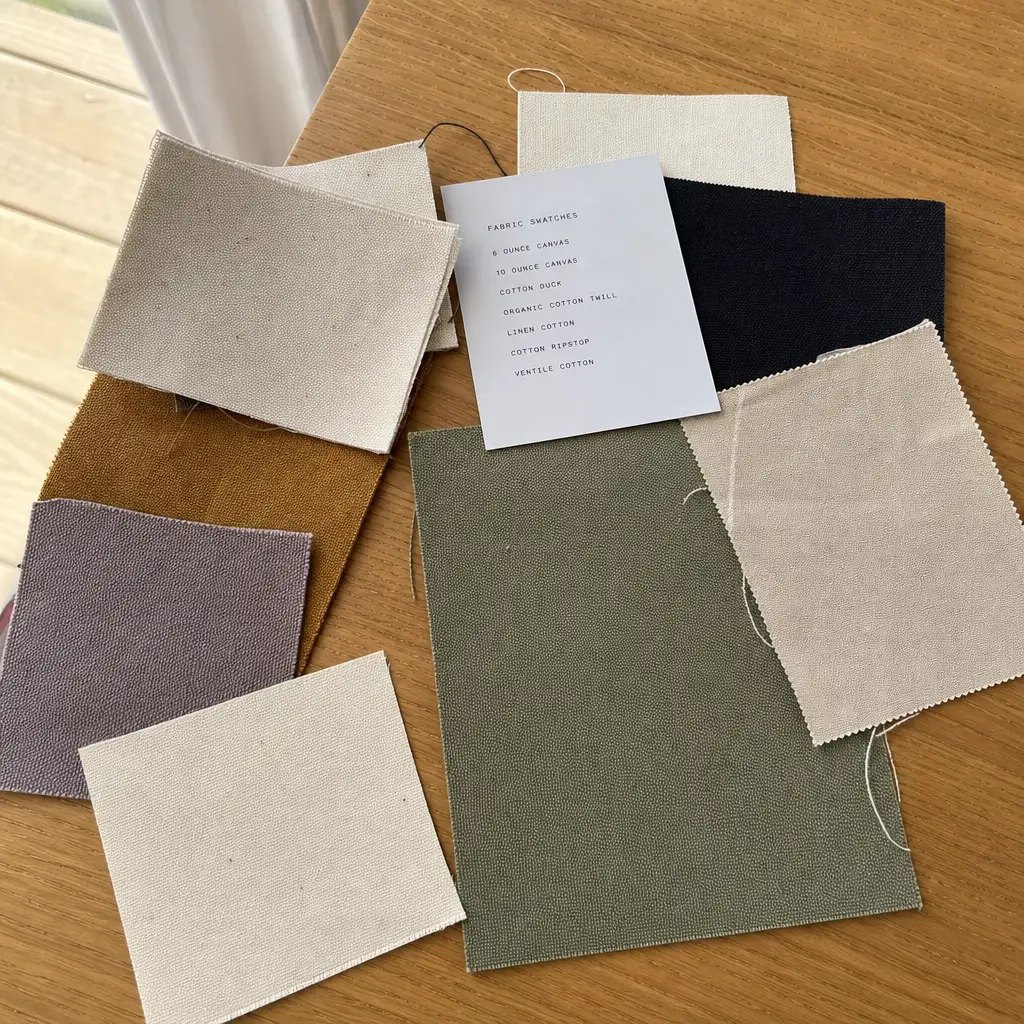
For most bulk canvas wine carrier programs, 12 oz to 14 oz cotton canvas is the practical commercial range. Twelve-ounce canvas usually balances structure, printability, sewing efficiency, and carton density. Fourteen-ounce canvas gives a fuller hand feel and can improve perceived value, especially for executive gifting or resale. Ten-ounce canvas can work for cost-sensitive programs, but it should not be selected only because the unit price is lower. Softer canvas can wrinkle in the carton, collapse around the bottle, and make the carrier look less premium after handling.
Procurement teams should ask suppliers to quote fabric weight in both ounces and GSM when possible. They also need to know whether the weight is greige fabric, dyed fabric, washed fabric, or finished fabric. A supplier may quote a fabric as 12 oz, but the actual finished hand feel can vary depending on weave density, washing, coating, and shrinkage. Natural canvas can show slubs and seed flecks, which may be acceptable or even desirable for a natural look, but the approved sample should make that range visible.
Fabric weight also changes carton planning. A heavier carrier does not only cost more in material. It may require more needle control, create thicker seams, reduce pieces per carton, and increase gross weight. When a quote looks unusually low, procurement should check whether the fabric is lighter than specified, loosely woven, or measured before finishing. The best choice is not simply the heaviest material available. It is the material that gives the required presentation while still packing efficiently.
If the program is expected to repeat, the buyer should also ask about shade continuity. Some canvas lots vary more than others, and a small difference is easy to miss on a desktop screen but obvious in a receiving bin. Ask the supplier how they control lot-to-lot variation and whether the same shade can be held across repeat orders without a fresh approval.
- 10 oz canvas: suitable for short-term giveaways when cost and lower cube matter more than stand-up structure.
- 12 oz canvas: strong default for startup gifting because it supports branding without excessive carton bulk.
- 14 oz canvas: better for premium feel, heavier bottles, and repeat-use value, but requires stricter fold and carton review.
- Natural canvas: verify shade, specks, odor, and print opacity before approval.
- Dyed canvas: confirm shade tolerance, colorfastness expectation, and whether custom dyeing changes MOQ or lead time.
Engineer bottle fit before decoration approval
Bottle fit should be confirmed before the logo is finalized because the bottle changes the way the fabric sits. A standard 750 ml wine bottle is not the only possible profile. Burgundy, Bordeaux, Champagne-style, sparkling wine, olive oil, and specialty beverage bottles can vary in shoulder slope, base diameter, neck height, and filled weight. If the carrier is too narrow, the bottle may stress the side seams and distort the printed front panel. If the carrier is too wide, the bottle may shift during carrying and make the gift feel poorly fitted.
A practical specification should include finished carrier height, width, base depth or gusset, opening width, and handle drop. Buyers should ask the factory to test the carrier with the actual bottle or a buyer-approved dummy that matches the real dimensions and weight. This matters even more if the bottle will be inserted before shipping, because the combined unit may require a different carton plan than flat-packed carriers. A fit that looks fine on a sample table can create packing pressure once the bottle is actually inside.
Base construction deserves more attention than it usually gets. A flat carrier without enough support may sag under a filled bottle. A boxed bottom improves standing presentation but adds sewing steps and can change folding behavior. A reinforced bottom seam may be enough for many programs, but only if seam allowance and stitching are consistent. The sample should be judged with the bottle inside, not only as an empty textile item. That one check catches a surprising number of sizing problems.
It also helps to decide whether the bottle should sit flush inside the bag or show some neck height for presentation. Some gifting programs want a neat, fully covered look. Others want the neck visible so the gift feels more premium or easier to identify at distribution. That choice affects bag height, carton count, and whether the top edge is likely to crease in transit.
- Measure bottle height, base diameter, maximum body diameter, shoulder profile, neck diameter, and filled weight.
- Allow practical clearance so the bottle inserts smoothly without making the carrier look loose.
- Confirm whether the carrier must stand upright when filled or only function as a carry sleeve.
- Check whether the bottle neck extends above the carrier in a visually acceptable way.
- Test the handle drop with a filled bottle so carrying does not feel awkward or strained.
Select handles, seams, and closures for real handling conditions
Handles are one of the highest-risk areas on a canvas wine carrier because they concentrate the load of a glass bottle into a small stitched area. A neat sample handle can still fail if the stitch density is low, the seam allowance is narrow, or the reinforcement is decorative rather than structural. For B2B buyers, handle construction should be specified in measurable terms: material, width, finished length, handle drop, stitch pattern, reinforcement method, and acceptable appearance.
Self-fabric handles create a cohesive premium look and are common for branded gifts. Cotton webbing handles can be stronger and more consistent, especially when the bottle is heavy or the carrier may be reused. Bar-tacks, X-stitches, or reinforced box stitches should be discussed before quotation because they affect labor time and appearance. If the bag is intended for retail or repeated use, the reinforcement should be visible enough to inspire confidence but clean enough not to look industrial unless that is the desired style. That is a design choice, not an accident.
Closures should be added only when they serve a real purpose. Open-top carriers are faster to sew, easier to pack, and usually more carton-efficient. Drawstrings, flaps, button loops, or tie closures can improve bottle stability and presentation, but they add components, labor, MOQ complexity, and bulk. If a closure is required, the buyer should ask how it folds in the carton and whether it changes the master carton height or causes pressure marks on neighboring units.
If a closure or handle style is new to the supplier, ask for a photo of the reinforcement from the inside and the outside. The outer appearance can hide a weak stitch path. For repeat orders, the buyer should save those photos with the approved sample file so the same construction can be checked later without guesswork.
- Specify handle width and handle drop instead of accepting supplier default dimensions.
- Require reinforcement at the handle attachment points for any carrier holding a filled bottle.
- Ask whether thread color matches fabric, logo, handles, or a contrast design choice.
- Avoid decorative closures unless they improve stability, retail presentation, or customer experience.
- Include seam allowance and reinforcement photos in the approved PP sample record.
Match decoration method to artwork, order size, and carton behavior
Decoration is often the first thing internal stakeholders notice, but for procurement it should be evaluated as both a branding decision and a packing decision. Screen printing is usually the best choice for simple startup logos, one- or two-color artwork, and medium to large production runs. It is relatively flat, cost-efficient, and compatible with carton density when cured correctly. However, screen print can crack or crease if the print area is folded sharply or if ink is too heavy on coarse canvas.
Heat transfer can support finer detail, gradients, and smaller artwork runs, but buyers should ask about hand feel, edge durability, and performance on textured canvas. Woven labels are useful when the brand mark contains fine detail or when buyers want repeatable branding without printing directly onto a rough surface. Embroidery can look premium, but it adds thickness, can pucker fabric, and may reduce pieces per carton if the embroidered area is large. The decoration method should be chosen after reviewing the artwork and the fold line, not only after comparing unit price.
For tech startups, brand color accuracy can become a stakeholder issue very quickly. Procurement should provide Pantone references or approved color standards when available, but also recognize that natural canvas absorbs and displays color differently than coated paper or a screen. A printed strike-off or decorated sample is more useful than a rendering. The supplier should confirm print area, color count, setup charges, curing process, and placement tolerance before the buyer approves the PO.
One more detail matters in practice: how the decoration behaves when the carrier is packed. Some logos look perfect flat on the table and then pick up a crease exactly where the bag is folded. If the fold crosses the artwork, the buyer should decide whether to move the logo, reduce the print size, or change the fold method. Fixing that after production starts is expensive and slow.
- Screen print: best for bold logos, spot colors, and large front-panel branding.
- Heat transfer: useful for small detail, gradients, or lower quantities, but test adhesion and feel on canvas.
- Woven label: strong option for repeat programs and subtle branding without front-panel ink risk.
- Embroidery: premium appearance, but confirm puckering, back-side threads, thickness, and carton impact.
- Always check whether the approved fold crosses the decoration area.
Build MOQ and price logic around components, not only units
MOQ for canvas wine carriers is rarely a single number. It can be driven by fabric availability, dye lot, cutting efficiency, print setup, handle material, closure hardware, label minimums, inner packaging, and carton printing. A quote that says MOQ 500 pcs may only apply to stock natural canvas with one-color screen print and bulk packing. The same carrier in a custom dyed canvas, with a woven label and individual kraft sleeves, may have a much higher effective MOQ.
Procurement buyers should ask for MOQ by component. That means one minimum for blank carrier production, another for custom color fabric, another for print or label setup, and another for custom packaging if relevant. This structure makes quotes easier to compare and helps internal teams understand the cost of adding variants. If marketing wants three bag colors, the buyer can show the impact on cutting, sewing, printing, and carton assortment rather than negotiating from a vague unit price.
Pricing should also show what is included. At minimum, the quote should state fabric weight, dimensions, handle style, decoration method, number of print colors, unit packing, master carton count, carton dimensions, sample cost, setup cost, and lead time. If a supplier refuses to provide carton data at quotation stage, the buyer should treat the price as incomplete. Landed cost cannot be estimated responsibly without carton cube and gross weight.
This is also where a buyer can prevent avoidable scope creep. If the first quote is based on one logo color and bulk packing, a later request for a second logo color, custom belly band, or individual bag insertion should be treated as a change in cost and carton logic, not as a free revision. Clear component-based pricing keeps the project honest.
- Ask for MOQ by body color, handle type, print method, label type, closure, and packaging format.
- Confirm whether stock canvas colors reduce MOQ compared with custom dyeing.
- Request separate visibility for setup charges, sample fees, packaging upgrades, and carton changes.
- Clarify whether splitting one order across multiple logo versions changes price or lead time.
- Do not approve a quote unless it includes master carton count, dimensions, and gross weight estimate.
Design the carton plan: fit, fold, count, and warehouse receiving
Carton planning starts with the physical behavior of the finished carrier. The factory should show how the carrier is folded, how handles are positioned, whether the decoration is protected, and how many units are placed in each bundle or inner pack. A tight fold can create permanent creases through the logo. A loose fold protects shape but wastes carton volume. A high carton count may look efficient on paper but cause bulging cartons, compressed handles, or inconsistent receiving counts.
Many canvas wine carrier programs fall somewhere between 50 and 100 pieces per master carton, but that range is not a standard. The right count depends on canvas weight, base construction, handle thickness, closure style, decoration bulk, unit packing, and shipping mode. A flat open-top 10 oz carrier may pack more densely than a 14 oz boxed-bottom carrier with embroidery and a drawstring. The buyer should ask the supplier to calculate carton count after a fold test, not by copying a previous order for a different design.
Carton information matters to finance and logistics as much as to quality. Freight forwarders and 3PL warehouses need carton dimensions, gross weight, carton marks, and piece count to estimate cost and plan receiving. If the goods are going to a startup office, cartons that are too heavy may create handling problems. If goods are going into a warehouse, inconsistent carton count slows receiving. If goods are shipped by air, dimensional weight can outweigh the benefit of a low unit price.
A good carton plan should also answer basic receiving questions: Can one person lift the carton safely? Are cartons meant to be stacked? Is palletization expected? Does the destination require master carton labels, carton numbers, or destination-specific marks? Those details are not administrative extras. They affect damage rates and how fast the program moves through the building.
- Approve the fold method with photos, especially if the logo, handle, or closure is affected.
- Set a maximum gross weight per carton based on warehouse and courier handling limits.
- Require consistent pieces per carton unless the final carton is clearly marked as a short carton.
- Use carton marks with PO number, SKU, color, quantity, carton number, and destination if needed.
- Ask for revised carton dimensions if fabric weight, handle style, closure, or unit packing changes after sampling.
Use sample approval to lock the production and packing standard
A pre-production sample should not be treated as a visual mockup only. For canvas wine carriers, the PP sample is the point where the buyer locks fabric, dimensions, seam construction, handle reinforcement, decoration, bottle fit, and packing behavior. A supplier may send an early sample made from available fabric to show shape, but procurement should not confuse that with a production-ready approval. The approved sample must represent the actual material and method planned for bulk production.
The sample should be tested with the real bottle or a matched dummy at the correct weight. Insert the bottle, lift the carrier repeatedly, check whether seams distort, and look at the logo when the carrier is filled. Then remove the bottle, fold the carrier as the factory intends, and inspect whether the logo creases or the handles create pressure marks. If the unit will be individually packed, the sample should include that pack. If a paper band, polybag, barcode label, or insert card is required, it belongs in the approval record.
Buyers should keep a sealed approval sample and a photo set showing front, back, side seam, base, handle reinforcement, logo placement, unit packing, and carton packing. This reference helps prevent disputes during inspection. If the supplier later changes fabric lot, fold method, carton count, or decoration process, the buyer can require written approval before mass production continues. The best time to prevent a failed shipment is before cutting and sewing, not after the cartons are sealed.
If the order is a repeat program, compare the new sample against the previous approved sample in the same light and with the same bottle. That simple discipline catches small changes in shade, handle length, or print opacity that a fresh review might miss.
- Approve one sample for appearance and one reference set for construction and packing if the order is important.
- Record finished dimensions with tolerance instead of relying on general descriptions like standard size.
- Test lifting with the real bottle weight and check handle attachment after repeated handling.
- Photograph the approved fold and packing method so the carton team can follow it consistently.
- Do not allow carton count changes after PP approval without updated dimensions and buyer sign-off.
Set QC thresholds that prevent rejected cartons and receiving disputes
Quality control for canvas wine carriers should cover material, workmanship, decoration, function, and carton accuracy. The defects are often small but commercially significant: loose threads, shade variation, skipped stitches, weak bar-tacks, ink smears, logo misalignment, dirty canvas, or carton count mismatch. Because the carrier is a branded gifting item, cosmetic consistency matters. Because it holds a glass bottle, structural stitching matters. Because startup programs often run on fixed launch dates, carton accuracy matters.
The inspection plan should include in-line checks and final random inspection where possible. In-line checks catch fabric shade issues, print placement, and handle reinforcement before the entire order is packed. Final inspection verifies finished appearance, bottle fit, carton count, and packing list accuracy. Buyers do not need to overcomplicate the standard, but they should define critical defects clearly. A handle seam that opens under normal carry is critical. A carton with mixed colors not shown on the packing list is a logistics defect. A minor natural canvas slub may be acceptable if it matches the approved sample range.
Carton-level QC is especially important for B2B procurement. If the cartons arrive short-packed, overpacked, mislabeled, or bulging, the warehouse problem becomes a buyer problem. The supplier should provide packing photos, carton marks, and a packing list before shipment. If the program is split by destination, the carton numbering should match the destination allocation. For larger or time-sensitive orders, an inspection checklist should include both unit inspection and packed-carton verification.
It is worth separating defects by severity before production starts. Minor visual issues can be acceptable within a range if they do not affect branding or use. Functional issues should not be negotiable. If the carrier cannot hold the bottle securely, or the carton plan does not match the packing list, the order is not ready to ship. That distinction keeps inspection decisions fast and defensible.
- Classify open seams, failed handle reinforcement, severe stains, wrong logo, and wrong carton count as major or critical defects.
- Check print alignment and color against the approved sample under consistent lighting.
- Inspect carton marks against the packing list before shipment release.
- Confirm no sharp broken needles or metal contamination risk remains in finished textile goods.
- Retain inspection photos of carton loading, carton marks, and sealed cartons for receiving reference.
Specification comparison for buyers
| Spec decision | Recommended option | When it fits | Buyer risk to check |
|---|---|---|---|
| Canvas weight | 12 oz to 14 oz cotton canvas for premium gifting; 10 oz only for cost-driven short-term programs | Use 12 oz+ when the carrier must hold shape, photograph well, and survive repeated handling before gifting | Too light a fabric can collapse and wrinkle; too heavy can increase carton cube, sewing difficulty, and freight cost |
| Fabric finish | Natural, dyed, or washed canvas with shrinkage and colorfastness expectations confirmed before sampling | Natural canvas fits sustainability messaging; dyed canvas supports brand colors; washed canvas gives a softer hand feel | Uncontrolled shrinkage, shade variation, lint, or uneven dye can make repeat orders inconsistent |
| Handle construction | Self-fabric handles with bar-tack reinforcement, or cotton webbing handles for heavier load requirements | Self-fabric works for premium branded gifting; webbing is better when bottles are heavy or carried longer distances | Weak handle seam stitching is a common failure point during transit, event handling, and warehouse pick-pack |
| Base and side seam | Reinforced base seam, boxed bottom if required, and seam allowance documented in the tech pack | Use reinforcement when the carrier must stand upright or hold heavier glass bottles without sagging | A weak base seam can split under bottle weight; an oversized base wastes carton space |
| Print method | Screen print for simple spot-color logos; heat transfer for small detail; woven label for texture-heavy branding; embroidery only when bulk is acceptable | Screen print suits larger runs and clean logos; labels suit repeat programs where consistent placement matters | Ink cracking, poor registration, bulky embroidery, or label misplacement can reduce perceived quality and affect folding |
| Closure type | Open top for fastest packing; drawstring, button loop, or flap only when bottle stability or retail presentation requires it | Open top works for employee gifts and event kits; closure styles work for customer-facing retail or resale programs | Closures add sewing time, MOQ complexity, height, and carton pressure if not folded consistently |
| Bottle fit | Fit around the exact bottle profile with 10-20 mm practical clearance and confirmed neck height | Best for 750 ml wine bottles, branded sparkling bottles, or mixed bottle assortments with known dimensions | If the neck sits too high, cartons may crush the top; if fit is too loose, the carrier looks low-value and shifts in handling |
| Unit packing | Individual recyclable polybag, paper belly band, or bulk bundle depending on warehouse and gifting process | Individual packing helps clean receiving and kitting; bulk bundles reduce packaging waste and labor | Unspecified inner packing causes dust exposure, mixed counts, scuffed print, and slower warehouse receiving |
| Carton count | Engineer 50-100 pcs per master carton only after fold test, gross weight check, and compression review | Use lower counts for 14 oz canvas, embroidery, closures, or strict shape protection; higher counts for flat open-top 10-12 oz carriers | Wrong carton count drives carton bulge, print creasing, air-freight dimensional weight, and warehouse inefficiency |
Buyer checklist before sampling
- Confirm the exact bottle profile: height, base diameter, shoulder shape, neck diameter, filled weight, and whether the program uses only 750 ml wine bottles or mixed bottles.
- Define the use case before quoting: employee gift, investor gift, conference kit, retail resale, subscription insert, or warehouse kitting component.
- Lock fabric specification by oz and/or GSM, fiber content, color, finish, shrinkage expectation, and whether the quoted weight is before or after finishing.
- Specify handle style, handle drop, handle width, seam allowance, bar-tack position, and whether the handle must support a loaded bottle without seam distortion.
- Choose the decoration method with actual artwork size, Pantone or color reference, print placement tolerance, and whether artwork may be folded during packing.
- Confirm whether the carrier is open top, drawstring, flap, button-loop, or another closure, then ask how that changes sewing time and carton height.
- Define unit packing: no polybag, individual polybag, recycled polybag, kraft sleeve, paper belly band, or buyer-supplied insert.
- Request a carton plan before approving price: pieces per inner pack, pieces per master carton, carton dimensions, gross weight, net weight, and carton mark format.
- Ask whether cartons must survive sea freight stacking, courier handling, palletization, or direct-to-warehouse receiving by a 3PL.
- Require a pre-production sample made with actual fabric weight, logo method, handle construction, bottle fit, and intended folding method.
Factory quote questions to send
- What is the exact fabric weight in GSM and ounces, and is the quoted weight measured before dyeing, after washing, or after final finishing?
- Is the canvas 100% cotton, cotton blend, recycled cotton, or another composition, and can the composition be documented for our procurement file?
- What are the standard fabric color options, and how does MOQ change for custom dyeing or Pantone-matched canvas?
- What handle construction is included in the quote: self-fabric, cotton webbing, reinforced X-stitch, bar-tack, or another method?
- What load test or practical carry test can you perform using our actual bottle weight?
- Which print method is included, how many colors are priced, what is the maximum print area, and what setup charge applies?
- Can you produce a pre-production sample using real production fabric and real decoration rather than only a digital mockup?
- What is the tolerance for logo placement, print color, fabric GSM, finished dimensions, and handle length?
- How many pieces are packed per inner pack and per master carton, and what are the carton dimensions, net weight, and gross weight?
- What fold method will be used inside the carton, and will that fold cross the printed logo or embroidered area?
Quality-control points to confirm
- Fabric GSM or oz matches the approved sample within the agreed tolerance, commonly plus or minus 5% to 8% depending on finishing and washing.
- Finished dimensions are checked after sewing, including width, height, gusset or base depth, handle length, handle drop, opening width, and bottle fit.
- Print placement stays within the approved artwork tolerance and does not shift into seams, top hem, gusset folds, or handle stitching.
- Print quality is checked for color match, opacity, registration, curing, rubbing, cracking at fold lines, ink bleed, and contamination on natural canvas.
- Handle stitch density, X-stitch or bar-tack reinforcement, and thread tension are consistent across the production lot, especially at load-bearing points.
- Base seam and side seam are inspected for skipped stitches, open seams, weak seam allowance, raw edges, and twisting that affects bottle alignment.
- Bottle fit is tested with the actual approved bottle profile or a buyer-approved equivalent, not only with a generic factory dummy bottle.
- Unit packing matches approval: bag type, bag thickness if applicable, paper sleeve, warning text if required, silica use if approved, and barcode or SKU label if needed.
- Carton dimensions, inner pack count, master carton count, net weight, gross weight, and carton marks match the agreed shipping plan and packing list.
- Cartons are not overfilled, bulging, underfilled, crushed, oil-stained, wet, or mixed by color/SKU unless the assortment plan allows it.