Start With The Pack Format
When sourcing wholesale canvas wine carriers for hotel retail, the carton plan is part of the product, not a shipping afterthought. A buyer who only defines the bag body gets inconsistent offers because each supplier fills in its own assumptions about polybags, inserts, retail stickers, carton counts, and pallet density. That creates price noise and often rewards the quote that leaves out the most handling steps. The clean way to buy this category is to define the finished unit, the retail presentation, and the export carton together in one RFQ.
For hotel shops, minibar programs, and resort boutiques, the receiving path matters. The carrier may need to move from export warehouse to local distributor, then into a back room with limited space before it reaches shelf or replenishment stock. A pack that looks efficient on paper can still fail if the carton is too large to handle comfortably, the count is awkward for shelf replenishment, or the unit arrives with corners crushed and labels unreadable. The pack format should fit the actual route, not an abstract freight target.
The right first question is simple: what will the receiving team touch first? If the answer is the retail unit, then the outer appearance, barcode placement, and dust protection matter. If the answer is the master carton, then carton strength, stack behavior, and count accuracy matter more. If both matter, the spec needs to reflect both. That is how a buyer keeps the quote comparable and avoids rework after the first shipment lands.
- Define the finished unit, retail pack, and export carton in the same RFQ.
- Specify whether the carrier must be shelf-ready, warehouse-ready, or both.
- Ask for carton dimensions, gross weight, and stack limit before freight is booked.
- Request a packed-carton photo, not only finished-product photos.
Choose The Build Around The Bottle
The fabric weight is only useful when it is tied to the bottle and the use case. For many hotel retail programs, 12 oz canvas is the practical starting point because it gives enough body to feel intentional on shelf without making the unit bulky in carton. A 10 oz body can work for entry pricing or light gifting, but it may look soft once a full bottle is inserted. A 14 oz body gives a more substantial hand feel, yet the extra weight can slow sewing, increase material cost, and reduce carton efficiency.
The real build decision is not just oz weight. It is the combination of canvas, seam allowance, handle attachment, and base support. A carrier with a proper insert, a stable bottom, and reinforced handle anchors will usually perform better than a heavier bag with weak stitching. If the item is meant to be carried across a lobby or placed on a retail shelf, structural consistency matters more than a rounded fabric number on the quote. Ask the supplier to describe exactly how the load is carried from bottle to base to handle.
Bottle profile matters as much as fabric. A standard 750 ml Bordeaux bottle does not behave like a taller Burgundy bottle or a wider Champagne-style bottle. If the carrier will be used in hotel retail, test the largest expected shape, not only the easiest one. A bag that looks perfect with an empty shell can become tight, unstable, or cosmetically distorted once the real bottle is inside. Approval should be based on the actual bottle that the buyer expects the guest or shopper to use.
- Use 12 oz as the default starting point unless the price target is very aggressive.
- Reserve 10 oz for light-duty or entry-price retail only.
- Ask for a full bottle fit test before approval.
- Confirm the largest bottle profile the carrier must accept.
- Check whether the bag still stands cleanly after loading, not just before loading.
Pick Decoration That Survives Handling
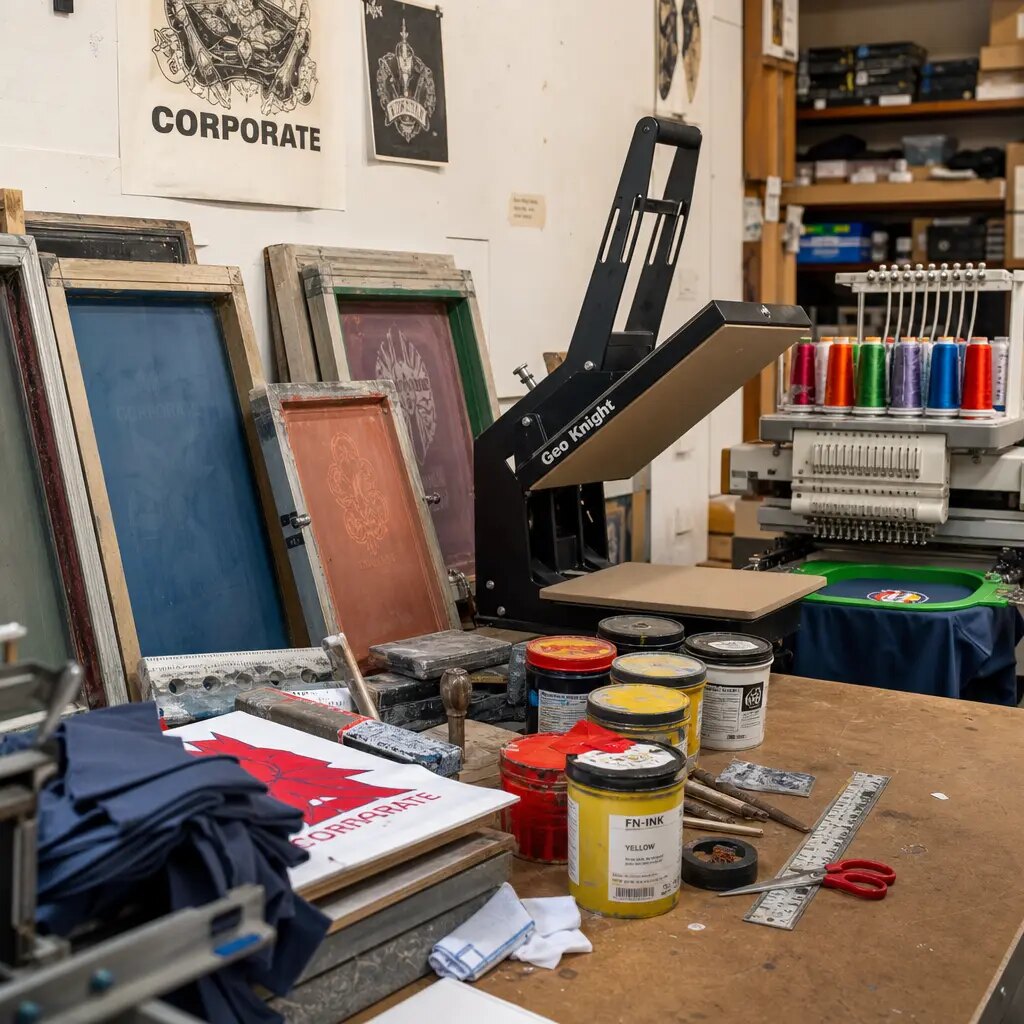
For a simple brand mark, screen print is usually the most reliable option. It is easy to repeat, easy to quote, and usually gives the cleanest result on natural canvas when the artwork is simple and the color count is low. The risk is not the print method itself but the details: thin type can break up on texture, fine lines can fill in, and poor curing can lead to rub-off during receiving or shelf handling. The design should be built for canvas, not copied from a flat digital layout and expected to behave the same way.
Embroidery can look more premium, but it is not always the best answer. It can add stiffness, alter the fold line, and distort a small logo on a narrow panel. A woven side label or sewn brand tab is often a better fit for hotel retail because it is durable, subtle, and easy to repeat on reorder runs. If the brand wants a controlled, understated look, a clean label placement often reads better than a large print that crowds the front panel or fights with the bag shape.
During development, keep the sample identifier separate from the final customer artwork. If the CTM / CottonToMaker sample logo is used on a development piece, place it on a side label or seam tab so the buyer can review construction without confusing the sample mark with final branding. Approve the exact placement, stitching, and edge finish. Small mistakes in label orientation or trim are the sort of detail that makes a retail product feel generic even when the core bag is well made.
- Use screen print for simple logos and repeat orders.
- Use a woven label or sewn tab when wear resistance matters more than artwork size.
- Approve print placement against a physical sample, not only a digital mockup.
- Ask for a dry-rub test and a fold test on the approved decoration.
- Avoid complex artwork if the order needs stable replenishment.
Compare Supplier Routes Before Price
The same carrier can come from very different sourcing routes, and the route affects risk more than many buyers expect. A direct factory can give the strongest control over sewing, packing, and carton labeling, but only if the plant truly owns those steps. A trading company can be useful when the buyer needs flexible MOQs or a mixed assortment in one PO, yet the price may hide subcontracted sewing and packing, which weakens traceability. A printer-led order can also work, but if sewing is outsourced, the build quality may not receive the same process control as the decoration.
That is why the supplier route needs to be compared before unit price. A low ex-works number is not meaningful if one quote includes direct QC ownership, carton marks, and sample control while another leaves those items vague. For hotel retail buyers, the cost of a wrong spec is not just the purchase price. It can include repacking labor, delayed replenishment, damage claims, and slower receiving. The cheapest route is not the cheapest outcome if the carton plan is weak or the factory cannot prove who owns the final release.
The practical test is simple: ask who cuts, who sews, who prints, who packs, and who signs off the carton before shipment. If the answer changes between samples and bulk, treat that as a risk signal. A buyer does not need a perfect factory story, but it does need a clear chain of responsibility. Once that chain is visible, comparing quotes becomes much easier because the real tradeoff is no longer hidden inside the sales pitch.
- Ask each supplier to identify who owns cutting, sewing, printing, packing, and final QC.
- Request workshop photos or a live video of the relevant production areas.
- Compare quotes only after the same fabric weight, print method, and carton spec are fixed.
- Treat a price gap as a spec gap until proven otherwise.
- Ask whether the same route will be used for repeat orders.
Read Quotes As Cost Breakdowns
A useful factory quote should never be just a unit price and a shipping date. It needs to show what is included in the fabric, what is included in decoration, and what is included in packing. For canvas wine carriers, the main cost drivers are usually fabric weight, handle material, print complexity, base support, carton count, and whether the unit is packed in a retail-ready way or as loose bulk pieces. If any of those pieces are unclear, the buyer cannot compare offers on equal terms.
The quote should also show how price changes with volume. Ask for the launch quantity and one or two realistic reorder breakpoints so you can see whether the supplier is using real MOQ logic or hiding setup costs inside the unit price. If sample work, special packing, or print setup will not recur, those costs should be separated from the steady-state number. That is especially important for hotel retail programs where the first order and the reorder may be different commercial events. The first shipment often carries development cost that should not distort the long-term cost picture.
It also helps to ask for a visible difference between the simplest pack and the most protective pack. For example, compare loose bulk, individual polybag, and retail sticker plus polybag. That tells you whether the extra packaging is protecting the route or just adding cost. Once the packing delta is visible, the buyer can decide whether the added labor is worth the lower risk of dust, scuffing, and warehouse handling damage.
- Break the price into fabric, sewing, decoration, packing, and export handling.
- Ask for the cost of polybags, inserts, stickers, and carton print as separate items.
- Request launch pricing and reorder pricing separately.
- Ask for overrun policy, shortage handling, and reprint responsibility in writing.
- Compare pack-cost differences before you compare raw unit price.
Set MOQ Around Reorder Reality
MOQ is not only a factory threshold. It is a decision about how much inventory the hotel channel can actually absorb before the next color change, artwork revision, or seasonal reset. The safest first run is usually the simplest one: one body color, one logo treatment, one carton spec, and one retail presentation. Every extra variant adds setup time and increases the chance that one version becomes stranded inventory while another sells through. On a retail shelf, variety that does not sell is not variety; it is dead stock.
A practical pilot quantity is the amount that proves sell-through without locking too much capital. A factory may price more efficiently at a few thousand pieces per color, but a buyer should not chase the lowest threshold if it creates unnecessary complexity. The better question is whether the MOQ matches the opening order, the likely reorder cadence, and the property group’s storage reality. A slightly higher MOQ can be the smarter choice if it reduces duplicate setup, keeps the spec stable, and lowers the chance of re-approving the same item twice.
For repeat programs, ask the supplier to separate launch pricing from reorder pricing. That shows whether the first run includes one-time development cost, extra samples, or special packing that will not repeat. It also helps the buyer plan inventory and forecast the next buy without assuming the first quote represents the long-term cost. A clear MOQ structure makes the program easier to manage across seasons and reduces the risk of overbuying into a slow-moving color or carton format.
- Keep the first run simple: one logo, one base color, one pack spec.
- Use MOQ to validate sell-through, not to test every variant at once.
- Negotiate reorder pricing separately from launch pricing.
- Avoid changing print colors or carton formats between sample and bulk unless necessary.
- Match MOQ to shelf velocity and replenishment cadence, not to ambition alone.
Approve Samples Against A Golden Standard
Sampling should move in stages: concept sample, pre-production sample, golden sample, and shipment reference. The approved sample is the standard for color, print placement, seam finish, and carton pack. If the factory changes the handle width, label position, or base insert during bulk production, that should be treated as a deviation, not as a harmless update. For hotel retail buyers, the first visible problem often shows up at the point of sale, not in the factory. Strong sample control is the easiest way to stop a small change from becoming a retail issue.
The sample review must be physical and functional. Load the carrier with the intended bottle size, check whether it stands correctly, lift it repeatedly, and watch how the handle and side seams behave under load. If the unit includes a divider or stiffener, verify that the insert stays aligned when the bag is moved. The approval should also include a packed-carton photo so the buyer can see how the units sit inside the box. A good-looking bag can still fail on carton logic if that part is never reviewed.
Keep one signed golden sample or a fixed photo set on file. The reference should show front and back views, seam details, inside construction, barcode placement, and carton loading. If a later shipment changes any of those items, the buyer has a clear basis for correction. Without that record, the team ends up arguing from memory instead of from spec, which is where most avoidable sourcing disputes start.
- Approve color, stitching, label placement, and bottle fit on the same sample.
- Keep one signed sample or photo set as the golden reference.
- Treat changes to carton count, inserts, or barcode position as new approval points.
- Test the carrier with the real bottle, not a dummy load.
- Ask for both empty-bag and loaded-bag photos before sign-off.
Pack For Hotel Receiving, Not Just Export
The packing plan should start with how the hotel retailer receives and stores the product. If the carrier is going into a shop set or minibar program, each unit may need a clean retail face, barcode, and dust protection. Individual polybagging is common, but it is not automatically the best choice. In humid routes, the bag can trap moisture if the goods are packed too quickly after finishing, and in some markets the plastic content creates disposal friction. If the destination wants a cleaner unpacking experience, a minimal sleeve or protected insert may be better than a fully sealed pouch.
Master carton design should match the distribution reality. A carton that is too large invites compression damage and wastes freight cube. A carton that is too full crushes the products and slows receiving. Ask the factory to propose a case pack that keeps the carton practical for hand handling and stacking. For chain hotel receiving teams, carton marks should show SKU, color, quantity, PO number, and carton count clearly. The person opening the box should not need to guess what is inside or spend time reconciling labels against a packing list.
The packing spec should also say how the units sit in the carton. A single layer may be better than a stacked pack if the product has a soft face or protruding label. Divider sheets, dunnage, or inner trays may be appropriate when decoration can rub during transit. The goal is not maximum density. The goal is a stable pack that arrives neat, counts correctly, and does not force the hotel team to sort or repack items before they can be used.
- Keep carton weights practical for receiving teams, not just efficient for freight.
- Use clear case labels and SKU marks on multiple sides of the master carton.
- Confirm whether destination rules require polybags, warning labels, or a no-plastic alternative.
- Ask for a carton loading diagram if the product includes a label, divider, or insert.
- Do not overpack cartons just to reduce pallet count if the product face can be damaged by pressure.
Use QC Checks That Catch Real Defects
QC needs to cover more than a final visual check. For canvas wine carriers, the main failure points are fabric weight drift, cut-size drift, weak handle anchoring, print defects, insert movement, and carton damage. A good inspection plan starts with a golden sample and a measurement sheet, then checks the first production pieces, then repeats inline at a defined interval, and ends with a packed-carton review before release. The point is to catch the problem while it is still cheap to fix.
Use measurable acceptance points. Check the finished canvas weight on the production lot, not on the sample yardage. Measure body width, body height, gusset, and handle drop directly against the approved reference. On load-bearing seams, look for clean bartacks, no open gaps, and no loose thread tails that suggest poor trimming. On decoration, check position, rub resistance, and curing. If the unit has a divider or base insert, verify that it sits flat and does not drift after handling. This is the difference between cosmetic approval and real production control.
Packing-line inspection matters as much as sewing. The first 20 units off the line should be checked before the full run is packed. Then repeat the same check at regular intervals, especially after machine changes, worker rotation, or label changes. Before cartons are sealed, verify count, SKU label, barcode, and carton mark placement. If the buyer expects carton loading photos, ask for them while the line is still open, not after the pallet has already left the floor. It is much easier to fix a packing error before the box is closed than after it has entered the freight chain.
- Measure finished fabric weight, body size, gusset, and handle drop against the approved sample.
- Reject any open seam, missing bartack, or loose thread at load-bearing points.
- Check print rub resistance with a simple white-cloth dry-rub test.
- Inspect the first 20 pieces on the line before bulk packing continues.
- Verify carton count, SKU label, barcode, and carton mark before sealing.
- Ask for carton loading photos while the line is still open.
- Use your house AQL or a clearly written acceptance plan, then apply it consistently.
Build The Landed-Cost Case Before Award
The lowest unit price is not always the best landed cost. Canvas wine carriers are light enough that small changes in carton count, bulk density, and packing method can change freight efficiency and warehouse handling cost. A supplier with a lower ex-works number but oversized cartons or weak packing can become more expensive once damage, repacking, and extra freight are counted. The award should reflect the cost of getting the item to shelf in usable condition, not just the cost of getting it out of the factory gate.
If the buyer is choosing between FOB and DDP, the decision should be based on control, not habit. FOB works well when the import team wants to manage freight and destination handling directly. DDP can simplify replenishment, but it can also hide the true margin stack and make carton quality harder to police unless the route is clearly documented. For hotel retail, the safest award is usually the one that keeps the pack spec stable and the cost structure visible. The line price matters, but only after the route, the carton plan, and the QC basis are clear.
A simple landed-cost worksheet should include unit price, carton count, carton dimensions, freight cube, damage allowance, and destination-side repacking labor if it is likely to occur. This is especially useful when comparing a cleaner but slightly more expensive pack against a cheaper one with less protection. If the better pack reduces damage and speeds receiving, it can easily win on total cost even if the quoted unit price is higher. That is the kind of comparison a buyer needs for a defensible award decision.
- Compare total landed cost, not only the ex-works unit price.
- Include packing density and carton size in the freight comparison.
- Reserve a defect allowance in the margin model for first-run retail programs.
- Ask whether destination repacking labor is expected or avoidable.
- Use the same freight assumptions across every supplier quote.
Specification comparison for buyers
| Spec decision | Recommended option | Commercial tradeoff | Buyer risk to check |
|---|---|---|---|
| Direct factory with in-house cutting, sewing, printing, and packing | Best when one team must own build quality and carton pack consistency | Usually better traceability, fewer handoffs, and cleaner reorders; unit price may be slightly higher than a trader quote but the spec is easier to control | Confirm the same plant actually does each step, not just the sales office; ask for workshop photos and a packing-line photo set |
| Trading company with subcontracted sewing | Best when you need flexible MOQs or mixed SKU sourcing in one PO | Can simplify sourcing across categories, but the quote may hide multiple margins and weaker defect traceability | Ask who owns final QC, carton sealing, and rework; hidden handoffs can slow samples and blur responsibility |
| Printer-led order with outsourced sewing | Best when artwork is the main value driver and the build is simple | Useful for heavy branding or short runs, but sewing, handle strength, and carton pack can be treated as secondary tasks | Verify seam construction, handle anchoring, and load tests separately from print approval |
| 10 oz canvas body | Best for entry price points, light gift use, or very large volumes | Lower material cost and lighter cartons, but the body can feel soft or limp once a full bottle is inserted | Check bottle sag, side-panel collapse, and whether the bag still feels retail-ready after filling |
| 12 oz canvas body | Best balance for most hotel retail programs | Usually the strongest mix of structure, hand feel, and freight efficiency | Confirm finishing shrink, actual post-finish weight, and whether the approved sample matches production hand feel |
| 14 oz canvas body | Best when shelf presence and premium feel matter more than cube efficiency | Higher material cost, slower sewing, and bulkier cartons; may reduce units per case and increase freight | Check whether the thicker body creates carton pressure, awkward folding, or poor handle flex |
| Single-bottle carrier | Best for standard wine shop, minibar, and gift-shop programs | Simpler build and better carton density, but lower perceived gift value than a set carrier | Validate fit for the largest bottle profile you expect, not only the standard Bordeaux shape |
| Two-bottle carrier with divider | Best for gifting and bundled retail sets | Higher ticket perception, but more parts to control and less efficient carton packing | Check divider alignment, rubbing between bottles, and whether the loaded bag remains balanced |
| Individual polybag plus retail sticker | Best when the product moves through receiving, warehouse, and shelf replenishment | Improves dust protection and barcoding, but adds pack cost and can trap moisture if packed too soon after finishing | Confirm bag odor, seal quality, and whether destination rules allow the chosen plastic format |
Buyer checklist before sampling
- Define bottle size, bottle weight, and the largest profile the carrier must fit, not just the marketing name of the bottle.
- Lock canvas weight after finishing, plus any lining, baseboard, divider, or reinforcement requirement.
- State the decoration method, logo placement, artwork size, and number of print colors before asking for pricing.
- Choose the pack format early: single piece, pair pack, polybagged retail unit, or bulk carton.
- Specify carton count, carton dimensions, gross weight, and whether the box must be shelf-ready or warehouse-only.
- Ask for a sample ladder: concept sample, pre-production sample, golden sample, and shipment reference.
- Request photos of the finished unit, inside construction, carton loading, and sealed carton labels before bulk release.
- Ask every supplier to quote the same spec so price differences are real, not just different assumptions.
- Write the overrun, under-run, replacement, and reprint terms into the PO or a separate approval sheet.
- Check the landed-cost impact of freight cube, destination repacking, and carton handling before award.
Factory quote questions to send
- What is the exact finished canvas weight after all processing, and what tolerance do you allow on the production lot?
- Which steps are done in-house, and which are subcontracted for cutting, sewing, printing, packing, or carton assembly?
- Can you quote the same carrier with and without individual polybags, and show the pack-cost difference clearly?
- What is the MOQ by color, by print color, and by carton configuration?
- What handle material, handle length, and handle drop do you recommend for this bottle profile?
- What seam allowance, bartack method, and reinforcement detail will you use at the load-bearing points?
- What carton size, carton grade, case pack, and stack limit do you recommend for export and hotel receiving?
- Which sample stages will you provide, how long does each stage take, and which sample becomes the golden reference?
- What does your pre-shipment QC report include: measurements, stitch photos, bottle-fit photos, and carton loading photos?
- What is your overrun policy, shortage handling process, and reprint responsibility if the bulk run differs from the approved sample?
Quality-control points to confirm
- Finished canvas weight matches the approved spec within plus or minus 5 percent, measured from the production lot rather than a pre-production swatch.
- Body width, body height, and gusset dimensions stay within plus or minus 3 mm of the approved sample or drawing.
- Handle drop and handle length stay within plus or minus 5 mm, so the bag hangs and carries the same way across the order.
- Load-bearing seams show no skipped stitches, open gaps, or loose thread tails longer than 10 mm.
- Stitch density and bartack formation match the approved sample on both handle anchors and base stress points.
- Print placement stays within plus or minus 2 mm of the approved position, with no smudging, ghosting, cracking, or incomplete curing.
- A dry-rub check with a white cloth shows no visible transfer after 20 firm strokes on the printed area.
- The reference bottle fits without seam strain, and the loaded carrier can be lifted repeatedly without handle pop or side-panel tearing.
- Base insert or stiffener stays flat and cannot shift more than 5 mm after a basic shake test or repeated handling.
- Divider panels, if used, stay centered and do not collapse when both bottles are inserted and lifted.