Define the bottle and gift use before asking for quotes
The first mistake in buying canvas wine carriers for corporate gifting is to start with decoration instead of use. A carrier for a single 750 ml bottle in a boardroom gift set has very different requirements from a carrier that will be handed out at an event, stacked in cartons, or paired with a tag and tissue wrap. If the supplier does not know the bottle shape, the way the bag will be handed over, and whether the order is for single bottles or paired sets, every later quote becomes less reliable.
Write the use case in plain production terms. State the bottle height and diameter, whether the bottle has a long neck or wider base, whether the carrier needs to stand upright on a table, and whether the brand wants a premium hand feel or simply a functional carry. That clarity lets the factory decide if a flat tote-style wine bag is enough or if you need a gusseted body, reinforced base, and cleaner top finish.
- Give the supplier a sample bottle or a bottle drawing whenever possible.
- Tell them whether the bag must also fit a neck tag, ribbon, or gift card.
- Specify if the carrier is meant for a retail shelf, a client gift box, or direct event handout.
Choose the canvas weight for the look you need
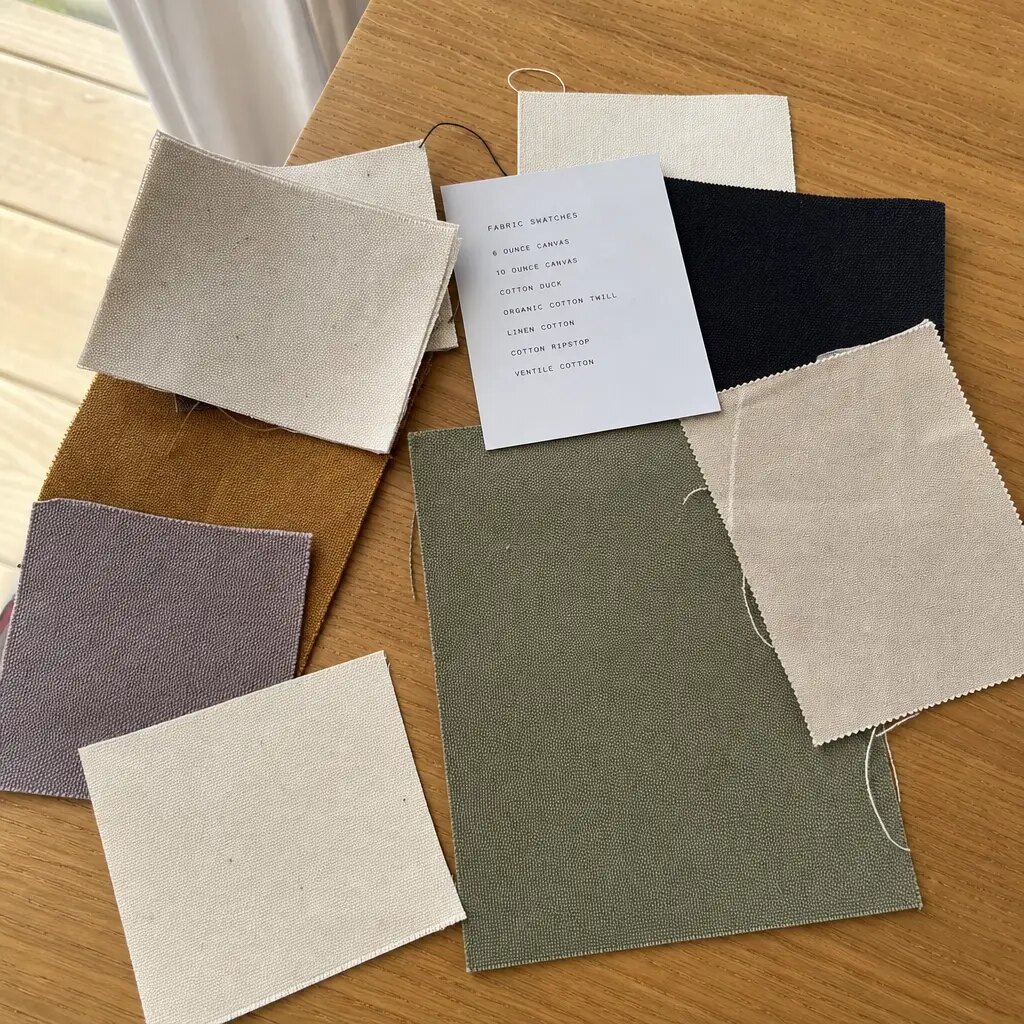
For most corporate gifting programs, 10-12 oz canvas is the practical starting point. It gives enough body for a single bottle without pushing the cost and carton bulk too high. If the buyer wants a firmer gift presentation, less drape, or a bag that stands upright on its own, 12-16 oz canvas can make sense. The right answer depends on whether the carrier is being judged as a presentation item or as a reusable utility bag that just happens to hold a wine bottle.
Do not let the word canvas hide the real spec. Ask for GSM or ounce weight, weave density, and whether the fabric is bleached, natural, washed, or dyed. A looser weave can print well but feel softer and less structured. A heavier fabric can look more premium, yet it may fold awkwardly, increase freight, and raise stitching stress. If the carrier is going into a gift set with a bottle, a card, and filler, the structure matters more than the raw fabric weight.
- Natural canvas often shows print more clearly than dark, heavily finished fabric.
- Washed canvas can look refined, but shade variation must be controlled across the run.
- If the carrier will be reused, test how the fabric holds shape after repeated loading and folding.
Select the branding method by run size and finish
The decoration method should follow the order size and the brand standard, not the supplier's default machine. Screen print is usually the most efficient choice for large runs with one or two solid colors, especially when the logo is simple and the buy is price-sensitive. Woven labels and woven patches work better when the buyer wants a more finished look without depending on ink coverage. Embroidery can be strong visually, but it only works cleanly when the logo is simple enough and the fabric can support the stitch density without puckering.
Logo placement matters as much as the technique. On a wine carrier, the most visible zones are the front panel, the upper body, and sometimes a side label near the seam. Ask the factory for artwork size limits in millimeters, not just a yes or no. Thin serif text, gradients, and close registration between colors usually create avoidable production trouble. For corporate gifting, a cleaner one-color print or a woven side label often gives a better result than trying to force a retail-style logo onto a small surface.
- Use screen print for simple logos and predictable repeat orders.
- Use woven labels or patches when the buyer wants a premium, low-risk finish.
- Avoid tiny text and hairline elements unless you have already approved a sample at full size.
Read the quote line by line, not just the unit price
A low unit price is not useful if the quote hides the real cost drivers. For canvas wine carriers, the price can move on fabric weight, handle material, number of print colors, print locations, closure parts, carton style, and whether the bag is flat-packed or folded with inserts. Two quotes that look close at first glance can be built on very different assumptions. If one supplier priced a 10 oz open-top bag and the other priced a 12 oz gusseted carrier with a woven label, the cheaper number is not the same product.
Ask each supplier to break the quote into the same logical blocks: fabric spec, decoration, labor, packing, sampling, and shipping term. That format exposes where the real differences sit. It also helps procurement compare quotes from a direct factory, a trading company, and a local decorator without mixing up factory cost with warehouse handling or domestic branding labor. If the supplier cannot separate the price drivers, the order is harder to control later.
- Separate base bag cost from decoration cost.
- Confirm whether sample charges are credited back after bulk order.
- Check if packing, cartons, and barcode labels are included or added later.
Compare supplier routes before you commit
For corporate gifting, the sourcing route can matter as much as the specification. A direct factory is usually the best option when you need custom dimensions, a defined print method, and repeatable quality across several thousand pieces. A trader or consolidator can help if your order includes multiple gift items from different factories, but you trade away transparency on the exact bag build. A local decorator is useful when timing is tight and the canvas carrier itself is already standard, but the available specs are narrower and the margin stack can be hidden inside the service fee.
The right route depends on the balance between control and convenience. If the order is a branded launch item, direct factory sourcing usually gives you more control over seam build, color, and carton packing. If you need the bag to arrive with a bottle, tissue, and insert already assembled, a mixed sourcing route may reduce internal work even if the unit price is higher. The key is to compare the full landed cost and the number of hands touching the order, not just the sticker price.
- Direct factory: best control over spec and repeat orders.
- Trader: useful for consolidated programs, but verify the true bag spec.
- Local decorator: fast for standard carriers, weaker for custom structure changes.
Approve the sample against real bottles and real packing
A sample should not only look right on a table. It needs to fit the actual bottle, survive a real carry test, and pack the way the final order will be packed. Use the same bottle shape you plan to ship with, because a carrier that fits one Bordeaux-style bottle loosely may be too tight or too narrow for a different shoulder shape. If the bag includes a closure, insert, or label, those elements need to be present on the sample too. Otherwise the buyer is approving a simplified version of the product.
Treat the sample as a production reference, not a display piece. Check the print against the approved artwork, pull the handle with a loaded bottle, inspect the seam allowance, and confirm whether the bag stands or flops the way the brief intended. If the sample arrives with cleaner stitching than the bulk can realistically hold, ask what machine, worker station, or finishing step was used. That information is more useful than generic approval language.
- Test fit with the actual bottle style, not just a standard dummy bottle.
- Load the bag and lift it several times to observe handle stress and seam movement.
- Keep one sealed sample as the golden reference for the bulk run.
Set production QC on the stress points
The weak points on a canvas wine carrier are predictable: the handle ends, the side seams, the base corners, and the print area if the ink sits across a fold. QC should focus there first. Many buyers write a broad standard and still miss the failure point that matters most. For example, a bag can pass visual inspection and still fail when lifted because the bartack is too short, the seam density is inconsistent, or the handle tape was cut off-grain. That is the kind of defect that turns a gift item into a complaint.
For a single-bottle carrier, a simple static load target is often enough to catch weak construction. Many importers use a working target in the 4-6 kg range for a handle lift test, then adjust upward if the bag is intended to carry heavier bottles or paired items. The exact number is less important than consistency between sample and bulk. Build the QC standard around visible finish, seam behavior, and carton consistency, and make sure the factory knows which defects are rejectable before production starts.
- Check handle stitch length and bartack placement at both attachment points.
- Inspect print registration around seams and gussets.
- Reject visible stains, broken threads, pulled fabric, or label placement drift.
Pack it like a gift, but cost it like freight
Packing can quietly change the economics of a wine carrier program. Flat-packed bags in bulk polybags are the simplest and most freight-efficient option, especially if the buyer will add the bottle or gift insert later in a distribution center. If the carrier must arrive as a gift-ready unit, the factory may need to insert tissue, fold in a specific direction, add a hangtag, or place the product in a retail-style inner pack. Each of those choices adds labor, carton volume, and damage risk if the instruction is vague.
Write the packing standard as a production instruction, not a nice-to-have note. State how many pieces per polybag, how many polybags per carton, what carton markings are needed, whether silica gel or paper inserts are included, and whether the pack must survive long-distance export or domestic distribution. If the buyer expects the final presentation to look premium, confirm whether the carrier should be lightly pressed, folded in a certain way, or packed with a shape insert so it does not crease around the bottle neck.
- Ask for carton dimensions and gross weight before you approve freight.
- If the order includes gift assembly, confirm who pays for the extra labor.
- Do not assume retail-style packing is included in a factory quote.
Build the schedule around sampling and decoration lead time
Lead time on canvas wine carriers is usually driven more by sampling, artwork approval, and packing choices than by the sewing itself. A simple one-color carrier may move quickly once the material is in house, but the project still slips if artwork is approved late, the sample needs a second revision, or the packing spec changes after the first quote. Buyers often lose time by treating the bag as a simple textile item when it actually moves like a branded gift product with several approval gates.
Ask the supplier for a realistic timeline broken into sample, pre-production approval, bulk sewing, printing or embroidery, inspection, and dispatch. That breakdown shows where risk sits. If a launch date is fixed, build slack around the sample stage and the first decoration strike-off, because those steps are where most changes happen. A good supplier will tell you where the critical path is; a weak supplier will only give a single delivery date and hope the order does not change.
- Lock artwork before sample approval whenever possible.
- Plan extra time if the order needs a new mold, closure part, or custom label.
- If the launch date is fixed, ask what can be parallelized and what cannot.
Award the order on landed cost and execution risk
The best quote is the one that gives you the lowest landed cost for the quality level you actually need. That means comparing fabric weight, print method, packing, inspection, and freight together. A slightly higher factory price can still win if it avoids rework, carton damage, and a second sample round. The cheapest unit price is often the most expensive order once you add missed deadlines, hidden packing charges, and replacement stock for damaged pieces.
Before award, ask which supplier can repeat the approved sample without reinterpretation. That is usually the real test for a corporate gifting program, because the buyer is not ordering a single display bag; the buyer is buying a repeatable production process. If one quote looks attractive but the supplier cannot clearly state the fabric, the print tolerance, or the carton pack-out, the savings are not real. In wholesale buying, clarity is part of the price.
- Compare total landed cost, not just ex-factory price.
- Give extra weight to suppliers who can document the exact sample build.
- Treat unclear packing or vague QC terms as a cost, not an admin detail.
Specification comparison for buyers
| Spec decision | Recommended option | When it fits | Buyer risk to check |
|---|---|---|---|
| Canvas weight | 10-12 oz canvas for standard single-bottle carriers; 12-16 oz if you want a firmer premium feel | Most corporate gifting runs where the bag must look substantial without becoming too heavy or expensive | Too light can sag around a bottle; too heavy can raise cost, reduce flexibility, and create a bulky fold in packing |
| Bag structure | Gusseted body with boxed base and reinforced side seams | When the carrier must stand up on a gift table and protect the bottle during hand carry | Flat patterns can quote cheaper but often collapse, twist at the handle, or look less premium in presentation |
| Branding method | 1-color screen print for large runs, woven label or woven patch for premium finish, embroidery only when logo size is simple | When the logo needs clean visibility and repeatable production across many cartons | Fine text can fill in, embroidery can distort on tight curves, and multi-color art can increase waste and approvals |
| Handle build | Cotton webbing or self-fabric handles with box-X stitching at stress points | When buyers expect a proper carry test and a cleaner corporate gift appearance | Short or understitched handles fail first, especially if the bottle is heavy or the bag is lifted by one handle |
| Closure style | Open top with an internal neck loop or snap if the bottle needs more security | When the wine is gift-wrapped separately or the carrier is inserted into a gift set | Closures add parts and assembly time, and poorly placed snaps can scratch labels or interfere with bottle fit |
| Supplier route | Direct factory for custom dimensions and print control; trader only if you need mixed-item consolidation | When the order is branded, repeatable, and tied to a defined launch date | Trader pricing can hide the real factory spec, and mixed sourcing makes sample approval and QC less transparent |
| MOQ logic | Set MOQ by fabric color, print color, and packing method separately | When the supplier gives one blanket MOQ but the real driver is decoration or packaging complexity | A low quoted MOQ can be offset by high surcharges on each artwork change or each carton configuration |
| Packing route | Flat-packed in polybags with carton inserts for pure wholesale; gift-ready inner packing only if the buyer wants retail shelf presentation | When freight cost and warehouse handling matter more than immediate shelf display | Retail-style packing increases labor, carton count, and damage points if the pack spec is not written clearly |
Buyer checklist before sampling
- State the bottle size, bottle shape, and whether the carrier is for one bottle or a set.
- Fix the canvas weight target, not just the word canvas. Ask for oz or GSM and fabric weave details.
- Confirm the finished size with a real bottle fit, including seam allowance and headspace.
- Choose the decoration method before pricing starts: screen print, embroidery, woven label, or patch.
- Set the logo area, color count, and Pantone target if color matching matters.
- Define handle length, handle material, and a load target for the carry test.
- Specify whether the carrier needs a closure, insert, or internal divider.
- Tell the supplier the packing format, carton quantity, and any gift insert or hangtag.
- Ask for sample photos and a pre-production sample before bulk approval.
- Attach your target ship date and shipping term so the supplier quotes the real lead time.
Factory quote questions to send
- What exact canvas weight, weave, and finishing are included in the quoted price?
- Is the quote based on the same bag size, handle build, and gusset depth we requested?
- What is the MOQ by color, print color, and packing format?
- What are the sample charges, and are they refundable against bulk order?
- Which decoration method is included, and what are the extra charges for more colors or a second print location?
- Can you share carton pack-out, carton dimensions, and gross weight for freight planning?
- What is the production lead time after sample approval, and what causes schedule slip?
- What inspection standard or defect list do you use before shipment?
- What shipping term is priced, and which charges are not included in the quote?
Quality-control points to confirm
- Fabric weight matches the approved spec within a reasonable tolerance, and the hand feel matches the sealed sample.
- Bag dimensions hold the bottle without forcing the seams or leaving the bottle loose enough to tip.
- Print placement sits within the agreed tolerance and does not distort over seams or gussets.
- Color is consistent across the run, with no obvious dye variation between front, back, handles, and label parts.
- Stitch density is even, thread tails are trimmed, and no loose bartacks appear at the handle attachment points.
- Handle attachment survives a loaded lift test without seam opening, twisting, or visible strain marks.
- Edges are clean, with no fraying, raw cuts, oil stains, broken needles, or unwanted glue marks.
- Any closure, snap, or insert functions cleanly and does not scratch the bottle or interfere with packing.
- Carton labels, quantity marks, and inner pack counts match the purchase order and packing list.
- The pre-shipment sample matches the approved golden sample in size, color, print quality, and overall finish.