Plan From The In-Hand Date
For coffee roasters, canvas wine carriers usually arrive inside a larger commercial calendar. They may be needed for holiday gift bundles, tasting-room retail, wholesale customer gifts, distributor promotions, subscription add-ons, or bottle-based cold brew launches. The important date is not when sewing finishes. It is when the carrier can be used by the roastery, warehouse, fulfillment partner, or retail team.
Work backward from that in-hand date and separate the schedule into approval gates. A useful supplier schedule should show artwork freeze, sample making, sample transit, buyer review, material booking, production, inspection, packing, freight handoff, customs or local delivery, warehouse intake, and assembly. When those steps are blended into one lead-time number, the buyer cannot see which decision is creating risk.
Avoid treating planning ranges as guaranteed benchmarks. A stock carrier with a simple print may move quickly if the body and ink are ready. A custom-dyed body with a woven label may wait on fabric, label development, and sample approval before production can start. The correct question is not only "How many days?" It is "Which steps are already controlled, and which steps still need approval?"
- Ask for lead time by phase, not one blended number.
- Put named owners on artwork approval, sample approval, packing approval, and final inspection.
- Keep the base construction stable when the launch date is fixed.
- Add warehouse intake and gift-set assembly time to the schedule.
- Treat late artwork, new labels, custom dyeing, and packing changes as schedule events.
Specify The Coffee Program First
A wine-style carrier used by a coffee roaster may not carry wine at all. It might hold bottled cold brew, coffee liqueur, syrup, a retail bottle paired with beans, a tasting kit, or a co-branded gift. The supplier cannot size the gusset, handle drop, or bottom structure accurately from a category name. Procurement should define the actual use case before the RFQ goes out.
Start with the product going into the carrier. Provide bottle diameter, total height, shoulder shape, base width, and loaded weight. If the carrier will include a coffee bag, insert card, sample jar, stirrer, tin, or hangtag, include those dimensions too. The difference between a clean fit and a strained fit often comes from the shoulder, bottom, or accessory placement rather than the main bottle diameter.
Channel matters as much as fit. A tasting-room retail carrier needs shelf presence and consistent decoration. A wholesale gift carrier needs carton sorting and reliable pack counts. An e-commerce insert needs crease recovery after compression. A field-sales leave-behind may prioritize lower unit cost and fast replenishment. Naming the channel helps the factory recommend fabric, bottom support, and packing without overbuilding the product.
- State the commercial use: tasting-room retail, wholesale gift, event giveaway, subscription insert, distributor kit, or e-commerce bundle.
- Provide loaded weight for the full set, not just the bottle.
- Tell the supplier whether the bag must stand upright when filled.
- Confirm whether the carrier is a sellable retail item or secondary packaging.
- Share any receiving rules from fulfillment partners or distributor warehouses.
Build A Spec That Removes Guesswork
A strong build sheet shortens quoting because it turns assumptions into decisions. For canvas wine carriers, the core spec should include finished dimensions, gusset depth, handle drop, fabric weight, fiber content, color reference, decoration method, logo placement, reinforcement, bottom construction, packing, and target delivery date. If any detail is undecided, mark it as an option and ask the supplier to price it separately.
Use millimeters for dimensions and define how they are measured. Sewn cotton products can shift after sewing, pressing, and folding, so the measurement method should be written down. Handle drop should be measured from the top opening to the inside grip point or another agreed reference. Logo placement should be measured from a seam or top edge, not described as "centered" without a reference.
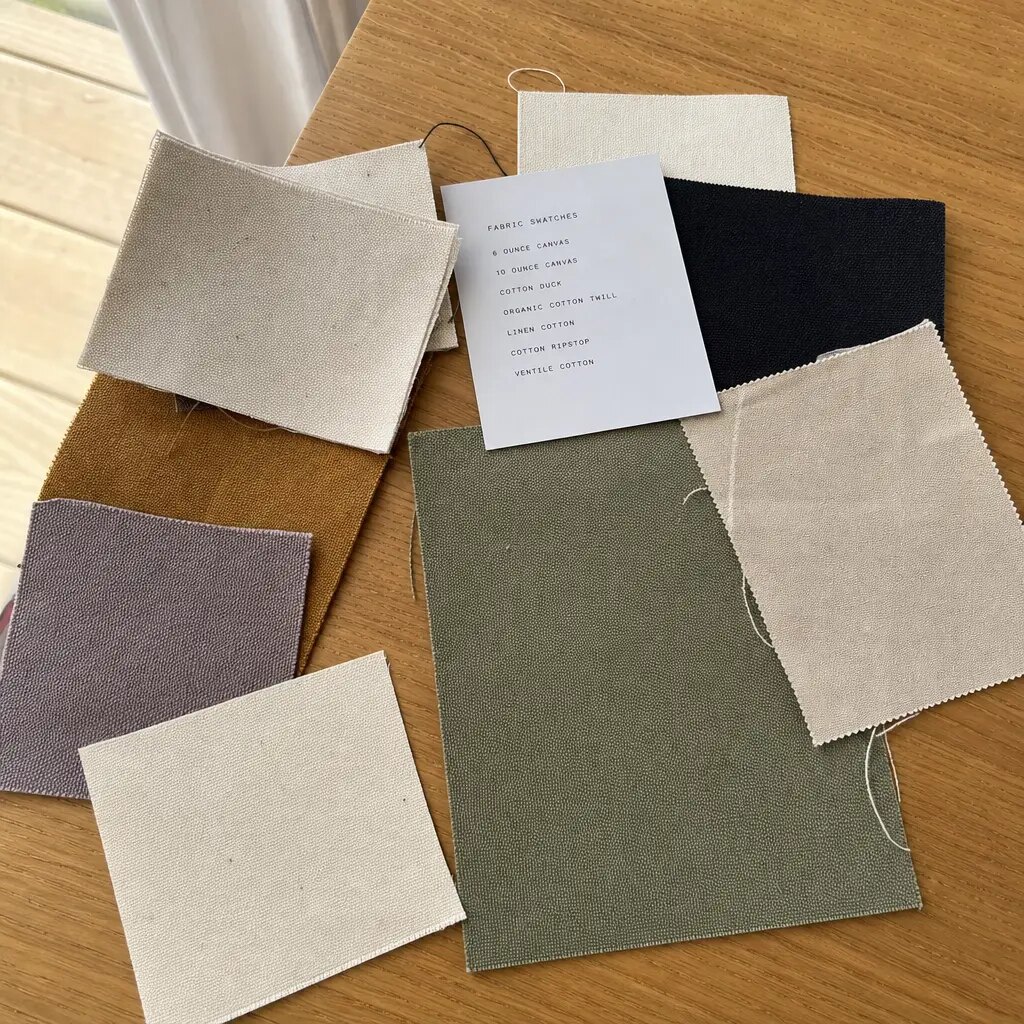
Canvas weight also needs context. A lighter canvas may be fine for an event carrier, especially if the bottle is light and the bag is not sold as a premium item. Heavier canvas can improve hand feel and presentation, but it may create bulky seams, slower sewing, and larger cartons. For procurement, the best fabric is the one that meets loaded-use and channel requirements at an acceptable landed cost.
- List finished width, height, gusset, bottom style, and handle drop.
- Identify fabric by fiber, weight, color reference, and finish.
- Specify reinforcement: bartack, box stitch, folded handle end, or other construction.
- Include decoration size, placement, color, and method.
- Define fold method and packing before carton estimates are requested.
Choose Decoration With The Calendar In Mind
Decoration can be the critical path even when the bag body is simple. Screen print is often the cleanest choice for bold roaster logos, seasonal marks, and shorter timelines. It still needs artwork approval, ink color confirmation, placement control, and print adhesion checks. A one-color print on a natural canvas body is usually easier to repeat than a design that changes body color, label, and packing at the same time.
Woven labels, sewn patches, and side tabs can look more retail-ready, especially when the brand mark is small or the bag will sit near premium coffee merchandise. They also add a separate component to source and approve. Buyers should ask whether label weaving is in-house or outsourced, what the label MOQ is, how long label sampling takes, and whether label placement is checked during sewing or only at final inspection.
Embroidery can work when the artwork is simple, but it is not automatically better. Small lettering, dense fill areas, and thin outlines may distort on canvas or make the fabric pucker. Ask for a stitch file review or decorated sample before approving bulk. For seasonal coffee programs, consider keeping the carrier body stable and changing the print, hangtag, or insert card instead of rebuilding the entire product each season.
- Use screen print for bold marks and tighter calendars.
- Use woven labels or patches when small branding must stay crisp.
- Review embroidery only with the actual logo size and canvas weight.
- Ask what each decoration method adds to sampling and production.
- Keep seasonal variation on artwork or inserts when lead time is tight.
Compare Suppliers By Control, Not Reassurance
A low quote is not useful if it hides the actual production chain. Canvas bottle carriers may involve a fabric mill, cutting room, sewing line, printer, label supplier, packer, and freight handoff. The buyer should understand which steps the quoted supplier controls directly and which are subcontracted. Subcontracting is not automatically a problem, but invisible subcontracting makes lead time and QC harder to manage.
Direct factories can be efficient when the spec is stable and the buyer wants line-of-sight on cutting, sewing, and inspection. Trading companies can be useful for mixed gift sets or multi-item programs, but the buyer should still ask who makes the carrier and who owns the inspection result. Stock-body suppliers can be the fastest route for testing a program, provided the stock body truly fits the bottle and the decoration is not treated as an afterthought.
Regional sourcing should be discussed in operational terms. Ask where fabric is sourced, where decoration happens, and where final packing is completed. A supplier in one region may still rely on labels, trims, or dyeing from another region. That detail matters more than a broad country-level assumption because the slowest component can control the whole calendar.
- Ask which steps are in-house and which are outsourced.
- Confirm MOQ by fabric color, artwork version, and packing version.
- Request the inspection checklist before production starts.
- Ask how shade changes are controlled if fabric comes from multiple lots.
- Confirm who signs off before the shipment leaves the factory.
Use Sampling To Approve The Real Product
Sampling should answer specific buyer questions: Does the carrier fit the bottle or gift set? Does it stand as intended? Are the handles comfortable and secure? Does the logo land in the right place after sewing and pressing? Does the folded bag look acceptable when unpacked? A sample that only proves general shape is not enough for a retail or holiday program.
Different sample types should be labeled clearly. A development sample may use substitute fabric to test shape. A decoration strike-off may only prove ink, embroidery, or label quality. A pre-production sample should match the intended production fabric, trim, decoration, thread, reinforcement, and packing as closely as possible. If anything is substituted, the approval note should say so.
Review the sample physically, not only from photos. Load the actual bottle or gift set, lift it, set it down, remove the contents, and inspect seam stress. Measure the finished dimensions and logo position. Photograph the sample with measurement references and keep one sealed approval sample. That sample becomes the comparison point for final inspection and for future reorders.
- Label samples as development, strike-off, pre-production, or top-of-production.
- Approve fit with the actual bottle or complete gift set.
- Record measurements and photos in the approval file.
- Keep a sealed sample for inspection comparison.
- Ask for top-of-production photos on first orders or important launches.
Define QC Before Bulk Starts
QC language should be measurable. Instead of saying "good stitching," define open seams, skipped stitches, loose threads, bartack length, handle placement, and label alignment. Instead of saying "logo centered," define the reference points and allowed tolerance. Instead of saying "strong handle," define the loaded test and pass condition. This keeps inspection from becoming a debate after the cartons are packed.
For coffee roaster programs, loaded function is the key test. The carrier should be checked with the intended bottle or set weight, including any coffee bag, card, or accessory that ships with it. If the bag will be sold in a retail environment, cosmetic defects matter more. If it is secondary packaging, broader cosmetic variation may be acceptable, but weak handles, open seams, incorrect artwork, and wrong carton counts should not be accepted.
AQL can help structure final inspection, but it should not replace product-specific checks. Agree on the sampling plan, defect classification, and critical rejects before production. Compare bulk goods against the sealed sample for fabric shade, hand feel, fold behavior, decoration placement, and packed appearance. Pull cartons from different parts of the finished stack so the inspection is not biased toward the easiest cartons to access.
- Define major, minor, and critical defects in writing.
- Use the complete loaded set for fit and handle checks.
- Check seam stress near the handle attachment and gusset corners.
- Compare print color and label placement against the approval sample.
- Include carton count and barcode accuracy in final inspection.
Make Packing Part Of The RFQ
Canvas carriers are bulky for their unit value, so packing can change landed cost quickly. A quote without carton dimensions, carton weight, units per carton, and fold method is incomplete. Flat bulk packing may reduce carton volume and work well if the roastery assembles gift sets in-house. Retail-ready packing may be necessary if goods go directly to stores, distributors, or a third-party logistics provider.
Packing decisions also affect quality. Over-compressed bags may arrive with heavy crease memory. Loose packing can waste freight space and allow dirt or shifting. Individual polybags may protect goods but add labor, material, and disposal considerations. Hangtags, barcode labels, insert cards, and carton marks should be approved before bulk packing starts, especially for multi-SKU coffee programs.
Ask for a packed-carton photo set before shipment. The useful view includes the open carton, folded bag orientation, inner pack, carton mark, and any barcode or SKU label. This gives the receiving team a preview and helps catch wrong marks before freight moves. For holiday launches, a carton-label mistake can be as disruptive as a sewing defect because it slows sorting and assembly.
- Request carton dimensions and weights during quotation.
- Approve fold direction and inner pack count before production closes.
- Send barcode, SKU, hangtag, and insert-card requirements early.
- Ask for open-carton and carton-mark photos before shipment.
- Confirm whether packing supports warehouse assembly or retail-ready delivery.
Control Freight Risk Without Guessing
Freight planning should be based on carton data and route, not on assumptions from a prior order. Canvas goods often rate by volume as much as weight, so the carton dimensions influence landed cost. Once the supplier provides estimated carton count, gross weight, and carton size, a forwarder can quote the lane and explain transit, customs, local delivery, and any seasonal congestion risk.
Regional planning should be specific to the supply chain. If fabric, labels, and sewing happen in the same production area, the schedule is easier to control. If fabric is dyed in one place, labels are made elsewhere, and final packing happens near a port or inland hub, the buyer should understand each handoff. The location of the factory matters, but the location of components and freight handoff matters too.
Split shipments can protect a launch, but they need discipline. If the first portion ships by air and the balance by ocean, carton marks, purchase order lines, inspection records, and warehouse receiving instructions must stay clear. Do not decide on a split only after production is late. Ask for the cost, carton plan, and inspection approach while the order is being placed.
- Quote freight after carton dimensions are available.
- Ask the forwarder to separate transit, customs, drayage, and delivery assumptions.
- Confirm where fabric, labels, decoration, sewing, and packing occur.
- Plan split shipments before carton labels and inspection are finalized.
- Keep purchase order lines clear when different shipment modes are used.
Design The First Order For Easier Reorders
The first order should create a reliable production baseline. Keep the construction, fabric color, handle length, logo position, and carton configuration as stable as possible. Once the base carrier is proven, future orders can move faster because the supplier, buyer, and inspector share the same reference sample and spec sheet.
For coffee roasters, seasonal change is often better handled through artwork, hangtags, insert cards, or outer gift packaging rather than rebuilding the carrier. Changing the canvas color, handle length, label type, and carton pack at the same time creates new sampling and QC questions. A stable base carrier lets marketing refresh the look without resetting the whole procurement path.
After delivery, record what actually happened. Note sample days, approval delays, production days, inspection result, carton accuracy, freight route, receiving issues, and assembly feedback. That internal history is more useful than generic lead-time estimates. It gives procurement a real planning base for the next holiday, partner program, or wholesale launch.
- Keep one approved base carrier for repeat programs.
- Track actual timing by phase after the order lands.
- Use inserts or hangtags for seasonal variation when possible.
- Record receiving and assembly feedback from the warehouse.
- Update the spec sheet after approved corrections, not from memory.
Specification comparison for buyers
| Procurement choice | What changes in the quote | Lead-time watchout | Best fit |
|---|---|---|---|
| Stock canvas wine carrier with custom print | Lower development cost; price is driven by decoration, packing, and order quantity | Fastest only if the body color, size, and fabric are already available | Event runs, tasting-room tests, urgent gift-kit fill-ins |
| Custom body using standard canvas color | Pattern, cutting, and sewing are custom, but fabric sourcing is simpler | Sample approval and cutting setup sit on the critical path | Repeat holiday bundles, branded retail, partner gifts |
| Custom-dyed canvas body | Adds dye-lot approval, shade tolerance, and higher material commitment | Fabric booking can delay the whole order if color is not in stock | Brand programs that require a controlled house color |
| One-color screen print | Usually simpler to price; setup and ink approval should be itemized | Artwork changes after strike-off can restart decoration approval | Bold roaster logos, seasonal marks, wholesale packs |
| Woven side label or sewn patch | Adds label MOQ, label sample, placement approval, and sewing check | Label production can be a separate supplier step | Premium retail carriers where small marks need to stay crisp |
| Embroidery | Price depends on stitch count, thread colors, and logo complexity | Small lettering, dense fills, or puckering may require resampling | Simple monograms or bold brand marks on heavier canvas |
| Flat bulk packing | Lower packing labor and usually better carton density | Receiving team must sort, fold, barcode, or assemble later | Roastery warehouses building gift sets in-house |
| Retail-ready packing | Adds labels, hangtags, inner packs, and carton sorting | Packing approval must happen before bulk production closes | Tasting-room retail, distributor shipments, multi-location launches |
| Ocean freight | Lower freight cost per unit when calendar allows | Forwarder schedule, customs, drayage, and warehouse intake must be planned separately | Stable seasonal orders with enough buffer |
Buyer checklist before sampling
- Confirm the exact bottle or product set: wine bottle, cold brew bottle, syrup bottle, canned coffee multipack, or bottle-plus-coffee gift set.
- Record bottle diameter, shoulder shape, height, loaded weight, and whether the carrier must stand upright when filled.
- Write finished bag dimensions in millimeters, including width, height, gusset, handle drop, bottom construction, and how each measurement is taken.
- Specify canvas fiber content, weight, color reference, finish, shrinkage expectation, and whether shade variation across lots is acceptable.
- Choose the decoration method before quoting: screen print, woven label, sewn patch, embroidery, hangtag, insert card, or a combination.
- Send vector artwork with logo size, placement from seams or edges, color reference, and any restricted brand-use rules.
- Ask the supplier to itemize unit price, sample fee, setup charge, decoration cost, label cost, packing cost, carton cost, and freight-ready carton data.
- Request a pre-production sample using intended fabric, trim, decoration, handle reinforcement, and packing method whenever the program is custom.
- Create an inspection sheet covering dimensions, loaded fit, handle reinforcement, seam quality, print or label placement, odor, stains, shade, and carton accuracy.
- Confirm inner pack count, master carton quantity, carton dimensions, gross weight, net weight, carton marks, barcode labels, and receiving requirements before bulk packing.
Factory quote questions to send
- Is this carrier made from an existing stock body or a custom cutting pattern, and what changes are allowed without a new sample?
- Which operations are in-house: fabric cutting, sewing, printing, label sewing, embroidery, pressing, packing, and final inspection?
- What is the practical MOQ by body color, fabric weight, artwork version, label version, and packing configuration?
- Can you quote by finished dimensions in millimeters and show your measurement method for width, height, gusset, handle drop, and logo position?
- What canvas weight and construction do you recommend for our actual loaded weight, and is the selected fabric available in one dye lot for the order?
- If the carrier is for a coffee roaster gift set, can you test fit with our bottle dimensions plus coffee bag, insert card, or accessory dimensions?
- Which decoration method is included in the quote, and what changes the price: extra print color, label size, embroidery stitch count, patch shape, or placement?
- Will the pre-production sample use production fabric, production thread, final trim, final ink or label, and the intended fold and packing method?
- What defects have you seen most often on canvas bottle carriers, and where in your process do you check for them?
- How do you verify handle strength, bartack quality, seam security, and loaded fit before shipment?
Quality-control points to confirm
- Approve measurement tolerances before production. For many sewn canvas bags, buyers use a practical tolerance band such as plus or minus 5 mm on main dimensions, but the final tolerance should match the product size, sewing method, and retail requirement.
- Define logo placement tolerance from fixed reference points such as top edge, side seam, gusset fold, or handle stitch line. Do not rely on visual centering alone.
- Run a loaded fit check using the actual bottle or a dimensionally accurate dummy, including insertion, removal, upright stability, and handle comfort.
- Use a static load check agreed with the supplier based on actual loaded weight plus a safety margin. The pass condition should state no open seam, broken bartack, torn handle, or visible failure after the hold period.
- For heavier gift sets, define the test load from the complete packed set, not the bottle alone, and record the approved test method on the spec sheet.
- Check handle attachment with either a factory pull test, third-party lab method, or agreed shop-floor equivalent. The key is to document the method and repeat it on sample and bulk goods.
- For screen print, approve a rub test method such as dry rub and damp rub with a white cloth, then compare transfer, cracking, and edge sharpness against the approved sample.
- For woven labels, patches, and side tabs, inspect orientation, stitch security, edge fray, color match, and whether the label sits flat after the bag is loaded.
- Classify critical defects separately from AQL. Broken handles, open seams, wrong artwork, wrong SKU, missing labels, unsafe odor, and wrong carton count should be rejectable regardless of sampling result.
- Use an agreed sampling plan for major and minor defects before inspection starts. AQL 2.5 major and 4.0 minor are common commercial starting points, but the buyer and supplier should confirm the standard for the order.