Why these carriers fail in real coffee programs
Canvas wine carriers look simple, but coffee roasters usually use them in the parts of the program that create the most handling risk: holiday gift sets, tasting-room sales, subscription add-ons, and branded wholesale bundles. The bag is expected to protect a glass bottle, present the brand clearly, and survive repeated handling by staff, distributors, and end customers. Most failures are not dramatic. They start as soft corners, handle stretch, print wear, or a base that shifts when the bottle is lifted quickly.
The first mistake is treating the carrier as a generic tote with a bottle inside. A wine carrier has a different stress pattern. The load sits low, the center of gravity is narrow, and the top opening or closure can rub directly against the label. For a coffee roaster, the problem is not only product damage. A weak carrier also damages the perceived quality of the gift set and creates a buyer-side complaint that is more expensive to resolve than the bag itself. Durability testing needs to reflect the actual use case, not a lab-only idea of strength.
- Test the carrier with the real bottle size, not an empty sample.
- Include any insert, sleeve, divider, or closure the final set will use.
- Judge the bag on service life, not just first impression.
Set the spec before you test
The right test only works if the spec is clear enough to repeat. Start with bottle count, bottle diameter, bottle height, and whether the program needs one-bottle or two-bottle carry. Then define the intended use: retail counter sale, e-commerce shipping add-on, or gift packaging. Those three routes need different construction. Retail-only carriers can tolerate lighter builds. A carrier that ships inside a larger set needs more resistance to compression, edge wear, and carton rubbing.
For most single-bottle programs, 12 oz or 340 gsm canvas is a workable baseline. It gives enough body for shape retention without becoming unnecessarily heavy or expensive. Step up to 14 oz or 400 gsm when the bottle is full-weight, the program is premium, or the carrier is expected to be reused. If the bag will be folded flat in bulk cartons, build in enough structure so it still opens cleanly after pressing. Buyers often approve a sample that looks good on a table, then discover it collapses when packed in volume.
- State the bottle size in millimeters and the filled weight in grams.
- Define whether the carrier must stand upright, fold flat, or fit inside a gift box.
- Write the target fabric weight into the RFQ instead of leaving it open.
Choose fabric weight and construction that match the load
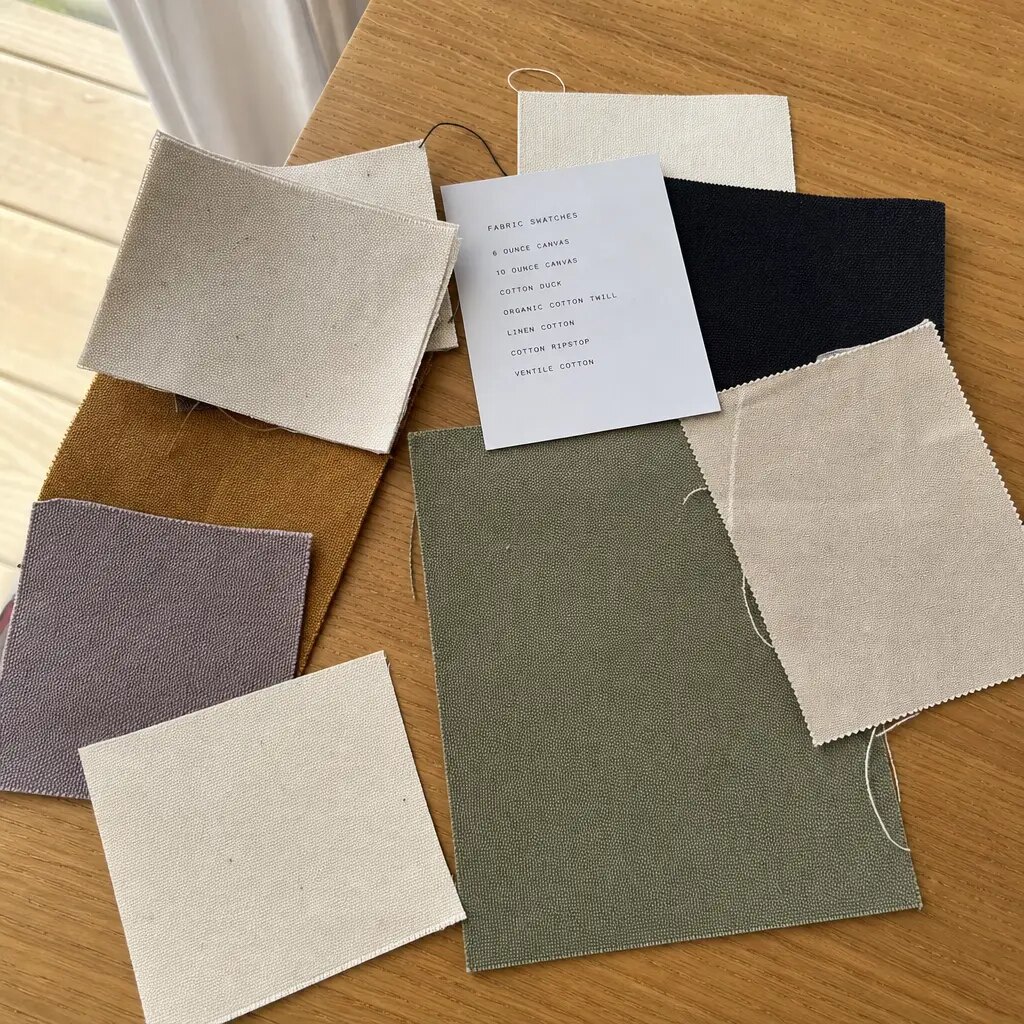
Fabric weight drives both the feel and the failure point. Light canvas can be acceptable for short, low-risk presentation use, but it tends to show wrinkles, edge curl, and quicker seam distortion. Medium canvas gives a better balance for roaster-branded wine carriers because it keeps its shape without becoming a freight penalty. If the bag includes a divider, a lining, or a reinforced base insert, the body fabric can sometimes stay in the middle range while the structure is improved through construction rather than raw weight alone.
Construction matters as much as gsm. A simple single-layer body with a narrow seam allowance is cheaper, but it exposes the load to more distortion. A lined build or double-layer panel is better when the carrier will be reused, handled by store staff all day, or exposed to higher bottle weight. Handles should be attached with bartacks or equivalent reinforcement at the top and at the load-bearing seam. If the supplier cannot explain how the handle load transfers into the body, the quote is incomplete even if the unit price looks attractive.
- Use 10 oz only for light presentation use and only if the buyer accepts a softer hand feel.
- Use 12 oz as the default for most single-bottle programs.
- Use 14 oz or a reinforced build when durability or premium appearance matters more than piece cost.
Lock in branding without weakening the carrier
Branding is usually where buyers lose durability because the decoration is chosen before the use case is settled. For canvas wine carriers, one- or two-color screen print is usually the cleanest option for bulk. It holds well on natural canvas, keeps the quote manageable, and is easy to compare across factories. If the design is complex or the brand wants a premium look, a woven patch, sewn label, or carefully placed side tag can be safer than a large printed panel that flexes every time the bag is folded.
Print placement needs to avoid the highest-stress zones. A logo printed directly on a fold line will age faster than one placed on a flatter panel. Heat transfer can work for short runs or multi-color art, but buyers should treat it as a risk item until rub-tested and crease-tested. On natural canvas, the ink should not bleed, crack, or become muddy after handling. If the factory is adding a CTM or CottonToMaker sample logo for approval, it should be applied on the actual product or side label, not as a separate mockup element, so the buyer can judge placement and finish honestly.
- Ask for the print method, ink type, cure method, and color tolerance in writing.
- Keep large graphics away from fold lines and handle anchors.
- Require a rub test on the printed area before bulk approval.
Build a durability test sequence that reflects real use
A useful durability test is a sequence, not a single event. Start with a loaded carry test using the real bottle or an equivalent weighted dummy. Lift, carry, set down, and repeat until the movement looks like normal store handling. Then do a drop or bump test from a practical height, not an exaggerated lab stunt. The target is to expose seam weakness, handle elongation, and bottle movement inside the carrier. If the carrier has a divider or insert, test it both with and without slight side pressure so the failure mode is visible.
Set acceptance criteria before testing begins. The bag should show no seam opening, no broken stitches, no handle slippage, and no structural collapse that changes the bottle position. Minor surface wrinkling is normal on canvas. What is not acceptable is visible stitch distortion, loose bartacks, print cracking beyond a hairline at the fold, or a base that bows enough to affect standing stability. For first orders, keep one passed sample as the golden sample and compare production units against it. That gives the buyer a practical reference when the factory asks whether a variation is still acceptable.
- Test with a 1.5x to 2x service load target if the program will be heavily handled.
- Require no visible seam opening after load, lift, and drop testing.
- Reject any sample that shows handle elongation, bottle tilt, or base puncture risk.
Use samples to prove the supplier can repeat the build
A single good-looking sample does not prove a factory can run the order. You need one sample for construction approval, one pre-production sample for confirmation, and a production reference that shows the same materials and placement as the bulk run. The sample should be evaluated with the real bottle, the real label, and the real closure if there is one. Empty bags hide too much. A carrier that looks straight on the table can twist once the bottle weight is added and the side seams start to work against each other.
Good sample control also makes quote comparison easier. If the factory sends a photo of panel dimensions, stitch count, print placement, and label application before mass production, the buyer can catch drift before labor is spent. This matters when the carrier has a two-bottle divider, a coated lining, or multiple trim materials. Any one of those details can change the final hand feel and the lead time. The goal is not to get endless samples. The goal is to force the supplier to show repeatability early enough that the bulk run is boring in the best possible way.
- Approve the sample only after loaded testing, not just visual review.
- Keep one signed golden sample on both the buyer and factory side.
- Require pre-production photos of cut parts, stitching, and print alignment.
Packing choices that change damage rates and freight
Packing is part of the product, not a separate clerical detail. Canvas wine carriers that are folded too tightly can develop permanent creases, while loose packing can let the print rub against neighboring units. If the bag is for wholesale or internal gift-set packing, bulk folding inside a master carton is usually the most efficient path. If it is retail-facing, a simple polybag or insert card may be enough, but only if the added labor is worth the presentation gain. Overpacking is a common mistake in this category because it adds cube, and cube costs money in sea freight and even more in air freight.
Carton planning should reflect the actual packed dimensions, not a theoretical bag size on paper. Ask the factory to confirm the carton count after compression and to show how the bags are stacked so the handles and print areas do not crush each other. If the route includes humid transit, a moisture barrier or cleaner inner pack may be worth the added cost. For coffee roasters that bundle bottles with other merchandise, the carrier should be able to survive repacking by the warehouse without losing shape or picking up scuffs from the carton edge.
- Compare quotes using the same carton size and pack count.
- Confirm whether the bag is folded once, twice, or flat-packed.
- Protect printed areas from carton rubbing if the finish is delicate.
Lead time risks and the order path from sample to bulk
Lead time is usually decided by three items: fabric availability, decoration complexity, and approval speed. Stock natural canvas with a standard print can move faster than custom dyed material with multiple labels and a special closure. The buyer should separate sample lead time from bulk lead time, because a fast sample does not guarantee a fast order. The delay often appears in trim sourcing, print setup, or color approval when the first sample is too far from the final spec.
The cleanest order path is to freeze the bottle size, fabric weight, print method, and packaging before bulk booking. If the campaign is seasonal, leave enough time for one correction cycle after the sample arrives. That buffer is cheaper than expediting a flawed run. For recurring programs, the factory should keep the approved material reference on file so reorders do not restart the approval loop. The real schedule risk in this category is usually not sewing speed. It is late changes to artwork, label placement, or carton packing after the factory has already started material preparation.
- Treat custom dyeing and special trims as schedule risks, not routine upgrades.
- Separate sample lead time, PP sample lead time, and bulk lead time in the PO discussion.
- Lock artwork and packaging before the factory books fabric.
Compare quotes on landed cost, not unit price alone
Unit price is only useful when the comparison basis is identical. One quote may include a heavier fabric, better handles, and stronger cartons, while another hides cost in packing, sampling, or print setup. Buyers should normalize the quote by asking for the same Incoterm, same fabric weight, same print method, same carton spec, and same pack count. Without that, the cheapest quote is usually just the least complete quote. A durable carrier that arrives in sellable condition is often the lower-cost option once rework, returns, and replacement shipments are counted.
Landed cost also changes with freight cube and damage risk. A slightly larger carton or over-padded inner pack can move the shipment into a worse freight bracket. On the other hand, a tighter build that lowers damage can save money if the bags are sold as part of a premium bundle. For coffee roasters, the commercial question is whether the carrier protects both the bottle and the brand image. If it does, a small price premium may be justified. If it does not, the hidden cost shows up in complaints, repacks, or markdowns.
- Normalize every quote to the same fabric weight, print coverage, and carton count.
- Include sample fees, setup charges, and packing labor in the comparison.
- Ask the supplier to quote the same spec twice if the first draft is too vague.
Specification comparison for buyers
| Spec decision | Recommended option | When it fits | Buyer risk to check |
|---|---|---|---|
| Fabric weight | 12 oz / 340 gsm canvas as the default, 14 oz / 400 gsm for premium or twin-bottle builds | Single-bottle retail sets, coffee roaster gifts, and repeat-use carriers | Thin lots can look acceptable in samples but fail after load testing or crease badly in transit |
| Carrier construction | Double-layer body or lined panel with a reinforced base insert | When the bottle is heavy, chilled, or packed with inserts, sleeves, or glass protectors | Unlined bags can sag, show bottle shape, and let the base wear through early |
| Handle build | Webbing handles or doubled-fabric handles with bartacks at the stress points | For full 750 ml bottles, paired bottles, or customers who will reuse the carrier | Single seam handles can elongate or tear if the stitch density is too low |
| Branding method | One- or two-color screen print for volume, woven patch or side label for premium programs | When the logo must stay readable after repeated handling and carton rubbing | Heat transfer can crack on fold lines and soft coatings can change color in production |
| Closure style | Open top only for low-risk secondary packaging, flap or snap closure for retail presentation | When the bag is part of a gift set or e-commerce unboxing | Open tops increase bottle movement and can scratch labels during shipping |
| Supplier route | Direct factory for recurring orders, trading company only if it adds real coordination value | When the program needs stable repeatability and clear control of material substitutions | Hidden markups, loose spec control, and unclear factory ownership of defects |
| QC route | Factory in-line QC plus third-party pre-shipment inspection for first orders or new builds | When the buyer has not approved the construction before bulk | Internal-only inspection often misses handle pull weakness, print rub, or carton packing errors |
| Packing route | Bulk folded in master cartons for wholesale, retail-ready polybag and insert card only if required | When freight cube and warehouse speed matter more than shelf presentation | Retail-style packing raises labor and carton volume if it is not actually needed |
| Lead time path | Stock canvas and standard trim for faster runs, custom dyed canvas only when the campaign justifies it | For seasonal programs with a fixed launch window | Color approvals, shrinkage, and trim sourcing can add weeks if the spec is not frozen early |
Buyer checklist before sampling
- Confirm bottle size, bottle weight, and whether the carrier must hold one bottle or two.
- State the exact canvas weight target in gsm or oz and allow the supplier to quote the same basis.
- Specify handle material, attachment method, and whether bartacks are required at every stress point.
- Approve the print method, print size, and Pantone reference before any bulk run starts.
- Require a loaded sample test using the real bottle, not an empty bag.
- Set a pass rule for seam opening, handle elongation, print rub, and base deformation.
- Lock the folding method and carton pack count so the freight quote is not built on guesswork.
- Request photos of cut panels, stitching, label application, and packed cartons during production.
- Compare the same Incoterm, same carton size, and same packing count across every quote.
- Hold one golden sample signed off by both sides before mass production begins.
Factory quote questions to send
- What is the exact fabric construction, gsm or oz weight, and width after finishing?
- Is the quoted price based on a single-layer body, lined build, or reinforced base insert?
- How are the handles attached, how many bartacks are used, and what stitch density is standard?
- Which print method is included, how many colors are covered, and what is the setup charge per color?
- What is the MOQ by fabric color, print color, and label option, not just the total order quantity?
- What sample fee applies, and is it refundable after bulk order confirmation?
- What is the expected lead time for sample, pre-production sample, and bulk production separately?
- What overrun or underrun tolerance applies, and how are short shipments handled?
- How is the carrier packed per carton, and what is the carton size and gross weight target?
- What inspection standard is used before shipment, and can the factory share photo evidence from the line?
Quality-control points to confirm
- Measure finished dimensions after pressing and confirm the bag can still fit the specified bottle diameter and height.
- Load test the carrier with the real bottle or a weighted dummy at 1.5x the intended service weight.
- Inspect handle attachment for stitch skips, loose threads, and any visible distortion at the stress points.
- Check seam opening after load and drop testing, especially at the base corners and side seams.
- Rub test the print on the fold line and near the handle area to confirm it does not crack or transfer.
- Verify divider alignment and base support so the bottle does not tilt or press through the bottom.
- Confirm folded carton count, carton markings, and moisture protection match the agreed packing method.
- Retain one signed golden sample and compare production output against it before release to ship.