The Buying Problem Behind Fabric Weight
Canvas wine carriers for wellness studios sit in an awkward middle ground. They are not simple event tote bags, because one glass bottle can weigh around 1.2 to 1.6 kg when filled. They are also not luxury rigid gift boxes, because most studios, retreat organizers, and boutique retailers still need a soft, foldable, freight-efficient item. Fabric weight is the first specification that decides whether the carrier feels intentional or cheap.
The common mistake is asking several suppliers for a canvas wine bag without locking the GSM, construction, and bottle format. One quote may use 8 oz canvas, another may use 12 oz canvas, and both can honestly call the item canvas. The lower price then looks attractive until the sample collapses, the print looks uneven, or the handles stretch after loading. A useful RFQ should make fabric weight a measurable requirement, not a loose description.
- Use GSM and oz together: for example, 10 oz / about 340 GSM canvas.
- State whether the weight is finished fabric weight, not greige or before-wash weight.
- Tie fabric weight to bottle format, because a two-bottle carrier needs more structure than a single-bottle carrier.
- Compare quotes only after print method, reinforcement, and packing are also aligned.
Recommended GSM Range for Wellness Studio Use
For most wellness studio programs, 10 oz canvas, roughly 340 GSM, is the safest starting point. It has enough body to hold a 750 ml bottle neatly, takes screen printing well, and does not push freight weight as high as heavier canvas. It also matches the natural, grounded look many wellness brands want without feeling like a disposable promotion item.
An 8 oz canvas, around 270 GSM, can work for one-day events or low-cost welcome gifts, but it needs careful construction. The carrier may need a reinforced bottom, tighter stitching, or a narrower pattern so the bottle does not swing inside. A 12 oz canvas, around 407 GSM, is better for premium retail or retreat gift sets, but the buyer should expect higher material cost, slower sewing, and sometimes more visible seam bulk.
- 8 oz / 270 GSM: suitable for budget event use, but weaker presentation and less opacity.
- 10 oz / 340 GSM: balanced option for most single-bottle and light two-bottle carriers.
- 12 oz / 407 GSM: premium handfeel and better structure, but higher cost and carton weight.
- 14 oz / 475 GSM and above: usually unnecessary unless the design is positioned as a durable retail accessory.
Bottle Fit Comes Before Artwork
A fabric weight guide is not useful unless bottle dimensions are fixed first. A standard Bordeaux-style 750 ml bottle, a champagne bottle, and a tall wellness beverage bottle can all require different width, gusset, and height. If the carrier is too narrow, the studio staff will struggle during event packing. If it is too wide, the product looks loose and the print panel wrinkles around the bottle.
Procurement teams should provide the target bottle diameter and height in the RFQ. If the buyer has multiple beverage partners, the factory can develop around the largest bottle, but that may create a looser fit for standard wine. For two-bottle carriers, the divider position matters as much as the outer size. A low divider allows bottle shoulders to touch, which can cause clinking, scuffing, or breakage during handling.
- Single-bottle carrier: define bottle height, diameter, and whether the neck should remain visible.
- Two-bottle carrier: specify divider height and whether the divider is full-depth or partial-depth.
- Champagne bottle use: allow a wider gusset and stronger handle reinforcement.
- Retail shelf use: test whether the filled carrier stands upright without leaning.
Construction Details That Change the Real Cost
Two factories can quote the same 10 oz canvas and still produce very different carriers. Cost changes with handle type, bottom construction, divider sewing, seam finishing, and reinforcement. A low unit price may remove the very details that make the bag safe for a loaded bottle. For wine carriers, construction is not decoration; it is load management.
A practical specification should define the handle drop, handle width, stitching pattern, and stress-point reinforcement. Self-fabric handles are common and give a clean matching look. Webbing handles can be stronger and faster to sew, but may change the brand feel. Bottom gussets improve standing shape, while flat styles pack better but may not present as nicely when filled.
- Handle reinforcement: require bartack, box-x, or reinforced seam return at the top edge.
- Bottom style: choose flat bottom for compact packing or gusseted bottom for better shelf presentation.
- Top finishing: folded hem is cleaner and stronger than raw or lightly overlocked edges.
- Thread: heavier canvas needs suitable thread and needle size to avoid skipped stitches.
Print Method by Fabric Weight
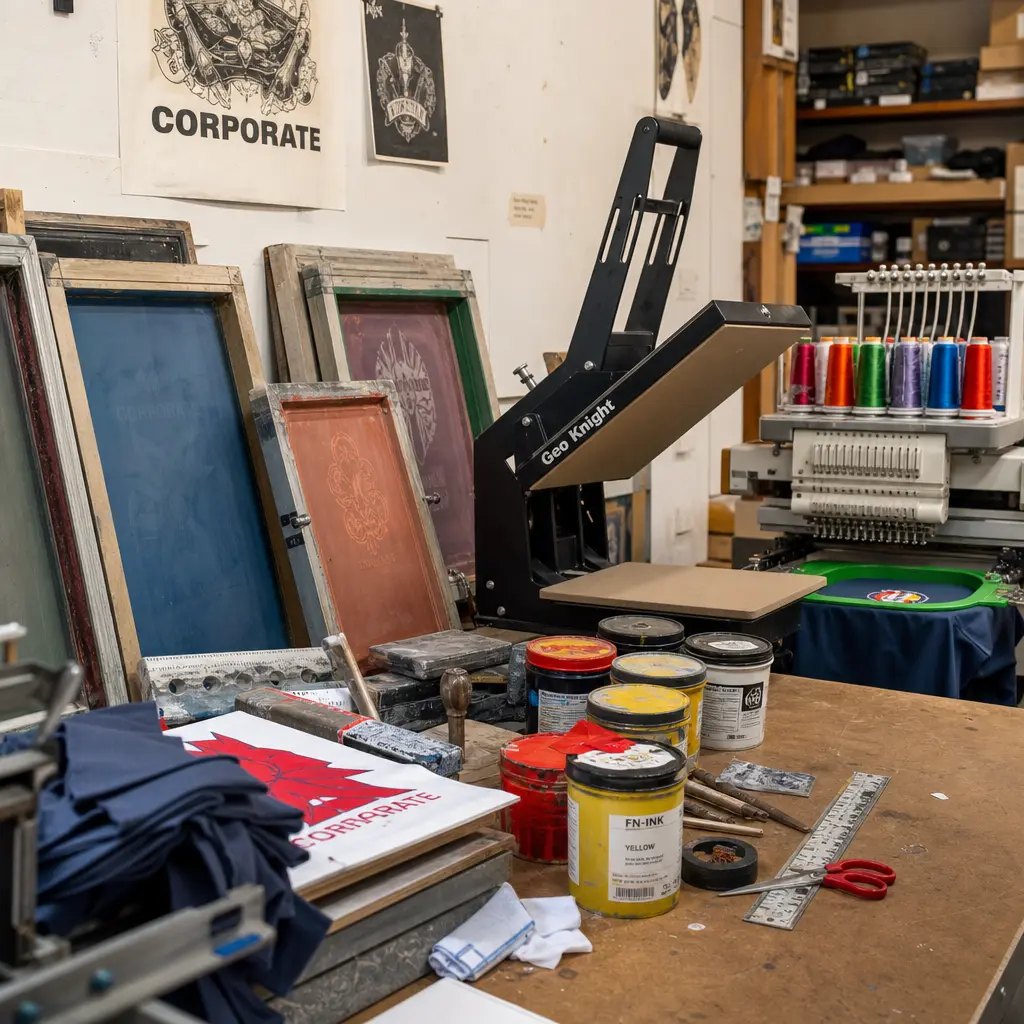
For wellness studio branding, water-based screen print is often the best balance of cost, appearance, and durability. It sits naturally on cotton canvas and avoids the plastic-heavy look that can conflict with spa, yoga, or retreat positioning. It is suitable for simple logos, short slogans, and one or two brand colors. The strike-off should be printed on the same GSM canvas as production because ink behavior changes on different fabric surfaces.
Heat transfer can handle fine detail and multi-color artwork, but it may feel less integrated with the fabric and can crack if the carrier is folded hard or washed. Embroidery is possible for premium orders, but dense stitching on a narrow wine carrier can distort the panel and raise cost. For a natural canvas wine carrier, the safest artwork is usually a medium-sized logo with adequate line thickness and enough margin from seams.
- Water-based screen print: best for simple wellness logos and natural handfeel.
- Pigment or plastisol print: useful for stronger color opacity, but confirm handfeel and rubbing resistance.
- Heat transfer: suitable for gradients or detailed artwork, but test folding and adhesion.
- Embroidery or woven label: premium option, but confirm panel distortion and needle holes on heavier canvas.
MOQ Logic and Why Low Minimums Cost More
MOQ for canvas wine carriers is usually driven by fabric sourcing, cutting efficiency, print setup, and sewing line setup. If the buyer selects a stock natural canvas and a one-color print, the minimum can be lower than a custom-dyed fabric or unusual GSM. For distributors serving multiple wellness studio locations, consolidating the same carrier body with different printed logos may reduce some material waste, but each logo still creates separate screen, setup, and packing control work.
Small test orders are possible, but buyers should not expect the same unit price as a bulk run. A factory still needs to make a pattern, set cutting layers, prepare screens, align print placement, and pack cartons. A good supplier will separate sample cost, setup cost, and bulk unit price clearly instead of hiding every cost inside a vague quote.
- Lowest MOQ path: stock natural canvas, standard size, one-color screen print, simple flat packing.
- Higher MOQ path: custom dyed fabric, heavy canvas, two-bottle divider, multi-color print, individual retail packing.
- Logo versioning: each logo may require separate screens, cartons, and inspection records.
- Reorder planning: keep fabric GSM and color reference stable to avoid shade and handfeel differences.
Sample Approval Should Test Load, Not Just Appearance
A photo sample can make the artwork look correct while hiding performance problems. For wine carriers, the approved sample should be loaded with the actual bottle type and held by the handle. The buyer should review how the fabric pulls at the top seam, whether the bottom corners distort, and whether the print stays flat when the carrier is filled.
The sample report should include finished dimensions, fabric weight, print method, handle construction, and photos with a bottle inside. If the buyer approves only the flat empty sample, the factory may proceed with a bag that looks good on a table but performs poorly during event assembly or retail handling. Acceptance criteria should be written before the sample is made.
- Measure finished height, width, gusset, divider position, and handle drop.
- Load with target bottle for at least a short handling test before approval.
- Inspect print edges over the actual canvas texture, especially small text and thin logo lines.
- Check whether folding for shipment creates a crease through the printed logo.
Packing Choices Affect Freight and Retail Condition
Packing is often treated as an afterthought, but it affects freight cost, warehouse handling, and the condition of printed carriers on arrival. Flat packing reduces creasing and makes counting easier, but it may increase carton footprint. Folding saves carton space, but if the fold crosses the logo, the buyer may receive visible crease lines on the display surface.
For wellness studios and distributors, the right packing method depends on the final channel. Bulk cartons may be enough for retreat event kits. Retail buyers may need individual paper bands, hang tags, barcode labels, or inner packs by store allocation. Every packing choice should be listed in the quote because it changes labor, carton count, and inspection time.
- Bulk packing: lowest cost, suitable for event use or warehouse repacking.
- Inner packs: useful for distributors shipping to multiple studio locations.
- Individual polybag alternatives: paper band or glassine-style packaging may fit sustainability positioning better.
- Carton marks: include SKU, color, quantity, destination, and purchase order reference.
Lead Time Risks in Fabric and Printing
Lead time is not only sewing time. A realistic schedule includes artwork review, sample making, sample transit, buyer approval, fabric booking, cutting, printing, drying or curing, sewing, trimming, inspection, packing, and export handling. If a wellness retreat date or retail launch is fixed, the RFQ should show the required delivery date and the latest acceptable ex-factory date.
The biggest schedule risks are late artwork changes, custom fabric delays, print color rework, and unclear approval responsibility. If a buyer needs a faster timeline, the safest route is stock natural canvas, a standard carrier size, one-color artwork, and bulk packing. Custom dyed fabric, heavy GSM, retail labels, and multi-destination packing should be planned earlier.
- Sample stage: allow time for pattern adjustment after bottle fit testing.
- Print stage: approve Pantone target and strike-off before bulk printing.
- Sewing stage: heavier canvas and dividers slow output compared with simple flat bags.
- Inspection stage: build in time for rework if handle or print defects exceed acceptance limits.
Quote Data Needed for Fair Supplier Comparison
A useful quote for canvas wine carriers should not be a single unit price with a small product photo. Procurement teams need the data behind the number. Without fabric GSM, finished size, print method, reinforcement, packing, carton data, sample terms, and Incoterms, the buyer is comparing assumptions rather than offers.
The best way to prevent quote confusion is to provide a compact RFQ sheet and require suppliers to fill it line by line. If a supplier leaves blanks around GSM, packing, or lead time trigger, the quote should be treated as incomplete. This is especially important for importers and distributors who must calculate landed cost, warehouse receiving, and downstream delivery.
- Product data: finished dimensions, fabric weight, bottle format, handle length, divider details.
- Branding data: print size, colors, position tolerance, artwork file type, proof process.
- Commercial data: MOQ, tier pricing, sample cost, setup charges, payment terms, Incoterms.
- Logistics data: pieces per carton, carton dimensions, gross weight, volume, packing method.
- Schedule data: sample lead time, production lead time, and what event starts the production clock.
Specification comparison for buyers
| Spec decision | Recommended option | When it fits | Buyer risk to check |
|---|---|---|---|
| Main fabric weight | 10 oz / 340 GSM canvas for most wellness studio orders | Good balance for member gifts, retreat welcome packs, and small retail add-ons where the carrier must stand neatly but not feel bulky | Quotes may list oz without GSM or use pre-shrunk versus greige weight; require finished GSM tolerance before comparing prices |
| Premium fabric weight | 12 oz / 407 GSM canvas with reinforced stress points | Fits higher-ticket retreat gifting, wine club collaborations, or boutique shelves where structure and perceived value matter | Higher fabric cost and needle pressure can increase seam puckering; sample must be checked after loading a full bottle |
| Budget fabric weight | 8 oz / 270 GSM canvas with bottom reinforcement | Works for short event runs, light-duty giveaway programs, or markets where freight weight must stay low | Thin fabric can collapse around the bottle and show darker print-through; confirm handfeel and opacity before production |
| Bottle format | Single-bottle carrier for broadest retail and event use | Best for spa events, yoga retreat welcome tables, and co-branded winery wellness packs | Incorrect bottle diameter causes tight loading or loose presentation; provide target bottle size and request fit test photos |
| Divider construction | Sewn-in canvas divider for two-bottle styles | Needed when buyers sell gift sets or pair wine with olive oil, tea syrup, or wellness beverages | Loose dividers allow bottle contact; define divider height, seam attachment, and loaded drop test requirement |
| Print method | Water-based screen print for 1-2 color wellness branding | Best for natural, organic-looking logos on cotton canvas with moderate order quantities | Fine lines can fill on coarse canvas; approve strike-off with actual fabric weight, not paper artwork |
| Handle and seam strength | Self-fabric handles with box-x or bartack reinforcement | Important for loaded wine weight and repeated retail handling | Some low quotes use single straight stitch only; require stitch type, thread count, and load test acceptance |
| Packing method | Flat packed by bottle format with carton size and weight listed | Keeps freight planning clean for distributors and studio chains shipping to multiple locations | Over-compression creates creases across the print; request carton photos and max carton weight in the quote |
Buyer checklist before sampling
- Define bottle type before quoting: standard 750 ml wine, champagne, tall bottle, or mixed wellness beverage format.
- State finished fabric weight in GSM and oz, plus acceptable tolerance such as plus or minus 5 percent.
- Specify single-bottle or two-bottle construction, divider height, bottom reinforcement, and handle length.
- Provide logo artwork with Pantone references and minimum line thickness, then require a print strike-off on production fabric.
- Request finished measurements after sewing, not only cutting size, because seam allowance changes bottle fit.
- Include loaded strength expectations: handle pull test, seam inspection, and bottle fit test with photos.
- Confirm packing method, pieces per carton, carton dimensions, gross weight, and whether bags are folded or flat packed.
- Compare quotes using the same fabric weight, print coverage, packing method, sample requirement, and Incoterms.
Factory quote questions to send
- What is the finished GSM and oz weight of the canvas, and what tolerance do you control in bulk production?
- Is the fabric dyed, natural, bleached, or recycled-content canvas, and will shrinkage affect the final wine bottle fit?
- What bottle size did you use for the fit test, and can you provide loaded front, side, and handle photos?
- Which print method is quoted, what is the maximum print area, and how many colors are included in the unit price?
- Are handle reinforcements included as bartacks, box-x stitching, or additional fabric patches?
- What MOQ applies to this exact fabric weight and color, and does MOQ change by print color or carrier style?
- What is the sample cost, sample lead time, and approval process before bulk fabric cutting?
- What packing specification is included, and can carton dimensions and gross weight be confirmed before deposit?
- What production lead time starts after sample approval, artwork approval, deposit, or material arrival?
- Which quote items are excluded: inland trucking, export carton marks, testing, spare pieces, polybags, or destination charges?
Quality-control points to confirm
- Finished fabric weight checked by GSM cutter or approved mill certificate, with tolerance recorded before cutting.
- Finished dimensions checked against approved sample, including height, width, gusset, handle drop, and divider position.
- Bottle fit test performed with the buyer's target bottle size or an agreed equivalent bottle dimension.
- Handle strength checked under loaded condition, with no skipped stitches, torn fabric, or seam opening.
- Print inspection completed for color, placement, ink penetration, edge sharpness, and rubbing resistance after drying.
- Seam inspection completed for stitch density, backstitch security, loose threads, and alignment at visible corners.
- Carton packing checked for correct quantity, clean folding, barcode or carton mark accuracy, and carton weight limit.
- Final random inspection uses agreed AQL level or buyer-defined acceptance criteria before shipment release.