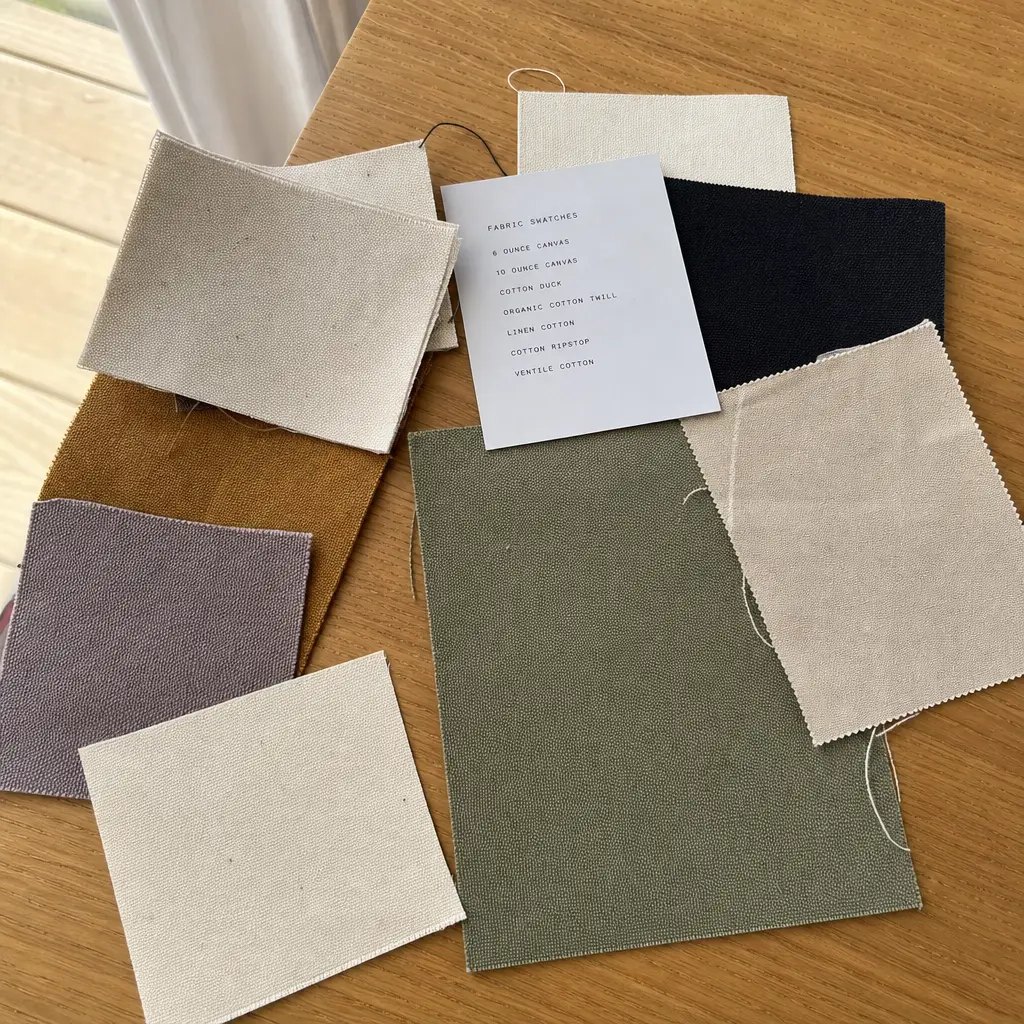
Start With the Bottle, Not the Canvas
The most common mistake in buying canvas wine carriers is starting with a fabric weight target before confirming the bottle profile. A 750 ml Bordeaux bottle, Burgundy bottle, sparkling wine bottle, and premium tall bottle do not behave the same inside a fabric carrier. The diameter controls the gusset, the neck height changes the visible proportion, and the weight changes how much stress lands on the handle seam. A 12 oz canvas that works well for a single Bordeaux bottle may feel too tight for a Champagne bottle if the carrier width was copied from a standard flat tote pattern.
For tech startups buying branded wine carriers as launch gifts, investor thank-you packs, or retail partner merchandise, the practical RFQ should define the bottle use case before requesting a quote. If the supplier does not know the bottle diameter and filled weight, they will quote a safe-looking bag based on a photo. That usually creates two problems: either the bag is overbuilt and expensive, or the sample looks fine empty but twists once loaded with real bottles.
- For standard 750 ml Bordeaux bottles, build the carrier around the filled bottle diameter plus fabric and handling allowance.
- For Burgundy or Champagne shapes, increase gusset and divider width instead of only increasing height.
- For two-bottle carriers, specify whether the divider is stitched to the bottom or only sewn into side seams.
- For six-bottle carriers, treat the item as a load-bearing bag, not a simple promotional pouch.
How Fabric Weight Changes Performance
Canvas wine carriers are usually discussed in ounces, but procurement teams should record both oz and GSM in the RFQ. In common factory communication, 10 oz canvas is roughly 340 GSM, 12 oz is roughly 410 GSM, 14 oz is roughly 475 GSM, and 16 oz is roughly 540 GSM. These numbers vary by yarn, weave density, dyeing, and finishing, so a buyer should not treat them as laboratory constants. They are buying references that help suppliers quote the same level of material.
The correct fabric weight depends on structure. A single-bottle carrier can perform well in 10 oz to 12 oz canvas if the seams are clean and the handle area is reinforced. A two-bottle carrier normally benefits from 12 oz to 14 oz because the bag must control bottle movement and carry more weight. A six-bottle carrier should usually move into 14 oz to 16 oz canvas, but only if the stitching and handle design are upgraded at the same time. Heavy fabric with weak handle stitching is still a weak bag.
- 8 oz canvas can be acceptable for light decorative sleeves but is usually too soft for a premium wine carrier.
- 10 oz canvas is a cost-efficient option for single-bottle event gifts where flat packing and low freight weight matter.
- 12 oz canvas is the most flexible middle choice for branded single-bottle and two-bottle programs.
- 14 oz canvas gives better structure for dividers, heavier bottles, and retail reuse.
- 16 oz canvas is useful for multi-bottle carriers but can increase sewing difficulty, packing bulk, and freight CBM.
Choose GSM by Commercial Use Case
A procurement team buying for a software conference has a different success standard than a retail buyer placing canvas wine carriers near a checkout counter. Conference gifts need clean branding, acceptable hand feel, and efficient carton packing. Retail carriers need stronger standing shape, better stitch consistency, and fewer visible creases after unpacking. Distributor programs need durability because the bags may be reused in stores, tasting rooms, or delivery promotions.
This is why a one-line RFQ such as 'canvas wine bag, natural, logo print' leads to weak quote comparison. Suppliers may quote 8 oz, 10 oz, or 12 oz and all call it canvas. The buyer sees a price difference without understanding the reason. A better RFQ ties GSM to expected use, load, and presentation. This lets a factory recommend where to save cost and where not to cut.
- Low-cost giveaway: single-bottle carrier, 10 oz natural canvas, screen print, simple folded packing.
- Premium event gift: single or two-bottle carrier, 12 oz to 14 oz canvas, reinforced handle, controlled logo placement.
- Retail wine shop program: two or six-bottle carrier, 14 oz canvas, divider stability, carton packing that avoids deep creases.
- Distributor reuse program: 14 oz to 16 oz canvas, webbing handles, bartacks, load test and heavier export carton.
- Gift box replacement: 12 oz to 14 oz canvas with cleaner finishing, but avoid excessive stiffness if the item must fold neatly.
Cost Drivers Buyers Often Miss
Fabric weight is only one part of the unit cost. A 14 oz carrier costs more than a 10 oz carrier because the fabric consumption is heavier, but the factory also needs slower sewing, stronger needles, sometimes heavier thread, and more careful folding. If the design has dividers, extra seams, or cotton webbing handles, labor can become a larger cost driver than the canvas itself. Buyers comparing quotes should separate material, construction, printing, packing, and testing assumptions.
MOQ logic also changes with fabric choice. Natural canvas in common weights may be available from stock, so the MOQ can be lower. Custom dyed canvas, special recycled cotton blends, or uncommon heavy weights may require minimum fabric yardage from the mill. If the startup wants three brand colors with the same logo, MOQ may apply per fabric color, not just total quantity. If the buyer wants different logo versions for regional teams, print setup and production sorting can also affect price.
- Higher GSM increases fabric cost, sewing time, folded thickness, carton size, and ocean freight CBM.
- Custom fabric color may trigger mill MOQ and longer material lead time.
- Multiple logo colors increase screen setup, alignment risk, and inspection time.
- Dividers add material and labor; stitched-bottom dividers cost more but control bottle movement better.
- Retail packing, barcode labels, hangtags, or individual polybags add cost that should be quoted separately.
Print Method and Fabric Texture
Most tech startup logos are clean geometric marks, wordmarks, or simple icon systems. On canvas wine carriers, screen printing is usually the safest production method for these designs. It gives strong color coverage, predictable cost, and good durability when ink is matched to cotton canvas and cured correctly. The buyer should specify Pantone references, print size, placement, and whether slight fabric texture showing through the ink is acceptable.
Heat transfer can work for short runs or full-color artwork, but it may feel less integrated with natural canvas and can show edge film depending on transfer quality. Embroidery looks premium on heavier canvas but is not ideal for tiny text or very fine logo marks. Woven labels and sewn side labels are useful when the buyer wants a subtle branded finish, especially if the front panel must remain clean for retail display. The key is to match the print method to both artwork and fabric weight, not to choose based on catalog photos.
- Use screen print for solid one-color or two-color startup logos and repeat bulk orders.
- Avoid tiny legal text or fine QR codes on coarse canvas unless a printed proof confirms readability.
- Keep print away from seams, fold lines, and heavily curved bottle areas unless distortion is acceptable.
- Use embroidery mainly on 12 oz and heavier canvas, with simplified artwork and clear thread color approval.
- Use woven side labels when the buyer wants discreet branding or multiple bag styles under one label system.
Sample Approval Should Prove Structure
A flat sample photo is not enough for canvas wine carriers. The sample must be tested with real or approved dummy bottles, because the important problems appear under load. The bag may lean, the bottom may sag, the divider may twist, or the handle may pull unevenly. For tech startup procurement teams working toward an event deadline, these issues are expensive because they appear after artwork and packing plans are already approved.
The sample process should have two levels. First, a prototype confirms size, bottle fit, handle comfort, and general structure. This can sometimes use close substitute fabric if timing is tight, but it should not be treated as final approval. Second, the pre-production sample must use the actual GSM, actual print method, actual thread, actual handle, actual divider, and actual packing fold. Bulk cutting should not start until this version is signed off.
- Test the sample with the buyer's bottle or a dummy matching filled weight and diameter.
- Measure handle drop while loaded, not only when the bag is flat on the table.
- Check whether the printed logo remains centered and readable when the bottle is inside.
- Review fold creases after the sample has stayed packed for at least one day.
- Photograph the approved sample with ruler, bottle, and carton packing reference for production control.
MOQ and Quote Comparison Logic
A low quote is often built on assumptions the buyer did not approve. One supplier may quote 10 oz stock natural canvas with one-color screen print and flat bulk packing. Another may quote 12 oz canvas with reinforced handles and individual polybags. Both lines may say 'canvas wine carrier,' but they are not commercially comparable. Procurement should force each quote into the same data format before negotiating unit price.
For startup buyers, volume uncertainty is common. The marketing team may want 300 pieces for a launch dinner, then 2,000 pieces for a distributor campaign if the first event works. The RFQ should request pricing at several breaks, such as 300, 500, 1,000, 3,000, and 5,000 pieces, with the same specification. This shows where the factory's real setup cost and material buying efficiency improve. It also helps the buyer avoid redesigning the bag when moving from sample run to bulk order.
- Compare quotes only when fabric weight, finished size, handle type, print method, packing, and inspection level match.
- Request price breaks using the same specification rather than allowing suppliers to down-spec lower quantities.
- Clarify whether MOQ is per style, per fabric color, per logo, or per shipment.
- Separate tooling, sample, screen setup, hangtag, label, and special packing charges from the unit price.
- Ask for carton data with every price level because freight can change the landed cost ranking.
Packing and Freight Affect the Real Cost
Canvas wine carriers are not heavy compared with glass bottles, but packing volume matters. A heavier GSM, stiff divider, or bulky handle can increase carton size. If a buyer is shipping by air for an event, this can change the landed cost more than a small unit price difference. If shipping by sea, carton strength and moisture control become more important because natural cotton canvas can absorb odor or humidity if packed poorly.
Flat packing is usually the most efficient method for single-bottle and two-bottle carriers. For retail programs, however, an overly compressed fold may create front-panel creases that reduce shelf appearance. The buyer should approve the fold position, inner packing, carton quantity, and carton marking. For six-bottle carriers, the packing method should protect divider shape and handle placement so store staff can open the carton and use the bags without reshaping every piece.
- Request units per carton, carton size, gross weight, net weight, and total CBM for the order quantity.
- Approve whether bags are bulk packed, paper banded, individually polybagged, or packed with retail hangtags.
- Keep logo panels away from hard fold lines when presentation matters.
- Use moisture-resistant export cartons for long sea shipments or humid routing.
- Include carton drop and compression expectations when carriers are shipped with other promotional goods.
Quality Thresholds for Bulk Inspection
Canvas wine carriers need inspection criteria that match their use. Cosmetic inspection alone misses load-bearing failures. A practical QC plan should include fabric weight verification, finished measurement, seam and handle strength, bottle fit, print adhesion, and packing condition. The approved pre-production sample should sit beside the inspection table so inspectors compare against a physical standard, not only a spreadsheet.
Acceptance criteria should be realistic. Natural canvas may have small cotton seed specks, slight slub texture, and minor shade variation between rolls. Those are not always defects. Oil marks, strong odor, loose handle stitches, twisted dividers, off-center logos, and print rubbing are more serious. Buyers should define what is acceptable before production, especially when natural or recycled cotton canvas is selected for sustainability messaging.
- Set fabric GSM tolerance before bulk production, commonly around plus or minus 5 percent unless a tighter standard is justified.
- Define finished size tolerance for height, width, gusset, divider width, and handle drop.
- Use a load test based on filled bottle weight and intended carrying time.
- Reject handle seams with skipped stitches, broken thread, weak bartacks, or visible needle cutting.
- Check print curing through rub testing, not only visual color matching.
- Separate natural fabric characteristics from true defects in the inspection agreement.
Lead Time Risks and How to Reduce Them
Lead time for canvas wine carriers depends on material availability, printing complexity, sample approval speed, and packing requirements. Stock natural canvas with one-color screen print can move much faster than custom dyed heavy canvas with dividers, woven labels, hangtags, and retail packing. Buyers should avoid using a single production lead time without separating material lead time, sample time, bulk production, inspection, and freight.
The highest risk period is between sample approval and bulk cutting. If artwork is not final, bottle dimensions are still changing, or the buyer has not approved packing, the factory may either wait or proceed with assumptions. Both outcomes cause problems. A disciplined purchase order includes a locked spec sheet, approved artwork, signed sample comments, target inspection date, and shipment mode. For event-driven startup orders, build a buffer for sample courier time and possible sample correction.
- Confirm whether quoted lead time starts after deposit, artwork approval, sample approval, or material arrival.
- Reserve extra time for custom dyed canvas, recycled fabric sourcing, or uncommon heavy GSM.
- Lock the bottle profile before pattern cutting to avoid late size revisions.
- Approve the print proof before mass printing; do not wait until finished bags are sewn.
- Schedule inspection before the last possible vessel or air shipment date.
Specification comparison for buyers
| Spec decision | Recommended option | When it fits | Buyer risk to check |
|---|---|---|---|
| Fabric weight for single-bottle gift carrier | 10 oz to 12 oz canvas, about 340 to 410 GSM | Good balance for event giveaways, wine club welcome packs, and startup launch gifts where the bag must stand reasonably well without looking heavy | Below 10 oz may collapse around a full bottle; above 12 oz may add freight weight without improving buyer perception |
| Fabric weight for two-bottle carrier with divider | 12 oz to 14 oz canvas, about 410 to 475 GSM, with reinforced divider stitch lines | Suitable for investor gifts, holiday sets, and premium retail bundles where bottles must not knock together during handling | Divider fabric and bottom stress points need testing with two filled bottles, not empty sample bottles |
| Fabric weight for six-bottle retail carrier | 14 oz to 16 oz canvas, about 475 to 540 GSM, plus box stitching or bartack reinforcement | Best for retail refill programs, bottle shops, and distributor merchandise where load capacity matters more than lowest unit price | Handle tearing and bottom sag are bigger risks than front-panel appearance; request load test criteria in the quote |
| Canvas construction | Plain weave cotton canvas for most orders; recycled cotton canvas only when color variation is acceptable | Plain cotton gives stable print results and easier color matching for startup brand artwork | Recycled content can create specks, shade variation, and weaker tensile performance unless the supplier provides clear pre-production samples |
| Print method | Screen print for solid logos; heat transfer only for full-color small runs; embroidery only for heavier canvas and simple marks | Screen print is usually the safest choice for clean tech logos, QR-free artwork, and repeat distributor orders | Fine type under 1.5 mm, low-contrast ink, or printing over seams can reduce legibility on coarse canvas |
| Handle specification | Same-fabric handles at 10 oz to 12 oz; cotton webbing or reinforced canvas handles for 14 oz to 16 oz carriers | Webbing improves comfort and strength for two-bottle and six-bottle formats | Unspecified handle length causes fit problems; define hand-carry drop and whether shoulder carry is required |
| Packing method | Flat pack with paper band or inner polybag by export carton; molded dividers only when retail presentation requires it | Flat packing controls CBM and freight cost for B2B bulk orders | Thick canvas and dividers can crease; approve fold position and carton loading direction before mass packing |
| Sampling sequence | Proto sample for size and structure, then pre-production sample using correct GSM, print ink, handle, and packing | Useful when procurement must lock artwork and event date before bulk production | A sample made from substitute fabric is not enough for approval because shrinkage, print edge, and hand feel can change |
Buyer checklist before sampling
- Define bottle format first: 750 ml Bordeaux, Burgundy, Champagne, or mixed bottle set, because diameter changes the carrier width and divider size.
- State target fabric weight in oz and GSM, and allow a practical tolerance such as plus or minus 5 percent after finishing.
- Specify carrier capacity: single bottle, two bottles with divider, four bottles, or six bottles; do not rely on a reference photo alone.
- Set minimum finished size and load requirement, including whether the bag must stand upright when empty or only when filled.
- Provide logo artwork as vector file and list print size, Pantone color, placement from seam, and whether printing may cross fabric folds.
- Choose handle type, width, drop length, reinforcement method, and whether bartacks are required at handle attachment points.
- Require a pre-production sample made with actual fabric weight, actual print method, and actual packing fold before bulk cutting.
- Confirm MOQ by fabric color, print color, and carrier style, because combining several designs can break factory efficiency.
- Request carton dimensions, units per carton, gross weight, net weight, and estimated CBM for landed-cost comparison.
- Include inspection points for seam strength, divider placement, print adhesion, fabric shade, odor, metal-free packing, and carton drop resistance.
Factory quote questions to send
- What fabric weight are you quoting in both oz and GSM, and is the weight measured before or after dyeing and finishing?
- Is the quoted canvas stock fabric, custom dyed fabric, organic cotton, recycled cotton, or blended canvas?
- What finished size tolerance can you hold for height, width, gusset, divider width, and handle drop?
- What reinforcement is included at the handle and bottom seams: single stitch, double stitch, cross stitch, or bartack?
- Which print method is included in the price, what is the maximum printable area, and how many ink colors are covered?
- Can the pre-production sample use the same fabric roll, ink, thread, handle, and packing fold as bulk production?
- What MOQ applies per style, per fabric color, and per logo design, and what surcharge applies below standard MOQ?
- What is the estimated production lead time after sample approval, and what material lead time applies if the canvas color is custom dyed?
- How many pieces fit in one export carton, what are the carton measurements, and what is the estimated CBM for 1,000 pieces?
- What quality tests or in-line checks are performed for load capacity, print rubbing, seam strength, needle damage, and packing cleanliness?
Quality-control points to confirm
- Fabric weight: verify bulk fabric with GSM cutter or agreed weighing method and reject lots outside the approved tolerance.
- Finished dimensions: measure height, width, gusset, divider spacing, and handle drop against the signed sample, not only the spec sheet.
- Load test: hang filled bottles for the agreed time and check handle seams, bottom seams, and divider distortion after unloading.
- Print adhesion: run dry rub and light wet rub checks on printed panels after ink curing; inspect edge sharpness on textured canvas.
- Stitch density: confirm stitches per inch, thread color, backstitch length, and bartack placement on stress points.
- Bottle fit: test with the buyer's actual bottle shape or approved dummy bottle, especially for Burgundy and Champagne profiles.
- Packing fold: inspect crease location, logo visibility after unpacking, moisture protection, carton strength, and barcode placement if retail cartons are used.
- Cleanliness: check fabric odor, oil stains, loose threads, lint, and color transfer before final carton sealing.