Why fabric weight is the first specification liquor retailers should lock down
In a canvas wine carrier program, fabric weight is not a cosmetic detail. It is the baseline structural decision that affects shape retention, shelf presentation, print appearance, handle stress, carton density, and customer reuse experience. That is why any serious canvas wine carriers fabric weight guide for liquor retailers should start with GSM rather than logo placement or trim decoration. If the fabric is underspecified, every later decision becomes harder to control.
Retail buyers often receive quotes that look similar at first glance because every supplier labels the product as a canvas wine bag or canvas bottle carrier. In reality, one quotation may be based on 280 GSM cloth, self-fabric handles, and no real divider support, while another is based on 400 GSM cloth, webbing handles, and base-anchored dividers. The cost gap can be significant, but so can the performance gap. Without matching structure line by line, buyers may compare prices that are not for the same bag.
Wine and liquor packaging has a particular load profile that makes fabric weight more critical than in general tote bags. A filled glass bottle places concentrated downward force through a narrow footprint. The bag body is asked to hold that weight vertically, the bottom seam must resist spreading, and the handles must transfer the load without distorting the top edge. A shopper may only carry the bag for a short distance, but even short carry cycles expose weak sewing or light fabric quickly.
Fabric weight also influences whether the bag looks promotional or premium. Lighter cloth can be appropriate for a one-time event giveaway or low-cost checkout add-on. Heavier cloth often feels more suitable for paid retail, winery gift programs, holiday packaging, and reuse. Liquor retailers should decide early whether the bag is meant to be disposable convenience packaging, branded gift packaging, or a reusable merchandise item. That commercial role should drive the GSM discussion.
- Use GSM as a functional specification, not just a feel preference.
- Normalize quotes before comparing cost; many supplier offers differ on hidden structure.
- Bottle weight creates concentrated stress that exposes weak fabric and weak sewing fast.
- The intended retail role of the bag should determine whether you buy promotional, mid-tier, or premium construction.
How to choose the right GSM range by bottle count, bottle type, and expected reuse
The most practical way to choose canvas weight is to begin with bottle count and bottle format. A standard 750 ml Bordeaux bottle presents a different fit and load pattern than a Burgundy bottle, sparkling wine, or heavier gift bottle. Even within single-bottle bags, the needed structure changes depending on whether the retailer wants a simple branded carry-out bag or a more premium bag that stands upright, displays neatly, and encourages repeat use.
For single-bottle promotional use, 10 oz to 12 oz canvas, roughly 280-340 GSM, is usually the commercial starting point. This range can work well for tasting rooms, seasonal gift-with-purchase campaigns, loyalty programs, and basic shelf add-ons. It provides enough body for a front logo panel and reasonable handling if the bottle is standard weight and the customer is not expected to use the bag repeatedly over time. At the lower end of this range, buyers should watch for twisting around the bottle and top-edge collapse.
For single-bottle premium retail programs, 12 oz to 14 oz canvas, roughly 340-400 GSM, usually gives a better balance of structure and presentation. The bag looks fuller, wrinkles less, and tends to display logos more cleanly. This range is often better if the store is charging for the bag, using it in gift bundles, or positioning it as part of the brand experience. If the bag must stand more squarely on shelf or be used repeatedly, this heavier range is usually easier to defend commercially.
Two-bottle carriers typically move into the 400-450 GSM class because the side walls and bottom seam must control both weight and bottle movement. Here, the internal divider is not optional in most retail situations. Without a proper divider, bottles can strike one another and the side seams may spread under load. Four-bottle and six-bottle carriers need a different mindset again. Once bottle count rises, buyers should stop thinking only in terms of heavier fabric and start thinking about reinforcement systems. A 450-570 GSM body can be appropriate, but it should be paired with stronger handles, deeper insertion, and bottom reinforcement logic.
Reuse expectation matters just as much as bottle count. If the retailer only needs a bag to survive checkout and a short walk to the car, a lower GSM can be justified. If the retailer expects customers to reuse the bag for gift-giving, picnics, club orders, or repeat shopping trips, a heavier body and better handle engineering will generally reduce complaints and protect brand perception.
The table below summarizes the most common procurement ranges buyers use when planning canvas wine carriers for liquor retail channels.
- 1 bottle, promotional use: about 280-340 GSM.
- 1 bottle, premium or reusable use: about 340-400 GSM.
- 2 bottles: about 400-450 GSM with divider.
- 4-6 bottles: about 450-570 GSM with reinforced handles and base logic.
- Champagne and heavy-glass formats may need a larger gusset and stronger base even at the same bottle count.
Beyond GSM: body fabric, seam design, dividers, and base reinforcement all affect performance
A common sourcing mistake is to treat fabric weight as if it fully defines bag strength. In practice, GSM tells only part of the story. The usable strength of a canvas wine carrier depends on how the fabric is converted into a finished structure. Two bags made from similar cloth can perform very differently because one has stronger seam allowances, a properly built divider, and reinforced bottom construction, while the other relies on raw fabric weight alone.
Body fabric should be specified independently from construction details. Buyers should ask whether the canvas is plain weave cotton, cotton-rich blend, or another structure, and whether the quoted GSM is finished weight after dyeing or finishing. A bag that looks substantial in a showroom sample can still underperform if the weave is loose, the finish softens the cloth too much, or the seams are cut without enough allowance. These details influence bag stability, especially around the side gussets and bottom folds.
Dividers deserve separate attention because they are often one of the first hidden cost reductions in low quotes. A suspended divider attached only at the top seam can help visual organization, but it does less to control bottle swing. A full-height divider secured into the base seam keeps bottles separated more effectively and improves load balance during lifting. For liquor retailers selling dual-bottle gift packs, this difference can matter more than a small GSM increase.
Base reinforcement is another under-specified area. Some single-bottle bags can work without additional base support if dimensions are tight and the fabric is heavy enough. Multi-bottle bags usually benefit from a strengthened bottom, such as an extra canvas layer, an internal support panel, or a stitched structural base. Buyers should be deliberate here because stronger bases improve carrying stability but can also change foldability, carton cube, and retail handling.
Seam engineering should be included in approvals, not assumed. Bag failure often begins at the lower side seam, the bottom corners, or the area where handle force distorts the top opening. Seam type, stitch density, thread suitability, and reinforcement placement all influence whether the bag keeps its shape under real bottle loads. A heavier cloth cannot compensate for weak construction logic.
- Do not treat GSM as a full quality standard; construction details matter just as much.
- Specify divider design separately: suspended, full-height, bottom-anchored, or removable.
- Ask whether base reinforcement is included and how it affects folding.
- Review seam allowance and bottom corner construction on production samples, not just drawings.
Handle construction is often the real failure point in canvas wine bags
If buyers remember only one technical point beyond fabric weight, it should be this: handles fail before fabric bodies fail in many wine carrier complaints. A bag body may look thick and durable, but if the handles are shallow, narrow, poorly stitched, or made from unsuitable self-fabric, the product will still disappoint in use. That is why handle construction should always be quoted as a separate engineering line.
Self-fabric handles can work for basic single-bottle programs when the body weight is adequate and the intended carry cycle is limited. However, they need careful folding, enough finished width for comfort, and secure insertion into the body panel. In cheaper versions, suppliers may simply extend a folded strip into the top hem with minimal insertion. That saves cost, but it concentrates stress near the opening and can cause tearing or seam opening under repeated use.
Cotton webbing handles are often the safer option for two-bottle and larger formats because they distribute load more consistently and usually perform better in repeated lifting. Buyers should specify webbing width, color, insertion depth, and stitch pattern. Box-X reinforcement is common for stronger carry points, but buyers should still inspect whether the pattern is centered, whether the thread tension is balanced, and whether the handle sits symmetrically on both sides. A good reinforcement pattern on one side and a rushed one on the other is not unusual in weak production control.
Handle drop length also matters commercially. If the bag is intended for one-handed carry from shelf to car, shorter handles can be acceptable. If the retailer expects shoulder carry or easier carrying of heavier multi-bottle sets, the drop and comfort width should be considered. Long handles on heavy bottle bags can create more swing, while very short handles can make premium gift packaging feel awkward. The right choice depends on the use case, not just on aesthetics.
Retail buyers should also think about handle abrasion and cleanliness. Natural cotton webbing on dark dyed canvas may show contrast issues if not color-matched correctly. White or light webbing can pick up marks in warehouse handling. These are small details, but they affect perceived quality when the customer buys the bag at full retail.
- Quote handle material separately from body fabric.
- Specify width, insertion depth, stitch pattern, and drop length.
- Use webbing more often for 2-bottle and multi-bottle carriers.
- Check left-right handle symmetry and reinforcement consistency during QC.
Print method, artwork style, and fabric texture need to be matched carefully
Branding decisions can change which fabric weights work best visually. Canvas is textured, and that texture becomes more pronounced as fabric gets heavier or more slubbed. For many liquor retailers, the artwork is straightforward: one or two spot colors, a centered front logo, or a short tagline. In these cases, screen printing is still the most practical and stable method for bulk production. It generally offers the best cost control, reasonable durability, and good readability on natural canvas surfaces.
Heavier canvas can improve bag feel, but it can also make certain graphics harder to execute cleanly. Fine lines, small serif text, and tight registration may not print as sharply on very textured 400-plus GSM fabric as they do on smoother midweight cloth. That does not mean buyers should avoid heavier fabrics. It means they should ask the supplier to test the actual artwork on the exact production fabric, not on a substitute cloth that prints more easily.
Dark ink coverage deserves particular attention. Large black, navy, or deep-colored blocks can stiffen the print area, especially on heavier canvas. If over-inked, they may crack, create an uneven hand feel, or emphasize fold marks after packing. Buyers planning broad coverage should request a strike-off and evaluate not only color but also flexibility, edge quality, and how the print behaves after the bag is folded and reopened.
Heat transfer and digital methods can be useful for smaller runs, complex artwork, or promotional tests, but they should be assessed honestly against the fabric texture. Transfers may show edge-lifting risk on coarse weaves if process control is poor. Digital printing can offer better image detail but may bring higher unit cost and more variation in color repeat between orders. For premium gift packaging, decoration such as embroidery, woven labels, or patches can add value, but those choices should come after the base structure has been specified correctly.
For SEO and buyer relevance, the key takeaway is simple: the best print method for canvas wine carriers depends on the fabric weight, weave texture, artwork density, and order volume. These should be reviewed together, not one by one.
- Screen print is usually the first choice for bulk liquor retail logos.
- Fine text and detailed lines should be strike-off tested on the actual fabric GSM.
- Heavy dark ink coverage can change hand feel and fold behavior.
- If artwork crosses a gusset or seam, require a production sample with that exact placement.
MOQ, sampling, and lead time: what really changes cost in a liquor retail order
MOQ is often misunderstood as a simple factory policy, but for canvas wine carriers it is usually driven by fabric sourcing, dyeing minimums, printing setup, and trim complexity. Buyers can lower MOQ pressure by using stock natural canvas, standard sizing, and simple one-color branding. As soon as the program adds custom dye, custom webbing color, woven labels, non-standard bottle dimensions, or complex divider construction, the order becomes less efficient to run and the workable MOQ usually rises.
This is why buyers should distinguish between minimum order quantity and economic order quantity. A supplier might technically accept a small custom order, but the unit cost may be inflated because the factory must absorb setup waste, trim leftovers, or inefficient cutting. For a new retail launch with uncertain demand, it is often more practical to simplify the first purchase and preserve the option to upgrade after sell-through has been validated.
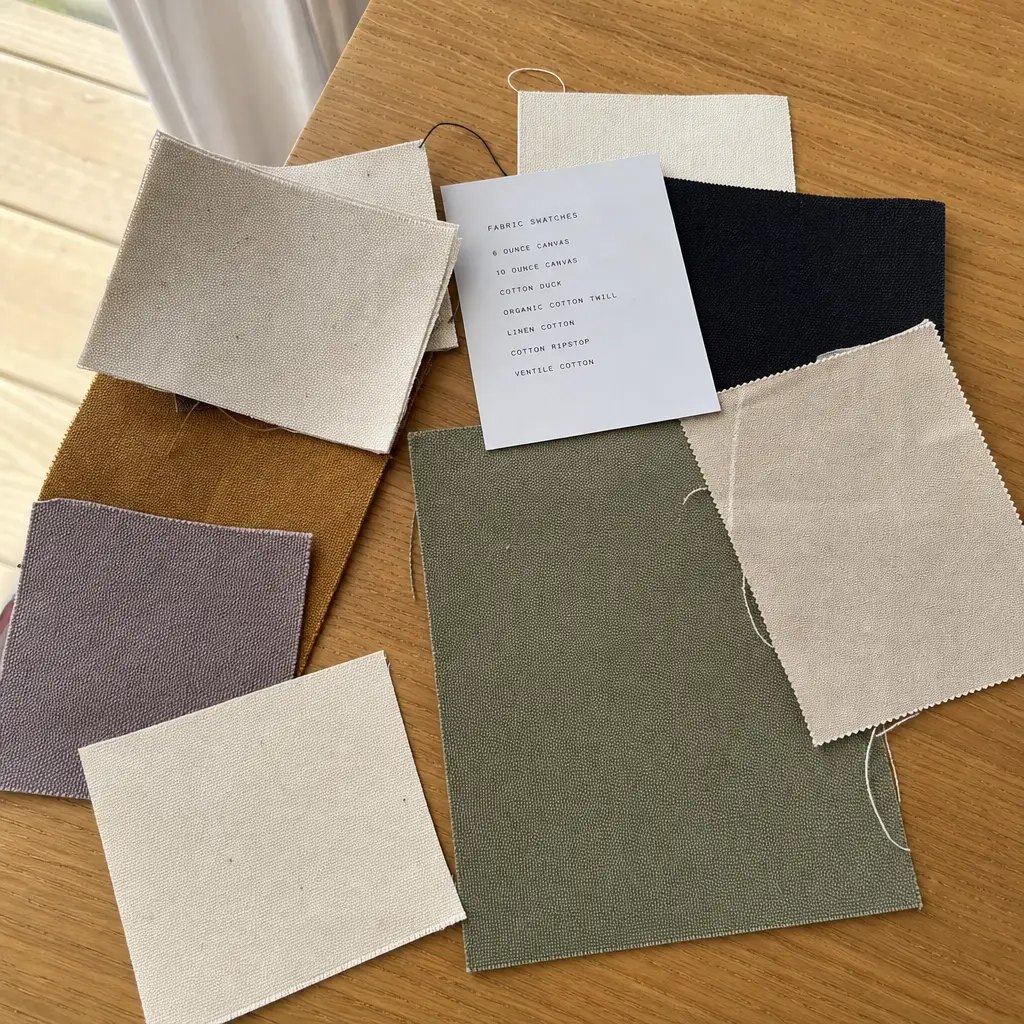
Sampling is where many of these cost and lead-time risks surface. A development sample may look fine but still not reflect actual production fabric or actual print conditions. Buyers should ask for a staged approval path: fabric swatch approval, pre-production sample in real material, and if the order is retail sensitive, a packed sample as well. This sequence helps identify issues before the factory books bulk material or starts cutting.
Lead time should also be broken into components. Stock natural canvas can move quickly, but custom dyed heavy canvas may need extra mill time and shade approval. Screen setup, strike-offs, and print corrections can add another layer of delay, especially when artwork uses large dark solids or exact brand colors. If the buyer sees only one total lead-time number, it is harder to tell where schedule risk sits.
For liquor retailers with seasonal deadlines, such as holiday gifting, corporate orders, or event-driven promotions, these distinctions matter. The earlier the buyer isolates which elements are fixed and which are optional, the easier it is for the supplier to quote realistic timing and MOQ.
- Stock natural canvas and standard sizing usually lower MOQ pressure.
- Custom dye, webbing color, labels, and dividers commonly raise the efficient MOQ.
- Approve swatches and pre-production samples before bulk fabric is committed.
- Ask for milestone timing, not just one final ex-factory date.
How to approve samples properly, including bottle load testing and packed sample review
Approving a wine carrier on appearance alone is one of the most expensive procurement shortcuts. A proper sample review should test fit, load behavior, seam response, handle balance, divider function, and packing outcome. This is especially true for liquor retailers because actual bottle dimensions vary more than many buyers assume. A bag that fits one supplier's bottle well may be too tight or too loose for another bottle profile within the same nominal volume.
Start by loading the pre-production sample with actual bottles or equivalent weighted dummies. Check whether the bag remains upright when set down, whether the side walls bow excessively, and whether the top opening distorts under lift. Then inspect the internal divider. In two-bottle and larger formats, the divider should hold separation rather than simply hanging decoratively. If the divider folds over or allows bottle contact during swing motion, the construction should be revised before bulk production.
Handle performance should be reviewed dynamically, not just visually. Lift the bag repeatedly, carry it for several minutes, and watch for asymmetry, seam strain, thread popping, or top-edge wrinkling around the insertion points. These are early warning signs. In many cases, a small increase in insertion depth or a change from self-fabric to webbing can prevent later complaints far more efficiently than increasing GSM alone.
Packed sample review is equally important. A bag that looks excellent in an unpacked sample may arrive at stores with deep fold memory through the print area, crushed gussets, or marks from tight bundling. Buyers should ask the supplier to pack one sample exactly as bulk goods will be folded, bundled, and cartoned. Leave it packed for a period, then reopen and inspect the print face, gusset recovery, and handle set. This simple step often catches preventable warehouse and store issues.
Sample approvals should be documented clearly. Record approved dimensions, GSM, print position, divider details, handle measurements, and packing method. A photo alone is not enough for a B2B procurement file.
- Load test with real bottle formats whenever possible.
- Inspect divider control during lifting and side-to-side movement.
- Approve one packed sample in final folding format before bulk release.
- Document approvals in writing with measurements and tolerances, not just photos.
Packing, carton weight, and warehouse handling can change total landed performance
Packing is rarely the first topic discussed in a wine bag RFQ, yet it has a direct effect on freight efficiency, warehouse labor, inward quality, and retail presentation. Canvas wine carriers are relatively dense, especially in higher GSM and multi-bottle configurations. As a result, carton planning should be driven by both cubic efficiency and gross weight. A carton can appear underfilled visually but still be too heavy for practical handling.
Buyers should define whether the bags are going to a central distribution center, direct to stores, e-commerce fulfillment, or promotional event packing. Each route changes the right folding and bundling logic. Bulk flat packing may be acceptable for warehouse replenishment. Retail-ready gift programs may need cleaner folds, tissue separation, or smaller inner bundles to preserve appearance. If individual UPC or barcode labels are required, their position should remain visible after packing so stores do not need to reopen every unit bundle.
Heavy overpacking can create quality problems that are not obvious in the factory. Gussets can flatten unevenly, dividers may crease permanently, and large print areas may show pressure lines or abrasion. For longer transit routes, carton strength and interior packing consistency matter as much as piece count. Export cartons that are too dense may save some freight cost but increase inward damage claims, store prep time, and customer-facing defects.
Carton planning is also a compliance and operations issue. If warehouse teams have carton weight thresholds, the sourcing team should specify them before the order is confirmed. This is particularly important for six-bottle carriers or premium heavy-canvas sets. A sourcing specification that ignores handling ergonomics can transfer cost to the warehouse and store teams later.
For B2B buyers, the practical question is not simply how many bags fit in a carton. It is how the chosen packing method affects landed condition, labor efficiency, and retail readiness.
- Set a target carton gross weight, not just pieces per carton.
- Match folding and bundling method to the downstream retail or warehouse route.
- Review packed samples for gusset crushing, print pressure marks, and divider deformation.
- Confirm barcode placement and inner pack counts if bags are sold or issued individually.
Quality control points that matter most before bulk shipment
Quality control for canvas wine carriers should focus on function-critical points rather than generic bag inspection alone. A standard visual check for stains and measurements is not enough when the product is expected to carry glass bottles safely. Retail buyers should agree with the supplier on a focused QC checklist tied to approved specifications and likely field failure points.
Fabric weight verification should be based on conditioned sample pieces from bulk production fabric, not only on a mill declaration. This matters because finished GSM can shift after washing, dyeing, coating, or finishing. If the order is sensitive to feel and structure, buyers should define acceptable tolerance in advance. For many programs, plus or minus 5 percent is easier to control than vague descriptions like heavy canvas.
Dimensional control is critical where bottle fit is tight or dividers are involved. Width, height, gusset, and handle drop should all be measured against approved tolerances. Multi-bottle carriers need extra attention because a small width reduction can make bottle insertion difficult, while an oversized gusset can allow too much movement. Handle pair matching should also be checked to avoid uneven carrying balance.
Stress-point sewing deserves more than a glance. Inspect stitch density, reinforcement pattern, back-tacking, seam opening, and thread consistency at handle insertions and bottom corners. A bag may pass a static visual inspection but still show weakness if stitch tension is inconsistent or skipped stitches appear at load-bearing points. Random load testing with real bottle weight or equivalent weights is one of the best final-release checks for this category.
Print QC should include color match, registration, edge clarity, and rub resistance, especially on textured natural canvas. If the order uses dyed fabric, crocking and shade variation should be reviewed as part of approval. Finally, packing QC should confirm count accuracy, folding consistency, carton labeling, and transit protection. These details are not glamorous, but they reduce avoidable disputes after shipment.
A good QC plan should therefore connect material, construction, decoration, and packing rather than treating them as separate silos.
- Verify finished GSM from bulk fabric, not only from mill paperwork.
- Measure body size, gusset, divider fit, and handle symmetry against tolerance.
- Inspect reinforcement stitching at all stress points.
- Run random load tests before final packing release.
- Include print rub resistance and fabric shade consistency in the inspection plan.
How to compare supplier quotes and write a better RFQ for canvas wine carriers
The fastest way to make supplier prices comparable is to write an RFQ that separates all major structural variables. Instead of requesting a heavy canvas wine bag and waiting for interpretations, specify bottle type, bottle count, target GSM, handle material, divider design, print method, print size, packing format, and carton limit. The more precise the structure, the easier it becomes to identify where one quotation is cheaper because of an actual efficiency and where it is cheaper because something important has been removed.
Start with the bottle. Provide exact bottle height and diameter, or a basic bottle drawing if possible. Then define whether the bag is intended for one bottle, two bottles, or a larger set, and whether it must stand upright empty or only when loaded. State the target fabric weight range and whether shade consistency matters for natural canvas. Add handle requirements such as self-fabric or webbing, width, drop, and reinforcement expectations. If a divider is required, say whether it must be full-height and stitched to the base.
Branding should be described in production terms. Include artwork colors, target print area, front or gusset placement, and whether exact brand matching is required. If the buyer is still flexible, indicate which variables are open to supplier recommendation. That allows the supplier to propose practical alternatives, such as 340 GSM versus 400 GSM or self-fabric versus webbing handles, without weakening the commercial brief.
Finally, ask quote questions that reveal hidden assumptions. Buyers should ask what exact fabric construction is being priced, whether GSM is finished or greige, what handle insertion is included, what divider version is in scope, how the sample process will work, what QC standard is used, and how the lead time breaks down. These questions often tell more about a quote than the unit price itself.
A well-built RFQ does not need to be long. It needs to be unambiguous. That alone can reduce revision cycles, supplier misunderstandings, and post-order surprises.
- Specify bottle dimensions before discussing bag size.
- Separate body fabric, handles, dividers, printing, and packing in the RFQ.
- State what is fixed and what the supplier may optimize.
- Use quote questions to surface hidden cost reductions or assumptions.
Specification comparison for buyers
| Spec decision | Recommended option | When it fits | Buyer risk to check |
|---|---|---|---|
| Single-bottle promo bag fabric weight | 10 oz to 12 oz canvas, about 280-340 GSM | Gift-with-purchase, tasting room retail, short carry distance, low print coverage | Too light below 280 GSM can twist around a heavy 750 ml bottle and distort print panels |
| Single-bottle premium retail bag fabric weight | 12 oz to 14 oz canvas, about 340-400 GSM | Higher shelf value, repeat retail use, larger logo panel, better structure without lining | If using dark dyed canvas, request crocking test and seam puckering review after washing or humid storage |
| Two-bottle carrier body fabric weight | 14 oz to 16 oz canvas, about 400-450 GSM with internal divider | Holiday packs, winery gift sets, supermarket checkout bundles | Light fabric with no divider allows bottles to knock together and overload side seams |
| Six-bottle carrier body fabric weight | 16 oz to 20 oz canvas, about 450-570 GSM plus webbing reinforcement | Warehouse club, corporate gift orders, distributor programs | Canvas alone is not enough; handle insertion and bottom reinforcement matter more than raw GSM |
| Handle construction | Cotton webbing or folded self-fabric with box-X stitching and 2.5-3.5 cm insertion depth | Any format above one bottle or any bag expected to be reused | Short insertion depth, single-row stitch, or no bartack causes field failures before fabric tears |
| Print method on natural canvas | Screen print for solid logos, heat transfer for short runs, digital only for photo detail | Most liquor retail artwork uses 1-2 spot colors and medium panel size | Large dark prints on heavy canvas can crack or look uneven if pre-treatment and strike-off are skipped |
| MOQ strategy | Use stock natural canvas and standard size to keep MOQ lower; custom dye and woven label push MOQ up | Pilot programs, regional launches, uncertain sell-through | Low MOQ quotes may hide mixed production, limited color control, or higher reject tolerance |
| Packing method | Flat packed with tissue or divider board by style, outer carton limited by weight not just quantity | Bulk import where freight efficiency matters but bags must arrive crease-controlled | Overpacked cartons lead to crushed gussets, distorted print faces, and warehouse handling complaints |
| Sample approval route | Approve fabric swatch, pre-production sample, then packed sample with bottle load test | Any private label order with custom size, divider, or print registration requirement | Skipping packed sample approval is where many buyers miss carton fit, crease marks, and handle set issues |
Buyer checklist before sampling
- Define bottle format first: 750 ml Bordeaux, Burgundy, Champagne, or mixed gift bottle sizes change width, gusset, and divider spec.
- State target fabric weight in GSM or oz, and specify tolerance if appearance matters; example: 340 GSM plus or minus 5 percent.
- Separate body fabric spec from handle spec; a strong body with weak self-fabric handles still fails in store use.
- Confirm whether the bag must stand upright empty or only when loaded; this affects fabric weight and base reinforcement.
- Specify if internal divider is required, and whether it must be stitched to the bottom seam or suspended from the top panel.
- Match print method to order volume and artwork: screen print for stable bulk cost, transfer or digital for short-run color complexity.
- Request bottle load test method in the sample stage, including carry duration and seam inspection points.
- Approve natural canvas shade standard if ordering unbleached cotton; shade drift between batches is common and affects brand look.
- Define packing format by store or warehouse need: bulk flat pack, inner poly by unit, barcode label, or pre-bundled by assortment.
- Review carton gross weight limit before final PO; many wine carriers are dense and can exceed practical warehouse handling weight.
Factory quote questions to send
- What exact fabric construction are you quoting: cotton content, yarn count if available, weave type, and finished GSM tolerance?
- Is the quoted GSM before or after washing, dyeing, or finishing, and how much variation do you normally allow lot to lot?
- For this bottle count, do you recommend self-fabric handles or separate cotton webbing, and what stitch pattern is included in the price?
- Is the divider included, and is it full-height, half-height, padded, or plain canvas only?
- What print method are you quoting, what is the maximum print area, and how does dark ink coverage affect cost and lead time?
- What is your MOQ for stock natural canvas versus custom dyed canvas versus custom woven label addition?
- Will you provide a pre-production sample made in actual production fabric weight, not substitute sample cloth?
- How many bags per export carton are you quoting, what are carton dimensions, and what is estimated gross weight per carton?
- What quality standard do you use for seam opening, print registration, fabric defects, and count tolerance?
- What is the lead time split for sample making, material booking, bulk sewing, printing, packing, and shipment readiness?
Quality-control points to confirm
- Fabric weight verification against approved standard, using conditioned sample pieces from bulk lot rather than only mill declaration.
- Finished size tolerance for width, height, and gusset, especially where divider fit depends on internal dimensions.
- Handle length pair tolerance and left-right positioning symmetry to avoid twisted carry balance.
- Stitch density, back-tack security, and box-X reinforcement on handle stress points.
- Bottom seam and side seam appearance under bottle load, with no skipped stitches or opening greater than agreed tolerance.
- Divider attachment quality so bottles do not collapse the internal wall during lifting.
- Print color match, edge sharpness, registration, rub resistance, and ink penetration on textured canvas surface.
- Canvas shade consistency across production lot for natural, bleached, or dyed fabric bodies.
- Carton count accuracy, folding method consistency, and protection against abrasion marks during transit.
- Random load test using actual filled bottle weight or equivalent test load before final packing release.