The Buying Problem
A canvas wine carrier for a university bookstore looks simple until the first sample arrives too soft, too bulky, or unable to hold a loaded bottle cleanly on the shelf. The real buying decision is not just the logo or the color. It is the match between fabric weight, bottle load, handle construction, retail price, and the way the bookstore will receive and display the goods.
For campus retail buyers, the wrong fabric weight creates two kinds of waste. A light carrier may save cents in the quote but look cheap beside licensed apparel and gift items. A heavy carrier may feel premium but reduce margin once sewing time, carton weight, and freight are included. The best specification is usually the lightest construction that still passes fit, handle pull, print clarity, and shelf presentation tests.
- Use 8 oz canvas only when the carrier is mainly promotional packaging or a short-use event item.
- Use 10 oz canvas for the common retail balance of structure, printability, and freight control.
- Use 12 oz canvas when the carrier is sold as a premium reusable gift bag or must hold two bottles.
- Treat 14 oz and heavier canvas as a special retail choice, not the default, because it changes sewing, folding, and freight economics.
Fabric Weight Choices
Canvas weight is often quoted in ounces, while many factories also use GSM. The conversion is not exact across every weave, but practical buying ranges are clear enough for RFQ work. An 8 oz canvas is roughly 270 GSM, 10 oz is around 340 GSM, 12 oz is around 400 GSM, and 14 oz is around 475 GSM. The number alone does not guarantee stiffness because yarn size, weave density, finishing, and washing all change the hand feel.
For wine carriers, the fabric must do more than look natural. It needs enough body so the bag does not collapse around the bottle neck, enough abrasion resistance for repeated use, and enough surface quality for the bookstore logo or licensed mark. A buyer comparing quotes should not accept only the phrase 'heavy canvas.' Put the target ounce weight, GSM range, and approved sample reference into the purchase order.
- 8 oz, about 270 GSM: lower cost, easier folding, weaker shelf shape; suitable for giveaway packaging with controlled expectations.
- 10 oz, about 340 GSM: recommended starting point for most single-bottle campus retail wine carriers.
- 12 oz, about 400 GSM: better structure and perceived value, especially for two-bottle carriers and gift sets.
- 14 oz, about 475 GSM: premium and durable, but may be stiff at the seams and higher in freight cost.
- Washed canvas feels softer but can shrink and distort print placement; unwashed canvas gives better dimensional control for most bookstore programs.
Match Weight to Bottle Load
A 750 ml wine bottle typically puts the stress near the bottom seam, not evenly across the whole carrier. Sparkling bottles and some specialty bottles are wider and heavier, while olive oil or beverage gift bottles may have different shoulders. If the university bookstore sells local winery gifts, alumni event packs, or seasonal bundles, the carrier should be tested with the actual bottle family, not a generic empty sample.
A single-bottle carrier in 10 oz canvas can work well when the base width, height, and handle drop are correct. A two-bottle carrier usually needs either 12 oz canvas or a carefully reinforced 10 oz construction with a sewn divider. The divider is not a cosmetic panel. It prevents glass contact, helps the bag stand, and reduces twisting when the customer carries two different bottle shapes.
- Single 750 ml bottle: 10 oz canvas, bottom gusset around the bottle diameter, reinforced handles.
- Single sparkling bottle: increase width and test neck clearance; do not rely on a standard wine-bottle pattern.
- Two 750 ml bottles: 12 oz canvas or reinforced 10 oz with a full-height divider.
- Gift set with bottle plus accessories: request a paper pattern or digital size drawing before sampling.
- Retail shelf display: test the empty carrier standing upright, not only the loaded carrier.
Construction Details
Fabric weight cannot compensate for weak sewing. A 12 oz carrier with poor handle stitching can fail sooner than a 10 oz carrier with proper reinforcement. The core construction points are handle material, handle attachment, bottom gusset, side seam strength, divider placement, and edge finishing. These should appear in the quote, not be left to the factory's default tote-bag method.
For a campus bookstore, the carrier also needs to look neat when handled by store staff and customers. Bulky seam allowances, crooked top hems, or uneven divider stitching are visible on a small product. Because wine carriers are narrow, small size errors are more serious than they are on a large tote. A 5 mm width shortage may make bottle insertion difficult.
- Handle drop: keep it comfortable for hand carry; shoulder length is usually unnecessary and can make the carrier unstable.
- Handle reinforcement: use cross-box stitching, bartack, or dense double stitching depending on factory equipment and style.
- Bottom gusset: must be wide enough for the bottle base plus seam allowance; too narrow makes the bag rock on the shelf.
- Top hem: folded and stitched edge gives a cleaner retail finish than raw overlock alone.
- Divider: for two-bottle styles, sew it into the bottom seam or securely anchor it so it cannot float upward.
Print Method Selection
University bookstore artwork often includes mascots, campus names, alumni marks, event dates, or department logos. The print method should be chosen for the fabric surface and the artwork detail. Screen printing is usually the most reliable option for one-color or two-color marks on natural canvas. It gives good opacity, reasonable cost at MOQ, and a durable look if the ink is cured correctly.
Heat transfer can help with complex multi-color art or small batches, but it may feel less integrated with the canvas and can show edge film depending on the transfer type. Embroidery looks premium but can pucker lighter canvas and may distort small lettering. Woven labels are useful when licensing rules require a clean brand mark but the front panel needs to remain understated.
- Screen print: best for bold campus marks, one to three colors, and repeat orders.
- Water-based ink: softer hand feel but may look less opaque on darker dyed canvas.
- Plastisol or heavier ink: stronger coverage but can crack if applied too thickly on fold areas.
- Heat transfer: useful for short runs or detailed artwork; approve the feel and wash resistance.
- Embroidery: consider on 12 oz canvas or a separate patch, not on very light fabric.
- Woven side label: good for CTM-style sample branding, private label programs, or subtle retail identity.
MOQ and Cost Logic
MOQ is not only a supplier policy. It comes from fabric availability, cutting efficiency, printing setup, labor batching, and carton packing. Natural canvas in common weights may be available from stock, so the MOQ can be lower. Dyed canvas, unusual widths, custom bottle sizing, or several campus logo versions increase the practical MOQ because the factory must manage more material and setup changes.
When comparing quotes, separate the cost drivers. A cheap unit price may exclude screen charges, sample cost, special packing, inspection support, or stronger export cartons. A higher quote may include actual 12 oz fabric while another supplier is quoting a lighter fabric with similar wording. The buyer's job is to make the quote data comparable before negotiating.
- Common natural 10 oz canvas with one-color print: often workable from about 300-500 pcs, depending on supplier and schedule.
- Custom dyed canvas: expect higher MOQ because dyeing a small lot is inefficient and color variation risk increases.
- Multiple bookstore logos: group by same fabric and same construction, but count separate print setup charges.
- Two-bottle carrier: higher sewing time and divider handling can matter more than the raw fabric increase.
- Premium retail finish: woven label, hangtag, individual polybag, and barcode labeling should be priced as separate lines.
Sample Approval
A good sample process prevents most production disputes. For canvas wine carriers, approve both the empty appearance and the loaded performance. The sample should be made in the intended fabric weight or a clearly stated substitute. A sample made in 12 oz canvas does not prove that the same shape will work in 8 oz canvas, and a paper print strike-off does not prove the logo will look clean on textured canvas.
The first sample should settle the pattern and construction. The pre-production sample should settle actual fabric, actual print, actual label, and actual packing fold if folding affects the print. Bookstore buyers should keep one sealed approved sample for inspection comparison and send one approved sample to the factory production team.
- Load test: insert the intended bottle and lift the carrier repeatedly by the handle.
- Fit test: bottle should slide in without scraping the label or stretching the side seam.
- Shelf test: empty carrier should stand or present neatly according to the retail display plan.
- Print test: compare logo size, position, ink coverage, edge sharpness, and Pantone target.
- Measurement test: record finished height, width, gusset, handle drop, and divider position.
- Packing test: fold or flat-pack the sample as quoted and check whether creases hit the printed logo.
Packing and Retail Handling
Packing is often treated as an afterthought, but it affects both landed cost and retail condition. Flat packing protects shape and print better, but it uses more carton volume. Folding can reduce volume, but it may crease the front panel or divider. If the carrier will be sold as a neat gift item in a bookstore, the front logo panel should arrive clean enough for direct shelf placement.
Campus bookstores and distributors may also have receiving requirements: carton labels, SKU stickers, barcode labels, inner packs, or no mixed SKUs in one carton. These requirements should be in the RFQ because they add labor. If individual polybags are required, specify material, warning text requirements where applicable, and whether the bag must be folded with the logo visible.
- Export carton: specify maximum gross weight that the receiving team can handle safely.
- Inner protection: use a carton liner or moisture barrier when shipping natural cotton canvas in humid seasons.
- Pcs per carton: 50-100 pcs is common, but final count depends on fabric weight and folding method.
- Carton markings: include PO number, SKU, color, quantity, carton number, and destination if needed.
- Retail labels: barcode, hangtag, country-of-origin label, and care label should be confirmed before production.
- Crease control: avoid folding directly through heavy ink or across the main campus logo.
Lead Time and Schedule Risk
University bookstore programs are tied to calendars: graduation, homecoming, alumni weekends, holiday gifting, local wine events, and campus store resets. The safest schedule works backward from the in-store date, not from the purchase order date. Sample revisions, artwork approval, fabric procurement, printing setup, sewing, inspection, export booking, customs, and domestic distribution all need time.
The risk increases when the buyer combines custom dyed fabric, licensed artwork, multiple store destinations, and tight retail dates. Natural canvas with one-color screen print is easier to schedule. A complex multi-color logo on dyed 12 oz canvas needs earlier approval because both color matching and print testing can require revision.
- Initial sample: allow time for pattern correction, not just courier transit.
- Pre-production sample: should use actual production fabric and print before bulk cutting starts.
- Bulk production: confirm whether lead time starts after deposit, artwork approval, or PP sample approval.
- Inspection: book before goods are packed if size, print, and stitching need full access.
- Shipping: compare air, sea, and consolidated freight only after carton dimensions and gross weight are known.
- Campus deadline: keep a buffer for bookstore receiving and internal distribution, especially before peak retail periods.
Landed Cost Comparison
The best fabric weight is not always the lowest FOB price. A 12 oz carrier may cost more at the factory but sell at a stronger retail price, reduce returns, and support a premium alumni gift position. An 8 oz carrier may win a giveaway tender but disappoint as a paid bookstore item. Buyers should compare landed cost against retail purpose, not only against unit price.
For fair comparison, request carton dimensions and gross weight with the quote. Heavier canvas increases product weight, but carton cube can matter just as much if the carrier must be packed flat to protect print. A small difference in folding method may change freight more than a small difference in fabric weight.
- Compare FOB unit price, setup charges, sample charges, packing cost, inspection cost, freight, duty, and domestic handling.
- Calculate cost per sellable unit after expected defect allowance, not only the supplier's quoted production quantity.
- Review retail margin by SKU: single-bottle, two-bottle, natural canvas, dyed canvas, and gift set versions may not share the same economics.
- Do not approve a lighter fabric only to meet a target price if the product must carry a premium bookstore ticket.
- Use the approved sample as the cost baseline; any fabric substitution after pricing should trigger a new approval.
Specification comparison for buyers
| Spec decision | Recommended option | When it fits | Buyer risk to check |
|---|---|---|---|
| Main body fabric weight | 10 oz canvas, about 340 GSM, for most bookstore wine carriers | Good balance for single-bottle retail bags, alumni gifts, tasting events, and campus store shelves where the bag must stand neatly but stay cost controlled | Thin 8 oz fabric may collapse around a full bottle; heavy 14 oz fabric may push freight and sewing cost higher than the retail price can support |
| Premium structure | 12 oz canvas, about 400 GSM, with reinforced handle box stitch | Better for two-bottle carriers, higher retail price points, holiday gift programs, and reusable alumni merchandise | Confirm needle size, seam allowance, and handle attachment because dense canvas can cause skipped stitches if the factory treats it like a tote bag |
| Budget fabric | 8 oz canvas, about 270 GSM, only with lining, insert, or short event use | Useful for large promotional runs where the bag is a gift wrap item rather than a long-life carrier | Without reinforcement, the bottle bottom may sag and the print can wrinkle when the bag is filled |
| Handle construction | Self-fabric handles or 25-32 mm cotton webbing with cross-box reinforcement | Self-fabric looks more retail; cotton webbing is efficient for bulk orders and heavier bottles | Round cord handles can look attractive but may cut into the hand and can be harder to secure on heavy canvas |
| Bottle separation | Sewn divider panel in 10-12 oz canvas for two-bottle styles | Required when glass bottles may knock together during checkout, gifting, or transport | A loose divider that is not caught into the bottom seam can shift and fail the drop test |
| Print method | Screen print for solid university marks; heat transfer only for complex small-batch art | Screen print gives clean coverage on natural canvas and works well for bookstore logos, alumni marks, and event dates | Heavy ink on coarse canvas can crack at fold lines; request print strike-off on actual production fabric, not paper |
| MOQ planning | 300-500 pcs for one color screen print; 800-1,000 pcs when dyed fabric, multiple SKUs, or custom size is required | Fits seasonal bookstore programs that need a controlled inventory buy without paying excessive setup cost per unit | Low MOQ quotes may hide higher unit price, limited color choice, or shared-fabric substitution |
| Packing method | Flat packed 50-100 pcs per export carton with moisture protection and carton drop-test strength | Best for campus store receiving rooms, distributor warehouses, and mixed retail shipments | Over-compressed cartons can crease printed panels; individual polybags may be required by some retailers but add labor and plastic cost |
Buyer checklist before sampling
- Define the bottle type before quoting: 750 ml wine bottle, sparkling bottle, olive oil bottle, or mixed gift set. Diameter and shoulder shape affect width, divider position, and bottom stress.
- State whether the carrier is a retail product, gift-with-purchase bag, alumni event bag, or packaging accessory. This changes the acceptable fabric weight and finishing level.
- Use GSM and ounce weight together in the RFQ, such as 10 oz canvas, about 340 GSM, so suppliers do not quote a lighter local fabric as an equivalent.
- Specify single-bottle or two-bottle capacity, finished size, handle drop, bottom gusset, seam allowance, and whether a divider is sewn into the bottom and side seams.
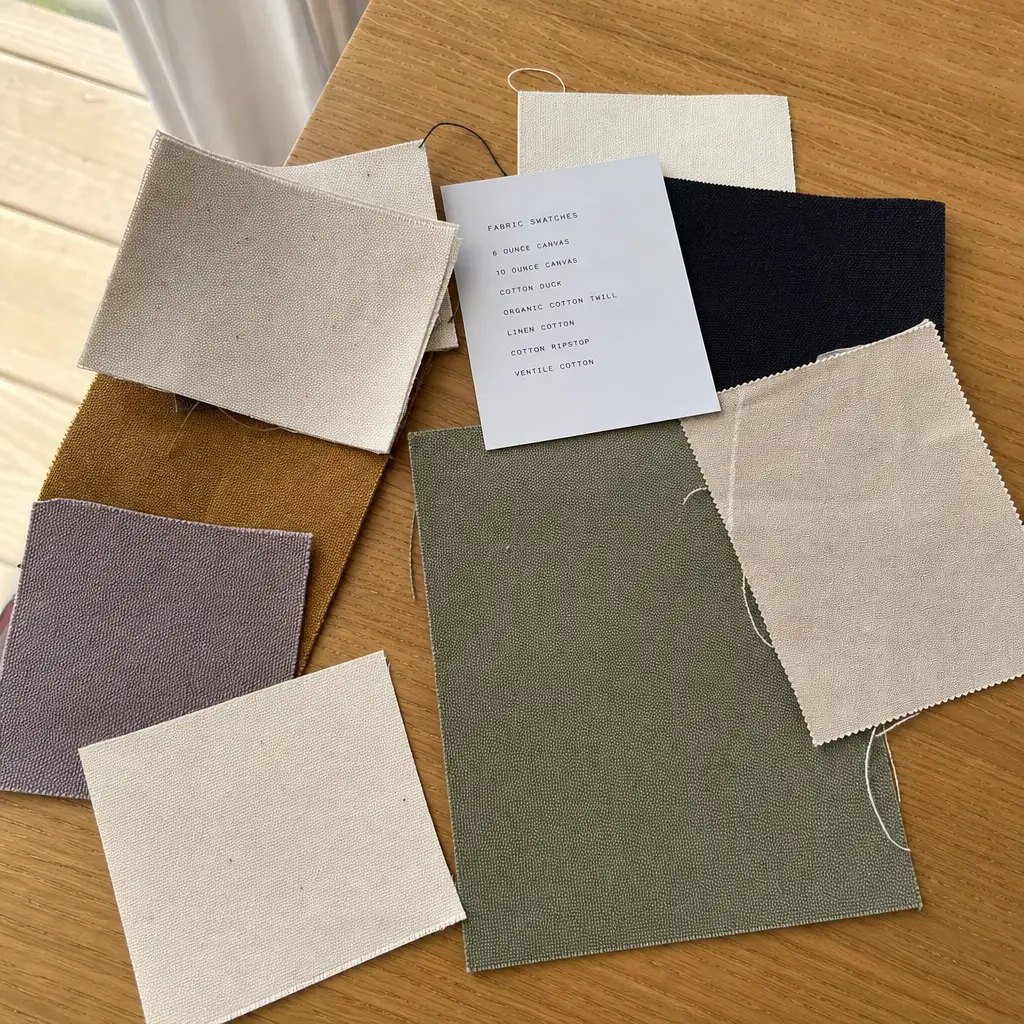
- Request photos of the actual fabric roll or swatch under daylight, including close-up weave texture and a measured fabric weight report when the order value justifies it.
- Confirm print method, print size, Pantone references, ink type, and whether artwork must be printed before or after sewing.
- Set sample approval rules for loaded bottle fit, handle pull, seam appearance, print position, and standing shape on a flat shelf.
- Define packing at the RFQ stage: flat pack or folded pack, pcs per carton, carton dimensions, individual polybag requirement, silica gel, and shipping marks.
- Separate tooling, sample, printing screen, fabric dyeing, and unit price lines in the quote so competing suppliers can be compared fairly.
- Build the campus calendar backward from the in-store date, allowing sample revision time, production, inspection, export booking, customs clearance, and bookstore distribution.
Factory quote questions to send
- What exact fabric will you quote: cotton canvas or cotton-poly canvas, ounce weight, GSM, yarn count if available, and whether it is from stock or custom woven?
- Can you make the carrier in 8 oz, 10 oz, and 12 oz versions using the same dimensions so we can compare structure and cost?
- What bottle size did you use to test the pattern, and can you provide loaded photos with a 750 ml bottle or our supplied bottle dimensions?
- How will the handles be attached, and what reinforcement stitching is included in the quoted price?
- For two-bottle carriers, is the divider sewn into the bottom seam, side seam, or only tacked at the top?
- Which print method do you recommend for our artwork on this canvas weight, and what is the maximum clean print area before distortion becomes likely?
- What are the MOQ breaks for natural canvas, dyed canvas, one-color print, multi-color print, and mixed campus store assortments?
- What sample cost and sample lead time apply for a pre-production sample using actual fabric and actual print?
- What inspection standard do you use for seam strength, print defects, stains, size tolerance, and carton packing?
- Can your quote show unit price, screen charge, sample charge, packing cost, export carton dimensions, gross weight, production lead time, and Incoterm separately?
Quality-control points to confirm
- Fabric weight tolerance should be agreed before production. For campus retail carriers, a practical tolerance is usually within about plus or minus 5 percent of the approved sample, unless the contract states otherwise.
- Finished size should be checked on flat samples before loading. A narrow width may still look correct empty but can scrape labels or fail with wider bottle shapes.
- Handle pull should be tested with a loaded bottle weight higher than normal use. The handle attachment should not tear, stretch badly, or show broken stitches after repeated lifting.
- Bottom seam and gusset corners need close inspection because bottle weight concentrates at the base. Loose corners are more serious than minor cosmetic thread tails.
- Print registration and ink coverage should be judged on actual canvas texture. Small serif text, fine university crests, and reversed details need extra approval.
- Color marks, oil spots, seed flecks, weaving slubs, and black specks should be categorized before inspection so natural canvas is not rejected for normal character but real stains are controlled.
- Divider alignment should be checked by loading two bottles. The divider must keep glass apart and should not twist the carrier out of shape.
- Cartons should pass basic handling requirements for export. Weak cartons, missing inner liners, or overfilled cartons can damage the print before the goods reach the bookstore.