Start with the real procurement risk: a small bag carrying a concentrated load
Canvas wine carriers are easy to underestimate. At first glance, they look like narrow tote bags, and that can lead to casual sourcing. The risk is different. A wine carrier holds a heavy, narrow, breakable item. Most of the stress sits at the handle attachment, bottom seam, gusset corners, and divider if the bag carries two bottles. A basic tote may hide small shape issues. A wine bag does not. Insert a bottle and weak structure, twisting, crooked logos, and handle strain show up quickly.
For eco apparel brands, these products are often linked to a date that cannot move: holiday gifting, a winery collaboration, a pop-up, a retail bundle, a gift-with-purchase campaign, or an employee gifting program. The deadline is not the day the factory finishes sewing. The real deadline is when the goods must arrive, be counted, possibly kitted with apparel or other items, and be ready for release through retail, wholesale, or a 3PL.
Most delays do not come from sewing speed. They come from open decisions. A buyer asks for a quick quote before confirming bottle size, divider construction, artwork color, sustainability documentation, or carton rules. The supplier prices assumptions. Then marketing changes the logo placement, compliance asks for proof behind a recycled claim, or logistics rejects the carton weight. The quote changes. The lead time changes. Sometimes the sample has to be remade. A stronger process freezes product architecture, material, print, trim, and packing before bulk cutting starts.
- Do not treat wine carriers as generic tote bags; specify and inspect them around bottle weight and glass risk.
- Build the schedule backward from the warehouse need date, including sample transit, buyer approval time, QC, freight, customs, receiving, and kitting.
- Replace vague RFQs such as “eco canvas wine bag with logo” with measurable requirements for dimensions, GSM, reinforcement, artwork, packing, and documentation.
- Ask suppliers to call out every assumption that affects price or lead time before you compare quotes.
- Keep a written no-change point for artwork, label copy, barcode data, carton marks, and packing instructions.
Define the bottle format before you center the logo
The first sourcing decision is not decoration. It is the product architecture. Are you buying a single-bottle open-top carrier, a two-bottle carrier with a divider, a drawstring bottle bag, a structured gift carrier, or a sleeve-style wine tote? That choice controls fabric consumption, cutting layout, sewing operations, QC checks, and carton density. A single-bottle open-top carrier made from stock natural canvas is usually the cleanest route for lead time. A two-bottle version with a stitched divider, reinforced base, and retail trims needs more sampling and more inspection.
Bottle dimensions should be locked before artwork is approved. A standard 750 ml Bordeaux bottle is not the same as a Burgundy bottle, champagne bottle, sparkling wine bottle, olive oil bottle, or spirits bottle. A difference of 1-2 cm in diameter can push you into a wider gusset, larger top opening, and different divider spacing. If the bottle will be wrapped in tissue, placed inside a sleeve, paired with a neck tag, or packed with another gift component, the full assembled item should be fit-tested, not just the bare bottle.
Finished size should be written in centimeters with tolerances. For many single-bottle carriers, a practical planning range is about 10-12 cm width, 35-38 cm height, and 8-10 cm gusset. For two-bottle carriers, a common range is about 18-22 cm width, 35-38 cm height, and 9-11 cm gusset. These are planning ranges, not standards for every bottle. The supplier should fit-test against your actual bottle dimensions before the pre-production sample is approved.
- Provide bottle diameter, height, shoulder shape, neck height, filled weight, and whether gift wrap, a box, or a sleeve will be used.
- Specify height, width, gusset, top opening, handle drop, handle width, divider height, divider width, and bottom construction.
- Use tighter tolerances for visible or functional points such as logo placement, handle drop, top opening, and divider alignment.
- Review the sample both flat and filled. Some bags look square on a table but lean or twist once the bottle is inserted.
- If the carrier must stand upright on a shelf, discuss base stiffness, fabric weight, bottom seam structure, and carton folding early.
Choose canvas weight with numbers, not words like “sturdy”
Words such as sturdy, premium, natural, eco, and heavyweight are not enough for a B2B purchase order. A canvas wine carrier specification should include composition, weave, GSM or ounce weight, tolerance, fabric color, finishing, and appearance standard. For many retail-quality single-bottle carriers, 12 oz canvas, approximately 340 GSM, is a useful starting point. Two-bottle carriers and more structured gift styles often move toward 14 oz canvas, approximately 400 GSM. Agree on a GSM tolerance before ordering. Depending on the fabric source and finishing process, +/- 5% to +/- 8% is a common planning range.
Heavier is not always better. Very thick canvas can create bulky seams at gusset corners, slow sewing, increase carton cube, and make screen printing less smooth. Too-light canvas creates the opposite problem: the bag collapses around the bottle and feels more like a disposable giveaway than a retail-ready accessory. The right fabric depends on the program. A one-day event, a premium gift set, and a repeat-use branded carrier do not need the same material strategy.
Surface character matters as much as weight. Natural cotton canvas may show seed specks, slub, neps, and shade variation. That may fit an eco apparel brand’s visual language, but it can also interrupt a clean logo. A tighter plain weave or combed cotton canvas can give a smoother print surface, usually at a different cost. Recycled cotton blends may show more color and fiber variation unless the supplier controls the lot. Organic cotton can be a good choice only when the documentation supports the exact claim you plan to make.
- RFQ language example: “12 oz cotton canvas, finished GSM approx. 340, tolerance +/- 5%, plain weave, natural color, approved swatch controls shade and speck level.”
- Ask whether GSM is measured on greige fabric, after dyeing, after finishing, after washing, or from final bulk rolls.
- If custom dye is required, request lab dip approval, bulk shade tolerance, roll-to-roll shade control, and shade review before cutting.
- Define fabric defects clearly: oil stains, mildew, heavy slub, weaving bars, shade bands, odor, contamination, and unacceptable color variation.
- Do not use recycled, organic, biodegradable, or low-impact claims unless the supplier can provide documents that support your exact wording.
Engineer the handle, divider, and seams for bottle weight
The handle is the highest-risk part of a canvas wine carrier. A standard 750 ml wine bottle can weigh roughly 1.2-1.6 kg depending on glass weight and liquid volume. A two-bottle carrier may carry more than 3 kg before gift inserts are added. This is why visual approval is not enough. The RFQ should state handle material, width, drop, attachment position, stitch pattern, reinforcement, thread color, and load-test expectation.
Common handle options include self-fabric handles and cotton webbing. Self-fabric handles create an integrated, natural look. Cotton webbing can be efficient and strong, but color and texture need to work with the body fabric. Handle width often sits around 2.5-3.5 cm. Handle drop for hand-carry wine bags is commonly 10-15 cm. Longer drops can increase leverage at the stitch points and may feel awkward on a narrow carrier. For retail or gifting use, consider X-box stitching, bartack reinforcement, reinforcement patches, a double-layer front panel, or continuous straps that run farther down the body.
Two-bottle carriers need a divider that stays where it belongs. A loose floating divider can shift, twist, or allow bottle-to-bottle contact. A same-fabric divider sewn into side seams and the bottom seam is a common, practical route. Padded dividers add cost and bulk, so reserve them for programs where extra glass-to-glass protection is part of the brief.
- Specify handle material, width, drop, attachment position, stitch type, SPI range if required, reinforcement patch, and thread color.
- Ask for close-up photos of handle reinforcement from the outside and inside of the sample.
- Run a loaded carry check on filled samples. For two-bottle bags, test with the intended combined weight plus a reasonable safety margin.
- For dividers, define height, width, seam allowance, top finish, bottom anchoring, and whether the divider is caught in side seams, base seam, or both.
- Inspect bottom corners under load. Weak seam allowance or poor backstitching can fail even when the flat product looks acceptable.
Match decoration to canvas texture, order size, and approval speed
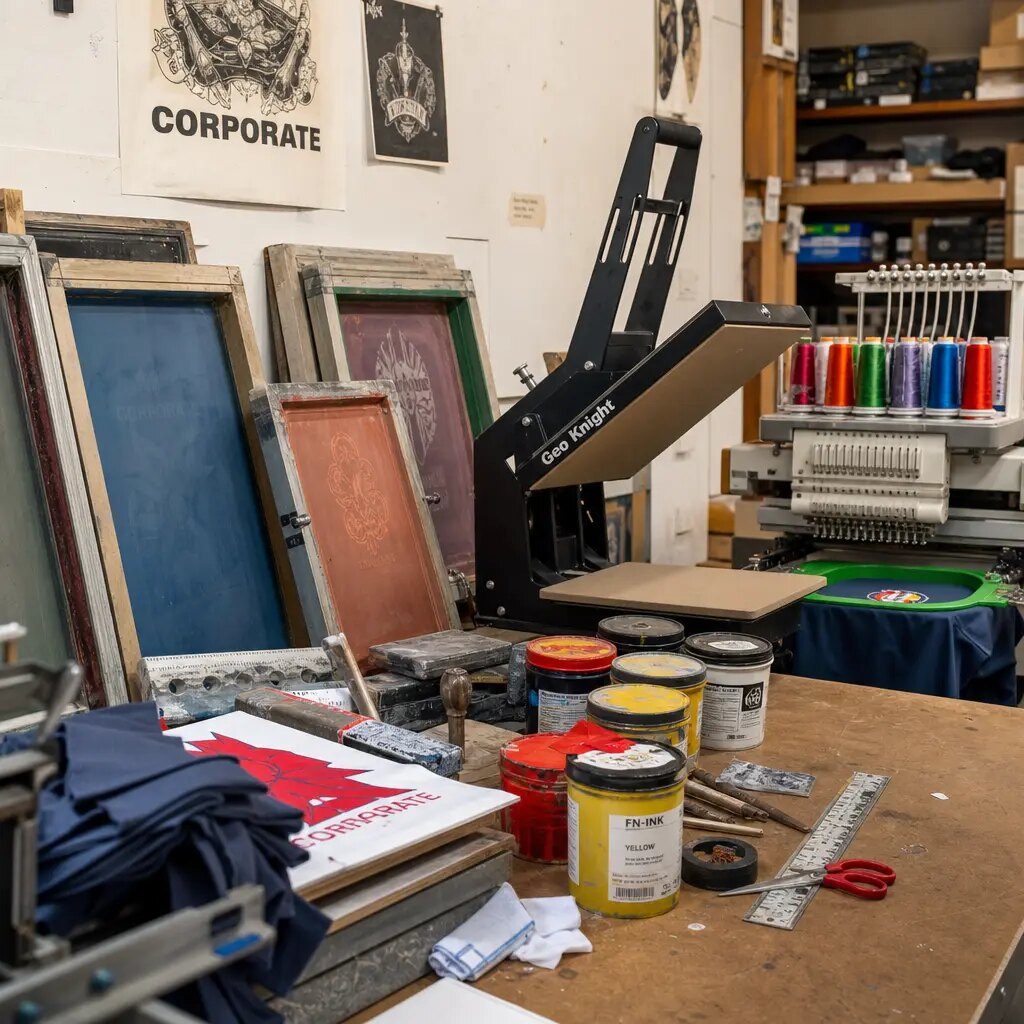
Most wholesale canvas wine carriers for eco apparel brands use restrained branding: a one-color logo, a short line of copy, a side label, or a hangtag. That simplicity is useful. The cleaner the artwork, the easier it is to protect lead time and repeatability. Screen printing is usually the practical bulk method for one- or two-color logos on canvas. It gives a familiar matte result, but the fabric texture has to be respected. Very fine lines, small serif text, halftones, and distressed marks can fill in, break up, or print unevenly on coarse canvas.
DTF or heat transfer can help when artwork is detailed, full color, or needed in a smaller run. The tradeoff is hand feel, film edge, flexibility, and performance on textured fabric. On natural canvas, a visible transfer edge can look less aligned with an eco product story. Embroidery can work well for a small premium mark, especially on a side panel, but dense embroidery may pucker lighter canvas. A woven side label is often a reliable, scalable branding option when the front print stays simple.
A digital mockup is not a production approval. At minimum, request a strike-off or printed pre-production sample on actual or bulk-intended canvas. Confirm ink color, opacity, print size, edge sharpness, placement, curing, folding behavior, and rub resistance. Measure placement from fixed reference points such as the top edge, side seam, bottom fold, or centerline. If artwork crosses a fold or sits near a gusset, decide in advance how much distortion is acceptable.
- Screen print: best for bulk one- to two-color logos and simple artwork.
- DTF or heat transfer: useful for detailed or short-run artwork, but test film edge, flexibility, hand feel, and rub performance.
- Embroidery: strong for small premium marks; check pucker, backing, stitch density, and thread color.
- Woven label: a low-risk branding route for repeat orders; confirm label MOQ, label lead time, fold type, and placement tolerance.
- Set print controls in writing: Pantone target, print size, placement tolerance, minimum line width, ink finish, opacity, curing method, and dry or wet rub expectation.
Control sustainability claims through documentation, not assumptions
Eco apparel brands often want the wine carrier to fit the rest of the brand’s material story. That makes sense. The important step is separating an eco-looking product from a claim that can be supported. Natural cotton canvas may look reusable and low-key, but it does not automatically support claims such as organic, recycled, biodegradable, carbon-neutral, or certified sustainable. If the claim will appear on a product page, hangtag, retailer form, packaging insert, or wholesale line sheet, you need the supporting documents before the purchase order is confirmed.
Documentation requirements vary by market, claim, and sales channel. A supplier declaration may be enough for a simple composition statement in some programs. Organic cotton or recycled content claims may require stricter chain-of-custody or transaction-related documentation. Retailer compliance may also require restricted substance testing, fiber composition reports, or colorfastness results. The safest approach is to tell the factory exactly what you need before the quote is approved. If documentation is requested later, the supplier may have to change fabric source, MOQ, price, and lead time.
Sustainability should also cover packing. Many eco apparel teams prefer to avoid individual polybags. That can work, but only if print protection and moisture control are addressed. A kraft separator, tissue sheet, carton liner, or belly band may be better than plastic for some orders. For other orders, no separator may be acceptable if ink curing and rub performance are confirmed. Treat the carrier and its packing as one system, not two separate decisions.
- Write the exact claim you plan to make and ask the supplier which documents support that wording.
- Distinguish composition documents, transaction documents, certifications, test reports, and supplier declarations.
- Confirm whether documents apply to the specific order lot, not only the supplier’s general capability.
- If individual polybags are not allowed, specify the alternative: kraft sheet, tissue separator, carton liner, moisture control, or no separator after testing.
- Put documentation requirements in the PO so they are part of the supplier deliverable, not a late-stage request.
Separate MOQ and price drivers before comparing suppliers
MOQ is rarely one simple number. It may be driven by fabric roll minimums, dye lot minimums, print setup, woven label minimums, carton printing, trim sourcing, sewing-line efficiency, or shipment segregation. One supplier may quote stock natural canvas with one-color screen print. Another may quote custom dyed fabric and woven labels. A third may include hangtag insertion, barcode stickers, and retail carton sorting. The unit prices will look different because the products are different.
For a first seasonal program, the lowest-risk route is usually stock natural canvas, one-color print, no custom trim, and flat export packing. This keeps approval steps manageable and reduces fabric lead time. Stock black canvas can also work, but white or light ink on dark canvas needs extra attention for opacity, curing, and rub-off. Custom dyed canvas should be used when brand color matching is important enough to justify lab dips, dye minimums, bulk shade approval, added cost, and more schedule risk.
Ask for a base quote plus alternates. That makes decisions visible. Fabric weight, print colors, print coverage, divider construction, base reinforcement, handle type, label method, hangtag insertion, barcode stickers, and packing method all affect price. If the budget needs to come down, simplify artwork, trim, or packing before weakening handle reinforcement or choosing fabric that is too light for bottle weight.
- Ask whether MOQ is per PO total, per style, per color, per artwork, per label version, per packing version, or per shipment destination.
- Request add-on pricing for woven labels, hangtag insertion, barcode stickers, kraft separators, belly bands, custom carton marks, and divider upgrades.
- Compare samples, setup charges, unit price, carton cube, inspection cost, freight estimate, and rework risk—not unit price alone.
- Do not compare a 10 oz plain-stitch quote with a 14 oz reinforced quote as if they are the same product.
- If several artwork versions are needed, confirm separate screens, setup charges, packing segregation, barcode rules, and carton labels.
Build a milestone lead time map instead of accepting one production number
A headline lead time such as “30 days” can be misleading. It may only describe the production window after all approvals are complete. It may not include fabric booking, lab dips, artwork correction, print strike-off review, sample transit, buyer approval time, print curing, final inspection, packing closeout, or freight booking. For procurement planning, the better question is not “How many days?” It is “What must be approved, by whom, and by which date?”
For standard stock-fabric wholesale canvas wine carriers, a practical planning range is often 35-50 days after final approval to ex-factory readiness. This is a planning window, not a guarantee. Custom dyed fabric, new woven labels, complex dividers, special retail packing, multi-destination carton segregation, or late changes can add 7-14 days or more. Buyer response time matters. If a strike-off sits with marketing for a week, that week disappears from the production buffer.
A useful milestone map includes owner, deadline, dependency, and impact. Fabric cannot be cut before final dimensions are approved. Print screens should not be made before artwork is frozen. Bulk sewing should not start while handle reinforcement is still under review. Packing instructions should be locked before finishing, not after cartons are filled. Procurement should set clear no-change dates for artwork, label copy, barcode data, carton marks, and shipment splits.
- Example stock route: RFQ clarification 2-3 days; artwork and layout comments 3-5 days; sample or strike-off 5-10 days; bulk production 20-25 days; final QC and packing 2-5 days.
- Custom dye route adds lab dip approval, bulk dyeing, shade review, fabric relaxation, and possible rework if shade fails.
- Trim route adds woven label, hangtag, insert card, barcode label, or special carton lead time.
- Plan backward from the warehouse need date, then add freight, customs, domestic delivery, 3PL receiving, and any kitting buffer.
- Treat late artwork, label, or packing changes as change orders with visible cost and timing impact.
Use sampling to prove production readiness, not just appearance
A development sample helps the team see shape and branding, but it may not prove the bulk order is ready. Sample rooms may use substitute fabric, a more experienced sewer, or a print method that is adjusted by hand. For wine carriers, the pre-production sample should confirm the real risk points: fabric behavior, finished dimensions, handle strength, divider alignment, print curing, label placement, and packing fold.
Stage sampling around what is still uncertain. If the team is choosing between single-bottle and two-bottle architecture, start with a blank fit sample. If fabric color and logo result matter most, request swatches and a strike-off. If sustainability documentation is central to the program, review documents before booking bulk fabric. The final pre-production sample should use bulk-intended material, final print method, final thread, final reinforcement, final trims, and final packing plan wherever practical.
Sample comments must be measurable. “Make it nicer” will not guide production. “Handle drop to be 13 cm +/- 0.5 cm” is actionable. So is “logo centerline to align with bag centerline within +/- 0.5 cm.” Approved samples should be photographed from front, back, side, inside, bottom, handle reinforcement, divider, print close-up, and packing fold. Keep those photos with the PO and inspection file.
- Approve dimensions, GSM swatch, print color, placement, handle construction, divider, label, trims, and packing method before bulk cutting.
- Ask for a filled sample review; skewing, divider pressure, and handle stress often appear only after a bottle is inserted.
- Use a ruler in approval photos so QC teams can compare actual measurements later.
- If natural specks are acceptable, define the acceptable level through the approved swatch or sample photo.
- Do not let a substitute-fabric sample become the final production standard unless the supplier clearly lists all differences.
Finalize packing and carton rules before production closes
Packing affects freight cost, product condition, and receiving accuracy, so it belongs in the RFQ stage. Canvas wine carriers are often most efficient when flat packed in export cartons. Flat packing improves carton density and makes counting easier. Some gift-ready styles, however, need a specific fold, a support insert, a belly band, tissue, or a separator. These choices add material, labor, and carton volume. They should be priced before the order is placed.
Print protection is a common issue. High-coverage screen prints, white ink on dark canvas, and transfers may need proper curing time and protection from compression. If cartons are packed too tightly, print panels can crease, ink can transfer, and handles can leave pressure marks on the logo area. Brands avoiding polybags should define the alternative rather than leaving it to the packing line. Options include kraft sheets, tissue separators, carton liners, belly bands, or no separator after confirmed rub testing.
Retailer and 3PL rules should be locked before packing begins. Barcode stickers, carton marks, assortment ratios, mixed-carton rules, carton dimensions, and gross weight limits can all create receiving problems if they are wrong. A practical carton gross weight target for manual handling is often 12-18 kg unless the buyer or retailer specifies otherwise. If one order ships to several destinations, carton segregation and labeling should be built into the production plan before final QC.
- Specify flat pack, fold direction, unit orientation, separator requirement, and whether individual polybags are allowed or prohibited.
- Define units per carton, carton size, carton board grade, gross weight cap, carton marks, barcode placement, and pallet rules if applicable.
- Check that handles and gussets are not crushed into the front logo panel.
- Scan barcodes before shipment if goods are routed to retail, marketplace, or 3PL inventory.
- Include open-carton and closed-carton photos in the final inspection record.
Specification comparison for buyers
| Spec decision | Recommended option | When it fits | Buyer risk to check |
|---|---|---|---|
| Finished dimensions | Single 750 ml carrier: commonly 10-12 cm W x 35-38 cm H x 8-10 cm gusset; two-bottle carrier: commonly 18-22 cm W x 35-38 cm H x 9-11 cm gusset. Set finished tolerance at +/- 0.5 cm for logo-facing panels and +/- 1.0 cm for less critical dimensions. | Standard Bordeaux and Burgundy bottle gifting, retail add-ons, winery collaborations, and holiday bundles. | Bottle formats vary. Champagne, sparkling wine, olive oil, or bottles with sleeves may need wider gussets and taller openings. Ask the supplier to fit-test using your bottle diameter, shoulder shape, and height before approving the pattern. |
| Fabric weight | 12 oz canvas, about 340 GSM, for most single-bottle retail carriers; 14 oz canvas, about 400 GSM, for two-bottle, structured, or premium gift use. Agree on GSM tolerance, commonly +/- 5% to +/- 8% depending on fabric source. | Balances structure, printability, sewing efficiency, carton density, and perceived quality for eco apparel brands selling or gifting wine carriers. | Some quotes use lighter fabric to reduce price. Confirm whether GSM is measured on finished cloth, whether washing or finishing changes weight, and whether the approved swatch is the control reference. |
| Canvas type | Plain-weave cotton canvas, combed cotton canvas for cleaner print surfaces, recycled cotton blend where documentation is available, or organic cotton canvas only when chain-of-custody evidence is required and budgeted. | Eco-positioned apparel brands that need a natural look without sacrificing handle strength or print clarity. | Open weave, heavy slub, or unstable fabric can distort logos, twist after cutting, or weaken handle areas. Define acceptable specks, slub, shade variation, and shrinkage before bulk fabric booking. |
| Handle construction | Self-fabric handles or cotton webbing, 2.5-3.5 cm width, with X-box reinforcement, bartack plus box stitch, or reinforcement patch. Handle drop commonly 10-15 cm for hand-carry wine bags. | Glass bottle carrying, retail use, gifting programs, and repeat handling by end customers. | Plain straight stitches can look acceptable in photos but fail under load. Require photos of stitch pattern, SPI range, thread type, and a loaded carry test using the intended bottle weight plus safety margin. |
| Bottle divider | For two-bottle bags, use same-fabric divider sewn into side seams and bottom seam, or a padded divider only when glass-to-glass protection is part of the brief. | Two-bottle wine gifting, corporate gift packs, tasting room retail, and mixed bottle bundles. | Loose floating dividers shift, twist, and allow bottle contact. Specify divider height, width, seam allowance, bottom anchoring, top finishing, and whether the divider is caught in side seams, base seam, or both. |
| Print method | Silk screen for one- to two-color logos; heat transfer or DTF for short runs or detailed artwork; embroidery or woven labels for small premium marks. Set print placement tolerance, commonly +/- 0.5 cm for front logo placement. | Screen print gives strong bulk economics and a familiar matte look on cotton canvas when artwork is simple. | Fine lines can bleed or fill in on coarse canvas. Large solid prints may crack, feel heavy, or transfer if under-cured. Request strike-off approval, Pantone target, line-width guidance, curing method, and dry/wet rub expectations. |
| Sustainability claim route | Stock natural cotton canvas for simplest eco aesthetic; recycled cotton blend or organic cotton only when documentation requirements are listed in the RFQ and PO. | Brands that must align packaging with apparel sustainability standards or retailer compliance requirements. | Do not rely on vague words such as eco, green, or sustainable. Ask which documents are available, whether they apply to the order lot, and whether the supplier can support the exact claim you intend to print or publish. |
| MOQ route | Use stock natural canvas with custom print for the lowest-complexity MOQ; use custom dyed fabric only when brand color matching is essential and the additional fabric minimum is acceptable. | Capsule launches, gift-with-purchase, pop-ups, event retail, winery partnerships, and pilot programs before repeat production. | MOQ may be per style, color, fabric, artwork, label, or packing version. Ask for the basis of MOQ and setup charges so suppliers are compared on the same order structure. |
| Packing method | Flat pack in export cartons. Add kraft separator, tissue, belly band, or recyclable divider only where print protection or retail presentation requires it. Keep carton gross weight within warehouse limits, often 12-18 kg unless otherwise specified. | Reduces cube and freight, improves counting, and supports eco apparel brands avoiding unnecessary individual polybags. | Over-tight packing can crease print panels, bend gussets, deform handles, or cause ink transfer. Specify units per carton, carton dimensions, gross weight cap, carton board grade, shipping marks, and barcode rules. |
Buyer checklist before sampling
- Confirm bottle format before RFQ: standard 750 ml wine, Burgundy, Bordeaux, champagne/sparkling, olive oil, spirits, or mixed gift set. Provide bottle diameter, height, shoulder shape, and filled weight if non-standard.
- State finished dimensions in centimeters: height, width, gusset, top opening, bottom construction, handle drop, handle width, divider height, and divider width. Add tolerances for each measurement.
- Specify fabric weight in GSM or ounces and define tolerance. Clarify whether the control value applies to greige cloth, finished cloth, dyed cloth, washed cloth, or approved bulk roll.
- Define composition and documentation: 100% cotton, recycled cotton blend, organic cotton, cotton-poly blend, or other material. List required certificates, test reports, declarations, and claim wording before quote approval.
- Choose fabric color route: stock natural, stock dyed, custom dyed to Pantone or lab dip, pigment dyed, or washed effect. Confirm shade tolerance and whether natural specks or slub are acceptable.
- Attach production-ready artwork files with print size, placement from seams, Pantone references, number of colors, line thickness, underbase requirements, and whether artwork may cross folds or gussets.
- Specify print method and testing expectation: screen print, DTF, heat transfer, embroidery, woven label, or combination branding. Ask for strike-off or printed PP sample on actual canvas.
- Choose handle construction: self-fabric, cotton webbing, X-box stitch, bartack, reinforcement patch, double-layer front panel, or base-to-handle continuous strap construction.
- Identify trims and inserts: woven side label, care label, hangtag, barcode sticker, insert card, bottle neck tag, price ticket, carton label, or retail belly band.
- Clarify MOQ by style, fabric color, artwork version, divider option, packing version, destination, and shipment split. Confirm any setup charges separately from unit price.
Factory quote questions to send
- What is the exact fabric specification quoted, including composition, weave type, yarn count if available, finished GSM, GSM tolerance, fabric width, shrinkage expectation, finishing process, and whether the cloth is stock or made to order?
- Is the quoted MOQ based on stock natural canvas, stock dyed canvas, or custom dyed fabric? Please break MOQ by style, color, artwork version, divider option, label version, packing version, and shipment split.
- Which print method is included in the price? What are the artwork limitations for minimum line width, small text, large solid areas, halftones, distressed effects, ink opacity, Pantone matching, and printing close to seams?
- Can you quote a base option and alternates, such as 12 oz versus 14 oz canvas, natural versus black canvas, one-color versus two-color print, woven label add-on, and single-bottle versus two-bottle divider construction?
- What handle attachment construction is included: X-box, bartack, plain lockstitch, reinforcement patch, double-layer panel, or continuous strap? What stitch per inch range and thread type do you normally use?
- What internal strength checks do you perform for wine carriers? Please describe the load test method, bottle weight used, test duration or cycles, and pass/fail criteria.
- Does the quoted price include bottle divider, bottom reinforcement, woven side label, care label, hangtag insertion, barcode sticker, insert card, belly band, tissue, kraft separator, or inner board support?
- What sample stages are available and which are chargeable: fabric swatch, blank fit sample, lab dip, print strike-off, printed development sample, size set sample, and pre-production sample?
- Will the pre-production sample be made from the same fabric lot or bulk-intended fabric, same print method, same thread, same handle construction, same divider, same label, and same packing fold planned for mass production?
- Please provide a milestone lead time split for fabric sourcing, dyeing if applicable, lab dip or strike-off approval, cutting, printing, print curing/resting, sewing, trimming, pressing, final QC, packing, carton marking, and ex-factory readiness.
Quality-control points to confirm
- Finished dimensions should be checked on approved inspection quantity with style-specific tolerance. Common targets are +/- 0.5 cm for front panel logo alignment, handle drop, and top opening; +/- 1.0 cm may be acceptable for height, width, and gusset depending on construction.
- Fabric GSM should be verified from approved bulk fabric, not only mill paperwork. If the agreed tolerance is +/- 5% or +/- 8%, inspection should record measured values and flag rolls outside tolerance before cutting where possible.
- Fabric composition and sustainability documentation must match purchase order wording. Marketing terms such as organic, recycled, low-impact, or biodegradable should not be used unless the agreed documentation supports the exact claim.
- Fabric appearance should be compared with the approved swatch. Define whether slub, seed specks, neps, shade bands, weaving bars, oil marks, mildew, odor, or heavy contamination are acceptable or rejectable.
- Print placement should follow approved artwork layout. Front logo placement normally needs tighter control than side gusset or inside-label prints; use measurements from top edge, side seam, bottom fold, or centerline.
- Screen print should show no major pinholes, smudges, heavy over-ink buildup, sticky surface, dye migration, obvious cracking, or ink transfer. Check after reasonable folding and dry rub; use wet rub if the product brief requires it.
- White or light ink on black canvas should be checked for opacity, curing, and rubbing because weak coverage and chalky rub-off are more visible on dark fabric.
- Handle stitching should be even, symmetrical, and reinforced. Loose threads, skipped stitches, broken stitches, weak bartacks, crooked X-boxes, and uneven handle placement should be classified as major defects for retail orders.
- Handle strength should be checked on filled samples using intended bottle weight plus a safety margin. New patterns, long handles, and two-bottle bags deserve extra load checks before shipment release.
- Two-bottle divider seams should be secure at top and bottom connection points. Reject twisting, loose floating panels, divider misalignment that prevents bottle insertion, or seams that pull open under load.