Start the RFQ with carton planning, not only bag dimensions
Canvas wine carriers for craft fairs are often ordered as simple promotional bags, but the receiving problem is usually carton planning. A buyer approves a nice sample, then discovers that the bulk cartons are too heavy for booth handling, too bulky for storage behind a retail stall, or too loosely packed for ocean freight. The RFQ should connect the product specification to the carton plan from the first quote round.
For craft fairs, distributors and brand owners usually need fast unpacking, clean presentation, and predictable replenishment. A carton of 200 wrinkled carriers may look efficient on paper but can waste booth labor if every piece needs reshaping. A carton of 50 may be easier to handle but can increase carton count, labels, storage space, and inland freight. The best plan balances unit cost, carton CBM, gross weight, and the way staff will actually use the carriers at the event.
- Include target units per carton in the RFQ, but allow the factory to propose a packing trial based on folded size.
- State the maximum carton gross weight your warehouse or event team can handle.
- Request carton CBM so logistics can compare air, LCL, FCL, and domestic forwarding options.
- If cartons will be opened at a booth, specify whether inner bundles should be 10, 20, 25, or 50 pieces.
Choose canvas weight based on bottle load and folding behavior
For wine carriers, fabric weight is not just a marketing description. It affects load capacity, print appearance, folding thickness, carton quantity, and landed freight cost. Many buyers request canvas without stating GSM or ounces, then receive quotes based on different materials. A 6 oz promotional cotton bag and a 12 oz canvas wine carrier are not comparable even if both are called canvas by different suppliers.
A practical range for craft fair wine carriers is often 10 oz to 12 oz cotton canvas, approximately 280-340 GSM. This gives enough body for a filled bottle while still folding flat for export. Heavier 14 oz or 16 oz canvas can look premium but may reduce pieces per carton and create bulky handle seams. Lighter 7 oz to 8 oz fabric may work for giveaways, but it can feel weak around the bottle base and may not stand well on a booth table.
- Use 280-300 GSM when price and carton efficiency are more important than rigid structure.
- Use 320-340 GSM when the carrier must feel retail-grade and hold one or two bottles securely.
- Use heavier canvas only when the buyer accepts higher freight volume and thicker folded bundles.
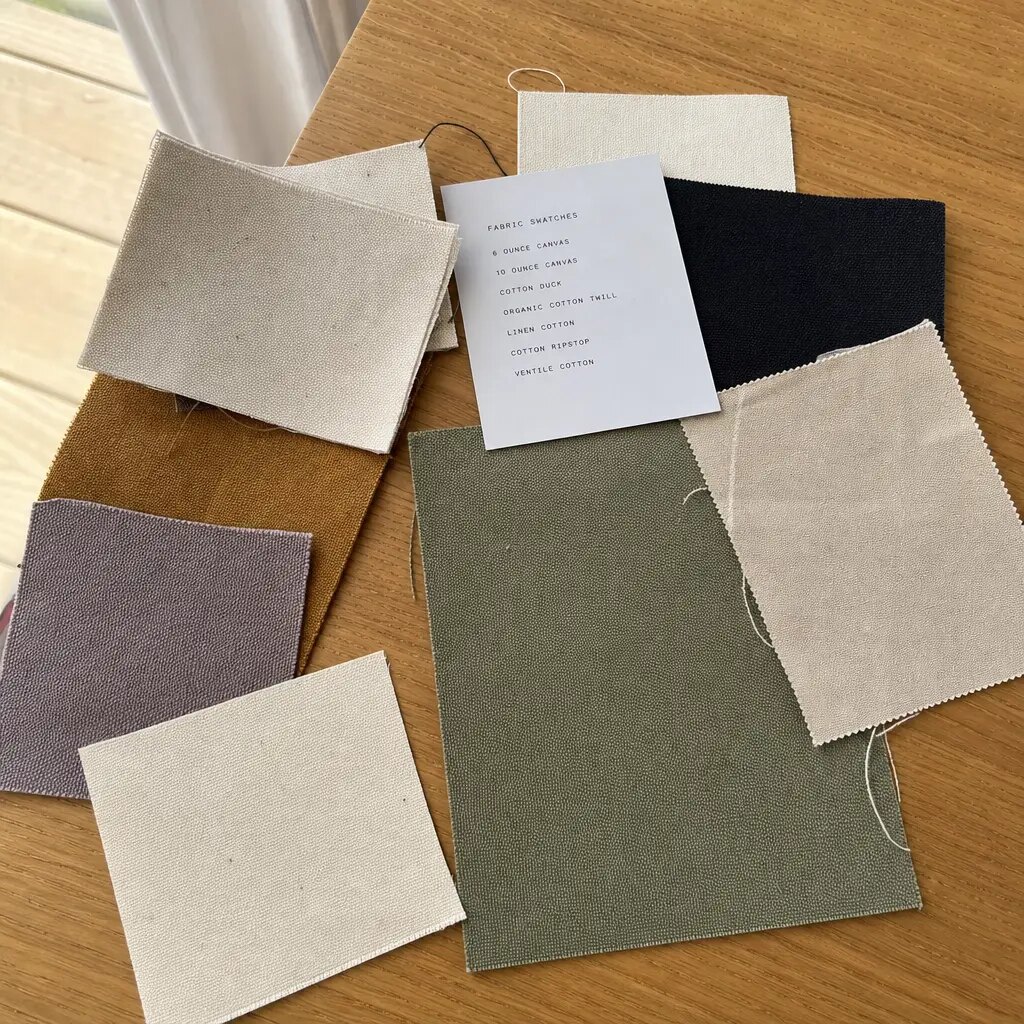
- Request actual fabric swatches because natural canvas shade and slub level vary between mills.
Match the carrier format to craft fair selling conditions
A single-bottle canvas wine carrier is usually the lowest-risk style for craft fairs because it folds flat, packs efficiently, and works with most standard 750 ml bottles. It is suitable for wineries, distilleries, gift vendors, and local food brands that want a reusable bag with a logo. The main specification points are body height, bottle diameter allowance, handle opening, and bottom reinforcement.
Two-bottle and four-bottle carriers need more careful planning. Dividers add material and labor, and they change how the unit folds inside the carton. If the divider is too low, bottles may knock together; if it is too high or too stiff, the carrier may not fold cleanly and can create carton bulging. For gift sets, the buyer should define the exact bottle range and whether the carrier will be displayed empty, filled at point of sale, or sold as part of a bundled product.
- Single-bottle carrier: best for lower MOQ, simple branding, and high carton efficiency.
- Two-bottle carrier: best for gift sets, but divider design must be tested with real bottles.
- Four-bottle carrier: useful for retail packs, but carton volume and handle strength need extra attention.
- Champagne or spirits bottles: require separate fit testing because shoulder and base dimensions differ from standard wine bottles.
Plan logo printing around seams, folds, and carton pressure
Screen printing is the common choice for canvas wine carriers when the artwork is a solid brand mark, event logo, or simple message. It gives good coverage on natural canvas and is cost-effective at bulk quantities. For craft fairs, one or two print colors are usually easier to control than full-color artwork, especially when the print surface has fabric texture. Heat transfer can handle more detail, but it may feel less natural and can react differently to carton compression.
The print position should be decided together with the folding method. A logo placed directly over a fold line can show cracking, ink stress, or deep crease marks after export packing. A print too close to the bottom may disappear when the bag is filled and placed on a table. A print too close to handle stitching may shift because the panel is harder to register during sewing. The artwork approval should include print size, print location, color reference, and a photo of the folded printed sample.
- Keep important logo details away from side seams, bottom corners, handle attachment, and divider stitch lines.
- For screen print, specify Pantone color or approved ink drawdown rather than relying on a digital file.
- For natural canvas, expect slight shade variation and fabric texture to show through fine print details.
- For multi-logo craft fair orders, separate setup charges by logo version and print color count.
Build MOQ logic that reflects real production costs
MOQ for canvas wine carriers is usually driven by fabric procurement, cutting efficiency, sewing line setup, printing setup, and packing version. A supplier may accept a small quantity if the fabric is stock natural canvas and the body pattern is existing. The same quantity becomes less attractive when the buyer requests dyed fabric, custom woven labels, multiple artwork versions, or special carton bundling.
For procurement teams, the cleanest RFQ structure separates the base carrier MOQ from decoration MOQ. For example, one body style in natural 12 oz canvas may be produced in a larger batch, then split into several screen print designs. This can work if the print areas and packing requirements are similar. If every design also has a different label, divider, hangtag, or carton count, the factory will price it as multiple small jobs rather than one efficient bulk order.
- Group orders by same body style, same canvas weight, same fabric color, and same packing plan.
- List each logo version with quantity, print colors, and print position.
- Avoid mixing many small artwork versions unless the event program truly needs them.
- Clarify whether overruns or underruns are acceptable, especially for custom dyed fabric or printed labels.
Use the sample stage to test packing, not only appearance
A photo sample can show the general look, but it does not prove that the carrier will survive the selected packing method. A proper pre-production sample should use the actual canvas weight, actual handle reinforcement, actual print method, and actual folding style. If the product has a divider, the divider should be sewn exactly as bulk production will be sewn, not simplified for sample speed.
For carton planning, the sample room should fold several pieces and simulate a bundle. Even a small trial can reveal whether the handles create uneven thickness, whether the printed panel rubs against another printed panel, and whether the divider causes the carton to bulge. Buyers who approve only a flat beauty photo often miss the issues that appear after 30 days in export cartons.
- Approve one open sample for appearance and one folded sample for packing behavior.
- Request photos of front, back, inside, handle stitching, bottom seam, divider, and folded unit.
- Measure the sample with an actual bottle inserted and again after it is folded flat.
- Keep an approved sample at the factory and one with the buyer for final inspection reference.
Set carton dimensions by weight, volume, and booth handling
The best carton size is not always the carton with the most pieces. For wine carriers, folded handles and bottom seams create uneven pressure. If the carton is overfilled, the carriers can develop hard creases or print transfer. If it is underfilled, cartons can crush during stacking, and the carrier bundles can shift during transit. Export packing should keep the goods stable without forcing the fabric into a shape that damages retail appearance.
For craft fair distribution, carton gross weight is especially important. Event staff may move cartons from vans to booths without warehouse equipment. A carton below about 15-18 kg gross weight is often more manageable, though the exact target depends on local handling rules. Buyers should also consider how many carriers are needed per booth day. If each booth uses 100 carriers, inner bundles of 25 or 50 can reduce counting time and keep the remaining stock clean.
- Require carton dimensions in centimeters and CBM per carton in the quote.
- State preferred inner bundle quantity for booth or retail replenishment.
- Avoid carton plans that rely on extreme compression to reach a lower CBM.
- Request carton board strength suitable for export stacking, not only domestic storage.
Compare quotes using total landed cost, not unit price alone
A low unit price can become expensive when the carton plan is inefficient. Two suppliers may quote the same canvas wine carrier at a similar FOB price, but one packs 100 pieces per carton at 0.08 CBM and another packs 60 pieces per carton at 0.075 CBM because the handles are bulkier. Without carton data, the buyer cannot calculate sea freight, storage space, pallet positions, or domestic parcel forwarding cost.
Quote comparison should include unit price, sample cost, print setup, fabric surcharge, label cost, carton count, CBM, gross weight, payment terms, lead time, and inspection readiness. For distributors shipping to multiple craft fair locations, carton labeling and inner bundle size may also affect labor cost. A slightly higher factory price can be better if the packing is cleaner, the carton weight is manageable, and the goods require less repacking after arrival.
- Calculate cost per usable carrier after estimated defect allowance, not only factory unit price.
- Compare CBM per 1,000 pieces to understand freight impact.
- Compare gross weight per carton to understand handling and forwarding cost.
- Include repacking labor risk if the supplier cannot pack by event or booth allocation.
Define acceptance criteria before bulk production starts
Canvas products have natural variation, but buyers still need measurable acceptance criteria. The factory and buyer should agree on size tolerance, print position tolerance, stitch quality, fabric defects, color shade range, and carton quantity. Without written criteria, inspection becomes subjective and disputes happen too late, when the goods are already packed.
For wine carriers, functional QC is more important than cosmetic perfection alone. A tiny slub in natural canvas may be acceptable, but a weak handle seam is not. A slight print texture may be normal on canvas, but ink smears on the logo are not. Carton inspection should include carton count, inner bundle count, label accuracy, and damage from compression. The approval sample should be the standard, but the purchase order should still list measurable limits.
- Size tolerance: define body height, width, gusset, and handle length tolerance.
- Stitching: reject broken stitches, skipped seams, loose thread clusters, and weak bar tacks.
- Print: define acceptable registration, ink coverage, position tolerance, and color reference.
- Packing: verify pieces per inner bundle, pieces per carton, carton label, and carton sealing.
Protect the schedule from fabric, print, and packing delays
Lead time for canvas wine carriers depends on fabric availability, sample approval speed, printing complexity, sewing capacity, and packing requirements. Stock natural canvas can move faster than dyed canvas or custom color fabric. Multiple logo versions add setup time and increase the chance of artwork mistakes. A tight craft fair deadline should include buffer time for sample shipping, buyer approval, production inspection, export booking, and local distribution.
The schedule should be written as milestones rather than one vague delivery date. Useful milestones include artwork confirmation, fabric booking, sample completion, sample approval, cutting, printing, sewing, packing trial, final inspection, and cargo ready date. If carton planning is important, do not leave packing approval until the final week. A carton trial should happen before bulk packing, while there is still time to adjust bundle count, carton size, or print protection.
- Allow extra time for dyed canvas, washed canvas, embroidery, custom labels, or multi-destination carton labels.
- Freeze artwork before fabric cutting if print position depends on panel size.
- Book inspection after goods are packed but before final shipment release.
- For fixed event dates, work backward from required warehouse arrival, not from factory completion.
Specification comparison for buyers
| Spec decision | Recommended option | When it fits | Buyer risk to check |
|---|---|---|---|
| Canvas weight | 10 oz to 12 oz cotton canvas, roughly 280-340 GSM | Craft fair retail packs that need a natural handfeel, enough structure, and acceptable folding for carton efficiency | Very light canvas can collapse around the bottle; very heavy canvas increases carton weight and may reduce units per carton |
| Bottle format | Single-bottle carrier for fastest packing; two-bottle carrier with center divider for gift sets | Single-bottle fits winery giveaways and small merchant booths; two-bottle fits premium bundles or holiday stalls | Divider height must prevent bottle knock; carton plan changes because two-bottle carriers are bulkier and harder to flatten |
| Handle construction | Integrated cut-and-sew handles or webbing handles with bar tack reinforcement | Integrated handles keep a clean retail look; webbing handles suit heavier bottles and repeated carrying | Handle seam strength is the common failure point; require pull testing and clear stitch density |
| Print method | Screen print for solid logos; heat transfer only for detailed color art; embroidery for small premium marks | Screen print is usually best for craft fair logos, winery branding, and sponsor marks | Thick ink can crack on folded areas; artwork must avoid handle seams and side gusset creases |
| Carton packing style | Flat folded carriers packed by bundle count with inner polybag or paper band | Best for importers, distributors, and event buyers who need predictable carton count and clean booth replenishment | Over-compression can crease prints, deform dividers, or create dirty fold marks on natural canvas |
| Master carton size | Export carton sized to avoid over 15-18 kg gross weight and excessive void space | Works for mixed retail shipments, pallet loading, and small parcel forwarding after arrival | A carton that is too large may crush during transit; a carton that is too heavy creates warehouse handling complaints |
| MOQ logic | One MOQ by fabric color and body size, with print MOQ separated by logo version | Useful when a buyer needs several craft fair designs on the same carrier base | Suppliers may quote one low MOQ but add high setup charges for each print color, logo, or packing version |
| Sample approval | Pre-production sample with actual canvas, actual print, handle reinforcement, divider, folding method, and carton packing sample | Needed before bulk production when booth display, gifting, or retail resale quality matters | A loose photo approval does not verify carton fit, creasing, or how the item looks after being folded for export |
Buyer checklist before sampling
- Define bottle type and diameter: standard 750 ml wine bottle, champagne bottle, slim spirits bottle, or mixed bottle range.
- Choose carrier format: single-bottle, two-bottle, four-bottle, with or without internal divider.
- Specify canvas weight in oz and GSM, not only the word canvas.
- State whether the fabric is natural, dyed, washed, or bleached because shrinkage, color, and print absorption change.
- Place the logo on a flat panel away from handle seams, bottom fold lines, and divider stitch lines.
- Confirm print method, print colors, artwork size, Pantone references, and whether a test print is required.
- Set handle reinforcement requirements such as X-stitch, box stitch, bar tack, stitch count, and pull strength target.
- Request folded dimensions and packed dimensions per unit before approving master carton size.
- Limit carton gross weight to a warehouse-friendly range, commonly below 15-18 kg unless your receiving team accepts heavier cartons.
- Require a packing trial photo showing unit folding, bundle count, inner packing, carton fill, and carton label.
Factory quote questions to send
- What canvas weight in oz and GSM will you use, and is the fabric stock greige, natural finished, dyed, or custom woven?
- What is the MOQ by body style, fabric color, print design, and packing version?
- What are the finished dimensions of the carrier, handle length, gusset width, divider height, and folded unit size?
- How many pieces fit in one export carton, and what are the carton dimensions, net weight, gross weight, and cubic meters per carton?
- Can you provide a carton packing photo from a real sample trial before we release bulk production?
- Which print method do you recommend for our artwork, and what is the maximum print area without crossing seams or fold lines?
- What handle reinforcement will be used, and what pull test or load test do you normally apply for wine carriers?
- Will the carriers be packed flat, semi-open, rolled, or nested, and how will the print surface be protected from rubbing?
- What is the sample lead time, bulk production lead time, and extra time required for dyed fabric, custom labels, or multiple logo versions?
- What quote terms are included: unit price, print setup, sample fee, carton cost, export packing, FOB port, and estimated production ready date?
Quality-control points to confirm
- Finished size tolerance should normally be controlled within about +/- 1 cm for body dimensions unless a tighter retail display fit is required.
- Canvas GSM should be verified against the approved sample; large weight differences can change handfeel, strength, and carton quantity.
- Bottle fit should be tested with the buyer's target bottle type, including shoulder height and base diameter.
- Handle attachment should survive repeated lifting with a filled bottle, with no skipped stitches, thread breakage, or seam tearing.
- Divider alignment must prevent bottles from knocking directly against each other in multi-bottle styles.
- Print position tolerance should be defined, commonly within +/- 5 mm for simple front logos when panel cutting is consistent.
- Ink coverage should be even, with no major pinholes, ghosting, fabric contamination, or cracking after folding.
- Carton count should match the approved packing plan; random cartons should be opened to verify bundle quantity.
- Carton board strength, tape sealing, and label information must match the shipping route and receiving warehouse requirements.
- Packed samples should be inspected after 24-48 hours under carton compression to identify print transfer, deep creasing, or shape deformation.