1. Why coffee roasters need a stricter wine-carrier checklist
Coffee roasters buy canvas wine carriers for more than wine. They are used for holiday corporate gifts, cafe retail bundles, bottled coffee concentrate, cold brew, syrup sets, olive oil collaborations, wholesale thank-you packs, tasting-room merchandise, and subscription add-ons. The carrier is small, but it sits close to the roaster's brand promise. It must look intentional, hold a concentrated glass-bottle load, arrive clean, and meet the documentation expectations of importers, retailers, corporate buyers, or internal procurement teams.
The sourcing risk is that a canvas wine carrier can be mistaken for a narrow tote bag. It is not. A bottle carrier concentrates weight at the bottom seam, handle attachments, upper hem, side seams, and divider if there are two bottles. A tote may carry soft goods that shift and distribute weight. A bottle is rigid, heavy, and often made of glass. A 750 ml glass wine bottle commonly weighs around 1.2-1.6 kg when filled, depending on bottle weight. Two bottles can bring the carried load to roughly 2.4-3.2 kg before inserts or accessories. That load is still manageable for a well-made carrier, but it is enough to expose weak bartacks, narrow handles, poor seam allowance, or lightweight fabric substitution.
Supplier compliance also fails when the quote is not tied to the physical product. A low-price offer may say "cotton canvas" without finished GSM, "screen print" without curing and placement tolerance, or "standard packing" without carton quantity or SKU rules. Generic certificates may not match the actual fabric lot, ink, webbing, or sewing site. For B2B buyers, the compliance checklist should create a traceable decision trail: approved bill of materials, approved bottle fit, approved logo method, approved construction, approved packing, and final inspection evidence.
- Procurement objective: prove the carrier can safely hold the intended bottle load, present the brand consistently, and pass receiving without relabeling or disputes
- Common failure points: underspecified fabric GSM, weak handles, loose dividers, wrong bottle fit, print placement drift, odor, wet cartons, and generic compliance documents
- Best starting point: define the bottle and loaded weight before choosing fabric, logo method, or supplier
- Do not approve from a photo alone: require construction measurements, inside photos, loaded-bottle photos, and a signed sample or PP approval record
2. Build the RFQ around the bottle, not the bag photo
A strong RFQ begins with the bottle geometry. Provide total bottle height, widest body diameter, base diameter, shoulder shape, cap or closure height, and filled weight. A standard 750 ml wine bottle differs from a squat cold brew bottle, tall syrup bottle, olive oil bottle with a wide shoulder, or heavy champagne-style bottle. If the carrier will hold a bottle plus a coffee bag, recipe card, chocolate bar, or tasting spoon, mock up the full gift set and calculate the actual loaded weight.
Finished bag dimensions should be specified with tolerances. For many single 750 ml bottle carriers, a finished body width of about 12-14 cm, gusset of 8-10 cm, and height of 34-38 cm can be a useful starting range, but it is not a universal standard. A wide-base bottle or gift insert may require more gusset. A carrier designed to cover more of the bottle neck may need extra height. A two-bottle carrier should not be made by simply widening a single-bottle pattern; it needs enough width for two bottle diameters plus divider thickness and seam allowance.
The RFQ should define how the bag should behave in use. Some cafe retail programs need the empty bag to stand upright on a shelf before bottles are inserted. That may require heavier canvas, a squarer gusset, a base insert, or tighter bottom construction. Other programs only need the carrier to stand once loaded. This difference affects unit cost, packing volume, inspection criteria, and customer presentation. If upright performance matters, state whether it applies empty, loaded, or both.
- RFQ dimensions to include: finished height, front width, gusset, opening width, handle drop, handle width, divider width, and logo placement from fixed seams
- Bottle data to include: height, widest diameter, base diameter, shoulder shape, closure type, filled weight, and whether condensation or refrigeration is expected
- Practical sewn-bag tolerance: often ±0.5-1.0 cm for dimensions, depending on size and construction; confirm before bulk production
- Logo placement tolerance: often around ±0.5 cm for simple screen-printed panels, but only if the supplier agrees and the reference points are clear
3. Specify canvas fabric by finished GSM, composition, and finish
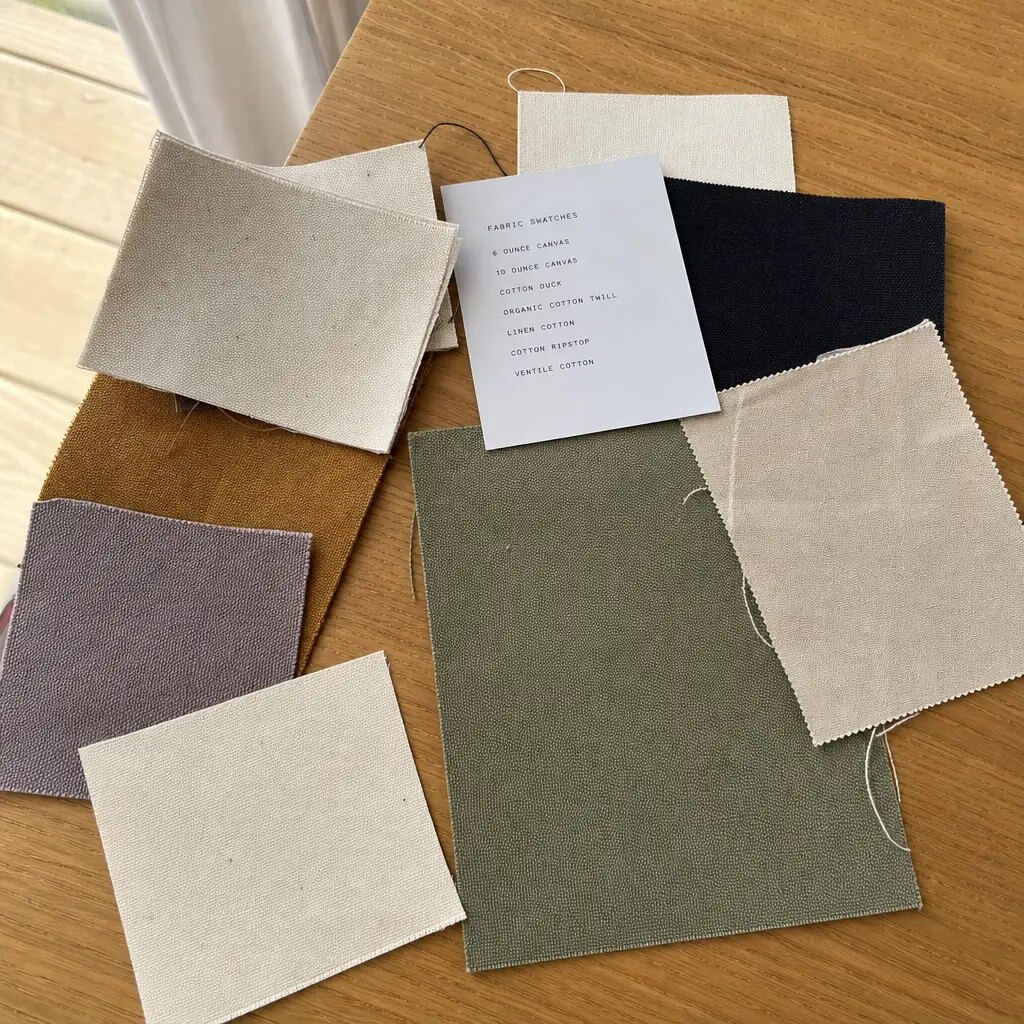
Do not source with descriptions such as "heavy cotton" or "premium canvas". They are not purchasing specifications. Ask for finished fabric weight in GSM or oz, composition, weave, finish, and tolerance. For many single-bottle carriers, 280-340 GSM cotton canvas is a practical working range because it balances body, printability, sewing speed, cost, and freight. For two-bottle carriers, premium dyed styles, or bags expected to stand more firmly, buyers may evaluate 340-400 GSM or add reinforcement rather than relying only on heavier fabric.
Finished weight matters more than greige or pre-finished weight. Dyeing, washing, coating, or finishing can change handfeel, shrinkage, and shade. If the supplier quotes custom dyed canvas, require lab dip approval and define acceptable shade variation under a consistent light source. If the carrier is natural canvas, ask whether the supplier uses bleached, unbleached, or semi-bleached fabric because the base tone will affect logo color. Natural cotton may show slubs or small weave irregularities; define what is acceptable so normal material character does not become a dispute.
If recycled cotton or organic cotton is part of the marketing claim, documentation must support that claim. Procurement should not let sales language drive the product unless the claim can be backed by the required certificates or transaction documents for your channel. If sustainability language is used on retail packaging, align marketing, legal, and supplier evidence before approving bulk materials.
- Minimum fabric line in RFQ: 100% cotton canvas or stated blend, finished GSM, color route, finish, shrinkage expectation, shade tolerance, and approved sample reference
- Typical fabric choice: 280-340 GSM for many single-bottle gift carriers; 340-400 GSM or reinforcement review for heavier two-bottle or premium retail styles
- Useful tolerance: finished fabric weight ±5% from approved bulk standard unless another range is written and accepted
- Red flags: fabric weight listed only before finishing, unclear blend, no lot reference, supplier refuses actual fabric sample, or certificates do not match the quoted material
4. Engineer handles, seams, and dividers for load-bearing use
Handles are often the most important construction decision. Cotton webbing handles are usually more consistent than narrow self-fabric handles for bottle carriers, especially when the carrier holds glass. A practical webbing width is commonly 25-35 mm for comfortable hand carry, although the exact width depends on the product style and price point. The RFQ should state handle drop, webbing width, reinforcement method, thread color, and whether handle ends are folded under, enclosed in the seam, or exposed inside the bag.
Reinforcement should be visible and repeatable. Bartacks or X-box stitching must be placed where load transfers from the handle into the bag body. A decorative stitch pattern is not the same as structural reinforcement. During sampling, inspect for skipped stitches, loose bartacks, needle cuts, seam grin, and handle ends that pull or fray. Ask the supplier to show handle close-ups before and after the bag is loaded with the intended bottle weight.
Two-bottle carriers need additional control. The divider should prevent bottle-to-bottle contact and keep the load balanced. A divider attached only at the top may shift, twist, or allow bottles to hit at the base. Better construction usually anchors the divider at the bottom and side or integrates it into the bag structure so it remains centered under load. Require interior photos with both bottles inserted. If the bag is intended for quiet premium gifting, bottle clinking during normal hand carry should be treated as a functional defect.
- Handle specs to request: material, width in mm, finished drop, stitch pattern, thread size if available, bartack count, and handle-end finish
- Seam specs to verify: seam allowance, stitch density, thread color, bottom seam reinforcement, top hem construction, and inside seam cleanliness
- Divider specs to verify: material, height, width, top finish, bottom anchoring, side attachment, and loaded bottle separation
- Inspection trigger: any missing bartack, open seam, or handle seam break should be treated as critical for a glass-bottle carrier
5. Match branding method to canvas texture and buying channel
One-color screen printing is often the most practical branding method for coffee roasters. It suits simple logos, holiday marks, roaster names, event messages, and cafe retail graphics. It also keeps MOQ and setup complexity manageable. The buyer should approve the print on actual canvas because natural fabric tone can warm or dull the color compared with a digital proof. Darker inks such as black, navy, dark green, or dark brown are usually easier to control than pale colors close to the canvas base.
For detailed logos, woven labels can be more reliable than pushing fine lines into a large ink print on textured canvas. Embroidery can look premium but may pucker lighter fabrics unless properly backed and stabilized. Heat transfer can support full-color graphics, but buyers must approve edge film, handfeel, fold behavior, and whether the finish matches the brand's sustainability positioning. A plastic-feeling transfer on a natural canvas gift carrier may be technically acceptable but commercially wrong for a specialty coffee brand.
Print tolerances need to be measurable. Define the logo size, color, print area, reference point, and placement tolerance. For example, the center of the logo may need to sit 8.0 cm below the top edge and centered on the front panel, with ±0.5 cm placement tolerance. If the carrier is packed folded, make sure the print does not sit directly on a hard fold line unless a fold test has been approved.
- Best default for many roasters: one-color screen print on natural or dyed canvas with physical strike-off if brand color matters
- Premium branding mix: small woven side label plus restrained front print or hangtag for retail storytelling
- Check before approving: ink opacity, curing, rub resistance, print feel, edge sharpness, placement, and whether folds mark the print
- Quote separately: screen setup, second color, Pantone matching, strike-off, embroidery tape, woven label MOQ, and logo revision fees
6. Define compliance documents that actually connect to the order
Supplier compliance is not a folder of unrelated certificates. It is evidence tied to the specific canvas wine carrier your company is buying. At minimum, ask for a bill of materials that lists body fabric, handle webbing, divider fabric, thread, ink or embroidery thread, labels, hangtags, inserts, and packaging materials. Then ask what documents can be connected to those materials. Depending on market and customer requirements, this may include fabric composition declarations, restricted-substance statements, ink declarations, test reports, or supplier self-declarations.
The production site also matters. Confirm whether cutting, printing, washing, embroidery, sewing, inspection, and packing are done in-house or outsourced. Outsourcing is not automatically a problem, but hidden subcontracting is. If the print house changes after approval, color, curing, placement, and compliance evidence may change too. If the sewing site changes, seam quality and handle reinforcement may change. Require written approval for any change to production site, fabric lot, print method, or major trim after PP sample approval.
Coffee roasters should treat these carriers as food-adjacent packaging when they are shipped or stored near sealed coffee, syrups, or consumable gifts. The textile may not be intended for direct food contact, but odor, mildew, lint, or chemical smell can still damage the customer experience. Add odor control, clean handling, dry packing, and contamination checks to the spec. If your retailer, distributor, or corporate client has restricted-substance or packaging rules, share them before sampling so the supplier does not develop an unapproved material route.
- Request at quotation stage: factory name, process flow, BOM, material spec sheet, trim list, ink or print declaration, and sample production route
- Tie documents to materials: fabric report should match the body fabric; ink declaration should match the print method; label evidence should match the label used
- Require change control: no unapproved change to fabric lot, handle webbing, print method, divider material, label, factory, or packing method
- Food-adjacent controls: no strong odor, mildew, oil stains, wet cartons, excessive lint, dirty surfaces, or packing materials that contaminate gift sets
7. Normalize MOQ and quote comparison before choosing a supplier
MOQ for canvas wine carriers is usually not one number. It depends on body fabric color, fabric route, handle color, print design, label type, divider construction, packing method, and shipment plan. A low MOQ may apply only to natural canvas, stock webbing, one-color print, one size, no divider, and standard master cartons. Custom dyed fabric, custom webbing, embroidery, woven labels, multiple SKUs, barcode labels, or retail-ready packing can each create a separate MOQ or setup cost.
Quote comparison should be normalized line by line. One supplier may quote 300 GSM natural canvas with a simple top-hem handle attachment. Another may quote 340 GSM canvas with 30 mm cotton webbing, bartacks, and SKU-pure cartons. These are not the same product. Require every supplier to complete the same spec grid and separate all costs: unit price, sample fee, setup fee, print strike-off, label cost, hangtag, barcode label, inner packing, carton marks, inspection support, and extra packing labor.
Landed cost also matters. Heavier canvas increases both material cost and shipping weight. Large cartons can increase freight volume. Individual polybags keep products clean but add cost and may conflict with plastic-reduction policies. SKU-pure cartons can raise packing complexity but reduce warehouse labor and receiving errors. Procurement should compare the total cost to receive and use the goods, not only the ex-factory unit price.
- Lowest-complexity route: natural canvas, stock webbing, one size, one-color screen print, no divider, flat packing, standard carton marks
- MOQ triggers: custom dye, custom handle color, woven labels, embroidery, divider, multiple artwork versions, barcode labels, retail packout, and special carton requirements
- Quote grid fields: fabric GSM, fabric route, handle construction, logo method, divider, label, packing, carton quantity, sample cost, setup cost, MOQ by SKU, and production lead time
- Commercial rule: if two quotes differ by more than a small amount, first check whether they are actually quoting the same material, construction, and packing
8. Use sample approval gates that test function and production repeatability
A canvas wine carrier sample is a working prototype, not a decoration proof. Load it with the intended bottle, lift it by the handles, carry it briefly, set it down, remove and reinsert the bottle, and inspect stress points. For two-bottle carriers, load both bottles and check divider position, balance, twisting, and bottle-to-bottle contact. If your product is a syrup, cold brew, olive oil, or coffee concentrate bottle, use a bottle with matching diameter and filled weight rather than a random wine bottle.
A disciplined approval path usually includes artwork layout, construction sample, print strike-off if color matters, PP sample made with intended bulk materials, sealed sample, first-piece inspection, and packed-carton approval. The PP sample should not be made from a convenient substitute fabric unless the buyer knowingly accepts the risk. If bulk fabric will be dyed, washed, or finished differently, approve a sample from the bulk route before mass production begins.
Sample comments should be measurable. "Make it stronger" is not a production instruction. "Use 30 mm cotton webbing with X-box reinforcement and two bartacks per handle end" is. "Logo too low" is vague. "Move logo center 1.5 cm upward; final position 8.0 cm below top edge, tolerance ±0.5 cm" is actionable. The final signed spec should include measurements, photos, tolerances, materials, print details, and packing rules.
- Test during sampling: bottle fit, loaded lift, short carry, shelf standing, divider stability, print rub, fold marks, odor after unpacking, and carton packing
- Measure during sampling: height, width, gusset, handle drop, handle width, divider width, logo size, logo distance from seams, and carton quantity
- Approve in writing: fabric, color, handle construction, divider, logo method, print placement, label placement, inside seams, carton marks, and packing method
- Keep as evidence: sealed sample, dated approval photos, final artwork file, BOM, tolerance sheet, and supplier-signed production specification
9. Set final inspection criteria inspectors can apply consistently
Inspection should separate functional defects from normal material variation. Natural canvas can have slubs, small weave irregularities, and slight tone variation. Those may be acceptable if they match the approved standard. They are not comparable to open seams, broken handles, missing dividers, wrong logo, strong odor, mold, or incorrect carton labels. A clear defect classification prevents subjective arguments during final inspection and receiving.
Critical defects are issues that make the product unsafe, unusable, non-compliant, or wrong for shipment. Examples include handle failure, open bottom seam, missing divider on a two-bottle SKU, wrong artwork, severe odor, mildew, contamination, wet cartons, and cartons marked with the wrong SKU. Major defects are issues that damage brand presentation or saleability: crooked logos beyond tolerance, print smearing, loose divider anchoring, obvious shade mismatch, handle placement causing imbalance, heavy fraying, or incorrect carton quantity. Minor defects include small loose threads, light creasing from flat packing, or minor canvas slubs within the approved material standard.
Use simple tools: sealed sample, measuring tape, approved artwork, reference bottle or bottle gauge, load weight, carton mark sheet, defect list, and camera. Inspectors should photograph measured dimensions with a ruler visible. For first orders or high-value retail programs, require first-piece inspection photos before the factory completes mass production. It is easier to correct logo placement, handle reinforcement, or divider anchoring at the first-piece stage than after all units are packed.
- Critical defects: handle seam break, open seam, wrong bottle fit, missing divider, wrong logo, mold, strong chemical odor, contamination, wet carton, wrong SKU carton
- Major defects: logo outside tolerance, print smear, print cracking, divider off center, loose bartack, visible shade mismatch, carton count error, heavy fraying
- Minor defects: short loose thread, small canvas slub, light packing crease, slight stitch variation within approved limit
- Inspection checks: measurements, bottle-fit test, loaded lift, print placement, print surface, seam finish, divider stability, odor, carton marks, and carton count
10. Control packing, carton marks, and receiving requirements
Packing affects both presentation and warehouse performance. Flat packing is usually efficient for canvas wine carriers, but the fold method must be approved. A hard fold across the printed logo can create cracking, shine, or permanent crease marks. A folded gusset can make the carrier look distorted at retail. Dyed or washed canvas may show compression marks more than natural canvas. Ask for packed-carton photos before mass shipment, especially for first orders, premium dyed styles, or retail-ready programs.
Cartons should be SKU-pure unless mixed cartons are intentionally approved. Each carton should show PO number, SKU, color, print design, quantity, carton sequence, gross weight, and destination marks. If the buyer requires barcode labels, hangtags, retail stickers, or inner bundle labels, approve location and format before packing. A carton containing the right product but carrying the wrong label can still create receiving delays, chargebacks, or manual warehouse work.
Set practical carton limits. Very heavy cartons are harder to handle and can crush lower layers. Very small cartons increase handling count and freight inefficiency. The best carton quantity depends on bag size, fabric weight, fold method, and receiving rules, so request actual carton dimensions and gross weight in the quote. For coffee gift programs, require dry cartons, clean packing area, no mildew odor, and no loose debris because the carriers may be stored near roasted coffee or paperboard gift components.
- Packing options to specify: flat packed, folded, inner bundled, individually polybagged, paper-banded, supported with insert, or retail tagged
- Carton mark fields: PO number, SKU, color, print design, units per carton, carton sequence, gross weight, net weight if needed, origin, and destination label
- Receiving controls: SKU-pure cartons, approved mixed-carton map, barcode position, hangtag position, inner pack count, and pre-shipment carton photos
- Packing defects to reject: wet cartons, mildew smell, oil stains, dirty packing, compressed print transfer, crushed dividers, unreadable marks, or wrong quantity
Specification comparison for buyers
| Supplier option | What to verify | Commercial advantage | Buyer risk to control |
|---|---|---|---|
| Direct sewing factory | fit-test photos with reference bottle, bottom reinforcement close-up, handle load proof, and final carton photo set | Better sample-to-bulk control and faster production feedback | May be weaker on export paperwork or branded packing unless checked early |
| Trading company | Factory name, production photos, trim-source proof, and who owns QC decisions | Can coordinate small mixed orders and extra services | Markup can hide real factory capability and slow defect decisions |
| Specialized bag workshop | bottle fit, bottom reinforcement, handle or cord strength, divider option, seam allowance, and upright stability | More practical for detailed construction, trims, and repeat programs | Capacity may be limited during peak seasons |
| Low-price general supplier | cotton canvas, jute, felt, nonwoven, or laminated paper sized to bottle diameter, weight, and condensation risk | Useful for simple promotional runs with loose specs | Material downgrades, weak packing, and vague inspection scope can erase savings |
| Retail-ready supplier | upright or flat packing, bottle-protection insert, carton count, moisture control, and retail display orientation | Can handle labels, SKU separation, carton marks, and receiving rules | Higher unit cost must be compared against reduced warehouse work |
| Compliance-focused supplier | Fabric records, labeling review, test plan, and production traceability | Safer for retail programs and repeat brand orders | Documentation claims need evidence, not only sales language |
| Local sample room plus bulk factory | Signed sample, bulk factory handoff, first-piece photos, and deviation owner | Good for complex branding before large production | Sample room quality may not match bulk line unless handoff is controlled |
Buyer checklist before sampling
- Define the bottle format before RFQ: standard 750 ml wine bottle, champagne-style bottle, syrup bottle, olive oil bottle, coffee concentrate bottle, cold brew bottle, or mixed gift set. Record total height, widest body diameter, base diameter, shoulder shape, closure height, and filled weight.
- State the required finished fabric weight, not a vague description such as "thick canvas". For many single-bottle canvas carriers, 280-340 GSM is a practical working range; two-bottle or premium retail styles may require 340-400 GSM or reinforced construction depending on load.
- Specify fabric composition and route: natural cotton canvas, recycled cotton blend, dyed cotton canvas, washed canvas, organic cotton if documented, lined construction, laminated lining, or unlined construction. Ask for expected shrinkage after finishing and lot-to-lot shade tolerance.
- Define finished dimensions and tolerances: body width, height, gusset, opening width, handle drop, divider width if used, and logo placement. A common sewn-bag tolerance is ±0.5 cm for logo placement and ±0.5-1.0 cm for dimensions, but confirm feasibility before production.
- Define whether the bag must stand upright empty, stand upright only when loaded, or does not need to stand. This affects bottom gusset, base seam, fabric weight, seam allowance, stiffener use, and carton packing.
- List load requirement by SKU: one 750 ml bottle, two 750 ml bottles, one heavier glass bottle, or bottle plus coffee accessories. Include target loaded weight and require a lift/carry test on the PP sample and during final inspection.
- Name logo size, print color count, placement tolerance, Pantone or brand-color reference, and approval method. Require approval on the actual fabric ground because natural canvas and dyed canvas change perceived ink color.
- State whether the carrier is food-adjacent packaging for sealed consumables. Even when not food-contact, coffee gift programs often require odor control, clean packing, dry cartons, lint control, and material documentation.
- Request handle construction details: self-fabric or cotton webbing, width in millimeters, finished handle drop, bartack or X-box reinforcement, stitch count, thread color, and whether handle ends are folded, bound, or enclosed.
- For two-bottle carriers, specify divider material, height, attachment points, bottom anchoring, and whether bottle-to-bottle contact is acceptable. Do not approve a two-bottle SKU from exterior photos only.
Factory quote questions to send
- What is the exact finished canvas composition and weight in GSM for the quoted item, and what tolerance do you allow on finished bulk fabric, for example ±5% from the approved standard?
- Is the price based on natural canvas, stock dyed canvas, or custom dyed canvas? What MOQ, lab dip lead time, bulk dye lead time, and shade tolerance apply to each route?
- What are the finished dimensions of the bag, gusset, opening, and handle drop in centimeters? What dimensional tolerance will you accept in bulk production?
- What bottle size and loaded weight did you use when developing the quote? Can you test with our bottle dimensions or a confirmed equivalent bottle before PP approval?
- Are handles made from self-fabric or cotton webbing? What is the webbing width, thickness or GSM if available, handle drop, reinforcement pattern, and number of bartacks or X-box stitches per handle end?
- For one 750 ml bottle, what loaded carry weight do you recommend testing? For two-bottle carriers, what loaded carry weight and divider construction do you recommend?
- What print method is included: screen print, heat transfer, embroidery, woven label, or another method? What is the maximum printable area, setup fee, color-change fee, and cost for a physical strike-off?
- Can the quoted print method meet our logo placement tolerance, such as ±0.5 cm from top seam and side seam? If not, what tolerance is realistic for your production line?
- For two-bottle styles, how is the divider constructed and fixed? Please provide inside photos showing top edge, bottom anchoring, side seam finish, and the divider under loaded bottles.
- Which operations are in-house and which are outsourced: fabric sourcing, dyeing, cutting, printing, embroidery, washing, sewing, labeling, inspection, and packing?
Quality-control points to confirm
- Finished fabric weight should be checked against the approved standard, commonly with a tolerance such as ±5% unless the buyer approves another range. Lighter fabric changes carry feel, bottle stability, and seam stress.
- Finished dimensions must be measured at agreed points: height from bottom seam to top edge, body width across front panel, gusset width at base, opening width, handle drop, and divider width. Use the sealed sample and tolerance sheet, not only a style photo.
- Bottle fit must be tested with the buyer's stated bottle dimensions or a confirmed equivalent. Check insertion, removal, neck exposure, base seating, gusset shape, and whether the bag twists when carried.
- Handle attachment must match the approved reinforcement pattern. Inspect for missing bartacks, loose X-box stitching, skipped stitches, needle damage, seam grin, thread breaks, and handle ends that are not properly enclosed or folded.
- A loaded lift and short carry simulation should be completed on PP samples and repeated during final inspection for higher-risk orders. The test should use the intended loaded weight, not an empty bag or plastic bottle substitute.
- Two-bottle dividers must remain centered when both bottles are inserted. Inspect top attachment, bottom anchoring, seam finish, and whether bottles can knock together during normal carrying.
- Print placement should be measured from fixed seam references. A practical tolerance for simple screen print is often ±0.5 cm, but the actual tolerance must be agreed with the supplier and written into the inspection sheet.
- Printed color must be reviewed on the actual fabric ground. Natural canvas, dyed canvas, and washed canvas can shift perceived color; a paper proof does not control bulk appearance.
- Print durability should be checked for smearing, under-curing, cracking on fold lines, heavy ink buildup, pinholes, and transfer marks caused by stacking or packing before ink is fully cured.
- Inside seams must be clean enough for gift use: no long loose threads, exposed sharp trim pieces, fraying handle ends, fabric tearing at stress points, or divider seams that scratch bottles.