Start With the Load, Not the Catalog Name
For coffee roasters, a canvas wine carrier is often more than a simple bottle sleeve. It may hold a bottle and a coffee bag, a tasting card, a mug, retail tissue, or a seasonal insert. That combination changes the load path. Fabric weight affects structure, but the carrier also depends on handle design, bottom construction, divider placement, and how the bag is packed for shipment.
A vague RFQ for a "canvas wine bag" leaves too much room for suppliers to quote different products under the same name. One quote may assume a light single-bottle promotional sleeve. Another may include heavier canvas, webbing handles, and a divider. The unit prices will not be comparable, and the cheaper quote may simply be a weaker build.
The first procurement step is to define the actual carrying job. A tasting-room gift bag has different requirements from a two-bottle holiday pack going through a distributor or kitting line. Once the load, retail use, and handling path are clear, fabric weight becomes a controlled decision rather than a guess.
- List the exact bottle count and any coffee item packed with the bottle.
- Record bottle diameter, height, shoulder shape, and closure details.
- Decide whether the carrier is a one-time gift pack or a reusable retail item.
- State whether the bag must stand upright for display.
- Define the expected loaded weight before asking suppliers to quote.
Fabric Weight Ranges That Make Commercial Sense
The best canvas weight is not automatically the heaviest option. It is the lightest fabric that still holds shape, prints cleanly, and carries the intended load. Going too light can make the carrier collapse around the bottle and weaken print coverage. Going too heavy can raise fabric cost, slow sewing, increase freight cube, and make the top hem bulky.
For single 750 ml bottle carriers, 10 oz to 12 oz canvas, roughly 280-340 GSM finished weight, is a practical starting range. It usually gives enough body for a counter gift bag without pushing the product into a premium-cost build. If the same carrier must hold beans, a mug, or a broader gift set, buyers should either move toward the upper part of the range or strengthen the bottom and handles.
Two-bottle carriers need more structure because the load is wider, heavier, and more likely to shift. For those styles, 14 oz to 16 oz canvas, about 390-450 GSM finished weight, is often a stronger starting point. Above that range, the extra weight should have a clear reason, such as a premium reusable positioning or a display requirement.
- Below about 260 GSM: suitable only for very light promotional use unless pattern and reinforcement are carefully controlled.
- 280-340 GSM: common range for single-bottle wine carriers and simple coffee gift pairings.
- 340-390 GSM: useful transition range when a single-bottle bag needs more shelf structure.
- 390-450 GSM: stronger starting point for two-bottle carriers, dividers, and heavier gift sets.
- Above 450 GSM: check sewing difficulty, carton cube, freight cost, and handle comfort before approving.
GSM, Ounce Canvas, and Finish Basis
Fabric-weight comparisons often go wrong because suppliers may not quote the same measurement basis. One mill may quote greige weight before dyeing and finishing. Another may quote finished weight after washing, softening, or calendaring. Those numbers can look similar on paper while producing different hand feel, thickness, shrinkage, and print behavior.
Ask for the weight basis in the same line as the fabric description. A useful quote should name the fiber content, weave, greige weight if available, finished GSM, ounce equivalent, and finish route. If the supplier uses only phrases such as "heavy canvas" or "premium cotton," the quote is not ready for commercial comparison.
This is especially important for dyed canvas. Dyeing and finishing can change drape and surface texture enough to affect how the carrier stands, how the print lands, and how the seams bulk at the top edge. For wholesale canvas wine carriers for coffee roasters, finished weight is usually the more useful number because it describes the fabric that will actually be cut and sewn.
- Require finished GSM or finished ounce canvas in the quote.
- Ask whether ounce weight is converted from GSM or measured by the supplier's fabric standard.
- Keep approved swatches labeled with weight, color, finish, supplier, and approval date.
- Use the same weight basis across all vendor comparisons.
- Treat unexplained fabric substitutions as quote deviations, not minor details.
Construction Details Buyers Should Specify
Fabric weight gets attention, but construction usually decides whether the carrier works in daily use. A lighter canvas with a strong handle base and boxed bottom can outperform heavier cloth with weak sewing. The RFQ should describe handle material, handle width, stitch pattern, seam type, bottom shape, top edge finish, and divider construction where relevant.
Coffee roaster gift packaging is highly visible. These bags may sit beside beans, bottles, cards, and shelf displays, so small defects read quickly: crooked hems, loose threads, raw divider edges, or puckered logo panels. Better construction improves both durability and retail presentation.
The highest stress points are predictable. Handles pull against the upper panel. Bottle weight presses into the bottom corners. Two bottles can knock against each other if the divider is too low or poorly anchored. A clear build spec keeps the factory from solving those details differently on each sample or repeat order.
- Use cotton webbing handles for heavier loads or repeated reuse.
- Use self-fabric handles when a cleaner gift look matters and the load is moderate.
- Specify handle width, handle drop, stitch rows, and back-tack or bar-tack expectations.
- Choose a boxed bottom when the bag must stand upright or carry coffee items with the bottle.
- For two-bottle bags, require a divider that is anchored securely and finished to prevent fraying.
Logo Method and Brand Presentation
Canvas is textured, absorbent, and less predictable than smooth synthetic packaging. A logo that looks sharp in a digital proof may feather, break up, or lose fine detail on coarse cotton. Print approval should always be tied to the actual production fabric, not only to artwork files or paper proofs.
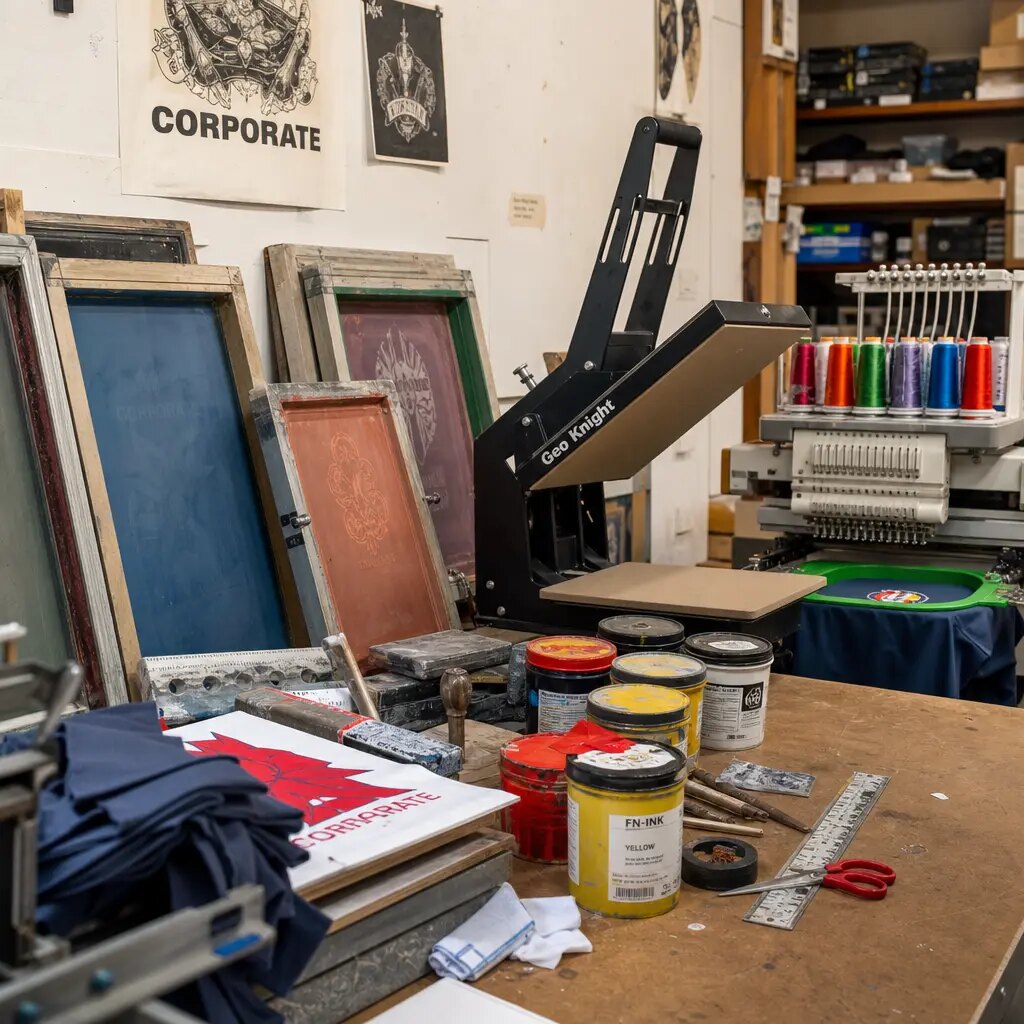
Screen printing is usually the practical choice for simple roaster logos, one-color marks, and medium to high volume orders. Heat transfer can hold fine detail or smaller lettering but may feel more like a surface film. Embroidery can look premium, yet it may distort lighter canvas or make the panel stiff. Woven labels are useful when the brand wants subtle identification without a large printed area.
Most coffee roaster programs do not need oversized decoration. They need a clean mark, consistent placement, and enough contrast to read on a retail shelf. Buyers should approve artwork at finished size and inspect coverage on the chosen fabric color. Natural canvas, black canvas, and dyed seasonal colors can all behave differently under the same logo process.
- Request a strike-off on actual fabric weight, color, and finish.
- Avoid tiny reverse lettering or thin strokes on coarse canvas.
- Confirm print placement from top hem and side seam, not by eye.
- Check large solid ink areas for patchiness before bulk release.
- For dark dyed fabric, check print sharpness and dye rubbing in the same approval round.
RFQ Structure for Comparable Supplier Pricing
A strong RFQ prevents false savings. If suppliers are free to choose fabric weight, handle trim, bottom construction, print method, and packing format, the lowest price may simply reflect a thinner or less controlled bag. The buyer needs every supplier quoting the same base carrier or clearly marking any deviation.
The most useful RFQs separate mandatory specifications from optional upgrades. The base quote might include natural 12 oz canvas, one-color screen print, self-fabric handles, boxed bottom, and flat carton packing. Options can then price webbing handles, a divider, a woven label, dyed fabric, hangtags, or special cartons. This makes tradeoffs visible.
Require suppliers to disclose substitutions in writing. If they recommend 300 GSM instead of 340 GSM, or webbing handles instead of self-fabric, that may be a valid improvement. It should still appear as a quoted change so procurement can compare cost, lead time, and risk.
- Include finished dimensions, gusset depth, handle drop, and bottle count.
- State the acceptable GSM or ounce range and the finish basis.
- Define artwork size, color count, print position, and logo method.
- Ask for separate costs for sample, strike-off, divider, label, hangtag, and packing changes.
- Require MOQ by body size, fabric color, artwork, and trim route.
- Ask suppliers to state production lead time after final sample approval.
Sampling and Approval Checks
A sample should be tested as a working package. Load the exact bottle, coffee bag, mug, insert, or tissue that will be sold with it. Then check whether the bottle loads easily, whether the opening fights the seam, whether the carrier stands, and whether the handle drop feels usable when the bag is full.
Do not approve bulk production from a digital mockup or a sample made from convenient substitute cloth unless the approval file clearly says what remains open. Fabric weight changes drape, print coverage, seam bulk, and finished shape. A pre-production sample should use actual bulk fabric, actual color, actual logo method, and final construction details.
The sample stage is also the right time to catch operational issues. A bag can look attractive flat but become awkward when the bottle neck hits the handle opening or when a coffee pack widens the gusset. These are inexpensive corrections before production and expensive complaints after shipment.
- Test with the real bottle and full accessory load.
- Measure finished size with the gusset opened consistently.
- Check handle drop while loaded, not only while flat.
- Confirm the carrier stands in the intended shelf or counter setup.
- Inspect print edge clarity, ink coverage, and placement tolerance.
- Keep one signed physical sample as the bulk-production reference.
QC Points for Bulk Inspection
Canvas wine carriers tend to fail in repeatable ways: handles pull loose, dividers fray, logo placement drifts, dark fabric transfers color, and cartons crush the top hems. These risks are manageable when the QC standard is written before production, supported by an approved sample, and focused on measurable checks.
Inspection does not need to turn every bag into a laboratory exercise. It should confirm that the carrier holds the intended load, that stress points are sewn securely, that the print is commercially acceptable, and that the packing protects the finished item. Clear tolerances also prevent overreaction to normal canvas variation, such as minor shade shifts or slight stitch movement on textured cloth.
For dyed canvas, rubbing checks matter because the carrier may touch bottle labels, paper bands, coffee bags, tissue, or inserts. A simple dry and lightly damp white-cloth rub can reveal obvious transfer risk before cartons are packed. If the program uses dark colors, include this check in the approval and inspection instructions.
- No skipped stitches at handle bases, bottom corners, or divider attachment points.
- No exposed fraying on divider edges, binding, or seam allowances.
- Logo placement measured from fixed edges within agreed tolerance.
- Loaded bag shows no seam grin, tearing, or corner collapse.
- Dark fabric shows no visible transfer in agreed rubbing checks.
- Cartons are dry, square, correctly marked, and not overfilled.
Packing, Cartons, and Landed Cost
Packing affects more than freight. It affects receiving speed, warehouse accuracy, retail appearance, and damage risk. Canvas wine carriers are usually best flat packed by SKU in fixed-count bundles, then placed in master cartons with consistent markings. Mixed cartons may save time at origin but can slow receiving if the warehouse has to sort by color, print, or size.
Overcompression is a common hidden cost. A carton packed too tightly can crease the logo panel, crush top hems, distort handles, or leave the bag looking shopworn before it reaches the retailer. A slightly lower freight cube is not helpful if the finished presentation suffers.
Set carton rules in the purchase order: pieces per inner bundle, pieces per master carton, carton dimensions, maximum gross weight, carton marks, and mixed-SKU policy. If the carrier is part of a larger kitting program, confirm whether bags need to arrive flat, pre-opened, individually polybagged, or grouped by artwork.
- Set a maximum gross carton weight your receiving team can handle.
- Define whether polybags are required, allowed, or restricted.
- Use carton marks that identify SKU, color, artwork, quantity, PO, and country of origin as needed.
- Avoid mixed cartons unless the warehouse has approved the assortment plan.
- Ask for packing photos before the first bulk shipment if presentation is important.
Lead Time and Replenishment Planning
Lead-time problems usually come from approvals and materials, not only sewing. Custom-dyed fabric, late artwork changes, unclear bottle dimensions, and missing retail labels can all delay a simple carrier. For seasonal coffee gifts, plan the approval calendar before relying on a production date.
Natural canvas programs usually move faster and are easier to replenish than custom-dyed assortments. If the base body, fabric weight, and construction stay stable, seasonal changes can come through print, labels, or inserts. That helps the factory repeat the pattern and helps procurement compare year-over-year price movement against a consistent spec.
For multi-channel roasters, standardization is useful. A counter-sale version, holiday version, and distributor version may share one base size while varying handle trim, logo, or divider. This reduces sampling noise and keeps repeat orders more predictable without forcing every program into the same retail look.
- Build time for one correction cycle after the first sample.
- Approve dyed fabric before committing to final production dates.
- Keep the base carrier stable when only seasonal branding changes.
- Confirm hangtags, barcodes, care labels, and carton marks before packing begins.
- Book inspection and freight earlier for fixed holiday or launch windows.
Specification comparison for buyers
| Spec decision | Recommended option | When it fits | Cost, lead-time, and buyer risk to check |
|---|---|---|---|
| Single 750 ml bottle carrier | 10 oz to 12 oz canvas, about 280-340 GSM finished weight | Retail counter sale, coffee-and-bottle gift, tasting room carryout | Good cost and faster sourcing in natural canvas; risk rises below about 260 GSM because the body may collapse and print coverage may look uneven. |
| Two-bottle or heavier gift set | 14 oz to 16 oz canvas, about 390-450 GSM finished weight | Holiday packs, distributor handling, reusable gift programs | Higher fabric cost, slower sewing, and larger carton cube; verify handle stitch penetration, divider height, and loaded sample performance. |
| Handle material | Cotton webbing for strength; self-fabric handles for a quieter retail look | Webbing suits heavier loads and reuse; self-fabric suits premium gift presentation | Webbing can add trim cost but is easier to control; self-fabric can stretch or twist if the base cloth is too light. |
| Internal bottle protection | Full-height divider with bound or folded edges | Two-bottle carriers, fragile labels, kitted gift sets | Adds sewing time and sample review; undersized dividers allow bottle shoulders to touch, while raw edges can fray. |
| Logo method | Screen print for simple artwork; heat transfer for fine detail; woven label for subtle branding | Most roaster logos, seasonal editions, retailer-exclusive programs | Screen print is usually economical at volume; transfers may add unit cost; embroidery can slow production and stiffen lighter panels. |
| Fabric color route | Natural canvas for replenishment; dyed canvas for premium assortments | Natural suits repeat buying and lower MOQ; dyed colors suit seasonal or gift channels | Custom dyeing adds color approval time and MOQ pressure; dark shades need rubbing checks before packing with labels or coffee goods. |
| Bottom construction | Boxed bottom with controlled seam allowance; reinforcement for heavier loads | Bags that must stand upright or carry bottle plus coffee pack | More sewing than a flat seam but better presentation; check that reinforcement does not distort logo placement. |
| Packing method | Flat packed by SKU in fixed-count bundles, then master carton | Import efficiency, warehouse counting, retailer routing | Overpacking lowers freight cube but can crease print and top hems; set carton count, gross weight, and carton mark rules. |
| MOQ strategy | One base body shared across several artwork versions | Seasonal roaster programs, multi-location branding, retailer exclusives | Best way to protect quality while managing MOQ; too many body sizes create separate cutting, sampling, and waste costs. |
Buyer checklist before sampling
- Define the actual contents: one 750 ml bottle, two bottles, bottle plus coffee beans, bottle plus mug, or a kitted gift set.
- Specify finished size, gusset depth, usable handle drop, and whether the carrier must stand upright on a shelf or counter.
- State fabric weight in GSM or ounce canvas and require the quote to say whether the number is greige or finished weight.
- Set an acceptable fabric-weight tolerance, such as plus or minus 5 percent on finished cloth, before comparing supplier prices.
- Confirm fabric route: natural, bleached, piece-dyed, garment-washed, or custom-dyed, plus any shade tolerance requirement.
- Choose logo execution by artwork complexity, order size, and fabric texture rather than by catalog default.
- Require a strike-off or pre-production sample on actual fabric, actual color, and actual print method before bulk release.
- Approve bottle fit with the real bottle diameter, shoulder shape, closure height, neck tag, and any coffee item packed with it.
- For two-bottle bags, define divider height, attachment points, edge finishing, and whether bottle shoulders may touch.
- Set packing rules up front: pieces per bundle, pieces per carton, carton dimensions, maximum gross weight, carton marks, and mixed-SKU limits.
Factory quote questions to send
- What exact fabric are you quoting: fiber content, weave, greige GSM, finished GSM, and ounce equivalent?
- Is the quoted fabric weight measured before or after dyeing, washing, softening, or calendaring?
- What finished-weight tolerance do you control within one bulk lot, and how do you manage roll-to-roll variation?
- What total load weight is the bag designed to carry, and what loaded test do you recommend for approval?
- Are the handles cotton webbing, self-fabric, or another trim, and what width and stitch pattern are included?
- What seam type is used on the side, bottom, boxed corners, divider, and top edge?
- Does the quote include reinforcement patches, bar tacks, back tacks, binding, or only standard straight stitching?
- Which logo method is included, how many colors are priced, and what print area triggers a cost change?
- Are strike-off, fit sample, pre-production sample, and one revised sample included or charged separately?
- What is the MOQ by fabric color, by artwork, by size, and can multiple prints share one base fabric order?
Quality-control points to confirm
- Bulk fabric weight should match the approved finished GSM or ounce range, not only the sales swatch description.
- Finished dimensions should be measured with gusset opened and bag flattened consistently, with tolerances set for height, width, and bottom depth.
- Handle attachments need straight stitch lines, secure back tacks or bar tacks, no skipped stitches, and no loose thread clusters at stress points.
- Bottom seams and boxed corners should hold the intended bottle load without seam grin, tearing, or visible distortion.
- Divider panels should be tall enough for the bottle shape, anchored securely, and finished without exposed fraying edges.
- Logo placement should be measured from top hem and side seam using a practical tolerance suitable for sewn canvas.
- Print should show acceptable coverage, edge clarity, and color consistency on the actual fabric texture.
- Dark dyed canvas should pass dry and lightly damp white-cloth rubbing checks before contact with labels, coffee bags, or tissue.
- Cartons should be dry, square, correctly marked, and packed at a weight the receiving team can handle safely.
- Packed bags should not arrive with crushed hems, permanent logo-panel creases, distorted handles, or mixed SKUs outside the agreed carton plan.