Put the carton plan into the RFQ, not the final packing room
Canvas wine carriers often enter an eco apparel brand’s assortment as a small seasonal accessory: winery collaboration, holiday gift-with-purchase, event merchandise, apparel-and-bottle bundle, loyalty gift, or lower-plastic retail packaging item. Because the product resembles a compact tote, the first RFQ is often too simple: fabric, size, logo, quantity. That leaves folding, bundle count, master carton count, carton board, carton marks, and print protection to the supplier’s default practice.
Those defaults can affect landed cost and customer-facing quality more than buyers expect. A canvas carrier is soft, but once it is packed, it becomes a compressed textile unit with handles, seams, dividers, folded edges, and printed surfaces sitting under pressure. Fold bags inconsistently and carton quantities become harder to verify. Let printed faces rub against raw canvas and the logo may show abrasion before it reaches the DC. Crush a two-bottle divider in one direction for weeks and it may keep the crease. Overfill the carton and it can bulge, fail stacking, or arrive looking non-compliant even if the bags themselves are sewn well.
For procurement, the cleanest approach is to quote the sewn product and the shipping unit together. The RFQ should request unit price plus packing data in the same response: pieces per inner bundle, pieces per master carton, carton dimensions, net weight, gross weight, CBM, carton board, sealing method, and packing material. That information allows buyers to compare landed cost instead of comparing FOB unit price in isolation.
Reduced-plastic packaging makes this planning more important, not less. Many eco apparel brands can avoid individual polybags for canvas wine carriers, but only when the replacement method is controlled. Paper banding, kraft wrap, tissue interleaving, or bulk bundling must be tested against the actual print, fabric texture, and carton compression. Removing plastic without approving the fold and carton plan simply shifts the risk to print rub, handle tangling, recount labor, and poor presentation.
- Treat the carrier as both a sewn textile product and a logistics unit.
- Ask for carton count, carton dimensions, gross weight, net weight, and CBM with the first quote.
- Approve folding direction and bundle count before bulk packing begins.
- Do not remove individual polybags until print rub, counting accuracy, and compression behavior are checked.
- Compare suppliers by landed cost and execution risk, not FOB price alone.
Start with bottle geometry, not the phrase “fits 750ml”
The phrase “fits a 750ml bottle” is one of the fastest ways to create a poor specification. Bottle capacity does not tell the factory the diameter, shoulder shape, full height, neck length, or filled weight. A Bordeaux bottle is often narrower and straighter than many Burgundy bottles. Sparkling wine bottles are commonly wider and heavier because of thicker glass. Olive oil, spirits, and specialty gift bottles may be taller, squatter, or more tapered than standard wine formats.
The pattern should be built around the largest approved bottle profile in the program. That single decision affects body width, gusset depth, bottom construction, divider allowance, handle drop, and carton bulk. A tight carrier can photograph beautifully but frustrate store teams if bottles must be forced into the opening. A wide carrier improves compatibility but may allow narrow bottles to lean. For two-bottle carriers, the calculation must include two bottle diameters, divider thickness, seam allowances, and realistic loading clearance.
Procurement teams should ask suppliers to state both finished outside dimensions and usable internal dimensions. A 100 mm outside width does not mean there is 100 mm of free internal space once seams, folds, and divider fabric are included. The quote should also identify the filled bottle weight used for handle and seam assumptions. Many filled wine bottles weigh around 1.2 kg to 1.6 kg, while sparkling wine and heavy glass formats can be higher. When possible, provide the real filled weight instead of accepting a generic load assumption.
Handle drop deserves a loaded fit check. If the bottle neck sits too close to the hand opening, the carrier may feel awkward even though the bottle technically fits. If the handle is too long, the loaded bottle swings more during carry. For retail gifting, buyers should also confirm that staff can insert and remove the bottle smoothly without distorting the bag.
- Provide maximum body diameter, full height, neck/shoulder profile, and filled weight for the largest bottle.
- Request a fit check using your bottle or a dimensioned dummy before PP sample approval.
- Ask for usable internal space, not only finished outside measurements.
- For 2-bottle carriers, include divider thickness and seam allowance in the fit calculation.
- Check loaded handle comfort and bottle loading ease during sample review.
Write canvas and construction specs in factory language
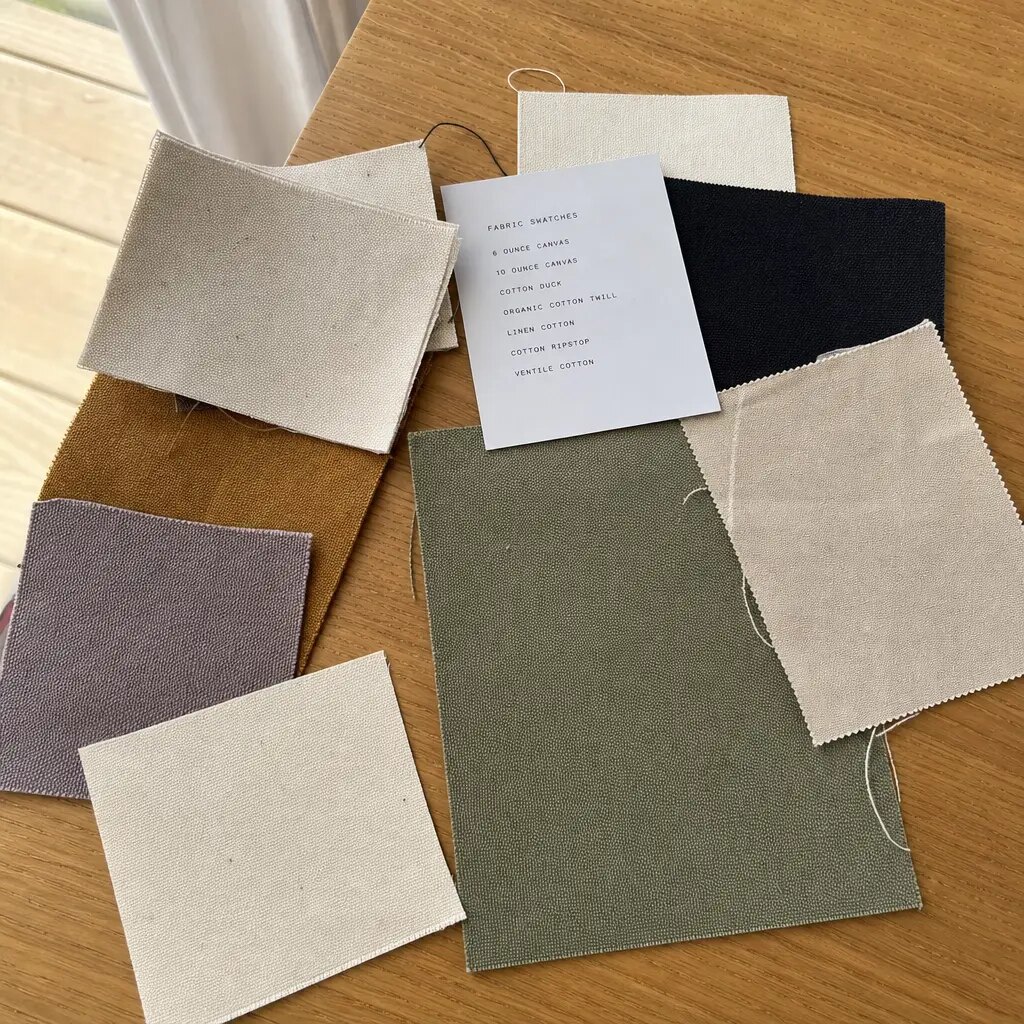
Eco apparel brands usually want natural materials, clean branding, and a reusable feel. Those goals need to become measurable production requirements. For many one-bottle canvas wine carriers, 10oz to 12oz cotton canvas, roughly 280 to 340 GSM, is a practical starting range. It gives the bag structure without making sewing, printing, folding, and freight cube unnecessarily difficult. For two-bottle styles, reinforcement design often matters more than simply moving to a heavier body fabric. A heavy body with weak handles is still a weak carrier.
The RFQ should identify fabric composition, finished GSM or oz rating, color, finish, shrinkage expectation, and acceptable GSM tolerance. If the brand requires organic cotton or recycled cotton content, spell out the certification or documentation requirement. The word “eco” is not a specification. Undyed natural cotton can show seed specks, slubs, and shade variation; these may be part of the desired look, but inspectors need written limits so they can separate acceptable character from stains, dirty handling marks, shade panels, or contamination.
Construction terms should be equally specific. Define whether the body is a flat sleeve, side-gusset carrier, boxed-bottom carrier, or two-bottle carrier with divider. State whether the bottom is formed by a fold, a separate panel, a boxed corner, or an added reinforcement patch. For handles, specify self-fabric or cotton webbing, width, drop, stitch pattern, thread color, and reinforcement. Phrases such as “strong handle” and “premium sewing” are not enough to control bulk production.
Reinforcement should follow the load path: handle attachment, top edge, side seams, bottom seam, gusset corners, and divider base. In many designs, adding labor at those stress points is more useful than increasing the whole body fabric weight. Ask the supplier to explain which seams carry weight and how they are reinforced.
- Use oz and GSM together where possible, and agree a bulk GSM tolerance before cutting.
- Define acceptable natural cotton specks, slubs, neps, and shade variation before inspection.
- Specify body type, gusset, bottom construction, divider type, and reinforcement points.
- Write handle width, drop, material, stitch pattern, and reinforcement into the tech pack.
- Replace vague terms like “heavy canvas” or “durable handle” with measurable requirements.
Choose branding with folding and abrasion in mind
Logo method is not only a branding decision; it changes the packing plan. A one-color screen print is often suitable for bold logos, event messages, and retail campaigns. A woven side label, cotton label, or small patch can reduce ink coverage while preserving a natural canvas look. Embroidery may work for small marks, though it adds thread tension and cost. Heat transfers should be tested carefully on rough canvas for adhesion, handfeel, edge lift, and durability.
Large solid prints need the most caution. Canvas has texture, and folded bags can rub against one another under carton pressure. If ink is under-cured, applied too heavily, or packed face-to-face against a coarse surface, the result can be offsetting, cracking, or visible rub after transit. Ask how the supplier cures the print, what rub check they use, and whether printed samples can be reviewed after folding and compression, not just fresh from the print table.
Print placement also needs fixed reference points. “Centered on front” can be interpreted several ways when the bag has a gusset, bottom fold, and handle seam. State print size in mm, distance from top edge, distance from side seam or center line, color reference, and placement tolerance. A few millimeters of variation may be normal on soft textile items, but the tolerance should be agreed before production so QC is objective.
If the project aims for PE-free or low-plastic packing, artwork layout may need adjustment. A large dark print on a fold line is more vulnerable than a smaller print placed away from high-compression areas. A side label may be the better choice when the brand wants low ink coverage, easy bundling, and lower abrasion risk.
- Select the logo method after considering folding direction and carton compression.
- Define artwork size, color reference, print location, and placement tolerance in mm.
- Ask how the supplier checks curing, cracking, offsetting, and rub resistance.
- Review printed samples after folding, bundling, compression, and reopening.
- Consider woven or cotton side labels when reduced ink coverage supports the brand message.
Use MOQ logic that fits a trial launch
Wine carrier programs are often smaller than an apparel brand’s core tote, garment bag, or packaging volume. MOQ pressure appears quickly when every SKU uses a different canvas color, fabric weight, print color, label, divider, handle, and packing method. To the factory, those are not minor variations. Each can require separate fabric allocation, print setup, sewing instruction, QC standard, and carton plan.
A more practical strategy is to standardize the base and vary only what supports the sales program. A one-bottle and two-bottle carrier may share the same natural canvas, print color, label, thread, and carton material while using different patterns and divider construction. A holiday edition may keep the same bag and change only hangtag artwork. This gives the buyer a real market test without turning a small order into a fragmented production run.
MOQ discussions should separate fabric MOQ, color MOQ, print MOQ, and sewing MOQ. Natural greige or stock canvas may offer more flexibility than custom dyed canvas. A custom Pantone fabric color may require a higher fabric booking and a longer lead time. A new print color may mean separate screens and cleanup. A different inner packing method can add labor and carton planning even if the sewn carrier is unchanged.
Ask for price breaks at realistic order bands: pilot quantity, first reorder, and estimated annual volume. Do not ask only for the highest forecast if the first PO will be much smaller. Quotes built on unrealistic volumes create budget gaps and encourage hidden downgrades later.
- Standardize canvas base, fabric color, print color, label, and handle material across related SKUs.
- Vary capacity, divider, or hangtag only where it supports merchandising.
- Ask MOQ by style, fabric color, logo, print color, and packing method.
- Keep optional retail extras as separate adders until confirmed.
- Request pilot, reorder, and annual-volume price breaks using the same technical assumptions.
Turn folding and inner packing into predictable carton counts
A workable carton packing plan starts with the unit fold. Simple one-bottle carriers may fold flat with handles aligned in one direction. Boxed-bottom carriers need a repeatable bottom fold so bulky corners do not stack randomly. Two-bottle carriers with dividers need more care because the divider can crease, twist, or create high points inside the carton. The folding method should be photographed, approved, and used as a packing reference.
Inner bundle count affects receiving speed and inspection accuracy. Bundles of 10 or 20 pieces are common because warehouse teams can count quickly and inspectors can verify carton quantity without handling every unit. Paper banding can work well in reduced-plastic programs, but the band should not crush the logo or permanently crease the divider. Tissue interleaving or kraft wrap may be needed for large, dark, or high-coverage prints. If the branding is only a small side label, lighter protection may be acceptable.
Master carton count should be set after checking four variables: product bulk, gross weight, carton board strength, and warehouse handling limits. For many simple single-bottle carriers, 50 to 80 pieces per carton may be workable. For heavier two-bottle carriers with dividers, reinforced bottoms, or thicker canvas, 30 to 50 pieces may be more realistic. These are planning ranges, not automatic targets. Confirm the final count with packed sample photos, carton dimensions, gross weight, and compression review.
CBM belongs in the quote. Ask for carton dimensions in centimeters, pieces per carton, and cubic meters per carton so you can calculate CBM per unit. But do not chase cube reduction at any cost. If a lower CBM depends on over-compressing the product, the freight saving may be offset by print abrasion, divider distortion, bulging cartons, or repacking work.
- Approve folding sequence, logo direction, handle orientation, and divider position.
- Use inner bundles of 10 or 20 pieces where receiving speed matters.
- Ask for pieces per carton, carton dimensions, gross weight, net weight, and CBM in every quote.
- Set a maximum carton gross weight before finalizing carton count.
- Reject lower CBM if the carton bulges or the product deforms after compression.
Match export cartons, sealing, and marks to the real route
Canvas bags are not fragile like glassware, yet cartons still fail. Problems usually come from weak board, oversized cartons, underfilled cartons, excessive gross weight, humidity exposure, or poor stacking. A 5-ply corrugated export carton is a common sea-freight baseline, but the right carton depends on packed weight, dimensions, transit time, stacking height, and whether the shipment will be consolidated with heavier goods.
Carton size should not be chosen only from the supplier’s stock room. A convenient factory carton may waste pallet space, create unstable stacks, or exceed a retailer’s handling limit. If the order will pass through a retailer distribution center, share routing guide limits early: maximum carton weight, carton label placement, barcode format, pallet height, and prohibited packaging materials. If the wine carriers ship with apparel, compare carton footprint with existing pallet or container loading plans.
Sealing and moisture control need written instructions. State whether cartons use standard tape, reinforced tape, H-taping, strapping, or corner protection if required. For long sea routes or humid storage, ask how cartons will be stored before loading and whether additional moisture protection is needed. Canvas can absorb odor and humidity, so clean, dry storage is part of quality control.
Shipping marks are not a last-minute admin task. Typical carton information includes brand, PO number, SKU, color or style, carton number, quantity, country of origin, gross weight, net weight, carton dimensions, and destination. Some buyers require barcode carton labels. Late mark changes can delay carton printing, relabeling, or shipment closing, so confirm when the factory needs final artwork and data.
- Use route-appropriate carton board; 5-ply export carton is a common sea-freight baseline.
- Confirm carton footprint against pallet, container, and retailer routing requirements.
- Specify tape method, strapping if needed, and dry-storage expectations.
- Provide carton shipping marks and barcode label rules before carton production.
- Inspect carton dimensions, sealing, labels, and condition during final QC.
Approve samples in three stages, including a packed carton review
A table sample can look right and still miss key risks. It may fit one bottle but not the largest bottle in the program. Handles may look neat while lacking reinforcement for filled bottle weight. A divider may stand upright before packing and crease after compression. A print may look sharp after curing and still rub during transit. These issues show up only when the carrier is tested the way it will be used and shipped.
A reliable approval path has three stages. The development sample confirms size direction, bottle fit, construction concept, and visual appearance. The pre-production sample should use bulk-intended fabric, actual logo method, thread, handle reinforcement, labels, divider, and packing components. The packed-carton sample, or a realistic mini packed-carton sample, confirms folding sequence, bundle count, carton count, carton board, carton dimensions, gross weight, and shipping marks.
The packed review does not always need a full export carton, especially if the order is small or the carton count is high. It does need to be realistic. Ask the supplier to show the folding process, bundle arrangement, carton loading layers, and sealed carton. Then reopen the packed sample after a compression period and check for offsetting, rub marks, fold memory, divider distortion, handle tangling, stains, and carton deformation.
This step is especially useful when removing individual polybags. Reduced-plastic packing can be a good fit for canvas wine carriers, but it must still protect the finished surface and support accurate counting. A packed-carton reference gives procurement, quality, logistics, and the supplier the same target before bulk shipment.
- Approve development sample for fit and construction concept.
- Approve PP sample using bulk-intended materials and final logo method.
- Approve packed-carton or mini packed-carton sample for folding, bundling, carton count, and marks.
- Reopen the packed sample to check rub, offsetting, divider crease, and handle tangling.
- Use the approved packed sample as the final inspection reference.
Focus QC on load-bearing performance and post-transit appearance
A generic textile inspection will catch stains, loose threads, and wrong labels, but wine carriers need functional checks. They carry glass, so handle failure or bottom seam failure has a higher consequence than a defect on a lightweight promotional tote. QC should prioritize bottle fit, load-bearing seams, handle attachment, divider anchoring, print durability, and carton packing accuracy.
Finished size tolerances must be written. For simple canvas wine carrier styles, buyers commonly use about +/-5 mm for width and gusset and +/-10 mm for height, though complex construction may need a different tolerance. Print placement should be measured from fixed points instead of judged by eye. Fabric GSM should be checked from bulk fabric before or during production because fabric substitution is one of the easiest ways for cost and performance to drift.
Load testing should reflect actual use. Use the real filled bottle weight or an equivalent dead weight, with safety margin, duration, and pass/fail criteria agreed before inspection. The inspector should watch handle stitches, top-edge stress, bottom seam, gusset corners, and divider base. For two-bottle carriers, load both bottles, lift and set down the carrier, and confirm the bottles remain separated at the base.
Print QC should include color, registration, edge sharpness, curing, cracking, rub resistance, and offsetting after folding. For natural canvas, inspection should distinguish approved fabric character from defects. Seed specks and minor slubs may be normal if approved; oil stains, dirty handling marks, severe shade panels, skewed cutting, or mildew odor should not be accepted. Final inspection should also open cartons to verify bundle method, carton quantity, shipping marks, and product condition after packing.
- Use an agreed AQL plan plus product-specific checks for load, bottle fit, print, and packing.
- Verify fabric GSM and shade against the approved standard before large-scale cutting when possible.
- Perform load checks with real or equivalent filled bottle weight.
- Check two-bottle divider separation with both bottles loaded.
- Open cartons during final inspection to confirm bundle method, count, marks, and print condition.
Separate cost drivers before comparing suppliers
Large quote gaps usually come from different assumptions, not only from supplier margin. Major cost drivers include canvas GSM, fabric composition, natural versus dyed fabric, organic or recycled content requirements, bottom reinforcement, divider construction, handle material, stitch reinforcement, logo method, print coverage, labels, hangtags, inner packing, carton board, and carton count. If the RFQ is vague, each factory builds a different product in its quote.
One supplier may quote 10oz conventional natural canvas, a single-layer divider, simple top-stitched handle, one-color print, bulk packing, and standard carton. Another may include 12oz canvas, reinforced divider, box-stitched webbing handles, paper-banded bundles, tissue protection, and 5-ply export cartons. Neither quote is useful until the included and excluded assumptions are visible. Ask suppliers to confirm these items line by line.
Not every upgrade is necessary. A brand may keep stronger handle reinforcement while reducing logo size. It may choose a woven side label instead of a large screen print to reduce abrasion risk. It may accept fewer pieces per carton to stay under a warehouse gross weight limit. The goal is deliberate tradeoff, not accidental downgrading.
Landed cost comparison should include CBM per unit and gross weight per carton. A slightly higher FOB price can be competitive if the packing is efficient, compliant, and robust. On the other hand, attractive CBM can be risky if it depends on over-compression. Compare sample quality, execution clarity, MOQ flexibility, freight cube, QC risk, and retailer compliance together.
- Ask suppliers to list assumptions for fabric, construction, logo, labels, packing, and carton.
- Request adders for heavier canvas, reinforced divider, second print location, hangtag, paper wrap, or upgraded carton.
- Compare CBM per unit and carton gross weight with unit price.
- Do not allow cost reduction through unapproved GSM, handle, divider, or carton changes.
- Tie sustainability-related material claims to documentation requirements, not general marketing language.
Specification comparison for buyers
| Spec decision | Recommended B2B requirement | Typical range or tolerance to confirm | Buyer risk to check |
|---|---|---|---|
| Bottle size basis | Quote against the largest approved bottle profile, not a generic 750ml description | Record maximum body diameter, full height, shoulder/neck profile, and filled weight; verify with a physical bottle or dimensioned dummy | A carrier sized around a slim Bordeaux bottle may fail on wider Burgundy, sparkling wine, olive oil, or spirits bottles |
| Canvas weight | State finished fabric weight in both oz and GSM, then verify bulk fabric before or during cutting | Common working range: 10oz to 12oz canvas, about 280 to 340 GSM; agree tolerance before production, often around +/-5% if the supplier can support it | Lower GSM can sag or twist under load; higher GSM increases sewing bulk, print difficulty, carton cube, and freight weight |
| Finished dimensions | Define width, height, side gusset, bottom panel or boxed-bottom depth, handle width, and handle drop in mm | For simple styles, common tolerances are +/-5 mm on width/gusset and +/-10 mm on height; tighten only where construction can hold it | If dimensions are loose, bottle fit and carton count can drift between sample approval and bulk delivery |
| Bottom construction | Match boxed bottom, folded gusset, or reinforced bottom panel to bottle diameter and load | Confirm bottom seam allowance, stitch type, reinforcement patch, and whether the bag must stand when loaded | A flat tote-style seam may look clean when empty but concentrate filled bottle weight on one seam line |
| Divider construction | For 2-bottle carriers, specify divider material, layer count, attachment points, and base anchoring | Single-layer divider for light promo use; double-layer or reinforced divider for heavier glass bottles; divider should prevent bottle-to-bottle contact at the base | A loose divider can fold during packing and allow bottles to knock together while carried |
| Handle construction | Specify self-fabric or cotton webbing handle, width, drop, thread, stitch pattern, and reinforcement | Common handle widths are 25 to 38 mm; handle drop should leave hand clearance above the bottle neck; use box stitch, cross stitch, bartack, or reinforcement patch where needed | A simple top-edge catch stitch can pass visual review and still fail under filled bottle load |
| Logo method | Choose branding according to abrasion risk, artwork coverage, and the sustainability brief | 1-color screen print for bold artwork; woven/cotton side label or patch for lower-ink branding; define print cure and rub check | Large solid prints can offset, crack, or rub when folded face-to-face inside compressed cartons |
| Inner packing | Approve a written folding and bundling method before bulk packing starts | Common bundles: 10 or 20 pcs; paper banding, kraft wrap, tissue interleaving, or controlled bulk packing depending on artwork sensitivity | No bundle standard leads to handle tangling, recount delays, print abrasion, and uneven carton compression |
| Master carton count | Set carton count after reviewing gross weight, carton dimensions, CBM, and compression behavior | Often 50 to 80 pcs for simple 1-bottle styles; 30 to 50 pcs for 2-bottle/divider styles, subject to weight and cube | Overpacked cartons can bulge, fail stacking, exceed 3PL limits, or distort dividers |
Buyer checklist before sampling
- Define the bottle family before RFQ: Bordeaux, Burgundy, sparkling, olive oil, spirits, or a mixed assortment.
- Provide maximum bottle body diameter, full height, shoulder/neck shape, and filled weight; do not rely only on the phrase “750ml bottle.”
- State target finished bag dimensions in mm: width, height, side gusset, bottom gusset or boxed-bottom depth, and internal usable space.
- Specify canvas composition and weight: conventional cotton, organic cotton, recycled cotton blend, undyed natural cotton, dyed canvas, oz/GSM, and acceptable GSM tolerance.
- Confirm whether the bag must stand upright when empty, stand only when loaded, or function as a soft carry sleeve.
- Define 1-bottle or 2-bottle use; for 2-bottle styles, include divider layers, attachment points, bottom anchoring, and whether bottles must not touch at the base.
- Write handle requirements: material, width, handle drop, stitch pattern, thread color, reinforcement patch, and target load test.
- Give logo artwork as vector files with size, placement, print color reference, and tolerance from fixed points such as top edge or side seam.
- Decide whether branding will be screen print, heat transfer, woven label, cotton label, patch, embroidery, or a combination; ask about abrasion and curing risks for each.
- List retail components: hangtag, care label, country-of-origin label, barcode sticker, insert card, gift card, or retailer carton label.
Factory quote questions to send
- What finished bag dimensions are you quoting in mm, including width, height, side gusset, bottom gusset or bottom panel, handle width, and handle drop?
- Which bottle profile did you use for pattern development, and what maximum bottle diameter, height, and filled weight will the finished carrier fit safely?
- Can you provide a fit photo or short video using our actual bottle or a dimensioned dummy before PP sample approval?
- What canvas specification is included: fiber composition, yarn/construction if available, finished GSM, oz rating, GSM tolerance, color, shrinkage expectation, and finish?
- Is the fabric conventional cotton, certified organic cotton, recycled cotton blend, undyed natural cotton, or dyed canvas, and what documentation is available if certification claims are required?
- Is the quoted body single layer, lined, reinforced at the bottom, or made with a separate bottom panel?
- For a 2-bottle carrier, is the divider omitted, single-layer, double-layer, padded, or reinforced, and where is it stitched or anchored?
- What handle construction is included: self-fabric handle, cotton webbing, continuous strap, box stitch, cross stitch, bartack, inside patch, or other reinforcement?
- What load test do you recommend for this design, what test weight will be used, and how long will the sample be held or cycled during the check?
- What thread type, stitch density, seam allowance, and needle size will be used for the load-bearing seams?
Quality-control points to confirm
- Confirm finished dimensions against written tolerances. For simple wine carrier styles, many buyers use +/-5 mm for width and gusset and +/-10 mm for height, but the final tolerance must match construction complexity.
- Check usable internal space with the largest approved bottle profile, not just outside bag measurements.
- Verify bulk fabric GSM from cuttable fabric using an agreed sampling method; do not rely only on mill paperwork or a hand sample.
- Compare bulk fabric shade, slub, nepping, natural cotton specks, and stains against an approved fabric standard and written acceptable variation notes.
- Check fabric skew, cutting direction, and panel symmetry because twisted panels can make loaded bottles lean.
- Inspect bottom seam, boxed corners, gusset symmetry, and reinforcement patches under loaded conditions.
- Inspect handle width, handle drop, stitch pattern, bartacks or box stitches, thread color, seam allowance, and reinforcement against the PP sample.
- Run an agreed load test using actual filled bottle weight or an equivalent dead weight; include handle attachment, bottom seam, and divider stress points.
- For 2-bottle carriers, load two approved bottles and confirm the divider remains upright, anchored, and long enough to prevent bottle contact at the base.
- Check stitch density, loose threads, skipped stitches, broken thread, raw edge exposure, and seam slippage on load-bearing areas.