Why carton planning changes the bag spec
Coffee roasters often start with the visible decision: natural canvas, a clean logo, and a carrier that looks right beside a bottle and a coffee pouch. Those choices matter, but they do not cover the full buying risk. A canvas wine carrier is a sewn soft-goods item. It compresses, folds, rubs, and recovers according to fabric weight, divider bulk, handle stack, print cure, and carton pressure. For B2B procurement, carton packing belongs inside the product specification, not at the end of the order.
The risk is highest on dated launches such as holiday gift sets, wholesale partner gifts, subscription add-ons, distributor kits, and corporate food-and-beverage bundles. If the shipment arrives with crushed gussets, flattened dividers, rubbed logos, or handles bent across the face panel, the receiving team may need to steam, reshape, sort, or replace units before filling. That destination labor can erase a small FOB saving.
A useful plan works backward from the filled use case. Will the carrier hold one 750 ml bottle, two bottles, or one bottle plus a 250 g, 340 g, or 12 oz coffee pouch? Will the bags be filled by the factory, an importer, a 3PL, cafe staff, or a distributor? Will cartons be palletized, stored, cross-docked, or broken into mixed kits? Each answer changes construction, carton density, inspection, and landed cost.
The goal is not the highest possible carton count. The goal is usable carriers with predictable dimensions, clean branding, safe handles, and carton data that logistics can price correctly.
- Include pieces per carton, outer carton dimensions, gross weight, and CBM per 1,000 units in the RFQ.
- Approve packed recovery before bulk production when the carrier is retail-facing or gift-facing.
- Compare quotes by arrival condition and filling labor, not unit price alone.
Start with the filled set
The most common RFQ problem is asking for a generic wine bag when the real item is a bottle-and-coffee gift set. A 750 ml bottle is not one fixed shape. Bordeaux, Burgundy, sparkling, olive oil, syrup, and specialty beverage bottles can differ in height, base diameter, shoulder width, closure height, and glass weight. Coffee pouches vary too. A firm flat-bottom pouch creates different pressure than a soft side-gusset pouch.
For one-bottle carriers, give the factory full bottle height, maximum body diameter, base diameter, shoulder width, cap or cork height, and filled weight. For two-bottle carriers, the divider depth and attachment are as important as outside width. For bottle-plus-coffee sets, state whether the pouch sits beside the bottle, in a separate compartment, in a front pocket, or loose inside the same cavity.
Technical fit and operational fit are different. A bag may hold the items but still slow a packing line if the opening collapses, the pouch catches on the divider, or the bottle shoulder rubs against a seam. If hundreds or thousands of carriers will be filled by a warehouse team, these small delays become measurable labor cost.
Do not rely on bottle volume alone. If the actual bottle is unavailable during quotation, send a measured drawing or dummy that matches maximum diameter, height, shoulder profile, and weight. List all inserts as well: greeting card, tasting note, recipe card, hangtag, ribbon, bottle necker, opener, or syrup sample.
- Build a load sheet before asking for price.
- State whether the carrier ships empty, filled, or partially kitted.
- Ask the supplier to confirm the load assumptions used in the quote.
Set fabric standards buyers can inspect
Canvas weight is easy to write and easy to misunderstand. For many canvas wine carrier programs, 10 oz/yd² to 12 oz/yd² canvas, about 340 to 407 GSM, is a practical planning range rather than a universal standard. A 10 oz canvas often works for lighter single-bottle promotions and efficient flat packing. A 12 oz canvas gives more body and reuse value, but it also increases bulk, fold memory, and carton cube.
The purchase order should state whether the target is finished fabric weight. Greige fabric, dyed fabric, washed fabric, coated fabric, and final fabric can measure differently. If a supplier quotes 12 oz canvas but controls only an upstream value, the finished carrier may not match the approved sample. Keep an approved swatch and set a tolerance, often around ±5% only when the buyer and supplier agree it is suitable for the fabric and construction.
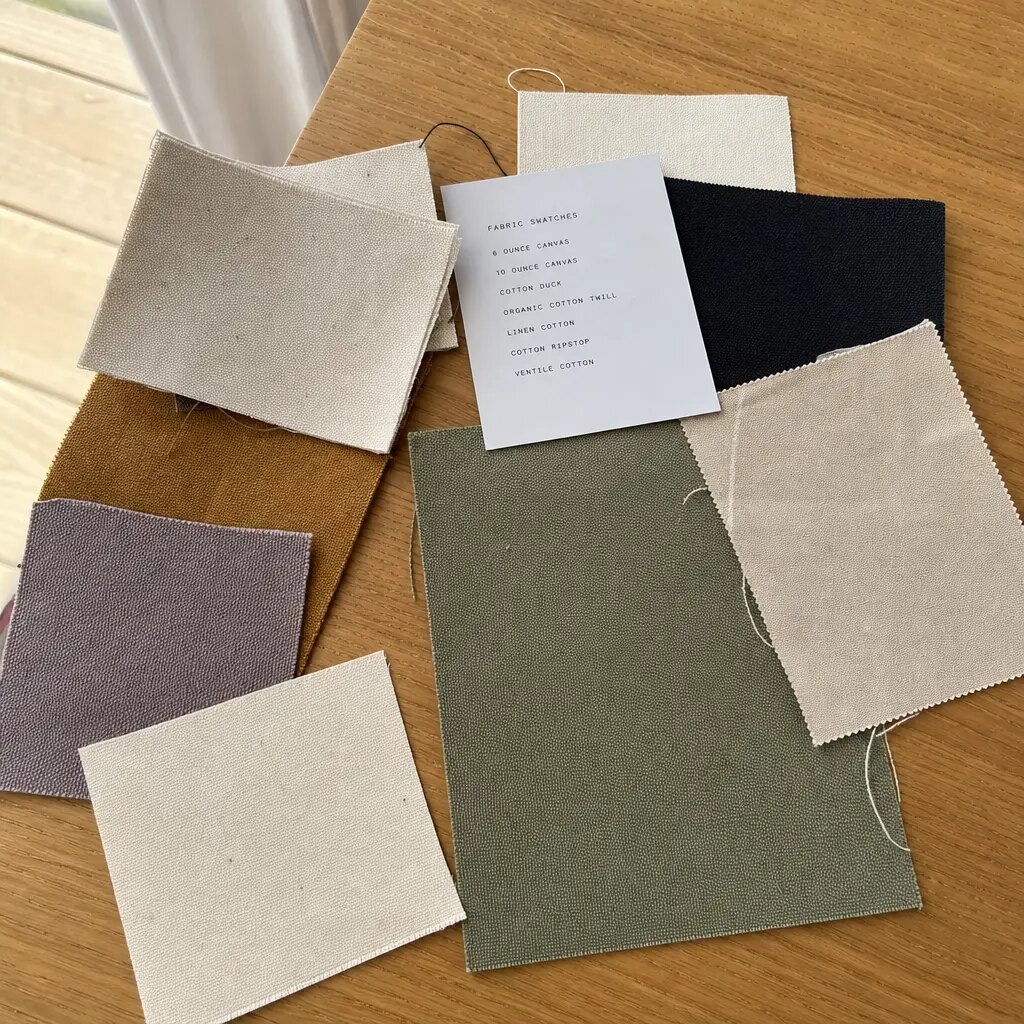
Natural cotton is popular with coffee roasters because it fits a craft food-and-beverage presentation. It may show seed flecks, minor slubs, and shade variation. Recycled cotton blends may show more texture or color variation. These are not automatically defects, but they must be approved before bulk cutting and print strike-off.
Odor should be part of QC. Canvas can pick up storage, dyeing, finishing, or packaging smells. For a coffee-related gift item, chemical, musty, or mildew odor is a brand problem, not a cosmetic issue.
- State fabric in both oz/yd² and GSM as finished fabric weight.
- Approve acceptable slubs, seed flecks, shade variation, and odor limits.
- Review print strike-offs on the actual production fabric.
Engineer dividers, bottoms, and handles
A canvas wine carrier is not just a narrow tote with a logo. The divider, base, side seams, and handles determine whether it performs after packing and filling. For two-bottle versions, the divider needs close review. A loose divider can look acceptable in a flat photo, then fold, shift, or let bottles lean together after carton compression.
A strong baseline for two-bottle carriers is a stitched center divider fixed into the side seams and caught into the bottom seam. This creates clearer bottle cavities and helps the bag open faster during filling. If the buyer wants a removable insert, the quote should say so clearly because cost, packing, and performance are different.
Bottom construction changes usability and freight. A rigid board can help the carrier stand upright, but it adds cost, reduces fold-flat efficiency, and creates hard pressure edges in a carton. Many roaster gift programs work better with a boxed fabric bottom or reinforced canvas base. The carrier does not need to behave like a rigid box; it needs to open cleanly, accept the load, and recover without severe twisting.
Handles should be specified like load-bearing parts. Name the webbing width, finished drop, attachment location, stitch type, and reinforcement method. Cotton webbing is often more reliable than narrow self-fabric loops for filled glass. A pull check should reflect the intended filled weight, not an empty-bag review.
- Require bottom-caught dividers unless another construction is tested and approved.
- Define handle width, drop, attachment position, and reinforcement in the RFQ.
- Inspect seam allowance, stitch density, and back-tacking on load-bearing points.
Choose branding with packing pressure in mind
Most roaster logos on canvas wine carriers are well suited to screen printing, especially one- or two-color artwork. Heat transfer can support full-color seasonal designs or shorter runs, but it needs closer review for cracking, edge lift, gloss mismatch, and pressure marks. Woven labels create subtle branding. Embroidery can look premium but may add stiffness if placed on a fold line.
Print method affects the carton plan. A large screen print should not always be packed face-to-face immediately after production. If ink is not cured, pressure and humidity can cause offset. If heat transfers are stacked against each other, the film can scuff or stick. Ask how long printed units rest before packing and whether panels will be alternated, interleaved, or separated.
Color control should be realistic. Pantone references help, but ink on unbleached cotton will not match a coated paper chip or digital proof exactly. Dark green, black, navy, and brown are often more forgiving on natural canvas than pale low-contrast inks. Small text, thin lines, or reverse type should be approved through a strike-off on production fabric.
Print placement needs measurement. State print size and location from fixed points such as top edge, side seam, bottom seam, or center line. For many sewn canvas bags, a placement tolerance such as ±5 mm to ±10 mm may be realistic depending on construction and print method.
- Approve a strike-off on actual canvas.
- Measure logo placement from fixed reference points.
- Review rub and offset after a trial-packed carton is opened.
Normalize quotes beyond FOB price
Two canvas wine carriers can look similar in photos while using different fabric weights, divider constructions, handle reinforcements, print methods, carton counts, and carton board. A low unit price may be based on lighter canvas, loose divider construction, minimal handle stitching, and an over-compressed carton. A higher price may include finished 12 oz canvas, a bottom-caught divider, reinforced handles, stronger board, and lower rework risk.
Ask each supplier to provide enough detail to normalize comparison. The quote should identify base construction, fabric weight, divider style, handle reinforcement, print method, number of colors, label or hangtag, unit packing, master carton count, outer carton dimensions, net weight, gross weight, and CBM per 1,000 units.
CBM per 1,000 units is especially useful. Multiply outer carton length, width, and height in meters, divide by pieces per carton, then multiply by 1,000. This converts packing into a logistics number procurement can compare across suppliers and packing options.
Gross weight matters too. A carton that looks efficient by cube may be too heavy for receiving or 3PL handling preferences. Heavy cartons are more likely to be dragged, dropped, or crushed at corners. If the shipment moves as LCL cargo or through several warehouses, carton strength and handling risk deserve more weight in the decision.
- Require carton dimensions, gross weight, and CBM per 1,000 units for each SKU.
- Ask whether the carton count was trial-packed or estimated.
- Compare revisions by fabric, construction, print, packing, carton, and lead time.
Set carton rules for the route
For canvas wine carriers, 40 to 80 pieces per export carton is a planning range, not a standard. A simple single-bottle flat bag in 10 oz canvas may pack near the higher end. A two-bottle 12 oz carrier with a bottom-caught divider, woven label, and individual polybag may need a lower count. The right count protects recovery and keeps gross weight manageable.
Agree on maximum gross weight before production. Some buyers have internal lifting limits, and 3PLs may have handling preferences. Smaller cartons may slightly increase carton material but can reduce crushing, improve receiving, and simplify picking. The best answer depends on freight mode, pallet plan, storage time, and whether cartons will be broken into mixed kits.
Carton material should match the route. A 5-ply export carton is often a sensible planning choice for heavier or bulkier carriers, especially for LCL freight, mixed-SKU pallets, cross-docking, or long domestic movement after import. The board grade should be selected against actual packed weight and stacking expectations.
Packing orientation should be approved visually. Handle stacks, folded gussets, dividers, labels, and hangtags create pressure points. If these points align with the printed face panel, bags may show marks after unpacking. Request photos of layer arrangement before sealing, closed carton, carton mark, and several units immediately after opening.
- Set pieces per carton, gross weight limit, board type, sealing method, and carton marks.
- Do not approve a count that requires workers to force flaps closed.
- Use stricter carton rules for LCL, mixed pallets, cross-docking, or long storage.
Use polybags and labels only when they earn their cost
Individual polybags are not automatically good or bad. They add value when retail compliance requires them, when units need dust protection during long storage, when each item needs a barcode, or when the carrier ships directly into retail. They add less value when a roaster, distributor, or 3PL will immediately unpack the carriers and fill them locally.
Hangtags and insert cards need the same scrutiny. A hangtag can improve retail presentation, but it can bend, tangle, or leave pressure marks if packed tightly. If hangtags will be applied locally after filling, it may be better to pack them separately in counted bundles. Insert cards may need a sleeve or inner carton rather than placement inside every folded carrier.
Barcode placement is a receiving issue. If the 3PL scans cartons only, a master carton barcode may be enough. If unit-level scanning is required, the label must remain visible and scannable without opening every bag. Labels on textured canvas can wrinkle or lift. Labels on polybags scan more easily but add packaging.
Sustainability language should be specific. Avoid vague claims unless the buyer has documentation requirements. It is more useful to specify no individual polybag, recycled-content carton if documented, water-based ink if confirmed, removable hangtag, or separate paper band.
- Use individual polybags for compliance, dust control, or unit barcode handling.
- Remove polybags when local filling makes them unnecessary.
- Test barcode readability on the approved packing format.
Approve samples with carton recovery
A loose pre-production sample is necessary, but it is incomplete. It proves fabric, size, logo, construction, and appearance before compression. It does not prove how the carrier performs after stacking, pressure, shipping, and unpacking. For canvas wine carriers, sample approval should include the planned packing method when the order is seasonal, retail-facing, two-bottle, high volume, or heavily printed.
A packed sample trial can be simple. The factory packs a small quantity using the proposed unit packing, layer arrangement, carton count, carton board, and sealing method. The carton stays closed for an agreed period, then is opened and photographed. Review units immediately and again after a short recovery period. Look for deep creases, print offset, rub marks, collapsed dividers, twisted bottoms, distorted handles, bent hangtags, and labels that detach.
If the carrier ships filled with bottles, the trial must reflect the loaded condition. Empty-bag carton tests do not show glass weight or bottle pressure against seams. If the carriers ship flat and bottles are added locally, focus on recovery and filling speed. Use real bottles or accurate dummies because shape matters as much as weight.
For urgent programs, skipping packed approval should be a conscious risk decision. At minimum, request a photo set: approved sample beside bottle, print strike-off, packed carton before sealing, closed carton, carton mark, and unpacked units from that carton.
- Approve fabric, print, construction, and packing as one process.
- Check immediate appearance and short recovery after unpacking.
- Revise carton count or orientation before bulk if the trial shows rub or divider collapse.
Write measurable QC into the PO
Many disputes happen because buyers and factories use reasonable words without measurable limits. Terms like strong handle, thick canvas, centered print, good divider, or export carton are too vague for final inspection. The PO should identify the approved sample, fabric swatch, print strike-off, and inspection criteria for fabric, dimensions, seams, handles, divider, print, unit packing, and cartons.
For dimensions, specify what will be measured and how. Height, width, gusset, top opening, divider depth, handle length, and handle drop should be checked on a finished bag laid flat in a consistent way. Sewn canvas has normal variation, so tolerances must be realistic. Logo placement may need a tighter tolerance than flexible gusset depth.
For functional defects, prioritize load and usability. Open seams, broken stitches, missing back-tacks, loose handles, torn fabric at handle attachments, poor bottle fit, and unsecured dividers should be treated more seriously than approved natural slubs. For brand presentation, smudging, wrong color, off-placement, transfer cracking, rub marks, and offset matter because the carrier is part of the gift experience.
If the buyer uses AQL inspection, state the inspection standard, inspection level, and acceptable quality limits. If certain points require 100% checking, such as barcode correctness, SKU sorting, or carton marks, specify that separately. Carton QC should confirm pieces per carton, dimensions, gross weight, marks, sealing, barcode readability, and recovery from a production carton.
- Set tolerances for fabric GSM, finished size, print placement, handle drop, and divider position.
- Define critical, major, and minor defects by function and presentation.
- Inspect actual production cartons before shipment release.
Specification comparison for buyers
| Spec decision | Recommended B2B baseline | When it fits | Buyer risk to check |
|---|---|---|---|
| Filled load | Quote against the actual item set: one 750 ml bottle, two 750 ml bottles, or one bottle plus a coffee pouch. Record bottle height, maximum diameter, shoulder shape, closure height, pouch size, and total filled weight. | Cafe retail, holiday gifting, subscription rewards, distributor gifts, and wholesale partner bundles. | A quote based on bottle volume or a photo can miss broad shoulders, tall caps, heavy glass, or pouch bulk. |
| Finished bag clearance | Allow workable clearance at the widest bottle point and top opening. Confirm with a physical fit test using the real bottle or a dimensionally accurate dummy. | Programs filled by cafe teams, distributors, or 3PLs that need repeatable packing speed. | A technically fitting bag may still be slow if the mouth folds inward, the divider catches, or the bottle shoulder drags. |
| Canvas weight | Use 10 oz/yd² to 12 oz/yd² canvas, about 340 to 407 GSM, as a planning range. State finished fabric weight and approved tolerance. | 10 oz often suits lighter single-bottle use; 12 oz supports heavier bottles, reuse positioning, and more structured presentation. | Underweight fabric may twist or grin at seams. Overweight fabric may increase cube, crease memory, and freight cost. |
| Fabric surface | Approve natural, bleached, dyed, recycled blend, or cotton-poly blend with defined limits for slubs, seed flecks, stains, shade variation, and odor. | Roaster programs where the carrier sits near food, coffee, wine, syrup, or premium gifting. | Unapproved texture can weaken fine logo detail, and odor can damage the gift experience. |
| Divider construction | For two-bottle carriers, specify a stitched center divider fixed into side seams and caught into the bottom seam unless a removable insert is intentional. | Wine-and-coffee kits, two-bottle sets, and any program where glass-to-glass contact should be reduced. | Loose dividers can fold under carton pressure, shift during filling, or let bottles lean together. |
| Handle attachment | Define webbing width, handle length, handle drop, attachment location, stitch pattern, and reinforcement such as box-X, bar tack, double row, or multiple back-tacks. | Filled glass weight, distributor repacking, retail carry-out, and customer reuse. | Decorative handles may pass a photo review but fail pull checks or tear near the attachment. |
| Print method | Use screen print for stable one- or two-color artwork, heat transfer for short-run full-color campaigns, woven label for subtle branding. Require strike-off approval on production fabric. | Repeat roaster logos, seasonal gift runs, and premium private-label programs. | Uncured ink, transfer edge lift, poor color on natural canvas, or face-to-face packing can cause rub and offset. |
| Unit packing | Ship flat in bulk unless retail compliance, dust protection, barcode handling, or presentation rules require individual polybags. | Local filling by roasters, importers, distributors, or 3PLs. | Polybags add material, labor, cube, and unpacking waste. No polybag may be wrong for dusty storage or retail routing. |
| Master carton count | Use 40 to 80 pieces per export carton only as a trial target. Confirm by gross weight, carton recovery, divider shape, and print rub review. | Higher counts may suit simple single-bottle flat bags; lower counts suit 12 oz canvas, dividers, labels, polybags, or gift-ready packing. | Overpacking causes deep creases, crushed gussets, distorted handles, collapsed dividers, split cartons, and rework. |
Buyer checklist before sampling
- Define the commercial use: cafe retail sale, gift-with-purchase, wholesale holiday bundle, distributor kit, subscription gift, or corporate gifting.
- Create a load sheet with bottle height, base diameter, maximum body diameter, shoulder width, closure height, filled weight, coffee pouch dimensions, and accessories.
- State whether the carrier ships empty, factory-filled, partially kitted, or packed separately for local assembly.
- Specify finished bag dimensions: height, width, gusset, top opening, divider depth, handle length, handle drop, and print location.
- Name fabric composition, finished fabric weight in oz/yd² and GSM, color standard, acceptable surface variation, odor limits, and fabric tolerance.
- Define divider type, bottom construction, handle material, webbing width, reinforcement, thread color, and load-bearing expectation.
- Confirm artwork method, print size, Pantone target, strike-off approval, curing time, placement tolerance, and rub-risk controls.
- Set unit packing, pieces per carton, carton dimensions, gross weight limit, carton board requirement, carton marks, barcode rules, and inspection scope.
Factory quote questions to send
- What filled load did you assume for pricing, including bottle dimensions, bottle weight, coffee pouch size, and total carried weight?
- What is the exact fabric composition, and what is the finished fabric weight in oz/yd² and GSM after dyeing, washing, or finishing?
- What fabric weight and shade tolerances will you apply in bulk, and how will incoming fabric be checked against the approved swatch?
- What finished dimensions and measurement tolerances are included for height, width, gusset, top opening, divider depth, handle length, and handle drop?
- How is the divider constructed: stitched panel, folded-body divider, bottom-caught divider, removable insert, or another method?
- How is the bottom made: simple seam, boxed base, bound seam, reinforced canvas layer, French seam, or rigid insert?
- What handle material, webbing width, stitch pattern, reinforcement method, and pull-check condition are included in the quote?
- What print method, curing time, placement tolerance, packing orientation, and rub-prevention steps are included?
- What are the proposed pieces per carton, outer carton dimensions, gross weight, carton board, sealing method, carton marks, and CBM per 1,000 units?
Quality-control points to confirm
- Check finished fabric weight against the approved standard, not only greige fabric, using the agreed tolerance as a buyer planning limit.
- Compare bulk fabric to the approved swatch for shade, hand feel, slubs, seed flecks, stains, oil marks, mildew odor, weaving defects, and yarn contamination.
- Measure finished height, width, gusset, top opening, divider depth, handle length, and handle drop with agreed millimeter tolerances.
- Verify bottle and coffee pouch fit using approved samples or accurate dummies, including shoulder clearance, closure clearance, pouch pressure, and loaded weight.
- Inspect seams for skipped stitches, broken thread, open seams, seam grin, loose thread ends, uneven seam allowance, and incomplete back-tacks.
- Pull-check handle attachments against the agreed load condition and inspect reinforcement placement, stitch density, thread breakage, and fabric tearing.
- Confirm divider position, straightness, side-seam attachment, and bottom catch where specified; loose divider corners should be treated as functional defects.
- Measure print placement from fixed reference points and inspect color, pinholes, smudging, transfer lift, cracking, rub marks, and offset after packing.
- Inspect production cartons for pieces per carton, outer dimensions, gross weight, board strength, sealing, carton marks, barcode readability, and recovery after opening.