The pricing problem with canvas wine carriers for craft fairs
A canvas wine carrier looks simple, but bulk pricing becomes messy when the buyer has not fixed the bottle size, fabric weight, handle construction, and print method. For craft fairs, the product is often used in small retail transactions: a shopper buys wine, a gift bottle, a candle-and-wine bundle, or a local maker set. The carrier must look presentable on the table, survive hand carry through a crowded venue, and still be cheap enough to include in a bundle price.
The main buying problem is not finding the lowest unit quote. It is building a pricing plan that lets procurement compare suppliers on the same specification. If one factory quotes 8 oz canvas with a simple loop handle and another quotes 12 oz canvas with reinforced webbing handles, the cheaper offer may not be cheaper after returns, display failures, or customer complaints. For Wine & Bottle Bags, the specification controls the cost more than the product name.
- Use one approved bottle type for the first quote round, such as 750 ml Bordeaux-style wine bottle.
- Separate single-bottle and two-bottle carriers into different quote lines.
- Do not combine natural canvas, dyed canvas, and printed artwork versions into one vague target quantity.
- State whether the carrier is disposable event packaging or a reusable retail-quality bag.
Define the carrier format before any price break discussion
The most common mistake in RFQs is asking for canvas wine carriers in bulk without clarifying the format. A single-bottle sleeve with cut handles, a gusseted tote-style carrier, and a two-bottle carrier with divider are not the same product. They use different fabric consumption, different sewing time, different stress points, and different packing volumes. Price breaks only make sense after the carrier construction is frozen.
For craft fair buyers, the safe starting point is a gusseted canvas wine carrier with a flat bottom and reinforced handles. A flat bottom helps the bag stand during booth display, while a shaped sleeve may look clean but can be unstable on uneven tables. Two-bottle versions should include a secured divider, not just a loose middle panel, because shoppers will carry the bag while walking, turning, and placing it in cars.
- Single-bottle carrier: usually lower cost, easier packing, suitable for winery samples and one-bottle gift purchases.
- Two-bottle carrier: higher perceived value, better for gift bundles, requires stronger handle and divider control.
- Flat-bottom style: better retail display, slightly more sewing than a simple sleeve.
- Cut-handle style: low cost but weaker for repeated use and not ideal for heavy glass.
Fabric weight and GSM choices that affect both price and presentation
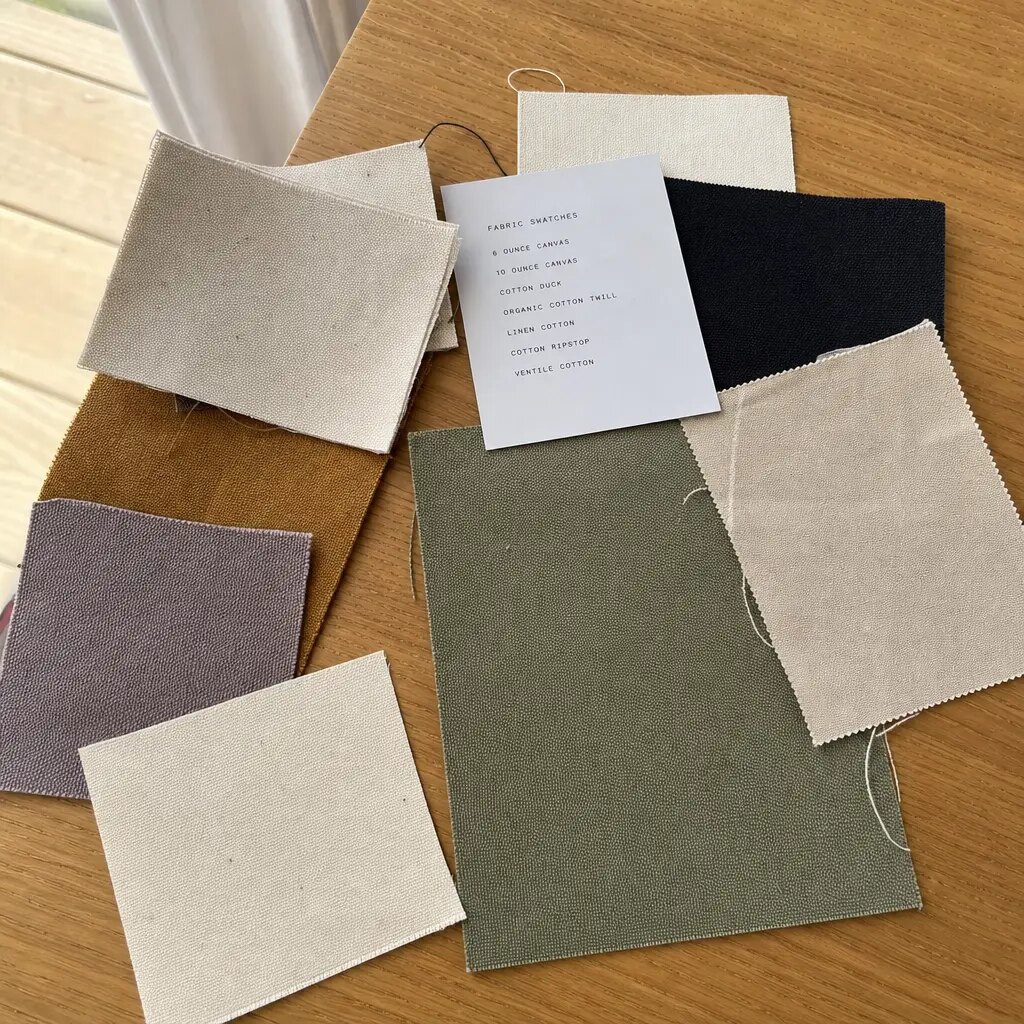
Canvas weight is one of the biggest cost drivers. A lightweight 6 oz to 8 oz canvas, roughly 180-260 GSM, may be acceptable for very short event use, but it often looks thin around a glass bottle. For most craft fair retail programs, 10 oz to 12 oz canvas, roughly 300-380 GSM, is the practical middle range. It has enough body for table display and still keeps sewing, folding, and freight reasonable.
Premium programs may move to 14 oz or 16 oz canvas, roughly 430-540 GSM, especially for two-bottle carriers or holiday gift packaging. The tradeoff is real: thicker fabric increases material cost, slows sewing at bulky seam intersections, and can increase carton volume. If the product needs to stand upright empty, heavier canvas helps. If the product is given away with every bottle purchase, the extra GSM may be hard to justify.
- Budget giveaway: 8 oz canvas can work if the bottle is light and the handle is reinforced.
- Standard retail craft fair carrier: 10 oz or 12 oz canvas is usually the best starting point.
- Premium reusable carrier: 14 oz or 16 oz canvas gives stronger hand-feel but raises cost and freight space.
- Natural unbleached canvas usually has visible slubs; avoid placing fine logo details over heavy texture areas.
How MOQ logic should be built for a bulk pricing plan
Factories do not calculate MOQ only from the total number of pieces. For canvas wine carriers, MOQ is affected by fabric purchasing, cutting efficiency, print setup, thread color, label setup, and packing version. A 3,000-piece order can still be inefficient if it is split into six fabric colors, four logo versions, and three carrier sizes. Procurement should build the pricing plan by style and version, not just by total spend.
A practical RFQ can request price breaks at 500, 1,000, 3,000, and 5,000 pieces per style using the same fabric and artwork. This gives the buyer a clean view of where the supplier's efficiency improves. Many importers also use a base quantity plus optional reorder clause: for example, first order at 1,000 pieces after sample approval, with repeat pricing valid for a defined period if fabric and print remain unchanged. The quote should state whether repeat orders avoid new setup charges.
- Quote line should read like: single-bottle carrier, 12 oz natural canvas, one-color front print, 1,000 pieces.
- Separate quote line should be used for: two-bottle carrier, 12 oz natural canvas, one-color front print, 1,000 pieces.
- If artwork changes by booth, vendor, or fair location, require the supplier to price each print version separately.
- For distributors, collect carton and pallet data at each price break because lower unit cost can be offset by freight volume.
Print method selection: where buyers lose money on artwork
For canvas wine carriers, screen printing is usually the strongest bulk pricing option for simple logos, winery names, craft fair branding, and one- to three-color graphics. It handles repeat runs efficiently and gives a familiar matte look on cotton canvas. However, canvas texture is not paper. Thin lines, tiny serif text, gradients, and reversed-out details can fill in or break during production. Artwork that looks sharp on a digital proof may not pass on actual fabric.
Heat transfer can work for small trial orders, multi-color artwork, or detailed graphics, but it may create a different hand-feel and should be tested for adhesion on textured canvas. Embroidery is rarely the cheapest route for wine carriers because the panel is small, and dense stitching can distort fabric near the bottle curve. Woven labels or side labels are good for brand programs that want a cleaner look without large front print, but they add label MOQ and sewing steps.
- Use screen print for solid logos, bold text, and repeatable bulk programs.
- Use heat transfer only after testing adhesion, edge lifting, and fabric texture visibility.
- Avoid small reversed text under 6 pt on coarse canvas.
- Set print position from measurable points, such as 60 mm below top edge and centered between side seams.
- Request a print strike-off on the same canvas weight before approving bulk production.
Cost drivers that should appear in the supplier quote
A useful supplier quote should show more than one unit price. Procurement teams need enough cost detail to understand why one supplier is higher or lower. For canvas wine carriers, the main drivers are canvas weight, fabric color, cutting yield, number of seams, handle type, divider panel, print method, print colors, labeling, packing, and inspection requirement. If these are hidden, the buyer cannot tell whether a lower quote is an efficiency advantage or a missing specification.
The best quote format does not need to reveal the factory's full internal costing. It should still list the included assumptions. For example, 12 oz natural canvas, self-fabric handles with box-X reinforcement, one-color screen print on one side, individual flat fold, 100 pieces per carton, export carton included, sample charge separate. That level of detail allows procurement to compare supplier A and supplier B without discovering after deposit that handles, dividers, or carton marks were not included.
- Fabric: oz, GSM, natural or dyed, washed or unwashed, shrinkage expectation.
- Construction: dimensions, gusset, bottom shape, divider, handle length, reinforcement.
- Decoration: print method, color count, setup charge, strike-off cost, print area.
- Packing: inner pack method, carton quantity, carton dimensions, gross weight.
- Commercial terms: MOQ, sample lead time, bulk lead time, payment term, quote validity.
Sample approval should test bottle fit, handle strength, and print reality
A canvas wine carrier sample is not approved just because the logo is centered. The sample must be loaded with the actual bottle type, carried by the handle, placed on a table, folded into the proposed packing method, and reviewed under realistic retail conditions. This is especially important for craft fairs, where the carrier may be displayed empty, filled quickly by staff, and handled by shoppers who are also carrying other purchases.
A strong approval process uses one development sample and one pre-production sample. The development sample proves the shape and construction. The pre-production sample should use booked fabric, actual print ink, final label, real reinforcement, and final packing fold. If the buyer approves only a photo, small problems can become bulk defects: bottle too tight, handle too short, divider too loose, print too close to the seam, or logo creased by the fold.
- Bottle fit: carrier should accept the approved bottle without forcing and without excessive side bulge.
- Handle length: should allow comfortable hand carry without dragging the bottle bottom against the wrist.
- Load check: test with filled bottle weight plus reasonable safety margin agreed with the factory.
- Print check: rub lightly with dry and slightly damp white cloth after curing, based on the selected print method.
- Packing fold: confirm the logo is not folded sharply through the center unless that is acceptable.
QC thresholds that protect craft fair retail presentation
Wine carriers sold or distributed at craft fairs have a visible presentation role. Defects that might be tolerated on a low-cost grocery bag can look poor beside handmade goods, wine bottles, and gift bundles. Inspection should focus on the front print panel, handle security, bottle fit, seam closure, and cleanliness. Natural canvas will have some slubs, but oil stains, dark marks across the logo area, or mildew odor should not be accepted.
Procurement can use standard AQL logic, but the defect definitions must match this product. A loose thread inside the bag may be minor. An open side seam, handle not caught in seam, missing divider stitch, wrong artwork, or print smear on the front panel should be major or critical depending on severity. For two-bottle carriers, divider failure is not cosmetic; it can allow glass bottles to hit each other during carry.
- Dimension tolerance: commonly plus or minus 5 mm to 10 mm depending on panel and gusset complexity.
- Print position tolerance: commonly plus or minus 5 mm for simple centered logos.
- Major defect examples: open seam, skipped stitch cluster, loose handle, wrong print color, obvious front stain.
- Critical defect examples: handle failure during agreed load test, sharp foreign object, severe mold odor, wrong product packed.
- Inspection sample should include pieces from different cartons, not only top cartons near the packing area.
Packing and carton planning for distributors and retail buyers
Packing affects landed cost and product condition. Canvas wine carriers are often flat packed, either loose in inner bundles, in individual polybags, or with paper bands for lower plastic use. Individual bags protect the product but add labor, material cost, and unpacking time at a fair booth. Bulk inner packs are faster and cheaper, but they require cleaner carton handling and better carton labeling to avoid mixed versions.
For importers and distributors, carton data should be collected at the quote stage, not after production. Pieces per carton, carton dimensions, gross weight, and net weight determine air freight estimates, ocean consolidation planning, warehouse handling, and retail allocation. Heavy canvas two-bottle carriers can fill cartons by volume before reaching a weight limit. Over-compression may save freight space but create deep creases, especially if the print is folded under pressure.
- Use carton marks showing PO number, style, artwork version, color, quantity, and carton sequence.
- For mixed artwork orders, avoid mixing versions in the same carton unless the warehouse specifically requests it.
- Confirm whether cartons are export-grade and suitable for stacking during international shipment.
- Consider paper banding or bulk inner packs for fair organizers who need fast booth distribution.
- Request carton photos before shipment to verify mark format and packing orientation.
Lead time and schedule risk around craft fair seasons
Craft fair demand is seasonal. Many programs cluster before spring events, harvest festivals, holiday markets, and local wine fairs. The schedule risk is not only sewing time. Fabric availability, print strike-off approval, sample freight, artwork revisions, carton booking, and inspection all consume calendar days. A buyer who requests a quote two weeks before an event is usually forced into expensive shortcuts or weak specifications.
A realistic planning flow is to finalize the specification first, then approve artwork, then produce a physical sample, then start bulk production after deposit and written approval. Lead times vary by factory load and order size, so they should be quoted for the actual season. For time-sensitive craft fair launches, split the risk: approve one core natural canvas style first, then add dyed colors or extra artwork versions only if the schedule supports them.
- Allow time for artwork cleanup before print strike-off; small text and gradients often need adjustment.
- Keep the first production run to one or two fabric colors if the event date is fixed.
- Do not schedule inspection on the same day goods must leave the factory.
- Reserve time for carton relabeling if the buyer has retailer-specific routing or warehouse rules.
- For repeat programs, lock the reorder window and quote validity before the previous stock is fully sold.
Specification comparison for buyers
| Spec decision | Recommended option | When it fits | Buyer risk to check |
|---|---|---|---|
| Canvas weight for standard craft fair sales | 10 oz to 12 oz cotton canvas, roughly 300-380 GSM | Good balance for single-bottle carriers, winery gift packaging, and retail counter stock | Below 280 GSM may collapse when displayed and can show bottle outline too strongly |
| Canvas weight for premium gift bundles | 14 oz to 16 oz canvas, roughly 430-540 GSM | Better for two-bottle carriers, holiday packs, and brands selling reusable packaging as part of the gift | Higher fabric cost and thicker seams can reduce packing efficiency and require stronger needles |
| Handle construction | Self-fabric handles with box-X reinforcement or cotton webbing handles sewn into side seams | Best for repeated carry use and heavier glass bottles | Short stitch length or shallow seam allowance can cause handle tear-out during load testing |
| Interior bottle separation | Canvas divider panel or stitched center divider for two-bottle carriers | Needed when bottles may be carried by shoppers through crowded craft fair aisles | Loose divider dimensions allow bottles to knock together; too tight makes loading slow |
| Logo print method | Screen printing for 1-3 solid colors; heat transfer only for complex artwork or small trial runs | Screen print gives cleaner unit cost for bulk and holds well on canvas texture | Fine reverse text and gradients may fill in on coarse canvas; artwork must be tested on actual fabric |
| MOQ planning route | Start with 500-1,000 pieces per style/color for stable bulk pricing | Useful for distributors, craft fair organizers, wineries, and retail buyers planning seasonal replenishment | Combining too many sizes, colors, or print versions can break production efficiency and raise unit price |
| Packing method | Flat packed in inner polybags or paper bands, then export cartons with carton marks | Works for inventory control, retail backroom storage, and direct distribution to fair booths | Over-compressed cartons can crease heavy canvas and distort carrier shape before display |
| Sample approval | Pre-production sample using booked fabric, real print ink, real handle reinforcement, and final packing fold | Best before confirming deposit for any repeatable bulk pricing plan | Photo samples alone hide hand-feel, bottle fit, seam strength, and print edge quality |
Buyer checklist before sampling
- Define bottle type before quoting: 750 ml wine, champagne, tall craft spirits, or mixed bottle assortment.
- Decide whether the order is for single-bottle, two-bottle, or mixed carrier sets; do not let the factory assume.
- Specify canvas weight in oz and GSM range so competing quotes use comparable fabric.
- State whether the fabric should be natural, bleached, dyed, organic cotton, recycled cotton blend, or conventional cotton.
- Provide artwork size, color count, Pantone references, and exact print position from top edge and side seams.
- Choose handle type, handle length, reinforcement method, and acceptable load target before sampling.
- Set MOQ logic by style, fabric color, print version, and shipment date, not only by total order quantity.
- Request carton dimensions, carton weight, pieces per carton, and packing fold method for freight comparison.
- Approve a physical pre-production sample with real bottle test, print rub test, seam check, and final label placement.
- Include AQL or inspection thresholds for fabric stains, stitch defects, print misregistration, and wrong packing mix.
Factory quote questions to send
- What canvas weight and construction are included in the quoted price: oz, GSM, yarn count if available, and washed or unwashed finish?
- Is the MOQ calculated per total order, per carrier style, per fabric color, or per printed artwork version?
- What is the price break at 500, 1,000, 3,000, and 5,000 pieces for the same approved specification?
- Which print method is included, how many colors are included, and what is the maximum printable area on each carrier size?
- Are screen setup charges, PMS color matching, sample charges, and pre-production sample freight included or separate?
- What handle reinforcement is included in the base quote, and what load test target can the factory support?
- What are the standard packing details: units per inner pack, units per carton, carton size, gross weight, and carton marking method?
- What is the current sample lead time and bulk lead time after sample approval and deposit?
- Can the factory provide photos or a short video of bottle fit testing, print testing, stitching, trimming, and packing for this product type?
- What tolerance will be used for finished dimensions, print position, fabric shade, and piece count per carton?
Quality-control points to confirm
- Finished carrier must fit the approved bottle type without forcing, tilting, or stressing the side seams.
- Handle attachment should pass agreed static load and short carry test before bulk packing.
- Canvas should be free from major oil stains, dark slubs on front print area, mildew odor, and obvious shade panels.
- Print should match approved color standard within agreed tolerance and remain legible on canvas texture.
- Print position should stay within the approved tolerance, commonly plus or minus 5 mm for simple front logos.
- Stitching should be straight enough for retail display, with no skipped stitches, open seams, loose threads, or exposed raw edges unless specified.
- Divider panels on two-bottle carriers should be centered and secured at bottom and side seams.
- Carton assortment must match the purchase order by style, color, and artwork version.
- Packing fold should not create permanent creases across the printed logo area.
- Random inspection should include bottle loading, handle pull, print rub, dimension check, and carton count verification.