Buying Problem: A Bakery Bag That Must Carry Glass
Canvas wine carriers for artisan bakeries sit between two product categories: reusable promotional bags and protective bottle packaging. A normal bakery tote can tolerate soft goods shifting inside. A wine carrier must control bottle movement, handle concentrated weight, and still look appropriate beside bread, pastry boxes, preserves, coffee, or seasonal gift products. That is why procurement teams should not source it as a standard canvas tote with a taller body.
The main buying problem is balancing retail presentation, safe carrying, and landed cost. A carrier that looks good in a sample photo can still fail in store if the handle drop is awkward, the divider is too low, or the print cracks on the folded panel. The RFQ should force every supplier to quote the same construction, not just the same general idea.
- Use this product under the primary category Wine & Bottle Bags, even if the end channel is bakery retail.
- Treat the bottle as the load standard, then add bakery items only after bottle fit is proven.
- Avoid vague RFQ wording such as cotton wine bag or canvas bottle tote without dimensions and reinforcement details.
- Decide early whether the product is a gift carrier, a retail upsell, a distributor pack, or a reusable branded bag.
Define the Bottle and Bakery Use Case First
The fastest way to receive unusable quotes is to request a canvas wine carrier without the bottle dimensions. Suppliers may assume a common 750 ml wine bottle, but bakery programs often pair carriers with sparkling wine, olive oil, craft cider, syrup, coffee concentrate, or tall condiment bottles. These can vary in height, shoulder shape, base diameter, and cap profile.
A buyer should also describe what else goes into the bag. If the carrier holds one bottle only, the body can be narrow and clean. If it holds a bottle plus breadsticks, biscotti, jam, or a gift card, the gusset and divider design change. The extra item may not be heavy, but it changes how the bag stands and how the logo faces the customer.
- Provide bottle height, base diameter, widest shoulder diameter, and filled weight.
- State whether one bottle, two bottles, or a bottle plus bakery accessory will be packed.
- For two-bottle styles, require a sewn divider or reinforced internal panel, not just a stitched center line.
- For retail display, specify whether the carrier must stand upright when empty or only when filled.
- For gift sets, test the bag with final product packaging, not loose bakery samples.
Fabric Weight, Handfeel, and Structure
For wholesale canvas wine carriers, the practical range is usually 10 oz to 12 oz canvas, roughly 280-340 GSM. An 8 oz fabric may reduce cost and fold neatly, but it often feels weak around a glass bottle and may collapse on display. A 14 oz canvas gives strong structure but increases sewing difficulty, carton weight, and freight cost. For many bakery retail programs, 10 oz natural canvas is the commercial starting point, while 12 oz suits premium gift assortments.
Buyers should be precise about fabric finish. Natural cotton canvas has visible specks and shade variation; that can suit artisan bakery branding, but it affects print color. Bleached canvas gives a cleaner print base but can look less rustic. Dyed canvas adds fabric MOQ, shade approval, and more risk of color migration if the bag is packed in humid conditions.
- Quote fabric in both oz and GSM so suppliers cannot substitute a lighter construction.
- Approve a fabric swatch under store lighting, not only from a phone photo.
- Set shrinkage tolerance if the carrier may be washed by consumers.
- Use natural canvas for rustic branding, but allow reasonable cotton seed specks in the QC standard.
- Avoid very heavy canvas unless the retail price or gift positioning can absorb higher freight and sewing cost.
Construction Details That Change Performance
The critical construction points are handle attachment, side seam strength, bottom shape, and divider stability. A bottle concentrates weight in a small footprint. If the bottom seam is weak or the gusset is poorly squared, the carrier twists when lifted. If the handle is attached with only a short straight stitch, the bag may pass visual inspection but fail after repeated carrying.
For bakery buyers, the carrier also needs to feel clean and giftable. Excess thread ends, uneven top hems, and lumpy divider stitching make a low-cost bag look unsuitable for premium bread, pastry, or wine bundles. The pre-production sample should be evaluated as a retail item, not only as a sewing sample.
- Use cross-stitch or bartack reinforcement on handle ends for loaded bottle use.
- Specify handle width, often 2.5-3 cm for comfort, instead of accepting narrow tape by default.
- Define handle drop based on hand carry or forearm carry; long drops may make bottles swing.
- Require the bottom to sit flat when filled if the carrier will be displayed in store.
- For two-bottle bags, set divider height high enough to prevent glass contact near the shoulder.
Print Method and Logo Placement
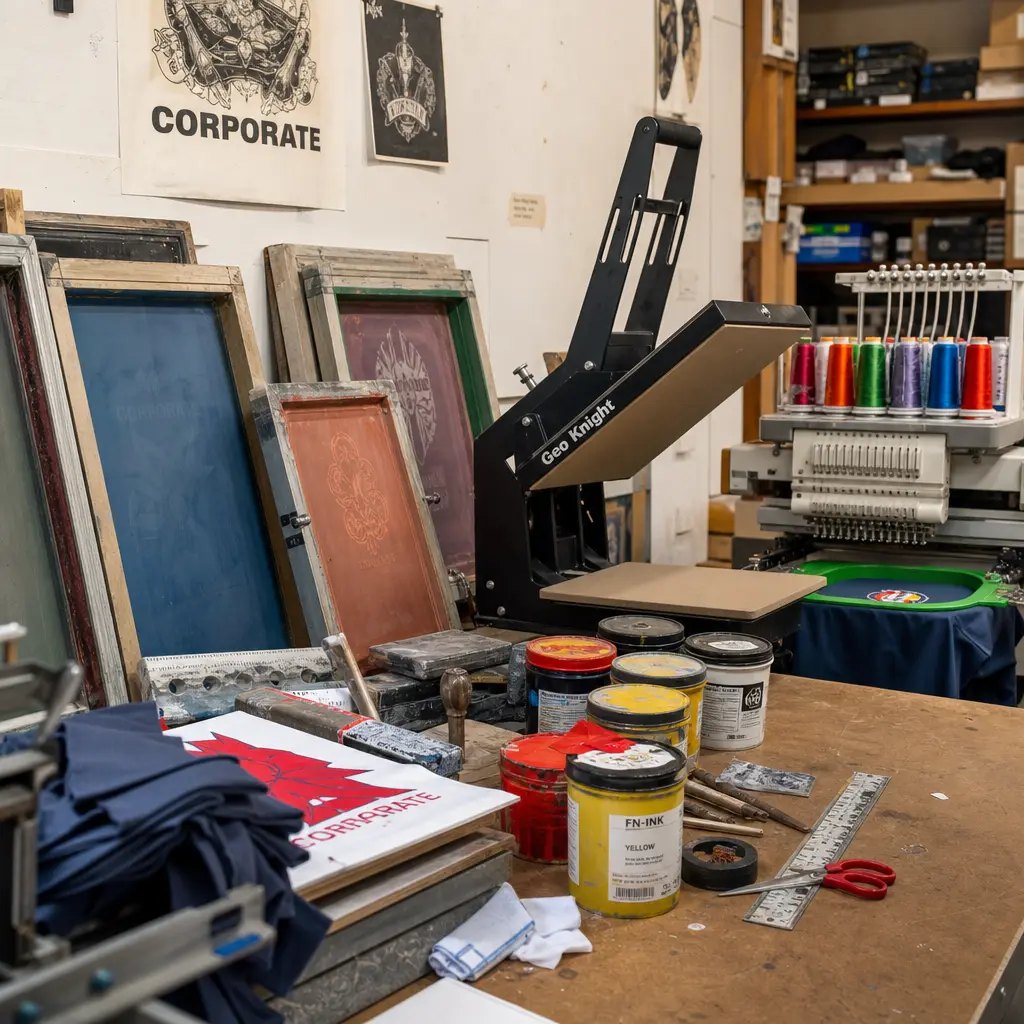
Screen printing is usually the best method for canvas wine carriers when the artwork is a solid bakery logo, small illustration, or one to three colors. It gives good cost control at wholesale quantities and can handle natural canvas texture if the artwork is not too fine. For detailed artwork, gradients, or many colors, heat transfer may be considered, but it can look less integrated with the fabric and must be checked for edge feel and durability.
Logo placement deserves more attention than many RFQs give it. A wine carrier has seams, gussets, folds, and sometimes a divider stitch line. If artwork is too close to the side seam, it may distort after sewing. If the print is placed before cutting without accurate panel control, logo height can vary across production.
- Send vector artwork with Pantone references and exact print size in centimeters.
- Keep fine text and thin lines away from coarse canvas unless a print trial proves clarity.
- Confirm whether printing is done before or after sewing, because it affects alignment and cost.
- Set print position from finished top edge and side seam, not from an approximate center point.
- Approve rub resistance on the actual fabric color, especially for dark ink on natural canvas.
MOQ and Cost Drivers Behind the Quote
MOQ is not only a supplier preference. It comes from fabric availability, cutting efficiency, print setup, label production, and packing labor. A plain natural canvas carrier with one-color screen print may support a lower MOQ than a dyed canvas carrier with custom woven label and multi-color artwork. If buyers compare quotes without knowing which MOQ driver applies, the cheapest offer may be based on a different material or a hidden setup charge.
Cost is also affected by style complexity. A single-bottle flat carrier is simpler than a two-bottle gusseted carrier with divider. Reinforced handles, thicker canvas, inside binding, custom labels, individual polybags, and retail hangtags all add real cost. The RFQ should separate these lines so the buyer can remove or upgrade features intentionally.
- Ask for MOQ per style, per fabric color, and per printed design.
- Request price breaks, for example 500, 1,000, 3,000, and 5,000 pieces, if these are realistic for the program.
- Separate bag cost, print cost, label cost, packing cost, and sample cost in the quotation.
- Clarify whether screen charges are one-time, repeated per reorder, or waived above a quantity.
- Compare CBM and gross weight, because freight can change the real landed cost ranking.
Sample Approval Before Bulk Cutting
The sample stage should prove fit, structure, print, and packing assumptions. A photo sample can screen out obvious issues, but it cannot confirm handfeel, handle comfort, print rubbing, or whether the divider actually prevents bottle contact. For importers and retail buyers, a physical pre-production sample is the strongest control point before fabric is cut in bulk.
Sample approval should not be a casual email saying looks good. It should record approved fabric, dimensions, print size, print position, handle construction, label position, and packing method. If the bulk production differs, the supplier and buyer need a shared reference point for correction.
- Test the sample with the real bottle or a dummy matching the final bottle dimensions and weight.
- Load the carrier and lift it repeatedly by the handle to expose weak stitch points.
- Stand the filled carrier on a flat surface to check balance and bottom shape.
- Rub the print with a dry white cloth to detect obvious ink transfer.
- Photograph the approved sample with measurement notes and keep one sealed reference sample.
Packing, Cartons, and Warehouse Receiving
Canvas wine carriers are often packed flat to save volume, but packing pressure must be controlled. Over-tight cartons can crease printed panels, deform dividers, and make the carrier look tired when unpacked for retail display. For natural canvas, moisture protection is also important because odor and mildew complaints are difficult to solve after arrival.
Buyers should request carton dimensions and gross weight before confirming the order. A quote that looks attractive per piece can become less competitive if the carrier is packed inefficiently. Importers and distributors also need carton marks that match warehouse receiving systems, especially when multiple bakery SKUs or seasonal designs ship together.
- Define pieces per carton and maximum carton gross weight based on warehouse handling rules.
- Use inner moisture protection for ocean shipments, but avoid unnecessary individual polybags if sustainability positioning matters.
- Require cartons strong enough for stacking without crushing divider structure.
- Mark cartons by SKU, design, quantity, gross weight, net weight, carton size, and purchase order number.
- Request pre-shipment packing photos showing flat pack orientation and carton closure.
Lead Time and Schedule Risk
A realistic schedule separates artwork approval, material booking, sample making, sample transit, bulk cutting, printing, sewing, finishing, inspection, packing, and export handover. Many schedule problems start when the buyer treats supplier lead time as if it begins at inquiry date. In practice, production usually starts after deposit, final artwork, and approved sample are complete.
Seasonal bakery programs need extra buffer. Wine carriers for holiday gift sets, farmers market launches, harvest promotions, or distributor catalogs cannot rely on the best-case sewing schedule. Fabric stock changes, print revisions, and third-party inspection bookings all create avoidable delay if they are not built into the sourcing calendar.
- Record sample lead time separately from bulk lead time.
- Define the approval that starts production: deposit, artwork, PP sample, or all approvals together.
- Add buffer for fabric dyeing if using custom color canvas.
- Book inspection before the final week of production when possible.
- For fixed retail launch dates, work backward from warehouse delivery, not factory ship date.
Quality Thresholds for Wholesale Acceptance
Quality control for canvas wine carriers should focus on load safety, presentation, and consistency. A bakery brand may accept natural fabric variation, but it should not accept stains, mildew odor, loose handles, crooked logos, or dividers that fail their purpose. These defects affect retail sell-through and consumer confidence more than small cosmetic variation in natural canvas.
Set measurable thresholds where possible. Finished dimensions can use a tolerance, print position can use a tolerance, and handle load can be tested by a defined weight for a defined time. Visual standards should be supported by an approved sample and defect classification so the inspection team does not make subjective decisions at the carton stage.
- Classify broken handle stitching, severe stains, mildew odor, and wrong artwork as major defects.
- Measure dimensions from finished edges with the bag laid flat and seams aligned.
- Check print position against the approved sample using a simple measurement guide.
- Test a sample quantity from different cartons, not only top pieces from one carton.
- Reject cartons with water damage or heavy compression if the product is for retail display.
Specification comparison for buyers
| Spec decision | Recommended option | When it fits | Buyer risk to check |
|---|---|---|---|
| Fabric weight | 10 oz to 12 oz canvas, roughly 280-340 GSM, pre-shrunk if washing is required | Standard bakery gift carriers holding one bottle, breadsticks, preserves, or small retail bundles | Too light collapses around the bottle; too heavy raises freight cost and may make seams bulky |
| Bottle format | Single-bottle carrier for entry programs; two-bottle carrier with divider for premium gifting | Single format for wine-and-bakery promotions; two-bottle format for holiday hampers and distributor packs | Divider height must stop bottle glass contact; short dividers look cheaper and fail drop handling |
| Handle construction | Self-fabric handles with cross-stitch or bartack reinforcement at stress points | Reusable retail bags where consumers may carry glass bottles plus bakery items | Handle drop and stitch density must be approved on sample, not described only as reinforced |
| Printing method | Screen print for solid bakery logos; heat transfer only for detailed artwork or short runs | Screen print fits most wholesale programs with one to three colors on natural canvas | Ink bleeding on coarse canvas, low rub resistance, and artwork placed too close to seams |
| Lining or coating | Unlined canvas for low cost; laminated or wipeable lining only when food contact risk is controlled | Unlined works when bottles are packaged and bakery items are wrapped separately | Unclear food-contact assumptions can create compliance questions and odor problems |
| MOQ logic | MOQ by fabric color, bag size, and print setup; consolidate colors to protect unit cost | Importers and distributors building repeat seasonal SKUs or private-label bakery assortments | Quotes with low MOQ may hide higher setup charges, fabric surcharges, or limited inspection options |
| Packing method | Flat packed in export cartons with moisture protection and divider samples retained for QC | Best for ocean freight and warehouse receiving where cartons must stack cleanly | Over-compression can crease printed panels and deform boxed dividers before retail display |
| Lead time basis | Separate sample lead time, bulk production time, printing time, and final inspection buffer | Programs tied to harvest season, Christmas hampers, bakery openings, or distributor catalog dates | Supplier promises based only on sewing capacity often ignore fabric booking and artwork approval delays |
Buyer checklist before sampling
- Define bottle size, quantity per carrier, and whether bakery items will share the same bag cavity.
- Specify canvas weight in oz and GSM, fabric color, shrinkage tolerance, and whether the fabric must be washed or unwashed.
- Confirm finished dimensions with tolerance, divider height if applicable, handle drop, handle width, and reinforcement method.
- Send print-ready artwork with Pantone references, print size, print position, and acceptable color deviation on natural canvas.
- State target order quantity by SKU, expected reorder quantity, shipment window, and whether split delivery is required.
- Request sample photos plus physical sample approval for fabric handfeel, print clarity, seam strength, and bottle fit.
- Include packing requirements: pieces per polybag if any, pieces per carton, carton marks, moisture protection, and pallet preference.
- Require quote data broken into bag unit price, print charge, label charge, sample charge, tooling or screen charge, carton dimensions, and gross weight.
- Set QC acceptance criteria for stains, broken stitches, handle pull strength, divider alignment, print rubbing, and carton damage.
- Confirm export documents, HS code basis, Incoterms, loading port, and whether supplier can support third-party inspection.
Factory quote questions to send
- What canvas weight in oz and GSM is included in the quoted price, and is it stock fabric or made-to-order fabric?
- What finished bag size and tolerance are quoted, including gusset, handle drop, divider height, and seam allowance?
- Which print method is included, how many colors, what print area, and are screen charges or plate charges separate?
- What MOQ applies per size, per fabric color, and per print design, and what price breaks are available at higher quantities?
- What is the sample cost, sample lead time, and what changes are allowed before bulk production without restarting the schedule?
- What bulk lead time starts after which approval: deposit, artwork, pre-production sample, fabric approval, or all of these?
- What packing is included in the price, including polybag use, carton size, carton ply, carton marks, and moisture protection?
- What QC tests can be performed in-house, and can the supplier support AQL inspection before shipment?
- What are the estimated carton dimensions, gross weight, and CBM per 1,000 pieces for each carrier style?
- Which Incoterms are quoted, what is the loading port, and what export documents are normally supplied?
Quality-control points to confirm
- Fabric weight verified against approved swatch within agreed tolerance, with no oil marks, mildew odor, shade panels, or excessive slubs on the main print face.
- Finished dimensions measured after sewing, including width, height, gusset, divider height, and handle drop, with tolerance agreed before production.
- Handle attachment tested by pull or load simulation using the target filled weight plus safety margin, with no seam tearing or stitch popping.
- Divider alignment checked on two-bottle carriers so glass bottles do not knock together during normal handling.
- Print adhesion tested by dry rub and light scratch; ink should not flake, transfer heavily, or fill fine logo details beyond approved sample.
- Stitching inspected for skipped stitches, loose thread ends, uneven top edge, puckering, broken needle marks, and bartack placement.
- Bottle fit tested with the actual target bottle or a dimensionally equivalent dummy bottle before approving bulk cutting.
- Packing checked for correct count per carton, dry cartons, legible carton marks, and no print creasing from over-tight packing.