Start With the Real Buying Risk
Canvas wine carriers sit in an awkward place for many artisan bakeries. They are not everyday consumables like bread bags, pastry boxes, or paper shopping bags. More often, they appear around a sales moment: holiday hampers, wine-and-pastry bundles, winery collaborations, farm shop displays, loyalty gifts, distributor catalog launches, or corporate gifting. The product needs to feel premium, but the forecast may still be soft. That tension is exactly where MOQ negotiation matters.
A weak RFQ asks only, “What is your minimum order?” The supplier can answer, but the number may hide several different minimums: fabric purchase, cutting efficiency, screen setup, sewing line changeover, divider labor, packing allocation, and carton marking. A better RFQ separates those variables. Ask for the minimum by body style, fabric color, logo version, packing method, and delivery window. You will get a quote that is easier to compare and easier to challenge.
The same canvas wine carrier can create three very different sourcing problems. A bakery group might need 2,000 units split across eight store logos. A food gift distributor may need one carrier body with several private-label prints. A single bakery may want a careful first run for a Christmas bundle. The construction may be nearly identical, yet the right MOQ structure will not be identical.
Give the factory enough commercial context to help you. Share the target order range, number of artwork versions, expected reorder window, and whether you can accept stock natural canvas. Ask for price breaks at realistic points instead of pushing for one magic MOQ. A quote at 300, 500, 1,000, and 2,000 pieces often tells procurement more than a single minimum ever will.
- Negotiate total body MOQ separately from per-logo print MOQ.
- Use stock natural canvas and one standard size for the lowest-risk first order.
- Ask for price breaks at practical levels such as 300, 500, 1,000, and 2,000 pieces where relevant.
- Avoid custom fabric color, custom webbing, and several sizes in the first trial unless sales demand is proven.
- Clarify whether lead time changes when the order is split into multiple logos or destinations.
Define the Loaded Product First
A carrier described as a “wine bag” may end up holding much more than wine. Bakeries and food gift brands often combine still wine, sparkling wine, cider, olive oil, vinegar, syrup, liqueur, coffee concentrate, jam, biscotti, crackers, chocolate, or a small bakery box. These items do not behave the same inside a bag. They vary in height, diameter, shoulder shape, filled weight, and center of gravity.
Do not let the supplier price from a generic wine-bag assumption if your contents are specific. A standard 750 ml still wine bottle is usually easier to fit than a wide sparkling bottle. A square olive oil bottle may need more gusset than a round wine bottle. A cookie sleeve or jam jar beside the bottle changes the way the bottom sits. If the opening is too tight, shop staff will struggle to pack the set quickly. If the bag is too loose, the gift looks unfinished.
Decide whether the item is packaging, reusable packaging, or merchandise. Basic gift packaging can prioritize cost, speed, and acceptable presentation. A reusable branded item needs stronger attention to canvas handfeel, stitch consistency, print quality, labels, and long-term appearance. Corporate programs add another layer: carton accuracy and destination packing may matter as much as the bag itself.
Send a simple dimension sheet with the RFQ. Include bottle height, maximum body diameter, base diameter, shoulder width, filled weight, and photos with a ruler if drawings are not available. If the carrier must work for several products, sample the largest, tallest, and heaviest combination. Empty display bottles are useful for photography, but they are not enough for approval.
- Measure height, maximum diameter, base diameter, shoulder width, neck height, and filled weight.
- Confirm whether the carrier must fit still wine, sparkling wine, olive oil, syrup, vinegar, or mixed gift sets.
- For two-bottle styles, specify divider height, divider width, and whether it is secured at the bottom.
- For bakery bundles, test the actual box, sleeve, jar, or insert beside the bottle.
- Approve fit with filled or equivalent-weight bottles, not empty display bottles only.
Choose Canvas by Structure, Not Habit
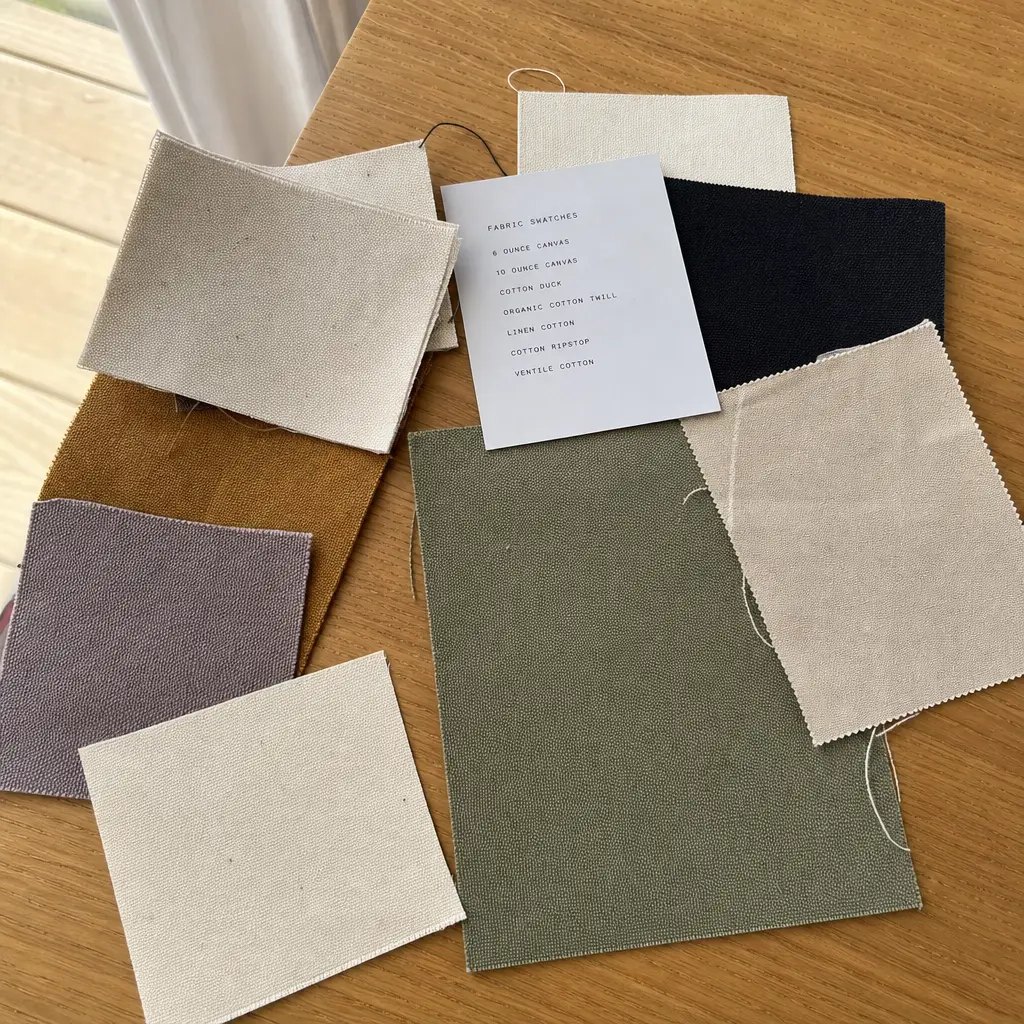
Fabric weight drives cost, appearance, and how confidently the carrier stands on a shelf. For most bakery gifting programs, 10 oz to 12 oz cotton canvas, about 340-410 GSM, is a sensible starting range. It has more structure than lightweight promotional cotton and can look substantial enough for glass bottles when the seams, handles, and bottom are built correctly.
Lighter 6 oz to 8 oz cotton can work for short-life promotional use, but it may collapse around a bottle and feel too thin for premium food gifting. That does not automatically make heavier canvas the answer. A 14 oz or 16 oz fabric can feel impressive in hand, but it adds material cost, carton weight, seam bulk, and sewing difficulty. At handle attachments, dividers, folded hems, and boxed corners, heavy fabric creates thick layers that can slow production and distort the finished shape.
Natural canvas has its own character. Flecks, slubs, seed marks, yarn knots, and shade variation are common. Many artisan bakery brands like that look because it feels honest and tactile. Still, “natural” must be defined. If cleaner appearance matters, approve a reference sample and state what marks are acceptable. Bleached or white canvas can look sharper for premium retail, but it needs stronger stain control and may need protective packing. Dyed canvas can support brand color, yet it usually adds lab dip work, dye-lot control, and higher material minimums.
If the carrier is marketed as washable or long-term reusable, write that into the specification. Many wine carriers are not formally sold as washable goods, but customers may assume canvas can be washed. If washing matters, define shrinkage limits, whether measurements apply before or after washing, and what print durability test is required.
- 6-8 oz cotton: lower cost, softer body, best for light promotional use.
- 10-12 oz canvas: balanced option for most single-bottle and two-bottle bakery gift carriers.
- 14 oz and above: premium handfeel but higher cost, freight weight, seam bulk, and sewing risk.
- Natural canvas: flecks and seed marks are normal unless cleaner-grade fabric is specified.
- Dyed canvas: useful for brand color but usually increases MOQ and approval complexity.
Lock the Construction Details
Bottle fit is controlled by finished dimensions, not by the product name. Specify width, height, gusset, boxed bottom depth, opening size, handle drop, handle width, and divider height in millimeters. If the fit is tight, ask whether the factory can hold about +/-5 mm on width and height. Loose gift-bag styles may tolerate more variation. Tight sparkling wine or mixed bakery sets usually cannot.
Handles need their own line in the specification. A 2.5-3.0 cm cotton webbing handle is often easier to standardize than a folded self-fabric handle. Webbing is consistent, familiar to factories, and easier to reinforce. Self-fabric handles can look more integrated with the body, but they add sewing steps and can create bulky attachment points. Either option can fail if the reinforcement is poor.
Define the reinforcement method before sampling. Bartacks, box-cross stitching, reinforced folded seams, or other methods may all be proposed, but they are not interchangeable. The approval sample should show stitch density, thread color, seam allowance, handle placement, and whether the reinforcement sits cleanly on the canvas without puckering.
For two-bottle carriers, treat the divider as a safety component. It should be high enough to reduce glass contact and secure enough not to pull loose when loaded. Ask whether it is stitched only into the side seams or also anchored at the bottom. Bottom anchoring can improve separation, but it affects sewing time and must be sampled. The boxed bottom also matters. A carrier that leans, twists, or opens at the corners will look cheap even if the fabric is expensive.
- State finished dimensions in millimeters with tolerance for every critical point.
- Define handle width, handle drop, attachment position, and reinforcement type.
- Approve divider height and bottom anchoring on a loaded two-bottle sample.
- Check boxed bottom shape, seam allowance, and standing stability.
- Do not approve bulk cutting while size, handle drop, or divider construction is unresolved.
Use Standardization as the MOQ Lever
Factories set MOQs for practical reasons. Fabric rolls must be purchased. Cutting tables work best at certain batch sizes. Printing needs screens, ink mixing, and setup time. Sewing lines lose efficiency when they change construction. Packing teams need clear allocation rules. When a buyer requests custom dyed canvas, two handle types, four logo versions, two capacities, and different destination packs, the order becomes several small jobs bundled into one purchase order.
The cleanest negotiation lever is standardization. A bakery group can often use one natural canvas body, one handle width, one divider construction, one print position, and one carton format while changing only the logo. A distributor can place one combined order and allocate production across private-label prints. This keeps the factory efficient without forcing the buyer to hold too much inventory under one design.
Ask for a combined body MOQ and separate per-logo print MOQs. The factory may prefer to cut and sew one larger body run, then print smaller logo batches if the artwork is simple and the print position is common. This structure is useful for multiple bakery locations, seasonal sub-brands, and distributor programs where the physical product should remain the same.
Be honest about future reorders. Suppliers may support a more flexible opening order when they see a stable program, but exaggerated volume promises rarely help. Share the real buying logic: first campaign, holiday reorder window, continuation plan if sell-through works, and any expected artwork changes. Stability in fabric, size, and construction gives you more negotiating power than a vague promise of future volume.
- Use one fabric color, one body size, one handle style, and one divider construction where possible.
- Group all logo versions into one production window.
- Ask for combined cutting and sewing with separate print setup per logo.
- Use stock materials to avoid fabric dye minimums and lab dip delays.
- Compare total landed cost per sellable unit, not only FOB unit price.
Match the Print Method to the Artwork
Water-based screen printing is usually the best default for bakery logos with one to three solid colors. It gives a natural handfeel on cotton canvas and is efficient for repeat programs. The limitation is the canvas surface. Coarse weave, slubs, and seed marks can soften edges, especially on fine serif text, small QR codes, distressed illustrations, thin outlines, and tight registration.
Heat transfer can make sense for detailed seasonal artwork, multicolor illustrations, or small per-logo quantities where screen setup is not practical. It can produce cleaner detail on rough canvas, but it changes the surface feel. Buyers should approve edge quality, adhesion, flexibility, and how the graphic looks after folding and carton compression. A transfer that looks sharp on a table may not feel right on an artisan bakery product.
Some suppliers may offer digital printing. Test it on the exact canvas color and weight before relying on it. Natural canvas is not a bright white, smooth substrate, so colors can look warmer, duller, or less crisp than they do on a monitor or paper proof. If brand color matters, provide Pantone references and approve a strike-off under consistent lighting.
Print placement should be measured, not guessed. State the distance from the top edge, side seam, bottom fold, or centerline, and set a tolerance. Printing close to seams, across gussets, or on both sides can change the production method because the factory may need to print before sewing or use positioning jigs.
- Use screen print for simple marks, slogans, and repeat bakery programs.
- Use heat transfer for detailed seasonal graphics only after adhesion and handfeel approval.
- Avoid very small text unless the supplier confirms a proven minimum line weight on canvas.
- Approve strike-off on final fabric weight and color.
- Measure logo placement from fixed reference points, not visual centering only.
Read the Quote Like a Cost Sheet
A useful B2B quote should show more than a unit price. Procurement needs to know what is included, what is excluded, and what changes when quantity, logo count, fabric color, print method, or packing changes. A low unit price can become expensive once screen charges, sample courier, individual polybags, barcode stickers, stronger export cartons, inspection support, or palletization are added.
Ask the supplier to separate the base carrier from decoration and packing. The base carrier cost should include fabric, cutting, sewing, handle reinforcement, boxed bottom, and divider if required. Decoration should cover screens, artwork separation, ink colors, print labor, strike-off, and curing. Packing should show inner pack method, polybag or paper band if used, carton grade, carton marks, barcode labels, and pallet labor when needed.
Compare quotes on the same Incoterm. One supplier may quote EXW with simple bulk packing while another quotes FOB with export cartons and carton marks. Those prices are not directly comparable. Ask for carton quantity, carton dimensions, gross weight, net weight, and CBM so the freight team can estimate shipping cost and warehouse handling.
Multi-location programs need allocation details early. Sorting by logo, applying barcodes, labeling cartons by store, or building destination-specific cartons takes time and creates error risk. If those tasks are not quoted before production, they often surface at the packing stage, when the buyer has the least leverage and the schedule is already tight.
- Base bag: fabric, cutting, sewing, handle reinforcement, bottom, and divider.
- Decoration: screens, ink colors, strike-off, print labor, curing, and artwork revisions.
- Packing: inner pack, polybag or paper band, carton grade, carton marks, barcodes, and pallets.
- Commercial terms: MOQ, price breaks, sample fees, payment term, Incoterm, quote validity, and lead-time trigger.
- Logistics data: carton quantity, carton size, gross weight, net weight, CBM, and destination allocation.
Approve Samples in the Right Order
The first sample should often be plain. A plain fit sample confirms bottle insertion, standing shape, gusset depth, boxed bottom, handle comfort, divider position, and overall construction before money is spent on print setup. It should use the proposed fabric weight or the closest available production canvas. If the fabric is substituted, the supplier should say so clearly.
Once fit and construction are approved, move to a printed pre-production sample. This sample should lock the final product: fabric, dimensions, logo size, print color, print position, handle construction, stitching method, divider build, label placement, and packing style. Do not approve a printed sample while the handle drop, fabric weight, or divider construction is still undecided. That creates confusion later.
Handle the sample the way staff and customers will handle it. Load the carrier with the intended bottle or gift set. Lift it several times. Set it on a counter. Insert and remove the bottle. Check whether the opening collapses, whether the handle feels comfortable, and whether the carrier stands cleanly. For two-bottle carriers, move the loaded bag and listen for bottle contact. If the divider shifts, pulls, or sits too low, correct it before bulk cutting.
Keep a controlled approval set. Ideally, one sealed sample stays with the factory, one with the buyer, and one with the inspection company if an inspection is planned. The approval record should include photos, measurements, fabric reference, print reference, tolerances, and any accepted natural-canvas characteristics. This prevents final inspection from becoming a debate about memory.
- Plain fit sample: approve size, bottle fit, standing shape, gusset, divider, and handle comfort.
- Printed pre-production sample: approve logo color, position, coverage, handfeel, labels, and packing.
- Retain buyer, factory, and inspection reference samples where possible.
- Record approved changes in the purchase order or specification sheet.
- Do not release bulk production based only on a digital mockup.
Set QC Standards for Loaded Glass
Canvas wine carriers hold glass, so visual inspection is not enough. A bag can look acceptable on a table and still fail under load. Handle tearing, open bottom seams, weak divider stitching, and incorrect fabric are functional risks. Loose threads may be minor. An unsafe handle failure is critical. Classify defects by customer risk before production begins.
Make the inspection measurable. Check bulk fabric against the agreed GSM or oz tolerance. Measure finished dimensions against the approved tolerance. Check print placement from defined reference points. Judge natural flecks, slubs, and shade variation against the approved sample, not against a new opinion at final inspection. Consistency is the point.
Functional checks should be repeatable. A practical loaded lift test can use the expected filled bottle weight plus an agreed safety margin. The inspector should look for handle tearing, stitch failure, seam distortion, divider movement, fabric damage, and bottom deformation. The load, number of lifts, and pass/fail criteria should be agreed with the supplier and inspection team before production starts.
Print QC needs both appearance and curing checks. Inspect for tilted logos, wrong artwork, under-cured ink, sticky surfaces, cracking, lint contamination, and ink transfer. A dry rub, tape pull, or supplier-approved adhesion check can catch curing issues before packing. On natural canvas, the approved strike-off should define acceptable edge softness and color appearance.
- Critical: wrong logo, unsafe handle failure, wrong fabric, severe contamination, or unusable construction.
- Major: open seam, broken reinforcement, loose divider, wrong size, tilted logo, or missing packing label.
- Minor: trimable thread ends, slight approved slub variation, or small print texture variation.
- Functional: load with expected contents plus agreed safety margin and lift by handles.
- Print: check placement, curing, adhesion, rub resistance, and ink transfer before packing.
Plan Packing and Warehouse Flow
Packing affects landed cost, product presentation, and warehouse accuracy. Flat packing is usually efficient for single-bottle canvas carriers because it reduces carton cube and keeps storage simple. But flat does not mean crushed. Over-compression can crease printed panels, especially with heavy canvas or large ink areas. Two-bottle carriers with dividers may need looser packing so internal panels are not distorted.
State sustainability requirements in the RFQ. Many bakery brands prefer no individual polybag, paper bands, or bulk inner packs. That can work for natural or darker canvas on controlled transport routes. For white canvas, humid ocean freight, long storage, or premium retail display, some protective packing may still be justified. Decide this before comparing quotes, not after production is finished.
Carton marking becomes critical when one order includes several logos, bakery locations, or distributor SKUs. Cartons should identify item code, logo version, quantity, carton number, gross weight, net weight, and destination if needed. The packing list should match carton labels exactly. Mixed cartons should be avoided unless the buyer’s warehouse has approved the method.
Set a carton gross weight limit. Heavy cartons may reduce packaging material cost, but they can be difficult to handle and may crush lower cartons during storage. Very small cartons protect the goods but increase freight cube and receiving work. Ask for carton dimensions and packing quantity before final quote approval so logistics can price the order properly.
- Use flat packing when it reduces CBM without damaging print or divider shape.
- Avoid tight compression on large prints, heavy canvas, and reinforced two-bottle dividers.
- Use recyclable polybag only when cleanliness, humidity, white fabric, or retail presentation requires it.
- Require carton labels by logo version, SKU, carton number, and destination allocation.
- Confirm carton size, quantity, gross weight, net weight, and CBM before final approval.
Specification comparison for buyers
| Spec decision | Recommended option | When it fits | Buyer risk to check |
|---|---|---|---|
| Fabric weight | 10 oz to 12 oz cotton canvas, approximately 340-410 GSM, with bulk fabric tolerance stated as +/-5% unless agreed otherwise | Most single-bottle and two-bottle bakery gift carriers where the bag should stand better than lightweight cotton | Below 8 oz may collapse around glass bottles; above 14 oz can increase seam bulk, needle breakage, carton weight, and cost without solving weak-handle construction |
| Finished size basis | Specify finished width, height, gusset, bottom shape, handle drop, and divider height in millimeters with tolerance | Necessary when fitting 750 ml wine, sparkling wine, olive oil, vinegar, syrup, or mixed bakery gift sets | A generic wine-bag size may not fit wider sparkling bottles or square oil bottles; tight styles should use +/-5 mm size tolerance on critical dimensions |
| Capacity and divider | Single-bottle carrier for low-risk trials; two-bottle carrier with stitched and bottom-secured divider for premium bundles | Single bottle fits impulse gifts and add-on retail; two bottle fits winery collaborations, corporate gifts, and holiday hampers | A loose or low divider allows bottle-on-bottle impact; divider height and bottom anchoring must be approved on loaded samples |
| Handle construction | 2.5-3.0 cm cotton webbing or folded self-fabric handles with bartack or box-cross reinforcement | Webbing is easier to standardize; self-fabric gives a cleaner bakery-branded look | Handle drop, seam allowance, stitch density, and reinforcement placement determine safety more than fabric weight alone |
| Print method | Water-based screen print for simple one to three color logos; heat transfer only when artwork detail or low design quantities require it | Screen print fits repeat programs; transfer fits detailed seasonal graphics or short promotional versions | Approve a strike-off on the final canvas because coarse texture, natural flecks, and fabric shade affect edge sharpness and ink color |
| MOQ structure | Negotiate one combined body MOQ with smaller per-logo print quantities where all bodies share size, fabric, handle, divider, and packing | Best for bakery groups, food gift distributors, or private-label programs with several logos | Supplier may quote a low MOQ but recover cost through screen charges, cutting loss, fabric dye minimums, packing labor, or sample fees |
| Sample sequence | Plain fit sample first; printed pre-production sample after dimensions, fabric, handle, divider, and artwork are frozen | Useful when actual bottles, gift inserts, and shelf display shape matter | Skipping the plain fit sample risks approving a beautiful print on a carrier that fails the buyer’s actual bottle or gift configuration |
| Packing format | Flat packed in export cartons, with bulk inner packs, paper bands, or recyclable polybag only where cleanliness, humidity, or retail presentation requires it | Flat pack reduces CBM for many single-bottle carriers; protective packing helps light canvas and premium retail sets | Over-compression can crease print panels and distort dividers; carton marks must separate logo versions, SKUs, and destinations |
| Lead time control | Separate RFQ, sample, approval, material booking, cutting, printing, curing, sewing, inspection, packing, and shipment booking dates | Important for holiday hampers, corporate gifting, harvest events, and bakery-winery launches | Production lead time usually starts after deposit and final approvals, not from first quote date |
Buyer checklist before sampling
- Define the intended use: retail gift packaging, reusable merchandise, event giveaway, corporate hamper component, distributor SKU, or bakery-winery collaboration item.
- List every product the carrier must hold: 750 ml still wine, sparkling wine, olive oil, vinegar, syrup, liqueur, coffee concentrate, jam jar, cookie sleeve, bakery box, or insert.
- Measure the real contents: bottle height, maximum body diameter, base diameter, shoulder width, filled weight, box width, sleeve thickness, and total loaded weight.
- Specify finished dimensions in millimeters: width, height, gusset, boxed bottom depth, handle drop, handle width, opening size, seam allowance expectation, and divider height if applicable.
- State fabric clearly: cotton canvas weight in oz and GSM, color, natural/bleached/dyed status, acceptable slubs and seed marks, shrinkage expectation, and bulk weight tolerance.
- Choose handle construction: self-fabric or webbing, width, length, drop, attachment position, reinforcement type, stitch color, and required loaded-use test.
- Choose print route by artwork complexity: number of colors, Pantone references if needed, logo size, print area, print position, handfeel, rub resistance, and wash expectation if relevant.
- Request MOQ by total order quantity, fabric color, body size, handle option, divider option, and logo version so all order splits are visible.
- Ask if the factory can combine cutting and sewing across multiple logo versions while changing only screen setup, ink, labels, carton marks, or destination packing.
- Require a plain fit sample before print setup and a printed pre-production sample before bulk cutting, bulk printing, or final material commitment.
Factory quote questions to send
- What is your MOQ by total quantity, fabric color, body size, handle type, divider construction, and printed logo version?
- Can you quote a combined body MOQ with separate per-logo print MOQs if all versions use the same fabric, size, handle, divider, and packing?
- Which canvas weight are you quoting in both oz and GSM, and what bulk tolerance will be applied to roll inspection?
- Is the fabric stock natural canvas, bleached canvas, dyed canvas, or custom color matched canvas, and what minimum applies to each option?
- What finished size tolerance can you hold for width, height, gusset, handle drop, and divider height on this construction?
- Which print method is included, how many colors are included, what is the maximum print area, and when does the price change?
- Are screen charges, artwork separation, printed strike-off, pre-production sample, courier cost, and revision samples included or charged separately?
- What handle reinforcement will be used: bartack, box-cross, reinforced folded seam, or another method, and what stitch density is standard?
- Can you perform a loaded pull check using the buyer’s expected loaded weight plus a defined safety margin, and can the method be repeated during inspection?
- How is the divider built for two-bottle versions: full-height or partial-height, stitched to side seams only or also secured at the bottom?
Quality-control points to confirm
- Bulk fabric weight should be checked from production rolls against the agreed oz/GSM range; +/-5% is common for canvas unless a tighter tolerance is written.
- Finished critical dimensions should be measured on approved inspection samples, with tight bottle-fit programs typically using +/-5 mm for width and height and agreed tolerance for gusset and handle drop.
- Handle attachment must pass the agreed loaded pull or lift test using the buyer’s expected loaded weight plus a safety margin, especially for glass bottles and two-bottle formats.
- Handle reinforcement should be checked for missing bartacks, weak box-cross stitching, short stitch runs, skipped stitches, broken threads, and insufficient seam allowance.
- Divider height, straightness, bottom anchoring, and side stitching should be checked after loading two bottles; bottles should not strike each other during normal handling.
- Bottom seams and boxed corners should be inspected for open corners, needle damage, seam slippage, distortion, and inability to stand when loaded.
- Print placement should be measured from the top edge, side seam, bottom fold, or agreed reference points instead of judged only by eye.
- Printed color should be compared with the approved strike-off under consistent lighting because natural canvas changes perceived ink shade.
- Print curing and adhesion should be checked by dry rub, tape pull, or the supplier’s standard approved method before packing, especially for dark ink or heat transfer.
- Natural canvas flecks, slubs, seed marks, yarn knots, and shade variation should be defined as acceptable or unacceptable before bulk production.