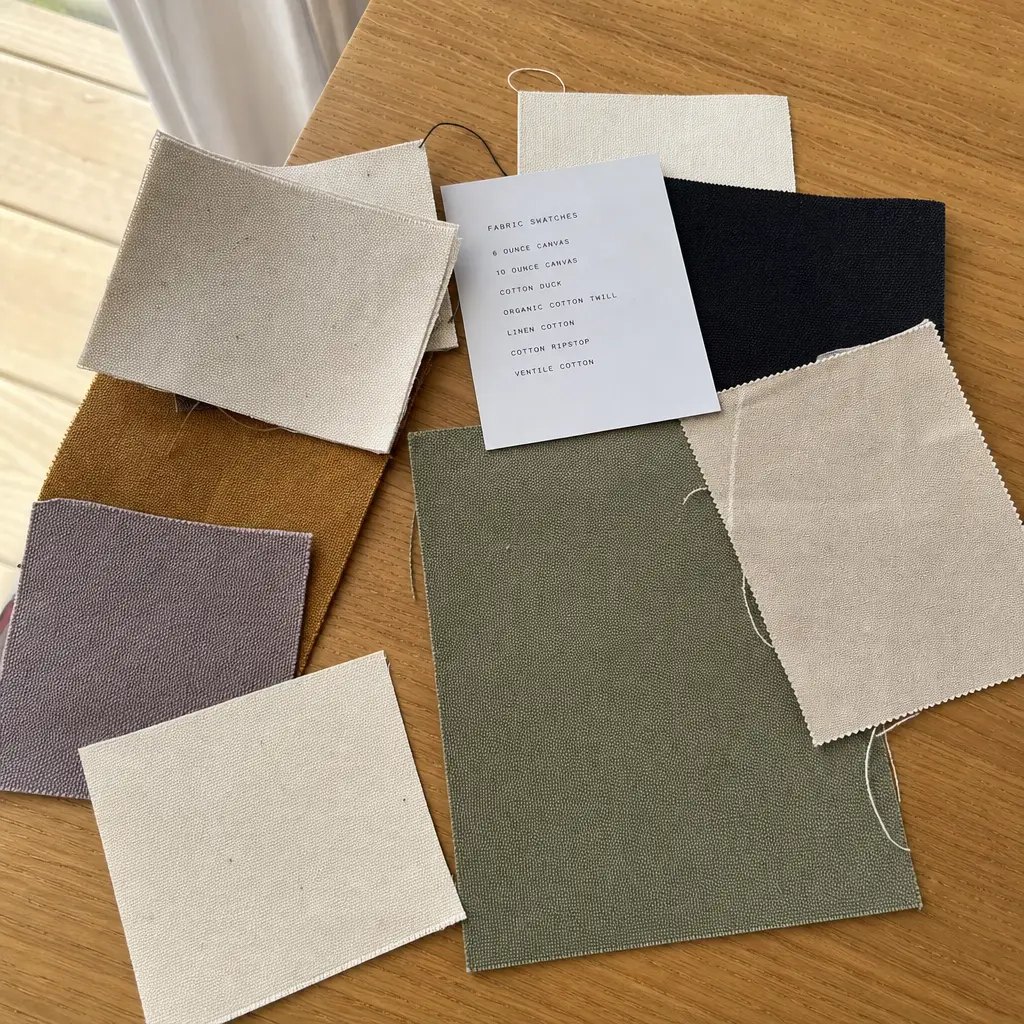
Start With the Bakery Program, Not the Bag Name
Canvas wine carriers for artisan bakeries are rarely just a generic packaging item. In B2B orders, they usually belong to a specific revenue plan: sourdough-and-wine bundles, holiday hampers, local winery collaborations, tasting-room add-ons, corporate gifts, or specialty food distributor assortments. The carrier needs the right craft look, but it also has to hold glass safely, protect the bakery brand, and arrive before a fixed selling window.
The sourcing problem often starts with an RFQ that says only 'canvas wine bag' and includes a reference image. One supplier may quote a flat 8 oz promotional sleeve. Another may price a 12 oz two-bottle carrier with a sewn divider. A third may assume retail packing, hangtags, and barcode labels. These products may look similar on a screen, but they carry different fabric consumption, cutting loss, sewing time, print setup, packing volume, and inspection work.
Before comparing prices, define how the carrier will be used. Will bakery staff load bottles at checkout? Will a distributor pre-pack gift sets in a warehouse? Will customers carry the carrier several blocks? Will the item be sold as reusable merchandise or given away as promotional packaging? Those answers shape the fabric weight, handle reinforcement, divider construction, print durability, carton strength, and schedule buffer.
- For one-bottle programs, confirm bottle height, diameter, filled weight, and whether the neck should remain visible for merchandising.
- For two-bottle programs, require a functional divider or stitched channel rather than simply increasing the bag width.
- For mixed bakery bundles, define whether the carrier also holds bread, crackers, jam, gift cards, tissue, inserts, or vouchers.
- For retail resale, include barcode, hangtag, warning label if applicable, SKU separation, shelf presentation, and carton marking in the RFQ.
- For promotional giveaway use, decide whether lower-cost construction is acceptable or whether reuse is part of the brand promise.
- For distributor programs, confirm whether one universal carrier must serve several bakery clients or bottle formats, because universal sizing can compromise fit.
Turn Bakery Branding Into Factory Specs
Artisan bakeries choose canvas because it feels warm, tactile, and close to handmade food. Procurement still has to turn that feeling into production language. 'Premium natural canvas' is not enough for a factory to price, cut, sew, print, and inspect consistently. A stronger spec names the fabric weight, finished dimensions, tolerance, handle construction, divider design, print method, thread color, label placement, packing format, carton data, and acceptance criteria.
This step matters because bakery brand assets are often designed first for paper bags, labels, bread sleeves, menus, or storefront signage. Those assets do not transfer perfectly to woven cotton canvas. Fine serif type can fill in. Pale ink can lose contrast against natural flecks. A logo that appears centered on a flat mockup may sit too low once the carrier is filled with bottles. A technical artwork review before sampling saves time later.
Procurement should also rank features as mandatory, conditional, or optional. A woven side label, custom dyed canvas, cotton drawstring closure, reinforced bottom, contrast stitching, retail polybag, or individual hangtag may all add value. Each one also changes cost, MOQ, sewing time, packing volume, or approval steps. A clear priority list helps the supplier quote a compliant base product and show upgrades separately instead of guessing what to remove to hit a target price.
- Convert visual requirements into measurable items: color reference, print size, print position, label position, logo tolerance, and acceptable fabric variation.
- Separate must-have features from optional upgrades before the first quote round so suppliers can price clearly.
- State whether natural cotton flecks, seed marks, small slubs, and shade variation are acceptable within defined limits.
- Confirm whether the carrier is customer-facing retail packaging, back-of-house assembly packaging, or reusable merchandise.
- Ask the supplier to flag artwork or construction details that may increase defect rates, slow production, or require higher MOQ.
- Keep the final spec sheet, approved sample, purchase order, and inspection checklist aligned to the same revision.
Choose Canvas Weight and Color Route Early
Fabric weight is one of the quickest ways to tell whether two quotes are truly comparable. For many custom canvas wine carriers used by artisan bakeries, 10 oz to 12 oz cotton canvas, approximately 340-410 GSM, is a practical planning range. It gives enough body for bottles, supports a reusable feel, works with simple screen printing, and can still be folded and packed efficiently.
Lighter fabric can be valid for event giveaways or low-cost one-bottle sleeves. The tradeoff is presentation and strength. A 6 oz or 8 oz canvas may collapse on display, show stress near handle points, or feel weak beside a premium bread-and-wine bundle. If one quote is much cheaper, check fabric weight, fabric width, yarn quality, finishing, and whether the quoted weight is before or after finishing.
Heavier fabric, such as 14 oz and above, is not automatically better. Thick canvas can create bulky bottom corners, make dividers harder to align, slow sewing, and show needle damage more clearly. It also increases carton weight and may raise freight cost. Many bakery programs get a better result from mid-weight canvas, good reinforcement, tidy sewing, and a defined load test.
Color choice affects the schedule as much as the look. Stock natural canvas is usually the fastest route. Stock dyed canvas can work when an available shade is close enough. Custom dyed canvas supports stronger brand control, but it adds lab dips, buyer approval, fabric minimums, dye-lot management, and risk if the first dip is rejected.
- 6-8 oz canvas: useful for budget sleeves or event giveaways, but weaker for loaded bottles and upright retail display.
- 10-12 oz canvas: practical range for reusable bakery wine carriers, private-label gift packaging, and distributor programs.
- 14 oz canvas and above: heavier handfeel, but higher material cost, sewing difficulty, bulk, and freight impact.
- Natural cotton canvas: strong craft look, but buyers must accept controlled shade variation, cotton flecks, and small slubs.
- Custom dyed canvas: better brand-color alignment, but adds lab dip approval, fabric MOQ, shade-band checks, and schedule risk.
- Recycled or blended canvas: may support procurement goals, but requires composition, availability, color consistency, and performance confirmation.
Size the Carrier Around Real Bottles
A common mistake is adapting a tote size and assuming bottles will behave. Wine carriers need volume in specific places. The base must let the bottle sit flat, the body must clear the shoulder, the opening must allow quick loading, and the handle drop must work when the carrier is full. If the fit is too tight, staff loading slows down and seams look strained. If it is too loose, bottles move, presentation suffers, and dividers can twist.
Bottle variation is bigger than many buyers expect. A 750 ml Bordeaux bottle, Burgundy bottle, sparkling wine bottle, cider bottle, olive oil bottle, syrup bottle, and non-alcoholic beverage bottle can differ in diameter, shoulder profile, height, and filled weight. A bakery working with local producers may not control every bottle format used during a season. The sample should be checked against the largest and most commercially important bottles before bulk cutting.
For two-bottle carriers, the divider is not decorative. It should reduce bottle-to-bottle contact during carrying, not only while the item stands on a table. A divider that is too low may keep bottle bases apart while shoulders still knock together. A divider that is too tight can slow loading and deform after flat packing. The RFQ should define divider height, material, stitch path, seam allowance, and tolerance.
- State finished width, height, gusset, base width, divider height, handle drop, and measurement points in centimeters or millimeters.
- Define whether the bottle neck should be exposed, partially covered, or fully covered by the canvas body.
- Provide actual bottle samples, bottle drawings, or a bottle-size table instead of writing only 'standard wine bottle'.
- Require divider height high enough to separate bottle bodies during carrying, not only when standing still.
- Set finished-size tolerance before production; for critical retail fit, about +/-5 mm is often more useful than a vague visual standard.
- Approve fit with filled bottles or weight-equivalent dummies because empty bottles do not reveal real balance or handle comfort.
Engineer Handle Strength Before Sampling
The handle is the highest-risk part of a canvas wine carrier because the full load concentrates at a small stitched area. A two-bottle carrier can exceed 2.5 kg once glass, liquid, hangtags, cards, inserts, and small bakery add-ons are included. Sparkling bottles or heavier specialty bottles can push the load higher. A handle with shallow overlap may look fine in sample photos and still fail after repeated lifting.
A useful RFQ defines handle material, width, drop, attachment method, reinforcement shape, stitch density expectation, thread color, and loaded test target. Self-fabric handles give a cohesive craft look, although they can add bulk where they join the carrier body. Cotton webbing handles can improve consistency and reduce cutting labor. The right choice depends on appearance, load, comfort, and price target.
Comfort also affects operations. Bakery staff may assemble and move many carriers during holiday peaks, farmers' markets, tasting events, or corporate gift preparation. A narrow handle can dig into the hand. A short handle drop can make loading awkward. If the carrier must hang from a display hook, handle length and balance also affect merchandising.
- Use X-box stitching, bar tack reinforcement, or full side-seam insertion at handle stress points instead of short decorative top stitching.
- Consider 25-35 mm handle width for a more comfortable retail gift carrier, especially for two-bottle designs.
- Define handle drop based on carrying, loading, display, and packing requirements rather than copying a reference image.
- Request a loaded hanging or lifting test that reflects expected bottle count, filled weight, and a safety margin.
- For two 750 ml bottles, ask the supplier whether a 3-4 kg internal load test is practical and how results are recorded.
- Inspect handle attachment after packing compression because folds near the mouth can hide weak stitches or fabric tearing.
Match Decoration Method to Canvas Limits
Most bakery logos, seasonal messages, and winery collaboration graphics work well with screen printing when the artwork uses one to three solid colors. Screen print offers stable unit cost at volume and a traditional look that suits cotton canvas. But canvas is not paper. Coarse weave, natural flecks, seam bulk, and fabric movement can reduce small-text clarity and make tight registration more difficult.
Heat transfer can reproduce more detail for short runs or complex multicolor artwork, but buyers should check adhesion, edge lifting, flexibility, rub resistance, and handfeel on textured canvas. Embroidery can create a premium craft effect, yet it raises cost, slows output, and may pucker lighter fabric if backing and stitch density are not controlled.
A woven label, side tab, sewn patch, or leather-look patch can be the cleaner solution when the front panel should remain minimal or the artwork is too detailed for direct print. The goal is not to choose the most elaborate decoration. The goal is to keep the logo legible, control defect risk, and protect the launch date.
- Screen print: best for solid logos, simple illustrations, seasonal messages, and repeat orders where setup spreads over volume.
- Heat transfer: useful for detailed or multicolor short runs, but requires adhesion, edge, flexibility, and rub checks.
- Embroidery: premium appearance, higher cost, slower output, and possible puckering on lighter canvas.
- Woven or sewn label: useful for subtle branding, co-branding, version control, or reducing front-panel print risk.
- Specify print size, position, color reference, maximum registration shift, minimum line thickness, and distance from seams or folds.
- Approve print on actual canvas, not only a digital mockup, because ink color and detail change on natural fabric.
Compare MOQ by Version, Not Total Units
Canvas wine carrier MOQ is tied to more than factory preference. It depends on fabric availability, cutting efficiency, print setup, sewing-line changeover, label procurement, packing style, inspection workload, and carton labeling. A supplier may accept a lower quantity when the buyer uses stock natural canvas, one size, one print color, and bulk packing. The same supplier may need a higher minimum for custom dyed fabric, several artwork versions, woven labels, barcode packing, or split shipments.
Procurement teams should separate total order quantity from production complexity. An order for 2,000 pieces split across four canvas colors, five logos, two packing styles, and three delivery destinations behaves like many small orders. Each version needs material segregation, print setup, production tracking, reject handling, packing-label control, and inspection records.
A useful quote shows MOQ by fabric color, print design, size, packing style, and delivery split. If the buyer plans franchise names, winery partner logos, seasonal graphics, or location-specific cartons, disclose that early. Holding back complexity until after a headline price is received usually creates requoting, delay, and budget confusion.
- Stock natural canvas usually gives the lowest MOQ, shortest material lead time, and simplest shade control.
- Custom dyed canvas requires lab dips, dye-lot control, fabric minimums, and extra approval checkpoints.
- Multiple print designs increase screen setup, production sorting, reject tracking, and packing-label control.
- Retail packing adds labor, material minimums, barcode control, and inspection points even when construction is simple.
- A low MOQ usually carries a higher unit price because setup cost is spread over fewer pieces.
- If delivery is split by store, distributor, or country, request packing and labeling cost before confirming the order.
Plan Lead Time From Approval Gates
A realistic lead time plan starts before sewing. Artwork must be checked, fabric must be confirmed, samples must be made, print colors must be approved, and corrections must close before bulk cutting. For standard custom canvas wine carriers using stock fabric and common printing, a practical planning assumption is about 45-60 days from approved pre-production sample to factory ex-date under normal capacity conditions. Add time for custom dyeing, complex packing, multiple approval parties, or peak-season capacity.
Seasonal bakery programs are unforgiving because the selling window is fixed. A holiday wine-and-bread carrier that arrives after the promotion launches may lose most of its commercial value, even if the product is technically acceptable. Build the calendar backward from the required in-warehouse date, then add freight, customs, warehouse receiving, store allocation, and internal assembly time.
The buyer side needs deadlines too. Brand review, winery partner sign-off, legal review, retailer approval, payment confirmation, sample courier transit, and inspection booking can delay production as much as factory operations. A factory can protect a schedule only when approval responsibility and response times are clear.
- Artwork proof: allow time for logo cleanup, minimum line adjustment, print-size confirmation, and color reference selection.
- Fabric confirmation: include stock check, swatch approval, lab dip review if dyed fabric is required, and material booking.
- Counter sample: use when construction or size is new and fit must be confirmed before final print setup.
- Pre-production sample: approve only when actual fabric, print, divider, handle construction, thread, label, and packing are represented.
- Bulk production: include cutting, printing, drying or curing, sewing, thread trimming, inline checks, final QC, and packing.
- Export handover: include final inspection, carton marking, booking coordination, document preparation, warehouse loading, and correction buffer.
Use Sampling as a Control Point
Sampling should protect both buyer and factory. The first sample may confirm general shape and size, but it is not enough for final approval if fabric, print method, handle reinforcement, divider construction, thread, or packing later changes. The pre-production sample should represent the actual production method. Once approved, it becomes the control sample for cutting, printing, sewing, packing, and final inspection.
Physical approval is essential for canvas wine carriers. Insert the bottle, lift the carrier, check balance, look at whether the divider twists, confirm whether the bag stands upright, and review the print at normal viewing distance. If the carrier will be sold or displayed in a bakery, review it under similar lighting and near similar packaging materials to judge canvas shade and print contrast.
Sampling also reveals operational details. Does the bag load quickly during rush periods? Do handles fold neatly in the carton? Does the divider deform after flat packing? Does the barcode land where warehouse staff can scan it? These questions are easier to answer before bulk cutting than after the goods are printed, sewn, packed, and ready to ship.
- Keep one signed or sealed sample with the buyer and one identical sample at the factory, both marked with version date and approval status.
- Approve print position with measured distance from edges, seams, handle line, and bottom fold rather than visual estimate only.
- Review seam bulk at bottom corners because thick canvas can create uneven standing or visible lumps.
- Test handle comfort with filled bottles during a short carrying simulation, especially for two-bottle carriers.
- Do not approve bulk production if the sample uses substitute fabric, substitute print, substitute handles, or simplified packing unless risk is documented.
- Record all sample changes in a revision log so the final quote, PO, artwork file, and approved sample do not conflict.
Control Packing, Cartons, and Landed Cost
Packing decisions affect landed cost and warehouse efficiency more than many buyers expect. Canvas wine carriers are often flat packed, but handles, dividers, reinforced bottoms, hangtags, barcode stickers, and retail inserts all change carton efficiency. Individual polybags can keep goods clean for retail resale, but they add plastic cost, packing labor, unpacking time, carton volume, and waste concerns. Bulk packing may be better for back-of-house bakery assembly if carton cleanliness is controlled.
For importers, distributors, and multi-store bakery groups, carton data belongs in the quotation stage. Pieces per carton, carton dimensions, gross weight, net weight, and estimated CBM are needed for freight comparison and landed-cost calculation. A supplier that is cheaper by a few cents per carrier may cost more after freight if packing uses too much volume.
Packing must protect presentation as well as count accuracy. Heavy compression can crease handles, flatten dividers, or leave the carrier looking wrinkled at store level. Moisture protection may be needed for long ocean transit, humid warehouses, or seasonal storage. Buyers should specify whether cartons need liners, desiccants, stronger board, palletization, retail-ready inner packs, or destination-specific labels.
- Request carton size, gross weight, net weight, pieces per carton, and estimated CBM with the first detailed quote.
- Define whether bags are bulk packed, bundle packed, individually polybagged, hangtagged, barcode labeled, or packed with retail inserts.
- Specify carton marks, SKU separation, barcode label placement, purchase order references, and destination labeling requirements.
- Consider moisture protection for ocean shipments, humid warehouses, and long storage before seasonal release.
- Check whether dividers, handles, and reinforced bases are compressed in packing because deformation can affect retail appearance.
- Confirm whether cartons suit palletization, courier movement, warehouse stacking, or direct-to-store distribution.
Specification comparison for buyers
| Spec decision | Recommended option | When it fits | Buyer risk to check |
|---|---|---|---|
| Fabric body weight | 10 oz to 12 oz cotton canvas, approximately 340-410 GSM; confirm whether quoted weight is greige, finished, washed, or coated | Balanced choice for bakery wine bundles, retail gift sets, reusable promotional packaging, and moderate flat packing | A quote that says only 'canvas' may hide 6 oz or 8 oz fabric, mixed yarn quality, or a lighter substitute that collapses after bottles are inserted |
| Fabric source | Stock natural canvas for the fastest programs; stock dyed canvas when the shade is acceptable; custom dyed canvas only when brand color is essential | Stock fabric usually reduces material lead time and shade-approval steps; custom dyeing supports tighter visual merchandising | Custom dyeing can add lab dips, fabric MOQ, shade-band approval, shrinkage checks, and delay if the first dip is rejected |
| Finished size tolerance | Set finished width, height, and gusset tolerance at about +/-5 mm for critical retail fit and +/-10 mm where appearance allows; print placement is commonly +/-3-5 mm | Useful when carriers must fit defined bottle sizes, shelf displays, gift boxes, or branded print layouts | If tolerances are not stated, factories may inspect only against the sample visually, making disputes difficult after bulk production |
| Carrier structure | One-bottle sleeve or two-bottle vertical carrier with gusseted base and sewn divider sized to the bottle body | Suitable for bread-and-wine bundles, holiday hampers, tasting packs, and winery or specialty food collaborations | A wide open bag without a divider allows bottles to strike each other; a low divider may separate bases but not shoulders |
| Handle construction | Self-fabric or cotton webbing handles, 25-35 mm wide, with X-box reinforcement, bar tack, or side-seam insertion | Needed for filled glass bottles plus hangtags, cards, bakery add-ons, and repeated customer reuse | Low quotes may use short top stitching or shallow overlap that looks acceptable in photos but fails at the mouth under load |
| Load test target | Test against actual expected load plus a safety margin; for two 750 ml bottles, plan around 3-4 kg test load unless buyer specifies otherwise | Useful for procurement approval, staff handling, distributor movement, and premium reusable positioning | No defined load test means handle, seam, and divider strength may be judged only by appearance |
| Print method | Screen print for 1-3 solid colors; heat transfer for detailed short runs; woven label or sewn patch for subtle or high-detail branding | Screen print suits bakery logos and seasonal messages at volume; labels reduce front-panel print risk | Fine lines can fill in on coarse canvas, while heavy ink can crack, rub, smell, or look uneven if curing and fabric prep are not controlled |
| MOQ planning | 500-1,000 pcs per color, spec, or artwork as a realistic planning lane for many custom orders using stock fabric | Works for bakery groups, regional gift programs, importers, wineries, and distributor seasonal buys | A low headline MOQ may exclude custom dyeing, individual packing, multiple SKUs, strict carton labeling, or lower unit pricing |
| Sample route | Artwork proof, fit sample if size is new, and PP sample using actual fabric, print, handles, divider, thread, labels, hangtags, and packing | Necessary before approving retail-facing bakery promotions, export orders, or fixed launch dates | Photo-only approval cannot verify bottle fit, handle comfort, divider height, ink handfeel, odor, carton compression, or measurement tolerance |
Buyer checklist before sampling
- Define the commercial use: one-bottle gift sleeve, two-bottle carrier, bakery-and-wine bundle, retail merchandise, distributor pack, or corporate gifting item.
- List actual bottle types with diameter, height, shoulder profile, filled weight, and priority ranking; include sparkling, Burgundy, Bordeaux, cider, olive oil, syrup, or non-alcoholic bottles if they may be used.
- Specify finished width, height, gusset/base depth, divider height, handle width, handle drop, seam allowance expectation, reinforcement method, and measurement tolerance in millimeters.
- State fabric composition, canvas weight in oz and GSM, color source, acceptable shade variation, shrinkage concern if washing is relevant, and whether natural flecks or slubs are acceptable.
- Confirm whether the carrier must stand upright on a bakery shelf, fit inside a gift box, hang from a display peg, ship pre-loaded, or be packed flat for back-of-house assembly.
- Choose branding method based on artwork complexity, color count, print area, minimum line thickness, rub resistance, print handfeel, and whether a woven label or sewn patch is acceptable.
- Set MOQ by fabric color, print design, size, packing style, destination, and delivery split rather than quoting only the total annual quantity.
- Request a physical pre-production sample made with actual bulk fabric, actual handle construction, actual divider, actual print method, thread color, labels, hangtags, and intended packing.
- Require carton dimensions, pieces per carton, gross weight, net weight, estimated CBM, carton marks, barcode placement, carton label layout, and pallet guidance if applicable.
- Build the schedule around artwork lock, material booking, lab dip if needed, sample making, courier transit, buyer approval, bulk cutting, printing, curing or drying, sewing, QC, packing, final inspection, and export handover.
Factory quote questions to send
- What exact canvas weight will be used in oz and GSM, and is that greige, finished, washed, coated, stock natural, stock dyed, or custom dyed fabric?
- Can you provide fabric swatches or a fabric specification sheet showing composition, weave, expected shade variation, approximate shrinkage if relevant, and current stock availability?
- Is the quoted size a finished size after sewing, and what tolerance do you apply to width, height, gusset, bottom width, divider position, handle drop, and print placement?
- Which bottle sizes has this pattern been tested with, and can you confirm the maximum bottle diameter and height that fit comfortably?
- How is the handle attached: sewn into the side seam, top-stitched to the body, reinforced with X-box stitching, bar-tacked, or made from separate cotton webbing?
- What loaded handle test can you perform internally, how many samples will be checked, what weight will be used, and how long will the load hang or be lifted?
- For two-bottle carriers, what is the divider material, divider height, stitch path, seam allowance, and method used to reduce bottle-to-bottle contact during carrying?
- Which print method is included in the quote, how many colors are included, what maximum print area is included, and are screen charges, setup charges, and color matching charges included?
- What artwork file format do you need, what minimum line thickness and text height do you recommend for this canvas, and what color reference standard should the buyer provide?
- What is the MOQ per fabric color, per print design, per size, per packing style, per label version, and per delivery split?
Quality-control points to confirm
- Finished carrier width, height, gusset or base depth, divider position, handle width, handle drop, label position, and print placement should match the approved PP sample within agreed tolerance, commonly measured in millimeters rather than by visual judgment only.
- Loaded handle testing should reflect the real use weight of filled bottles plus a safety margin; inspectors should check handle tearing, stitch breakage, seam opening, fabric distortion, and slippage after the load period.
- Divider stitching should be straight, secure, centered, and high enough to separate bottle bodies during carrying, not only while the carrier is standing still on a table.
- Print should match approved artwork and color reference with no unacceptable bleeding, cracking, ghosting, pinholes, heavy ink build-up, visible off-registration, curing odor, or transfer-edge lifting.
- Canvas surface should be free from unacceptable oil stains, mildew marks, large slubs outside agreed limits, strong odor, color contamination, water marks, dirt from cutting tables, and obvious shade mixing within the same SKU.
- Top edge, side seams, bottom corners, gusset seams, divider seams, and handle stress points should have no skipped stitches, broken threads, loose threads, open seams, needle cuts, or stitch lines too close to the fabric edge.
- Thread color, stitch density, seam allowance, trimming, reinforcement shape, label attachment, and handle orientation should remain consistent with the approved pre-production sample.
- For natural cotton canvas, inspectors should separate acceptable natural flecks from defects such as stains, foreign yarn, dark contamination, mildew, or abrasion marks.
- Packing should match the approved method, with correct piece count, SKU separation, carton marking, barcode or label placement, hangtag position, desiccant or liner where required, and no excessive compression of dividers or handles.
- Random cartons should be opened during final inspection to compare real packing volume, carton strength, product compression, carton count, and SKU mix against the quote and packing list.