Why a Simple Carrier Deserves a Real Specification
Canvas wine carriers for artisan bakeries are easy to underestimate. They look like soft gift packaging, yet they carry glass, liquid weight, printed labels, and a bakery's brand promise in one hand. A customer may use the carrier for a wine pairing, olive oil, vinegar, cordial, bottled cold brew, syrup, sauce, or a holiday bundle with jars and cards. The product needs to look warm and handmade, but procurement still has to treat it as load-bearing retail packaging.
The sourcing gap usually appears between the photo and the filled bag. Two samples can look nearly identical online while using different canvas weights, seam allowances, thread, reinforcement stitches, divider construction, or carton compression. Those differences matter. A filled 750 ml bottle often weighs about 1.2-1.5 kg depending on glass weight and closure. A two-bottle bakery gift set with inserts can reach 2.5-3.5 kg or more.
A strong RFQ replaces loose phrases like strong canvas, wine bottle size, or premium print with numbers and pass/fail checks. The buyer should define fabric weight, dimensional tolerance, handle reinforcement, divider attachment, load test, bottle clearance, print rub resistance, odor requirements, carton packing, and defect categories. Once those points are written, suppliers quote the same product and inspectors have objective reasons to approve or reject goods.
This canvas wine carriers for artisan bakeries durability testing checklist is built for B2B buyers, importers, distributors, and bakery groups that need repeatable sourcing control. It is not a substitute for regulated transport testing. It is a practical factory-level framework for reusable retail carriers that hold filled bottles during purchase, counter packing, local transport, gifting, and normal customer handling.
- Treat the carrier as load-bearing packaging, not only a decorative tote.
- Test the heaviest planned bottle or gift bundle, not an empty sample.
- Align all quotes on fabric, size, handle, divider, logo method, and packing.
- Use a signed pre-production sample as the bulk production standard.
- Define rejection triggers for tearing, seam opening, bottle scuffing, ink transfer, odor, and carton damage.
Start With the Bottle, Not the Catalog Size
The best pattern starts with the actual bottle. A Bordeaux-style wine bottle, Burgundy bottle, sparkling bottle, olive oil bottle, vinegar bottle, and swing-cap cordial bottle can all differ in base diameter, shoulder width, closure height, and filled weight. Artisan bakeries also build mixed sets. If the opening is too tight, staff may force the bottle in and scrape the label. If the carrier is too generous, the bottle leans, rattles, and makes the whole gift feel unstable.
Ask merchandising, purchasing, or store operations for a simple bottle measurement sheet before sampling. Include overall height with cork, cap, wax seal, swing cap, pourer, or decorative closure. Measure the base diameter and widest shoulder diameter. Record the label height and the area where fabric may rub during insertion. Weigh the filled bottle, not just the liquid volume. If the bag also carries a recipe card, jar, sleeve, tissue, ribbon, or hang tag, add those pieces to the trial pack.
Clearance is a balancing act. The carrier needs enough room for fast packing at a retail counter, especially during holiday traffic, but not so much that the bottle rolls inside the bag. Fabric thickness, seam bulk, and bottle shape all change the fit, so the sample has to prove the allowance. For two-bottle carriers, test a matched pair and the most difficult mixed pair, such as a wider oil bottle with a narrower wine bottle.
Finished tolerances belong in the PO and inspection plan. For many sewn canvas bottle carriers, +/-5 mm for width and gusset and +/-10 mm for height is realistic. Handle drop and logo placement may need tighter limits because small shifts are visible to the customer. If the bakery wants a very crisp display shape or tight counter presentation, ask the factory to confirm whether the requested tolerances are achievable before price approval.
- Measure bottle height including closure, not only liquid capacity.
- Record base diameter, widest shoulder diameter, neck shape, and label position.
- Weigh the complete filled configuration, including bakery add-ons.
- Set finished tolerances before the supplier cuts the sample.
- Test the largest bottle for tightness and the smallest bottle for leaning.
Choose Canvas by Performance, Not Just Weight
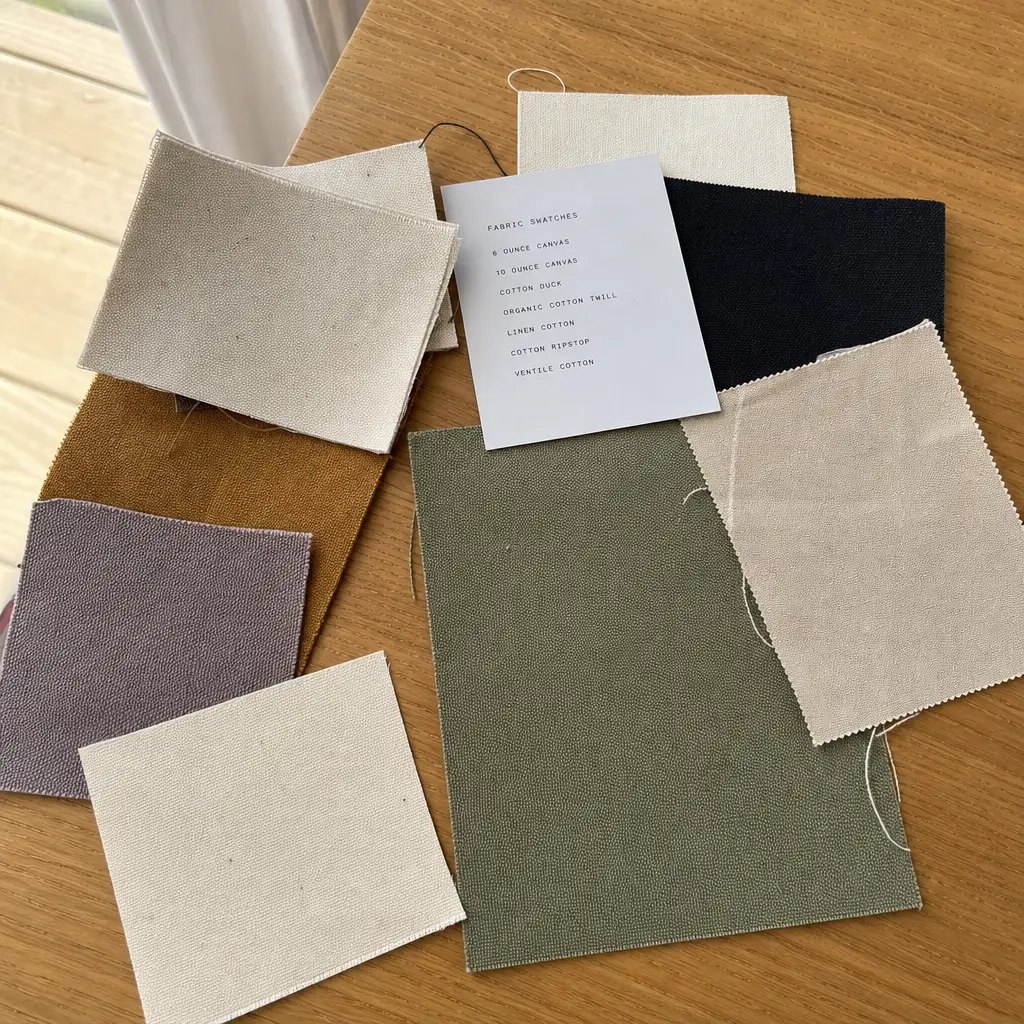
Canvas weight affects strength, standing shape, print behavior, seam bulk, and perceived value. For most artisan bakery bottle carriers, 12 oz to 16 oz cotton canvas is a practical custom range. In metric terms, this is often about 340-450 GSM, although the conversion varies with yarn, weave, finishing, and whether fabric is measured before or after treatment. A quote that simply says cotton canvas does not give procurement enough control.
A 10 oz canvas can work for some low-cost single-bottle programs if the buyer accepts a softer hand and the handle area is properly reinforced. It is not the safest default for a premium reusable carrier. At the other end, heavier canvas may feel sturdier but can create thick seam intersections, skipped stitches, needle marks, slower sewing, bigger cartons, and more rejects. The right fabric is the one that performs consistently through cutting, printing, sewing, packing, and real use.
Finish changes the result as much as weight. Natural unbleached canvas suits many bakery brands, but it may show seed specks, slubs, and shade variation. Bleached canvas gives a cleaner print base. Dyed canvas improves color direction but needs lab dip approval and shade tolerance. Pigment-dyed, washed, or enzyme-washed canvas changes hand feel and shrinkage. Pre-shrunk fabric can reduce variation, but finished measurements still need inspection.
Ask the supplier to state incoming fabric tolerance. A common commercial tolerance may be +/-5% to +/-8% on GSM, but it should be agreed rather than assumed. For replenishment orders, retain an approved fabric swatch and define the acceptable slub level. If multiple fabric lots are used in one production run, the buyer should know whether shade variation may be visible across cartons.
- Specify oz, GSM, weave if known, finish, color, and fabric-weight tolerance.
- Confirm whether the fabric is stock, custom dyed, washed, or finished to order.
- Approve shade and slub level from physical swatches, not only photos.
- Ask for shrinkage expectations when fabric is washed, enzyme-washed, or pre-shrunk.
- Repeat fit, load, and print checks if the fabric weight or finish changes.
Build the Load Path Into the Handle Design
Handle failure is the highest-risk defect because it can mean broken glass, wasted product, customer complaints, and safety exposure. The load path runs from the handle into the reinforcement stitch, top hem, side seams, bottom gusset, and, for two-bottle styles, the divider points. Strong canvas cannot make up for a weak handle attachment. A tidy sample can still fail if the handle is held by a short straight stitch with poor backtacking.
Common choices include cotton webbing and folded self-fabric handles. For many retail bottle carriers, 25-38 mm handle width gives a practical balance of grip comfort and sewing area. Handle drop should be long enough to carry comfortably but not so long that bottles swing and hit the user's leg. The RFQ should say whether handles are stitched into the top hem, applied to the outside panel, captured in seams, or reinforced with hidden patches.
Reinforcement needs to be visible in the specification. Box-X stitching, bartacks, multiple rows of lockstitch, or a documented equivalent can all work when properly sewn. Buyers should avoid choosing the stitch only for appearance. Set the load test first, then let the approved construction prove it. Thread type, stitch density, seam allowance, needle choice, and machine setup become especially important with 14 oz to 16 oz canvas and bulky folded corners.
A practical static hang test is 2x the intended filled weight for 2 hours. After testing, inspect for seam opening, thread breakage, fabric tearing, and permanent handle distortion. A carrier intended for a 1.5 kg loaded bottle, for example, can be tested at 3.0 kg. Static testing is not enough by itself, so add 50-100 lift-and-lower cycles at intended load to simulate customer handling.
- Define handle material, width, drop length, and attachment method.
- Require box-X, bartack, reinforced tab, or documented equivalent at stress points.
- State static hang load, duration, sample quantity, and pass/fail criteria.
- Add 50-100 dynamic lift cycles at intended filled weight.
- Inspect inside and outside handle points for seam opening, needle damage, and thread breakage.
Control Divider, Gusset, and Standing Stability
A two-bottle canvas carrier needs more than a loose internal flap. The divider should keep glass away from glass, help balance the load, and stay in position when one bottle is inserted before the other. A divider attached only at the top can look acceptable when flat but twist during packing. If it is too narrow, bottles collide. If it is too tight or too stiff, staff slow down and labels get scuffed.
For most two-bottle formats, specify a divider sewn into the side seams and preferably captured in the bottom construction. This takes more sewing time, but it improves stability. Divider height should protect the area where the bottles are most likely to touch. It does not always need to reach the top of the bottle; it does need to protect the shoulder and body contact zone during normal carrying. Divider width should allow insertion without forcing after accounting for fabric thickness and seam bulk.
The bottom gusset controls how the carrier stands. A shallow gusset may fold under a filled bottle. An oversized gusset can allow side-to-side movement. A clean boxed bottom with consistent corner stitching helps distribute weight and presents better on a bakery counter. If the carrier will sit upright as part of a retail display, standing stability should be checked after loading and again after carton unpacking.
Factories may suggest bottom inserts for premium programs. Inserts can help, but they also add cost, packing steps, material separation questions, and another item to misplace. For many bakery wine carriers, a correctly sized gusset, secure bottom seam, and stable divider are more reliable than a loose insert. If an insert is used, define its material, thickness, dimensions, removability, and whether it is packed inside each carrier.
- Define divider height, width, side-seam attachment, and bottom capture.
- Insert and remove bottles repeatedly to check twisting and label abrasion.
- Confirm bottles sit on the bottom instead of hanging on divider fabric.
- Check gusset corners for skipped stitches, bulky folds, and loose threads.
- Test standing stability with the heaviest and narrowest bottle combinations.
Make Branding Durable Enough for Reuse
Bakery wine carriers often live beyond the first sale. Customers may reuse them for picnics, host gifts, farmers market purchases, or home storage. That makes branding more than a first-impression detail. Water-based screen print is often a good option for solid one- to three-color bakery logos on cotton canvas because it can feel softer than thick ink deposits. Natural canvas, however, may mute light colors and absorb ink differently from lot to lot.
Heat transfer can be helpful for detailed art, gradients, short runs, and multiple bakery locations with separate logos. The tradeoff is that transfers need peel, edge, fold, and abrasion checks. A transfer placed across a fold line or heavy crease can crack or lift. Embroidery can look premium, but it may pucker lighter panels and add backing that changes the feel. A woven label is often a strong B2B choice when subtle, long-wear branding matters more than a large print area.
Logo placement should be measured from fixed reference points, not judged by eye. On a narrow bottle panel, a 5 mm shift can look obvious. The artwork approval should state print size, color reference, position from top seam and side seam, and acceptable tolerance. For many carriers, +/-3 mm to +/-5 mm is a reasonable starting point, though complex sewn shapes may require broader tolerance.
Print QC should include dry rub, light wet rub, cracking, tackiness, and transfer checks. A simple factory-level method is to rub a white cotton cloth across the logo for a defined number of strokes and compare ink loss against the approved sample. For transfers, bend the panel and inspect edges after carton compression. If bags are packed print-to-print, add separators or change orientation when offset risk appears.
- Approve artwork on the final canvas whenever possible.
- State print size, color reference, placement points, and tolerance.
- Use dry rub and light wet rub checks before bulk production approval.
- Check transfer edges for peel after bending and carton compression.
- Consider woven labels when long-term wear matters more than large logo coverage.
Compare Quotes Without Losing Hidden Strength
MOQ for canvas wine carriers is rarely driven by one factor. It may come from fabric purchase, dyeing, cutting efficiency, sewing-line setup, print screens, transfer sheets, woven labels, packing materials, or carton marking. A supplier may offer a low MOQ with stock natural canvas and a standard size, then quote a higher minimum for custom dyed canvas, special webbing, multiple logos, or a sewn divider. Ask which component creates the minimum.
Cost comparisons should separate the features that affect performance. Fabric weight changes material cost and freight volume. Wider gussets use more fabric. Reinforced handles add sewing time. Dividers add cutting, panels, alignment, and inspection points. Large prints add setup, ink, curing time, and QC risk. Carton count affects landed cost through CBM, gross weight, warehouse handling, and crease pressure. A two-bottle carrier is not simply a single-bottle carrier multiplied by two.
Bakery groups and distributors can often reduce complexity by standardizing one base carrier. The same size, canvas, handle, divider, and carton plan can support several bakery logos if print positions are consistent. This makes repeat orders easier and helps inspectors compare like with like. Each logo version still needs artwork approval, color approval, and print QC, and mixed-design packing must be controlled so SKUs are not combined incorrectly.
A low quote is not automatically a bad quote, but buyers should know what changed. Savings may come from lighter canvas, narrower handles, fewer stitches, smaller seam allowance, a shorter divider, cheaper carton board, or higher pieces per carton. Any change that touches load performance, fit, branding, or carton recovery should trigger a sample review and, where needed, a retest.
- Separate MOQ by fabric, color, size, print design, divider, label, and packing.
- Ask for cost impact on heavier canvas, reinforced handles, dividers, and carton count.
- Compare carton CBM and gross weight, not only ex-factory unit price.
- Standardize base construction across bakery logos where possible.
- Retest whenever a cost-down change affects fabric, stitching, handle, divider, or packing.
Use Samples to Prevent Bulk Disputes
A controlled sample path saves time later. The concept sample confirms the look. The fit sample confirms bottle insertion, gusset depth, divider behavior, and standing shape. The print strike-off confirms logo size, color, and hand feel. The pre-production sample should combine final fabric, final construction, final handle reinforcement, final divider, final logo method, label, and proposed packing. That final sample becomes the signed standard for mass production.
Photo approval is not enough for a bottle carrier. Photos cannot show handle pull strength, seam slippage, label scuffing, odor, divider twisting, print tackiness, or carton pressure marks. Test physical samples with real bottles. If real bottles cannot be shipped to the factory, use weighted dummy bottles that match height, base diameter, shoulder shape, closure profile, and filled weight.
Keep records because repeat orders depend on them. The buyer should retain one approved sample, and the factory or inspection team should retain a signed duplicate when possible. The specification sheet should list finished dimensions, tolerances, fabric weight, handle details, reinforcement, divider details, print placement, packing method, carton dimensions, and inspection criteria. Photographs should show stress points, divider construction, and carton layout.
Any material change after approval should reopen the relevant check. Moving from 12 oz to 14 oz canvas may improve body but change print hand feel and seam bulk. Changing from screen print to heat transfer may allow more artwork detail but create edge-peel risk. Reducing carton volume may help freight cost but increase creasing and ink transfer. The sample record should make those tradeoffs visible before bulk goods are cut.
- Approve dimensions with bottles loaded, not only on an empty flat sample.
- Use real or accurate dummy bottles for fit, standing, and lift checks.
- Keep signed buyer and factory samples for bulk comparison.
- Document logo placement, handle reinforcement, divider attachment, and carton layout.
- Repeat relevant tests when fabric, print, bottle type, or carton compression changes.
Durability Testing Checklist for Factory QC
Durability testing should be simple enough for factory QC and clear enough for rejection decisions. The core checks are static load, dynamic lift, handle pull or hang, seam inspection, bottle fit, divider twist, standing stability, print rub, odor, and carton recovery. Each test needs a sample quantity, load, duration or cycle count, acceptance criteria, and defect classification. Without those details, a failed bag can turn into an argument about opinion.
For static load, use the intended filled weight plus a safety margin. A practical procurement requirement is 2x intended load for 2 hours with no handle tearing, fabric ripping, thread breakage, or seam opening above the buyer's limit. If a two-bottle gift set is intended to carry 3.0 kg, a 6.0 kg static hang test gives the factory a clear target. Buyers can adjust the factor, but the number should be written in the RFQ and PO.
Dynamic lift testing catches failures that a quiet hang test can miss. Load the carrier at intended filled weight and lift/lower it 50-100 cycles by the handles. Then inspect handle attachment, top hem, side seams, bottom corners, and divider joins. Look for progressive seam slippage, broken stitches, tearing, or handle distortion that would affect retail use.
Bottle fit and divider checks should mimic store behavior. Insert and remove the intended bottles several times, including the widest and narrowest variants. Check whether staff can pack without forcing, whether labels scuff, whether the divider twists, and whether the carrier stands after packing. For two-bottle carriers, test one bottle inserted alone and then both bottles inserted, because unbalanced loading often reveals divider problems.
Print and carton checks protect brand presentation. Rub the logo with dry and lightly damp white cloth, bend the printed panel if the mark crosses a fold area, and inspect for cracking or tackiness. Pack samples in the proposed carton count, leave them under normal compression, then reopen and inspect for permanent creases, ink offset, handle deformation, distorted gussets, and carton crushing.
- Static load: 2x intended filled weight for 2 hours unless the buyer specifies another factor.
- Dynamic lift: 50-100 lift/lower cycles at intended filled weight.
- Bottle fit: repeated insertion and removal with real or weighted dummy bottles.
- Standing test: filled carrier remains upright on a flat surface without severe lean or bottom roll.
- Print rub: dry and light wet cloth checks for ink loss, cracking, tackiness, or transfer.
- Carton recovery: inspect unpacked samples for permanent creases, print offset, and distorted gussets.
Final Inspection, AQL, and Defect Rules
Final inspection should combine visual review, measurement, functional testing, and packed-carton checks. Many importers use an AQL-based sampling plan, but the levels and defect definitions need to match product risk. A handle that tears during a load test is not a small sewing flaw. A tiny natural slub on unbleached canvas may be acceptable if it matches the approved swatch. The inspection rules should make that difference clear.
Defect classification should be written before production starts. Critical defects may include broken needles, sharp contamination, severe mold, unsafe handle failure, or contamination that makes the carrier unsuitable for retail use. Major defects may include wrong dimensions outside tolerance, failed load test, loose handle reinforcement, severe seam opening, wrong fabric weight, wrong print color, divider failure, heavy stains, strong odor, or carton and barcode errors that affect distribution. Minor defects may include small loose threads, slight shade variation within standard, or minor slub variation accepted for natural canvas.
Inspection teams should measure width, height, gusset, handle drop, divider position, and logo placement on a defined sample size. They should also run functional checks on randomly selected pieces and photograph the results. Even if the factory performs inline QC, the buyer should keep the right to conduct pre-shipment inspection because final packed goods can differ from sewing-line samples.
A useful inspection report shows the approved sample reference, PO number, SKU, quantity inspected, carton numbers opened, measured results, test load, cycle count, failures, photos, and final disposition. That level of detail helps procurement teams manage claims, release shipments, and place repeat orders without relying on vague descriptions.
- Define critical, major, and minor defects before production starts.
- Use AQL or a buyer sampling plan that includes functional load checks.
- Measure dimensions and logo placement against written tolerances.
- Photograph failed load tests, seam defects, print issues, and carton problems.
- Do not downgrade handle failure or severe seam opening to a cosmetic defect.
Specification comparison for buyers
| Spec decision | Recommended option | When it fits | Buyer risk to check |
|---|---|---|---|
| Fabric weight | 12 oz to 16 oz cotton canvas, typically about 340-450 GSM depending on weave, yarn, and finish; request supplier tolerance, commonly +/-5% to +/-8% | Reusable bakery wine, olive oil, vinegar, cordial, syrup, coffee concentrate, or holiday bottle-gift programs | Below 10 oz may look collapsible under filled bottles; above 16 oz can create bulky seams, skipped stitches, larger cartons, and higher sewing rejection risk |
| Fabric finish | Natural unbleached, bleached, dyed, pigment-dyed, washed, enzyme-washed, or pre-shrunk canvas stated in RFQ and sample record | Brand programs where shade, hand feel, shrinkage, logo color, and replenishment consistency matter | Unspecified finish can change shrinkage, odor, ink absorption, crease recovery, shade, and color fastness between lots |
| Finished dimensions | Pattern built from real bottle height, base diameter, shoulder diameter, closure height, gusset depth, and insertion allowance | Bakery retail counters where staff pack filled bottles quickly and the carrier must stand upright | Catalog sizing may not fit sparkling bottles, wax seals, olive oil bottles, swing caps, or mixed gift sets |
| Carrier structure | Single-bottle or two-bottle carrier with boxed bottom, reinforced side seams, clean top hem, and sewn divider for two-bottle formats | Retail gifting where glass bottles must stay separated and upright during customer transport | Loose bottoms, shallow gussets, or unanchored dividers allow leaning, bottle impact, and label scuffing |
| Handle construction | Cotton webbing or folded self-fabric handles, usually 25-38 mm wide, with box-X, bartack, or equivalent reinforcement | Programs expected to carry 1.2-3.5 kg repeatedly, including customer reuse after purchase | Straight stitch-only handle attachment can fail even when panel fabric is strong |
| Load testing | Static hang at 2x intended filled weight for 2 hours, plus 50-100 dynamic lift cycles at intended load unless buyer sets another standard | Importers and bakery groups that need practical pass/fail checks before shipment | No load criteria means attractive samples can pass visual inspection but tear when filled |
| Divider design | Divider sewn into side seams and preferably captured at bottom seam, with enough width for bottle insertion without forcing | Two-bottle wine, oil, vinegar, cordial, or mixed beverage sets sold as bakery gifts | Loose dividers twist; narrow dividers slow packing and scuff labels; short dividers may not prevent glass contact |
| Print method | Water-based screen print for solid logos; heat transfer for detailed short runs; woven label for durable low-abrasion branding | One- to three-color bakery branding, seasonal gift programs, private-label ranges, or multiple store logos | Heavy ink can crack on folds; transfers can peel; embroidery can pucker lighter panels; poor cure can cause carton transfer |
| MOQ logic | 500-1,000 pcs per size/color/print as a practical custom starting point; confirm separate minimums for fabric, dyeing, printing, labels, and packing | Importers, bakery groups, distributors, and gift packaging buyers balancing unit price with inventory exposure | Very low MOQ often means stock fabric, stock dimensions, higher setup allocation, limited color control, and fewer construction changes |
Buyer checklist before sampling
- Define the exact use case: 750 ml still wine, sparkling wine, 500 ml olive oil, vinegar, cordial, syrup, bottled coffee concentrate, sauce, or mixed bakery gift set.
- Record the heaviest loaded configuration, including filled bottle, closure, hang tag, tissue, jar, card, sleeve, and any bakery add-on packed in store.
- Specify cotton canvas by oz, GSM, weave if known, finish, color, shrinkage expectation, allowable slub level, and fabric-weight tolerance.
- Measure real bottles: overall height including closure, base diameter, widest shoulder diameter, neck profile, label height, and filled weight.
- Set finished size tolerances, such as +/-5 mm for width and gusset and +/-10 mm for height, unless the design requires tighter control.
- For two-bottle carriers, define divider height, divider width, bottom capture, side-seam attachment, insertion clearance, and bottle-to-bottle separation requirement.
- Require handle details: material, width, drop length, folded construction, reinforcement pattern, stitch density, thread type, and minimum load-test requirement.
- Choose branding based on artwork detail, quantity, hand feel, abrasion exposure, fold location, and whether bags are packed print-to-print or print-to-back.
- Request a final printed pre-production sample made with final fabric, final handle construction, final divider, final logo method, label, and proposed packing.
- Approve the sample only after loaded standing, repeated lifting, bottle insertion, divider twist, dry/wet rub, odor, and packed-carton recovery checks.
Factory quote questions to send
- What canvas weight in oz and GSM is quoted, what fabric-weight tolerance do you accept at incoming inspection, and can you provide fabric test data or supplier spec sheet?
- Is the quoted canvas natural, bleached, dyed, pigment-dyed, washed, enzyme-washed, or pre-shrunk, and is it stock fabric or produced to order?
- What shrinkage range should we expect after washing or finishing, and will finished dimensions be controlled after fabric relaxation?
- Can you recommend finished dimensions from our bottle height, base diameter, shoulder diameter, closure type, label position, filled weight, and desired standing shape?
- For a two-bottle carrier, how is the divider attached: side seam only, top points only, bottom captured, or fully integrated into side and bottom seams?
- What handle material, width, drop length, reinforcement stitch, thread type, stitch density, and seam allowance are included in the quoted construction?
- What static hang, dynamic lift, or handle pull test can your factory perform, and what load, duration, cycle count, and sample quantity do you recommend?
- Which print method is quoted, how many colors are included, what is the maximum print area, and what curing, rub, peel, or transfer checks are performed?
- What tolerances do you propose for finished width, height, gusset, handle drop, logo placement, and divider alignment?
- If our bakery group uses several logos, can one base carrier be cut and sewn together while printing separate versions, and how does that affect MOQ and setup charges?
Quality-control points to confirm
- Fabric weight should be checked against the approved oz and GSM range before cutting; a common commercial tolerance is +/-5% to +/-8% unless the buyer sets a tighter value.
- Fabric appearance should be compared with the approved swatch for shade, slub level, weaving defects, stains, odor, oil marks, yarn contamination, and unacceptable crease lines.
- Finished dimensions should be measured on flat and loaded samples; practical tolerances are often +/-5 mm for width and gusset, +/-10 mm for height, and +/-5 mm for handle drop unless otherwise agreed.
- Bottle fit should be tested with the buyer's real bottle or a weighted dummy matching base diameter, shoulder width, height, closure profile, and filled weight.
- Handle attachment should pass the agreed static hang or pull test using expected filled weight plus safety margin, with no seam opening above 2 mm, thread breakage, or visible fabric tearing.
- Dynamic lift testing should simulate repeated customer handling, such as 50-100 lift-and-lower cycles at the intended filled load, before checking stitch slippage and distortion.
- Side seams, bottom seams, gusset corners, top hem, divider joins, and handle entry points should be checked for skipped stitches, broken threads, loose backtacking, raw edges, uneven stitch density, and needle damage.
- Divider alignment should keep bottles separated without twisting, leaning, tearing, or reducing insertion clearance below the approved sample standard.
- Print quality should be checked for position, color, registration, edge sharpness, pinholes, tackiness, cracking, dry rub loss, light wet rub loss, and transfer onto adjacent bags.
- Logo placement should be measured from fixed reference points such as top seam, side seam, or bottom gusset; typical placement tolerance should be stated, for example +/-3 mm to +/-5 mm.