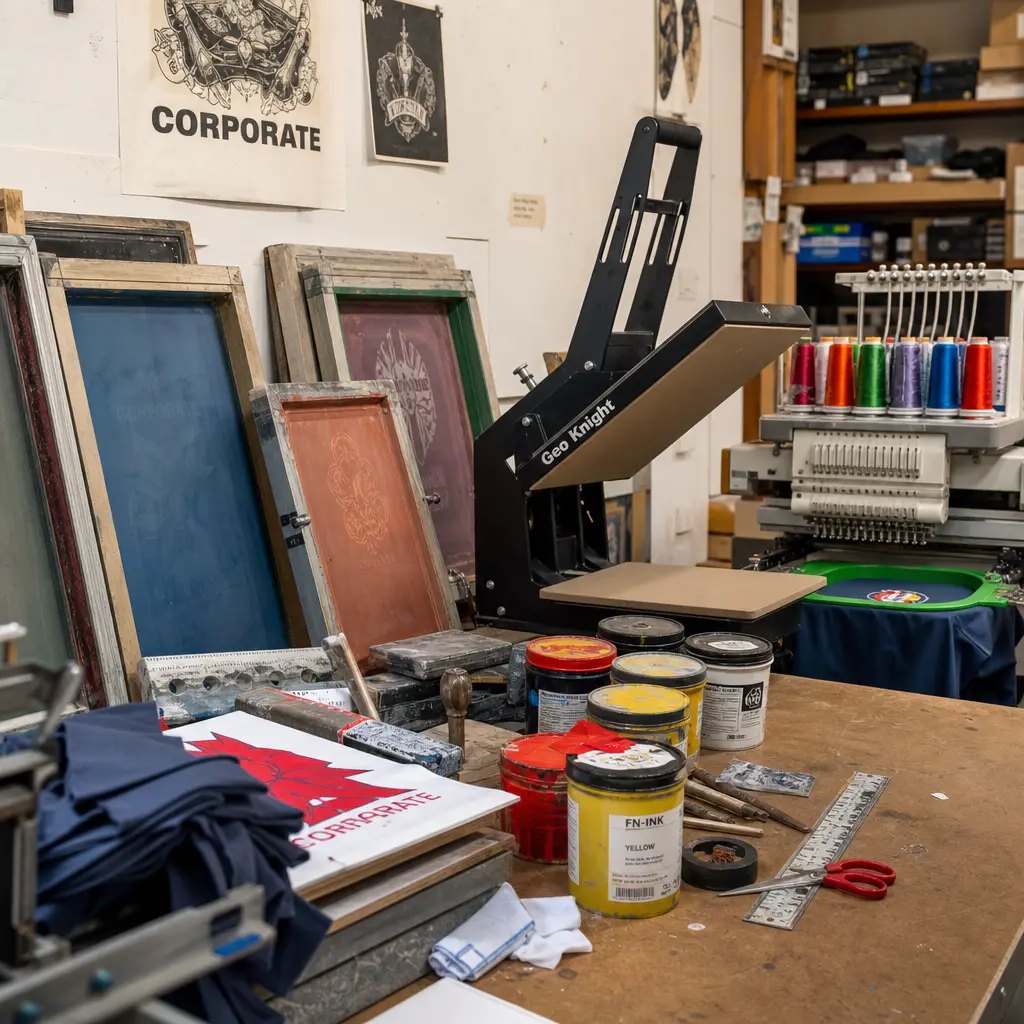
Why Spa Retailers Need a Different Sample Approval Standard
A canvas wine carrier sold in a spa retail environment isn't just a utility bag. It sits next to high-margin skincare, aromatherapy oils, and branded robes. The tactile experience matters as much as the visual. When a spa guest picks up the carrier, the fabric should feel substantial, the print should look intentional, and the stitching should suggest care, not cost-cutting.
Standard promo-bag approval checklists miss these points. They focus on logo placement and color match but ignore handfeel, odor, gusset stability, and how the carrier presents on a retail shelf. Spa buyers need to add sensory and presentation checks to their sample approval workflow, or they risk returns from disappointed retail managers who expected a premium accessory, not a trade-show giveaway.
The spa retail environment also demands consistency across a product line. If your carrier is part of a gift set that includes a robe, towel, or candle, the carrier's quality must match or exceed those items. A flimsy carrier cheapens the entire set. Sample approval for spa retail must therefore include a 'shelf test': place the carrier next to the other products in the set under warm retail lighting and assess whether it looks like it belongs.
Additionally, spa retailers often require that the carrier be reusable, not disposable. Guests may take it home and use it for groceries, gifts, or storage. This means the carrier must withstand repeated use, washing, and folding without losing its shape or print. Your sample approval process should simulate this lifecycle to avoid returns or brand damage.
- Spa retail markup expectations demand a product that feels worth the gift-set price
- Tactile defects like rough seams or chemical smell are immediate rejection reasons in spa channels
- Sample approval must include a 'shelf test': how does the carrier look next to other spa products under warm retail lighting?
- Reusable carrier requirement: test for shape retention after folding and light washing
Fabric Weight and Handfeel: The First Five-Second Test
When a spa buyer picks up your canvas wine carrier sample, the first judgment happens in under five seconds. If the fabric feels thin, papery, or overly stiff with sizing, the perceived value drops immediately. We recommend 12 oz (340 GSM) heavy canvas as the baseline for spa retail. This weight drapes well, stands up on its own with a bottle inside, and communicates durability without feeling industrial.
Ask the factory to wash one sample before sending it. Unwashed canvas often contains starch or sizing that makes it feel crisp in the sample room but turns limp after the first consumer wash. A washed sample reveals the true handfeel your spa customer will experience. If the factory refuses or says washing isn't standard, that's a red flag. You need to know how the product ages, not just how it photographs.
Canvas weight also affects freight cost. A 12 oz carrier weighs approximately 120 grams. A 14 oz carrier weighs about 140 grams. For an order of 1,000 units, that's a 20 kg difference. While 12 oz is the sweet spot for spa retail, 10 oz (280 GSM) can be acceptable for single-use gift packaging where the carrier is part of a promotional set and not intended for reuse. However, 10 oz canvas will not stand upright as reliably and may feel flimsy to the touch.
To verify fabric weight, use a calibrated fabric scale. Cut a 10 cm x 10 cm swatch from an inconspicuous area of the sample, weigh it, and calculate GSM. The result should be within ±5% of the specified weight. If the factory cannot provide a swatch or refuses to allow destructive testing, consider it a risk indicator.
- Spec 12 oz (340 GSM) as minimum; 10 oz is acceptable only for single-use gift packaging
- Request one washed and one unwashed sample to compare handfeel change
- Canvas should not feel slick or shiny; that indicates synthetic blend or heavy calendaring
- Verify GSM with a fabric scale; tolerance ±5% from approved spec
Print Method and Brand Durability for Spa Environments
Spa branding tends to be understated: a small logo, a wordmark, maybe a subtle pattern. Water-based screen printing is the right choice here. It soaks into the canvas fibers rather than sitting on top like plastisol. The result is a soft print that won't crack when the gusset folds or when the carrier is stored flat. Plastisol prints look fine on samples but fail on the gusset fold line after a few uses.
During sample approval, fold the printed area along the natural crease lines of the carrier and rub the fold between your fingers. If you see any cracking, flaking, or whitening at the crease, reject the sample. This is a non-negotiable failure for spa retail. Also check print registration: a 2 mm shift might be acceptable on a trade-show tote, but spa buyers will notice and consider it a quality defect.
For dark canvas colors (charcoal, navy, black), water-based ink may require an under-base white layer to achieve opacity. This adds a production step and cost, but it's necessary for a clean, vibrant print. Ask the factory to show you a sample with and without the under-base so you can compare. The under-base should not add noticeable thickness or stiffness to the print.
Print durability also depends on the curing process. Water-based inks must be cured at the correct temperature and time to bond with the fibers. Under-cured ink will wash off or rub off. Ask the factory for their curing specifications (temperature, dwell time, conveyor speed) and request a wash-test video on the sample. A 30-second wash in warm water with mild detergent should not cause ink loss.
- Spec water-based ink with soft-hand additive for spa branding
- Perform fold-test on printed gusset area: 10 folds, no cracking allowed
- Check print opacity on dark canvas; request an under-base white layer if needed
- Request wash-test video: 30-second warm water wash, no ink loss
Stitching and Seam Construction: What the Inside Reveals
Turn the sample inside out. This is where cost-cutting hides. A clean interior with no raw edges tells you the factory invested in French seams or bound seams. Raw, overlocked edges with loose threads are acceptable for budget promotional bags but not for spa retail. The inside of the carrier should look almost as finished as the outside.
Check the handle attachment points carefully. This is the highest-stress area on a wine carrier. We require double-stitching with a cross-box or bartack reinforcement at each handle end. On the sample, pull the handle firmly away from the body and watch the attachment point. Any gap opening between the handle and the body fabric means insufficient reinforcement. The stitch line should hold tight with zero separation.
Seam type also affects production cost and lead time. French seams add approximately $0.15 per unit compared to overlock seams. For an order of 1,000 units, that's $150. For spa retail, this cost is justified by the premium appearance and durability. However, if your budget is tight, bound seams (where raw edges are covered with bias tape) are an acceptable alternative that still looks clean inside.
Thread quality matters too. Polyester thread is standard for canvas bags because it resists UV degradation and has good tensile strength. Cotton thread can rot over time, especially in humid spa environments. Ask the factory what thread they use and whether it is colorfast to washing. A thread that bleeds onto the canvas during washing will ruin the carrier's appearance.
- French seams preferred; overlock with binding tape is an acceptable alternative
- Handle attachment: cross-box stitch minimum 1.5 cm x 1.5 cm, no single-line stitching
- Thread tension check: no loose loops on underside, no puckering along seam line
- Specify polyester thread for UV and wash resistance
Gusset Stability and Bottle Fit: The Functional Core
A canvas wine carrier that tips over with a bottle inside is useless for spa retail. The bottom gusset must be wide enough and stiff enough to create a stable base. We spec a 3.5–4 cm flat gusset depth for standard 750 ml bottles. Measure this on the sample with the gusset fully opened and flat on a table. Both sides should match within 2 mm.
Insert a full wine bottle into the carrier and place it on a hard flat surface. The carrier should stand upright without support. If it leans or falls, the gusset is too narrow or the fabric is too soft. Also check that the bottle neck doesn't protrude awkwardly; the carrier height should leave about 5–7 cm of the bottle neck visible for a balanced proportion. This proportion matters for spa gift presentation.
Gusset depth also affects packing efficiency. A 4 cm gusset allows the carrier to lie flat when empty, which is important for storage and shipping. A gusset that is too deep (e.g., 6 cm) will create a bulky shape that wastes space in cartons and on retail shelves. Conversely, a gusset that is too shallow (e.g., 2 cm) will not provide enough base stability.
For carriers that will be used with different bottle shapes (e.g., champagne bottles with wider bases), consider a slightly deeper gusset of 4.5 cm. Test the sample with the actual bottles you plan to use. If the carrier is part of a gift set that includes a specific wine brand, request a bottle from that brand for testing.
- Gusset depth: 3.5–4 cm flat measurement, symmetrical left and right within 2 mm
- Stability test: filled bottle must stand unassisted on hard surface
- Height proportion: carrier body should cover 60–70% of bottle height
- Test with actual bottle shapes you will use in the gift set
Label and Branding Placement: Consistency at Scale
Spa retailers often request subtle branding. A small woven label sewn into the side seam is the most common approach. On your sample, measure the label position from the top edge and from the side seam. This measurement becomes your bulk production tolerance. We recommend a ±5 mm tolerance on label placement; anything looser leads to visibly inconsistent branding across units.
Check the label itself for quality. Woven labels should have clean, tight edges with no fraying. The sew line should be straight and use matching thread. If the label puckers the surrounding fabric, the factory's sewing machine tension is too high for the label thickness. This is a common defect that's easy to miss on one sample but becomes obvious across a bulk order.
Label placement also affects the carrier's appearance on a retail shelf. If the label is too low, it may be hidden by the bottle. If it's too high, it may look awkward. For a standard wine carrier, we recommend placing the label 2–3 cm below the top edge on the side panel. This position is visible when the carrier is on a shelf but not obtrusive.
If you plan to use the same woven label across multiple bag styles (e.g., wine carrier, tote bag, cosmetic bag), confirm with the factory that the label size and placement can be standardized. This reduces setup costs and ensures brand consistency. Some factories offer a discount on label MOQ if you commit to using the same label across multiple SKUs.
- Woven label preferred over print or heat-transfer for spa retail durability
- Label placement tolerance: ±5 mm from specified position
- Check for fabric puckering around label; indicates incorrect needle or tension
- Standardize label placement across multiple bag styles for cost savings
Color Accuracy and Dye Lot Consistency
Spa branding often uses specific Pantone colors that must match across products: the carrier, the robe, the skincare packaging. Approving a canvas sample under warm office lighting is a common mistake. Canvas absorbs light differently than coated paper or plastic, so the same Pantone can look different on fabric.
Evaluate the sample under daylight-balanced light (5000K) and compare it to your physical Pantone reference, not a digital screen. If the color is off by more than one shade, ask the factory for a lab-dip adjustment before approving. For dark colors like charcoal or navy, also request a wet-rub color fastness test report. Cheap sulfur dyes used on dark canvas can bleed onto the wine bottle or the customer's hands.
Dye lot consistency is another critical factor. Even if the sample color matches, the bulk production may come from a different dye lot with a slightly different shade. Request that the factory reserve a portion of the same dye lot used for the PP sample for bulk production. If that's not possible, ask for a dye lot continuity plan: how will the factory ensure color consistency across multiple production runs?
For large orders (5,000+ units), consider requesting a dye lot sample from each batch before production. This adds lead time but prevents costly color mismatches. Some factories charge a small fee for this service, but it's negligible compared to the cost of a rejected container.
- Color evaluation under 5000K daylight, not warm office light
- Compare to physical Pantone chip, not screen or printout
- Dark colors: request Grade 4 minimum wet-rub fastness test report
- Request dye lot continuity plan for bulk production
Odor Check: The Invisible Defect That Kills Spa Sales
Spa retail environments are scent-sensitive. A canvas carrier that smells musty, chemical, or like diesel from a container shipment will be rejected immediately by the spa buyer, regardless of how good it looks. Open the sample bag and smell the interior. Any off-odor is a rejection reason.
Odor issues usually come from three sources: mold from improper drying before packing, residual chemicals from cheap printing inks, or fumigation residue from container treatment. Ask the factory how they control moisture before packing and whether they use carbon adsorption or ventilation for printed goods. A factory that can't answer this question clearly is likely to ship product that smells.
To test for mold, place the sample in a sealed plastic bag for 24 hours and then smell it. If a musty odor develops, the fabric was not dried properly before packing. This is a serious quality issue that can lead to mold growth during transit, especially in humid shipping conditions. Reject the sample and request a new one from a different production batch.
Chemical odors from inks or treatments can sometimes be removed by airing out the carriers for 24–48 hours. However, this adds time and cost to your logistics. If the sample has a chemical smell, ask the factory to explain their curing and ventilation process. If they cannot provide a clear answer, consider finding an alternative supplier.
- Smell test the interior of the sample immediately upon opening
- Musty odor = mold risk; reject and request new sample from different production batch
- Chemical odor = ink or treatment residue; ask for factory's curing and ventilation process
- Perform 24-hour sealed bag test to detect hidden mold odors
Packing and Shipping: Protecting the Sample Standard in Bulk
Your approved sample sets the quality bar, but bulk packing can undo that standard. Canvas carriers with gussets are prone to creasing if packed flat under pressure. Creased gussets look cheap on a spa shelf. Specify that bulk carriers be packed with the gusset folded but not compressed, ideally with a thin cardboard insert to maintain shape during transit.
Also confirm the carton packing configuration. How many units per carton? What's the carton weight? Over-packed cartons lead to crushed bottom units. For a standard canvas wine carrier, we recommend no more than 50 units per export carton, with a divider between layers. Ask the factory for a packing sample photo before bulk production begins.
For ocean freight, consider using desiccant packs inside each carton to absorb moisture. Canvas is hygroscopic and can absorb humidity during transit, leading to mold or musty odors. Desiccant packs are inexpensive (approximately $0.05 per carton) and can prevent costly quality issues.
If your carriers have snap buttons, ensure they are closed during packing to prevent snagging on other carriers. Loose snaps can also scratch the canvas or damage the print. Ask the factory to include a note in the packing instructions: 'All snaps must be fastened before packing.'
- Spec gusset protection: cardboard insert or tissue fill to prevent creasing
- Maximum 50 units per export carton for standard-size wine carrier
- Request packing sample photo for approval before bulk packing starts
- Use desiccant packs in cartons for ocean freight to prevent moisture damage
Pre-Production Sample Sign-Off: The Final Gate
The sample you approve becomes the factory's reference standard. Everything they produce in bulk will be compared to this sample. That's why your sign-off must be documented, specific, and include measurable criteria. Don't just email 'approved.' Send a marked-up spec sheet with measurements, a signed sample photo, and a list of acceptable tolerances.
We recommend a two-stage sample process for new spa retail programs. Stage one is the initial sample for design and material approval. Stage two is the pre-production sample (PP sample) made from actual bulk production materials and processes. The PP sample is the one you sign off. Never skip the PP sample stage for a new factory or a new design. The cost of a PP sample is negligible compared to a rejected container.
During PP sample sign-off, take a high-resolution photo of the sample next to a ruler and a Pantone reference. Store this photo in your production file. If there is a dispute later about dimensions or color, you have a documented reference. Also keep one sealed sample in your office for comparison with bulk production.
Finally, establish a clear communication protocol with the factory. Who is your point of contact for sample revisions? What is the turnaround time for each revision? How many rounds of sampling are included in the unit price? Clarify these details before the sample process begins to avoid misunderstandings and delays.
- Document approval with measurements, photos, and tolerance notes
- Require a PP sample made from bulk materials before final sign-off
- Keep one sealed reference sample in your office for dispute resolution
- Establish clear communication protocol: point of contact, turnaround time, revision rounds
Specification comparison for buyers
| Spec decision | Recommended option | When it fits | Buyer risk to check |
|---|---|---|---|
| Fabric weight | 12 oz (340 GSM) heavy canvas | Spa gift sets, reusable retail packaging | Below 10 oz feels flimsy; above 14 oz adds bulk and freight cost |
| Handle construction | Double-stitched self-fabric with cross-box reinforcement | Single-bottle carriers up to 1.5 kg load | Webbing handles can fray at edges; check melt-cut vs folded ends |
| Bottom gusset depth | 3.5–4 cm flat gusset | Standard 750 ml bottle with slight punt | Too shallow and bottle tips; too deep wastes fabric and looks sloppy |
| Print method | Water-based screen print, single-side | Spa branding with soft handfeel, no plastisol stiffness | Plastisol can crack at gusset folds; request fold-test video |
| Seam type | French seam on side panels | Premium spa retail look, no raw edges inside | Adds approx. $0.15/unit; confirm factory can execute cleanly |
| Closure type | No closure (open-top) or single snap button | Open-top for quick gift wrapping; snap for reusable carrier | Snap misalignment is common; request snap placement jig photo |
| Label attachment | Woven label sewn into side seam | Subtle branding preferred by spa buyers | Heat-transfer labels peel after 6+ months; specify sew-in only |
| Color fastness | Grade 4 wet rub, Grade 4-5 dry rub | Dark canvas colors (charcoal, navy) for spa branding | Request lab test report for dark colors; cheap dyes bleed onto bottle |
Buyer checklist before sampling
- Measure GSM with a calibrated fabric scale, not hand-feel; tolerance ±5% from approved spec
- Check handle attachment: pull vertically with 2x bottle weight for 10 seconds, no thread break
- Fold gusset flat and measure depth at center; compare left and right for symmetry within 2 mm
- Rub printed area with damp white cloth 10 times; no ink transfer allowed
- Inspect inside seams under light; no raw edges, no skipped stitches longer than 3 mm
- Place a full 750 ml bottle inside; carrier must stand upright on flat surface without tipping
- Check woven label placement: same position on all samples, no puckering around label edges
- Smell the sample; musty odor indicates improper drying or moldy fabric, reject immediately
- Photograph sample next to Pantone reference under 5000K daylight for color approval
Factory quote questions to send
- What is the exact GSM tolerance you guarantee on bulk production canvas?
- Do you use a placement jig for snap buttons or woven labels? Please share a photo of the jig.
- What is your standard seam allowance on French seams for this carrier style?
- Can you provide a wet-rub test report for the specific dye lot used on our sample?
- What is the MOQ for our custom woven label, and does it change if we use the same label across multiple bag styles?
- What is the lead time for a pre-production sample after artwork approval, and how many rounds of sampling are included in the unit price?
- How do you pack finished carriers to prevent gusset creasing during ocean freight?
Quality-control points to confirm
- Fabric GSM check on incoming canvas rolls before cutting; reject rolls below 95% of spec
- In-line print registration check every 50 pieces; maximum 2 mm misalignment allowed
- Stitch density verification: minimum 8 stitches per inch on all load-bearing seams
- Random pull-test on handles: 3 pieces per 100, hold 15 kg for 5 seconds, no failure
- Final AQL 2.5 inspection covering dimensions, print quality, label placement, and odor