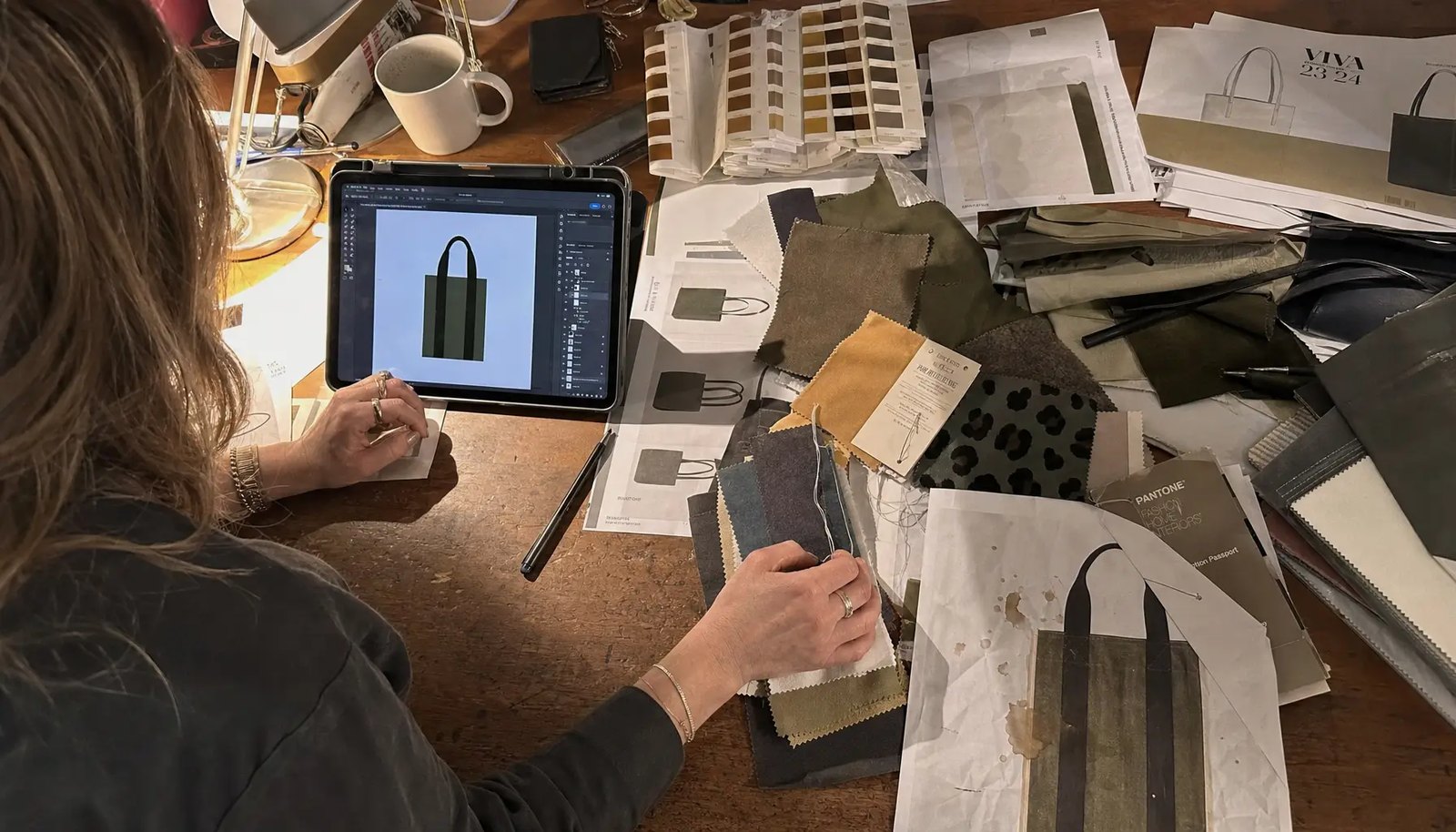
Why Sample Approval Matters More for Museum Shop Wine Carriers
A canvas wine carrier sold through a museum shop is a small product, but it carries three procurement risks at the same time. First, it must safely hold a heavy glass bottle during customer carry-out. Second, it often functions as part of the gift presentation, so shape and finish matter more than they would for a basic promotional bag. Third, it may carry institutional branding, exhibition artwork, or licensed graphics that need consistent reproduction. That mix makes sample approval more important than for a generic tote or low-risk souvenir textile.
In practice, many bulk problems start because the sample was treated as a visual concept instead of a production master. The bag looked acceptable on a table, so the order moved forward, but key details stayed undefined: actual GSM, bottle range, handle attachment method, print placement tolerance, and packing format. When those points are left open, the supplier may fill the gaps with reasonable assumptions that still do not match the buyer's expectations. The result is not always an obvious defect. Often it is a bag that is technically usable but not right for museum retail standards.
Museum shops also tend to buy in more design-sensitive quantities. They may not have the volume leverage of large chain retail, which makes every approval decision matter more. A buyer cannot rely on the idea that defects will average out over very large runs or be absorbed easily through markdown strategy. If the product reaches stores with weak structure, inconsistent artwork placement, or excessive transit creasing, the issue shows immediately on shelf and can damage sell-through.
The practical goal of sample approval is therefore straightforward: convert a prototype into an enforceable production reference. That means a signed sample should be supported by measurable specifications, approved artwork references, packaging instructions, and acceptance criteria that can be used later during pre-shipment inspection or warehouse receiving. Without that discipline, reorders become inconsistent and quote comparisons become unreliable.
For procurement teams, this is also where cost control starts. A clear sample approval process prevents last-minute changes that trigger revised pricing, missed launch dates, or arguments over whether a production variation is acceptable. It is easier to ask hard questions at sample stage than after goods are packed.
- Treat the sample as the production master, not a concept piece.
- Approve against actual retail use: bottle weight, shelf display, customer carry-out, and gift presentation.
- Capture measurable tolerances before issuing the purchase order.
- Use the approved sample to align sourcing, merchandising, QC, and receiving teams.
Start With the Bottle, Not the Bag Drawing
Most wine carrier errors begin with the wrong starting point. Buyers often begin with a bag sketch, a reference photo, or a general statement such as single-bottle wine bag. That is not enough. The first input should be the actual bottle range the museum shop expects to sell with the carrier. Bottle shape differences are not minor. Bordeaux, Burgundy, sparkling wine, olive-oil style glass, and some specialty beverage formats vary at the base, shoulder, neck, and overall height. A bag that fits one bottle neatly can become too tight, too loose, or visually awkward with another.
A factory making a first sample needs actual bottle dimensions in millimeters, not only the nominal 750 ml capacity. At minimum, the buyer should provide height, base diameter, widest shoulder width, and approximate filled weight. If the program includes more than one bottle family, the buyer should rank them by priority: required fit, preferred fit, and excluded fit. That forces an early commercial decision. A universal pattern may be possible, but it should be validated, not assumed.
For many museum shop programs, a practical single-bottle baseline is a finished width around 10 to 12 cm, gusset around 9 to 10 cm, and height around 34 to 37 cm. Those figures are only starting points. The real test is whether the bottle inserts smoothly, stands reasonably upright, clears the top opening without strain, and does not leave too much excess movement at the base. If the bottle swings inside the bag, the customer will feel it immediately when walking.
The approval sample should therefore be reviewed in loaded condition, not empty. Ask the factory for photos or short video showing the bag standing on a flat surface with the bottle inside, being lifted by the handle, and being set down again. This exposes functional issues that an empty sample hides: base collapse, handle twist, narrow opening, or excessive looseness at the neck.
Museum shops that sell limited-release beverages, donor gifts, or event-related wine programs should be especially strict here. If the store team expects the bag to work across several suppliers, the sample should prove that range before bulk approval. Otherwise, the safest route is to specify one intended bottle format and communicate that clearly in product notes and store operations guidance.
- Provide bottle height, base diameter, shoulder width, and approximate filled weight.
- Specify whether the bag must fit only standard 750 ml still wine or also sparkling wine formats.
- Ask for sample photos standing upright and carried by the handle with a filled bottle inside.
- If multiple bottle shapes are planned, define which shapes are mandatory and which are optional.
Choose Canvas Weight for Structure, Print Surface, and Retail Positioning
Fabric weight is one of the most important sample approval choices because it affects structure, cost, sewing performance, and artwork appearance at the same time. For canvas wine carriers, many buyers work within a range of roughly 10 oz to 12 oz canvas, about 280 to 340 GSM. For museum shop use, 12 oz or about 340 GSM is often the most reliable starting point because it gives the bag enough body to support the bottle and present well at retail without becoming unnecessarily heavy.
Lighter weights can still work, especially for value-driven gift programs or simple graphics, but they bring tradeoffs. The bag may collapse more when displayed empty, show seam stress sooner once loaded, and provide a less stable print surface for precise artwork. Those issues are especially visible on a narrow product like a bottle bag because the fabric is wrapping a concentrated weight rather than spreading load across a wide tote body.
Heavier canvas is not automatically better. Once the fabric moves into 14 oz or roughly 400 GSM and above, the bag can feel more substantial, but the cost rises and sewing bulk increases. Side seams, handle attachment areas, and top turn-overs become thicker and sometimes harder to finish cleanly. Depending on the weave, a heavier cloth can also have a rougher texture that works against fine-line or detail-sensitive artwork. That matters for museum programs that need a cleaner visual presentation than mass souvenir goods.
The buyer should also look beyond headline GSM. Ask whether the cloth is natural, bleached, dyed, or blended, and whether the fabric surface is smooth enough for the chosen print method. Natural canvas is often attractive for museum retail because it feels authentic and pairs well with heritage branding, but color variation between lots can be more visible than buyers expect. Dyed or bleached goods may offer a more controlled visual base, but they can affect print contrast and price.
A disciplined approval sheet should record both oz and GSM, fabric composition, color reference, and any specific comments about hand feel or weave quality. That prevents confusion when different suppliers quote in different units or when a reorder is placed months later by a different contact. If the buyer is comparing factories, they should be careful not to assume that all 12 oz canvases perform the same. Weave density, finishing, and yarn quality can change the real feel and structure significantly.
- 280 GSM suits value-oriented programs with simple graphics.
- 340 GSM is a strong default for better structure and perceived quality.
- 400 GSM and above should be justified by premium positioning or special durability needs.
- Record both oz and GSM in the approval sheet to avoid conversion confusion across suppliers.
Print Method Approval Should Be Based on Artwork Behavior
Museum shop graphics are often more demanding than ordinary retail logo work. The artwork may come from exhibition identity systems, archives, licensing programs, or institution marks that need consistent spacing, color, and edge definition. That makes print method a sample approval decision, not a detail to leave open until production. The correct question is not which method can place ink on canvas, but which method can reproduce the artwork consistently across the planned run at an acceptable cost and feel.
For many canvas wine carriers, screen printing remains the most stable option when the design uses one or two solid colors, bold typography, or simple graphic forms. It usually offers the best combination of repeatability, opacity, and unit economics once the style moves past the first sample. Screen print also tends to age better visually on canvas than cheaper transfer methods, especially when the bag is folded, handled, and placed on shelf repeatedly.
Heat transfer or digital methods can be useful when the museum wants fine tonal detail, image-based art, or low-volume design variation. But buyers should evaluate more than first appearance. On a sample, touch the print area, bend it lightly, and inspect edge clarity on the fabric texture. Some transfers look sharp on day one but feel too plastic, create a visible film edge, or show early cracking once the bag is folded. A product sold in a museum environment often needs a more considered hand feel than a conventional giveaway item.
Natural canvas requires additional attention because the fabric can absorb ink slightly and mute color. Darker dyed canvas changes contrast and may require an underbase or adjusted color build. If brand or exhibition color is important, ask the supplier what matching standard they are using and whether the approved sample should be the final physical color reference. It is safer to define color acceptance in relation to the approved sample than to rely on general verbal descriptions such as dark red or museum blue.
The print approval record should include print method, artwork file name, print dimensions, logo position from fixed construction points, and acceptable variation. Position should be measured from the bottom seam, side seam, or top edge, not only by saying centered. That level of detail matters because a narrow bag can make even a small print shift look obvious. If both front and back are printed, the buyer should also note whether exact alignment is required or whether each side is judged independently within tolerance.
- Screen print is usually best for bold logos, text, and simple artwork.
- Heat transfer suits short runs or detailed images but needs rub and fold review.
- Natural canvas can mute color slightly; dyed canvas can change ink contrast.
- Include logo placement measurements from fixed construction points, not from the visual center only.
Construction Details That Prevent Handle and Base Failures
The main functional weakness in a single-bottle carrier is rarely the center of the fabric body. It is usually found at the handle attachment points, base corners, or seams that take concentrated load when the bottle swings. A filled glass bottle creates vertical weight plus motion. The sample must therefore be reviewed as a load-bearing textile item, not only as packaging.
Handle construction deserves close attention. Buyers should confirm handle width, handle length, attachment depth into the body seam or top fold, and the reinforcement pattern used at the stress point. A self-fabric handle with box-X stitching or dense cross reinforcement is a practical standard for most museum shop single-bottle bags. The objective is not decorative stitching. It is load distribution. If the handle is attached too close to the top edge or with too small a reinforcement area, failure risk rises quickly.
The bag opening also matters. Some samples look elegant when laid flat but become difficult to use because the opening is too narrow for smooth bottle insertion. That causes the customer to force the bottle through the top, increasing seam stress and making the bag feel cheap. During approval, insert and remove the intended bottle several times. The experience should feel easy and controlled, not tight or unstable.
Base design is equally important. A flat body without a real gusset can carry a bottle, but it typically twists more during walking and offers a weaker shelf stance. A bottom gusset gives the bottle a defined seat and improves visual structure when the product is displayed or photographed for retail. Internal finishing at the gusset and side seams should also be specified. Overlock may be acceptable for value programs, while bound seams or cleaner finishing may be justified for premium presentation.
Ask the supplier for a basic filled-bottle lift test during sample review. This does not need to be an exaggerated laboratory claim. The point is to see whether the bag can hold its intended use without seam opening, handle twisting, obvious puckering, or base distortion. Procurement teams should write down what they observed and what they accept, because later production inspectors need that standard in objective terms.
- Review handle width, attachment stitch density, and reinforcement shape.
- Request a filled-bottle lift test, not an empty sample inspection only.
- Prefer a real base gusset for retail programs where the bag is sold as a gift item.
- Note interior finishing method on the approved sample comments.
Use Sample Approval to Control MOQ, Cost Drivers, and Quote Drift
A common sourcing mistake is to approve a sample aesthetically while leaving the commercial specification incomplete. The bag then goes back to the factory for pricing, and the unit cost changes because the approved version includes heavier canvas, larger print, stronger handle reinforcement, custom labels, or revised packing that were not part of the original quote basis. For museum shop buyers working to a fixed margin or budgeted open-to-buy, that drift can turn a promising item into a difficult approval case.
The sample stage should therefore lock the cost-driving elements before bulk PO issuance. Buyers should ask the factory to quote against the approved sample specification, not against a generic wine bag description. The difference matters. A small increase in gusset width, print coverage, or seam finishing can change labor, fabric consumption, and carton efficiency. Those are not large variables individually, but together they affect landed cost meaningfully.
MOQ structure also needs to be broken down carefully. Some suppliers present one attractive MOQ number, but the real buying condition is more complex. There may be a sewing MOQ by style, a fabric MOQ by color, a print MOQ by artwork, and a label MOQ for custom trims. Museum shops often want one bag construction in several exhibition versions, language versions, or event prints. Without understanding each MOQ layer, the buyer may approve a sample that cannot be ordered economically in the desired assortment mix.
Quote review should separate fixed tooling or setup charges from repeatable unit costs. Sample charge, print screen charge, courier, custom label setup, and carton changes should be visible. Otherwise, it becomes difficult to compare factories fairly or to estimate reorder economics. A supplier may appear cheaper on the unit price while carrying hidden extras in setup, higher CBM, or less efficient pack-out.
The approved sample comments sheet is a useful procurement tool here. It should state which elements are fixed for production and which may vary without reopening price. For example, the buyer might allow artwork changes within the same print area and color count, but not changes to size, fabric, or handle construction. That keeps the relationship commercial and operational, rather than subjective.
- Separate sewing MOQ from print MOQ and fabric color MOQ.
- Flag any price break based on carton-fill quantities or fabric lot usage.
- State whether sample-approved dimensions apply across all artwork variants.
- Use the sample comments sheet to freeze label type, print size, and handle construction.
What a Useful Approval Sample Package Should Include
A single sewn sample is not enough for a clean production handoff. To control quality and reorders, the buyer needs an approval package that combines the physical sample with the technical information the factory will actually use. That package becomes the reference for purchasing, merchandising, production, inspection, and receiving. When details live only in email threads or memory, the risk of drift rises sharply.
At minimum, the package should include the signed physical sample, a finished measurement sheet, the approved artwork reference, fabric notes, and packing instructions. Measurements should be based on the sewn sample after finishing, not only on the original pattern. A narrow wine carrier can show visible difference from a few millimeters of shift, so dimensions should be taken from defined points and written clearly. For example, body width across front panel, bottom gusset depth, total height, handle drop, and print distance from bottom seam.
Fabric notes should cover GSM, composition, color base, and any visual comments that matter commercially. If the buyer prefers a specific natural-canvas tone or wants no heavy slubs on the front panel, that should be stated. Artwork notes should identify the file name or revision number used for approval, print dimensions, print side, and whether slight fabric show-through is acceptable or not. Packing notes should include unit packing, carton quantity, and any instructions to avoid severe creasing.
For museum shop programs, one revision round is often money well spent if the first sample reveals weakness in fit, structure, or print position. The purpose of revision is not perfectionism. It is to resolve issues before bulk production locks them in. Buyers should distinguish between advisory comments and mandatory corrections so the supplier understands what must change before production approval is granted.
It is also helpful to keep two forms of reference internally: one physically signed sample stored with style information, and one digital photo record attached to the PO file. The physical sample protects against disputes about feel and construction. The photo set makes it easier for teams in different locations to review the approved standard quickly.
- Physical sample with signed approval date and style code.
- Measurement sheet with finished tolerances in millimeters.
- Fabric specification including GSM, color reference, and composition.
- Artwork file name, print size, print colors, and print location.
- Packing notes covering unit packing, carton quantity, and carton dimensions.
Packing Standards Affect Retail Appearance, Receiving Labor, and Landed Cost
Packing is often treated as a late-stage logistics detail, but for canvas wine carriers it directly affects how the product looks on arrival and how much warehouse or store labor is needed before sale. If cartons are overfilled, the gusset can flatten hard, handles can crease sharply, and printed panels can rub or offset. The goods may still pass a count check, but the retail team inherits the problem in the form of reshaping, cleaning, or rejecting damaged-looking units.
Museum channels are especially sensitive to this because receiving operations are often leaner than those of mass retailers. A product that needs extra handling on arrival increases hidden cost. It also delays floor placement, which is a problem for event-driven or exhibition-timed merchandise. That is why packing should be reviewed during sample approval, not after production has started.
The right packing format depends on fabric color, print coverage, transit duration, and sustainability goals. Individual polybags can help protect light-colored canvas from dust and reduce print rubbing, but they add material cost and may not align with packaging reduction targets. In some cases, master-carton packing without unit polybag is acceptable if the canvas is dark, the print is robust, and carton density is controlled. Tissue or simple separators may be enough for protection without overpacking.
Carton specification matters for freight planning as well. Buyers should request carton quantity, outer carton dimensions, gross weight, and estimated CBM as part of the quote, not as an afterthought. A supplier with a slightly higher ex-works price may still be more competitive if the packing is more efficient and reduces freight cost or receiving difficulty. Procurement teams should evaluate the total delivered effect, not only the factory unit price.
When the product is intended to go straight to museum stores, buyers should also decide whether final retail tasks such as hangtag attachment, barcode labeling, or assortment marking happen at factory or after import. Small post-production steps can create disproportionate labor if they are pushed downstream to a distribution team that was not staffed for them.
- Avoid over-compression that permanently distorts the gusset base.
- Use unit polybag only when dust, moisture, or print rubbing risk justifies it.
- Request carton size and CBM early; this affects freight cost more than many buyers expect.
- For direct-to-store or gift-ready programs, discuss whether hangtag attachment is done at factory or after import.
Build a Sample Timeline Around Real Approval Risks
Lead time for a canvas wine carrier is not just sewing time. A realistic schedule includes artwork preparation, sample making, sample dispatch, buyer review, revision if required, material booking, printing, cutting, sewing, packing, inspection, and freight booking. Museum shops frequently buy against exhibition launches, holiday gifting windows, member events, or fundraising calendars, so the approval process should be scheduled backward from the in-store date rather than forward from the factory's first estimate.
One of the biggest timing risks is treating sample approval as a soft milestone. If the buyer continues changing fabric weight, logo placement, handle length, or bottle fit after the supplier has already reserved material or production space, delays and revised costing are likely. A cleaner process uses decision gates. First, confirm construction and fit. Second, confirm visual details such as print, trim, and color. Once those are approved, the purchase order should state that production proceeds against that version only.
Courier time can also be underestimated, especially if physical sample sign-off is required across multiple stakeholders. A museum retail buyer may need internal approval from merchandising, design, licensing, or operations teams before release. That internal review time should be accounted for explicitly. It is common for factories to make samples relatively quickly, but for approval to sit idle on the buyer side, which then compresses production lead time and creates avoidable pressure.
Seasonal blackout periods need to be considered early. Holiday factory closures, peak freight booking periods, customs congestion, and the museum's own event schedule can all shorten the real available window. If the bag is tied to an exhibition opening, the cost of being late may be much higher than the cost of a small sample revision. Procurement teams should therefore prioritize decision clarity early rather than trying to recover time later through rushed production.
For practical control, ask the supplier to define what event starts the production lead time clock: deposit receipt, artwork approval, lab dip approval if dyed fabric is involved, or final pre-production sample approval. That wording matters. Without it, buyer and factory may each believe the lead time started on a different date.
- Plan time for courier transit both ways if physical sample sign-off is required.
- Leave room for one revision round on fit or print placement.
- Tie bulk lead time start date to final sample approval, not first inquiry date.
- Note blackout periods such as exhibition launch deadlines, holiday factory closures, and booking cutoffs.
Turn Sample Comments Into Written Bulk Acceptance Criteria
Many buyers inspect the sample carefully, make useful observations, and then issue a purchase order that says little more than canvas wine bag with logo. That gap is where avoidable disputes begin. The stronger approach is to convert sample comments into written acceptance criteria before the PO is released. Then the factory has a clear production target and the buyer has a fair basis for inspection.
Acceptance criteria should cover dimensions, print placement, print appearance, fabric consistency, construction quality, and packing. Dimensions need tolerances that reflect textile production reality without becoming so loose that the approved shape is lost. Print criteria should state not only the intended location but how much shift is allowed. Fabric criteria should mention GSM consistency and any limits on visible panel mismatch or excessive slub variation if that matters for the museum's retail standard.
Construction standards should be specific enough for QC use. Instead of saying good stitching, define what that means in practical terms: no skipped stitches, no open seams, no obvious seam puckering from normal viewing distance, reinforcement present at agreed handle points, and trimmed loose threads. For the top edge, clarify whether the expectation is a clean fold, binding, or another finish. For the base, note whether standing performance is required with the intended bottle inserted.
Packing criteria should be written as well because transit damage often falls into a grey area between production quality and logistics. If the buyer expects no severe crease line through the print area, no crushed gusset beyond recovery, or a defined carton count, that should be documented. Otherwise, the supplier may argue that the product left the factory in acceptable condition even though it reached the warehouse in poor retail shape.
This written standard is especially valuable when the museum shop is working through an importer, distributor, or sourcing office rather than directly with the sewing factory. The more parties involved, the more likely it is that key details become simplified. A concise approval standard attached to the PO keeps expectations consistent across time and across contacts, which is critical for repeat programs.
- Dimension tolerance example: plus or minus 5 mm on width and gusset, plus or minus 10 mm on height.
- Print placement example: logo centerline within agreed tolerance from bottom seam and side seam.
- Shade control example: match approved swatch under standard light with no obvious panel mismatch in one unit.
- Defect standard example: no skipped stitches, no major ink smears, no seam puckering visible at arm's length.
Specification comparison for buyers
| Spec decision | Recommended option | When it fits | Buyer risk to check |
|---|---|---|---|
| Canvas weight | 12 oz canvas, about 340 GSM | Best baseline for most museum shop single-bottle carriers because it balances structure, print surface, and cost | Lighter fabric can collapse around the bottle; heavier fabric can raise price and make seam areas bulky or reduce print smoothness if the weave is coarse |
| Bottle capacity | Single 750 ml bottle pattern with 9-10 cm gusset and tested fit for standard wine bottle height | Works for winery gift sales, exhibition merchandise, and museum-branded food and beverage gifting | Sample may fit one bottle shape only; request fit test photos with Bordeaux and Burgundy style bottles before approval |
| Handle construction | Self-fabric handle with box-X reinforcement or cross stitch at stress points | Suitable for retail carry-out where the bag is lifted by one filled bottle | Weak handle attachment is a common failure point; sample should be load tested with a filled glass bottle, not an empty prop |
| Base structure | Bottom gusset with internal seam binding or clean overlock finishing | Needed when the bag must stand better on shelf and carry glass securely | Flat non-gusset samples often look cheaper and swing more during carrying, increasing bottle impact risk |
| Print method | Screen print for solid museum logos and bold artwork; heat transfer only for short runs or complex photo art | Screen print gives the most stable bulk result on cotton canvas for repeat programs | Heat transfer may crack or show edge feel; screen print can shift if artwork registration tolerance is not defined |
| Interior padding | Unpadded body for standard gift bag use; add removable divider or foam only when breakage risk justifies it | Fits most museum shop programs where presentation matters more than shipping protection | Overbuilding the sample can make bulk price jump fast and may move the product out of souvenir price range |
| Closure style | Open top or short center strap with snap | Open top is simplest for gift bag retail; snap strap works if bottles are displayed loose in shopping bags after purchase | Complex closures add labor and often create fit issues when bottle neck shapes vary across suppliers |
| Retail packing | Individual polybag only if print rub or dust is a concern, then packed in export carton with shape support | Best for cleaner presentation on arrival and easier receiving at museum distribution centers | Overtight packing can crease print panels and distort gussets; ask for carton quantity and packed dimensions on the quote |
Buyer checklist before sampling
- Approve the sample against the actual bottle size range you will sell, not only one generic 750 ml bottle.
- Record fabric weight in GSM and fabric composition on the approved sample sheet.
- State whether the canvas is dyed, yarn dyed, bleached, or natural cotton because shade tolerance affects reorders.
- Match print method to artwork type: screen print for solid graphics, transfer or digital only when artwork detail requires it.
- Measure body width, gusset, handle drop, and finished height after sample sewing, not from artwork only.
- Check whether the bag stands reasonably upright with the intended bottle inserted.
- Load test the approved sample with a filled bottle to verify handle strength, seam stability, and swing behavior.
- Write acceptance tolerance for logo position, print color, panel size, and stitching appearance before bulk order confirmation.
- Confirm top edge finish, seam finish, and reinforcement details in writing so they are not simplified in bulk.
- Review the factory packing method so gussets, handles, and printed panels are not crushed in transit.
Factory quote questions to send
- What canvas weight are you quoting in GSM and oz, and is the fabric carded cotton, combed cotton, recycled cotton blend, or another composition?
- Is the quoted price based on natural canvas, dyed canvas, or bleached canvas, and what shade tolerance applies for repeat orders?
- What bottle dimensions was your pattern based on, and can you share fit photos for at least two common wine bottle shapes?
- What is included in the sample price: pattern development, print setup, revised sample round, and courier cost or not?
- Which print method is quoted, and what artwork limitations apply for line thickness, registration, ink coverage, and color matching?
- What is your MOQ by color, by print design, and by size, and how does the unit price change at higher breaks?
- How are handles attached and what load test method do you use for a filled single-bottle bag?
- What inner packing and carton packing are included in the quote, and can you quote with and without individual polybag?
- What is the production lead time counted from: deposit date, artwork approval, lab dip approval, or pre-production sample approval?
- Can you provide a quote split showing ex-works price, print charge, sample charge, carton specs, and estimated CBM?
Quality-control points to confirm
- Fabric GSM should stay within the agreed tolerance and remain consistent across production lots.
- Body panels must be square with stable finished dimensions and gusset symmetry.
- Handle attachment stitches must be dense, secure, and free from skipped stitches or loose thread ends.
- Printed logo position should match the approved placement tolerance and sit level on both front and back panels if double-sided.
- Print color should be matched against approved reference under standard light, especially on natural canvas where ink can mute slightly.
- Seam allowance and seam construction must prevent fraying at top edge, side seams, and bottom corners.
- Top edge turn-over or binding should be even, with no exposed raw fabric visible from normal viewing distance.
- Loaded bag should hold a filled bottle without visible seam strain, handle twisting, or base distortion.
- Carton packing must prevent severe fold marks on the print area and crushing at the gusset base.