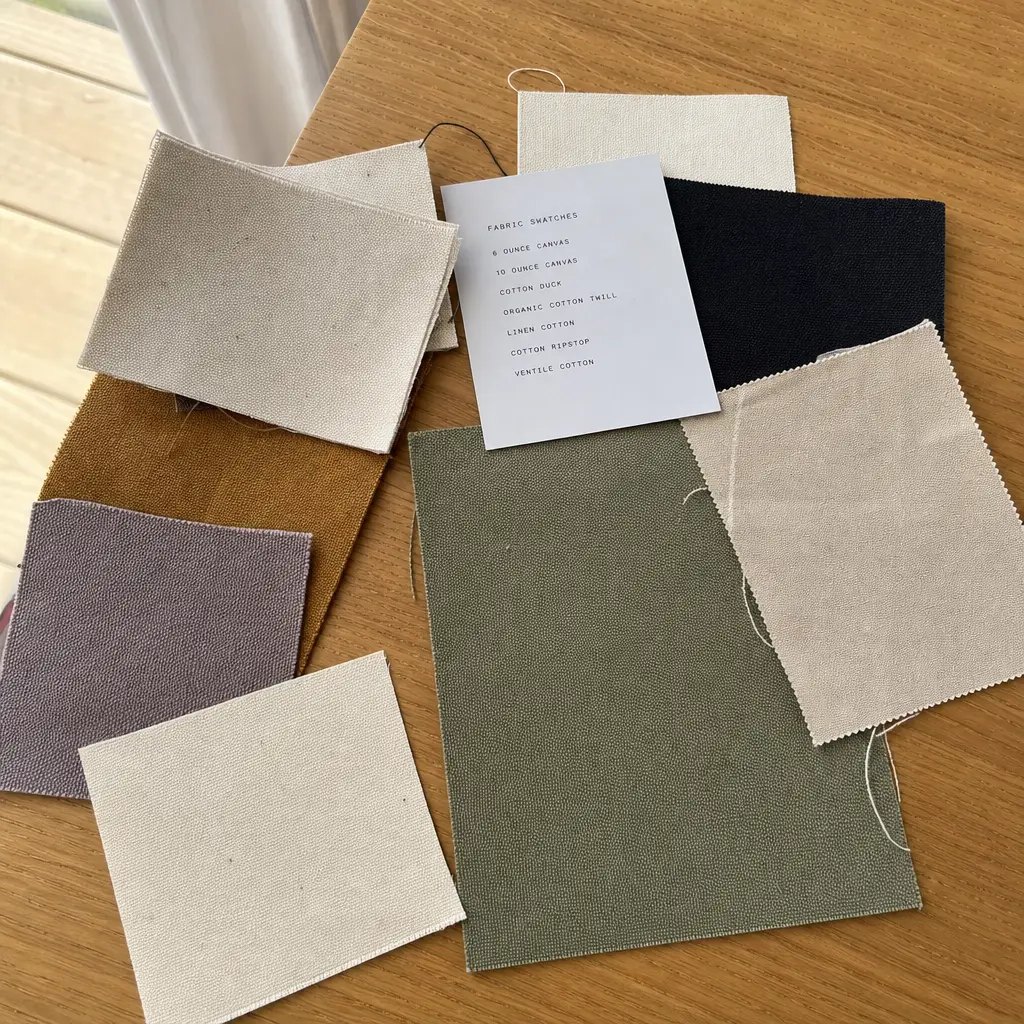
What this sample approval step is really protecting
For wine clubs, the sample is not just a visual reference. It is the point where fabric weight, bottle fit, print durability, and packing logic either line up or create expensive production surprises. A canvas wine carrier that looks fine empty can fail once two or four bottles are loaded, folded, shipped, and repacked by a fulfillment team.
The approval step should answer one question clearly: can this exact sample be produced at scale without changing the feel, strength, or carton efficiency? If the supplier cannot show that on the sample, the PO is too early.
- Use the sample to verify load stability, not just appearance.
- Treat print, stitching, and packing as one system, not three separate approvals.
- Do not approve from artwork alone when the carrier has dividers, gussets, or closures.
Start with the use case, not the catalog style
Wine clubs buy canvas wine carriers for different jobs. Some need a reusable member gift that feels premium on arrival. Others need a carrier that can be packed fast at a fulfillment center and still protect bottles in transit. The right sample depends on whether the bag is for presentation, shipping, retail resale, or event handout.
Before comparing quotes, define the exact bottle set. A carrier for two standard 750 ml bottles is a different product from a four-bottle club pack or a mixed-format carrier with glass, corkscrew, and insert. The supplier should sample against your bottle dimensions, not generic industry sizes.
- State bottle count and bottle diameter range in the RFQ.
- Say whether the carrier must stand upright on shelf or sit flat in a mailing carton.
- Note if the bag needs dividers, closures, or an insert pocket.
Fabric weight and body: where most approval mistakes start
For most canvas wine carriers, 12 oz to 16 oz canvas, roughly 340 to 450 GSM, is the practical working range. Lighter canvas can save cost but may collapse around the bottles, wrinkle badly after folding, or show weak stitch hold near the handle. Heavier canvas gives structure and better shelf presence, but it can increase sewing difficulty and unit cost.
Ask the supplier to identify the actual fabric weight, the yarn count if available, and whether the canvas is natural, bleached, dyed, or recycled cotton. If the sample has stiffener or lining, separate that from the base fabric spec so you are not comparing a reinforced sample against a plain production quote.
- Check if the fabric feels underbuilt at the base seams when loaded.
- Inspect for visible weave variation or thin spots in natural canvas.
- Confirm whether shrinkage has been prewashed or compensated in cutting.
Print method should match the logo and the channel
Screen print is usually the most economical choice for simple one-color logos and medium-volume wine club programs. It holds up well on canvas when the artwork is bold and the print area is not overloaded with fine detail. If the logo has small text, thin strokes, or a premium retail requirement, a woven label, embroidery, or sewn patch may be the better approval route.
A common mistake is approving a beautiful PDF proof without seeing how the logo actually lands on textured canvas. On thick canvas, small details can fill in, edges can look uneven, and color saturation can shift. The physical sample should show the exact print size, placement, and finish, including any front, back, side, or handle-area branding.
- Keep fine text off rough canvas unless the print method has been tested.
- Approve one side or both sides explicitly, not by assumption.
- If the artwork uses spot colors, confirm ink matching tolerance before bulk.
Compare the supplier route before you compare the price
The cheapest quote is often the one with the weakest sample discipline. For canvas wine carriers, buyers usually face three sourcing routes: a direct factory with in-house sampling, a trading company layering margin on top, or a factory that outsources sample development to a subcontractor. Each route can work, but the risk profile is different.
A direct factory is usually the cleanest route when you need repeatability on fabric weight, stitching, and carton pack. A trading company can help with coordination, but the buyer must confirm that the final production line is the same one used for the sample. If the sample came from a different workshop, treat it as a design reference only.
- Ask who physically made the sample.
- Ask whether the same sewing line will run bulk production.
- Request carton spec, production QC flow, and overrun policy in writing.
What a solid quote should include for sample approval
A useful quote for canvas wine carriers is more than a unit price. It should separate sample charge, production pricing, print setup, packaging, and lead time. If the supplier hides carton dimensions, packing count, or MOQ by color, you cannot compare landed cost accurately.
Quote structure also reveals production discipline. A supplier that can quote by fabric weight, print version, and packing format usually understands how the product will be made. A vague quote that only gives a single FOB number often means the buyer will discover the real costs later, after artwork changes or packing revisions.
- Require sample charge and sample lead time.
- Require MOQ by color and by print version.
- Require carton size, pieces per carton, and gross weight.
Use a simple comparison table to separate real options from lookalikes
For wine club procurement, the useful comparison is not between random suppliers. It is between sourcing routes and construction levels that can actually support your program. The table below is the right way to judge which option fits a branded club pack, a retail shelf item, or an event gift program.
Do not let the quote hide behind the lowest FOB number. The sample should prove whether the supplier can hold fabric quality, print clarity, and packaging efficiency at scale.
- Compare sample quality against repeatability, not just aesthetics.
- Balance unit price against packing density and rejection risk.
- Use the sample to decide whether premium details are worth the cost.
Approval standards: the sample has to survive real use
Sample approval should include a loaded handling test. Insert the actual bottles, close the carrier if it has a closure, lift by the handles, and check whether the bag sags, twists, or stresses at the corners. If the carrier is for retail or gifting, look at the shape after the bag has been folded and reopened several times.
Acceptance criteria should be written down before the sample is signed off. That keeps the buyer from approving a bag that looks good in the sample room but fails when filled, labeled, stacked, and shipped. For a wine club, that means the carrier must protect bottles, preserve brand presentation, and fit the packing flow without extra labor.
- Handle reinforcement should not show seam puckering or loose thread ends.
- Bottle dividers must keep bottles from rubbing together.
- The finished sample should match target size within the agreed tolerance.
Packing, cartonization, and freight matter more than many teams expect
Canvas wine carriers are often judged as a soft good, but the carton footprint can make or break landed cost. A flat-packed carrier with efficient folding and a tight master carton can save freight, reduce warehouse handling, and lower damage rates. A bulky sample that looks impressive but wastes carton space may not be viable for a subscription or club program.
Ask the supplier to show how the approved sample folds, how many pieces fit per carton, and whether the packing includes barcode labels, polybags, hangtags, or silica gel. These small details affect both outbound efficiency and the final unpacking experience.
- Confirm carton count before approving production.
- Ask for packed gross weight, not only unit weight.
- Make sure labels and inserts do not shift the carrier shape.
Lead time risk and what to lock before the PO
Sample approval is the place to remove schedule risk. If the supplier still needs fabric sourcing, print strike-offs, label confirmation, or carton redesign after sample sign-off, your real lead time has not been set yet. For wine clubs, that matters because seasonal shipments and membership campaigns are date-sensitive.
Lock the timeline in stages: sample development, sample approval, bulk material readiness, production, inspection, and ship date. If a supplier cannot explain which step drives the longest delay, they are not ready for a committed PO.
- Set sample lead time separately from production lead time.
- Ask whether fabric is stock or mill-made.
- Confirm whether artwork approval can delay bulk start.
Specification comparison for buyers
| Spec decision | Recommended option | When it fits | Buyer risk to check |
|---|---|---|---|
| Fabric weight | 12 oz to 16 oz canvas, usually 340 to 450 GSM | Wine club gift programs, retail sets, and carriers that need structure | Too light and the bag collapses; too heavy can raise cost and make stitching stress harder |
| Print method | Screen print for simple logos; woven label or embroidery for premium feel | Best when the logo is one-color or the brand wants a cleaner long-life finish | Fine text can fill in on thick canvas; thread count and logo size must be approved on sample |
| Handle construction | Self-fabric handles with bar-tack reinforcement | Standard for two-bottle or four-bottle carriers with regular club fulfillment | Short handle drop or weak bar-tacks can fail when bottles are loaded off-center |
| Bottle divider style | Fixed internal divider or stitched bottle sleeves | Needed when bottles must not touch during shipping or gifting | Divider dimensions must match actual bottle diameters, not just a generic bottle sketch |
| Closure type | Open top for speed or flap/zip closure for premium gifting | Open top suits club packing lines; zip or flap suits retail presentation | Closures add labor and may affect quote, lead time, and carton efficiency |
| Supplier route | Direct factory with sample room and in-house QC | Best when the buyer needs control over details and repeatability | Verify the factory is not outsourcing the sample while quoting as a manufacturer |
| MOQ structure | Separate sample charge, then production MOQ by color and print version | Works for brands testing artwork or running seasonal club packs | Low MOQ can hide higher unit price, setup fees, or limited packing options |
| Packing method | Flat packed with master carton insert and barcode label | Good for importers and distributors optimizing carton count and warehouse handling | Loose folding can crease the bag, distort print, or increase carton volume |
| Quote basis | Clear EXW/FOB terms plus carton count, lead time, and overrun allowance | Needed for landed-cost comparison across suppliers | Missing freight-ready data makes quotes look cheaper than they are |
Buyer checklist before sampling
- Confirm bottle count, bottle diameter range, and whether the carrier is for standard 750 ml bottles, magnum bottles, or mixed formats.
- Lock fabric weight in GSM or oz, including whether the canvas is natural, bleached, dyed, or recycled cotton canvas.
- Approve the print method, print size, ink color, and artwork tolerance on a physical sample, not just a PDF proof.
- Measure handle length, handle width, seam allowance, and reinforcement points with loaded bottles in the sample.
- Confirm whether the sample shows final packing style, hangtag, barcode label, and carton pack quantity.
- Request quote terms for sample charge, sample lead time, production MOQ, overrun tolerance, and defect handling.
Factory quote questions to send
- What is the exact fabric spec in GSM or oz, and is it bleached, natural, or dyed canvas?
- Which print method will you use for the approved artwork, and what is the setup charge per color or per side?
- Can you share the sample lead time, production lead time, and the earliest ship window after approval?
- What is the MOQ by color and by print version, and what changes if we want multiple logo placements?
- How many pieces per carton, what is the carton size and gross weight, and can you quote packed-to-carton pricing?
- What is your acceptable overrun or underrun range, and how do you handle defects found during pre-shipment inspection?
Quality-control points to confirm
- Fabric must match the approved GSM or oz range within the supplier's stated tolerance, and the weave should not show thin spots or loose slubs in critical load areas.
- Stitching must be straight, dense enough for carry strength, and reinforced at handle joins, divider points, and base seams with no skipped stitches.
- Print registration, edge sharpness, and color density must match the signed sample under normal light; smudging, pinholes, and ghosting are rejection points.
- Handles must pass a loaded sample pull test with bottles inside, and the carrier should keep shape without seam popping or severe distortion.
- The sample must match the approved size, bottle fit, folding behavior, label placement, and carton configuration before bulk approval.