Why Coffee Roasters Need a Reorder Plan for Canvas Wine Carriers
If you are a coffee roaster selling retail gift sets that include a bottle of wine or a specialty beverage, the canvas wine carrier is often the most visible part of the package. A well-made carrier reinforces your brand. A poorly made one—frayed handle, misaligned print, or wrong bottle fit—can damage your retail relationship before the customer even tastes the coffee.
A reorder is not the same as a first order. You already have a production sample, a print file, and a packing spec. But factories change fabric sources, thread types, and even sewing operators between runs. Without a structured reorder plan, you risk receiving carriers that look different from your last batch. This guide covers the specific decisions, checks, and questions that keep your reorder consistent.
Consider this: a coffee roaster who reorders 2,000 canvas wine carriers without verifying the fabric weight may receive a lighter fabric that tears at the handle. The cost of a failed batch—return shipping, replacement production, and lost retail sales—can exceed the cost of a pre-production sample by 10x. A reorder plan is not bureaucracy; it is risk management.
- Fabric weight and weave can shift between lots; verify GSM on every reorder
- Print color may drift if the factory changes ink supplier; request a print sample
- Handle attachment method may change if the factory upgrades or downgrades equipment
- Packing standards may relax if the factory is under schedule pressure
- A structured reorder plan reduces the risk of receiving non-conforming goods
Fabric Weight and Weave: The First Spec to Confirm
Canvas is a plain-weave cotton fabric. Its weight is measured in ounces per square yard (oz/yd²) or grams per square meter (GSM). For a wine carrier, 10-12 oz (280-340 GSM) is standard. Lighter fabric may tear at the handle stitch. Heavier fabric adds stiffness and freight cost without much benefit.
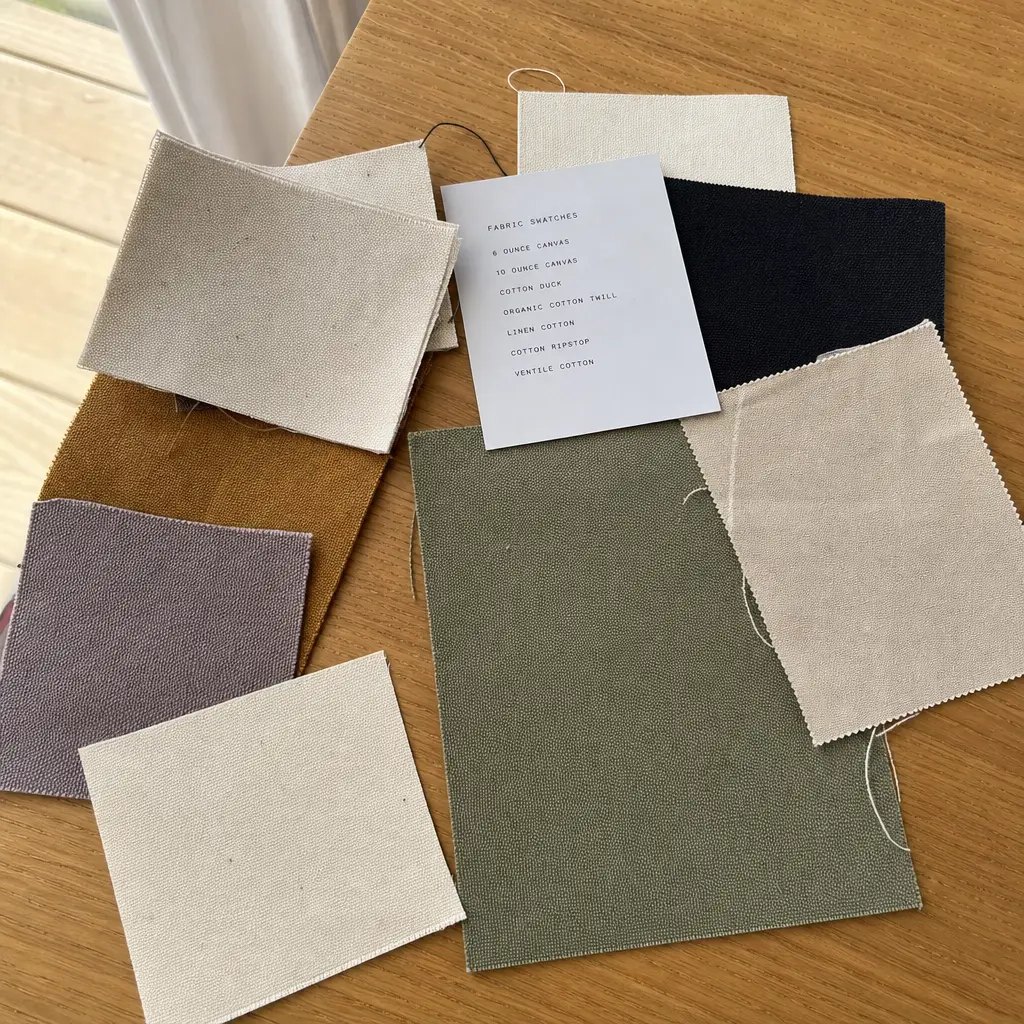
On a reorder, ask the factory to confirm the exact GSM and weave count (threads per inch). If they changed suppliers, the new fabric may look similar but behave differently—less durable, more shrinkage, or different dye absorption. Request a small fabric swatch from the new lot before production starts.
Weave count matters because a tighter weave (e.g., 60x40 threads per inch) is stronger and holds print ink better than a loose weave (e.g., 40x30). A factory may switch to a looser weave to reduce cost, which can affect print quality and durability. Ask for the weave count in your spec sheet and verify it on the pre-production sample.
If you are unsure about the fabric, request a tensile strength test (ASTM D5034) on the new lot. A minimum breaking strength of 50 lbs (22 kg) in the warp direction is recommended for a two-bottle carrier. This test is inexpensive and provides objective data for comparison.
- Request GSM test report from the factory for the new fabric lot
- Compare weave count (warp and weft) to your previous order spec
- If the fabric feels different, ask for a pre-production sample before bulk cutting
- Request a tensile strength test (ASTM D5034) if you are unsure about the fabric quality
- Ask for a fabric swatch from the new lot and compare it to your previous order swatch under D65 light
Print Method and Color Consistency: Avoiding Brand Drift
Most canvas wine carriers are screen printed with water-based ink. This method bonds with the cotton fibers and withstands multiple washes. Heat transfer or vinyl may peel after a few uses, especially if the carrier is washed or exposed to moisture.
On a reorder, the biggest risk is color shift. Factories may change ink supplier or mix a new batch that looks slightly different. Always request a print sample on the actual fabric before production. Compare it to your approved sample under daylight (D65) or store lighting. If you use PMS colors, include the PMS code in your spec sheet.
For precise color matching, ask the factory to provide a spectrophotometer reading. The Delta E (ΔE) value measures the difference between the target color and the printed color. A ΔE under 2.0 is considered an excellent match for most retail applications. If the factory cannot provide a spectrophotometer reading, request a physical color chip from the same ink batch.
Also consider the print placement. On a reorder, the print position may shift if the factory uses a different screen or operator. Specify the distance from the top edge and the center alignment in your spec sheet. A misaligned print can make the carrier look unprofessional, especially if the logo is off-center by more than 5 mm.
- Water-based screen print is the most durable for canvas wine carriers
- Request a print sample on the actual fabric, not on paper or swatch card
- Include PMS code or a physical color chip in your spec sheet
- Ask for a wash test report: 5 cycles at 40°C, no fading or peeling
- Request a spectrophotometer reading (Delta E under 2.0) for color accuracy
- Specify print placement (distance from top edge and center alignment) in your spec sheet
Handle Attachment: The Most Common Failure Point
The handle takes the most stress. A wine carrier with two 750 ml bottles can weigh over 2.5 kg. If the handle stitch fails, the carrier is useless and the bottles may break. The standard is 1.5-inch cotton webbing, double-stitched with a bartack reinforcement at the stress points.
On a reorder, confirm that the handle attachment method has not changed. Some factories switch to single stitching or lighter webbing to save cost. Request a load test on the pre-production sample: hang 4 kg from the handle for 30 seconds. No stitch failure, no webbing tear. If the factory cannot provide a load test report, ask for a video of the test.
The stitch type also matters. A lock stitch (301) is standard for webbing attachment, but a chain stitch (401) may unravel if a single stitch breaks. Specify the stitch type in your spec sheet. Also check the stitch density: 8-10 stitches per inch is standard for handle attachment. Too few stitches may weaken the seam; too many may cause the fabric to pucker.
If you are shipping carriers to a humid or coastal region, ask about the thread material. Polyester thread is more resistant to moisture and UV than cotton thread. A factory may use cotton thread to save cost, but it can rot or weaken over time in humid conditions.
- Specify webbing width (1.5 inches) and stitch type (double stitch, lock stitch)
- Request bartack reinforcement at both ends of the handle attachment
- Ask for a load test report or video with the pre-production sample
- If the handle feels flimsy, request a heavier webbing or additional stitch rows
- Specify stitch density (8-10 stitches per inch) and thread material (polyester preferred)
- Request a load test on random samples from the production run, not just the pre-production sample
Gusset and Bottle Fit: Avoid Scuffed Labels and Tilted Bottles
A wine carrier without a bottom gusset forces the bottles to sit side by side, often touching each other. This can scuff labels or cause the bottles to tilt. A 4-inch flat gusset provides enough space for two standard 750 ml wine bottles without contact.
On a reorder, measure the gusset width on the pre-production sample. Place your actual bottles inside. Check that the bottles sit upright, do not touch each other, and do not protrude above the carrier top. If you use a different bottle shape (e.g., Burgundy vs. Bordeaux), test the fit before approving the sample.
The gusset depth is also important. A shallow gusset (less than 3 inches) may not provide enough support for the bottle base, causing the bottles to tilt forward or backward. A deep gusset (over 5 inches) may add unnecessary fabric and cost. Measure the gusset depth from the bottom seam to the fold line and compare it to your spec.
If you are concerned about label scuffing, consider adding a divider insert. A simple piece of cardboard or felt between the bottles can prevent contact. Some factories offer a sewn-in divider as an option. This adds cost but may be worth it for premium retail products.
- Specify gusset width (4 inches recommended for two 750 ml bottles)
- Request a bottle fit test with your actual bottles during sample approval
- Check that the carrier height is at least 1 inch above the bottle neck
- If bottles touch, ask for a wider gusset or a divider insert
- Measure gusset depth from the bottom seam to the fold line and compare to spec
- Consider a divider insert to prevent label scuffing for premium products
Closure Type: Button and Loop vs. Magnetic Snap
The most common closure for canvas wine carriers is a button and loop—a wooden or plastic button sewn on the front flap, with a fabric loop on the back. This closure is simple, durable, and easy for retail customers to open and close. Magnetic snaps are faster to use but can rust in humid conditions or during sea freight.
On a reorder, confirm the closure type and material. If you used a wooden button before, check that the factory sources the same wood type and finish. If you use a magnetic snap, request a corrosion test: 72 hours in a salt spray chamber (ASTM B117) or a simple humidity test in a sealed bag with a wet sponge for 48 hours.
The button size and loop length also matter. A button that is too small (under 15 mm) may be difficult to fasten. A loop that is too short may be hard to close; a loop that is too long may look loose. Specify the button diameter and loop length in your spec sheet. For a standard two-bottle carrier, a 20 mm wooden button and a 4 cm loop are typical.
If you are targeting an eco-friendly brand image, consider using a coconut shell button or a recycled plastic button. These materials are available from most factories and add a natural, artisanal feel to the carrier. Confirm the button material and finish (matte, gloss, or natural) in your spec sheet.
- Button and loop is the most reliable closure for canvas wine carriers
- If using magnetic snap, request a corrosion test report
- Confirm button material (wood, plastic, or metal) and finish (matte, gloss, or natural)
- Check that the loop is long enough to close easily but not loose
- Specify button diameter (20 mm recommended) and loop length (4 cm recommended)
- Consider eco-friendly button materials (coconut shell, recycled plastic) for brand alignment
MOQ Logic for Reorders: What Changes and What Stays
First orders often have higher MOQs because the factory needs to set up the print screen, cut pattern, and sample. On a reorder, the MOQ may be lower if the factory already has the screen and pattern. But some factories apply a minimum run per color per size, regardless of order history.
Ask your factory: What is the MOQ per print color and per size for a reorder? Is there a surcharge for lower quantities? For example, a factory may accept 300 pcs per color on a reorder but add a 20% setup fee. If you plan to reorder frequently, negotiate a blanket MOQ for the year with scheduled releases.
Also ask if the factory still has your print screen and pattern. If they do, you may save on setup costs. If they do not, factor in the cost of a new screen (typically $50-100 per color) and a new pattern (typically $30-50). Some factories charge a storage fee for keeping screens and patterns beyond 6 months. Ask about this before placing the PO.
If your reorder quantity is below the factory's MOQ, consider combining multiple colors or sizes in one production run. For example, if you need 200 pcs of red and 200 pcs of blue, ask the factory if they can run both colors in one batch. This may reduce the per-unit cost and meet the MOQ threshold.
- Confirm reorder MOQ per color and per size before placing the PO
- Ask if the factory still has your print screen and pattern; if not, factor in setup cost
- Negotiate a blanket MOQ for the year if you plan multiple reorders
- If MOQ is too high, ask if they can combine colors in one production run
- Ask about screen and pattern storage fees beyond 6 months
Sample Approval: The Critical Step Between Reorder and Production
A pre-production sample (PP sample) is the only way to verify that the factory has interpreted your spec correctly. On a reorder, the sample should match your previous order in fabric, print, handle, gusset, and closure. Do not skip this step even if you have ordered the same product before.
Request the PP sample on the actual production fabric, with the actual print color and handle webbing. Check every dimension against your spec sheet. Test the fit with your bottles. Wash one sample (if possible) to check print and stitch durability. Only approve the sample in writing after all checks pass.
Create a sample approval checklist that includes: fabric weight (GSM), weave count, print color (ΔE under 2.0), handle load test (4 kg for 30 seconds), gusset width and depth, bottle fit, closure function, and packing. Send this checklist to the factory with your sample request. Ask them to fill it out and return it with the sample.
If the factory sends a sample that does not match your spec, do not approve it. Request a revised sample with the corrections. A second sample may take 3-5 days, but it is better than approving a flawed sample and receiving a bad batch. Document all corrections in writing and keep a record of the sample approval process.
- Request PP sample on actual production fabric, not on a different lot
- Compare sample to your previous order or approved sample side by side
- Test bottle fit, handle load, print color, and closure function
- Do not approve verbally; send a written approval with any corrections
- Create a sample approval checklist and send it to the factory with your sample request
- If the sample does not match, request a revised sample before approving
Packing and Lead Time: Avoid Last-Minute Surprises
Packing standards affect both product quality and freight cost. For canvas wine carriers, the standard is 50 pcs per polybag, then packed in a master carton. The polybag protects the carrier from dust and moisture. The carton should not exceed 15 kg for easy handling by courier or freight forwarder.
On a reorder, confirm the packing method and carton weight. Ask the factory to send a packing photo or video before shipment. Lead time for a reorder is usually 30-45 working days after sample approval. If the factory quotes less than 25 days, ask how they will achieve it—overtime, split shipment, or pre-cut fabric. Add a 10-working-day buffer for customs or port delays.
Polybag thickness matters. A thin polybag (under 30 microns) may tear during handling, exposing the carrier to dust and moisture. Specify a minimum polybag thickness of 30 microns in your spec sheet. Also ask about the polybag material: LDPE (low-density polyethylene) is standard, but some factories use recycled or biodegradable materials for eco-friendly brands.
Carton weight and dimensions affect freight cost. A carton that weighs 18 kg may be more expensive to ship than two cartons of 9 kg each, depending on the courier's pricing structure. Ask the factory for the carton weight and dimensions (length, width, height) to estimate freight cost. If the carton is too heavy, ask them to reduce the quantity per carton (e.g., 40 pcs instead of 50).
- Confirm polybag thickness (at least 30 microns) and sealing method
- Ask for carton weight and dimensions to estimate freight cost
- Request a packing photo or video before shipment
- Add a 10-working-day buffer to the quoted lead time
- If lead time is tight, ask about partial shipment options
- Specify polybag material (LDPE, recycled, or biodegradable) for brand alignment
- If carton weight exceeds 15 kg, ask to reduce quantity per carton
Factory Quote Questions: What to Ask Before You Commit
A factory quote is more than a price. It is a contract that defines the spec, MOQ, lead time, and terms. Before you commit, ask the factory to itemize the cost: fabric, print, handle, closure, packing, and freight (if included). This helps you compare quotes from different factories and identify hidden costs.
Also ask about the factory's defect tolerance (AQL level). For canvas wine carriers, a 2.5% defect rate (AQL 2.5) is standard. If the factory offers a lower AQL (e.g., 1.0%), it may indicate higher quality control or a higher price. Request a QC report with the shipment that shows the number of defects found and the AQL level.
Payment terms are another important factor. Standard terms are 30% deposit with the PO and 70% before shipment. Some factories offer 50/50 or 30/70 with a letter of credit. Ask about the payment terms and whether there is a discount for early payment or a penalty for late payment.
Finally, ask about the factory's warranty policy. Most factories offer a 30-day warranty from the date of delivery for manufacturing defects. Some may offer a longer warranty (60 or 90 days) for an additional cost. Clarify what is covered (e.g., fabric defects, print peeling, handle failure) and what is not (e.g., damage during shipping, customer misuse).
- Request an itemized cost breakdown for fabric, print, handle, closure, and packing
- Ask about the factory's AQL level and whether they provide a QC report
- Confirm payment terms (e.g., 30% deposit, 70% before shipment)
- Ask about warranty or replacement for defects found within 30 days of delivery
- Request a sample of the QC report format they use
- Clarify what is covered under warranty and what is not
Specification comparison for buyers
| Spec decision | Recommended option | When it fits | Buyer risk to check |
|---|---|---|---|
| Fabric weight | 12 oz (340 GSM) natural canvas | Standard two-bottle carrier for retail gifting | Under 10 oz may tear at handle stitch; over 14 oz adds freight cost and stiffness |
| Handle type | Cotton webbing, 1.5" wide, double-stitched with bartack | Heavier bottles or daily carry | Single-stitched webbing fails under 4 kg load; ask for load test report |
| Print method | Screen print (water-based ink) | Logo-only, runs over 500 pcs | Heat transfer may peel after 10 washes; ask for wash test sample |
| Bottom gusset | 4" flat gusset with bartack reinforcement | Carries two 750 ml wine bottles side by side | No gusset causes bottle contact and label scuff; request gusset width in spec |
| Closure | Button and loop (wooden or plastic) | Retail shelf display, easy open | Magnetic snap may rust; ask for corrosion test if coastal shipping |
| MOQ per color | 500 pcs per print color per size | Standard production run | Lower MOQ (200 pcs) may incur 20-30% surcharge; confirm before PO |
| Sample lead time | 7-10 working days for pre-production sample | First reorder after initial run | Rush samples (3-5 days) often skip full QC; request full spec sample |
| Production lead time | 30-45 working days after sample approval | Standard bulk order 1000-3000 pcs | Under 25 days usually means overtime or split shipment; ask for shipping schedule |
| Packing | 50 pcs per polybag, then master carton | Retail-ready, no repacking needed | Loose packing causes creases; ask for polybag thickness and carton weight limit |
Buyer checklist before sampling
- Confirm fabric weight (GSM) and weave count on current production sample vs. new reorder spec
- Request pre-production sample with exact print color, handle attachment, and gusset dimensions
- Verify handle load test: 4 kg static weight for 30 seconds, no stitch failure
- Check print wash fastness: 5 home laundry cycles at 40°C, no fading or peeling
- Measure gusset width and bottle fit with your actual bottle dimensions
- Confirm packing method: polybag per piece, carton weight under 15 kg for courier
- Request factory QC report for previous order lot (if available) to spot recurring defects
- Set a clear lead time buffer: add 10 working days to quoted lead time for customs or port delays
- Request a fabric swatch from the new lot before production starts
- Ask for a spectrophotometer reading (Delta E under 2.0) for print color accuracy
Factory quote questions to send
- What is the exact GSM and weave count of the canvas you will use for this reorder?
- Can you provide a load test certificate for the handle attachment from your last production run?
- What is your MOQ per print color and per size? Is there a surcharge for lower MOQ?
- How many pre-production samples do you include in the quote? What is the cost for additional samples?
- What is your standard lead time for sample approval and production? Do you offer partial shipment?
- What is your packing standard? Do you use polybags, and what is the carton weight limit?
- Do you have a wash test report for the print method you recommend? Can I see it?
- What is your defect tolerance (AQL level) for canvas wine carriers? Do you provide a QC report with shipment?
- What is the cost breakdown for fabric, print, handle, and packing? Can you itemize it?
- Do you offer any warranty or replacement for defects found within 30 days of delivery?
Quality-control points to confirm
- Fabric weight verification: measure GSM on 3 random pieces from the production run
- Handle stitch inspection: check double stitching, bartack at stress points, no loose threads
- Print alignment and color: compare to approved pre-production sample under D65 light
- Gusset dimension check: measure width and depth against spec, ensure no twist
- Button and loop function: open and close 10 times, no breakage or deformation
- Packing inspection: polybag sealed, no dirt or crease, carton weight within limit
- Load test: random sample handles must hold 4 kg for 30 seconds without failure
- Wash test: one random sample per 1000 pcs, 5 wash cycles at 40°C, check print and stitch
- Fabric swatch comparison: compare new lot swatch to previous order swatch under D65 light
- Bottle fit test: place actual bottles in carrier, check upright position and no label scuff