Why craft fairs expose weak wine carrier specs
Canvas wine carriers used at craft fairs do not behave like ordinary promotional packaging. They sit in full view on a table, get picked up repeatedly, and may be filled with a real bottle while a customer is still standing at the booth. They are also judged beside handmade goods, premium food items, winery labels, and gift merchandise. A loose thread or crooked logo is not hidden in a backroom; it is part of the selling experience.
The bigger procurement risk is not the one bad sample. It is a bulk shipment that looks fine in a supplier photo but arrives with mixed canvas shades, narrow handle capture, twisted boxed bottoms, shifted prints, dirty fold edges, or cartons packed in a way that creases the decoration. Craft fair sellers rarely have time to sort, steam, re-fold, or rework hundreds of bags before an event. The product needs to arrive ready to sell, gift, or bundle.
A canvas wine carriers quality inspection checklist for craft fairs therefore has to go beyond a generic tote bag checklist. A bottle is rigid, heavy for its size, and unforgiving. The bag must accept the bottle without forcing, carry it safely, stand well enough for table display if that is part of the offer, and show the logo cleanly under close customer handling.
For B2B buyers, the most useful move is to replace soft language with measurable requirements. “Strong canvas” becomes 12 oz or 14 oz cotton canvas with actual GSM and an agreed tolerance. “Good stitching” becomes seam allowance, stitch density, reinforcement method, and no skipped stitches at stress points. “Nice logo” becomes artwork version, print size, Pantone target, placement tolerance, curing check, and approved fold position.
- Define the sales context first: gift packaging, craft fair retail item, winery merchandise, event bundle, or reusable carrier.
- Treat table presentation as a quality requirement when the carrier will stand upright beside bottles or other merchandise.
- Control function and appearance together: fit, base shape, handle strength, print quality, fold pattern, and carton accuracy.
- Do not approve bulk production from supplier photos alone when the fabric, artwork, structure, or factory is new.
- Tie inspection criteria to the approved bottle profile and sealed golden sample, not a generic wine carrier template.
Start with bottle fit, not a flat bag size
Many sourcing problems begin with a flat dimension and the phrase “standard wine bottle.” That phrase is not precise enough. A 750 ml Bordeaux bottle, Burgundy bottle, Champagne or sparkling bottle, and tall flute bottle can differ in base diameter, shoulder shape, neck length, and total height. A carrier that slides easily over a narrow Bordeaux bottle may bind around a wider Burgundy or sparkling bottle even when the measured body height appears correct.
Put the bottle profile in the RFQ before asking for final pricing. If the program includes more than one bottle shape, choose the largest or most difficult bottle as the inspection reference. If the carrier is part of gift packaging, test the full retail presentation: tissue, insert card, neck tag, divider, protective sleeve, bottle label, or any wrap that adds thickness or friction.
Flat dimensions still matter, but they do not tell the full story. Canvas thickness, seam allowance, top hem bulk, boxed bottom construction, and side seam buildup all reduce usable internal space. With a rigid glass bottle, a few millimeters can decide whether insertion feels smooth or forced.
A practical fit check is simple and should be repeated at sample approval and final inspection. Insert the approved bottle without forcing it. Confirm that it reaches the base. Lift the carrier by both handles. Set it on a flat surface. Then inspect whether the sides are stressed, the base twists, the top opening distorts, or the handles pull unevenly.
- Identify the reference bottle by type and dimensions, not volume alone.
- Measure bottle base diameter, full height, shoulder width, and neck profile when using a custom bottle.
- Inspect fit with all gift components included in the final retail presentation.
- Reject a design that requires forcing the bottle unless a snug sleeve fit is intentionally specified and approved.
- For boxed-bottom carriers, test whether the filled bag stands upright and whether the corners remain symmetrical.
Canvas weight, GSM, finish, and shrinkage controls
Fabric weight drives both cost and perceived quality. For many craft fair programs, 12 oz to 14 oz cotton canvas is a practical working range. A 12 oz canvas, commonly referenced around 407 GSM, can work well for a standard 750 ml carrier when the bottle fit, seams, handle reinforcement, and base construction are properly approved. A 14 oz canvas, commonly referenced around 475 GSM, gives a firmer hand and a more structured presentation for premium gift packaging.
Those numbers are useful references, not a substitute for supplier confirmation. Canvas ounces, GSM, yarn count, weave density, and finishing can vary by mill. Some factories quote a familiar fabric name without stating the measured fabric weight. Buyers should ask for ounces and GSM, the fabric code or mill reference, the incoming inspection tolerance, and whether one fabric lot will be used across the full order.
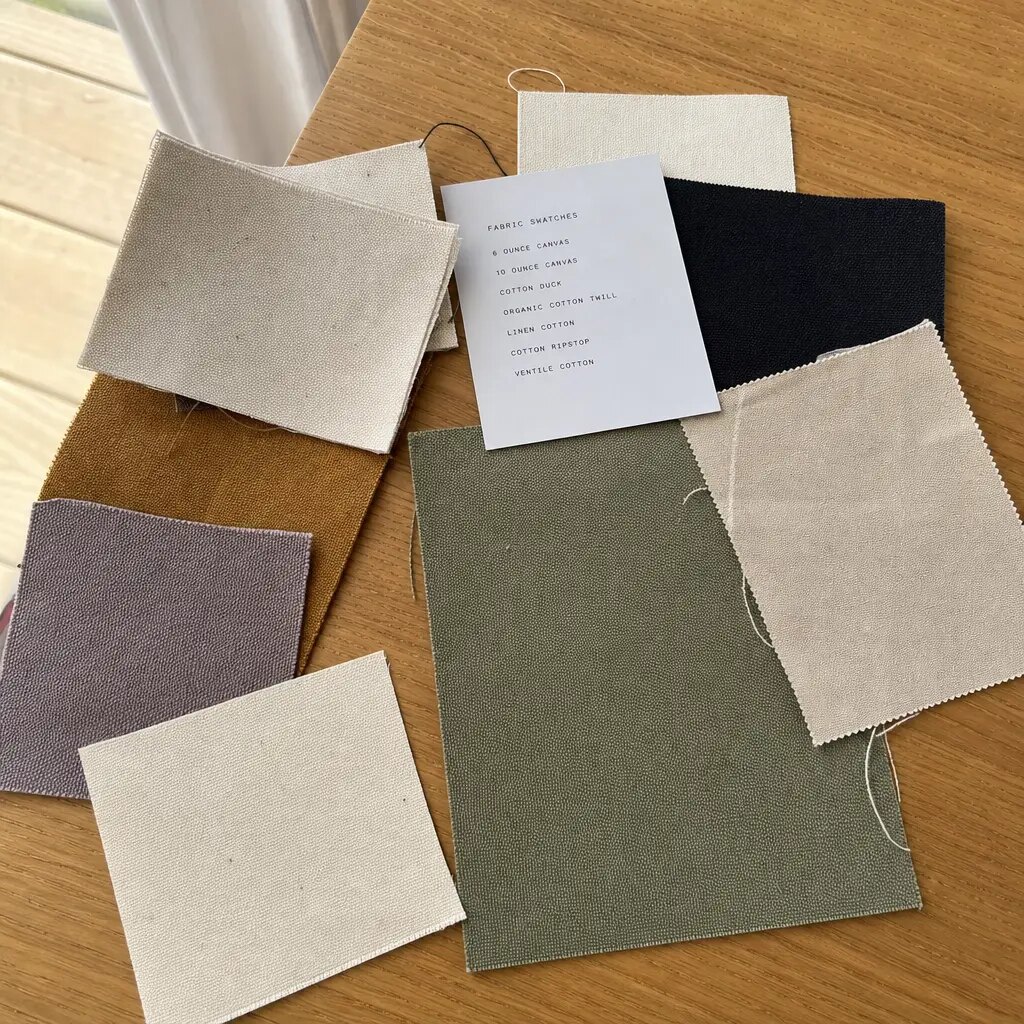
Finish is just as important as weight. Natural unbleached canvas is popular for craft fairs because it has an organic, handmade look, but shade variation should be controlled against an approved swatch. Bleached canvas can look crisp but may show dirt quickly. Dyed canvas needs lab dip approval and shade band control. Washed or enzyme-washed canvas changes the hand feel and may affect shrinkage. Pre-shrunk canvas may reduce movement after pressing or heat curing, but actual results should be confirmed by the supplier.
Decoration can also affect dimensions. If panels are printed before sewing, fabric stability influences cut alignment and final logo position. If finished bags are printed after sewing, hems and seams can create pressure differences during printing. Ask where printing happens in the production flow and whether curing temperature, pressing, or washing could change finished measurements or print appearance.
- Use 12 oz canvas for many standard craft fair carriers when structure, handle reinforcement, and bottle fit are approved.
- Use 14 oz canvas when the buyer wants a more premium hand feel, stronger upright presentation, or stronger gift packaging perception.
- Record both oz and GSM in the purchase order, sample approval form, and inspection checklist.
- Define natural, bleached, dyed, washed, enzyme-washed, pre-shrunk, or untreated canvas before comparing prices.
- Approve a shade swatch or lab dip, and define unacceptable variation such as panel mismatch, yellowing, gray cast, stains, or dirty slubs.
- Ask whether heat curing, pressing, or washing can change finished dimensions or logo appearance.
Construction details that decide strength and display quality
Wine carriers concentrate weight in a small footprint, so sewing details are not merely cosmetic. The highest-risk points are the handle attachments, top hem, side seams, bottom seam, and boxed corners. A bag can look acceptable when empty and still fail once a filled glass bottle pulls against a narrow seam allowance or poorly balanced thread tension.
A boxed bottom is often a better choice for craft fair display because it gives the bag a flatter footprint. It can help the carrier stand beside merchandise and reduce sagging around the bottle base. It also adds more sewing operations, which means more chances for variation. The tech pack should state boxed depth, corner symmetry expectations, reinforcement layer, seam allowance, and inside raw-edge finish.
Handle construction deserves its own line on the specification. Self-fabric handles create a coordinated natural look, though they can become bulky where they are sewn into the body. Cotton webbing handles may give more consistent width and easier reinforcement. Either can work if the buyer defines handle width, finished drop, insertion depth, bartack or box-stitch shape, stitch density, thread color, and acceptable appearance.
Top opening and hem construction can influence both fit and presentation. A weak hem may curl. A bulky hem can create hard fold lines, increase carton volume, or reduce the usable opening. If the design adds drawstrings, snaps, buttons, hook-and-loop tape, dividers, labels, or hangtags, each trim needs placement, color, durability, and counting checks.
- Define seam allowance and stitch density instead of relying on “standard factory sewing.”
- Require reinforcement at each handle end, such as bartack, box stitch, cross stitch, or another approved construction.
- Check handle drop using a filled carrier, not only an empty sample.
- Specify bottom style: flat seam, boxed bottom, single-layer reinforcement, or double-layer reinforcement.
- Inspect inside finishing for loose threads, raw edges, and seam bulk that interferes with bottle insertion.
- Add trim checks for drawstrings, snaps, buttons, labels, patches, hangtags, and dividers if included.
Decoration checks: logo method, placement, and durability
The logo is often the first thing a craft fair customer notices. A well-sewn carrier can still look low quality if the print is crooked, dull, sticky, cracked, too low, misregistered, or partly hidden by a fold. Select the decoration method based on artwork complexity, order quantity, canvas texture, retail positioning, and the packing method.
Screen printing is usually straightforward for repeat orders with one to three spot colors. It can produce a clean look on canvas, but buyers still need to control ink opacity, Pantone target, edge sharpness, curing, and placement. Canvas has texture, so slight weave show-through may be normal; the acceptable level should be visible on the approved sample, not debated during inspection.
DTF, heat transfer, DTG, and similar methods can be useful for short runs, seasonal art, or complex colors. They need different controls: hand feel, adhesion, cracking after folding, glossy film edges, transfer marks, and compatibility with natural canvas texture. A transfer that looks excellent flat may not perform well if bags are folded print-to-print inside a warm carton.
Labels and patches are also common on canvas wine carriers. Woven labels, cotton labels, leather patches, or side tags reduce some ink risks but add their own inspection points. Check label clarity, color, fold type, stitch line, placement, symmetry, and artwork version. If multiple SKUs use similar labels, carton separation and receiving labels become especially important.
- Measure print placement from fixed reference points: top seam, side seam, centerline, or bottom seam.
- Define print size, color target, registration tolerance, and acceptable texture show-through.
- Inspect for pinholes, bleeding, ghosting, weak opacity, ink buildup, tackiness, cracking, and transfer marks.
- For transfers or DTF, perform a fold and rub check before approving packing.
- For labels and patches, define size, fold, material, placement tolerance, stitch color, and artwork version.
- Keep a print strike-off or decorated pre-production sample with the golden sample record.
Normalize the quote before choosing a supplier
The lowest unit price may not be the best offer if suppliers are quoting different products. One factory may price 12 oz natural canvas, a simple flat base, one-color screen print, and bulk packing. Another may include 14 oz canvas, a reinforced boxed bottom, cotton webbing handles, individual packing, barcode labels, and stronger export cartons. Those quotes are not comparable until the specification is normalized.
Ask suppliers to show the cost drivers clearly. Common add-ons include development samples, screen fees, artwork cleanup, Pantone matching, custom dyeing, woven labels, hangtags, barcode application, carton marks, inner bags, desiccants, export documents, inspection support, and courier costs. Some suppliers include decoration in the unit price. Others separate every setup charge.
MOQ should be checked by component, not only by finished bag. Fabric color, artwork version, print color count, handle material, label, closure, and packing method can each create a different minimum. A very low MOQ can be useful when stock fabric and simple printing are acceptable, but it can also signal limited fabric control, lighter construction, or higher reorder risk.
For procurement, landed cost is usually more useful than factory price alone. Canvas carriers are bulky, and packing affects freight cost. Compare carton quantity, carton dimensions, gross weight, net weight, CBM, and pallet compatibility. A slightly higher unit price can be the safer choice when it reduces rework, receiving delays, or inspection failures.
- Normalize quotes by GSM, fabric finish, finished size, handle construction, bottom structure, print method, trims, and packing.
- Separate unit price from sample charges, setup fees, screen fees, artwork charges, and courier costs.
- Ask whether fabric is stock, reserved, or made to order, and whether substitutions are allowed.
- Compare carton dimensions, quantity per carton, gross weight, net weight, and estimated CBM.
- Clarify whether hangtags, barcodes, country-of-origin labels, desiccants, and carton marks are included.
- Evaluate total landed cost and inspection risk, not only the lowest EXW or FOB price.
Sample approval and golden sample discipline
Sample approval is where many preventable defects should be caught. A first development sample can confirm shape and general appearance, but it should not release production if the bulk fabric, thread, handles, trims, or print method will be different. The pre-production sample should use the actual materials and processes planned for the order.
Review the sample like an inspector would. Measure the bag, insert the bottle, lift it by the handles, inspect the base, check the logo, fold it as it will be packed, and look for pressure marks or decoration damage. Photograph the front, back, side, bottom, inside seams, handle attachments, print close-up, label placement, and folded packing view. Those photos help the buyer, supplier, and third-party inspector judge the same product.
The golden sample should be sealed, labeled, and referenced in the purchase order. Include the approval date, spec version, artwork version, canvas weight, fabric finish, print method, trim details, packing method, and any approved deviations. Do not use the golden sample for repeated handling or pull testing; keep a separate working sample for checks that may damage the bag.
Any change after approval should trigger review. A new fabric lot can change shade and print absorption. A different handle tape can change strength. A different print workshop can change curing. A new fold pattern can crease the logo. Procurement should state clearly that unapproved substitutions are not allowed.
- Approve development samples for concept only; approve pre-production samples for bulk release.
- Use actual bulk fabric, thread, handles, trims, print method, and packing fold for the pre-production sample.
- Seal and label the golden sample as the dispute reference.
- Keep a working sample for measurement, bottle insertion, fold checks, and pull checks.
- Require re-approval for changes in fabric, shade, handle, thread, trim, print method, artwork, size, or packing.
- Attach the approved spec sheet and sample photos to the purchase order.
Inspection plan, AQL, and defect grading
A quality inspection checklist needs pass/fail logic. Phrases such as “nice sewing,” “acceptable logo,” or “strong handle” sound clear during sourcing but create disputes when a shipment is on the line. A B2B inspection plan should define the sampling method, measurement tolerances, defect classes, and required action when findings exceed the agreed level.
Many buyers use AQL-based final random inspection for consumer soft goods, with separate limits for critical, major, and minor defects. The exact AQL level should be written into the purchase order. Whatever sampling level is chosen, critical defects generally should not be accepted because they affect safety, legality, usability, or brand identity.
For canvas wine carriers, critical defects may include mold, contamination, wrong product, wrong artwork, strong chemical or mildew odor, unsafe handle failure, or inability to fit the approved bottle. Major defects may include open seams, weak handle reinforcement, severe print shift, wrong size beyond tolerance, missing labels, severe shade mismatch, twisted base, or packing that damages the product. Minor defects may include loose thread tails, small approved slubs, slight fold variation, or small cosmetic marks within the agreed limit.
Functional checks should be repeatable. Inspectors should insert the target bottle, lift the filled carrier, inspect the handle stress points, place the bag on a flat surface, and check the print after normal handling. Measurements should come from fixed points and be compared against the written specification and sealed golden sample.
- Set the inspection sampling plan and AQL level before production begins.
- Define critical, major, and minor defects in the purchase order or QC checklist.
- Use zero tolerance for severe safety, contamination, wrong artwork, or wrong product defects where appropriate.
- Measure fabric weight, finished dimensions, handle drop, print placement, carton quantity, and label accuracy.
- Inspect under daylight-equivalent lighting for shade, print color, stains, and surface defects.
- Require corrective action, sorting, repair, or re-inspection when major defects exceed the agreed acceptance standard.
Practical tolerance targets for canvas wine carriers
Tolerances should be realistic for cotton canvas while still protecting bottle fit and retail appearance. Cotton fabric can move during cutting, sewing, pressing, washing, and printing. If the tolerance is too tight, the factory may price in unnecessary risk or fail inspection for normal soft-goods movement. If it is too loose, the finished carrier may look inconsistent or fail its basic function.
Different features deserve different tolerances. Body dimensions can often allow slightly more movement than logo placement because shoppers notice a crooked print immediately. Handle drop affects carrying comfort and how the bag sits on a display. Gusset or boxed bottom depth affects both bottle fit and whether the carrier stands upright.
Confirm feasibility during sampling. If manual printing, seam bulk, or the chosen structure makes ±5 mm print placement unrealistic, decide early: adjust the artwork, change the process, or document a wider tolerance. Do not wait until final inspection to discover that the factory cannot hold the standard.
As starting points for small canvas soft goods, many buyers use body width or height ±10 mm, gusset or boxed bottom depth ±5 mm, handle drop ±5 mm to ±10 mm, print placement ±5 mm, label placement ±3 mm to ±5 mm, and fabric weight ±5%. These are not universal rules. The approved bottle fit remains the controlling requirement even if flat dimensions appear to pass.
- Use tolerance ranges as procurement controls, not after-the-fact negotiation tools.
- Keep bottle fit as the highest priority; a dimension can be technically in tolerance but still fail function.
- Confirm tolerance feasibility with the supplier before approving the pre-production sample.
- Measure print placement from fixed seams or centerlines, not by eye.
- Apply tighter tolerances to visible branding and looser but functional tolerances to less visible soft-goods dimensions.
- Record approved deviations on the sample card and purchase order.
Packing, carton control, and moisture protection
Packing is part of quality control because it determines how the carrier looks when it reaches the buyer. Canvas wine carriers can arrive with hard creases, dirty edges, distorted handles, rubbed logos, moisture marks, or odor if the carton plan is weak. For craft fair sellers, inconsistent folding or mixed cartons can create hours of extra work right before an event.
Flat packing is usually efficient, but the fold pattern needs approval. If a fold runs through the front logo, test whether the print cracks, creases, or transfers. Glossy, thick, or transfer-based decoration should not be packed print-to-print unless the approved sample has passed a rub and transfer check. Some designs may need interleaving, alternating stack direction, tissue, or a different fold.
Moisture control matters because cotton canvas absorbs humidity and odor. Individual polybags are not always necessary, especially when a brand wants to reduce plastic, but master cartons should be clean, dry, and export-suitable. If desiccants are used, define the type, quantity, and placement. If paper-based protection is preferred, include it at the quote stage so cost and carton volume are not surprises.
Carton labeling should make receiving easy. Craft fair programs often include multiple artwork versions, colors, or SKUs in one purchase order. Master cartons should show style number, color, artwork version, quantity, carton number, gross weight, net weight, and buyer-required marks. Barcode labels, hangtags, and country-of-origin labels should be checked before shipment, not discovered missing at the venue.
- Approve fold pattern, bundle quantity, inner pack method, and master carton quantity.
- Avoid folding through heavy logo areas unless the approved sample passes fold durability checks.
- Use carton liners, interleaving, desiccants, or moisture barriers when transit or print method requires them.
- Confirm carton dimensions, gross weight, net weight, and CBM before freight booking.
- Separate mixed SKUs and artwork versions clearly in cartons and on packing lists.
- Include carton marks, barcodes, hangtags, country-of-origin labels, and quantity counts in final inspection.
Specification comparison for buyers
| Spec decision | Recommended option | When it fits | Buyer risk to check |
|---|---|---|---|
| Fabric weight | 12 oz to 14 oz cotton canvas, with actual GSM stated on the quote and bulk fabric controlled to an agreed tolerance such as ±5% | Craft fair retail, winery merchandise, reusable gift packaging, medium logo coverage | Supplier may quote by fabric name only; actual GSM, finish, shrinkage, and hand feel can vary by mill and lot |
| Bottle fit standard | Approve against the exact bottle profile: 750 ml Bordeaux, Burgundy, Champagne/sparkling, tall flute, or buyer-supplied custom bottle | Any order where the carrier is sold with, displayed with, or packed around a real bottle | Flat dimensions may pass while the shoulder, base diameter, or wrapped bottle does not insert smoothly |
| Finished size tolerance | Set measurable tolerances for width, height, gusset or boxed bottom depth, handle drop, and print placement; common soft-goods starting point is ±5 mm for small dimensions and ±10 mm for larger body dimensions if fit is not affected | Repeat SKUs, branded gift programs, retail receiving checks, third-party inspection | No stated tolerance leads to disputes over crooked appearance, tight bottle fit, or inconsistent display shape |
| Bottom structure | Boxed bottom with symmetrical corners; add single-layer or double-layer base reinforcement when premium structure or heavier bottles require it | Craft fair table display, gift sets, upright presentation, reduced sag around the bottle base | Weak bottom seam, raw edge exposure, asymmetric boxing, or poor seam allowance can create leaning and tearing |
| Handle construction | Self-fabric or cotton webbing handles with defined width, drop, attachment depth, and bartack or box-stitch reinforcement at each stress point | Reusable wine carrier, retail customer handling, event gifting | Handle pull-out risk increases when attachment depth, thread tension, stitch density, or reinforcement length is not specified |
| Thread and stitching | Polyester or cotton/poly thread selected for strength and appearance; define stitch density, seam allowance, and visible thread color | Orders requiring repeatable sewing appearance and functional load performance | Skipped stitches, loose tension, puckering, narrow seam capture, and untrimmed threads are frequent bulk defects |
| Print method | Screen print for repeat one- to three-color spot logos; DTF, heat transfer, or DTG for short runs or complex color art only after adhesion and fold checks | Brand logos, craft fair seasonal artwork, winery merchandise, small-batch SKUs | Ink color shift, pinholes on textured canvas, poor curing, cracking at folds, transfer marks, and inaccurate placement |
| Closure and trims | Open top for lowest complexity; drawstring, snap, button, divider, label, hangtag, or barcode only when specified in the tech pack | Gift packaging, premium presentation, retail-ready inventory control | Every added trim creates alignment, durability, color, compliance, and counting checks |
| Supplier route | Direct factory or transparent sourcing partner with fabric traceability, first-off approval, in-line QC access, and final random inspection support | Repeat procurement, custom branding, controlled specifications, export orders | Unclear subcontracting can hide fabric substitutions, print workshop changes, relaxed sewing standards, or inconsistent carton packing |
Buyer checklist before sampling
- Confirm the functional use before quoting: single 750 ml carrier, two-bottle carrier, gift sleeve, retail merchandise bag, or craft fair display packaging. The use case changes fabric weight, base structure, decoration, and packing requirements.
- Name the target bottle profile in the RFQ. Avoid vague “standard wine bottle” wording; specify Bordeaux, Burgundy, Champagne/sparkling, tall flute, or provide the buyer’s physical bottle or CAD-style dimensions.
- Record bottle diameter, bottle height, shoulder profile, neck height, and any gift wrap, insert card, tissue, divider, protective sleeve, or neck tag that will be used inside or around the carrier.
- Lock canvas weight in both ounces and GSM. As a practical reference, 12 oz canvas is commonly around 407 GSM and 14 oz canvas around 475 GSM, but the supplier must confirm the actual mill specification and tolerance.
- Specify canvas finish: natural unbleached, bleached, dyed, pigment dyed, washed, enzyme-washed, pre-shrunk, or untreated. Ask whether finishing occurs before cutting and whether heat curing during printing changes shrinkage.
- Define finished measurements and tolerances: body width, body height, top opening, side gusset or boxed bottom depth, handle width, handle drop, bottom reinforcement size, print position, and label placement.
- Define sewing construction on the drawing: seam allowance, stitch density, thread type, top hem, side seam, boxed corner method, overlock or bound raw edges, bottom reinforcement, and handle reinforcement.
- Set handle attachment requirements: handle material, width, finished drop, insertion depth, bartack or box-stitch shape, number of reinforcements per handle end, thread color, and acceptable stitch appearance.
- Choose one decoration method per SKU and define artwork file format, Pantone or approved color target, print size, print location from fixed reference points, registration tolerance, curing expectation, and rub or fold check.
- Request a pre-production sample made with actual bulk fabric, actual handle material, actual thread, actual trim, actual print method, and proposed packing fold. A look sample made from substitute fabric should not release bulk production.
Factory quote questions to send
- What is the exact canvas weight in ounces and GSM, and what tolerance do you apply during incoming fabric inspection? Can you provide the fabric code or mill reference used for the quote?
- Is the canvas natural, bleached, dyed, washed, enzyme-washed, pre-shrunk, or untreated? What shrinkage percentage do you normally see after washing, pressing, or print heat curing?
- Will bulk production use one fabric lot, or can multiple lots be mixed? If multiple lots are used, how will you control shade variation within the same shipment and within the same bag?
- What finished dimensions are included in the price: body width, height, top opening, gusset or boxed bottom depth, handle width, handle drop, and bottom reinforcement area?
- Which bottle profile did you use to price and test the carrier: Bordeaux, Burgundy, Champagne/sparkling, tall flute, or another reference? Can you test with our supplied bottle or bottle dimensions?
- What seam allowance, stitch density, thread type, and handle reinforcement method are included? Please state whether handles are bartacked, box-stitched, cross-stitched, or only sewn into the seam.
- Is the base a simple flat seam, boxed bottom, single-layer reinforced base, or double-layer reinforced base? How is the raw edge finished inside the carrier?
- Which print method is included in the quote? How many colors are priced, what print size is included, and what setup, screen, plate, film, artwork, or color matching fees apply?
- Can you match Pantone colors, or do you only approximate with standard ink colors? What is your normal print placement tolerance from the top seam, side seam, or centerline?
- What MOQ applies by fabric color, artwork version, print color count, handle material, trim option, and packing method? Does MOQ change for dyed canvas or custom labels?
Quality-control points to confirm
- Fabric weight should be checked against the approved specification in both ounces and GSM. A practical control band for cotton canvas is often ±5% unless the purchase order states a different tolerance.
- Fabric shade should match the approved swatch, lab dip, or golden sample under daylight-equivalent lighting such as D65 or a defined inspection light source. Natural canvas variation should be approved visually before bulk production.
- Fabric surface should be free from oil stains, rust marks, water marks, mold, strong odor, holes, broken yarns, severe weaving defects, and heavy slubs beyond the approved natural canvas texture.
- Finished size should be measured on a flat sample and verified with the target bottle inserted. Check body width, body height, top opening, side gusset or boxed bottom depth, handle drop, and bottom shape.
- Measurement tolerances should be stated before inspection. For many small canvas carriers, buyers use starting tolerances such as ±5 mm for handle drop, gusset, print position, and small trim placement, and ±10 mm for larger body dimensions when bottle fit is not affected.
- Bottle insertion must be smooth without forcing the side seams, top opening, or base. If the bottle is wrapped, tagged, or inserted with gift material, the inspection test must include those components.
- Filled carriers should be lifted by the handles and set on a flat surface. For boxed-bottom carriers, the bag should stand reasonably upright without severe twisting, leaning, or collapsed corners.
- Seam allowance should be consistent and adequate for the approved construction. Inspect for skipped stitches, broken threads, loose tension, seam puckering, raw edges, open seams, needle damage, and untrimmed thread tails.
- Handle attachment must match the approved bartack, box stitch, cross stitch, or other reinforcement method. Check stitch density, thread color, reinforcement length, symmetry, attachment depth, and whether the handle is securely captured.
- Handle pull testing should be performed during development, first-off production, and final inspection on a defined sample quantity. The test should represent realistic carrying of a filled glass bottle and should not cause immediate fabric tearing, seam opening, or handle separation.