Why print proofing fails on canvas wine carriers
Canvas wine carriers look simple, but they are one of the easiest promotional products to mis-proof. The panel is narrow, the fabric has visible weave, and the shape changes once the bottle is loaded. A logo that looks centered on a flat PDF can shift toward a seam, drift into a gusset, or shrink in visibility once the bag is sewn and folded. Event planners usually want the branding to read clearly from a distance, but the factory will build from a cut pattern, not from a marketing render. That is where most mistakes start.
The other failure is that buyers approve art before they have locked the actual use case. A welcome-gift carrier, a sponsor handout, and a premium retail item do not need the same print tolerance or the same fabric hand. If the order is for one-night venue gifting, a lighter canvas may be acceptable. If the bag is meant to be resold or displayed on a table setting, the print needs stronger opacity, cleaner edges, and more controlled sewing. The proofing checklist has to reflect that reality or the quote comparisons will be misleading.
- Define the bottle type before scaling the artwork: standard 750 ml, sparkling, or a taller specialty bottle.
- State the viewing distance you care about, since that affects logo size and line thickness.
- Separate event giveaway requirements from retail resale requirements, because they drive different QC thresholds.
Lock the carrier spec before artwork gets approved
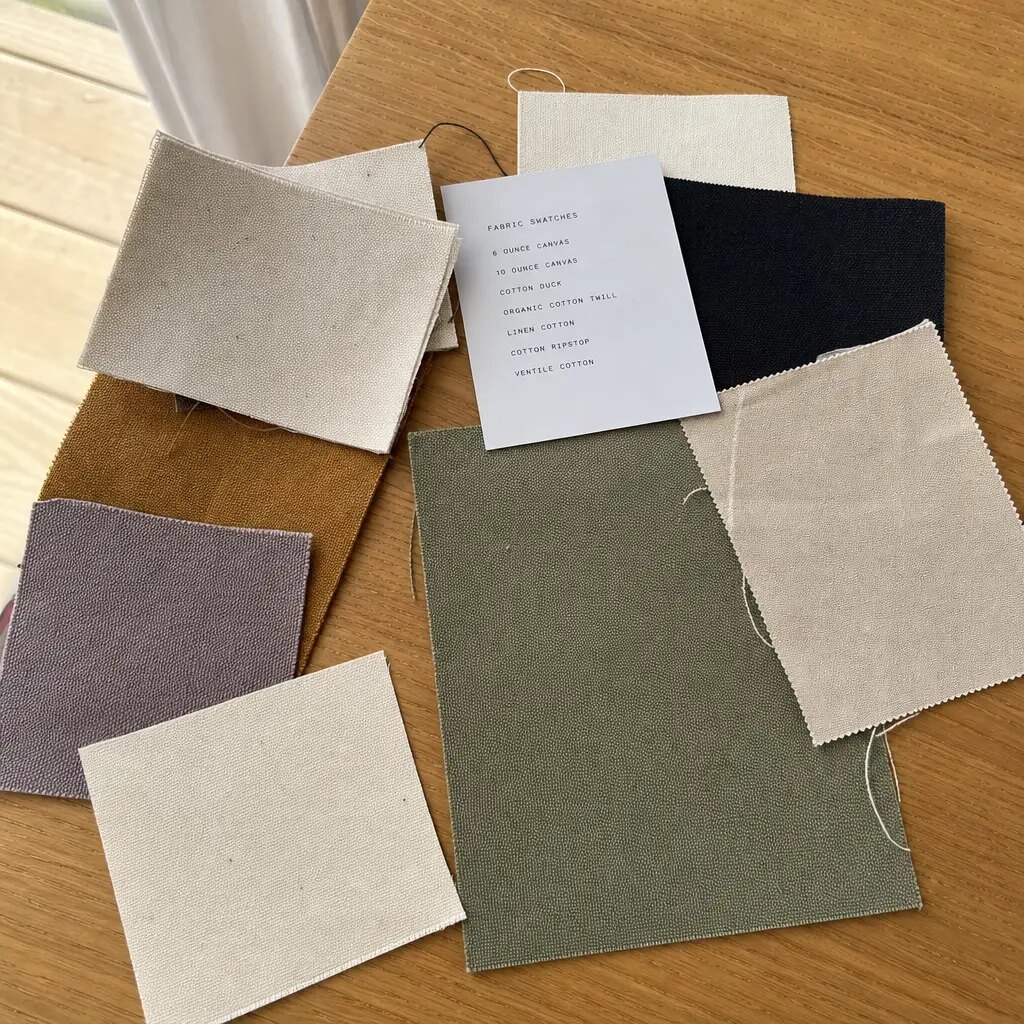
For canvas wine carriers, fabric weight is the first decision that changes how the print will behave. Around 8 oz to 10 oz can work for short-run promotional use, but the cloth is more likely to wrinkle, show weave texture, and make fine text look broken. A 12 oz canvas, roughly in the 400 GSM range, is usually a safer floor because it gives the front panel more body and a flatter print surface. Fourteen to 16 oz canvas, roughly 475 to 540 GSM, feels more premium and carries ink more cleanly, but it also raises sewing resistance and shipping weight. The right choice depends on whether the buyer wants margin efficiency or a more substantial hand feel.
The structure has to be fixed before the artwork is finalized. Confirm the finished size, cut size, seam allowance, handle length, gusset depth, base insert, and whether the carrier uses binding, piping, or a stitched bottom. Each of those details changes the usable print area. A clean proof should show the dieline, stitch lines, fold lines, and the exact safe zone for the logo. If the factory sends a polished mockup without those marks, the buyer does not yet have a production proof. That is a sales image, not a production document.
- Ask for both finished dimensions and cut dimensions so you can see the sewing allowance.
- Confirm whether the carrier is built for one bottle or two bottles, because the base and side panels change.
- Require the same fabric color and finish that will be used in bulk, not a generic sample cloth.
Choose the print method that matches the artwork
Use the print method that fits the logo, not the cheapest method on paper. Screen print is usually the strongest choice for one to three solid colors because it gives better opacity on natural canvas and a cleaner repeat across volume. It is also the easiest method to control when the brand color needs to stay consistent from sample to bulk. The tradeoff is setup cost, especially if the order is small or the art changes late. Heat transfer and digital transfer work better for gradients, tiny icons, or very short runs, but the buyer should treat film feel and edge durability as real risks rather than minor details.
Color proofing on canvas needs more discipline than proofing on coated paper. Natural canvas absorbs ink differently and can warm the color, especially on unbleached cloth. A Pantone callout is useful, but it is not enough if the print team is matching by eye on a textured fabric. The safer path is to request a strike-off on the same canvas lot and inspect it under both daylight and warm indoor light. If the logo is small, reverse, or made of thin strokes, enlarge it before approval instead of hoping the printer can rescue it in bulk.
- Use screen print for solid logos that need opacity and repeatability.
- Use transfer methods when the artwork has gradients, small lines, or more than a few colors.
- Treat metallic inks, very fine text, and reverse type as high-risk unless the strike-off has already proven them.
Build a proofing workflow the factory can follow
The cleanest workflow is simple: artwork proof, strike-off, pre-production sample, then bulk. The artwork proof checks placement, spelling, size, and panel location. The strike-off checks whether the ink actually looks right on the real fabric. The pre-production sample checks the sewing, handle build, divider fit, fold style, and final packing. Buyers often try to combine those steps into one approval to save time, but that is where a thin line in the logo or a seam shift gets missed. If the carrier matters to the brand, each stage should have its own written signoff.
Do not send the factory a loose logo file and expect them to infer the rest. Send a proofing packet with the vector artwork, Pantone references, a measured dieline, the exact print position, the minimum readable size, and a note that defines what cannot change without approval. If the supplier revises the proof, compare the new version against the old one line by line. The most common mistakes are small but expensive: a missing apostrophe, a shifted emblem, a logo reduced to make the sewing easier, or a label moved to make carton packing simpler. Those changes can break brand consistency even if the bag still technically works.
- Approve the print on a measured dieline, not on a phone screenshot.
- Request a strike-off on the same canvas lot and color finish used for the order.
- Keep a written approval trail for every revision so the factory cannot treat a draft as final.
Read the factory quote like a landed-cost worksheet
A useful quote separates the parts of the product. You want to see fabric, sewing, print, setup, sampling, packing, and freight assumptions broken out clearly. If the supplier gives only one unit price, you cannot tell whether you are comparing the same carrier. One factory may be quoting 12 oz canvas with a one-color screen print and bulk packing. Another may be using a lighter cloth, charging separately for screens, and adding carton fees later. Ask the factory to quote your target MOQ and the next price tier so you can see whether the cost drops with real volume or only looks good at the first row.
The right comparison is landed cost, not ex-factory price. On a carrier like this, the cheap quote can become expensive if the print needs a second pass, the packing is too loose for retail distribution, or the cartons are inefficient for freight. Add sample courier cost, inland transport, export documents, duty, and expected rework into the comparison. Buyers should also watch reorder economics. If screens and tooling are reusable, that can justify a slightly higher first order. If everything is charged again on reorder, the apparent unit price can become a trap.
- Separate setup fees from unit pricing.
- Confirm whether printing tools are reusable on reorder.
- Ask for carton cube and pack quantity so you can estimate freight efficiency.
- Verify whether the quote includes inserts, barcode labels, and any retail hang tag work.
Use sourcing routes that match the order risk
Not every buying route gives the same control. A direct factory with in-house sewing and printing is usually the best option when you need a stable spec, repeat orders, and one person accountable for the bag and the print. A sewing factory paired with a local decorator can work for very small runs or urgent reprints, but the buyer then has to manage two vendors and two quality standards. That is fine if the artwork is simple. It gets messy when the logo must line up with a seam or the event date cannot move.
Distributor and trading routes are useful when the buyer needs speed, but they often hide who actually controls the fabric and the print. The quote can look clean until the first sample exposes a mismatch in material or a label that was not discussed. For event planners and procurement teams, the safest route is usually the one that gives the fewest handoffs. If the order needs custom packaging, custom labels, or a woven side mark with the CTM or CottonToMaker sample logo, the approval chain must be even tighter because every extra component adds one more place for error.
- Choose a direct factory when repeatability and spec control matter more than a one-off speed win.
- Use a trading or distributor route only when you have enough margin to absorb hidden coordination risk.
- Treat any multi-vendor setup as a higher-risk order and build extra sample time into the schedule.
Set acceptance criteria for print, stitching, and fit
QC should focus on visible failures and construction failures, not on chasing perfect-looking cotton grain. For print, set a tolerance for placement and define what cannot be accepted: missing strokes, broken small text, heavy color banding, smudged edges, or a logo that sits too close to a seam. On a flat front panel, a few millimeters of placement tolerance is normal; what matters is consistency across the run. If the logo relies on tiny type or thin rules, it is better to enlarge the art or simplify the layout than to accept a heroic printer promise that is unlikely to hold in bulk.
Construction checks matter just as much as print checks. The seam count, handle reinforcement, bottom support, and bottle fit all affect how the logo presents once the carrier is loaded. A bag that twists under load will make a perfectly printed logo look crooked. For a double-bottle version, the divider or center wall has to stay straight so the front panel does not buckle. If the carrier is meant for event distribution, the first-touch impression matters. Buyers often blame the print when the real issue is a weak seam or a soft base insert.
- Set a placement tolerance for the logo before production starts.
- Define no-go defects for spelling, ink gaps, smudging, and misaligned panels.
- Test rub resistance on the printed area and load-test the handles with the actual bottle weight.
Treat packing as part of the product, not an afterthought
Packing changes the way the carrier arrives, and it can change the way the print looks. If the bag is folded too tightly, a fresh print or transfer can take a crease mark right where the eye lands first. Ask the factory to fold the product the same way it will ship and to show that fold on the pre-production sample. For venue gifts and sponsor handouts, the simplest pack is often the best because it keeps labor down and reduces carton volume. For retail or premium hospitality, you may need a better label, insert card, or barcode placement, but those should be approved as part of the spec, not added later.
If the product includes a side label, woven tag, or sample brand mark such as CTM or CottonToMaker, approve its size and location with the main branding. A side label should not collide with retailer stickers, warning copy, or country-of-origin text. It should also be sewn so that it does not twist under folding pressure. For imported orders, master carton count, carton marks, and inner pack should be written into the quote because poor carton planning creates damage, repacking, or a freight penalty. The cheapest pack is not always the cheapest landed result.
- Approve the fold method on the sample before bulk production starts.
- Confirm carton count, inner pack, and carton marks in writing.
- Keep barcode labels and regulatory text away from the main print panel whenever possible.
Protect the schedule with milestone approvals
Lead time risk usually starts with artwork changes, not with sewing. Every revision after proof approval can trigger a new screen, a new strike-off, or a revised packing layout. The buyer should freeze the art first, then freeze the structure, then release the order. If the event team still expects sponsor edits or a late logo swap, define a change window and write down who pays for the rework. That sounds strict, but it is the only way to keep the factory from treating draft artwork as a movable target.
Build your calendar backward from the event date and add real buffer for sample review, courier transit, and any carton relabeling. A sensible schedule needs time for the first proof, one correction cycle, the physical sample, bulk production, and final dispatch. When a supplier quotes from deposit date but the buyer spends a week on art review, the delivery date slips without anyone technically missing their promise. Ask for milestone dates, not just a final ship date, so the team can see where the project is really drifting.
- Freeze artwork before the PO is released.
- Ask for milestone dates for proof, sample, bulk start, packing, and ship.
- Keep a contingency window for event-driven reorder requests.
- Separate factory production time from buyer review time in the schedule.
What to send the factory before you ask for pricing
The best RFQ package is short, but complete enough that the factory can quote the same job every time. Send the carrier style, finished size, target fabric weight, preferred print method, logo files, Pantone references, packing style, destination port or warehouse, and the date the bags must be usable. Add a one-line note on how the bags will be used: event giveaway, retail shelf, sponsor merch, or hospitality amenity. Those use cases matter because they change the amount of finish quality, packing detail, and inspection effort the supplier should assume when it prices the order.
Put the quote questions in writing so the supplier has to answer them the same way every time. Ask whether the price includes one print position or two, whether the setup charge is reusable, whether a pre-production sample is chargeable, what the MOQ is by colorway, and what changes on reorder. If you are comparing two factories, keep the sample path and packing spec identical. That is the only way to tell whether one supplier is actually better or whether one of them simply assumed less work.
- Provide vector artwork and a measured dieline.
- State the fabric weight in oz or GSM.
- Name the print method you will accept.
- Tell the factory how the bags will be packed and shipped.
Specification comparison for buyers
| Spec decision | Recommended option | When it fits | Buyer risk to check |
|---|---|---|---|
| Sourcing route | Direct factory with in-house sewing and printing | Repeat programs, custom sizes, one approval chain | Confirm the print is not being subcontracted to a third party |
| Secondary sourcing route | Sewing factory paired with a trusted local decorator | Very small runs, urgent domestic reprints, simple artwork | Two vendors can split responsibility when defects appear |
| Artwork proof route | Digital proof plus strike-off on the same canvas lot | Brand color matters, small text is used, or the logo must sit near a seam | A PDF alone can hide weave distortion and color shift |
| Print method route | One-color screen print | Solid logos on 12 oz to 16 oz canvas with medium or higher MOQ | Screen fees and color changes affect reorder economics |
| Print method route | Heat transfer or digital transfer | Gradients, tiny details, or lower MOQ orders | Film feel, edge lift, or cracking if the sample is not validated |
| Fabric route | 12 oz to 14 oz natural canvas with a tighter weave | Best balance of structure, print clarity, and event use | Lighter cloth wrinkles more and makes logos look washed out |
| Sample route | Pre-production sample after approved strike-off | Launch orders, premium retail, or sponsor-sensitive branding | Dummy samples can use different fabric, stitching, or packing |
| Packing route | Bulk folded with carton marks and optional retail insert only if needed | Venue handouts, distributor shipments, or warehouse distribution | Decorative packaging increases freight and repack labor |
| Quote route | FOB quote with setup, sample, packing, and freight line items separated | Import comparisons and landed-cost planning | Single-line quotes hide the real difference between suppliers |
Buyer checklist before sampling
- Confirm the carrier type, finished size, and bottle format before artwork is scaled.
- Lock fabric weight in oz or GSM and state whether the weave should be tight, medium, or rustic.
- Approve a measured dieline with seam allowances and the exact print panel marked.
- Send vector artwork, Pantone references, and a minimum readable size for text.
- Require a strike-off on the same fabric lot used for bulk production.
- Separate setup fees, sample fees, packing fees, and freight assumptions in the quote.
- Set a placement tolerance for the logo and a clear rule for spelling, missing lines, and color drift.
- Confirm handle length, base support, divider layout, and bottle fit before approval.
- Approve folding, polybagging, carton count, and carton labels before bulk starts.
- Write down who can approve revisions after the first proof so changes do not slip in quietly.
Factory quote questions to send
- Is sewing and printing done in-house, or will any step be outsourced?
- What exact fabric weight in oz or GSM will you use, and what is the canvas finish?
- What print method is proposed, how many colors are included, and what changes the setup cost?
- Will you quote the same finished size, seam allowance, and print area shown on the dieline?
- Can you provide a digital proof and a physical strike-off on the same fabric lot?
- What is the MOQ per colorway, and how does the unit price change at the next tier?
- Are screens, plates, or transfer tools reusable on reorder, or charged again?
- What is included in packing: polybag, insert, barcode label, carton mark, and master carton?
- What are the sample charges, and can they be credited against bulk if the order is placed?
- What lead time do you count from artwork approval, sample approval, or deposit receipt?
Quality-control points to confirm
- Measure finished dimensions against the approved dieline, not against a marketing mockup.
- Check logo placement tolerance on the front panel and confirm the print does not touch seams, binding, or fold lines.
- Compare color against the approved strike-off under daylight and warm indoor light.
- Inspect ink coverage for pinholes, banding, haloing, or thin strokes on small text.
- Run a dry rub check on the printed area and inspect for scuffing or transfer lift.
- Load-test handles, side seams, and base support using the actual bottle weight and carrier format.
- Verify bottle fit, divider alignment, and any insert so the carrier holds shape after loading.
- Confirm folding style, polybag seal, carton count, and carton labels before shipment is released.