Why this guide matters for spa retail buyers
A canvas wine carrier looks straightforward, but in spa retail it performs several jobs at once. It has to carry a bottle safely, present well on a shelf or gift table, reinforce a premium wellness brand, and arrive clean enough to sell without rework. That combination makes print proofing more important than many buyers expect. A supplier can show attractive digital artwork and still deliver a bag that feels soft, prints unevenly, or arrives with label placement that disrupts the front panel. When the bag is part of a curated gift set, that quality gap becomes visible immediately.
The spa-retail angle also changes how the bag is judged. In mass promotional channels, slight print variation may be tolerated if the price is aggressive. In spa boutiques, hotel spas, resort stores, and wellness gift shops, the same variation reads as poor packaging discipline. Buyers often use the bag beside candles, bath products, oils, robes, or seasonal treatment bundles. That means the canvas wine carrier is not only a transport item; it is part of the merchandising story. Texture, upright shape, print sharpness, and cleanliness all matter at shelf distance.
For procurement teams, the practical implication is simple: the proof stage has to confirm final retail appearance, not only logo approval. The bag should be reviewed as a finished product with fabric, print, construction, and packing treated as one controlled specification. A weak proof process pushes avoidable risk into bulk production, and that risk usually shows up late, when launch timing is already tight.
- Treat the proof as approval of the finished retail item, not just the artwork file.
- Tie bag specification to the actual shelf environment, gift-set format, and intended bottle size.
- Use the purchase order to lock measurable tolerances before production starts.
Start with the retail use case before choosing specs
Many sourcing problems begin because the buyer asks for a generic canvas wine bag instead of defining the exact retail job the product needs to do. A one-bottle holiday gifting bag for a resort spa, a two-bottle seasonal collaboration set, and a wellness gift carrier that combines a bottle with small accessories each need different proportions and construction choices. If the use case is vague, suppliers will fill the gap with assumptions, and those assumptions make quotes hard to compare.
For spa retailers, it helps to set the specification around four use questions. First, will the carrier be sold empty as a retail accessory, or filled as part of a pre-built gift set? Second, does it need to stand neatly on a display shelf, or will it mostly hang, stack, or sit inside another gift arrangement? Third, will stores receive it already barcode-labeled and shelf-ready, or will a distribution center add labels later? Fourth, is this a short seasonal launch, a pilot in selected stores, or a repeat replenishment item? These answers influence fabric weight, print method, packing, MOQ route, and timing.
This early framing also prevents mild but expensive mismatches. For example, a buyer may prefer a soft 10 oz canvas feel because it appears natural and relaxed, but if the bag must hold a bottle upright beside premium boxed products, the softer body can undermine the presentation. Likewise, a beautifully centered logo can still fail commercially if a late barcode label ends up placed across the visible front panel. Good procurement starts by fixing the retail scenario before asking the market to quote it.
- Define whether the unit is sold empty, sold filled, or packed into a larger gift set.
- Clarify shelf presentation: upright display, hanging display, stacked stock, or ecommerce photography.
- Decide early whether barcode labeling is factory-applied or handled after import.
Fabric weight, hand feel, and shape retention
Fabric choice is one of the most consequential decisions in a canvas wine carrier print proof guide for spa retailers because it affects print behavior, silhouette, and customer perception. In most branded spa gift programs, 10 to 12 oz cotton canvas is the practical starting range. It generally offers enough body for clean decoration and acceptable shape while keeping cost and sewing speed manageable. A 14 oz fabric can give a firmer, more premium stance, especially for stand-alone retail sale, but that extra structure adds weight, increases material cost, and can slightly reduce sewing efficiency.
The buyer should ask for finished fabric weight, not only nominal ounce language. Two suppliers may both say 12 oz canvas while quoting fabrics with noticeably different finished feel because of weave, wash treatment, shrinkage, and finishing. Finished GSM helps create a more comparable benchmark. If the spa retailer wants a natural, organic look, unbleached or natural canvas may be attractive, but the buyer should remember that lot variation in natural shade can affect how printed color appears. Dyed canvas can solve some brand color needs, but it adds dye-lot control considerations and may change print coverage behavior.
Shape retention matters especially in spa retail because the bag is often part of a premium visual display. A bag that collapses too much when empty may look inexpensive even if the fabric itself is good. On the other hand, a fabric that is too stiff can feel less tactile and more industrial than the wellness channel expects. This is why swatch review and sewn sample review should both happen before bulk approval. Fabric is not only a technical input; it is part of the merchandising outcome.
- Ask for finished oz and GSM, plus any wash or shrinkage treatment.
- Review both flat swatches and sewn samples because shape and print behave differently after construction.
- Use 14 oz only when shelf posture or a heavier premium feel justifies the extra cost.
Print method and proof discipline on textured canvas
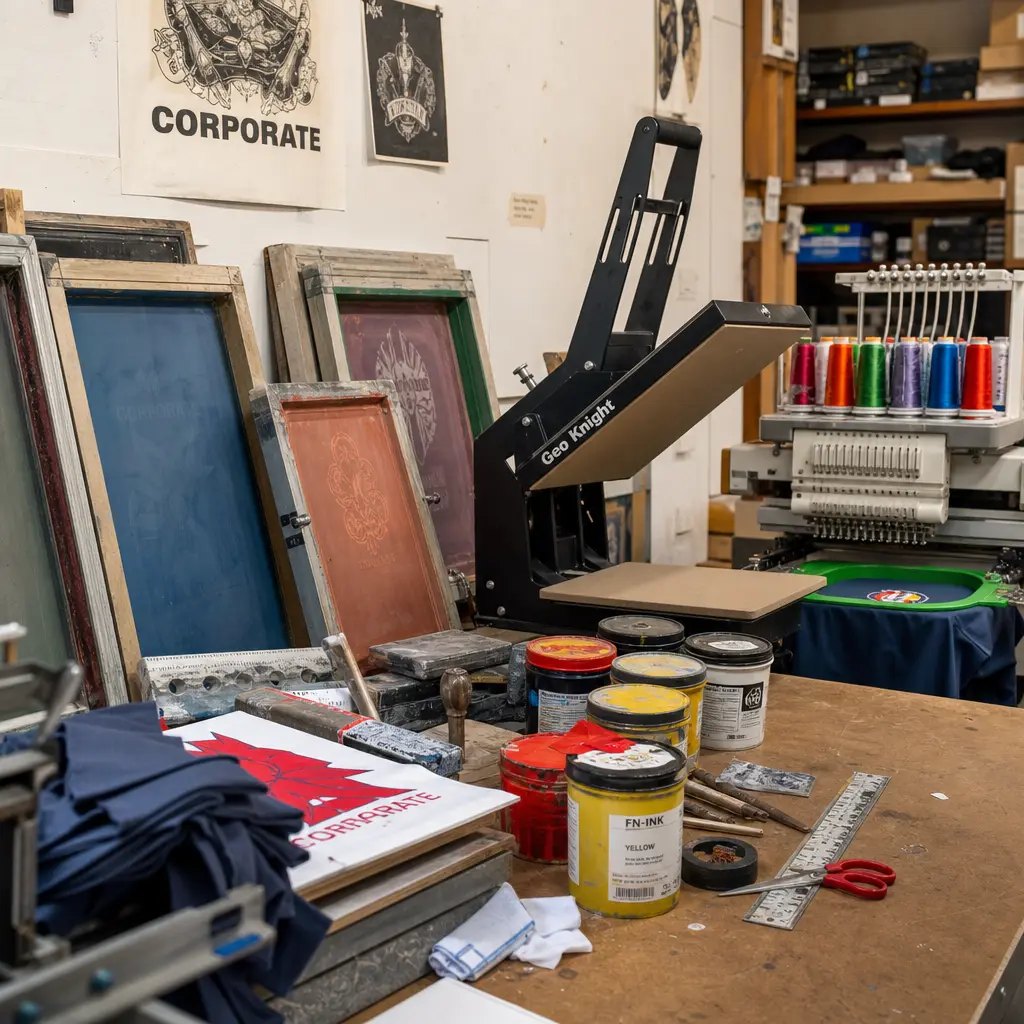
Print method is where many branded bag programs succeed or fail. For simple logos, single-color artwork, and repeat spa retail orders, screen print remains the most reliable commercial choice. It generally produces the cleanest balance of cost, durability, and visual appropriateness on cotton canvas. The ink sits naturally enough for most wellness-oriented branding and does not introduce the shiny film effect that some retailers dislike in a natural-fabric assortment. For clean logos and stable repeat demand, it is usually the lowest-risk path.
Heat transfer can still be the right option in specific situations, especially for short runs, multicolor art, or artwork with gradients that would be inefficient to screen. But the buyer should not accept it by default. On textured canvas, some transfer constructions look overly glossy, can reveal edge lines, or may crack or lift with flexing. That may be acceptable in a low-risk promotional run, but it is less acceptable in a premium spa store where customers inspect the item up close. A buyer considering transfer should insist on a physical sample on the actual fabric color and weight, then review hand feel, edge finish, and adhesion under light handling tests.
The proof sequence should be disciplined. A digital mockup is useful only to align artwork scale and location. It does not prove print quality. After the digital layout, the next step should be a physical strike-off or equivalent decoration proof on the actual substrate. This is where fine-line clarity, ink density, color behavior on natural canvas, and perceived finish are evaluated. Only after that should a full pre-production sample be approved for construction, print placement, and packing. This sequence costs some time upfront, but it is much cheaper than managing bulk rework later.
- Use digital proofs for layout only; use physical strike-offs for real print approval.
- Screen print is usually the safest route for simple spa branding on canvas.
- If using transfer, require adhesion and flex review on the actual fabric.
Product specification comparison for procurement alignment
Many quote comparisons go wrong because suppliers are pricing different products under similar names. One quote may assume a stock blank body, one-color screen print, and bulk packing. Another may assume fully custom dimensions, reinforced handles, barcode labels, and different fabric weight. The comparison table in this guide is therefore framed around specification decisions rather than supplier type alone. That better reflects the real source of cost and risk in this category.
For spa retailers, the most useful comparison is not simply factory direct versus intermediary. It is how each specification choice affects retail presentation, receiving efficiency, and defect exposure. Fabric weight affects silhouette and print clarity. Decoration method affects durability and appearance. Handle reinforcement affects complaint rate. Barcode placement affects store-readiness. Packing affects soil risk and warehouse labor. Procurement teams get better outcomes when they compare suppliers against a fixed specification matrix rather than letting each vendor define its own version of the bag.
Once the product specification is fixed, supplier route can be evaluated more clearly. A direct factory may offer stronger visibility into print setup and sewing controls. An intermediary may help if it genuinely adds mixed-SKU coordination or compliance support. But neither route can be evaluated fairly until the underlying product assumptions are consistent. Fix the bag first, then compare the route.
- Use one specification matrix across all RFQs so price differences are real.
- Separate product-spec decisions from sourcing-route decisions during evaluation.
- Rank suppliers only after confirming like-for-like assumptions on fabric, print, and packing.
How to read the quote and spot hidden cost movement
A strong quote for a printed canvas wine carrier should break cost into understandable components. At minimum, the buyer should be able to identify base product cost, print setup charges, sample charges, packaging add-ons, and freight assumptions. When quotes stay too aggregated, hidden differences tend to emerge after artwork approval. A supplier may add screen charges later, raise price because the print area grew slightly, or note that barcode application was never included. None of that is unusual, but it becomes costly when the buyer believed the initial number was complete.
The most common hidden cost movers in this category are heavier fabric, larger print area, extra color count, divider sewing, reinforced handle construction, retail labeling, and lower carton efficiency. Even a simple change such as moving from bulk-packed units to individually labeled store-ready units can add meaningful labor and packing material cost. That is why buyers should ask for alternative pricing where it helps decision-making. For example, a quote that shows the step from 10 oz to 12 oz canvas, or from stock body to custom dimensions, allows a commercial decision instead of a late-stage surprise.
Spa retailers should also tie the quote to receiving and launch realities. If the goods need to route through a DC, barcode placement and carton mark requirements should appear in the quote, not in a later email thread. If the product is for a holiday or treatment-promotion launch, sample timing and approval rounds should be reflected in the lead-time assumptions. Pricing is only comparable when scope is comparable.
- Ask for line-item visibility on sample, screen, labeling, and packing charges.
- Request alternative price steps for the few spec choices that may change internally.
- Make sure the quoted scope matches your warehouse, barcode, and launch requirements.
Sampling, measurement, and approval records
Sampling should answer three separate questions. First, does the artwork reproduce attractively on the chosen canvas? Second, does the sewn bag fit the intended bottle and hold its shape appropriately? Third, does the packed item match the retailer's receiving and presentation needs? Trying to answer all three with one casual sample review is where important details get missed. Procurement teams should treat decoration proofing, construction approval, and packout approval as linked but distinct checkpoints.
The strike-off or decoration proof should be used to approve logo size, edge sharpness, color appearance, and general finish. The pre-production sample should then be measured with a tape and documented against the specification. Useful checks include total body height, panel width, gusset width, handle drop, internal usable width, divider placement, and the exact distance from the top hem to the printed artwork. If the item is meant to fit a standard wine bottle plus a tag or tissue, that assembly should be tested physically. A bag that fits on paper can still feel strained in reality.
Approval records matter because memory is unreliable once bulk production begins. The buyer should keep one signed approval sheet with dimensions, print location, and packing notes, plus one retained physical sample where possible. This reference becomes especially important when different people handle buying, merchandising, warehouse receipt, and quality review. Clear approval records also help resolve disputes quickly if shipped goods differ from the approved standard.
- Separate artwork proof approval from full construction approval.
- Measure the sewn sample, not just the flat layout or sales drawing.
- Retain one approved sample and one signed specification sheet as production references.
Store-ready packing, shelf presentation, and logistics details
Packing decisions deserve more attention in spa retail than they often get. Natural canvas can soil easily, printed faces can scuff if folded badly, and overdesigned retail packing can add cost without adding sales value. The right answer depends on how the goods move after arrival. If the retailer receives the bags into a distribution center and applies final labels there, simple protective packing may be enough. If stores receive goods ready to put out immediately, barcode position, fold direction, and carton labeling become part of the product specification, not just logistics administration.
Shelf presentation should also influence packing. If the wine carrier needs to present smoothly on a front table or premium gifting wall, the way it is folded in the carton matters. A deep crease across the printed logo panel can make a good bag look tired at opening. Buyers should define whether the bag should be folded with the print face inward for protection, whether tissue separators are necessary, and whether the handle should be tucked a certain way to reduce distortion. These are minor details until hundreds or thousands of units reach stores looking inconsistent.
For spa chains and multi-location wellness retailers, store-ready handling usually means more than a barcode sticker. Carton marks may need a style code, PO number, quantity, destination reference, and country-of-origin handling consistent with internal receiving systems. The buyer should also consider carton weight and count. A carton that is efficient for freight but awkward for store or warehouse teams can create avoidable handling issues. Good packing is the point where product quality and operations quality meet.
- Define whether the product is DC-ready or store-ready before quoting begins.
- Control fold direction and label placement so the visible panel stays retail clean.
- Make carton counts and marks compatible with actual receiving workflows.
Measurable QC standards that buyers can enforce
Quality control guidance is only useful when it is specific enough to inspect. Terms such as good print, strong stitching, or acceptable packing do not help much during final inspection. A better approach is to translate the approved sample into measurable checks. For print, that means defining the approved print box location and allowable deviation in millimeters. For dimensions, it means listing tolerances on width, height, gusset, and handle drop. For sewing, it means identifying rejectable defects such as skipped stitches, open seams, broken reinforcement, or long loose threads on retail-facing areas.
Spa retailers should pay particular attention to the defects customers notice first: misaligned front prints, dirty natural canvas, crooked handles, weak handle reinforcement, and bags that do not sit properly with a bottle inside. Inspection should include both appearance and basic functional checks. A simple static load test with the intended bottle weight can reveal weak handle attachment. A basic packed-carton drop check can show whether the export carton is underbuilt for transit. None of this requires exaggerated claims or laboratory language. It requires clearly described practical checks tied to the actual use case.
If the order is inspected using AQL, the defect classification should also be defined in plain procurement language. A critical defect might be mold, severe contamination, or a barcode error that makes the item unsellable. Major defects may include gross print misplacement, open seams, or failed handle reinforcement. Minor defects may include small thread ends or slight visual variation that does not affect saleability. What matters is that both buyer and supplier understand the same definitions before goods are packed. That reduces argument and improves corrective action if the lot underperforms.
- Translate approved appearance into numeric tolerances wherever practical.
- Inspect for saleability, not only for factory workmanship in isolation.
- Define critical, major, and minor defect examples before final inspection starts.
Lead times, launch planning, and supplier accountability
Lead time management in this category is usually less about sewing speed and more about approval discipline. Artwork questions, late barcode changes, and vague packing instructions are common reasons a straightforward bag order slips. Spa retail programs often run to narrow seasonal windows such as holiday gifting, resort event timing, wine collaboration launches, or treatment-package promotions. Missing those dates reduces the value of the product even if the goods eventually arrive in acceptable condition.
A workable schedule should separate digital layout approval, strike-off timing, pre-production sample timing, bulk production, final inspection, and packing release. Buyers should avoid starting the production clock before all artwork, barcode, and packout details are frozen. That may feel slower at the front end, but it usually shortens the total cycle by reducing revisions. It also clarifies responsibility. If the supplier misses a confirmed production stage after complete approval is in hand, the issue is operational. If the buyer keeps changing print or label instructions, the delay source is visible and manageable.
Accountability should also be written into the quote and PO. Procurement teams should know who owns sample coordination, who approves the final pre-production reference, who authorizes packing, and who bears remake responsibility if the shipped goods do not match the signed sample. This matters whether the order is placed direct with a factory or through a sourcing layer. Clear accountability prevents the familiar problem of each party claiming that another party approved the wrong thing. In a category this simple, ambiguity is usually avoidable.
- Break the timeline into approval stages instead of one generic lead-time promise.
- Freeze artwork, labels, and packout before bulk release.
- Assign responsibility for remake risk if shipped goods differ from the approved sample.
Specification comparison for buyers
| Specification area | Recommended option for spa retail | Best fit use case | Buyer risk and what to verify |
|---|---|---|---|
| Fabric weight | 10-12 oz cotton canvas for most branded gift programs; 14 oz when a more upright premium silhouette is required | Seasonal gift bundles, treatment-room gifting, winery collaboration sets, and front-of-store premium gifting | Suppliers may quote nominal ounces only. Confirm finished GSM, fabric tolerance, and whether the canvas is washed or pre-shrunk before cutting. |
| Print method | Screen print for 1-2 solid colors; heat transfer for short runs or multicolor artwork only after physical adhesion testing | Repeat spa branding, resort gifting, clean logo layouts, and controlled brand colors | Transfer film can crack, lift on coarse canvas, or look too glossy for wellness positioning. Require a rub test sample and edge adhesion review. |
| Print position | Centered front print with exact X/Y measurement from top hem and side seams | Shelf display, ecommerce photography, and gift set presentation where alignment affects perceived quality | Artwork can drift after cutting and sewing. Lock the print box on an approved dieline and inspect placement by millimeter tolerance. |
| Handle construction | Double-fold self-fabric handles with box-X or bar-tack reinforcement, cotton thread matched to fabric tone | Programs that expect reuse, heavier bottles, or paired bottle-and-product gift packs | Weak handle attachment is a common field complaint. Ask for stitch density, reinforcement method, and handle pull-test target. |
| Compartment layout | Single bottle cavity for standard gifting; stitched divider for 2-bottle sets; bottom insert only when shape retention matters | Spa gift packs with one bottle plus card, or paired bottle sets for holiday gifting | Internal width often shrinks after seam allowance and turning. Verify usable internal width and bottle diameter fit on the sewn sample. |
| Color and finish | Natural canvas for an organic wellness look; dyed canvas only when brand color is central to the retail concept | Spa boutiques emphasizing natural materials, premium gifting, or earthy packaging cues | Natural lots can vary in shade; dyed lots can vary between dye batches. Set shade approval against a physical swatch, not screen color. |
| Packing format | Individual polybag only if cleanliness is critical; barcode label and retailer carton mark only when store-ready handling is needed | Retailers receiving goods into DCs, then routing to stores with scan-based receiving | Extra sleeves and inserts raise labor and can scuff print. Underpacking increases soil risk on natural canvas. Define exact store-ready need. |
| Barcode and labeling | Outer carton shipping marks plus item barcode placement on polybag or hangtag zone, not across printed logo area | Store-ready launches, chain spa groups, and multi-location replenishment programs | Late barcode decisions often delay packing. Fix label size, position, scan format, and who supplies final artwork before bulk starts. |
| MOQ route | Blank stock body plus custom print for launch testing; fully custom cut-and-sew when dimensions and repeat volume are stable | Pilot programs, seasonal capsules, and long-run branded retail SKUs | Stock bodies limit print zone and sizing. Full custom adds setup time and cost. Compare based on actual launch objective, not unit price alone. |
Buyer checklist before sampling
- Confirm fabric specification in both ounces and GSM, including tolerance, weave, and whether the canvas is pre-shrunk or washed before cutting.
- Approve an artwork dieline showing print width, print height, and measured placement from top hem and side seams.
- Require one physical strike-off on the actual canvas color and weight before authorizing bulk production.
- State bottle size range clearly: bottle diameter, bottle height, and whether tissue, tag, insert, or secondary gift item must fit inside.
- Define handle drop, finished bag height, base width, gusset width, and internal divider requirement on the purchase order.
- Specify print method, number of print colors, Pantone references where relevant, and acceptable print appearance on textured canvas.
- Confirm store-ready requirements: barcode format, barcode position, retail label, hangtag hole, fold direction, and carton shipping marks.
- Set measurable tolerances in writing for print placement, finished dimensions, stitch quality, and carton pack count.
- Ask for a line-by-line quote that separates sample cost, screen or plate charges, packing cost, ex-factory price, and freight assumptions.
- State the inspection plan before production: AQL level, sample size basis, defect definitions, and who approves corrective action if failures are found.
Factory quote questions to send
- What is the finished fabric specification in oz and GSM, and what tolerance do you allow lot to lot?
- Is the quoted canvas natural, bleached, or dyed, and is it pre-shrunk or washed before cutting?
- Which print method is included, how many print colors are included, and what is the maximum quoted print area?
- What are the exact finished dimensions, including body height, width, gusset, handle drop, and usable inner width after sewing?
- What reinforcement method is included for handles and bottom seams, and what handle pull-test target do you use internally?
- Does the quote include a printed strike-off, a pre-production sample, screen or plate charges, barcode labeling, and final carton marks?
- What is the MOQ by color, by artwork version, and by packaging variation?
- What is your standard lead time for sample approval, bulk production, and packing after artwork signoff?
- What bottle diameter and height does the quoted pattern fit without stressing seams or distorting the print panel?
- What are the carton pack quantity, carton dimensions, gross weight per carton, and any nesting or folding method used?
Quality-control points to confirm
- Print placement tolerance: front artwork centerline should stay within +/-5 mm horizontally and +/-5 mm vertically from the approved measured print box; no part of the design should encroach into seam allowance or handle stitch area.
- Print size tolerance: finished printed artwork should remain within +/-3 mm of approved width and height, with no obvious stretching, pinholes, blurred edges, or broken fine lines visible at arm's length.
- Color approval: compare bulk print to the approved physical strike-off under neutral daylight-equivalent lighting; visible shade shift that changes brand appearance across cartons should be flagged for hold review.
- Rub resistance check: after 20 firm dry rubs with a clean white cotton cloth, no obvious ink flaking, smearing, or heavy color transfer should be visible.
- Heat-transfer adhesion check when applicable: edges should remain fully bonded after repeated finger flexing and tape-lift spot checks on the approved test area; lifting corners are rejectable.
- Finished size tolerance: body width, height, and gusset should remain within +/-5 mm of approved specification unless otherwise agreed; divider width should be checked on sewn internal usable space, not flat pattern only.
- Stitch quality: no skipped stitches, no open seams, no loose thread tails longer than 5 mm on visible retail surfaces, and no broken reinforcement stitches at handles, base seams, or divider joins.
- Stitch density and reinforcement: handle attachment should match the approved reinforcement pattern, and handle pull testing should show no seam opening or visible stitch failure under a static load equal to one filled bottle plus a reasonable handling margin.
- Handle pull test example: load the carrier with the intended bottle weight and hold by the handles for 60 seconds; no tearing, seam cracking, or handle slippage should appear. For internal QC, buyers can also request a higher static test threshold agreed with the factory.
- Bottom seam check: fill the sample with the intended bottle and place it down repeatedly on a flat surface for several cycles; the base seam should not distort, split, or create visible print panel twisting.