Why yoga studios buy canvas wine carriers
Yoga studios usually buy canvas wine carriers for three commercial reasons: retail add-on sales, event gifting, and membership or class-promo bundles. That means the item has to look premium on a shelf, survive basic handling, and stay within a unit cost that still leaves margin after freight and retail markup. The buying mistake is treating it like a simple tote. A wine carrier has narrower construction tolerances, more visible branding pressure, and more risk around bottle fit.
For this category, the right MOQ plan depends on how the studio sells. A front-desk retail buy can justify a smaller first run with a standard fabric and one-color logo. A distributor program usually needs cleaner carton packing and more consistent repeatability. If the carrier is meant to sit beside candles, gifts, or wellness merchandise, the look of the seams and the stiffness of the canvas matter as much as the logo.
- Treat the product as a display item first and a carry item second.
- Build MOQ around the channel, not only around the factory minimum.
- Keep bottle fit and carton packing in the RFQ from the start.
Fabric weight and construction that sell cleanly
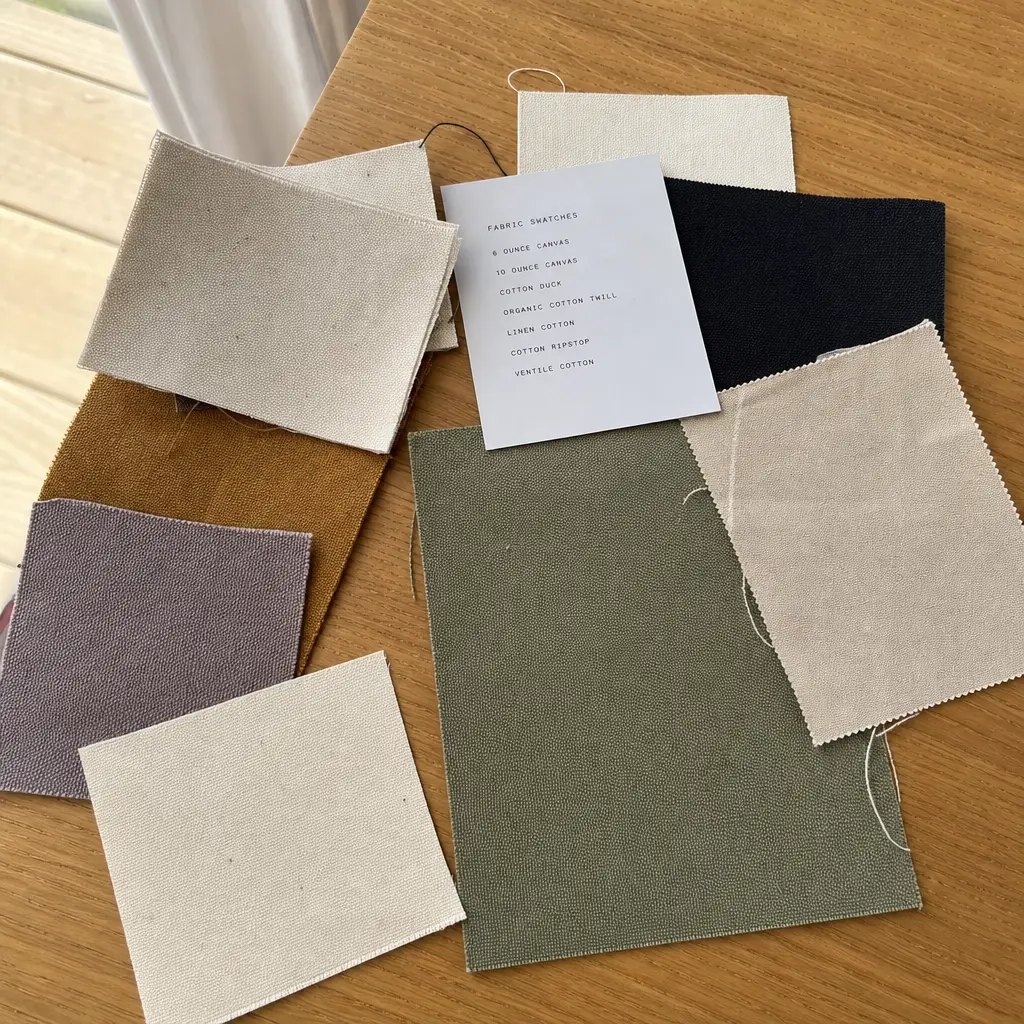
For most yoga studio programs, 10 oz to 12 oz canvas is the practical range. In GSM terms, that usually lands around 340-400 GSM, which gives enough body for a premium feel without turning the carrier into a bulky sewing job. Below that, the bag can slump and lose shelf appeal. Above that, sewing cost and needle wear rise, and some factories will widen tolerances to keep throughput moving.
Construction should match the bottle count. A single-bottle carrier can use a simple bottle sleeve with a shaped base or a neck cutout. A two-bottle version needs a divider wall that is stitched into the base and side seams. Handle style should be chosen with load in mind: folded canvas handles are cleaner visually, while webbing handles can improve strength and speed in production if the design allows them. Ask for stitch counts and reinforcement points in the quote, not just a finished photo.
- 10 oz-12 oz canvas is the normal retail sweet spot for this item.
- Use a divider or base reinforcement when the carrier will hold two bottles.
- Require the factory to state seam allowance and handle reinforcement method.
MOQ logic: what actually drives the minimum
MOQ on canvas wine carriers is usually driven by four things: fabric width and dye lot, print setup, sewing efficiency, and packing configuration. A plain natural canvas body with one-color print can often be produced at a lower MOQ than a fully custom dyed version with multiple print locations. If the carrier needs a special divider, snap, or woven label, the line setup becomes less efficient and the MOQ rises.
The useful way to talk to suppliers is to separate standard and custom variables. For example, ask for pricing at 500, 1,000, and 3,000 pieces using the same fabric and construction, then price the add-ons separately. That lets you see whether the supplier is truly flexible or just hiding a high setup cost in the unit price. For a yoga studio buyer, a clean first run often means one natural canvas body, one print color, standard dimensions, and a simple carton spec.
- Ask the factory to quote the base carrier and each add-on separately.
- Compare MOQ at 500, 1,000, and 3,000 pieces before choosing a launch quantity.
- Custom dye, multi-location print, and hardware increase MOQ fastest.
Print and branding choices that hold up in retail
Screen print is the most common choice because it is predictable, visible, and easy to cost. A single-color logo on natural canvas usually gives the best balance of setup cost and shelf clarity. If the brand wants a more subdued look, a woven side label or sewn patch can work better than large print coverage. Embroidery is possible on heavier canvas, but it adds cost and can distort lighter fabrics around the stitches.
For yoga studios, branding should stay legible from arm’s length. That means the print area should be sized to the bag, not just to the artwork file. Ask the supplier whether the logo will be printed before or after sewing, because that changes alignment risk. Printing on cut panels before assembly is often cleaner for placement, while printing on finished bags can be slower but may be simpler for very small runs. In either case, request a strike-off or pre-production sample with the real fabric, real ink, and real placement.
- Use one-color screen print when you need low setup cost and clear shelf branding.
- Choose woven labels or patches when the look should feel more understated.
- Approve print placement on a real sample, not only on artwork proofs.
Comparison of sourcing routes for this item
Not every buyer needs the same supplier route. A yoga studio chain opening one or two locations can often work through a factory-direct supplier that already makes simple cotton or canvas carriers. A distributor may need a more structured exporter with carton discipline and better document control. A trading company can be useful when the buyer needs multiple related items bundled in one shipment, but the tradeoff is less visibility into actual sewing capacity and QC ownership.
The table below is the practical comparison. The right answer is the route that matches your risk tolerance, not the cheapest quote on paper. If the factory can show sample room control, fabric sourcing consistency, and carton packing experience, it is usually the cleaner choice for a repeatable wine carrier program.
- Factory-direct is strongest when you need clear production accountability.
- Trading routes can help bundle products but may blur QC ownership.
- Use supplier evidence, not just unit price, to choose the route.
Landed-cost comparison for bulk buyers
The lowest unit price does not usually win once freight, samples, and carton mistakes are included. A carrier that saves $0.12 at ex-factory level but increases carton volume, damages handles in transit, or requires rework can erase the gain quickly. For this category, the cost model should include fabric, print, sewing labor, packing labor, inner protection, carton size, and freight density.
A practical quote review should compare the same structure across suppliers: same fabric weight, same print method, same handle style, same carton count, same sample policy. Then calculate landed cost per sellable unit, not just ex-works price. If one quote looks much lower, find out whether it omits packaging, uses thinner canvas, or assumes a different bottle size. That is where hidden margin loss usually sits.
- Compare ex-factory price, carton volume, and freight density together.
- Make sure every quote uses the same construction and packing assumptions.
- Watch for hidden costs in samples, packaging, and post-print finishing.
Sample approval and QC thresholds
Sample approval should cover dimensions, stitch quality, logo placement, and bottle fit. A wine carrier that looks good flat on a table may fail once a bottle is inserted. The sample should be tested with the actual bottle diameter your studios sell, not a random empty bottle from the factory. If the carrier has a divider, the divider should stay upright and not twist when a bottle is added or removed.
Write acceptance criteria before bulk approval. For example, set a dimension tolerance that keeps the bottle compartment usable, define a maximum allowable logo shift, and require clean edges with no frayed seams at stress points. If the order is for a retail program, insist on a short pull test on handles and a visual check for ink rub after packing. The goal is not laboratory perfection. The goal is repeatable, sellable product that does not create returns.
- Test with the actual bottle size your customer will carry.
- Set dimensional and print-placement tolerances before bulk sign-off.
- Check handle pull, seam finish, and ink rub on the approval sample.
Packing and carton planning
Packing is where many small orders lose money. A canvas wine carrier with a shaped handle can deform if cartons are overfilled or if the factory uses soft inner packing. Ask for the master carton size, pieces per carton, gross weight, and whether inner polybags are needed to prevent print rubbing. If the brand sells through retail, carton appearance matters less than unit protection, but both need to be balanced so freight does not spike.
For distributor and retail buyers, carton planning should be part of the quote, not an afterthought. A compact carton can lower freight cost and warehouse handling, but only if the bags still hold shape after compression. If the carrier includes hardware such as snaps or rivets, use packing that prevents metal contact marks. Sample cartons should be reviewed the same way the bag sample is reviewed: open one, inspect one, and keep one as a packing reference.
- Request carton dimensions and gross weight in every quote.
- Use protective packing if print or hardware can rub in transit.
- Approving a packing sample matters as much as approving the bag sample.
Build a usable RFQ and timeline
A strong RFQ for this item should define the bag as a retail product, not just a sewing spec. State the bottle count, bottle size, canvas weight, color, logo method, handle style, divider requirement, packing method, and target MOQ. Attach artwork and one physical reference if available. The best quotes come back when the supplier can cost the item without guessing at fit or finish.
On timing, separate sample, approval, and production. A realistic plan for a simple canvas wine carrier is sample development first, then bulk production after approval, then packing and export. For standard materials and one-color branding, a 30-45 day production window after deposit is common, but only if the sample is already signed off and the art file is final. If the studio needs a launch date, build in time for sample corrections and carton revisions instead of compressing production later.
- Put fit, fabric weight, print, and packing into the RFQ body.
- Plan for sample correction time before bulk production starts.
- Use one final artwork file and one approved physical reference.
Specification comparison for buyers
| Spec decision | Recommended option | When it fits | Buyer risk to check |
|---|---|---|---|
| Fabric weight | 10 oz to 12 oz canvas, usually about 340-400 GSM | Yoga studios want a premium retail feel with enough body to hold one or two bottles without collapsing | Too-light fabric looks cheap and scuffs fast; too-heavy fabric raises cost and slows sewing |
| Print method | 1-color screen print or woven side label for first orders | Best when the studio wants clear branding and controlled setup cost | Multi-color prints and full-bleed art raise MOQ, lead time, and rejection risk on alignment |
| Carrier structure | Single-bottle carrier with divider or 2-bottle carrier with center wall | Works for studio retail counters, gift bundles, and class-event resale | Divider seams must be reinforced or bottles can rub and tilt in transit |
| Handle construction | Same-fabric handles with cross-box stitching or folded webbing handles | Suitable for moderate bottle weight and repeated customer use | Weak handle attachment is a common failure point; pull tests should be defined in the quote |
| Closure style | Open top with bottle neck cutout or short top flap with snap | Open-top styles are simpler and cheaper; flap styles suit premium gifting | Snaps, magnets, and rivets add parts, assembly steps, and defect points |
| MOQ route | 500-1,000 pcs for standard fabric/color, higher for custom dye or multi-location print | Fits buyers testing a studio retail program or seasonal gift line | Low MOQ quotes may hide higher unit cost, shorter fabric options, or chargeable samples |
| Packing method | Bulk pack with dividers or inner polybag plus master carton | Best for distributors and retail buyers controlling freight cost | Poor carton partitioning causes crushed corners, ink rub, and handle deformation |
| Supplier route | Factory-direct with sample room and export carton experience | Best when the buyer needs quote control, custom branding, and stable reorders | Trading-only offers can miss production detail; verify whether the factory actually cuts and sews |
| Lead time plan | Sample approval first, then 30-45 days for standard production after deposit | Works when the launch date is fixed but not immediate | Quoted lead times often exclude sampling, packaging approval, and carton testing |
Buyer checklist before sampling
- Confirm final bag size, gusset, handle drop, and usable loading weight.
- Specify fabric type, GSM/oz weight, color tolerance, and shrinkage expectations.
- Send vector artwork and define logo size, print position, and Pantone references.
- Ask for sample photos plus one physical pre-production sample before bulk approval.
- Agree carton packing, barcode or hangtag needs, and shipment marks before production.
- Record inspection checkpoints for stitching, print adhesion, stains, and quantity count.
Factory quote questions to send
- What fabric weight in GSM will you use, and is the canvas pre-shrunk or piece-dyed after sewing?
- Is the MOQ based on fabric sourcing, print setup, or carton packing efficiency? Please separate each driver.
- What is the exact print method, print area, and setup cost for one-color and multi-color branding?
- Can you quote the same carrier in 500, 1,000, and 3,000 pcs with the same construction and carton spec?
- What are the sample cost, sample lead time, and what will be refunded or credited after order confirmation?
- What carton size, master carton quantity, and gross weight do you recommend for export packing?
- What seam allowance, stitch count, and handle reinforcement will you use at high-stress points?
- What is your production lead time after sample approval, and what parts of the schedule are in your control versus outsourced?
Quality-control points to confirm
- Fabric weight should match the approved sample within an agreed tolerance, usually around +/-5% on incoming fabric checks.
- Print placement should stay within a tight visual tolerance so logos do not drift across units or sit too close to seams.
- Handle stitches and cross-box reinforcement must be even, with no skipped stitches, loose threads, or pulling at load points.
- Bottle divider or insert wall should stay upright after a simple shake test and should not collapse when one bottle is removed.
- Carton pack should prevent handle crush, corner denting, and print abrasion during compression and drop handling.