Why logo placement on a canvas wine carrier needs its own approval
A canvas wine carrier is a small product with a large branding expectation. Spa retailers often use it as a gift-with-purchase, a wine-and-wellness set, a resort room amenity, or a boutique retail add-on. The logo is usually simple and elegant, but the bag surface is not as forgiving as a flat tote. Once a bottle is inserted, the fabric curves, the base expands, and the handle area pulls upward. A logo that looked balanced on a flat artwork proof can look too high, too low, or slightly arched on the finished carrier.
For procurement teams, the buying problem is not only where the logo looks attractive. The placement must also be repeatable in production, printable without seam interference, compatible with the selected canvas weight, and easy to inspect. A clear logo placement guide in the RFQ reduces sample rounds, avoids arguments over whether production is acceptable, and helps competing suppliers quote the same product instead of interpreting the artwork differently.
- Treat logo placement as a construction spec, not a graphic design note.
- Approve the logo on a filled carrier, because the bottle changes the panel shape.
- Use millimeter measurements from seams and stitch lines so factory QC can inspect consistently.
- Avoid approving only a digital mockup; it cannot show weave texture, seam bulk, or bottle distortion.
Start with the carrier structure before setting the logo position
Most single bottle canvas wine carriers are built with a front panel, back panel, side gusset or boxed base, and two short handles. Some low-cost versions are made with a simple flat bottom, while better retail versions use a gusset that helps the bottle stand upright. The front panel available for printing is smaller than the finished bag face because seam allowance, handle reinforcement, and bottom folding all reduce the safe area.
A practical front logo position for a 750 ml bottle carrier is usually centered left to right and placed below the handle stitching, not directly under it. If the logo is too close to the handle reinforcement, the print screen may not sit flat and the top of the logo can blur. If the logo is too close to the base, the bottle curve and bottom fold can make it look distorted. The RFQ should define a safe print zone after sewing, such as a rectangular area measured from the finished seams.
- For a typical finished size around 160-180 mm wide by 350-380 mm high, keep the main logo inside a safe zone of about 90-120 mm wide and 70-110 mm high.
- Keep at least 30-40 mm clearance from the bottom fold for a front print on a gusseted carrier.
- Keep at least 20-30 mm clearance from side seams, especially on thicker 12 oz or 14 oz canvas.
- Measure from the handle stitch line, not from the top edge of the soft fabric, because fabric edges can vary after sewing.
Choose canvas weight that supports the logo style
Fabric weight changes both the retail feel and the logo result. For spa retail programs, 10 oz to 12 oz cotton canvas is usually the safe range. It has enough body for a wine bottle and gives a more premium hand feel than thin promotional cotton, while still allowing clean folding and reasonable carton packing. In GSM terms, this often sits around 280-340 GSM, depending on the mill construction and finishing.
An 8 oz canvas can work for price-sensitive events or giveaways, but it may collapse more easily on shelf and show more bottle shape through the fabric. A 14 oz canvas can look substantial but may be stiff, more expensive, and harder to print smoothly near seams. Heavy canvas also increases shipping weight and carton volume. For logos with fine spa typography, fabric tightness matters as much as ounce weight. A tight, even weave prints better than a coarse fabric with large slubs.
- Use 8 oz only when budget and light use are more important than retail structure.
- Use 10-12 oz for most spa retail and gifting programs.
- Use 14 oz only when the brand accepts stiffness, higher freight, and possible folding bulk.
- Avoid heavy slub fabric for small lettering, thin line icons, or detailed botanical spa graphics.
Match the logo method to the spa brand look and order quantity
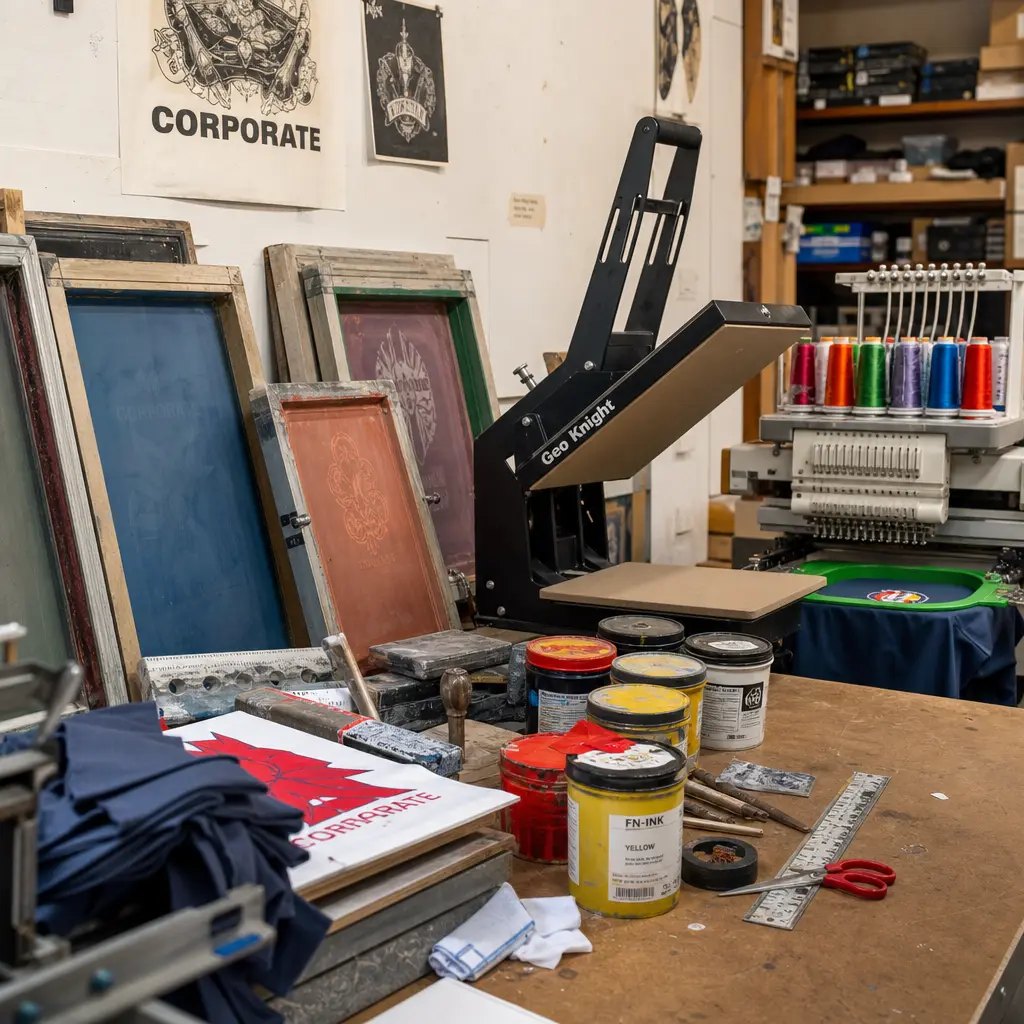
Screen printing is the most common choice for canvas wine carriers because it is economical for repeat logos and works well with simple one-color or two-color spa branding. Natural canvas with black, dark green, brown, or muted gray print is usually straightforward. White or pale ink on dark dyed canvas needs more control because opacity, curing, and hand feel become more sensitive. If the artwork uses gradients, photographic detail, or many colors, a transfer method may be discussed, but it can look less natural on a cotton canvas retail bag.
For a quieter premium look, a woven label, embroidered patch, or debossed leatherette patch can be stronger than a large printed front logo. These methods also help when the spa has multiple locations: the base bag stays the same, and only labels or patches vary. The tradeoff is added component MOQ, sewing labor, and more sample time. Patches also need placement approval because they can pucker the canvas if the backing is too stiff or if stitch tension is not controlled.
- Screen print: best for clean logos, moderate MOQ, and predictable unit cost.
- Embroidery patch: good for textured premium branding but avoid tiny lettering.
- Woven label: useful for small subtle brand marks or multi-location programs.
- Deboss patch: premium look, but confirm material compliance and edge durability.
- Heat transfer: possible for complex artwork, but test hand feel and long-term adhesion on canvas.
Set real logo size rules instead of relying on a mockup
The most common artwork mistake is making the logo too large for the carrier. A wine carrier is narrow, and the bottle inside makes the front panel slightly convex. On many single bottle carriers, a main logo width of 70-95 mm is more stable than a 130 mm logo. A smaller, well-positioned logo usually looks more upscale for spa retail than a logo that fills the bag and curves around the sides.
Line thickness should be included in the artwork note. Many spa logos use fine serif type, leaf icons, water lines, or light geometric marks. On canvas, lines below about 1.0-1.2 mm can break, fill in, or look uneven depending on the weave and ink. If the logo must include small location text, consider moving it to a woven side label, hangtag, or paper belly band instead of forcing it into the front print.
- Main logo width for single bottle carrier: commonly 70-95 mm.
- Minimum printed line thickness: around 1.2 mm for safer screen printing on canvas.
- Minimum text height: preferably 4-5 mm or larger for clean reading after print.
- Keep logo clear space equal to at least 10-15 mm from nearby seams, patches, or handles.
- Request the factory to flag artwork details they cannot reproduce before sample making.
Build a sample approval process that catches loaded-bag distortion
The correct sample is not just an empty bag lying flat on a table. For logo placement approval, the sample should be photographed and reviewed with a bottle or bottle dummy inserted. This shows whether the logo remains centered, whether the lower part of the artwork wrinkles, and whether the carrier stands properly. The buyer should also check the handle view because handle tension can pull the upper panel and slightly change logo alignment.
For a new program, a practical sequence is one development sample to confirm size, fabric, and print method, followed by a pre-production sample using final fabric color, final artwork, and production sewing method. If the order uses multiple spa locations with the same carrier, approve the base construction first, then approve each logo variation on a shared placement template. This avoids repeating full construction sampling for every location.
- Review sample empty, filled, front view, side view, and top handle view.
- Measure logo centerline against bag centerline and record the approved position.
- Keep an approved physical sample with signature, date, and PO reference.
- Do not approve production from a photo if fabric color, logo size, or method has changed.
- If bottle type changes from wine to champagne, repeat the fit and logo distortion check.
Understand the MOQ and cost drivers behind logo placement decisions
MOQ is rarely only about the bag. It can be driven by fabric dyeing, printing setup, screens, patches, woven labels, carton marks, or the number of logo versions. A plain natural canvas wine carrier may have a lower MOQ than a dyed canvas carrier with a deboss patch. If a spa group needs five location logos, the buyer should ask whether the factory can run the same base bag quantity and split the branding step by logo. This can reduce fabric waste and help reach a better production quantity.
Logo placement itself can also affect cost. Printing panels before sewing may give a flatter print surface, but it requires accurate panel positioning during sewing. Printing after sewing can reduce alignment risk to the finished bag but may be limited by seams and handle bulk. For small carriers, many factories prefer printing before final assembly if the design is large or close to seams. The quote should state the production route so the buyer understands what tolerance is realistic.
- Main cost drivers: canvas weight, dyed versus natural fabric, logo color count, print setup, patch components, sewing complexity, and packing style.
- Multi-location orders: consolidate base fabric and split only the logo step where possible.
- One-color screen print is usually more efficient than several small logo color variations.
- Patches can create separate component MOQ even if the bag MOQ is lower.
- Changing placement after screens or sewing guides are made can create extra charges and delay.
Write placement tolerances into the purchase order
A vague instruction such as logo centered on front panel is not enough for mass production. Fabric bags are flexible, sewn by operators, and can shift slightly during handling. A realistic tolerance protects both buyer and factory. For a front center print on a canvas wine carrier, ±5 mm from the approved sample is a practical starting point. For a woven side label or patch, ±3 mm to ±5 mm may be achievable depending on seam construction and operator method.
The PO should also define what counts as a major defect. A logo that is 2 mm off-center may not matter. A logo that is visibly slanted, partly under the handle reinforcement, smudged, or printed over a large fabric stain should not pass. By defining critical, major, and minor defects before inspection, buyers avoid emotional disputes when cartons are ready and shipping time is tight.
- Critical defect: wrong logo, wrong color, missing logo, unsafe contamination, or bag cannot hold declared bottle.
- Major defect: logo outside tolerance, obvious slant, heavy smudge, poor curing, patch lifting, or severe stain on front panel.
- Minor defect: small thread end, slight natural canvas slub outside logo area, or tiny placement variation within agreed tolerance.
- Inspection reference: approved sealed sample, artwork file, measurement diagram, and PO spec sheet.
- Recommended measurement points: centerline, distance below handle stitch line, and distance above bottom fold.
Plan packing so the logo arrives retail-ready
Canvas wine carriers are often packed tightly to reduce freight cost, but aggressive compression can damage the retail appearance. Fresh screen print needs enough curing and cooling time before stacking. Raised patches or embroidery can leave pressure marks on adjacent bags if cartons are overfilled. Natural canvas also picks up dust and carton fiber, which is visible on light retail displays.
The packing method should match the sales channel. A spa boutique may prefer individual paper bands, hangtags, or neat bulk packing without plastic. A distributor may need polybags with SKU labels for warehouse control. Flat packing is efficient, but the fold line should not cross a printed logo or patch. Carton weight should be practical for handling, especially if the goods ship to multiple spa locations rather than one central warehouse.
- Use tissue or face-to-back stacking if the print surface is at risk of transfer.
- Avoid hard fold lines across the front logo.
- Set carton quantity based on finished bag stiffness and patch thickness, not only carton volume.
- Keep gross carton weight manageable, commonly under 15-18 kg for easier retail distribution handling.
- Mark cartons with PO, SKU, logo version, quantity, and destination if there are multiple spa locations.
Manage lead time risks before the spa promotion date is fixed
Logo placement problems become expensive when the promotion date is already announced. A normal custom canvas wine carrier timeline includes artwork review, sampling, sample transit, approval, material preparation, printing or patch production, sewing, inspection, packing, and export. Natural canvas with simple screen print is usually faster than dyed fabric with custom woven labels or deboss patches. Exact lead time depends on factory capacity and order size, so buyers should request a schedule by step rather than a single optimistic date.
The largest avoidable delays come from incomplete artwork, late bottle confirmation, color changes after sampling, and unclear approval authority. If a brand owner, spa operator, and distributor all need to approve the sample, assign one final decision maker before the sample is made. Otherwise, the factory may receive conflicting comments such as make logo larger, move logo lower, and keep sample ship date unchanged. Those three requests rarely fit together without risk.
- Artwork review and sample preparation should start only after bottle size and carrier dimensions are fixed.
- Dyed canvas, woven labels, embroidery patches, and deboss patches need additional component lead time.
- Allow time for physical sample transit and internal buyer approval, not only factory sample making.
- Freeze logo placement after pre-production sample approval.
- Keep a buffer before spa launch dates, seasonal gift windows, or resort event check-in dates.
Specification comparison for buyers
| Spec decision | Recommended option | When it fits | Buyer risk to check |
|---|---|---|---|
| Front center logo placement | Logo centered 55-75 mm below handle stitch line, within a 90-120 mm wide safe print zone | Best for spa retail shelves, welcome gifts, and one-bottle carriers where the bag stands facing the customer | If placed too high, handle seam bulk can cause uneven screen pressure; if too low, the logo may wrinkle around the bottle base |
| Side panel or side seam branding | Small woven side label or narrow vertical print, 20-35 mm wide | Useful when the spa wants subtle branding or the front panel carries artwork, scent notes, or gift messaging | Side seams on small carriers are curved under load; wide printed logos can twist and look off-center after bottle insertion |
| Fabric weight for clean logo edges | 10-12 oz cotton canvas, roughly 280-340 GSM, with tight weave and low slub variation | Good balance for spa retail gift packaging, enough body for a wine bottle without making the carrier stiff or expensive | Loose weave or heavy slub canvas can break fine logo lines, especially with serif fonts and thin spa marks |
| Print method for standard spa logos | Water-based or discharge-style screen print for one to three solid colors | Best for natural, black, or dyed canvas when the logo uses simple flat colors and moderate line thickness | Poor curing causes rubbing or crocking; request cure temperature/time control and a rub test on the approved sample |
| Print method for premium small-batch look | Embroidery patch, woven label, or leatherette deboss patch sewn before final packing | Fits boutique spa retailers that want a giftable, reusable look and lower visual noise | Patch size and stitch density add cost; needle holes and edge lifting must be reviewed on the pre-production sample |
| Logo size on single bottle carrier | 70-95 mm wide for main logo, with minimum 1.2 mm line thickness for print | Works on most 750 ml carrier fronts while leaving enough margin around seams and base fold | Oversized logos may curve around the bottle and appear distorted; very fine lettering can fill in during printing |
| MOQ logic for logo placement testing | Use one paid sample and one pre-production sample before mass production; combine colorways only after placement is locked | Practical for importers consolidating several spa locations, resorts, or seasonal gift programs | Changing logo size after screens, embroidery files, or cutting panels are prepared can create re-sampling cost and schedule slip |
| Packing for printed carriers | Flat pack or lightly folded with tissue at print face; avoid tight compression on fresh ink or raised patches | Best for retail-ready cartons going to spa distribution centers or boutique backrooms | Heavy carton compression can cause print transfer, handle deformation, or patch creasing if curing and packing time are rushed |
Buyer checklist before sampling
- Define the bottle type before artwork approval: standard 750 ml wine, champagne, tall sparkling bottle, or wellness oil bottle set.
- State the exact printable area in millimeters on the RFQ, not only the desired logo width.
- Provide vector artwork with Pantone or thread references, minimum line thickness, and clear spacing around the logo.
- Choose fabric weight by retail use: 8 oz for low-cost giveaways, 10-12 oz for spa retail gifts, 14 oz only when stiffness is acceptable.
- Request a physical logo placement sample filled with a bottle or bottle dummy, then photograph front, side, and loaded handle view.
- Set acceptance tolerance for placement, such as ±5 mm from approved sample for front center logo and ±3 mm for sewn label position.
- Require print cure and rub testing before packing, especially for dark ink on natural canvas and white ink on dyed canvas.
- Confirm whether bags will be individually polybagged, paper banded, flat packed, or bulk packed for sustainability and warehouse handling.
- List carton size, gross weight target, and maximum units per carton so printed panels are not crushed during export shipment.
- Keep one signed approval sample with the buyer and one sealed duplicate with the factory for production reference.
Factory quote questions to send
- What is the exact fabric construction offered: cotton canvas ounce weight, approximate GSM, yarn count if available, and whether the fabric is greige, washed, dyed, or bleached?
- What is the confirmed finished size of the wine carrier, including width, height, gusset, handle drop, and recommended bottle size?
- What is the maximum safe logo area on the front panel after sewing, and what distance will be kept from handle reinforcement, side seams, and bottom fold?
- Which logo methods can your factory do in-house, and which are subcontracted: screen print, heat transfer, embroidery, woven label, leather patch, or deboss patch?
- For screen print, what ink type, curing method, minimum line thickness, and color tolerance will be used on the selected canvas color?
- What is the MOQ per logo, per fabric color, and per print color count? Can multiple spa locations share the same base bag to improve quantity pricing?
- How many samples are included in the quotation, what is the sample lead time, and what changes after sample approval will trigger new sample cost?
- What production lead time applies after deposit and artwork approval, and what extra time is needed for dyed fabric, patches, or woven labels?
- How will printed carriers be packed, how many pieces per export carton, and what is the estimated carton measurement and gross weight?
- What inspection standard will be used for logo placement, print defects, stitching defects, stains, odor, and carton damage before shipment?
Quality-control points to confirm
- Logo placement measured from fixed construction points, not by visual guess: handle stitch line, side seam, and bottom fold.
- Front logo position tolerance within ±5 mm against approved sample unless a tighter tolerance is agreed for premium retail programs.
- Printed logo edges clean at normal viewing distance of 50 cm, with no major ink skip, pinholes, smudges, ghosting, or registration shift.
- Ink adhesion passes dry rub and light wet rub tests agreed before production; no visible transfer onto packing tissue or adjacent bags.
- Canvas panels free from major stains, oil marks, heavy slubs crossing the logo, mold odor, and obvious color lot variation.
- Handle reinforcement stitching holds under loaded bottle test without tearing, seam opening, or obvious panel distortion around the logo.
- Sewn labels or patches aligned within agreed tolerance and attached without loose threads, lifted corners, or puckering.
- Finished carrier fits the declared bottle type with acceptable insertion/removal clearance and stable standing appearance.
- Cartons packed to avoid crushing print or bending handles, with carton marks matching purchase order, SKU, and destination requirements.