What a wine club buyer should audit first
A canvas wine carrier looks simple, but most quote problems start with vague specifications. If the request only says 'canvas carrier for wine club', suppliers will fill in the blanks with their own fabric weight (e.g., 10 oz instead of 14 oz), handle build (single stitch vs. bar-tack), divider method (none vs. PP board), and packing format (bulk vs. individual polybags). That is how two quotes with similar unit prices can produce very different landed costs and very different customer complaints.
Start the audit with use case. A monthly wine club shipment does not need the same carrier construction as a retail gift set or a tasting-room upsell. Define bottle count (1, 2, or 3 bottles), bottle diameter (standard 750 ml is 3.0-3.5 inches), route to customer (direct mail vs. in-store pickup), and whether the carrier is meant to be reused after delivery. Those four points decide most of the structure and most of the cost.
Choose the right canvas weight and structure
For most wine clubs, 12 oz to 16 oz canvas, roughly 340 to 450 GSM, is the practical range. Below 10 oz (280 GSM), the carrier can feel soft, collapse at the base, or look underbuilt next to the bottles. Above 18 oz (510 GSM), the bag becomes heavier and more expensive without always improving performance unless the design also carries thick glass bottles or extra inserts.
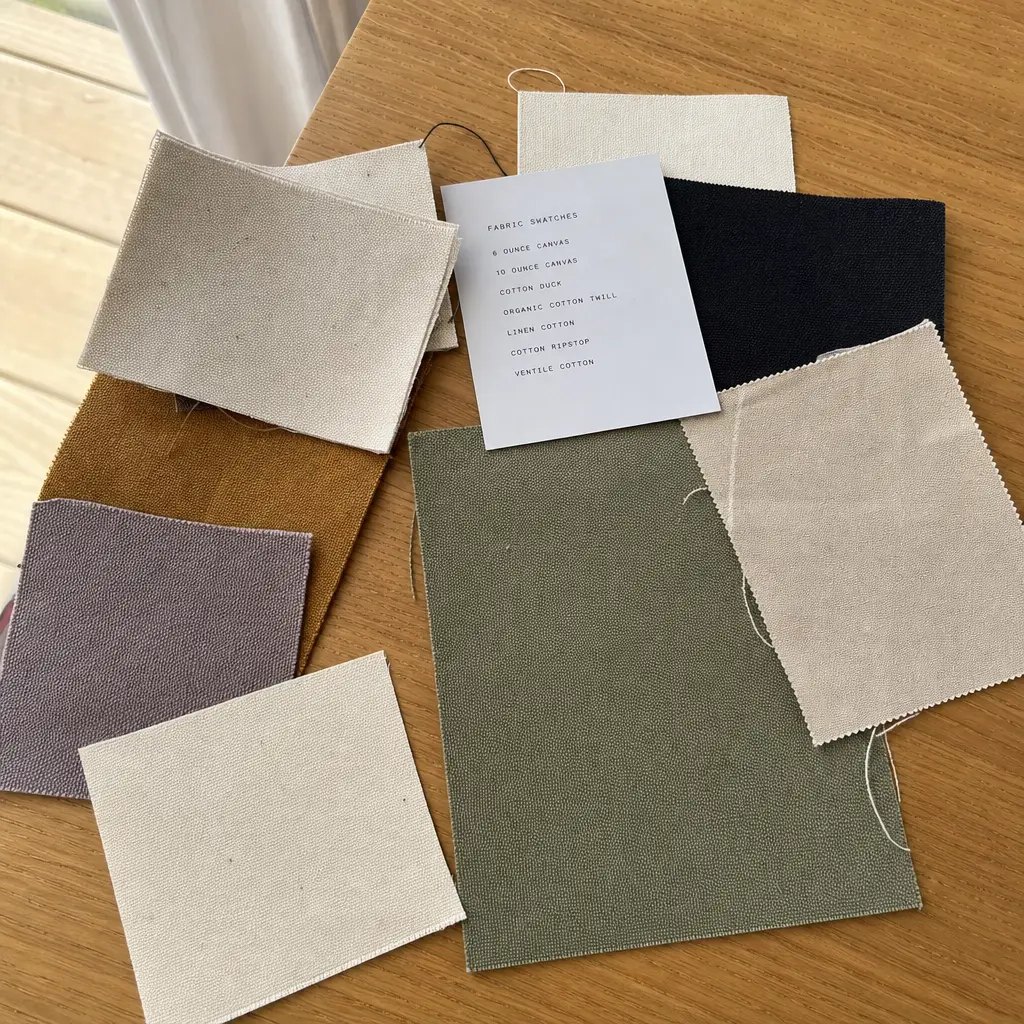
The structure should match the bottle load, not the artwork. Single-bottle carriers can be made lighter (12 oz), but two-bottle and three-bottle versions need stronger bottoms (double-layer canvas or PP board insert), tighter seam control (8-10 stitches per inch), and more stable handles (cross-stitched webbing with bar-tack reinforcement). If the supplier cannot tell you the fabric weight, seam allowance (e.g., 1/2 inch), and whether the bottom is single-layer or reinforced, the quote is not ready for comparison.
Print method and branding decisions that change the quote
Screen print is usually the best option for simple wine club branding (≤4 PMS colors). It holds up well on canvas (ink adhesion: tape test), it is efficient on repeat orders (setup fee amortized over 500+ units), and it keeps MOQ reasonable (200-500 pcs per design). For premium club packs, buyers often prefer a woven label (sewn on side seam) or embroidery (on front panel) when the logo is small (e.g., 2x2 inches) and the brand wants a cleaner retail finish. Each method changes the price (screen print: $0.50-$1.00 per unit; woven label: $0.80-$1.50 per unit; embroidery: $1.00-$2.00 per unit, based on supplier quotes), sample time (5-10 days for screen print vs. 10-15 days for embroidery), and risk profile (fine text <6pt can fill in on screen print; embroidery can distort small logos).
The common mistake is asking for logo decoration without defining the production limit. Small text (<6pt), thin lines (<1 mm), gradients, and many PMS colors (>4) can cause rejection in screen print or push the supplier toward a more expensive method (e.g., digital print). For audit purposes, request the actual print size (e.g., 4x4 inches), number of colors (e.g., 2 PMS), ink hand-feel (matte or gloss), and whether the artwork sits on the body panel or on a sewn patch (e.g., woven label).
Compare sourcing routes before you price the PO
There are several valid sourcing routes for canvas wine carriers, and the best one depends on order size and launch risk. A direct factory is usually the most cost-efficient for custom color (e.g., Pantone-matched), custom size (e.g., 12x8x4 inches), and recurring club programs (MOQ: 500-2000 units). A stock-item wholesaler is faster for test runs (MOQ: 100-500 units), but you lose control over fabric weight (often 10 oz) and branding details (limited print options). Trading companies can help coordinate small programs (MOQ: 200-1000 units), though the buyer needs to separate coordination value (5-10% markup) from manufacturing value.
Use the comparison table to keep the decision grounded in evidence. The right route is not the cheapest ex-works line item. It is the route that gives you the correct fabric (12-16 oz), the right print method (screen print or woven label), acceptable MOQ (500-2000 units for custom), and a packing format that survives fulfillment (individual polybags or interleaving). If those pieces are not in the quote, the unit price is incomplete.
How to compare supplier quotes without missing hidden cost
A useful quote for a wine club program should show fabric spec (GSM or oz), decoration method (screen print, woven label, embroidery), handle material (cotton webbing, width: 1 inch), divider or insert details (PP board, thickness: 2 mm), packing count (e.g., 50 pcs per carton), carton size (e.g., 24x18x12 inches), and lead time (e.g., 25 days after sample approval). Without those items, the quote is just a number. One supplier may include a base insert (PP board: $0.20 per unit), another may exclude it. One may quote bulk packed cartons (no inner bags), another may include individual polybags (1.5 mil: $0.10 per unit) and dividers that raise freight volume by 10-15%.
When you compare quotes, translate each offer into the same unit. Ask for the exact weight of the finished carrier (e.g., 0.5 lbs for a 2-bottle carrier), the carton count per master carton (e.g., 50 pcs), and whether the quoted lead time starts from artwork approval or from deposit receipt. Small differences in packing can alter the cube (e.g., 2 cubic feet vs. 2.5 cubic feet) and make a lower unit price more expensive once you book freight (e.g., $50 extra per pallet).
Factory evidence that separates a real producer from a paper quote
A serious factory can show more than product photos. For a wine carrier program, ask for line photos or video from the sewing area (showing stitch density: 8-10 stitches per inch), swatch references for the exact canvas weight (with GSM test results), examples of reinforcement stitching (bar-tack on handles), and carton packing photos from a live production floor (showing inner bags and dividers). If the supplier works with multiple wine club accounts, they should be able to show non-confidential examples of the same construction family (e.g., 2-bottle carriers with PP board inserts).
Evidence should match the spec. A good sample room photo is not enough if the bulk production line is different (e.g., different sewing machines or operators). Review whether the factory cuts in-house (laser or die-cut), prints in-house (screen print or digital), and controls final packing (in-house QC) or outsources half the work (e.g., print to a third party). More handoffs mean more schedule risk (5-10 days extra) and more room for spec drift (e.g., fabric weight variation >5%).
QC thresholds that matter for bottle carriers
Quality control for a wine carrier is mostly about fit, balance, and seam integrity. The carrier should hold the intended bottle count (e.g., 2 bottles of 750 ml) without distortion (base deviation ≤2 mm), the base should sit flat (no twisting), and the handles should carry weight (up to 5 lbs) without edge tearing or stitch failure (test with 2x bottle weight). For club shipments, a loose-looking bag is a real problem because it looks unfinished when the customer opens the box.
Set acceptance criteria before production starts. Decide the allowed seam deviation (e.g., ±1 mm), the acceptable print tolerance (e.g., misalignment ≤1 mm), the minimum carton strength (edge crush test: ≥32 lbs per inch), and how you will treat minor shade variation in natural canvas (ΔE ≤ 2.0). Natural canvas is not perfectly uniform, but inconsistency should not be used as an excuse for poor batch control (e.g., >5% variation in GSM).
- Ask for line photos, approved sample placement, and QC station evidence (e.g., stitch count records).
- Check whether material, sewing, logo, and packing teams share the same spec version (e.g., signed spec sheet).
- Record missing equipment (e.g., no bar-tack machine) or unclear records (e.g., no GSM test) as audit findings.
Sample approval workflow that prevents rework
Do not approve a wine carrier sample until you have tested it with real bottles. Dry samples on a table are not enough. Load the carrier with the bottle type you actually ship (e.g., 750 ml Bordeaux bottles), then evaluate fit (bottle diameter: 3.0-3.5 inches), handle comfort (drop: 10-12 inches), base stability (no tipping), logo placement (centered on front panel), and whether the divider or insert keeps glass from touching (gap: ≥1 mm). This is especially important if the bottle is heavier than standard 750 ml wine (e.g., 1.5L bottles: 3.5 lbs).
Use a clear sample sequence. First sample should confirm size and structure (e.g., 12x8x4 inches). Second sample should confirm decoration (print color: PMS 186) and packing (individual polybags). Pre-production sample (PP sample) should match the bulk fabric (same lot) and final carton configuration (e.g., 50 pcs per carton). If the factory changes fabric lot, print method, or carton count after sample approval, treat it as a change order, not a minor adjustment (e.g., require new PP sample).
Packing, lead time, and freight risk
Packing is often where a good carrier program becomes a bad receiving experience. Define whether the bags are bulk packed (no inner bags), individually polybagged (1.5 mil polybags), or packed with interleaving (tissue paper) to prevent scuffing. For wine clubs, outer carton strength (edge crush test: ≥32 lbs per inch) and exact pack count (e.g., 50 pcs per carton) matter because fulfillment teams need predictable cube (e.g., 2 cubic feet per carton) and easy counting. A carrier that arrives crushed or stained costs more than the small savings from lighter packing (e.g., $0.10 per unit saved vs. $0.50 per unit in returns).
Lead time should be stated as a real production window, not a marketing promise. Ask what happens if fabric, webbing, or carton stock changes (e.g., 5-10 day delay). Ask whether the schedule is measured from sample approval (e.g., 25 days), deposit (e.g., 30 days), or artwork confirmation (e.g., 20 days). For seasonal club launches (e.g., holiday season), add slack for print approval (5-7 days) and carton proof review (3-5 days). Those are common delay points and they are easy to miss in a quote comparison.
Specification comparison for buyers
| Spec Decision | Recommended Option | When It Fits | Buyer Risk to Check |
|---|---|---|---|
| Fabric Weight | 12 oz to 16 oz canvas (340 to 450 GSM) | Wine club shipments, premium retail sets, carriers holding 2-3 bottles without sagging | Thin fabric (<10 oz) can deform at the base or look cheap; heavy fabric (>18 oz) adds cost and weight without proportional benefit. Verify GSM tolerance with supplier (e.g., ±5%). |
| Print Method | Screen print for simple logos (≤4 colors); woven label or embroidery for premium branding | Low-color artwork, recurring club SKUs, or brands wanting a cleaner retail finish | Fine text (<6pt) can fill in on screen print; embroidery can distort small logos. Ask for setup fees and per-unit cost examples from supplier quotes. |
| Bottle Layout | Single, double, or 3-bottle carrier with internal dividers (PP board or cardboard insert) | Monthly club shipments, tasting kits, or retail upsell bundles | Poor divider construction (no insert, thin cardboard) lets bottles collide. Request supplier test data on breakage risk in transit. |
| Handle Build | Cross-stitched cotton webbing handles with bar-tack reinforcement (minimum 5 stitches per tack) | Heavier bottle loads (2-3 bottles) and carriers intended for reuse | Short stitch runs (<3 stitches) or weak handle attachment are common failure points. Test with 2x bottle weight before approval. |
| Lining and Insert | Optional PP board (2-3 mm) or cardboard base (1.5-2 mm) depending on shipping route | Higher-end gifting, heavier bottles (>750 ml), or carriers that must stand upright in-store | Unspecified inserts create quote gaps; verify thickness, material, and whether insert is included in unit price. |
| MOQ Route | Direct factory MOQ for custom spec (500-2000 units); stock body + custom logo for smaller runs (100-500 units) | Test launches, seasonal club offers, or first-time programs | Low MOQ can hide setup fees (e.g., $50-$200 per color/print) or force mixed-spec substitutions. Ask for itemized setup costs. |
| Packing Format | Bulk packed with divider protection, then carton by exact pack count (e.g., 50 pcs per carton) | E-commerce, club fulfillment, and warehouse handling | Loose packing raises abrasion risk and causes carton count mismatch; specify inner polybag or interleaving. |
| Lead Time | 15-35 days after sample approval, depending on print complexity and material availability | Routine replenishment with stable artwork and available materials | Peak season (Oct-Dec) can extend lead time by 10-20 days due to yarn, print, or carton shortages; add buffer for first orders. |
| Audit Evidence | Video of sewing line, QC records (stitch count, seam strength), material swatches with GSM test, and carton drop-test method | Supplier comparison before first PO or when switching factories | Photo-only evidence is weak; it does not show line discipline, packing control, or real-time QC checks. |
Buyer checklist before sampling
- Confirm final bag size (width, height, gusset), handle drop (10-12 inches for hand carry), and usable loading weight (up to 5 lbs for 2 bottles).
- Specify fabric type (natural or dyed canvas), GSM/oz weight (12-16 oz), color tolerance (ΔE ≤ 2.0), and shrinkage expectations (≤3% after wash).
- Send vector artwork (AI or EPS) and define logo size (e.g., 4x4 inches), print position (center front panel), and Pantone references (PMS numbers).
- Ask for sample photos plus one physical pre-production sample (PP sample) before bulk approval; test with actual bottles.
- Agree carton packing (bulk or individual polybags), barcode or hangtag needs (UPC or custom), and shipment marks (carton labels) before production.
- Record inspection checkpoints for stitching (stitch density: 8-10 stitches per inch), print adhesion (tape test), stains (visual inspection under 500 lux), and quantity count (±1% tolerance).
Factory quote questions to send
- What is the exact canvas weight in GSM or oz, and what tolerance do you hold on bulk fabric (e.g., ±5% GSM)?
- What reinforcement do you use at the handle anchors and bottom seams (e.g., bar-tack stitches, double stitching), and can you show sample stitch specs (thread type, stitch length)?
- Which print method is included in the quote (screen print, woven label, embroidery), how many colors are covered (e.g., up to 4 PMS colors), and what is the setup fee per color?
- What is your MOQ by fabric color (e.g., 500 pcs per color), logo method (e.g., 200 pcs for screen print), and carton pack format (e.g., 50 pcs per carton)?
- What sample stages do you provide before production (first sample, PP sample), and what changes (e.g., fabric color, logo size) require a new sample approval?
- What is the full packing specification per carton, including inner bags (polybag thickness: 1.5 mil), dividers (cardboard or PP board), and master carton strength (edge crush test: ≥32 lbs per inch)?
- How do you control bottle fit for standard 750 ml bottles (diameter: 3.0-3.5 inches), and what is the maximum bottle diameter you can confirm (e.g., 4.0 inches)?
- What lead time applies after approval (e.g., 25 days), and what parts of the schedule are at risk in peak season (e.g., fabric dyeing, print setup)?
Quality-control points to confirm
- Canvas weight matches approved swatch within agreed tolerance (e.g., ±5% GSM) and is consistent across the lot (check 3 samples per 1000 units).
- Handle seams use bar-tacks or reinforced stitching (minimum 5 stitches per tack) with no skipped stitches, loose thread, or seam puckering (visual inspection under 500 lux).
- Divider placement matches the approved bottle count (e.g., 2-bottle carrier with center divider) and keeps bottles separated under light handling (test with 750 ml bottles).
- Print registration is clean (misalignment ≤1 mm), color density is even (no fading or bleeding), and there is no cracking on fold lines or edge bleed (tape test: apply and remove tape 3 times).
- Base panel sits flat with no twisting (deviation ≤2 mm from flat surface), and the carrier stands correctly when loaded with sample bottles (no tipping).
- Carton pack count, barcode (UPC or custom), and outer mark match the shipping instruction and master carton list (verify 100% of cartons for first order).