Start With the Bottle, Not the Canvas Number
A canvas wine carrier for hotel retail looks simple, but it carries a dense and fragile load. A filled 750 ml glass wine bottle often weighs about 1.2 to 1.6 kg, depending on glass weight, punt depth, closure, and bottle style. Sparkling bottles can be wider and heavier. That weight sits on the bottom seam and pulls through the handle attachments each time a guest lifts the carrier from a shelf, checkout counter, or hotel room welcome tray.
This is why the first sourcing question should not be, “Is 10 oz or 12 oz more premium?” The better question is, “Will this fabric, pattern, gusset, handle, and seam construction safely carry our actual bottle?” Fabric weight matters. It gives the carrier body, improves shelf presence, and affects print results. Still, canvas weight alone cannot rescue a weak seam allowance, a shallow gusset, or a handle stitched too close to the edge.
Canvas is often quoted in ounces per square yard, while technical teams may request GSM. The working conversion is ounces per square yard multiplied by 33.906. That makes 8 oz canvas about 271 GSM, 10 oz about 339 GSM, 12 oz about 407 GSM, and 14 oz about 475 GSM. Use those figures to compare quotations, but do not treat them as the full specification. Two fabrics with the same weight can feel and perform differently because of yarn size, weave density, finishing, shrinkage, and softening.
Before a sample is approved, document the bottle. Record total height, maximum body diameter, shoulder shape, neck diameter, closure type, punt depth, and filled weight. A tall Bordeaux bottle, a wider Burgundy bottle, a sparkling bottle, and a custom private-label bottle may all behave differently in the same bag. A flat empty sample can look acceptable, then sag, lean, pinch, or stretch once staff insert the real filled bottle.
The strongest brief connects material to use. Instead of writing only “12 oz natural canvas wine bag,” specify the bottle dimensions, target fabric weight and tolerance, finished dimensions, gusset depth, handle construction, reinforcement method, print method, packing format, and load test. That turns a subjective item into a product that can be quoted, sampled, inspected, and reordered with fewer surprises.
- Use the actual filled bottle or a dimensionally accurate weighted dummy for sampling and testing.
- State canvas weight in both ounces per square yard and GSM to reduce supplier interpretation errors.
- Ask for a bulk fabric tolerance, commonly around +/-5% unless the project requires tighter control.
- Treat fabric weight, gusset geometry, seam construction, and handle reinforcement as one load-bearing system.
Fabric Weight Benchmarks: 8 oz, 10 oz, 12 oz, and 14 oz
An 8 oz canvas, approximately 271 GSM, is the lightest option most hotel retail buyers should normally consider for a wine carrier. It can work for flat sleeves, welcome amenities, short seasonal campaigns, and low-ticket souvenir retail where the product functions more like a branded wrap than a long-life reusable bag. It is not automatically wrong. It simply leaves less margin for bottle sag, ink show-through, seam stress, and base collapse.
If 8 oz canvas is used for a filled bottle, the construction has to do more work. Reinforced seams, controlled gusset dimensions, suitable handle material, and a real load test become essential. A buyer should also check whether the print looks too transparent or uneven on the lighter base. For rustic natural canvas, a little texture is acceptable; for a polished hotel boutique display, too much show-through can look cheap.
A 10 oz canvas, about 339 GSM, is usually the best first benchmark for one-bottle hotel retail carriers. It has a more substantial hand than 8 oz, yet it remains efficient to cut, sew, print, fold, and carton pack. For lobby shops, resort boutiques, gift-with-purchase programs, and repeat reorder SKUs, a well-built 10 oz carrier with a correct gusset and reinforced handle often gives a better cost-to-quality balance than a heavier fabric with weak construction.
A 12 oz canvas, about 407 GSM, starts to feel more gift-oriented. It gives the bag more body and helps the carrier stand with a cleaner shelf silhouette, especially when the gusset matches the bottle diameter. It is a strong choice when the carrier itself is part of the perceived value: house-label wine, premium amenities, wine-and-accessory sets, or boutique merchandising. The tradeoff is real. Fabric cost rises, folded seams get bulkier, carton volume may increase, and sewing through multiple layers can slow production.
A 14 oz canvas, around 475 GSM, should be chosen for a reason, not out of habit. It can suit heavy reusable positioning, loyalty gifts, or high-end retail packaging where a rigid hand is part of the message. For many standard 750 ml wine bottle programs, however, 14 oz is more than the product needs. Heavy canvas can feel stiff or rough if not finished well, can show needle marks, and can pack bulky. Before approving it, ask whether guests will notice enough value to justify unit cost, CBM, and cutting waste.
- 8 oz: best for light-duty wraps, short campaigns, and simple low-coverage artwork.
- 10 oz: best first benchmark for most one-bottle hotel retail carriers.
- 12 oz: useful when shelf structure and premium hand feel are part of the retail value.
- 14 oz: reserve for heavy reusable positioning or a clearly premium merchandising brief.
Match the Fabric Weight to the Hotel Retail Use Case
Hotel retail is not one use case. A front-desk welcome amenity, minibar promotion, lobby shop SKU, resort boutique gift, wine club item, and event retail product each have a different cost target, handling path, and guest expectation. The same 10 oz carrier may be perfect for one program and underbuilt or overbuilt for another. Start with the channel before locking the cloth.
For an entry-level impulse item, compact packing and low unit cost may matter more than a rigid shelf stance. In that case, 8 oz or 10 oz natural canvas with a one-color screen print may be enough, as long as the bottle is not expected to be carried far or reused frequently. For a resort boutique where the carrier sits beside premium bottles, corkscrews, candles, glassware, or branded food gifts, 10 oz with excellent construction or 12 oz with a stable gusset may be the better commercial choice.
Display method changes the spec. If carriers are displayed pre-filled, the base and handle points stay under load for longer. Leaning, twisting, bottom distortion, and panel collapse become highly visible. If the carrier is sold folded at checkout, shelf structure matters less, but fold quality, barcode placement, and staff speed matter more. A bag that looks good in a product photo can still create operational friction if associates have to force bottles into it all day.
Think about the bottle range too. Multi-property hotel groups may use different private-label bottles across destinations. A single universal carrier may need a slightly larger opening and gusset clearance to handle those variations. If every property uses one approved bottle, the pattern can be tighter, neater, and more retail-polished. The best canvas wine carrier fabric weight guide for hotel retail is not “heavier is better.” It is “match the weight and construction to how the product will actually be sold and handled.”
Retail price band should also guide the decision. A low-price add-on can look honest and attractive in natural 10 oz canvas with a clean print. A higher-price gift item may need 12 oz canvas, a woven label, a hangtag, or a better internal finish to justify its shelf position. Procurement, merchandising, and operations should agree on that before the RFQ goes out.
- Welcome amenity: prioritize cost, simple branding, and clean presentation in-room or at check-in.
- Lobby retail: prioritize bottle insertion, shelf appearance, barcode control, and reliable reorder consistency.
- Resort boutique: prioritize premium hand feel, trim quality, and retail-ready packing.
- Event retail: prioritize lead time, carton separation by artwork, and consistent logo placement across versions.
Specify Construction Before Paying for Heavier Canvas
Many weak wine carrier samples are not fabric-weight failures. They are construction failures. A 10 oz canvas carrier can perform well if the load path is designed correctly. The same weight can fail if the handle is narrow, the stitch line is too close to the edge, the seam allowance is thin, the gusset is shallow, or the top hem lacks reinforcement. Upgrading to 12 oz or 14 oz may make the sample feel sturdier in the hand, but it will not fix poor engineering.
For a one-bottle carrier, the gusset should be based on the maximum bottle diameter and the desired shelf stance. A practical starting range for many 750 ml still wine bottles is about 40 to 60 mm gusset depth, but the actual bottle must confirm the number. Wider Burgundy bottles, sparkling bottles, or heavier custom molds may need more space. A gusset that is too shallow creates a rounded base, so the product rocks or leans. A gusset that is too wide makes a narrow bottle look loose and underfilled.
Handle construction needs exact wording in the RFQ. Options include self-fabric handles, cotton webbing handles, folded canvas straps, die-cut handle openings, separate tape, or reinforced webbing ends. For filled glass bottles, handle attachment points should use defined reinforcement, such as bartacks, box-x stitching, extra fabric patches, or an approved equivalent. Do not accept phrases like “strong handle” or “good stitching” as specifications. They cannot be inspected consistently.
Stitch density, thread type, and seam finish also matter. Buyers should state stitches per inch or centimeter, thread color, thread strength where relevant, seam allowance, top hem depth, and whether raw edges are overlocked, bound, or enclosed. A folded top hem gives structure and prevents fraying, but it adds layers at the side seams. On heavier canvas, that bulk can create uneven sewing, skipped stitches, or needle marks unless the line is set up properly.
The inside of the carrier is not invisible. Guests may look inside while inserting the bottle, and retail staff will handle it repeatedly. Loose thread tails, scratchy raw edges, crooked bartacks, and messy overlock can make the item feel lower grade even when the outside print is clean. Construction should be approved before the team decides to solve every concern with heavier fabric.
- Define gusset depth, seam allowance, top hem depth, handle drop, reinforcement method, and stitch density in the tech pack.
- Use bartacks, box-x stitching, or comparable reinforcement at handle attachment points for filled-bottle use.
- Set body and gusset dimensions from the bottle diameter instead of copying a generic wine bag pattern.
- Upgrade construction first when a sample feels weak; increase fabric weight only after the construction is controlled.
Branding Methods: Print, Label, Patch, or Embroidery
Canvas has character. It also has limits. Its weave, slubs, seed flecks, and finish all affect how artwork appears. Screen print is usually the most efficient branding method for one-color or two-color hotel logos on natural canvas. It offers clear visibility and manageable setup cost. But it is not the same as printing on smooth paper. Fine serif type, thin rules, gradients, detailed crests, and small property names can break up on a coarse weave.
Approve artwork on the final fabric, not only on a digital proof. Natural canvas changes color perception: white ink may look muted, black ink may have textured edges, and large solid areas can feel stiff or show through to the reverse side on lighter weights. Dyed canvas adds another variable because the ground shade can shift the print color. If the bag will be folded flat, test the print after folding, pressure, and reopening. Fold-line cracking, scuffing, blocking, and odor are procurement issues, not just design issues.
A woven label, side tab, or sewn patch can be the better choice for understated hotel branding. These trims work well for boutique properties, wine clubs, multi-property programs, and premium collections where the mark should feel consistent but not loud. They also help when the logo has fine detail that will not screen print cleanly. The tradeoff is additional trim MOQ, label approval, placement risk, and sewing time.
Small trim details need precise placement. State label size, fold allowance, stitch color, stitch position, and distance from the side seam, bottom seam, or top edge. Then set a placement tolerance in millimeters. A side tab that is 5 mm off may not sound serious on paper, but on a compact wine carrier it can look noticeably crooked.
Embroidery can feel premium, yet it should be tested carefully. On smaller panels or lighter canvas, embroidery may pucker the fabric, distort the bag face, or require backing that remains visible inside. It also adds stitch count cost and thread color approvals. If embroidery is part of the brief, approve it on the final panel size, final fabric weight, and final construction layers before mass production.
- Use screen print for simple logos, clear retail visibility, and controlled unit cost.
- Use woven labels or side tabs for subtle branding, fine detail, or multi-property consistency.
- Use sewn patches when the brand wants a premium focal point and accepts added trim cost.
- Use embroidery only after testing puckering, backing, stitch density, and panel distortion on the final fabric.
Build an RFQ That Produces Comparable Quotes
A vague RFQ creates vague pricing. If a buyer asks for a “natural canvas wine bag with logo,” one supplier may quote 8 oz fabric, another 10 oz, another a shallow gusset, and another bulk packing with no hangtag or barcode. The lowest price may simply reflect a lighter material, fewer stitches, no reinforcement, cheaper ink, or less protective packing. It is not always better buying. Sometimes it is just an incomplete specification.
If the fabric weight is not final, ask suppliers for a controlled price ladder. Keep the same bottle, finished dimensions, gusset, handle construction, branding method, and packing format, then request prices for 8 oz, 10 oz, and 12 oz canvas. If 14 oz is being considered, ask whether the factory needs different needles, thread, cutting equipment, or slower sewing speed. This makes the fabric upgrade visible instead of hidden inside unrelated spec changes.
MOQ should be broken into practical parts. Natural stock canvas may have a lower minimum than dyed canvas. Custom webbing, woven labels, printed hangtags, barcode labels, and special packing may each have their own minimums. For hotel groups, the real constraint may be MOQ per property logo or per artwork version, not total order quantity. If the program includes three property marks, two fabric colors, and split shipments, the supplier should quote that structure directly.
Ask for logistics information early. Carton dimensions, units per carton, gross weight, net weight, and estimated CBM are needed for landed cost comparison. A 12 oz carrier may have only a modest ex-factory price increase over 10 oz, but if the carton count rises or the folded product becomes bulkier, freight cost may change the decision. Do not wait until production is finished to learn the pack count.
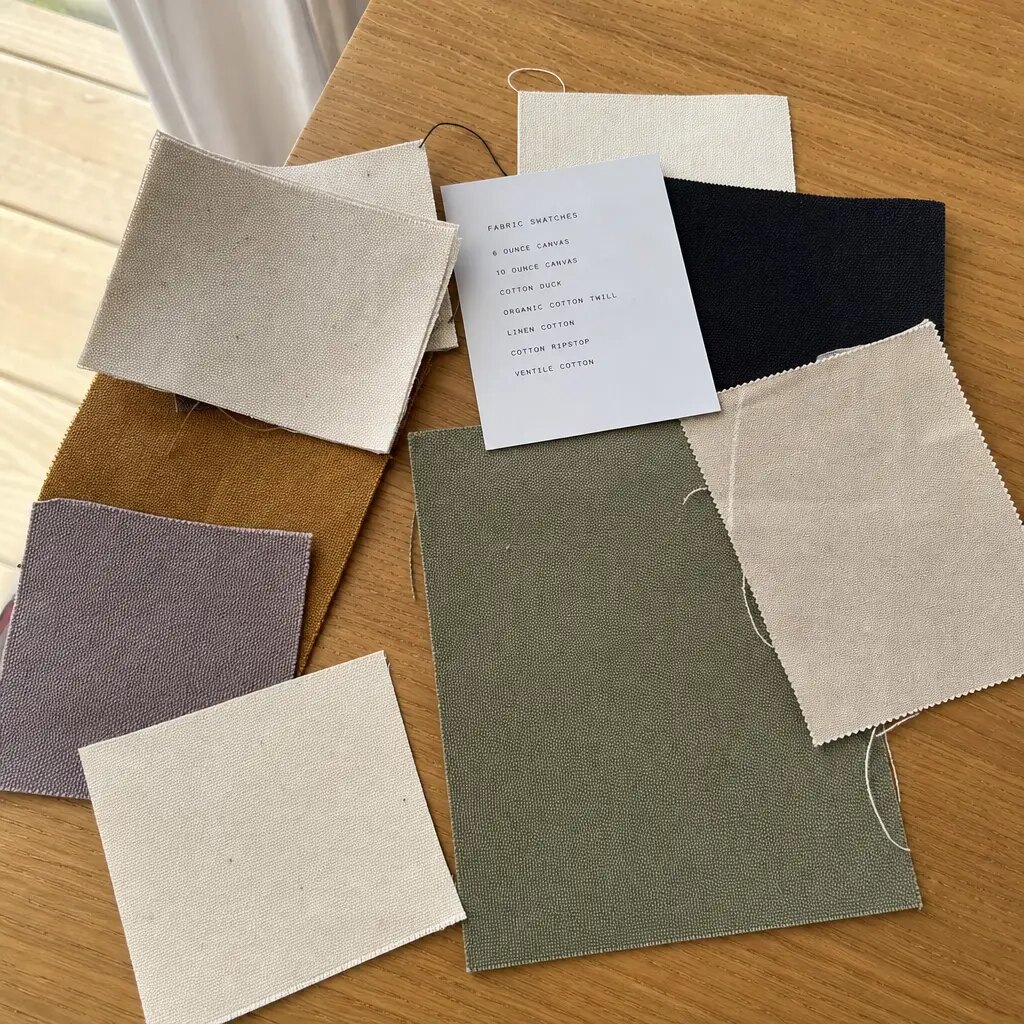
A good RFQ also includes approval steps. State whether the supplier must provide fabric swatches, a blank fit sample, a branded sample, a pre-production sample, and carton photos before shipment. For repeat programs, ask whether the fabric source, print method, thread, handle material, and trim can be held consistent for reorders. Consistency is especially important for hotel retail collections that stay on shelf season after season.
- Quote all suppliers against the same bottle, fabric weight, dimensions, construction, print method, and packing spec.
- Ask for separate prices for fabric upgrades, trim, labels, hangtags, barcodes, polybags, and plastic-free packing alternatives.
- Require MOQ by fabric color, artwork version, label version, and destination split.
- Compare landed cost using carton dimensions, pack count, gross weight, net weight, and CBM, not unit price alone.
Sampling: Prove Fit, Load, Print, and Packing Before Bulk
A sample should prove how the product works, not just how it looks flat. Canvas wine carriers often appear acceptable on a table, then show problems when used with a filled bottle. The base may sag. The shoulder may pinch. The carrier may lean forward. The logo may sit too low after the bottle drops into the gusset. Handles may stretch, and print can scuff after folding. Approving bulk production from a flat empty sample is an avoidable risk.
A staged sample process is safer. First, approve fabric swatches or a blank fit sample to confirm weight, hand feel, dimensions, and bottle fit. Next, approve a branded sample using the final print, label, patch, or embroidery method. For dyed fabric, custom trim, lining, special finishes, or retail-ready packing, require a pre-production sample made with bulk-intended materials. If the supplier changes fabric source, ink, thread, trim, packing, or construction after approval, document and reapprove the change.
Measure every sample. Check body height, opening width, bottom width, gusset depth, handle length, handle drop, top hem depth, and logo placement from fixed reference points. Do not rely on visual judgment alone. Insert the actual filled bottle or a weighted dummy. Lift it repeatedly. Set it on a flat surface. Leave it standing for a defined period, then inspect seam creep, base distortion, handle stretch, and panel shape.
Packing should be sampled too. Fold the carrier exactly as it will be packed, place it under light pressure, and reopen it. Check whether the logo cracks, transfers, blocks, or picks up lint. Confirm that the handle does not look crushed and that side labels or patches do not curl. If the order uses individual polybags, plastic-free wrap, hangtags, barcode stickers, or insert cards, approve the final arrangement before production.
Staff usability is part of sampling. If retail associates need to insert bottles quickly, the opening should not require force or special alignment. If guests will carry the purchase through the hotel, the handle drop should feel comfortable and balanced. If the product is gift-ready, the carrier should look intentional when opened, not like a wrinkled bag that has been forced into a carton.
- Approve fit with the actual bottle or a weighted dummy matching the bottle dimensions and filled weight.
- Record all approved dimensions and logo placement measurements from the signed sample.
- Test print after folding and unfolding if the carrier will be packed flat.
- Require a pre-production sample for dyed fabric, custom trim, embroidery, lining, or retail-ready packaging.
QC Standards and Tolerances Inspectors Can Use
Quality control needs measurable checkpoints. “Good quality” and “same as sample” are not enough for a sewn retail product carrying glass. The inspection plan should cover fabric, dimensions, sewing, load performance, branding, cleanliness, odor, labeling, barcode, and packing. For larger or time-sensitive orders, buyers can use an AQL inspection plan with critical, major, and minor defect categories, plus functional tests specific to the bottle carrier.
Fabric inspection should verify both weight and appearance. A supplier roll label is not a substitute for a GSM check against the approved spec and tolerance. Natural canvas may include slubs, seed specks, and slight shade movement. Those can be normal and attractive for hospitality branding, but the acceptable range must be defined. Heavy stains, oil marks, holes, mildew smell, damp odor, excessive neps, finish streaks, or obvious shade jumps on visible retail panels should be rejected.
Dyed fabric needs tighter shade control. Inspect against the approved lab dip or bulk swatch under consistent lighting. Check for unacceptable panel-to-panel shade variation within the same finished carrier, and do not mix obvious dye lots within one retail SKU unless approved. Dark dyed canvas should also be checked for rubbing transfer if it may touch light packaging, guest clothing, or hotel linens.
Finished dimensions need agreed tolerances. A practical starting point for small sewn wine carriers is often +/-5 mm for body height, opening width, gusset depth, and logo placement, and +/-10 mm for handle length. The final tolerance should reflect factory capability and be written into the QC checklist. Inspectors should also use the intended bottle or an equivalent test tool to confirm that the bottle inserts smoothly, stands as approved, and does not cause severe neck pinch or bottom distortion.
Load testing should be defined before production begins. The buyer and supplier can agree to test with the actual filled bottle weight or an equivalent weight above normal use for a defined duration. The exact test weight, duration, number of pieces, and pass/fail criteria should be written down. Pass criteria should include no seam opening, no fabric tear, no handle detachment, no stitch popping, and no visible stitch creep beyond the approved sample.
Branding and packing defects can make a technically strong carrier commercially unacceptable. Inspect logo alignment, ink clarity, edge sharpness, label straightness, artwork orientation, cleanliness, odor, fold method, barcode readability, SKU separation, carton marks, and count accuracy. Hotel retail teams should be able to receive the goods and put them into use without sorting through mixed artwork or cleaning dusty panels.
- Use measurable tolerances for dimensions, logo placement, handle length, and label placement.
- Check fabric GSM, shade, odor, stains, slubs, and finish before accepting finished goods.
- Define load test weight, duration, sample quantity, and pass/fail criteria in writing.
- Inspect barcode scanability, carton marks, SKU separation, and retail fold method before shipment.
Packing, Cartons, and Landed Cost
Packing is part of the product, not the last detail. A well-sewn canvas wine carrier can arrive unsellable if the front print is scuffed, the handles are crushed, the label is bent, or the carton contains mixed property logos. Hotel retail teams often need goods that move quickly from receiving to the shop floor. If the packing plan forces staff to clean, refold, relabel, or separate units, the apparent unit savings can disappear in labor.
Choose the packing format based on the selling process. Bulk packing reduces material cost, but it can increase dirt, compression, mixed counts, and handling damage. Retail-ready packing may include an individual polybag, plastic-free wrap, tissue, hangtag, insert card, barcode label, country-of-origin label, and an approved fold that protects the logo. Display-ready packing may require smaller inner cartons, grouped SKUs, or a standing presentation. The right choice depends on the hotel’s receiving process and staffing, not only the factory quote.
Approve the fold method with the sample. If the logo sits across a heavy fold line, the ink can crack or transfer. If the handle is sharply folded, it may look crushed on shelf. If a side label sits on the fold edge, it can curl. These problems are easy to prevent when the fold is photographed, measured, and written into the purchase order.
Carton specifications affect landed cost. A 12 oz or 14 oz carrier may increase carton size even if the finished bag dimensions look similar to a 10 oz version. Deeper gussets, linings, patches, hangtags, and individual packing all affect carton count and CBM. Ask for carton dimensions, units per carton, gross weight, net weight, and estimated CBM for every quoted option.
For multi-property orders, carton marking should be unambiguous. Mark by property, SKU, fabric color, artwork version, barcode version, destination, and purchase order where needed. If the order includes split shipments, confirm carton sequence and packing lists before dispatch. Receiving errors are expensive because the product is often needed for a launch, event, seasonal retail program, or hotel opening window.
- Approve the fold method and confirm it protects the logo, label, handles, and gusset.
- Specify unit packing, barcode, insert card, hangtag, origin label, inner carton, and master carton requirements.
- Compare landed cost using carton CBM and gross weight, not just ex-factory unit price.
- Separate cartons clearly by property, SKU, color, and artwork version to reduce receiving errors.
Compliance, Labeling, and Material Risk
Canvas wine carriers are simple products, but B2B buyers still need to check destination and channel requirements. Depending on the market, the order may need country-of-origin marking, fiber content labeling, care or cleaning information, barcode compliance, and retailer-specific routing labels. If the carrier is sold as a retail textile accessory, confirm applicable rules with the compliance team, importer, or retailer before finalizing artwork and packing.
Material choices can add risk. Dyed canvas may need colorfastness-to-rubbing checks, especially for dark colors that could touch hotel linens, guest clothing, light gift boxes, or pale paper bags. Printed logos should be checked for odor, tackiness, smudging, cracking, and transfer. If a water-resistant finish, stiffener, coating, softener, or wash is requested, ask what chemistry is used and whether it changes hand feel, shrinkage, odor, color, or labeling requirements.
Natural unbleached canvas should not be described as pure white or defect-free. It may contain seed flecks, slubs, nep texture, and slight shade variation. For many hospitality brands, that is part of the appeal. For a cleaner luxury look, however, the same texture may be viewed as inconsistent. Approve a swatch that shows the acceptable shade and surface range, and define what becomes a rejectable stain, mark, or slub concentration.
Bleached or dyed canvas may deliver a more controlled appearance, but it can change MOQ, lead time, price, and testing requirements. Lab dips may be needed for dyed fabric. Bulk shade should be approved before cutting. If the hotel group has a strict brand palette, confirm whether the fabric color, print color, label color, and thread color are being matched to Pantone, a physical reference, or an approved swatch.
Be careful with sustainability language. Terms such as organic cotton, recycled cotton, unbleached, biodegradable, low-impact dye, reusable, or plastic-free packing should be supported by documentation where they appear in retail copy, hangtags, or marketing materials. Ask for available certifications, chain-of-custody documents, or material declarations early. Do not add unsupported claims just because the product is made from canvas.
- Confirm destination requirements for origin marking, fiber content, barcode rules, and retailer routing labels.
- Test dyed or printed materials for rubbing transfer, odor, and print durability where relevant.
- Define the acceptable appearance range for natural canvas rather than rejecting normal slubs after production.
- Do not make sustainability claims unless the supplier can provide appropriate supporting documentation.
Specification comparison for buyers
| Spec decision | Recommended option | When it fits | Buyer risk to check |
|---|---|---|---|
| 8 oz canvas, approx. 271 GSM | Use only for light-duty sleeves or entry-level carriers with reinforced seams | Minibar promotions, welcome amenities, seasonal giveaways, or low-ticket souvenir retail | Can sag around a filled 750 ml bottle; check ink show-through, seam creep, handle stretch, and whether the base collapses when displayed |
| 10 oz canvas, approx. 339 GSM | Best first benchmark for most one-bottle hotel retail carriers | Lobby shops, resort boutiques, repeat reorder programs, gift-with-purchase, and balanced cost-to-quality SKUs | Needs controlled gusset and handle reinforcement; check standing stability and dimensional tolerance instead of assuming weight alone solves structure |
| 12 oz canvas, approx. 407 GSM | Use for more structured shelf presentation and premium hand feel | Higher-price hotel retail, house-label wine gifts, wine-and-accessory sets, and display-led boutique merchandising | Higher fabric cost and carton volume; check sewing bulk at seams, print coverage, and whether lining is still necessary |
| 14 oz canvas, approx. 475 GSM | Use selectively for heavy reusable positioning, not as the default | Upscale gifting, loyalty amenities, long-life reusable carriers, and programs where rigid feel is part of the value | Can be over-specified for standard bottles; check rougher hand feel, needle marks, folded packing bulk, freight CBM, and cutting waste |
| Natural unbleached canvas | Most efficient base for classic hospitality branding and faster sampling | Cost-sensitive hotel retail, rustic or coastal brand aesthetics, and programs with one-color screen print | Natural shade variation and slubs are normal within limits; define approved shade range, acceptable slub level, and stain rejection criteria |
| Dyed canvas | Use when brand color, property palette, or retail collection consistency is required | Hotel groups with strict color systems, resort shops, seasonal collections, and premium gift packaging | Requires shade approval and often higher MOQ; check colorfastness to rubbing, dye lot consistency, and lead time for lab dips |
| Screen print | Default branding method for clear one-color or two-color marks on canvas | Most hotel logos, wine club marks, property names, and retail graphics with moderate detail | Fine lines can break on coarse weave; check ink bleed, reverse-side show-through, crocking, odor, and fold-line cracking |
| Woven label, side tab, or sewn patch | Use for subtle premium branding or small detail that will not print cleanly | Boutique hotel retail, understated luxury programs, wine clubs, and multi-property programs needing consistent brand tabs | Adds trim MOQ and placement risk; specify label dimensions, fold allowance, stitch color, and placement tolerance in millimeters |
| Reinforced handle construction | Required for filled glass bottle use, regardless of fabric weight | Any carrier expected to hold a 750 ml wine bottle, especially if guests carry it beyond checkout | Define handle material, box-x or bartack reinforcement, stitch count, thread type, and static load test instead of accepting vague 'strong handle' wording |
Buyer checklist before sampling
- Confirm the exact bottle profile before sampling: nominal volume, filled weight, total height, maximum body diameter, shoulder shape, neck diameter, closure type, punt depth, and whether the bottle is Bordeaux, Burgundy, sparkling, or custom mold.
- Specify canvas weight as ounces per square yard and GSM. Use approximate conversions: 8 oz = 271 GSM, 10 oz = 339 GSM, 12 oz = 407 GSM, and 14 oz = 475 GSM. State an acceptable fabric weight tolerance, commonly within about +/-5% unless a stricter range is agreed.
- Define fabric finish clearly: natural unbleached, bleached, dyed, washed, stiffened, sanforized, or otherwise finished. Confirm whether slubs, seed specks, shade variation, and nep texture are acceptable for retail presentation.
- Choose the carrier format before quoting: flat sleeve, simple flat tote, gusseted one-bottle carrier, two-bottle carrier with divider, drawstring gift bag, snap/loop closure carrier, or retail bag with hangtag and barcode.
- Lock finished dimensions in millimeters: body height, opening width, bottom width, gusset depth, handle length, handle drop, top hem depth, seam allowance, and reinforcement position.
- Define dimensional tolerances. For small sewn wine carriers, a practical starting point is often +/-5 mm for body dimensions and logo placement, and +/-10 mm for handle length, subject to final factory capability and buyer approval.
- Confirm construction standards: stitch type, stitches per inch or centimeter, thread color, thread strength, seam type, bartack or box-x reinforcement, top hem method, bottom gusset construction, and whether raw edges are overlocked, bound, or enclosed.
- Choose branding by production reality, not only design preference. Confirm screen print, heat transfer, embroidery, woven label, sewn patch, or side tab, including artwork size, Pantone or reference color, placement from seams, and whether the logo crosses a fold line.
- Ask for MOQ by fabric color, canvas weight, print colorway, artwork version, label design, hangtag version, barcode version, packing format, and shipment split rather than accepting only one total MOQ.
- Request a fit sample using the intended filled bottle or a dimensionally accurate dummy weight. Do not approve bulk production from a flat empty sample that has never carried the correct bottle load.
Factory quote questions to send
- What exact canvas weight are you quoting in ounces per square yard and GSM, and what bulk tolerance will you guarantee against the approved fabric swatch?
- Is the fabric natural, bleached, dyed, washed, softened, stiffened, or otherwise finished, and how does that choice affect MOQ, shade approval, shrinkage, hand feel, and lead time?
- What yarn count or construction description can you provide, and is the fabric plain weave canvas, duck canvas, or another weave? Can you send a swatch from the intended bulk fabric source before sample making?
- What finished dimensions are included in the price: body height, opening width, bottom width, gusset depth, top hem, seam allowance, handle length, and handle drop? What tolerance can your sewing line hold?
- What handle construction is included: self-fabric, cotton webbing, folded canvas, separate tape, die-cut handle, bartack, box-x stitch, or additional reinforcement patch?
- What static load test do you recommend for a filled 750 ml glass bottle, what test weight and duration will you use, and how many pieces will be tested during production inspection?
- Which thread type, thread thickness, stitch type, and stitches per inch or centimeter are included? Will load-bearing points use a different stitch or reinforcement method?
- Which branding methods can be used on the quoted fabric weight, and what are the artwork limits for fine lines, small text, ink coverage, registration, and placement near seams?
- Can you quote screen print, woven label, sewn patch, embroidery, and side tab separately, including setup charges, trim MOQ, sample time, and bulk lead time for each option?
- For screen print, what ink system will be used, how will color be matched on natural or dyed canvas, and what tests will you run for rubbing, odor, cracking, and reverse-side show-through?
Quality-control points to confirm
- Fabric weight is checked against the approved spec in GSM or ounces per square yard, using the agreed tolerance. Inspectors should not rely only on supplier roll labels.
- Fabric surface matches the approved swatch: no unapproved shade jump, heavy slub concentration, oil mark, stain, mildew, damp odor, excessive neps, weaving holes, or finish streaks on visible retail panels.
- Dyed fabric matches the approved lab dip or swatch under consistent lighting, with no unacceptable panel-to-panel shade variation within the same finished carrier.
- Finished dimensions match the signed sample and tech pack, including body height, opening width, bottom width, gusset depth, handle length, handle drop, top hem depth, and logo placement within agreed tolerance.
- The intended bottle inserts smoothly without forcing, sits upright as specified, does not pinch excessively at the neck or shoulder, and does not distort the bottom gusset beyond the approved sample.
- Handle attachment points, side seams, top hem, and bottom gusset pass the agreed static load test using a filled bottle or equivalent weight, with no seam opening, stitch popping, fabric tearing, or visible stitch creep.
- Stitching is straight and secure, with controlled tension, consistent stitch density, no skipped stitches, no broken thread, no loose thread tails over the agreed limit, and no sharp or unfinished raw edges where the guest will touch.
- Bartacks, box-x stitching, reinforcement patches, or webbing are positioned consistently and symmetrically, especially at handle load points.
- Logo size, position, ink color, edge sharpness, registration, label placement, and artwork orientation match the approved sample under normal retail lighting.
- Screen print shows no unacceptable bleed, smudging, cracking, tackiness, odor, color transfer, reverse-side show-through, or distortion caused by seam bulk, folds, or fabric texture.