Define the Real Durability Problem
Canvas wine carriers for wellness studios are usually not just wine packaging. They may carry herbal drinks, olive oil, ceremony gifts, member rewards, retreat welcome bottles, or retail products sold beside yoga mats and refill bottles. That use case changes the durability requirement. A bag that looks acceptable for a single photo shoot may not survive a full glass bottle, repeated handling at reception, and a customer walking home with the carrier in one hand.
The practical buying problem is to translate a soft brand brief into measurable construction points. Procurement teams should not approve the lowest quote until the supplier has declared fabric weight, finished size, handle construction, print method, load testing method, packing plan, and sample approval sequence. Durability is not one test at the end. It is the result of many small decisions made before the purchase order is placed.
- Use filled bottle weight, not empty bottle size, as the load reference.
- Decide whether the carrier is single-use gift packaging or intended for repeat retail use.
- Separate visual brand requirements from structural requirements in the RFQ.
- Treat wellness studio presentation standards as retail standards, not event giveaway standards.
Choose Canvas Weight by Use Case
For most wine carrier programs, 10 oz to 12 oz cotton canvas is the safe commercial range. This usually translates to roughly 340-407 GSM before washing or finishing, depending on weave and supplier measurement. A 7 oz or 8 oz canvas can reduce cost and carton weight, but it often feels too limp for a glass bottle and may show seam stress around the handle points after real use. A 14 oz canvas improves hand feel and structure, but it increases sewing difficulty, freight weight, and unit cost.
Wellness brands often prefer natural unbleached canvas because it matches calm retail interiors and organic-looking product lines. Natural canvas is not automatically stronger than dyed canvas, and dyeing can affect shrinkage and hand feel. If the studio wants a color-matched sage, terracotta, charcoal, or cream carrier, the RFQ should define whether the fabric is piece-dyed, yarn-dyed, or printed overall. Dyed fabric usually needs a higher MOQ and more lead time than stock natural canvas.
- Light event level: 7-8 oz canvas for short-term, low-load use only.
- Standard retail level: 10-12 oz canvas for most 750 ml bottle programs.
- Premium structured level: 14 oz canvas when stiffness and high perceived value matter.
- Risk point: heavier canvas needs needle, thread, and seam settings that match the thickness.
Engineer the Handle Before the Logo
Handle failure is the most visible durability complaint because the customer is holding the product when it happens. A wine carrier handle should be reviewed as a load-bearing component, not a decoration. Self-fabric handles give a clean canvas look, while cotton webbing handles can improve strength and production consistency. The decision should consider touch, shade match, edge comfort, and stitch reinforcement, not just price per piece.
The handle drop must also match the use. A short hand-carry handle looks neat on a boutique shelf, but if the filled carrier is heavy, a slightly longer handle may be more comfortable. For wellness studios, the bag may be carried together with a mat, coat, or tote. That does not mean making the handle oversized; it means testing comfort with a filled bottle and checking whether the carrier swings, twists, or pulls open at the mouth seam.
- Require cross-stitch or bar-tack reinforcement at every handle attachment point.
- Avoid narrow handle strips on heavy glass bottles because they cut into the hand.
- Check handle shade if webbing is used with natural canvas body fabric.
- Record handle length flat, handle width, and reinforcement stitch pattern in the spec sheet.
Test the Base, Divider, and Side Seams
A canvas wine carrier usually fails where the bottle concentrates pressure: bottom corners, side seams, divider attachment, and handle insertion. A flat pouch style is simple and economical, but a boxed base or reinforced bottom gives better standing stability. For two-bottle carriers, a stitched divider prevents bottle impact and reduces noise, but it must be anchored correctly. A floating divider that is only lightly caught at the top can twist during use.
Buyers should approve the carrier with the actual bottle type or a factory-agreed dummy bottle. A slim wine bottle, sparkling bottle, olive oil bottle, and wellness beverage bottle can all have different shoulder shapes and base diameters. If the factory tests only with a generic bottle, the final product may be too tight, too loose, or unstable when packed with the buyer’s bottle.
- Use the heaviest expected filled bottle for load and base testing.
- For two-bottle carriers, require a divider that reaches low enough to stop glass-to-glass impact.
- Check whether the base stands upright when filled and placed on a flat table.
- Reject open side seams, weak back-tacking, and puckering around thick folded areas.
Match Print Method to Canvas and Handling
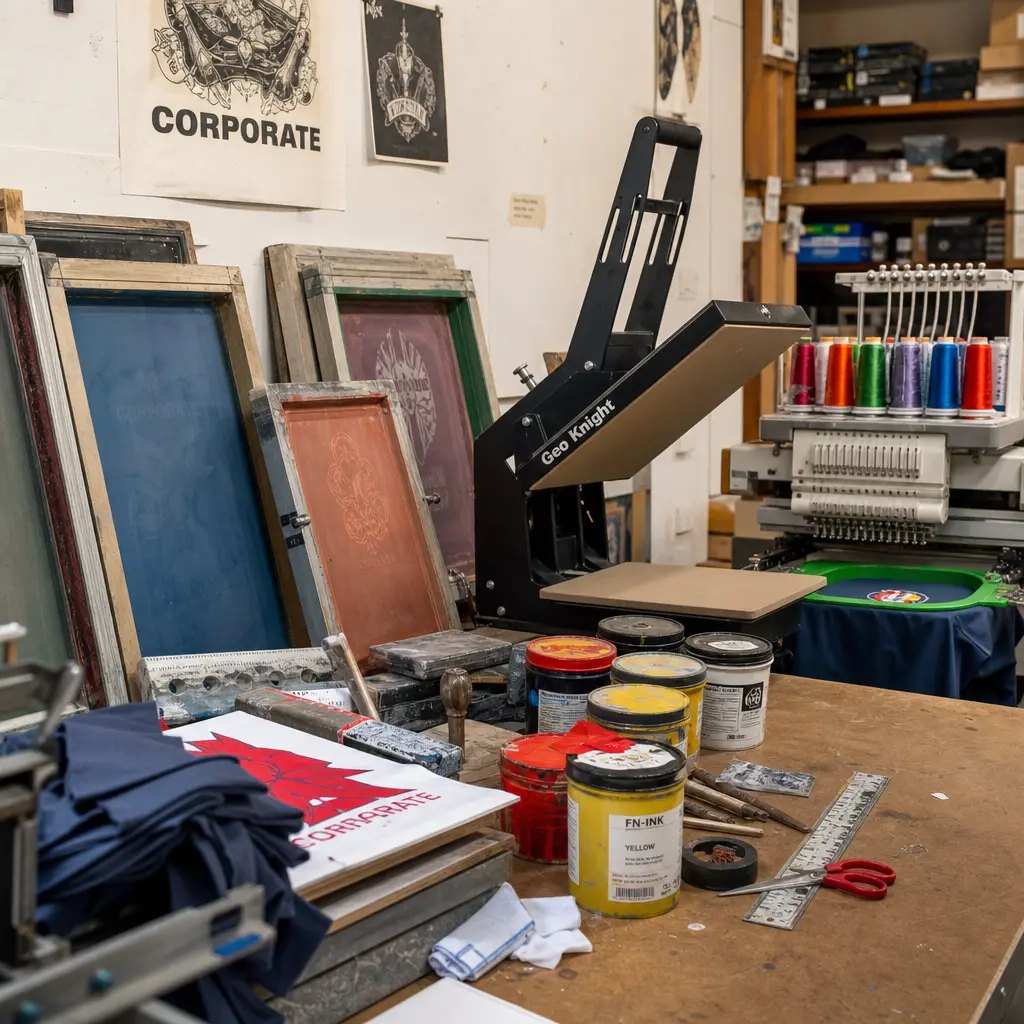
Most wellness studio wine carriers use a simple logo, line illustration, or short message. Water-based screen printing is often the best fit for natural canvas because it keeps a softer hand feel and suits one-color or two-color artwork. Pigment screen print can also work well when the logo needs stronger opacity. Heat transfer is useful for complex small runs or gradient artwork, but it can feel less integrated with canvas and needs careful adhesion testing on textured fabric.
Durability testing should include more than color approval. Fold the printed panel, rub it with a dry white cloth, and check whether ink transfers, cracks, or remains tacky. Also smell the printed bag after packing for a day. Wellness retail buyers are sensitive to odor because the product may be placed near candles, skincare, tea, or food-adjacent bottles. Ink curing and ventilation time should be included in the production schedule, especially for urgent event orders.
- Use screen print for simple logos, large flat graphics, and better cost at scale.
- Use heat transfer only when the artwork detail justifies the feel and durability tradeoff.
- Confirm print size in centimeters and placement from the bag center line or seam.
- Require a packed printed sample review for odor, blocking, and crease marks.
Set Practical Durability Test Thresholds
A useful durability checklist should tell the supplier how the bag will be judged. For wine carriers, a static load test is the minimum. The factory can hang or hold the filled-weight equivalent for a defined time, then inspect handle seams, side seams, and base distortion. A lift-cycle test is more realistic because customers pick up and put down the carrier many times. Even if the test is simple, it creates a shared expectation before production.
There is no need to over-engineer a small retail bag like industrial lifting gear. The goal is to catch weak construction before shipment. A practical acceptance standard could include no handle detachment, no seam opening, no major print damage after folding, and no base tearing after load testing. The buyer should align the test with destination risk, retail channel, and claimed reuse. If the bag is sold as reusable packaging, the durability standard must be higher than a gift wrap accessory.
- Static load: test with at least the filled bottle weight plus a reasonable safety margin.
- Lift cycles: repeat lifting from handle and setting down to expose weak stitch points.
- Seam review: inspect stress points inside and outside, not only the front panel.
- Print fold test: fold across the printed area and inspect for cracking or transfer.
- Abrasion check: rub bottom corners and printed face to simulate carton and shelf handling.
Build Sample Approval Around Evidence
A digital artwork proof cannot approve a canvas wine carrier. At minimum, buyers should use a blank size sample to approve dimensions and bottle fit, then a printed sample to approve artwork placement, ink color, hand feel, and smell. For larger orders, a pre-production sample made with bulk fabric, bulk thread, bulk label, and final packing method is the safest approval point. This sample becomes the reference for inspection.
Sample comments should be written like production instructions. Instead of saying the handle feels weak, state that handle reinforcement must use bar-tack or cross-stitch at all four attachment points. Instead of saying the logo should be higher, specify the print center position from the top edge or bottom edge. A sample approval email with photos, measurements, and tolerance notes prevents disputes when production starts.
- Approve finished bag size with the buyer’s actual bottle or a measured equivalent.
- Keep one approved sample with the buyer and one sealed sample at the factory.
- Mark all approved changes on photos, not only in email text.
- Do not release bulk cutting until fabric weight and shade are accepted.
Understand MOQ and Cost Drivers
Canvas wine carrier MOQ depends on what is custom. A natural canvas body with standard sewing and one-color screen print may be possible at a lower MOQ, often in the few hundred pieces depending on factory capacity and current fabric stock. Custom dyed fabric, custom woven labels, special hardware, multicolor printing, or unusual bottle sizes can push MOQ higher because the supplier must buy fabric, prepare screens, set up dyeing, or allocate a sewing line for slower operations.
When comparing quotes, buyers should separate the bag base cost from setup and packing items. A supplier may look more expensive because they included screen charges, custom label tooling, thicker export cartons, or pre-shipment inspection support. Another quote may be cheaper because it assumes thin canvas, no sample revision, loose bulk packing, and no durability testing. A clean comparison sheet should normalize fabric GSM, print size, label type, carton quantity, and sample inclusions.
- Main cost drivers: canvas weight, bag size, handle construction, base reinforcement, and stitch complexity.
- Branding cost drivers: number of print colors, print coverage, label type, and artwork registration.
- Packing cost drivers: individual polybag, tissue, inner carton, moisture protection, and carton strength.
- MOQ drivers: fabric dyeing, non-stock trims, custom labels, and production line changeover.
Control Packing Without Inflating Freight
Wine carriers are small, but poor packing can still create quality claims. Natural canvas picks up dust, carton fibers, and moisture easily. Printed panels can crease or rub if over-compressed. A practical method is to flat pack the carriers in neat inner bundles, align handles, protect the printed face, and use an export carton that is not forced beyond shape. The carton should be strong enough for stacking and handling during sea or air freight.
Packing should be specified in the quote because it affects both unit cost and landed cost. Individual polybags improve cleanliness but may conflict with sustainability goals. Paper bands, recycled polybags, or master polybag liners can be considered depending on retail requirements. For wellness studios, the buyer may prefer reduced plastic, but the factory still needs a moisture-control plan if the goods move through humid ports or long storage.
- Define pieces per bundle and pieces per export carton before approving the price.
- Request carton dimensions and gross weight to estimate freight and warehouse handling.
- Use moisture protection for natural canvas, especially for sea shipments.
- Avoid over-tight cartons that leave permanent handle or print creases.
- Specify carton marks for SKU, color, quantity, purchase order, and destination.
Plan Lead Time Around Real Production Steps
Lead time is often misunderstood because buyers count only sewing days. A realistic schedule includes artwork preparation, sample making, sample shipping, sample comments, fabric sourcing, fabric testing or shade approval, cutting, printing, curing, sewing, trimming, inspection, packing, and export handover. If the carrier is needed for a retreat, holiday gift box, studio opening, or retail launch, the schedule should include buffer for sample revision.
The highest schedule risks are custom dyed canvas, late artwork changes, unclear print placement, and delayed bottle information. If the supplier does not know the bottle diameter and filled weight until after sampling, the first sample may not represent the final use. For repeat programs, buyers can reduce lead time by keeping the same approved construction and changing only print artwork or side label.
- Start timing from confirmed artwork, deposit, and approved sample terms, not from first inquiry.
- Add time for print curing before packing to reduce odor and blocking risk.
- Reserve extra days if the order uses dyed canvas or custom woven labels.
- Do not approve mass production from photos alone when bottle fit is critical.
Specification comparison for buyers
| Spec decision | Recommended option | When it fits | Buyer risk to check |
|---|---|---|---|
| Fabric body weight | 10 oz to 12 oz cotton canvas, roughly 340-407 GSM before washing | Retail wine carrier, wellness studio gift set, boutique bottle program, or member event packaging | Very light 7 oz canvas can pass visual approval but fail handle load or corner abrasion after filled bottle use |
| Bottle capacity | Single-bottle format for premium gifting; two-bottle format with divider for retail bundles | Single bottle reduces weight claims and carton cube; two-bottle version improves perceived value for holiday packs | Two-bottle bags without a stitched center divider allow bottle impact and print distortion during transit |
| Handle construction | Self-fabric handles with cross-stitch or bar-tack reinforcement at the mouth seam | Best for natural canvas look and repeated carry from studio to home | Cotton webbing may be stronger, but mismatched shade and rough handle edges can reduce retail finish |
| Print method | Water-based screen print for simple CTM-style logos; heat transfer only for complex gradients or small MOQ tests | Screen print suits wellness branding with one to three colors and better soft hand feel | Low-cure ink or thick plastisol can crack on folded canvas and may smell inside polybags |
| Top closure | Open top for retail display; drawstring or flap only when the bottle must be concealed or transported | Open top is faster to sew, easier to pack, and avoids cord compliance questions | If the buyer needs closure, cord length, knot strength, and choking-risk labeling may affect destination compliance |
| Internal reinforcement | Bottom double layer or boxed base for heavier glass bottles | Useful for 750 ml wine, olive oil, kombucha, or wellness gift bottles with high gross weight | A flat unreinforced base can sag, pushing stress into the side seams and creating early stitch failure |
| MOQ logic | 300-500 pieces for standard natural canvas with one-color print; higher MOQ for dyed fabric or custom woven labels | Good fit for studio chains, retail buyers testing local events, and distributors consolidating several logos | Quote comparisons become misleading if one supplier includes fabric dyeing or label tooling while another quotes stock greige canvas |
| Packing method | Flat packed by 25 or 50 pieces per inner bundle, export carton with moisture protection and carton drop allowance | Keeps freight cube low and protects print face during sea or air shipment | Over-tight packing can crease printed panels, while loose cartons increase rubbing and edge soiling |
Buyer checklist before sampling
- Define bottle size, filled weight, and expected reuse count before choosing canvas GSM.
- Specify fabric as cotton canvas by ounce and approximate GSM, not only as natural cotton.
- Require handle pull testing using a filled-bottle equivalent plus safety margin.
- Approve the divider, base, and handle stitch pattern on a physical pre-production sample.
- Test print rub, fold cracking, odor, and color fastness before mass production approval.
- State whether the bag is for retail sale, gift-with-purchase, event giveaway, or member kit packaging.
- Confirm carton quantity, carton size, gross weight, polybag policy, and humidity protection.
- Compare quotes using the same artwork size, label type, packing method, and inspection level.
- Reserve schedule time for fabric shrinkage, print curing, and sample revision instead of counting only sewing days.
- Set acceptance criteria for seam strength, stitch density, print placement tolerance, and carton condition.
Factory quote questions to send
- What canvas weight are you quoting in oz and GSM, and is it stock fabric or made-to-order fabric?
- What is the finished bag size after sewing, and what bottle diameter and height did you use for fit checking?
- Which handle material, handle length, and reinforcement stitch are included in the quote?
- Is the base single layer, double layer, boxed, or reinforced with an insert?
- Which print method is quoted, how many colors, what print size, and what curing process is used?
- What sample types are included: blank size sample, printed sample, pre-production sample, or only digital artwork proof?
- What MOQ applies for natural canvas, dyed canvas, custom labels, and custom carton marks separately?
- What are the carton dimensions, pieces per carton, estimated gross weight, and recommended pallet loading?
- What production lead time starts after which approval: deposit, artwork, fabric arrival, or pre-production sample sign-off?
- What in-house tests can be shared with photos or short videos before shipment inspection?
Quality-control points to confirm
- Fabric weight tolerance should be declared, commonly within an agreed range such as plus or minus 5 percent for bulk canvas.
- Finished bag size should be measured flat with a practical tolerance, such as plus or minus 0.5 cm on width and height for simple styles.
- Handle attachment should survive repeated static load and lift cycles using more than the actual filled bottle weight.
- Stitch density should be consistent, with no skipped stitches, open seams, loose thread nests, or weak back-tacking at stress points.
- Print position should be controlled from the side seam or center line, not only judged by eye on random samples.
- Ink surface should pass dry rub and reasonable fold tests without heavy cracking, transfer, or tackiness.
- Natural canvas should be checked for oil spots, yarn slubs beyond approval sample level, mildew smell, and unacceptable shade variation.
- Cartons should pass handling review with no crushed corners, damp board, incorrect carton marks, or overfilled deformation.